Junior Prom

141017_Chincoteague NWR_9813acsIt’s prom season at Chincoteague National Wildlife Refuge.

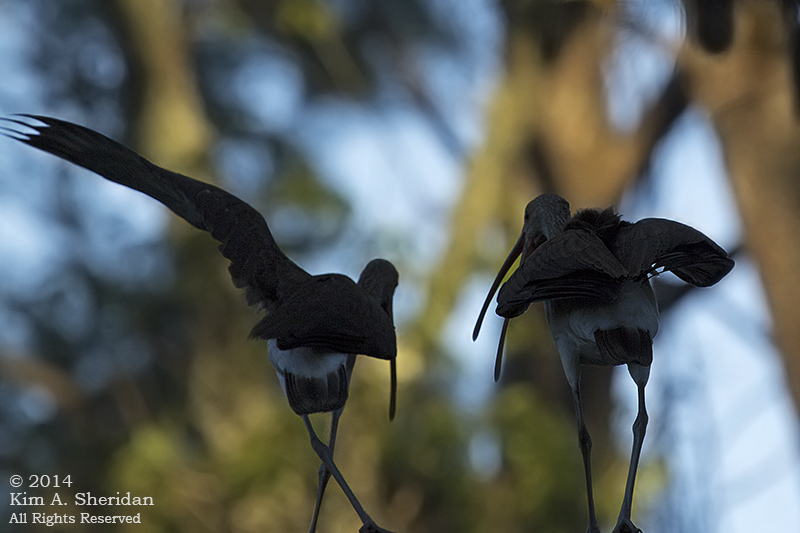
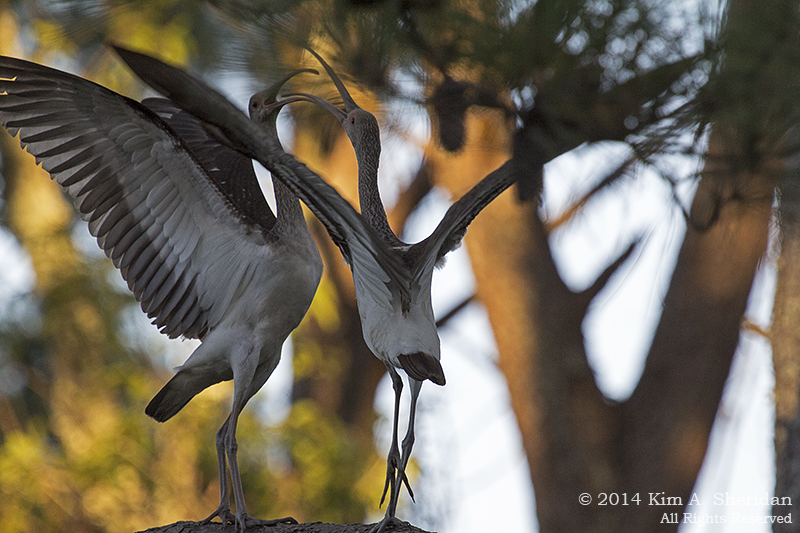
Fall is the time for young birds to gather in flocks and socialize. Like teenagers at the junior prom, they strut, preen and dance. Juvenile White Ibises show off their moves.
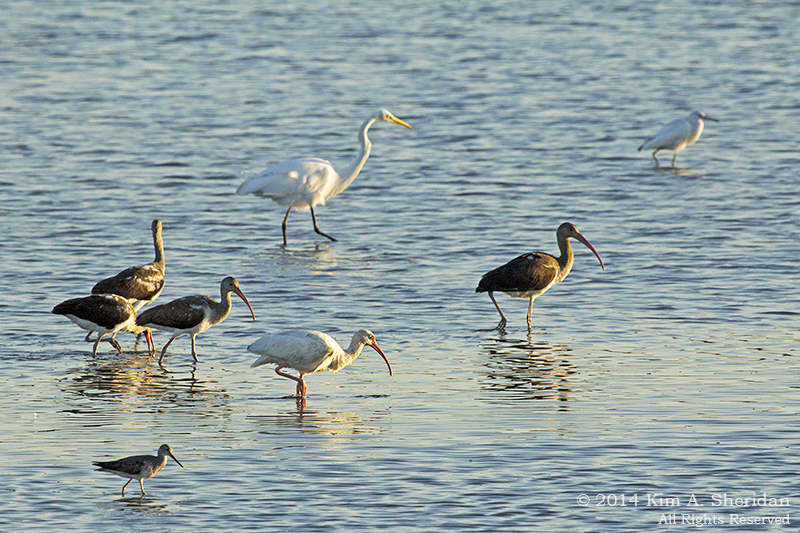
141018_Chincoteague NWR AM Swan Cove_0168aJuvenile birds have their own fashion style; they never dress like the grown-ups. White Ibis favor brown; Little Blue Herons wear white. It’s all so confusing. Especially when the adult chaperones are around. Here’s an adult White Ibis in white plumage with four young Ibis. In front is a Greater Yellowlegs; center rear is a Great Egret, and all the way in the back a juvenile Little Blue Heron.

141018_Chincoteague NWR AM Swan Cove_0464acsA Tri-colored Heron paces the dance floor.

141017_Chincoteague NWR_9868acsIn the evening the birds come to the woods along Beach Road. Loblolly pines offer a nice perch to soak up the late day sun. Twelve Snowy Egrets, three White Ibis… and a partridge in a pine tree?

141017_Chincoteague NWR_9649acsA shy young Black-crowned Night-heron waits for a dance invitation.

141018_Chincoteague NWR_0849axsDouble-crested Cormorants hang out in the small stream that bordered the road. Somebody’s gotta handle the refreshments.

141018_Chincoteague NWR_0841aGreat Blue Heron. There are a lot of wallflowers at this prom.

141017_Chincoteague NWR_9753acsThe highlight of the evening is the crowning of the Prom King and Queen. This year the honor goes to a pair of White Ibises.

141017_Chincoteague NWR_9784acsProm pictures are de rigueur.

141017_Chincoteague NWR_9816acsTime to take a bow. It’s been some enchanted evening!

Gorgeous

141028_HNWR Autumn_2271acsWhat’s this? Has Lady Autumn been playing in her wardrobe again?

141109_Nockamixon Fall Camping_3230aIn the manner of all divas, this elusive elf has made us wait for her appearance. At last she has graced the stage. First to feel the touch of her hand were the mountains and high hills. Haycock Mountain wears Her Ladyship’s colors along the shimmering blue shores of Lake Nockamixon.

141025_Hawk Mountain_1962aHawk Mountain is similarly adorned. One can do worse than to sun oneself on an outcropping of Tuscarora sandstone, watching while raptors journey past, and vultures circle lazily over the slopes.

141025_Hawk Mountain_1840acsHere flies a courier of the autumn elf. A Red-tailed Hawk wings its determined way south on a mission of migration.

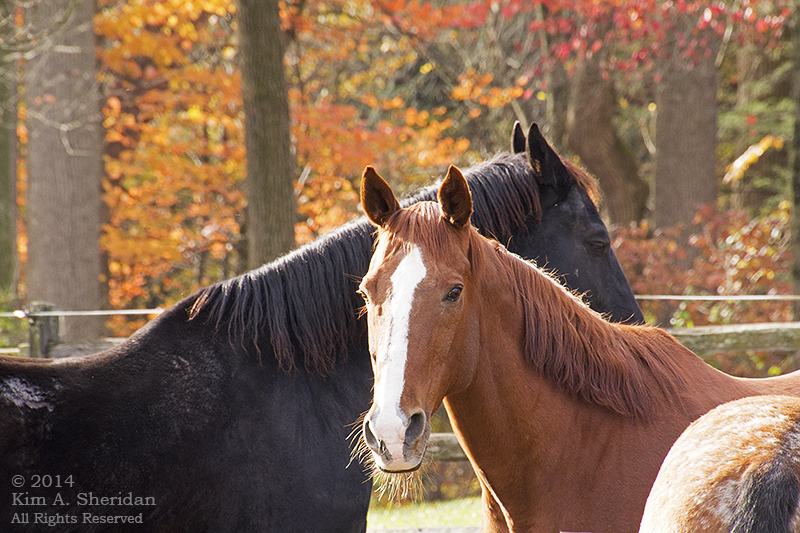
141031_Wissahickon Autumn_2458aHer Ladyship’s steeds soak up the sunshine on a fine autumn day.

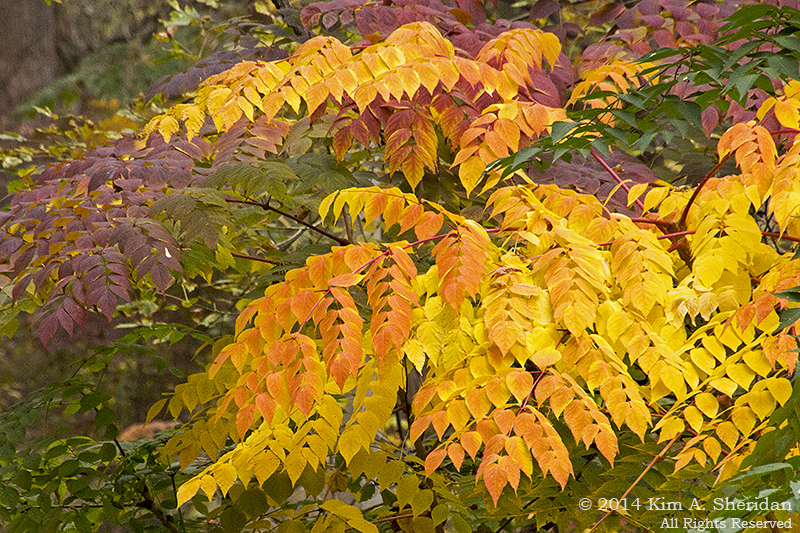
141031_Wissahickon Autumn_2667acsFun Fact: The Summer Queen bedecks herself in leaves of green, while Lady Autumn chooses golden yellows, fiery reds and blood-deep purples. Yet these are in fact the same leaves. Why do they change color? Like much in life, it has to do with food. Plants use the chemical chlorophyll to make food from sunlight, a process known as photosynthesis. Chlorophyll gives leaves their green color. When the day shortens and sunlight fades in fall, the chlorophyll also fades. This reveals the yellows and oranges of the carotenoid pigments, which have been present all along. In addition, some trees produce anthocyanins in the fall, which turn leaves red and even purple. Leaves are vulnerable to freezing, so to protect the tree throughout the cold winter, the leaves close their veins and fall away.

141031_Wissahickon Autumn_2587acsLady Autumn samples many smaller stages before she is ready to take her act to Broadway.

The theater of choice this year is the Wissahickon Valley.

A wise choice it is indeed. The slopes of the deep gorge abound with trees that can best show off her finery.

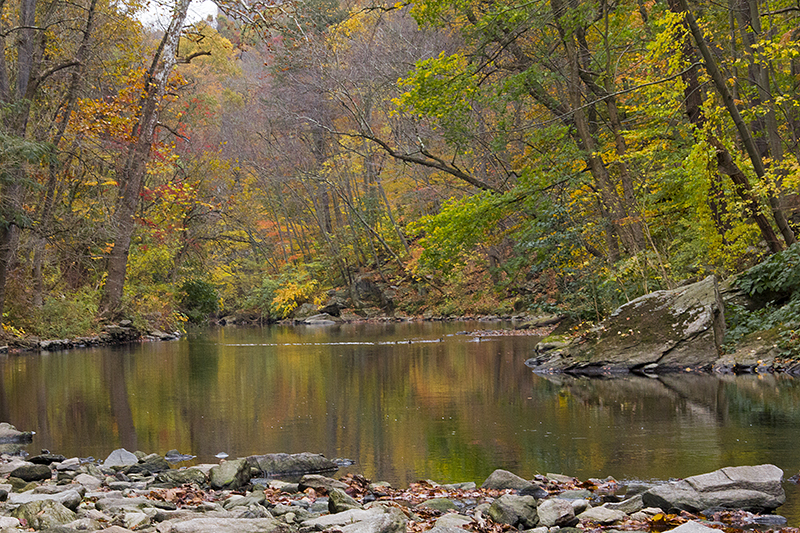
She cannot help but admire herself in the mirrored surface of Wissahickon Creek.

141031_Wissahickon Autumn_2638aNo unblemished mirror is this Creek. All along its course are boulders of Wissahickon schist, smoothed and weathered with time. Far from detracting from Her Ladyship’s beauty, they seem somehow to enhance it.141031_Wissahickon Autumn_2885a

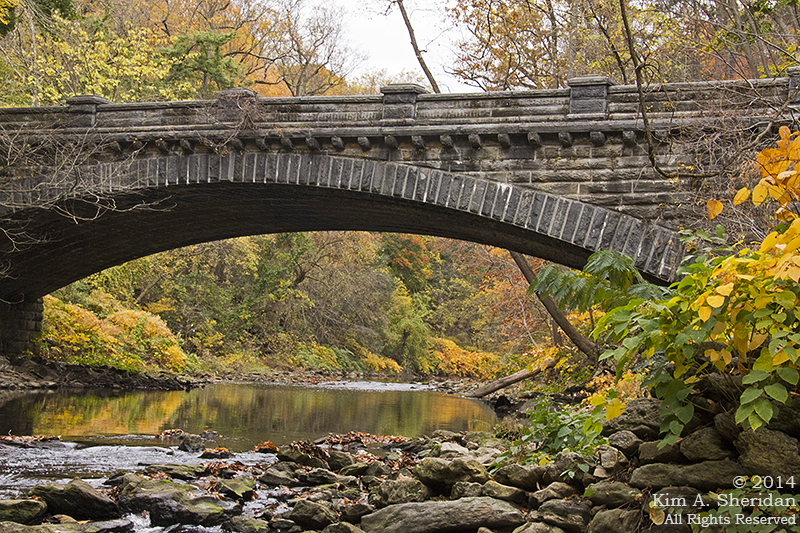
141031_Wissahickon Autumn_2792aAs do some creations of Man. The Bluestone Bridge was built in 1896 to carry travelers across the creek to the Lotus Inn. The old roadhouse is long gone, but the bridge remains.

141031_Wissahickon Autumn_2934aElsewhere, the Walnut Lane Bridge provides a more modern backdrop to Lady Autumn’s colorful dance.

141031_Wissahickon Autumn_2849acsNow the days grow short, and the hounds of the Winter Queen can be heard baying throughout the woods.

Lady Autumn’s entourage finds much preparation needed before the curtain closes.

141114_7D First Shoot_0058 acs copyThe smallest of her footmen searches busily through crimson raiments worn and then discarded. “There’s an acorn in here somewhere, I just know there is!”

Soon the last of Autumn’s finery, discarded along the wayside, will fade to brown, to be gathered and taken away. Not to be rushed is our Lady, though; before ceding the stage, she will have her encore, one last turn along the Wissahickon, one last dance in the gorgeous gorge.141031_Wissahickon Autumn_2745acs

Watery New Horizons: Part II

141030_Lake OswegoLaunch_124522acsOh, the places we’ll go!

No longer tied to the land, limited in our vision to the edge of the shore. Now the whole watery world opens up before us, and we are free to explore each cove, each inlet, each river bend. Wildlife, once skittish, will meet our gaze with fearlessness and dance for our pleasure. Oh, the places we’ll go!

141009_New Kayak _132554aYup, I finally got my own kayak. Here she is still in the store. She’s officially a “Pungo” model, but I have dubbed her Calypso, in honor of explorer and conservationist Jacques Cousteau.

141011_New Kayak_9248aReady to go home. The first thing everyone says is “It’s the same color as your car!” As if I would get anything other than blue. Blue, the color of the clear sky, azure butterflies, bluebells, and blueberries. Blue, the color of water…

Oh, the places we’ll go!

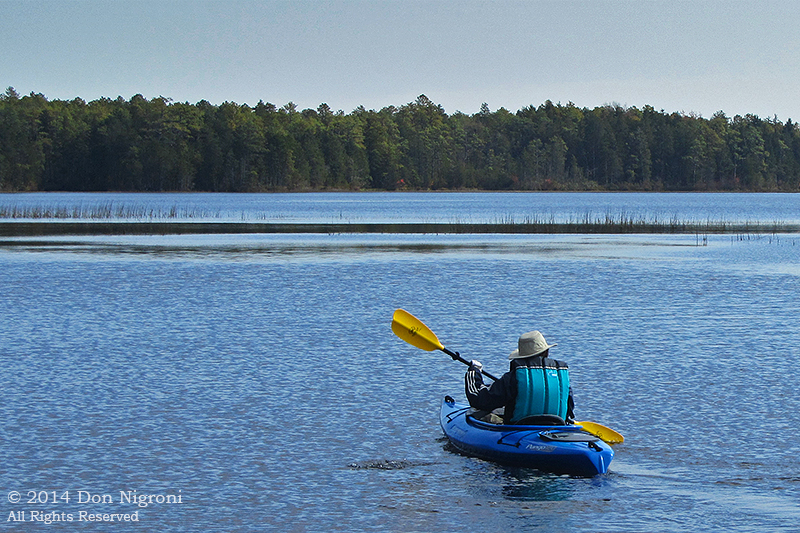
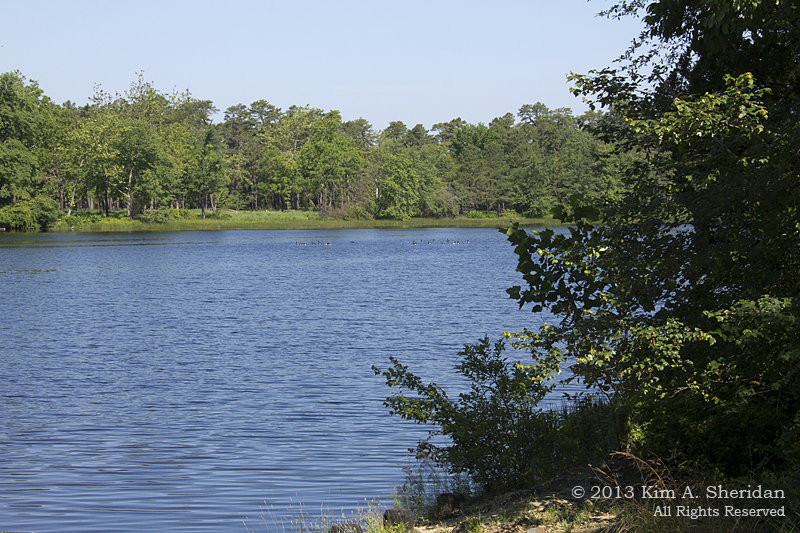
Like Lake Oswego in the Pine Barrens, for Calypso’s maiden voyage on a cool but bright October day.

141030_Lake Oswego Kayak Launch_2080aUnlike friends Don and Robb, I chose a hard-shell kayak over an inflatable model. No PUMPA-PUMPA-PUMPA for me. I just have to lift a 50 pound boat onto and off my car. That turned out to be easy. Reaching the tie-down straps, however, is another story. Nice to have a handy-dandy stepladder available.

141030_Lake Oswego Kayak Launch_2094acsA journey of a thousand miles begins with a single paddle stroke.

141030_Lake Oswego Kayak Launch_2096acsI had the lake to myself. Unfortunately, finding a warm calm day on a weekend to get the three of us together had proven impossible. On Launch Day, Robb was at work. Though Don accompanied me to the lake, he declined to paddle.  Something about a new book. No worries. I enjoyed the peace and solitude and the chance to get to know my new craft.

Oh, the places we’ll go!

130615_Pine Barrens Marthas Furnace_3371 aAnd where might we three voyagers go? Why, there’s a world of possibilities! We might explore the Oswego River downstream from the lake that shares its name.

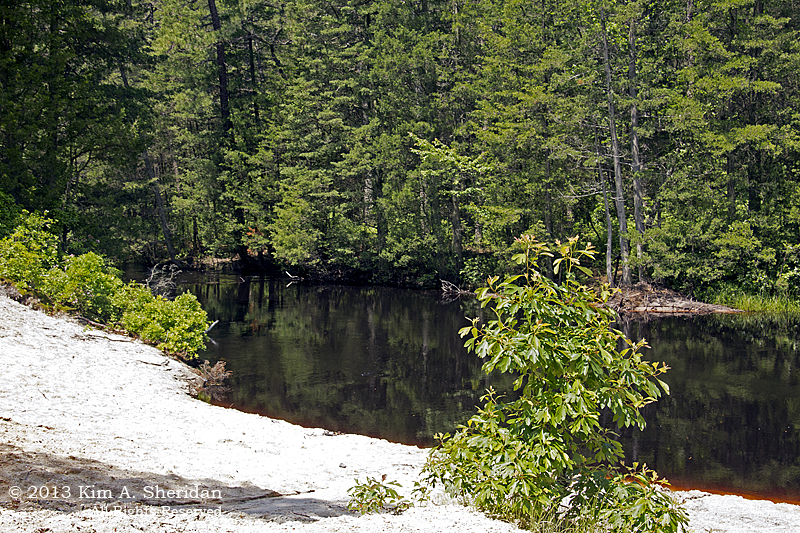
131026_Pine Barrens_9849aThe tea-colored water of the Mullica River in the Pine Barrens looks inviting…

130615_Pine Barrens Batsto_3230 aAs do Batsto Lake and River.

Oh, the places we’ll go!

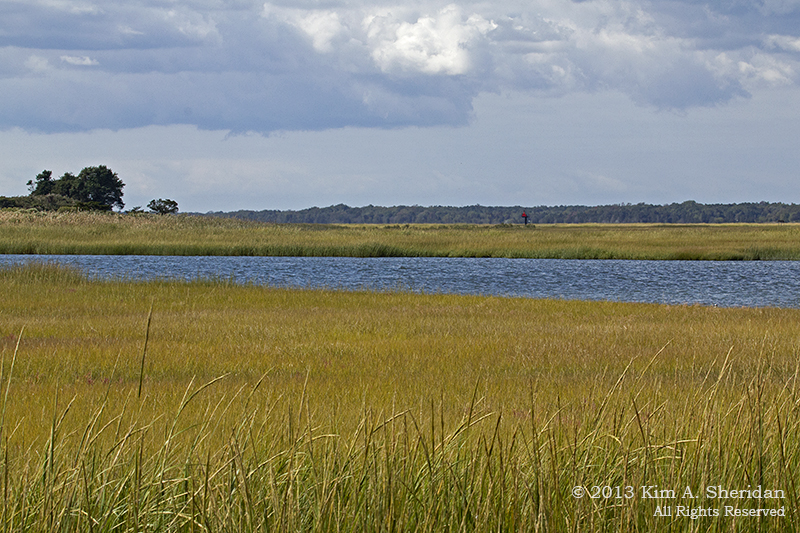
130927_OC 51st Street_5847 aThe Jersey Shore is a treasure trove of bays, marshes and tidal creeks to explore, like this creek near Ocean City.

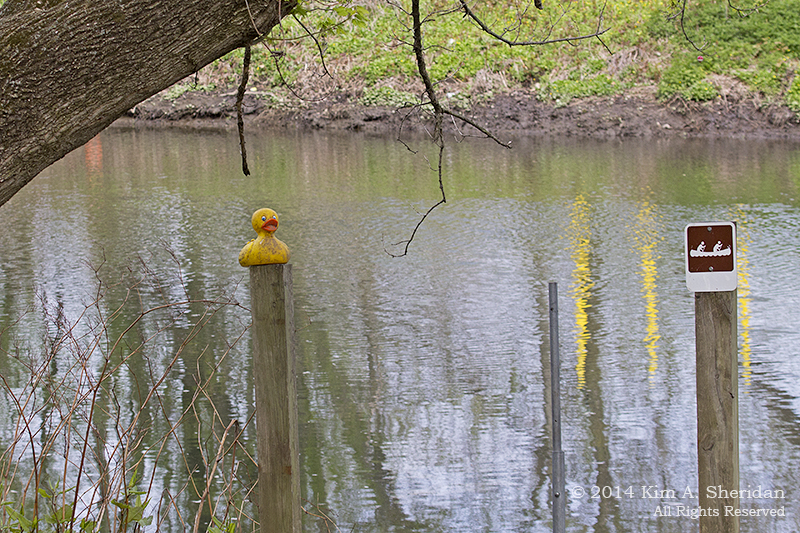
140422_HNWR Ducky_9986 acsOf course I want to explore Heinz Refuge on Darby Creek. The guys had already ventured out in their itty-bitty blow-up tub toys. On the canoe launch, their mascot awaited their safe return.

140511_Nockamixon Fishing Pier_8239 acsLake Nockamixon beckons, with Haycock Mountain looming on the watery horizon.

With the approach of winter, it’s likely that this would be my only trip with Calypso this year. But come next spring, I will be ready for adventure at the first hint of warmth.

For now, I have dreams, dreams of paddling…

Around the bend and out of sight, with a whole watery world shining on the horizon.

141030 Lake Oswego Kayak Launch_2097 acsOh, the places we’ll go!

Wild Horses

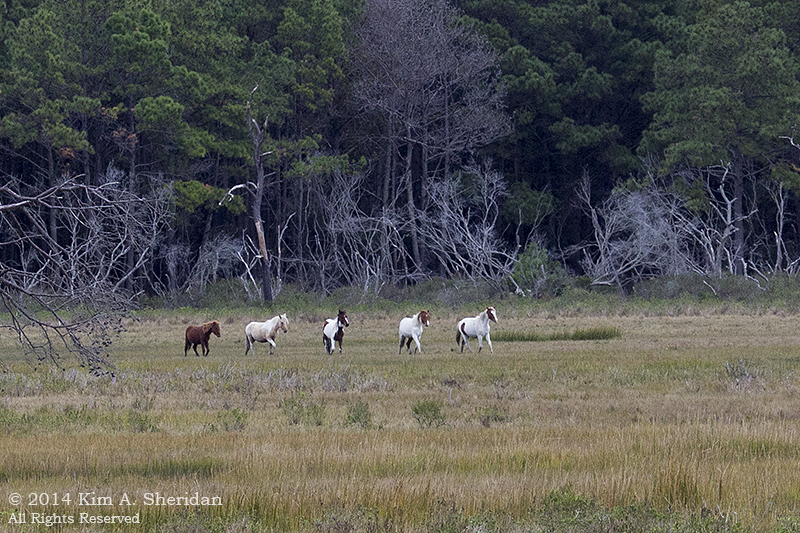
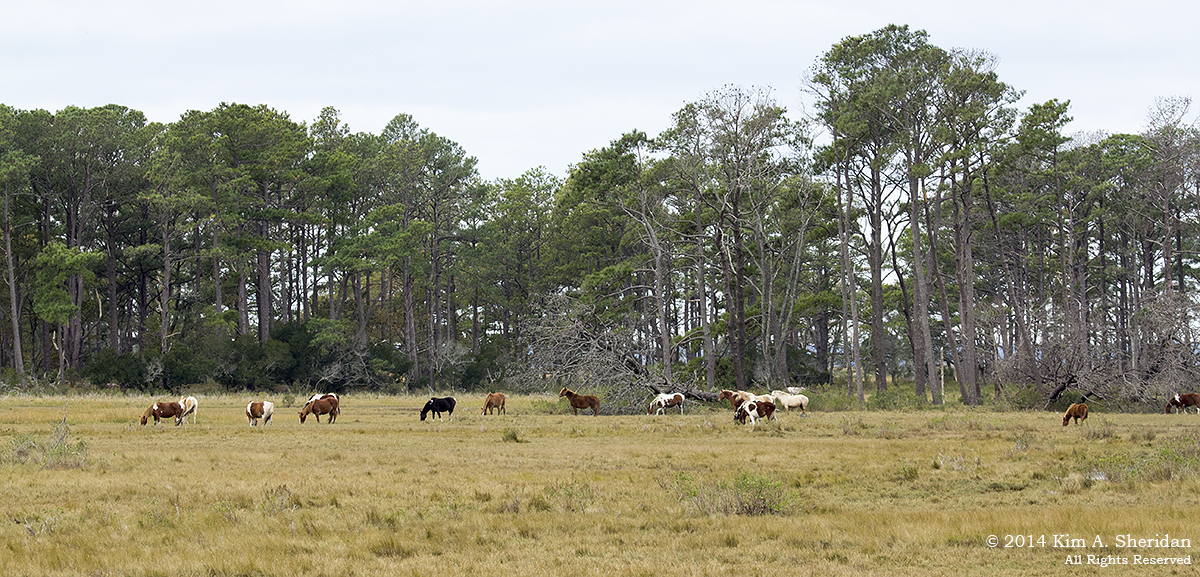
141017_Chincoteague NWR_9571 aThundering hooves pound the grasslands. Over the rise the herd appears, horses with manes flowing in the wind of their own passage. Their varied colors of chestnut and sorrel, palomino and pinto mirror the reds, tans and golds of the canyons and mesas that edge the Plains.

Say “wild horses” and this is the image that springs to mind, mustangs roaming the deserts and prairies, an echo of the Old West. Coastal salt marshes and maritime forests are not where you would expect to find these wild creatures. Yet the southeastern coast is dotted with small herds of ponies. One of the most famous of these herds lives in the Chincoteague National Wildlife Refuge, which is part of Assateague Island National Seashore in Virginia and Maryland.

141019_Chincoteague NWR Woodland Trail_1230 acsLocal legend says that the Assateague ponies are descendents of horses that struggled ashore from a shipwreck. More likely they are the offspring of tax-evaders! Farmers in the 17th century would turn their animals loose on the island to avoid the taxes levied on free-roaming mainland livestock.

141019_Chincoteague NWR Beach Road_1728Today there are two herds on Assateague Island. The northern Maryland herd is owned by the National Park Service, and roams free in the Assateague Island National Seashore. The southern Virginia herd is privately owned by the Chincoteague Volunteer Fire Department. Once a year, on “Pony Penning Days”, they are driven across the channel to Chincoteague Island. Many of the young foals are auctioned off before the herd is swum back to Assateague. This helps keep the horse population at a healthy level, and proceeds benefit the fire company.

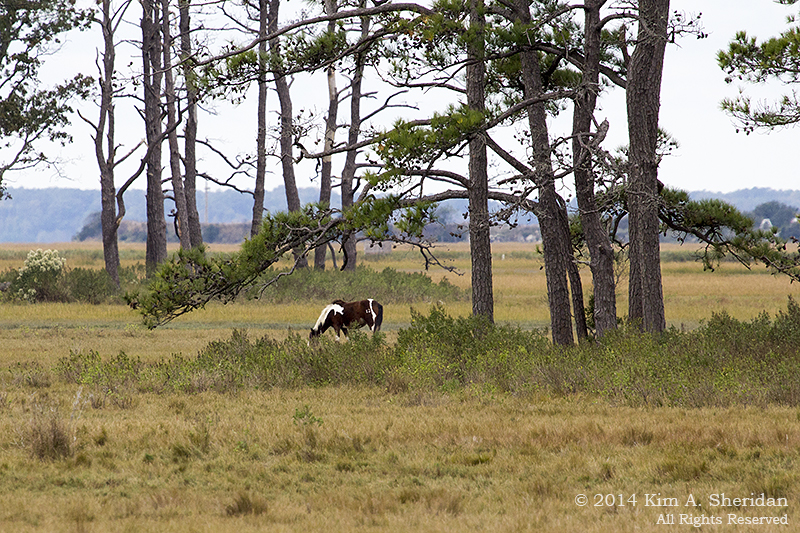
141019_Chincoteague NWR Beach Road_1742 aLone horse under a loblolly pine, the predominate tree of the maritime forest here.

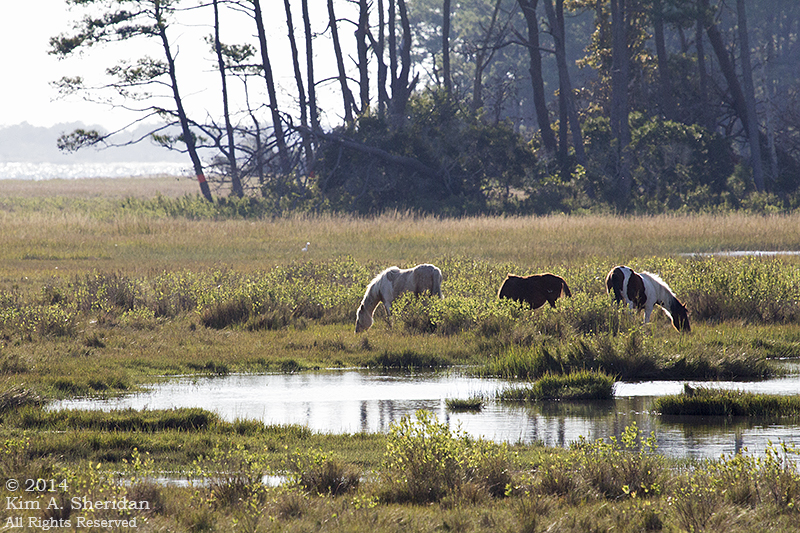
141019_Chincoteague NWR Woodland Trail_1226 acs2The wild horses live rough, no cushy stables for them. Cold stormy winters find them in the shrub thickets and woods. The moderate months of spring and fall are spent in the marshes. In summer, heat, humidity and hordes of biting insects drive them to the beach and into the water.

141019_Chincoteague NWR Woodland Trail_1331Dead trees and shrubs are everywhere, fascinating in their naked beauty. The salt marsh is a harsh mistress.

For the ponies, too. Most of my photos were of headless horses, their faces buried in the grass. They graze constantly. I thought their rotund appearance meant the ponies ate well. In fact, it’s just the opposite. Their diet of salt marsh cord grass and salt hay is abundant but poor in nutritional value. It’s also salty, which leads the horses to drink twice the amount of water a domestic horses would drink. Those round tummies are the result of water bloat.

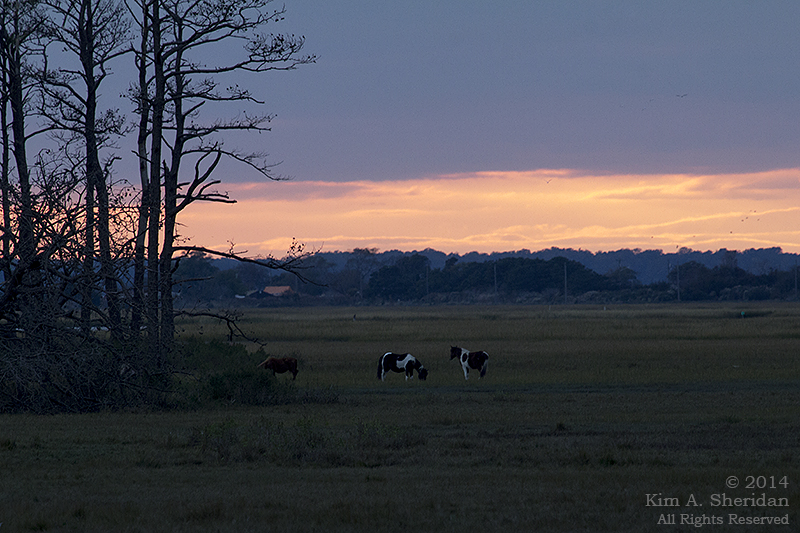
141018_Chincoteague NWR_0957 acsLike many children, I grew up on Marguerite Henry’s 1947 book Misty of Chincoteague, about Pony Penning Days. Little did I dream I’d someday get to see those wild ponies, grazing peacefully at sunset.

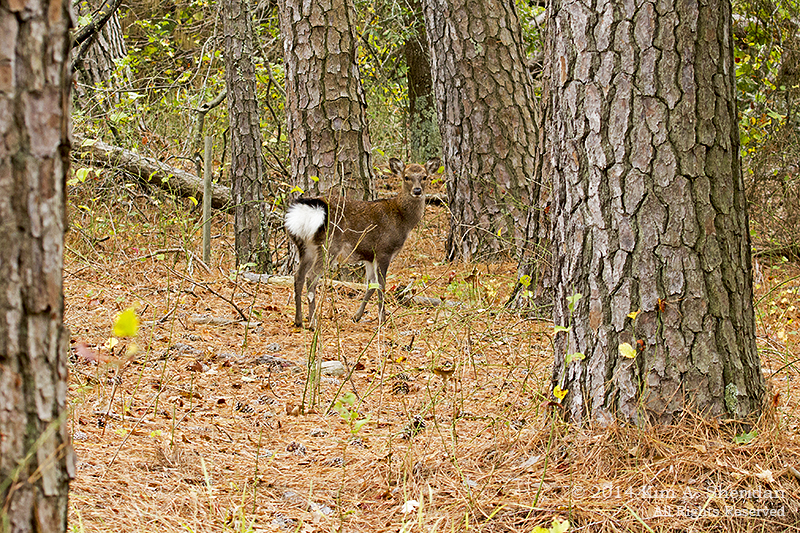
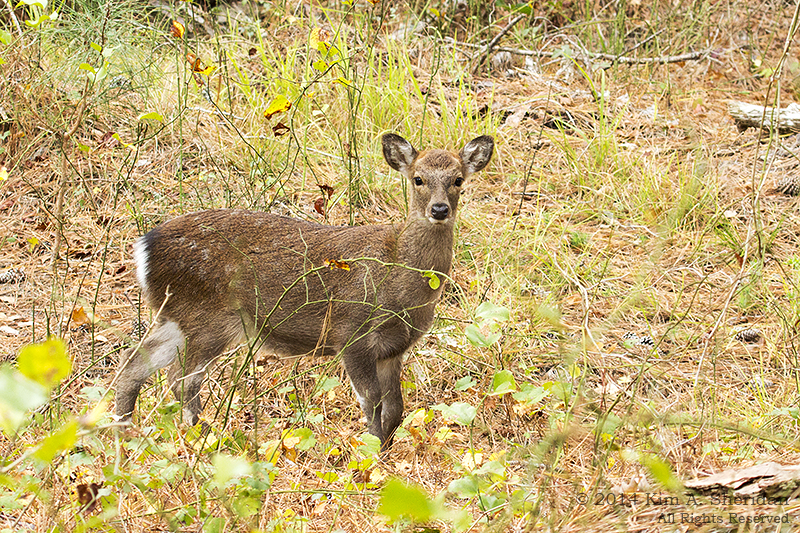
141019_Chincoteague NWR Woodland Trail_1209 aThere’s another critter with hooves at Chincoteague NWR that’s equally captivating. This is a Sika Elk.

They look like a smaller version of the native White-tailed Deer. But they are a non-native species introduced from Asia by an Eastern Shore man named Clemment Henry in the early 1900s. He released a half dozen elk onto James Island in Chesapeake Bay, and from there the population grew and spread.

141019_Chincoteague NWR Woodland Trail_1204 aWe encountered several Sika Elk on a walk through the woods. They regarded us with much curiosity, coming closer to us to get a good look when we stood quietly. See the spots on the white rump? They remain throughout adulthood, unlike the native White-tails. This elk demonstrated an unusual way of bounding away that I can only describe, poorly, as a stiff-legged bounce. Watching it hop had us in stitches.

Yes, like the wild horses of Assateague Island, these little Sika Elk are quite “endeering”!

141019_Chincoteague NWR Woodland Trail_1360 acs