 It’s become an annual tradition now, the winter pilgrimage to Barnegat Light to see the winter waterfowl. Every year it gets colder and windier, and every year the jetty gets longer.
Or at least it seems longer! Especially this year, as it was my first time picking my way from rock to rock with a tripod on my shoulder. I’m not the most sure-footed of creatures, as my friends will be happy to tell you. But I also don’t have the steadiest of hands, so having the tripod was a big help.
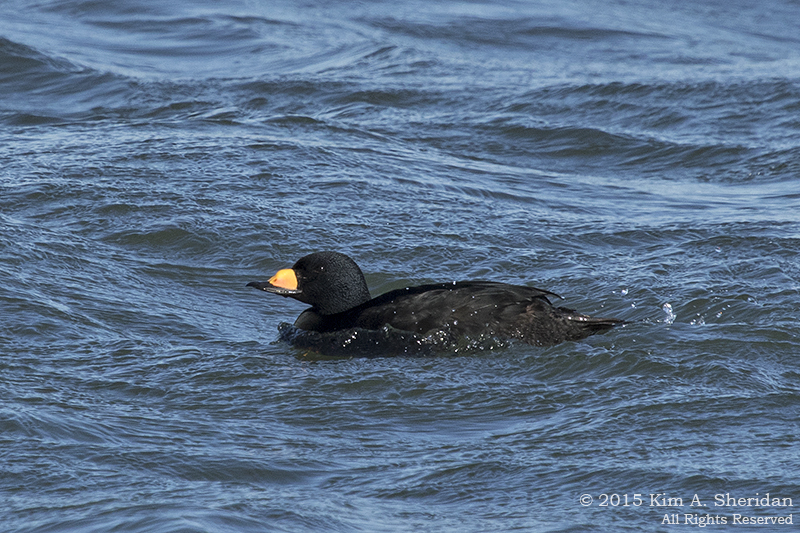 The day started with a Black Scoter near the Lighthouse. Hmmm… Dark bird on dark water. Helpful of him to have a bright yellow bill.
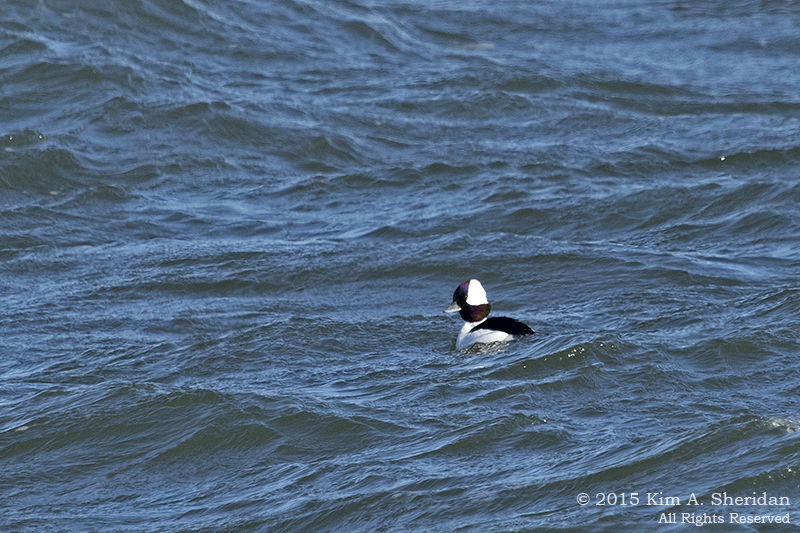 A small duck bobbed alone in the big bay. I was a little surprised to see this Bufflehead out here in the Inlet. I’m used to seeing them in fresh water lakes. But they frequent the salty bays too.
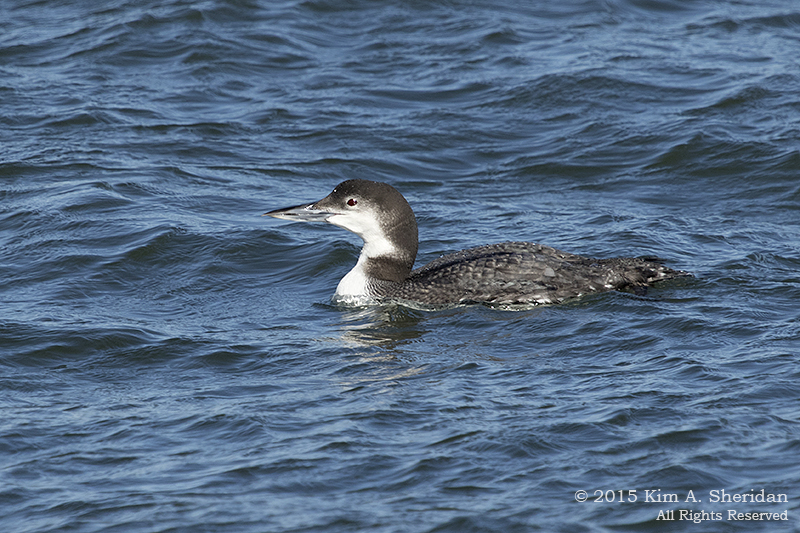 Common Loon. Someday I hope to see them in full breeding plumage, and hear them call.
 The birds we came to see are the Harlequin Ducks. Two males swam near the rocks at the end of the jetty. There were only four Harlequins there this day, two males and two females. We didn’t mind. Quality over quantity.
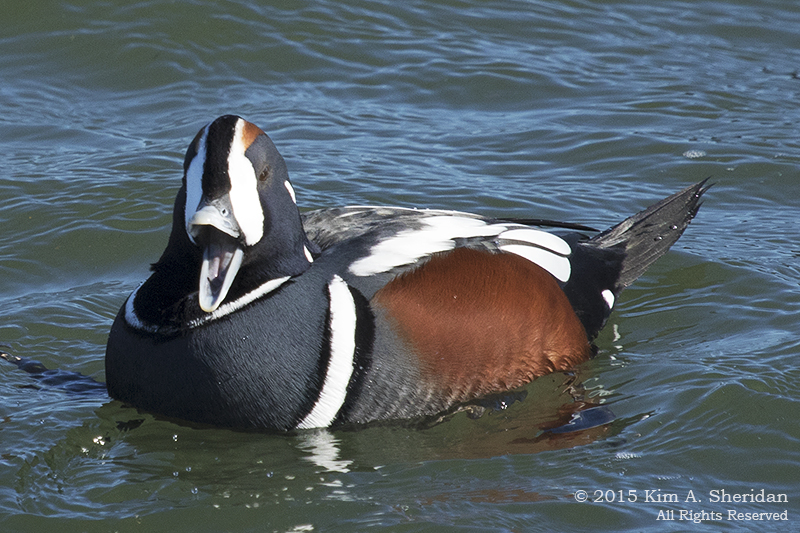 It was 22° with winds gusting over 20 mph. I wore heavy wool socks, long underwear, lined pants under rain pants, a turtleneck, fleece AND insulated vest under a down jacket, a scarf, two hats and three pairs of gloves, with hand warmers inside. This duck thought I was the funniest thing he’d seen in awhile.
FUN FACT: Why are the ducks comfortable swimming in the frigid water while we humans are shivering on shore?
It starts with their feathers. Next to the skin lies a thick insulating layer of down feathers. Above the down are layers of interlocking and overlapping feathers that leave a minimum of bare skin exposed to the elements. The birds attend meticulously to feather maintenance with liberal doses of preen oil.
Look closely at a duck after it surfaces from a dive, and you will see the water beading up and running from its waterproof feathers like rain from a freshly waxed car.
Ducks’ feet and legs lack feathers to protect them, and could be a dangerous source of heat loss. But water birds have evolved to combat this by utilizing a countercurrent heat exchange system. As hot blood in the arteries flows into the upper leg, it transfers heat to the cold venous blood returning from the feet. Blood that reaches the feet is much colder than the body, close to the temperature of the water in which the duck swims, but the blood that returns to the heart is warm. This heat exchange minimizes heat loss from the legs, while maintaining a healthy body core temperature. Cold feet, warm heart!
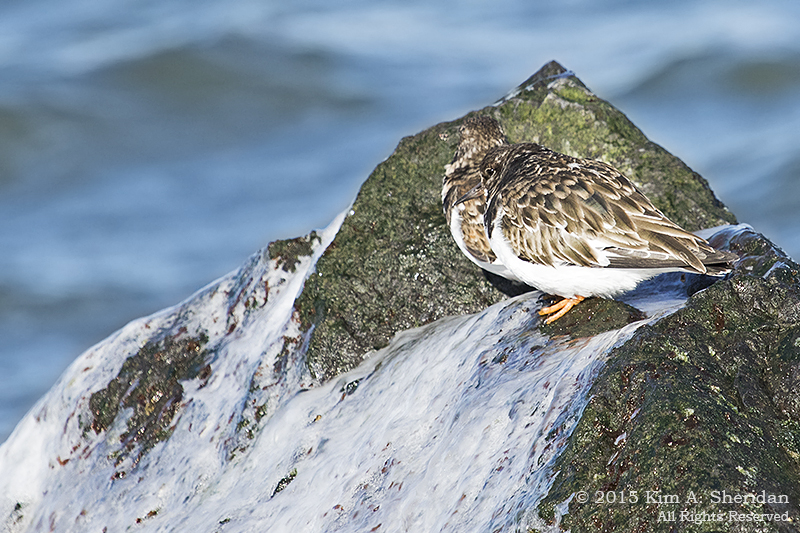 Sandpipers were in attendance as well as ducks. Two small gatherings of Ruddy Turnstones perched precariously on the icy rocks.
 You put your right foot in, you put your right foot out…
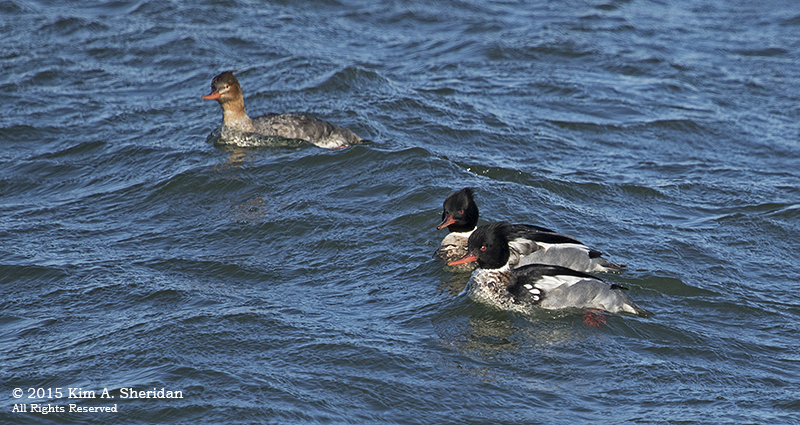 Back near the Lighthouse were three Red-breasted Mergansers, one female (rear left) and two males.
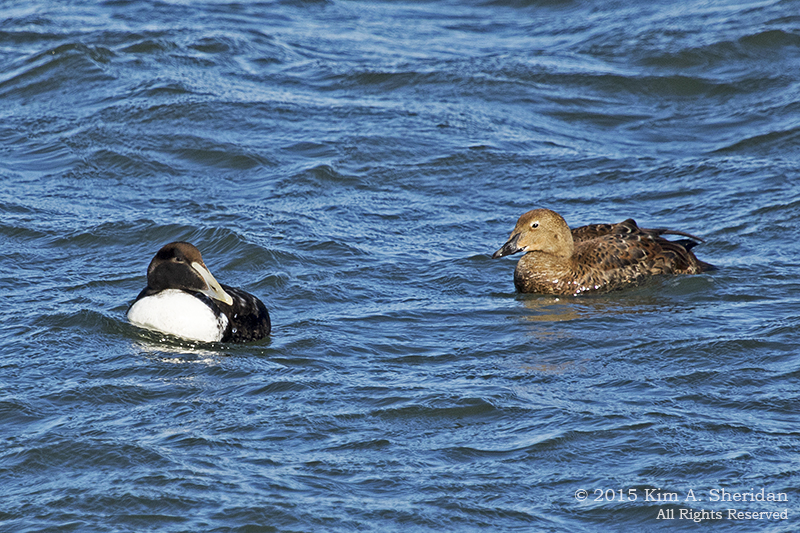 Accompanying the Mergansers were a young male Common Eider (left) and a female King Eider. The King Eider was a new bird for me. Common Eiders I’ve seen before, but only females at a distance. Seeing both this close was a treat. I’d have been happy with Eider one!
 Time to snuggle in somewhere warm at the end of a cold day at Barnegat Light.






 The Wild Edge