Early Green

160322_PA HNWR Early Spring_3075aI’m not fond of the color brown. In fact, I don’t even think it’s a color. It’s more like a background, and one I’m tired of. For most of my life I lived in a beige house, which is brown in a wishy-washy mood. With apologies to my U.S. Fish and Wildlife Service friends in their brown and tan uniforms, the only good brown thing is chocolate.

As mild as this past winter was, I really have no cause to complain. But since the trees and shrubs lost their leaves in November, life outdoors has been a sea of brown bare trees and beige dried foliage. Now, I admire the structural bones of a single bare tree as much as the next person, but this is too much of a good thing. Momentary escapes to the Pine Barrens and Jersey Shore offered only momentary relief from the monotony. After five months, I am ready for change.

Nothing says “change” like green. Pale yellow-green. Bright kelly green. Deep forest green. The green of Nature. The green of Spring.  The green of New Life.
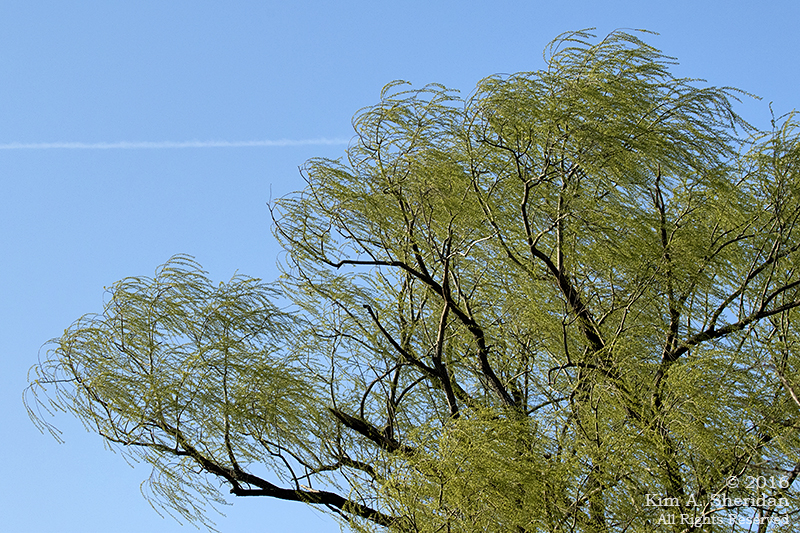
160322_PA HNWR Early Spring_3126acsWhat a relief to see green in all its variations on a recent evening walk at John Heinz NWR, and soak in the sights and sounds of the new arrivals early Spring brought with it. Like the willows dancing in the breeze while a jet contrail slices the clear blue sky.
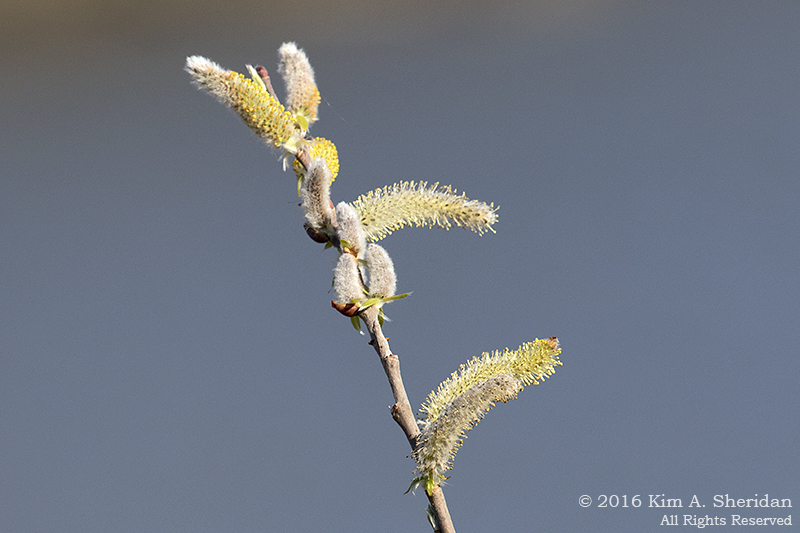
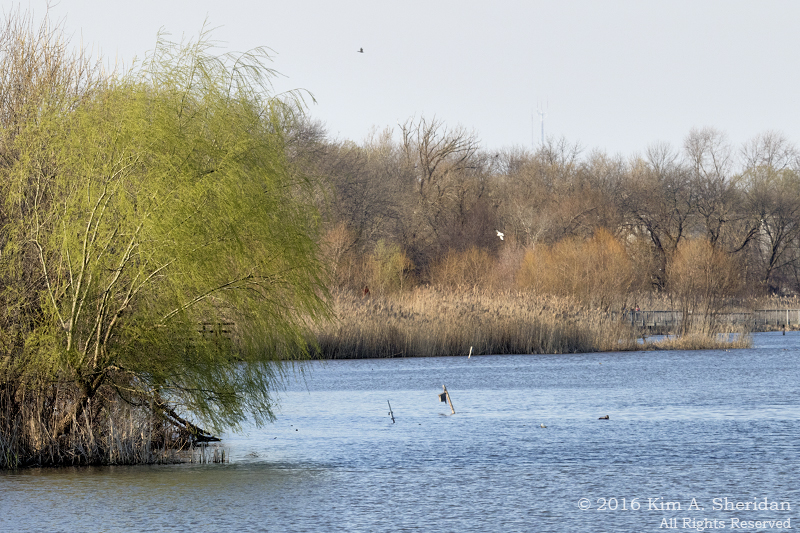
160322_PA HNWR Early Spring_2573acsSpring greens are subtle. Pussy willow along the water’s edge.

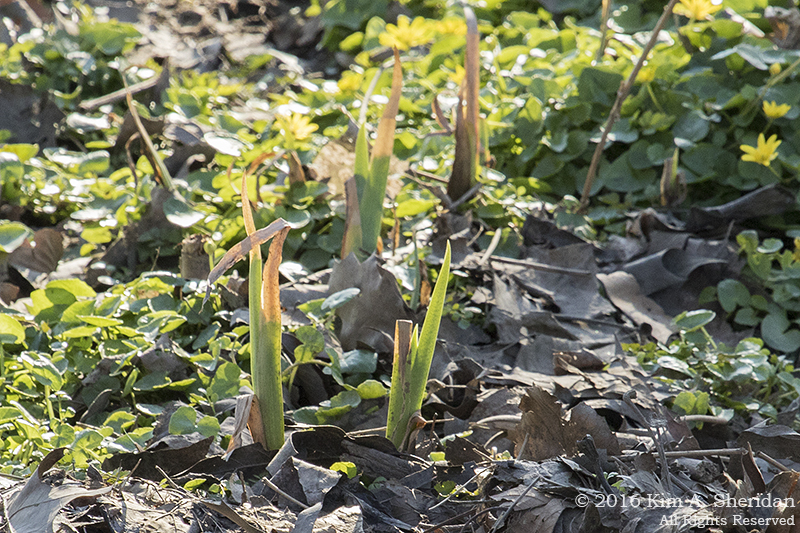
160322_PA HNWR Early Spring_2492acsSometimes the green is the canvas on which other colors are painted. Just the carpet of green leaves would be welcome sight. The golden flowers add that touch of flair.
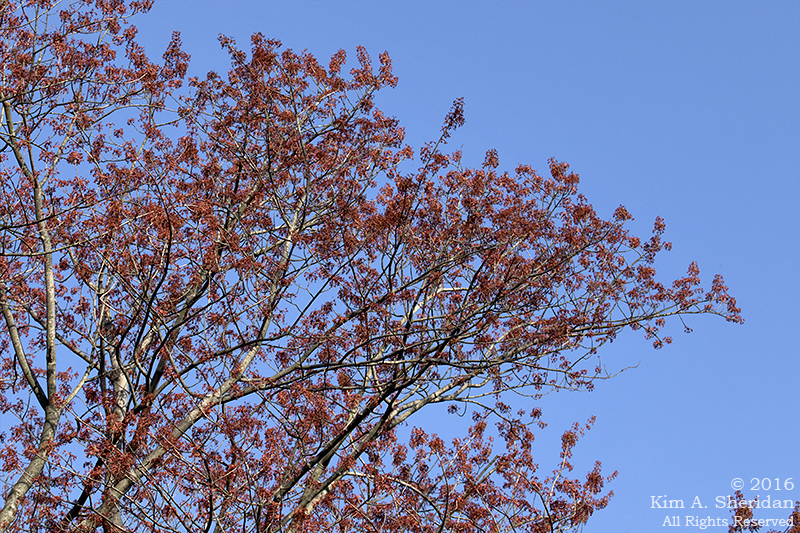
160322_PA HNWR Early Spring_2779acsSometimes spring greens are red! At this time of year, many of the trees are bright crimson, as the red maples burst into bud…
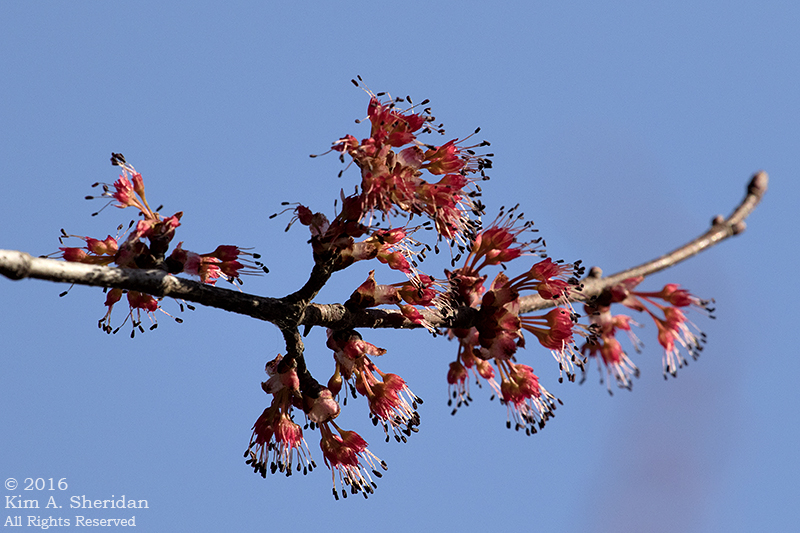
160322_PA HNWR Early Spring_2699acs…And flower.

160322_PA HNWR Early Spring_2716acsSometimes the green is not so welcome, like new shoots of Phragmites, an invasive plant found throughout the Refuge that a friend and I are trying to eradicate from a small plot. We knew it would come back. The fight is renewed for another growing season.
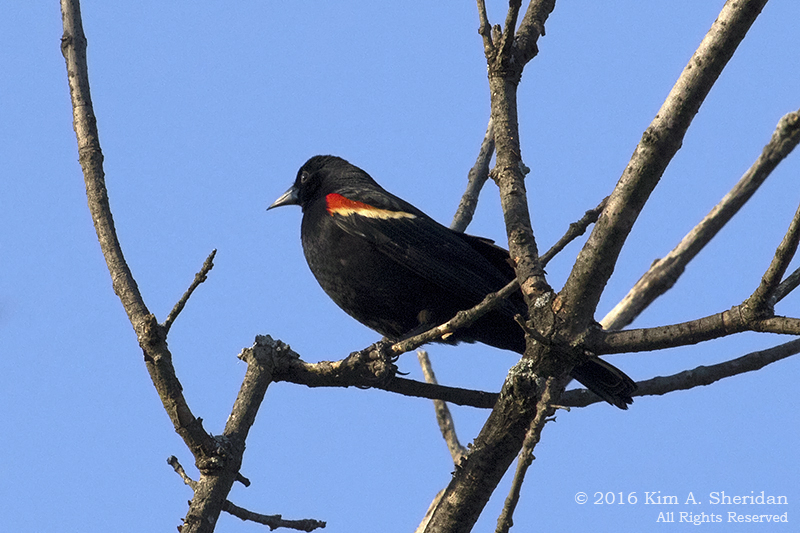
160322_PA HNWR Early Spring_3198acsThe greening of the land brings with it new arrivals freshly returned from their wintering grounds. Red-winged Blackbirds have been back for a few weeks. Their CONK-ER-REE calls are anything but musical, but nonetheless music to my winter-weary ears.

The air is filled with the songs of birds. Song Sparrows, Carolina Wrens and Cardinals join the blackbird chorus. There’s an amphibian choir singing as well, as frogs have come out of the mud where they spent the winter to look for mates. The aptly named Spring Peepers make a surprisingly loud, high-pitched PEEP continuously. These are tiny frogs, no bigger than a fingernail. In all my searching, I have never seen one, though I have been nearly deafened by their noise. Singing tenor to the peepers’ soprano are the Wood Frogs, who sound more like ducks, with their ragged QUACK call.
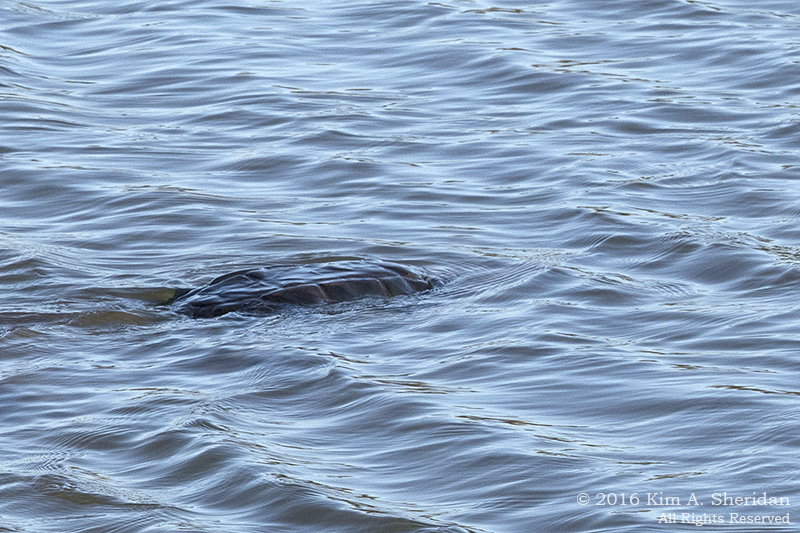
160322_PA HNWR Early Spring_3106acsSnapping turtles have also come out of the mud, and cruise along at the water’s surface.

160322_PA HNWR Early Spring_3230acsTree Swallows came back recently. Now the sky over the impoundment is filled with the little blue jewels hawking insects. Which means, of course, that the insects are back too. The marshy environment of Heinz Refuge would be miserable with mosquitos were it not for our swallow friends. Which is why we have nest boxes for them.
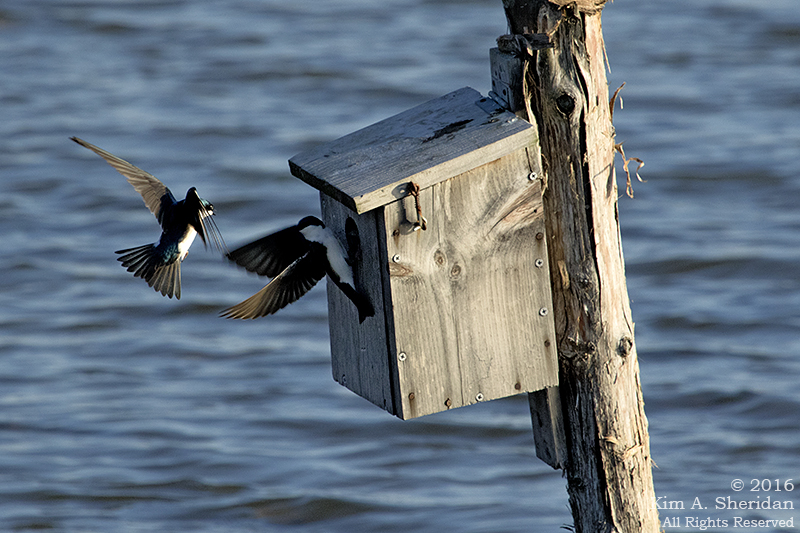
160322_PA HNWR Early Spring_3263acsFrequent squabbles break out over those nest boxes. This is prime real estate.
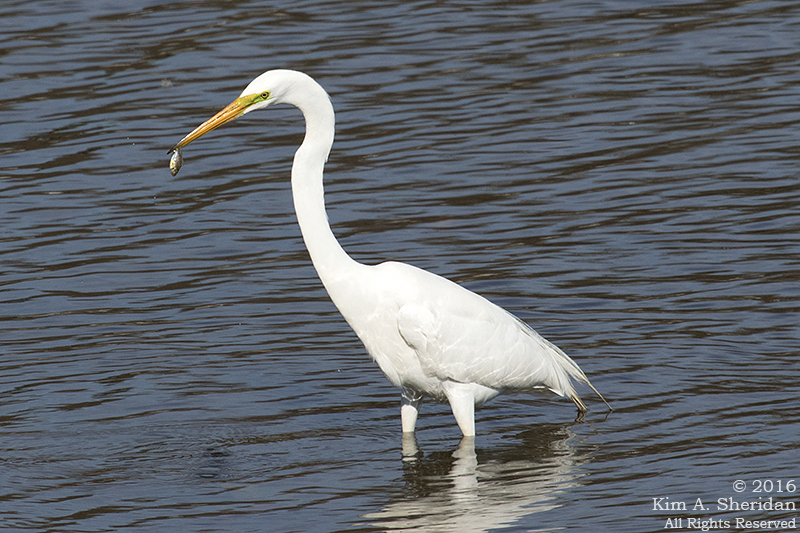
160322_PA HNWR Early Spring_2560acsGreat Egrets arrived last week. This one was enjoying an hors d’oeuvre, hoping for a more filling main course.
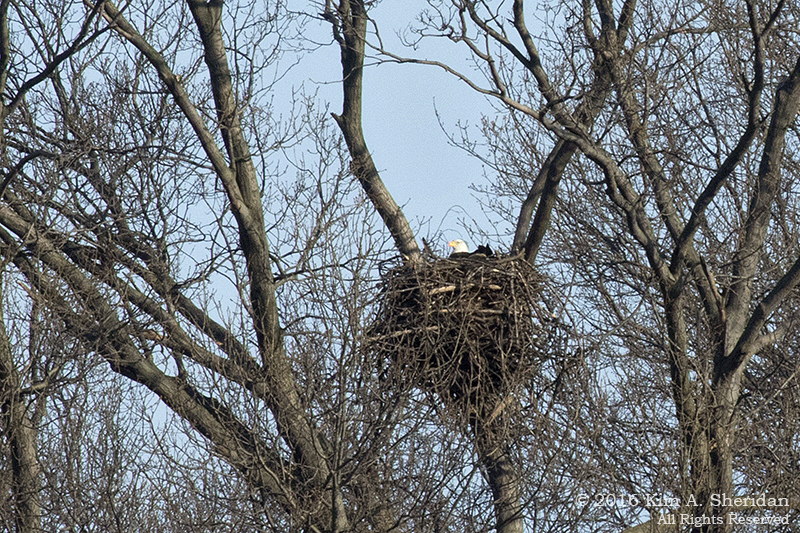
160322_PA HNWR Early Spring_3031acsHere’s the greenest photo of all. Yes, I know – there’s no green, just the dreaded brown. This is one of our Bald Eagle pair sitting on its nest. Inside that nest are one or more eggs. Any day now (it might already have happened) a tiny, fluffy eaglet will break its way out of the shell and start its new life.

New life. It just doesn’t get any greener than that.

My Frozen Valentines

160214_MD Point Lookout_9994acsaNever in my wildest dreams could I have imagined spending a Valentine’s Day on a beach with not one, but two, well-dressed men.

160214_MD Point Lookout_0012acsWell-dressed for the Arctic, that is. Because that’s what Point Lookout in Maryland felt like on this Valentine’s morn.

Robb, Don and I had come to the western shore of the Chesapeake Bay mostly to look for the fossils of Calvert Cliffs. Never ones to pass up a lighthouse, though, we drove to Point Lookout State Park at the very tip of the peninsula between the Chesapeake and the Potomac River.

160214_MD Point Lookout_0131acsOn the way, we passed a weathered wooden barn at the edge of a slumbering winter field. My companions couldn’t resist a little tomfoolery. Don decided we should reenact an Andrew Wyeth painting, and made Robb lie down and pose in front of the barn. Laughter is the best medicine, and these guys keep me laughing all day long.

160214_MD Point Lookout_9997acsWe found the lighthouse unimpressive, spoiled as we were by Drum Point the day before.

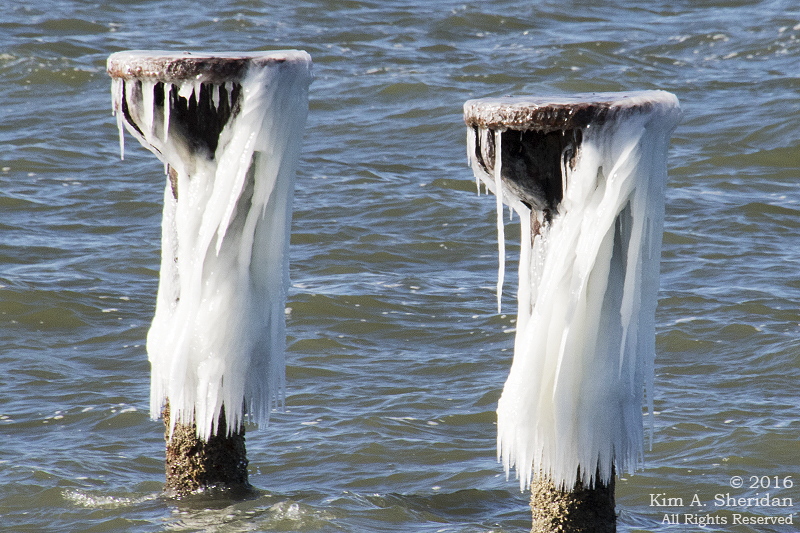
160214_MD Point Lookout_9974acsI was more intrigued by the ice coating objects along the shoreline. Not sure what these are. Can you guess which way the prevailing wind blows?

160214_MD Point Lookout_9981acsNearby, a section of fallen chain-link fence arched gracefully to the ground, providing the framework for a fascinating ice abstraction.

Robb and Don are always changing plans on the fly. I love it because I always get to see lots of different things when I’m with them. I don’t do spontaneity well. They push me to expand my horizons, while being endlessly patient as I adjust to stepping outside my comfort zone.

Sometimes they move too quickly, though, and miss what’s right in front of them. Cold as it was, they were keen to leave Point Lookout for our next destination. It took more than a little effort to convince them I’d spotted a neat beach to explore.

160214_MD Point Lookout_0057acs1My parents inspired a love of beach glass collecting many years ago. For a long time, that glass came exclusively from the Jersey Shore ocean beaches. Now I am collecting it in many other places – rivers, lakes, and bays. Point Lookout yielded several pieces of glass, my first from the Chesapeake Bay.

This one wasn’t coming home with me, though. Couldn’t budge it.

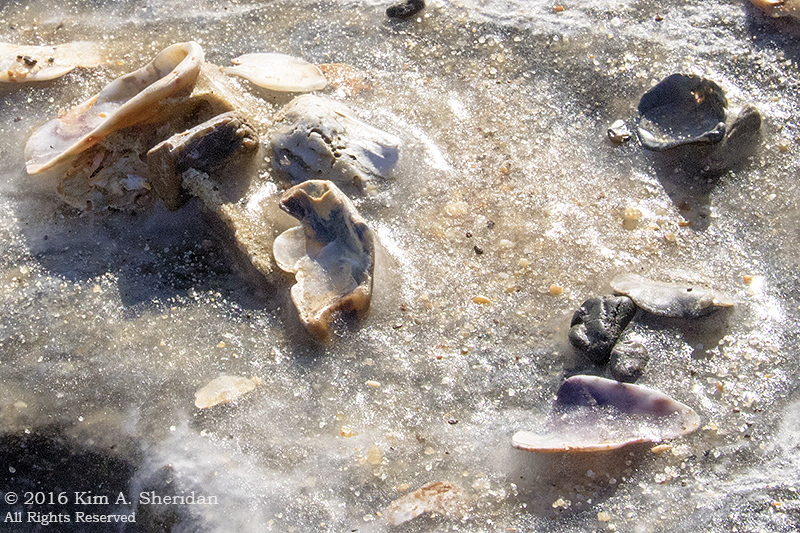
160214_MD Point Lookout_0014acs2Ice on the half shell.

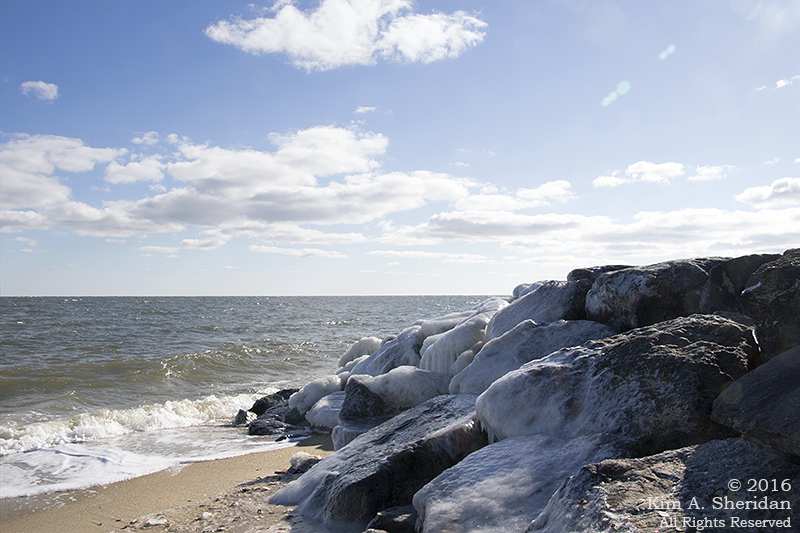
160214_MD Point Lookout_0032acsThe rocks of the jetty formed a luscious confection, topped with terraced frosting that oozed into bubbles, then drizzled off the edges.

160214_MD Point Lookout_0027acsThere were no fossils here, since we were south of the end of Calvert Cliffs. Instead, our focus was on pebbles. One of the things I love most about my friends is the variety and passion of their interests. Their enthusiasms change as quickly and as intensely as cloud formations in a summer thunderstorm. I am swept along with the gusts, learning along with them.

160214_MD Point Lookout_0081acsAnd here they are, my frozen Valentines, bundled in parkas and balaclavas. Without them my Valentine’s Day might have been warmer, but not nearly so sweet.

Frigid Fossil Hunt

After such a mild winter, why, oh why, did we choose the only truly FRIGID weekend to go fossil hunting along the Chesapeake Bay?

160214_MD Flag Ponds Nature Park_0252aCalvert Cliffs on the western shore of Maryland is well-known for fossils, in particular fossilized sharks’ teeth. Dreaming of returning with fists full of teeth, Robb, Don and I spent a cold weekend on the Chesapeake Bay exploring Calvert Cliffs and other nearby sites.

Take a little trip back in time, 15 million years ago. It’s the Miocene Epoch, and southern Maryland is covered by a warm shallow sea. In the sea swim ancient species of whales, porpoises, turtles, sea cows, and rays. Several species of shark, including the giant White Shark Carcharocles megalodon, feed on the vertebrate population. Ancient invertebrates inhabiting the seas include clams, oysters, crabs and corals.

As each sea critter died, its carcass sank to the sea floor, to be covered with sand and silt. Generation after generation, the layers of bones accrued and fossilized.

Fast forward to the present. What was once sea floor is now a formation of clay, sandstone and shale cliffs known as the Calvert Cliffs stretching for miles along the western shore of the Chesapeake Bay. Imbedded in those cliffs are the fossilized remains of over 600 species of extinct Miocene animals.

While the cliffs themselves are mostly on private property, there are a few public beaches where fossils appear – usually shells and corals – and the public is encouraged to fossil hunt. The real stars of the fossil hunt are the shark’s teeth. The teeth of extinct species of tiger, hammerhead, sand, and best of all Megalodon sharks can frequently be found here.

FUN FACT: Sharks, both prehistoric and modern, have an unlimited supply of teeth, which they lose frequently and which are immediately replaced by already existing teeth. Over the course of millions of years, that’s a lot of sharks’ teeth falling to the sea floor.

Don promised there would be “trillions” of fossilized sharks’ teeth out there for us to find.

160213_MD Drum Point Lighthouse_9881acsOur first stop was the Calvert Marine Museum in Solomons, Maryland. This was a great waterfront museum with an emphasis on natural and maritime history. We enjoyed the aquarium and other displays, but it was the fossil collection that we came to see. It was well worth the trip! There was a prehistoric time line, a reproduction of the Calvert Cliffs, and fossils of Miocene shells, sharks, whales, fish and crocodiles. Looming over it all was a HUGE replica of the extinct giant shark fondly known as Megalodon.

160213_MD Drum Point Lighthouse_9911acsWe also toured the decommissioned Drum Point Lighthouse. Previously I have only seen tower lighthouses that stand on the shoreline. Drum Point is a screwpile lighthouse that once stood over the water off Drum Point. The octagonal structure encloses a two story cottage for the keeper and his family. Moored next to the lighthouse is the skipjack Dee of St. Mary’s. Skipjacks were used to dredge oysters from the Chesapeake Bay.

The next afternoon we went to the beach near a portion of the Calvert Cliffs, hoping to find fossils. The gatekeeper showed us some fossils he’d found recently, petrified wood and a shark’s tooth. He said he’d found them yards out in the water, where the Bay is very shallow. Oops! Mistake #1: we left our muck boots at home. With temperatures hovering around 22° and a stiff breeze, there was no way we were walking in the water.

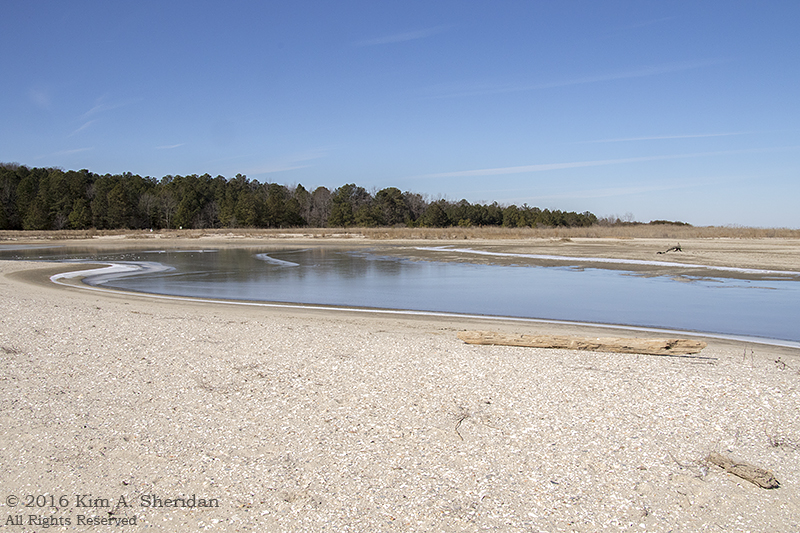
160214_MD Fossil Hunting_0240acsThe beach was unlike anything we’d seen before. Hundreds of yards wide, peppered with large pools and stands of beach grasses.

We walked for a long way right at the edge of the water, looking for fossils and teeth. Trillions of sharks’ teeth? Nope.

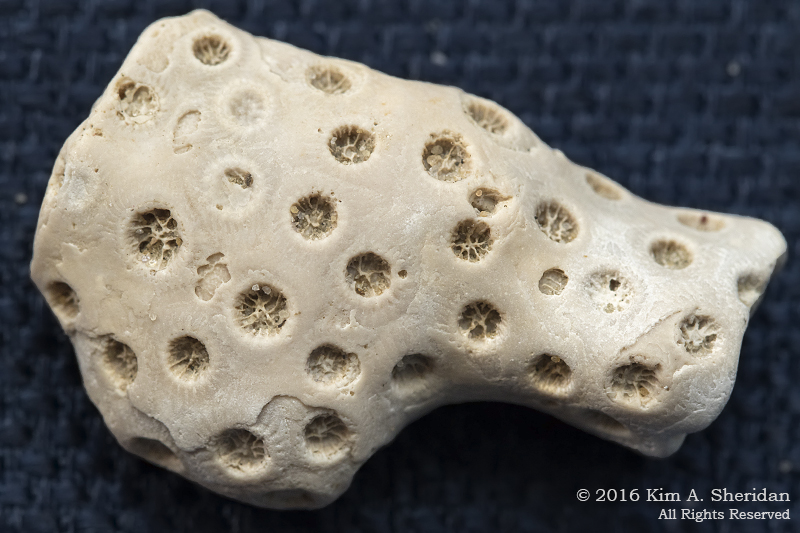
160302_MD Fossil Hunting_1612acs copyWe did find a few of these fossilized corals, which I photographed at home later.

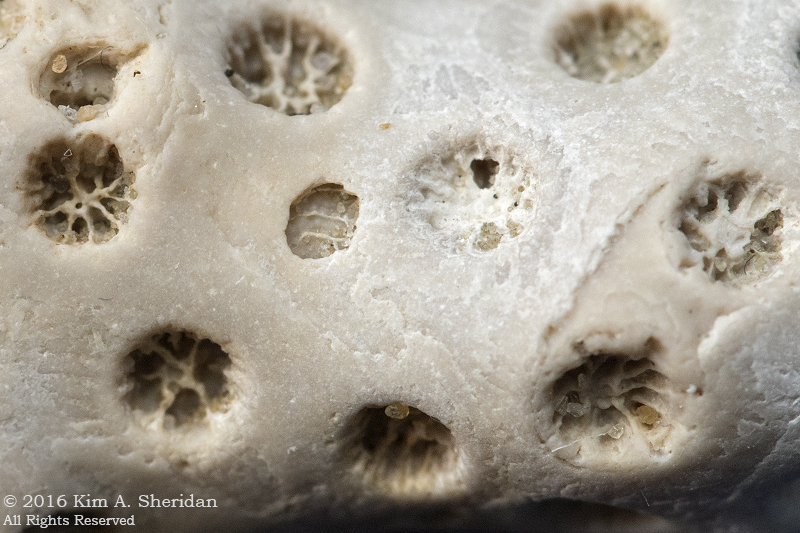
160302_MD Fossil Hunting_1613acsHere’s a close-up of the coral.

160214_MD Fossil Hunting_0193acsThe cliffs south of us were dramatic. Even from a distance, the striations were obvious. It was also obvious that I’d made a miscalculation in suggesting the afternoon for this trek. I’d hoped it would be warmer. But the afternoon sun left the cliffs in deep shade, and none of my photos do them justice. Mistake #2.

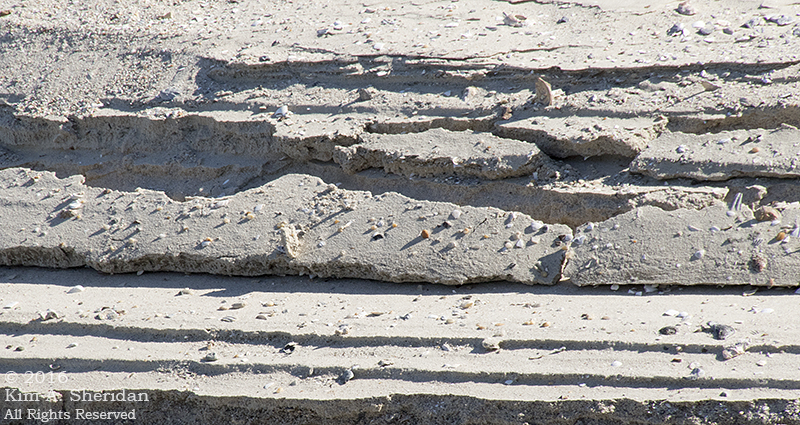
160214_MD Fossil Hunting_0246acsAn island of terraced sand looked enticing. Surely there are shark teeth in those layers? But it was out of reach across the water. We’ll never know.

160214_MD Fossil Hunting_0323acsWe found rocks with fossilized clam and scallop shells embedded in them. Pretty cool.

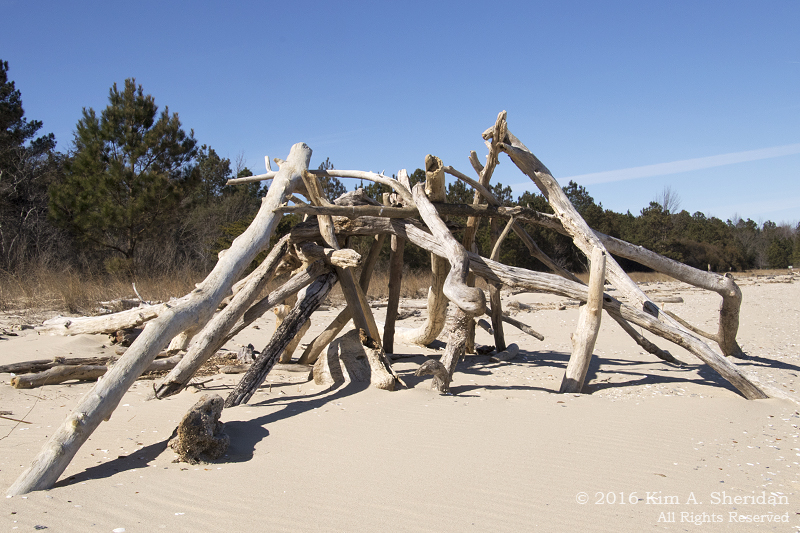
160214_MD Fossil Hunting_0262acsBeach sculpture. Again, humans’ need to create art wherever they are amazes me.

In our exploration of the beach did we find trillions of sharks’ teeth? Nope. Not one.

160214_MD Fossil Hunting_0310acsCoral, yes. Clam shells imbedded in rocks, yes.

Sharks’ teeth, no.

160214_MD Fossil Hunting_0157acsNo matter. We explored a beach unlike others we’ve seen, saw some honest-to-goodness fossils, and marveled at the massive Calvert Cliffs.

Frigid fossil fun!