Old Man Winter

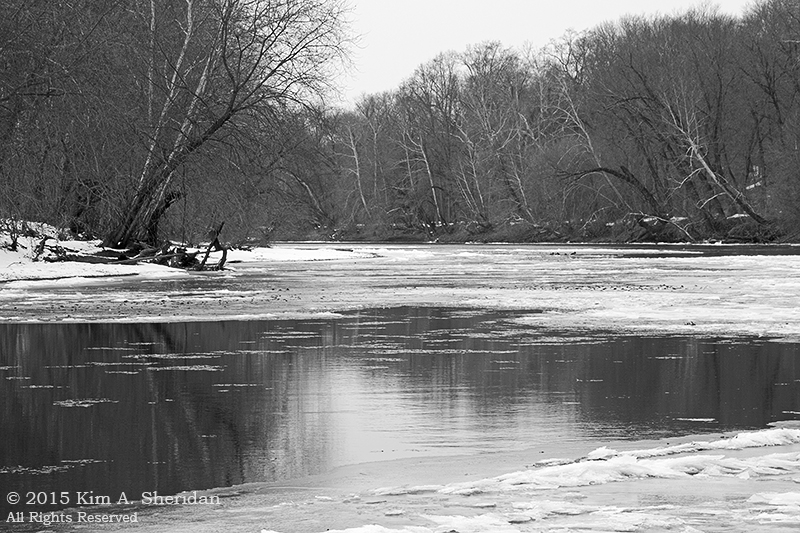
150201_PA VF Betzwood_4847acs bwThe Winter Queen, beautiful and imperious, does not always condescend to trifle with us in person. Last year we were bound in her glacial grip, locked in snow and ice for weeks at a time. This year Her Majesty’s attention has been drawn elsewhere, and she has delegated her duties here to her henchman, Old Man Winter.
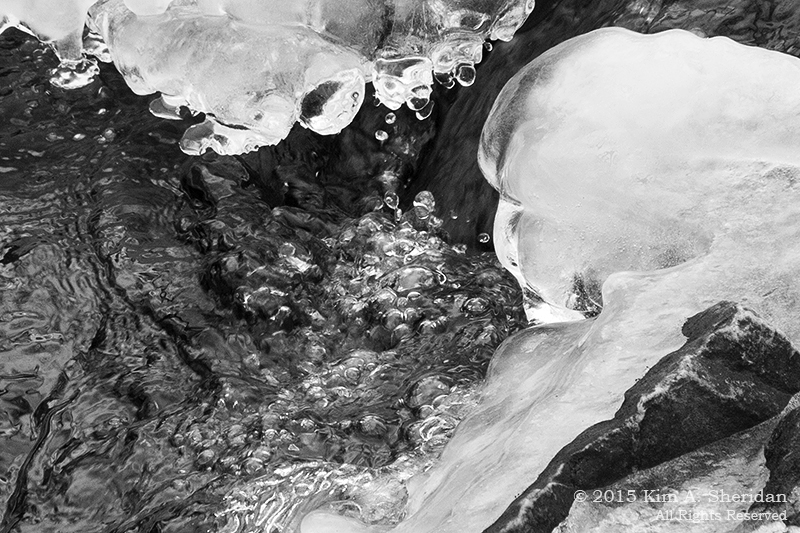
150201_PA VF Betzwood_5040acs bwOld Man Winter has an artist’s fickle temperament; warm days follow cold, and snowfalls are light. Not that we escape his touch. Rivers freeze, trees shiver when he passes by. His palette is white and gray, and his brushes are the biting winds that accompany the most frigid days. See how he blows water into ice!
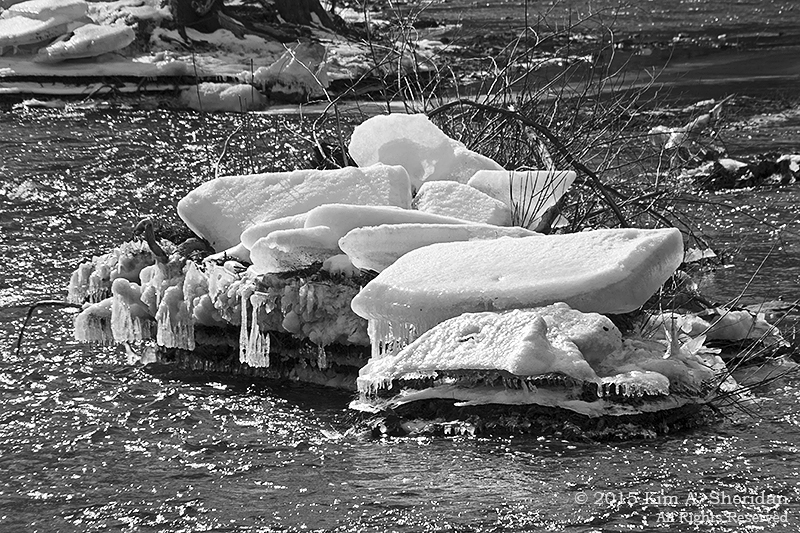
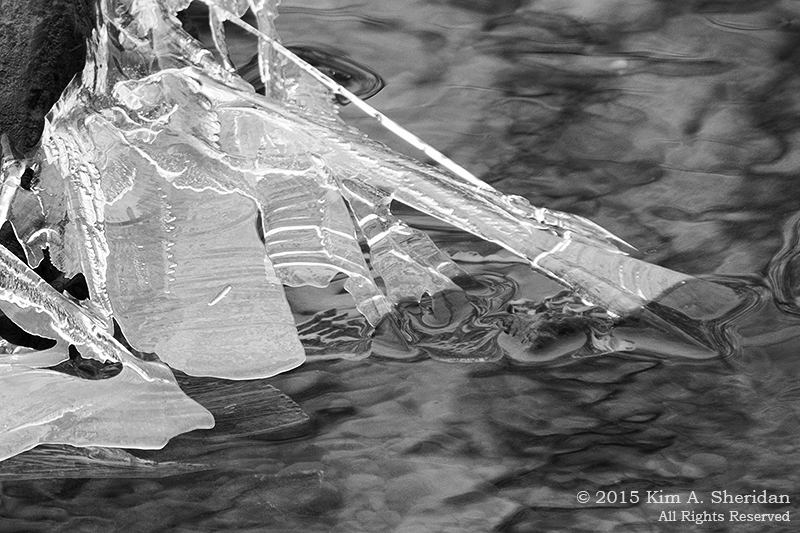
150207_VFAS Mill Grove_5313acs bwIslands in the stream, bearing not palm trees, but ice blocks and frozen stalactites.
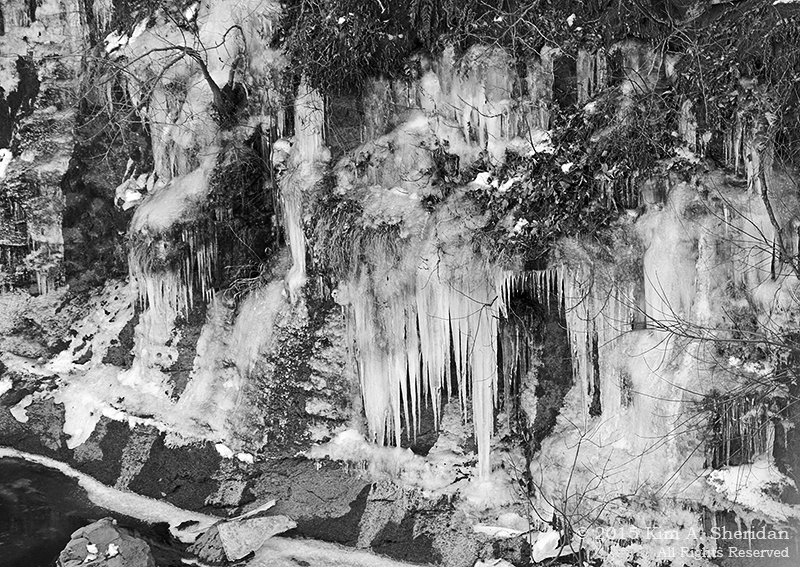
150207_VFAS Mill Grove_5375acs bwIce forms, melts, then freezes again, into ever more fantastical shapes. Icicles may drape an entire cliffside in cascading curtains…
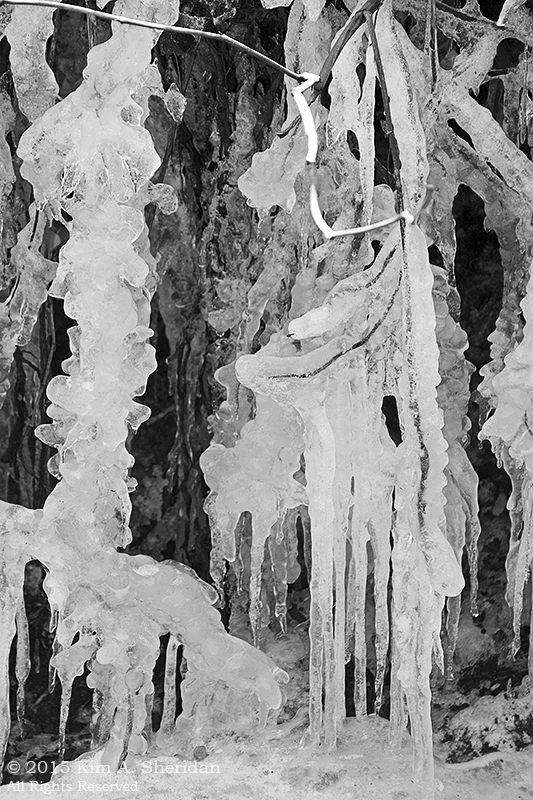
150207_VFAS Mill Grove_5369acs bwOr dress twigs in chunky nuggets like rock candy on a string.


150201_PA VF Betzwood_4865acs bw

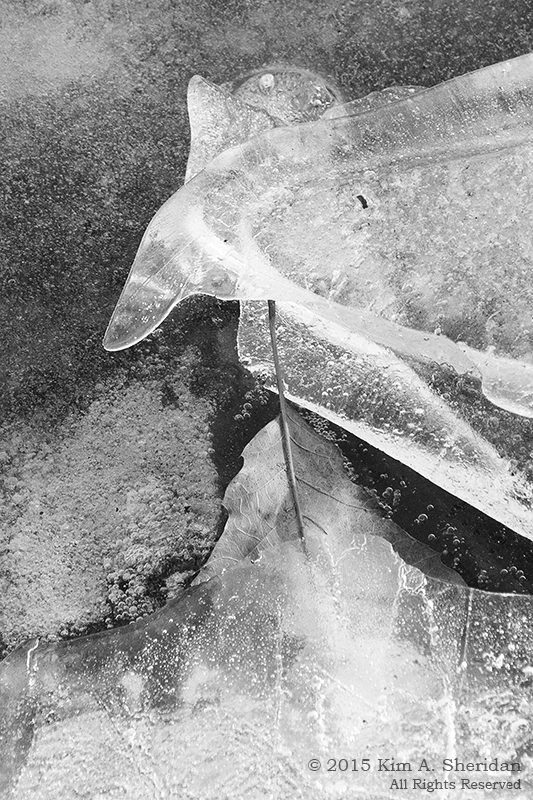
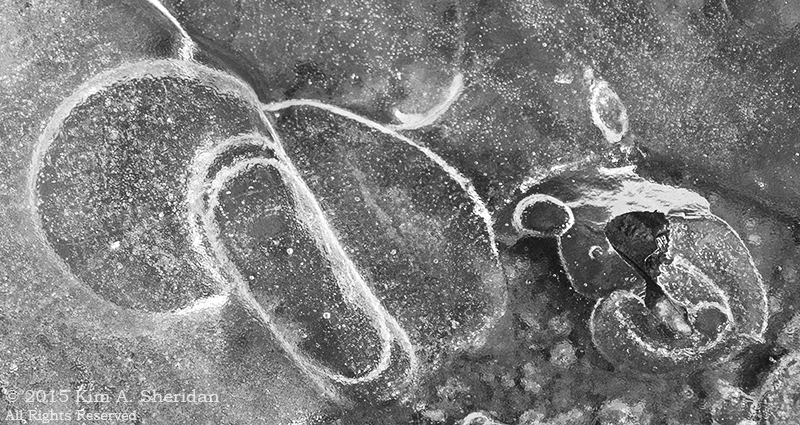
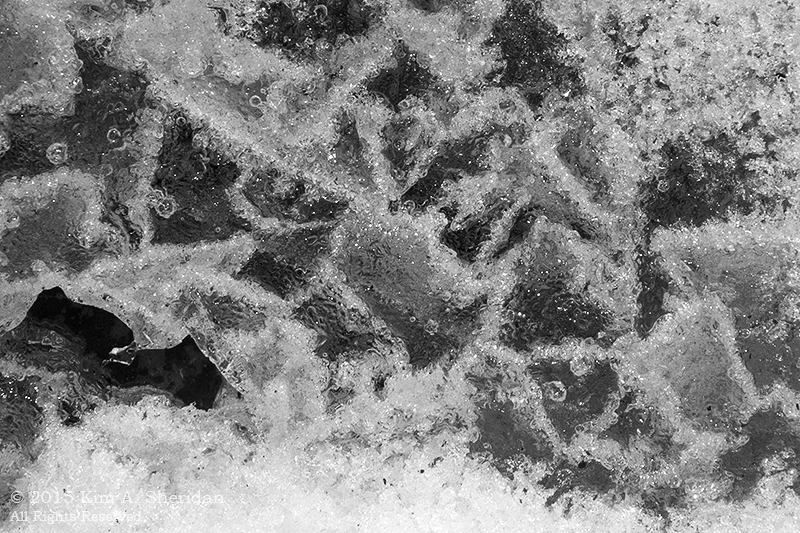
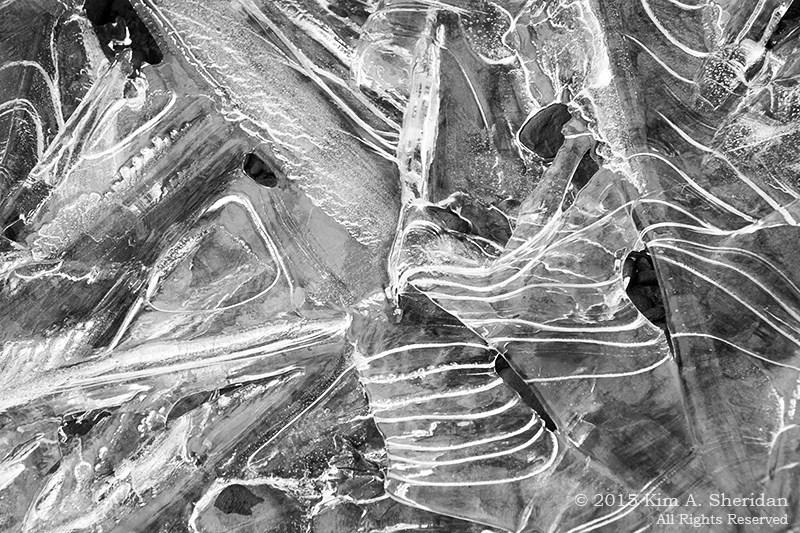
150207_VFAS Mill Grove_5251acs bwOld Man Winter paints in abstractions made of seemingly random lines, textures and patterns.

Look closely at his artwork; perhaps you will see waves crashing upon the shore, doves in flight, a duck swallowing a fish…
150207_VFAS Mill Grove_5242acs bw150201_PA VF Betzwood_4896acs150207_VFAS Mill Grove_5206acd bw150201_PA VF Betzwood_4866 acs2 bw

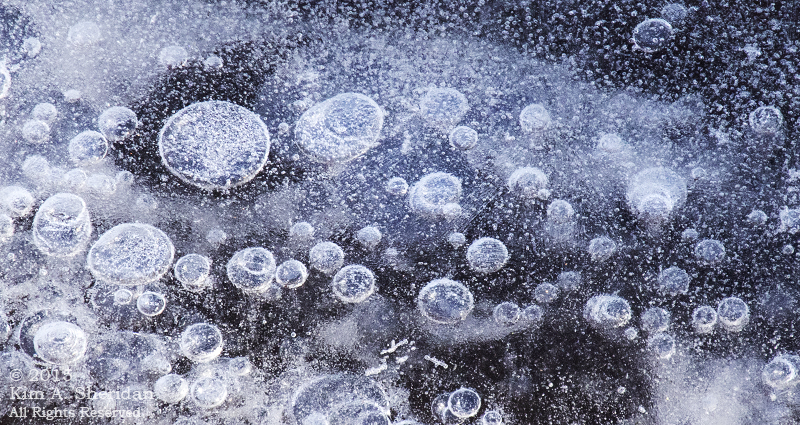
Look! Old Man Winter is feeling frisky!150207_VFAS Mill Grove_5236acsOn a sunny day, even the old master is tempted to reach for a spot of color. In a playful mood, he blows ice bubbles in cobalt and blue.
Can Lady Spring be far away?

Weird and Wonderful Plants

141225 Longwood Gardens_3410acsThe Conservatory at Longwood Gardens is a welcome respite from the dark and dreary days of winter. Outside the landscaped grounds are cold, bleak and brown. Step indoors and we are welcomed with warmth and color.

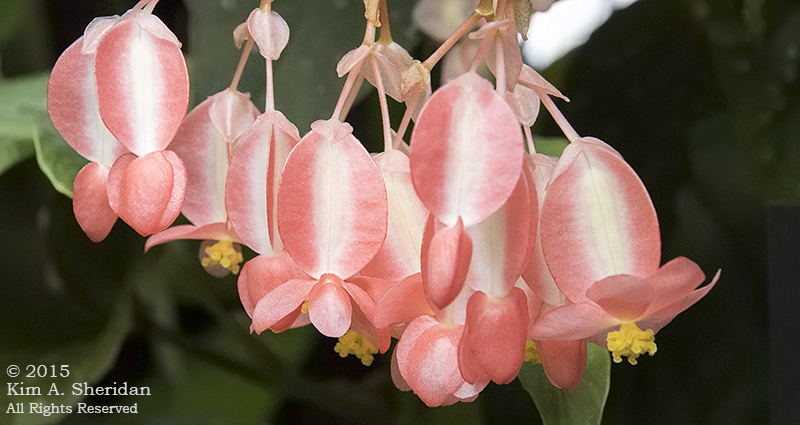
141225_Longwood Gardens_3581acsBeautiful flowers are everywhere. Some dangle in delicate shades of blush…

141225_Longwood Gardens_3584acsWhile others offer a brighter palette.

141225 Longwood Gardens_3511aPast the Main Conservatory and the Exhibition Hall, the Silver Garden and the Banana House, each step deeper into the labyrinth of corridors and rooms reveals ever more exotic plants. Bird of Paradise.

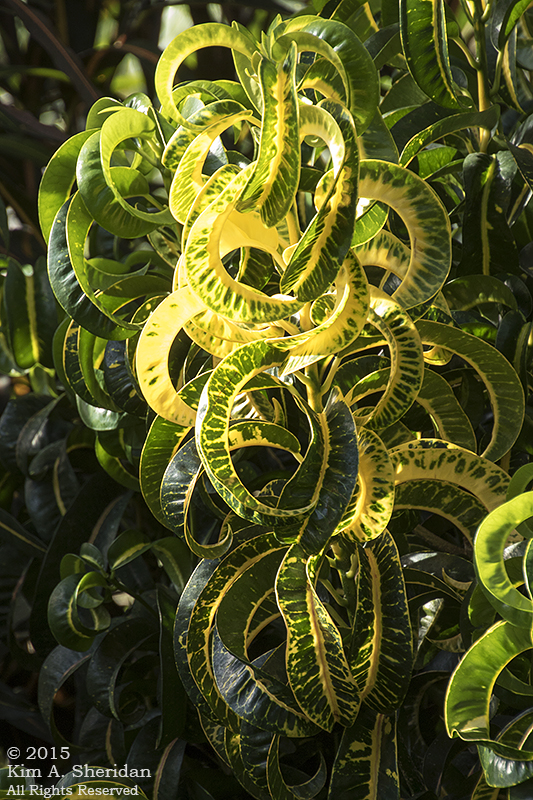
141225 Longwood Gardens_3503acsRound the bend and we are met with a shaft of sunlight illuminating some unusual leaves. Ram’s Horn Croton.

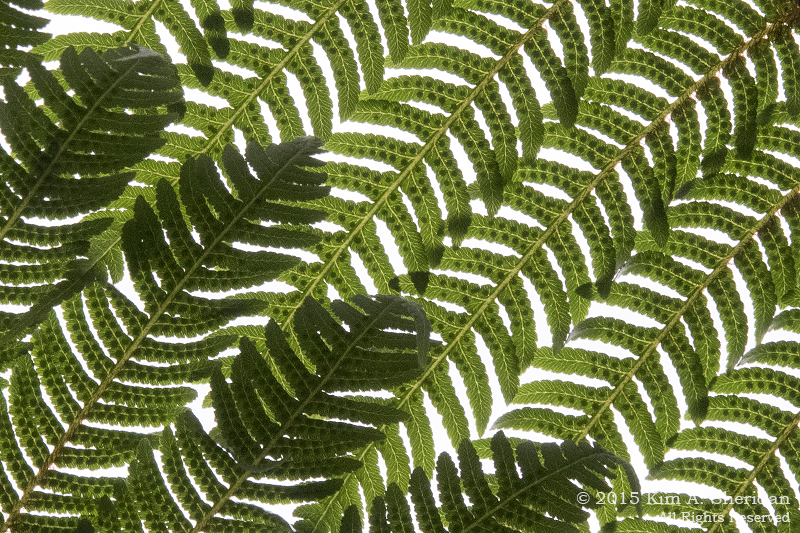
141225_Longwood Gardens_3564acsWalking into the Fern Passage brings us among some truly weird and wonderful plants. Look up! See the intricate pattern made from the spore-dotted fronds of the Australian Tree fern that towers over your head.

141225_Longwood Gardens_3560aTurn another direction, and we find ourselves face to face with suspended carnivorous pitcher plants. Smaller ones share a planter with tiny Venus Flytraps.

141225_Longwood Gardens_3592acsWait – our favorite plants seem to be missing. Where are the club mosses? This is Longwood Gardens; they simply have to be here.

141225_Longwood Gardens_3600acsAnd they are. In fact, we were looking right at them. A helpful staff botanist is happy to show us what we missed.

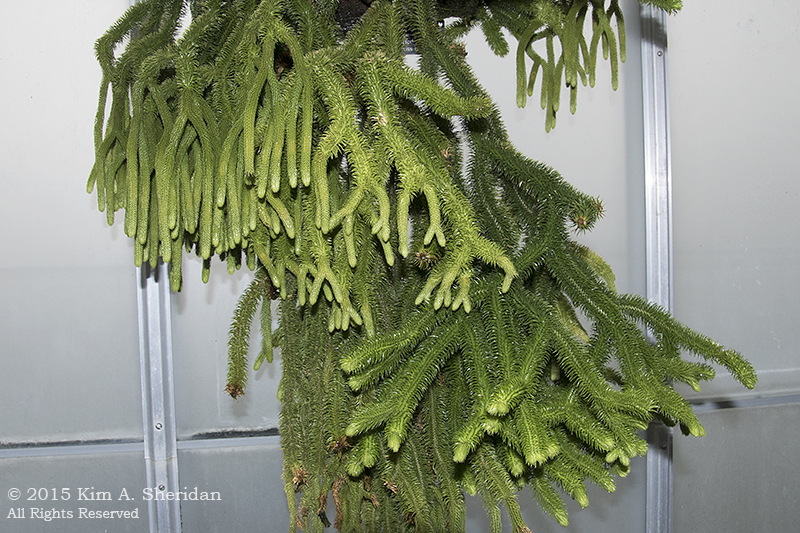
141225_Longwood Gardens_3595acsNot mosses at all, club mosses are vascular plants. We are familiar with Lycopodium, which resembles a teeny tiny Christmas tree, but on this Christmas day, we are introduced to Huperzia, sometimes known as fir moss.

141225_Longwood Gardens_3594aThese particular Huperzia are called Tassel Ferns.

141225_Longwood Gardens_3550aPassing through the Cascade Garden, we find ourselves in the Rose Alley, which speaks to us of both spring gardens and tropical climes. Water droplets glisten on colorful hibiscus.

141225 Longwood Gardens_3531aOutside it is cold and windy, but inside the Conservatory of Longwood Gardens winter dreams blossom into weird and wonderful life.

Duck, Duck, Sandpiper

150110_NJ Barnegat Light Harlequin_4278acs2It’s become an annual tradition now, the winter pilgrimage to Barnegat Light to see the winter waterfowl. Every year it gets colder and windier, and every year the jetty gets longer.

Or at least it seems longer! Especially this year, as it was my first time picking my way from rock to rock with a tripod on my shoulder. I’m not the most sure-footed of creatures, as my friends will be happy to tell you. But I also don’t have the steadiest of hands, so having the tripod was a big help.

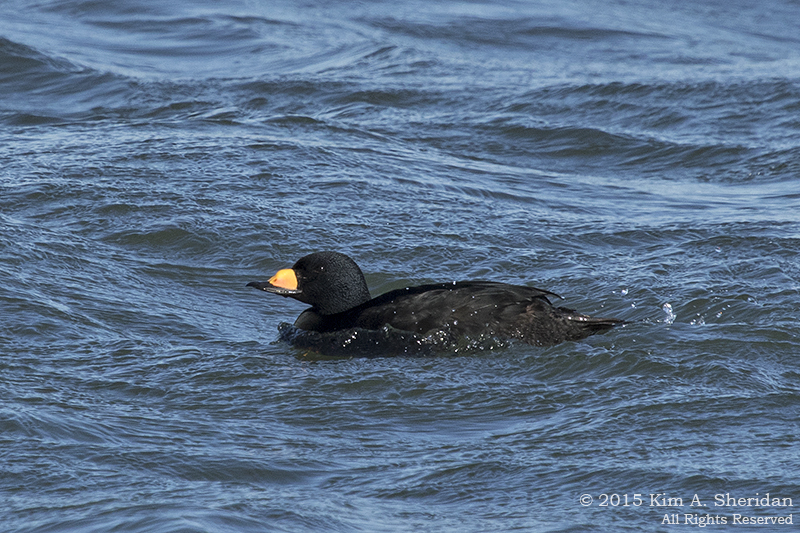
150110_NJ Barnegat Light Scoter_4124acsThe day started with a Black Scoter near the Lighthouse. Hmmm… Dark bird on dark water. Helpful of him to have a bright yellow bill.

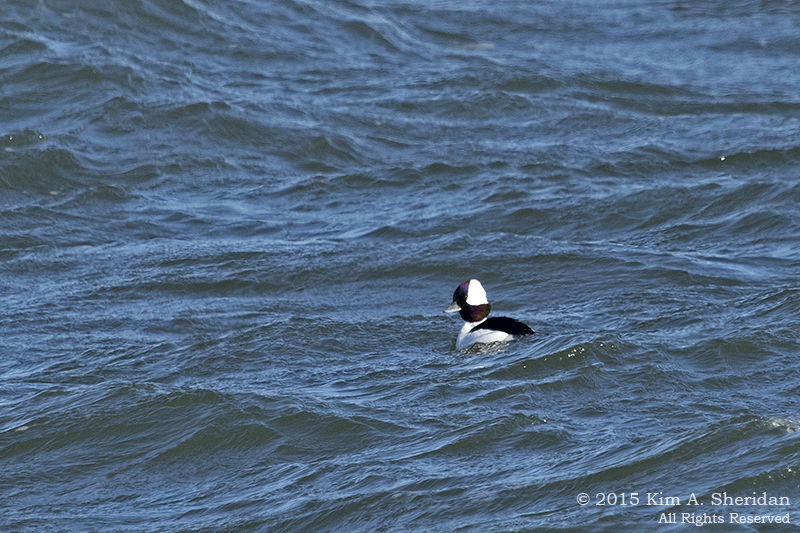
150110_NJ Barnegat Light Bufflehead_4186aA small duck bobbed alone in the big bay. I was a little surprised to see this Bufflehead out here in the Inlet. I’m used to seeing them in fresh water lakes. But they frequent the salty bays too.

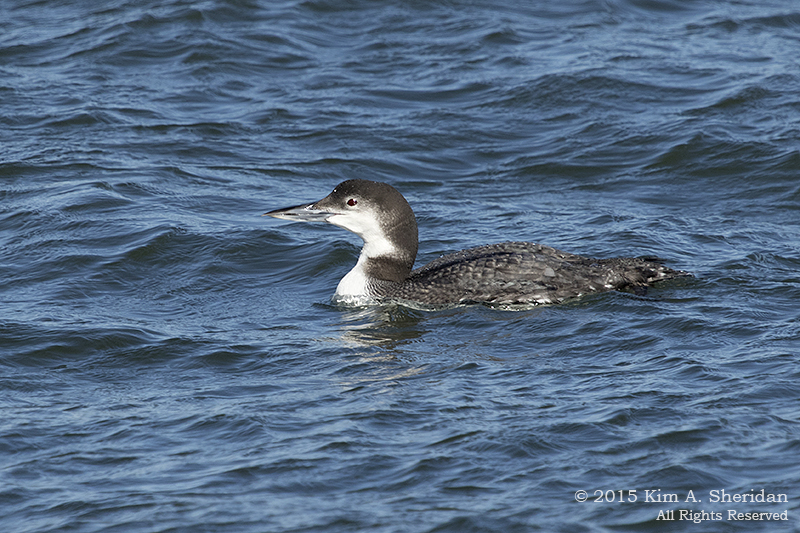
150110_NJ Barnegat Light Loon_4220acsCommon Loon. Someday I hope to see them in full breeding plumage, and hear them call.

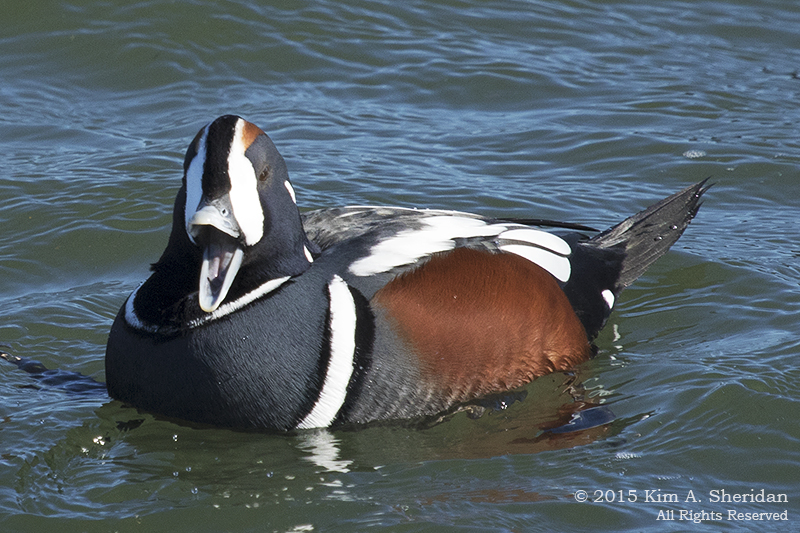
150110_NJ Barnegat Light Harlequin_4292aThe birds we came to see are the Harlequin Ducks. Two males swam near the rocks at the end of the jetty. There were only four Harlequins there this day, two males and two females. We didn’t mind. Quality over quantity.

150110_NJ Barnegat Light Harlequin_4284It was 22° with winds gusting over 20 mph. I wore heavy wool socks, long underwear, lined pants under rain pants, a turtleneck, fleece AND insulated vest under a down jacket, a scarf, two hats and three pairs of gloves, with hand warmers inside. This duck thought I was the funniest thing he’d seen in awhile.

FUN FACT: Why are the ducks comfortable swimming in the frigid water while we humans are shivering on shore?

It starts with their feathers. Next to the skin lies a thick insulating layer of down feathers. Above the down are layers of interlocking and overlapping feathers that leave a minimum of bare skin exposed to the elements. The birds attend meticulously to feather maintenance with liberal doses of preen oil.150110_NJ Barnegat Light Harlequin_4377acs3

Look closely at a duck after it surfaces from a dive, and you will see the water beading up and running from its waterproof feathers like rain from a freshly waxed car.

Ducks’ feet and legs lack feathers to protect them, and could be a dangerous source of heat loss. But water birds have evolved to combat this by utilizing a countercurrent heat exchange system. As hot blood in the arteries flows into the upper leg, it transfers heat to the cold venous blood returning from the feet. Blood that reaches the feet is much colder than the body, close to the temperature of the water in which the duck swims, but the blood that returns to the heart is warm. This heat exchange minimizes heat loss from the legs, while maintaining a healthy body core temperature. Cold feet, warm heart!

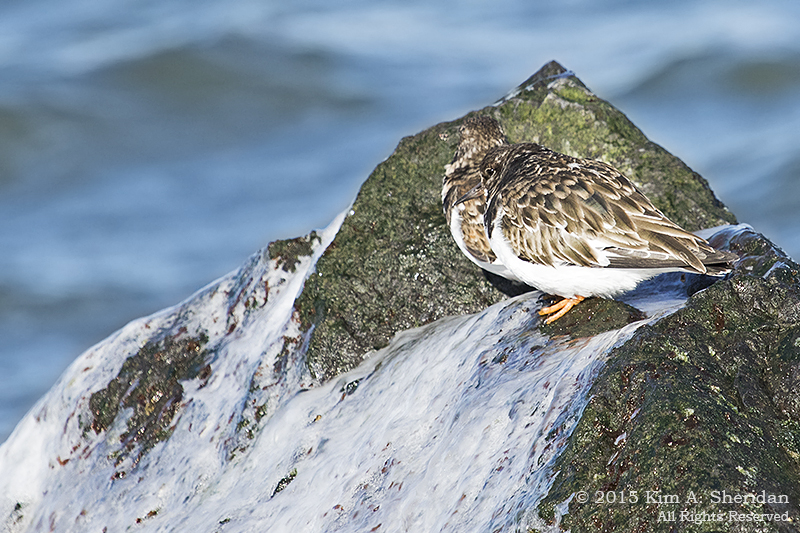
150110_NJ Barnegat Light Turnstone_4337acsSandpipers were in attendance as well as ducks. Two small gatherings of Ruddy Turnstones perched precariously on the icy rocks.

150110_NJ Barnegat Light Turnstone_4416acsYou put your right foot in, you put your right foot out…

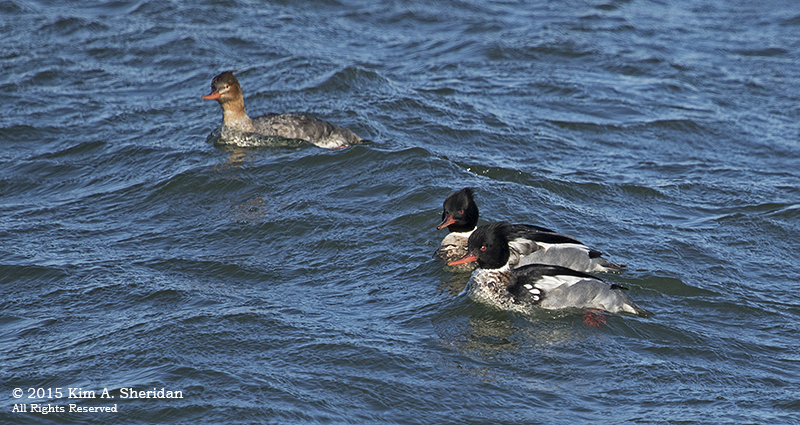
150110_NJ Barnegat Light Merganser_4578acsBack near the Lighthouse were three Red-breasted Mergansers, one female (rear left) and two males.

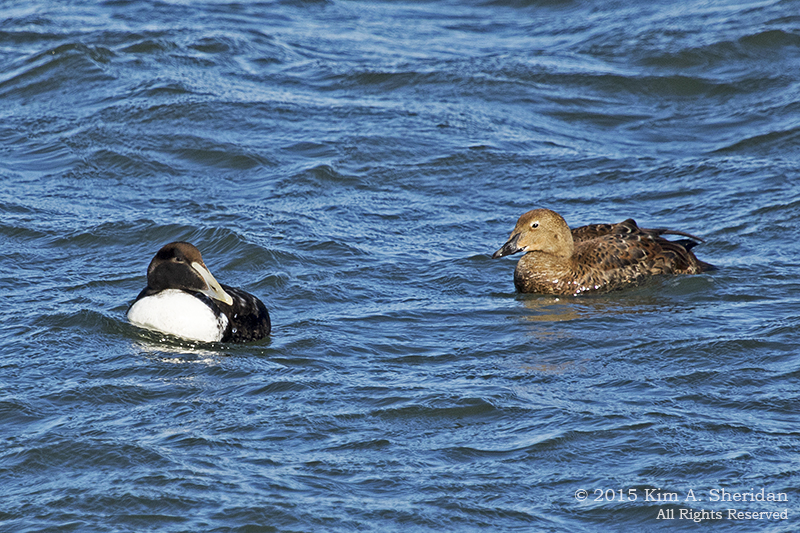
150110_NJ Barnegat Light Eider_4581aAccompanying the Mergansers were a young male Common Eider (left) and a female King Eider. The King Eider was a new bird for me. Common Eiders I’ve seen before, but only females at a distance. Seeing both this close was a treat. I’d have been happy with Eider one!

150110_NJ Barnegat Light Turnstone_4465acsTime to snuggle in somewhere warm at the end of a cold day at Barnegat Light.

Winter’s Edge

141122_NJ Stone Harbor Point_1513acsLong gone are the warm days of summer, days when families crowded the beach with their beach blankets and umbrellas, their sand pails and horseshoe sets. The only creatures frolicking in the surf are ducks. The stiff ocean breeze, so welcome when the temperature was 80°, is a torment at 35°. Autumn lingers, but teeters on the edge of winter. The beach is empty.

Of humans, but not of wonders.

At last, the beach is ours!

141122_NJ Stone Harbor Point_1563acsFrom late fall to mid-spring, the Jersey Shore is ours to explore, empty of crowds and noise. Now there are plenty of treasures to collect, shells and rocks and sea glass, safe from the many feet and the mechanical beach-sweepers of summer.

141122_NJ Stone Harbor Point_1555acs2Lines of dune fencing stretch across white sand to the horizon.

141128_NJ Holgate_2948acsThe winter birds arrive at the Shore with the colder weather. Long-tailed Ducks bob in the waves. The females seem to have a lot to say to the pink-billed males.

141128_NJ Holgate_2706acsThis sparrow-like bird is a Snow Bunting.

141128_NJ Holgate_2774acsAs we walked along the beach at Holgate one November day, we kept seeing these odd tree sculptures. For a bit, we thought some enterprising soul had placed driftwood on end as an artistic expression. Then we realized that these were the broken stumps of dead trees, and we were walking amidst what once had been wooded dunes.

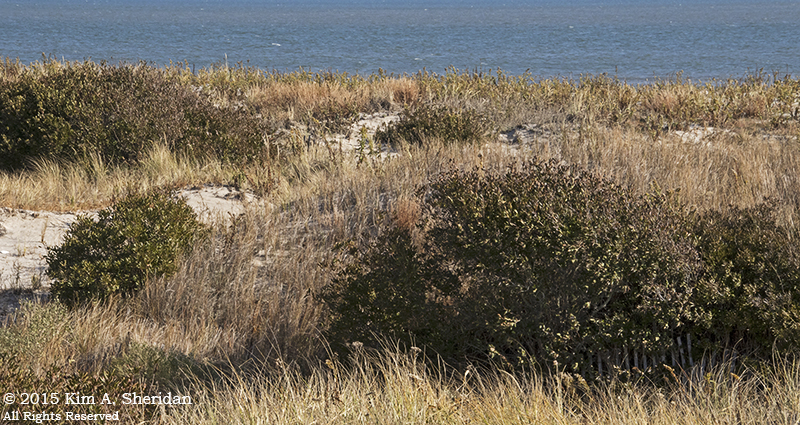
141128_NJ Holgate2902-5 Pan acsThe dunes at Holgate, looking west toward Barnegat Bay. The southern tip of Long Beach Island is a part of the Edwin B. Forsythe National Wildlife Refuge. It didn’t always look like this. Only a few years ago, it was a thicket of dune plants and shrubs. Then Superstorm Sandy paid a visit, inundating the entire area, breeching the island from bay to ocean in places. These weathered roots, trunks and branches are what are left of once vital vegetation. Devastated, but starkly beautiful.

FUN FACT: These plants were flooded with water, but died of thirst. Why? Fresh water flows easily into a plant through the tissues of the roots, a process called osmosis. But this was a saltwater inundation. Ever have a salt shaker gum up in humid weather? Salt absorbs water very easily, pulling water from the plants into the soil and leading to dehydration. It also interferes with the chemical processes by which a plant obtains nutrients. The combination of nutrient and water deficiencies has laid waste to the dune plants.
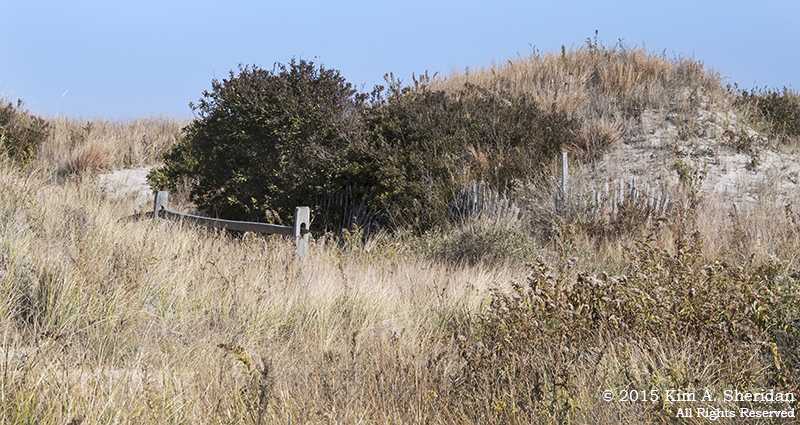
141122_NJ Stone Harbor Point_1480acsThis is what a healthy dune community should look like. Stone Harbor Point.

141122_NJ Stone Harbor Point_1520acsGood fences make good neighbors.

141122_NJ Stone Harbor Point_1489acsDune fences make good dunes, and if successful, good dune grasses and plants.

141122_NJ Stone Harbor Point_1552aGood fences make good backdrops for wildflowers, still abloom in mid-November.

141122_NJ Hereford Inlet_1646acsOne doesn’t have to go far from the beach to find woodland critters. The gardens at Hereford Lighthouse provide a fine place for squirrels to make a living.

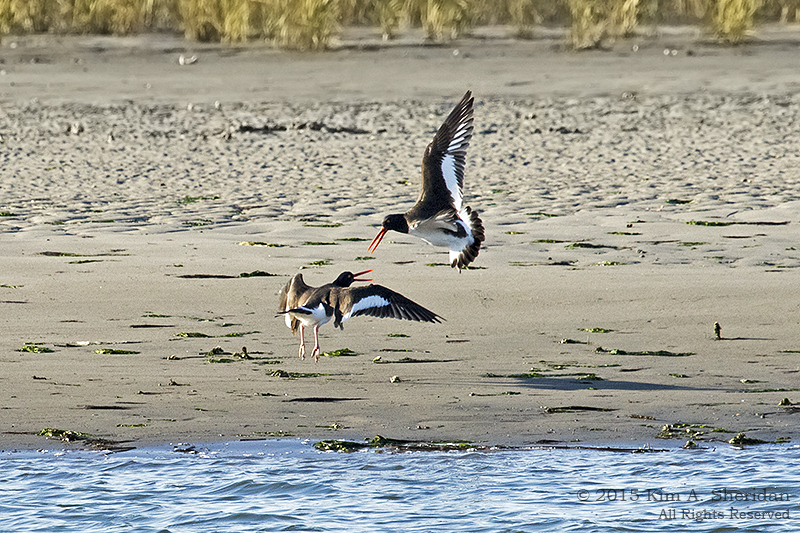
141122_NJ Nummys Island_1892acsIn the late light of day, a pair of American Oystercatchers squabbles.

Even on the edge of winter, wonders abound at the wild edge.

Junior Prom

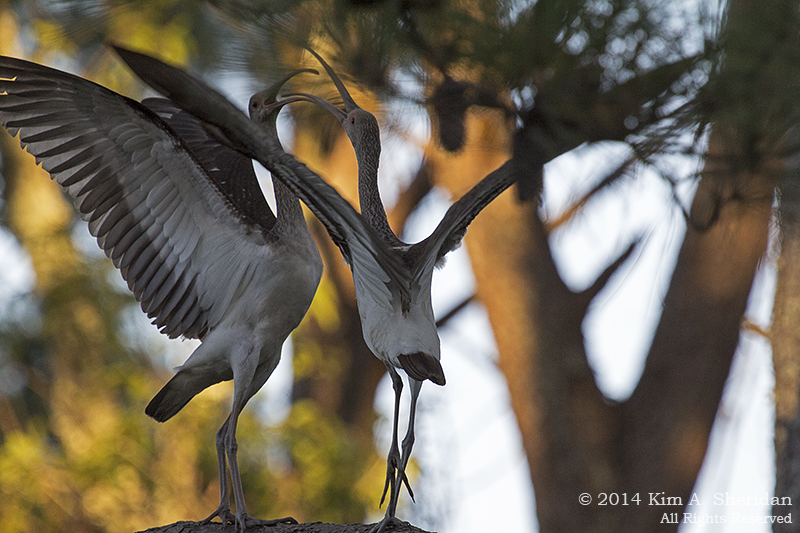
141017_Chincoteague NWR_9813acsIt’s prom season at Chincoteague National Wildlife Refuge.

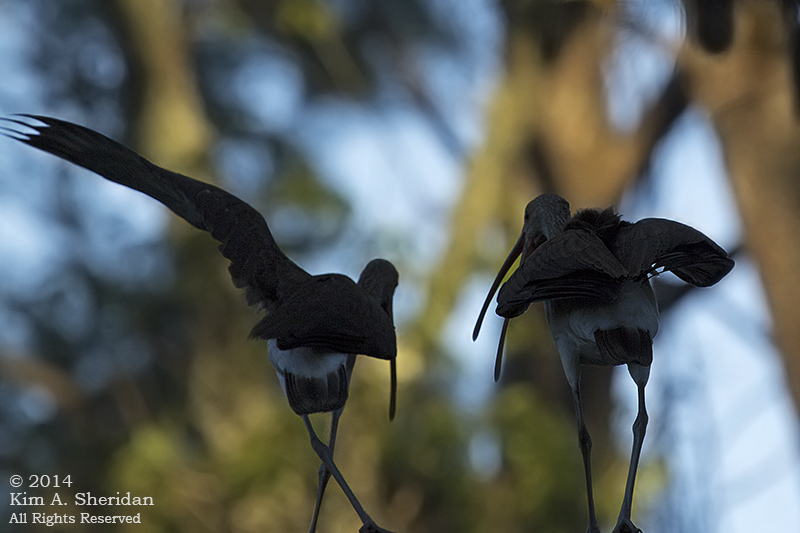
Fall is the time for young birds to gather in flocks and socialize. Like teenagers at the junior prom, they strut, preen and dance. Juvenile White Ibises show off their moves.

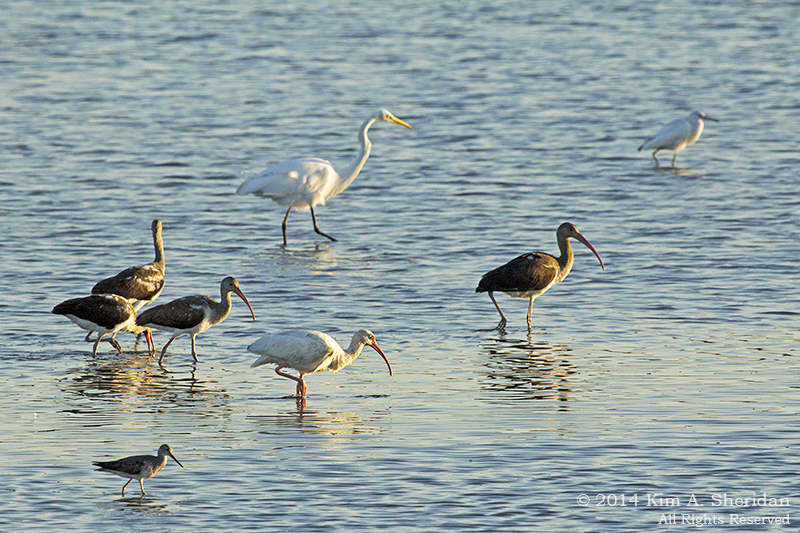
141018_Chincoteague NWR AM Swan Cove_0168aJuvenile birds have their own fashion style; they never dress like the grown-ups. White Ibis favor brown; Little Blue Herons wear white. It’s all so confusing. Especially when the adult chaperones are around. Here’s an adult White Ibis in white plumage with four young Ibis. In front is a Greater Yellowlegs; center rear is a Great Egret, and all the way in the back a juvenile Little Blue Heron.

141018_Chincoteague NWR AM Swan Cove_0464acsA Tri-colored Heron paces the dance floor.

141017_Chincoteague NWR_9868acsIn the evening the birds come to the woods along Beach Road. Loblolly pines offer a nice perch to soak up the late day sun. Twelve Snowy Egrets, three White Ibis… and a partridge in a pine tree?

141017_Chincoteague NWR_9649acsA shy young Black-crowned Night-heron waits for a dance invitation.

141018_Chincoteague NWR_0849axsDouble-crested Cormorants hang out in the small stream that bordered the road. Somebody’s gotta handle the refreshments.

141018_Chincoteague NWR_0841aGreat Blue Heron. There are a lot of wallflowers at this prom.

141017_Chincoteague NWR_9753acsThe highlight of the evening is the crowning of the Prom King and Queen. This year the honor goes to a pair of White Ibises.

141017_Chincoteague NWR_9784acsProm pictures are de rigueur.

141017_Chincoteague NWR_9816acsTime to take a bow. It’s been some enchanted evening!

Gorgeous

141028_HNWR Autumn_2271acsWhat’s this? Has Lady Autumn been playing in her wardrobe again?

141109_Nockamixon Fall Camping_3230aIn the manner of all divas, this elusive elf has made us wait for her appearance. At last she has graced the stage. First to feel the touch of her hand were the mountains and high hills. Haycock Mountain wears Her Ladyship’s colors along the shimmering blue shores of Lake Nockamixon.

141025_Hawk Mountain_1962aHawk Mountain is similarly adorned. One can do worse than to sun oneself on an outcropping of Tuscarora sandstone, watching while raptors journey past, and vultures circle lazily over the slopes.

141025_Hawk Mountain_1840acsHere flies a courier of the autumn elf. A Red-tailed Hawk wings its determined way south on a mission of migration.

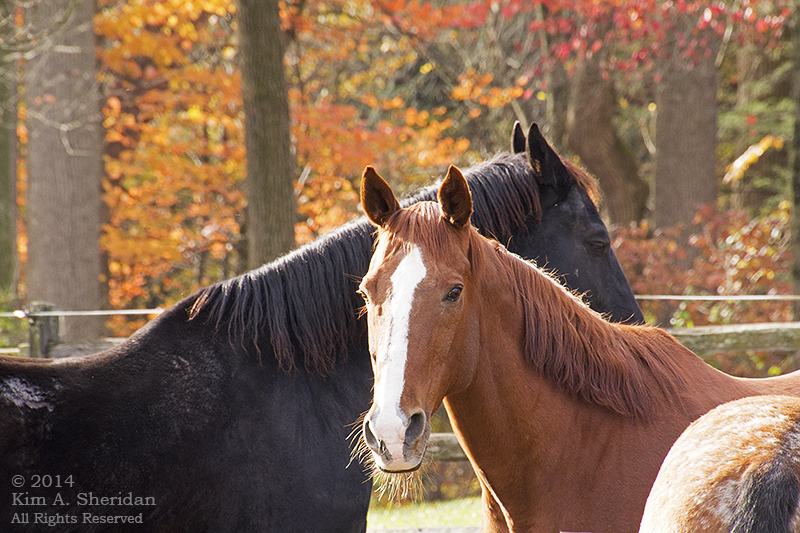
141031_Wissahickon Autumn_2458aHer Ladyship’s steeds soak up the sunshine on a fine autumn day.

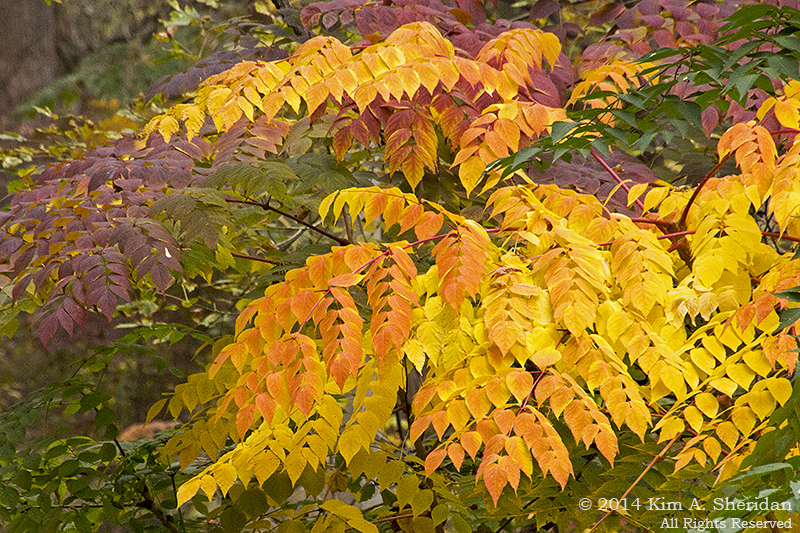
141031_Wissahickon Autumn_2667acsFun Fact: The Summer Queen bedecks herself in leaves of green, while Lady Autumn chooses golden yellows, fiery reds and blood-deep purples. Yet these are in fact the same leaves. Why do they change color? Like much in life, it has to do with food. Plants use the chemical chlorophyll to make food from sunlight, a process known as photosynthesis. Chlorophyll gives leaves their green color. When the day shortens and sunlight fades in fall, the chlorophyll also fades. This reveals the yellows and oranges of the carotenoid pigments, which have been present all along. In addition, some trees produce anthocyanins in the fall, which turn leaves red and even purple. Leaves are vulnerable to freezing, so to protect the tree throughout the cold winter, the leaves close their veins and fall away.

141031_Wissahickon Autumn_2587acsLady Autumn samples many smaller stages before she is ready to take her act to Broadway.

The theater of choice this year is the Wissahickon Valley.

A wise choice it is indeed. The slopes of the deep gorge abound with trees that can best show off her finery.

She cannot help but admire herself in the mirrored surface of Wissahickon Creek.

141031_Wissahickon Autumn_2638aNo unblemished mirror is this Creek. All along its course are boulders of Wissahickon schist, smoothed and weathered with time. Far from detracting from Her Ladyship’s beauty, they seem somehow to enhance it.141031_Wissahickon Autumn_2885a

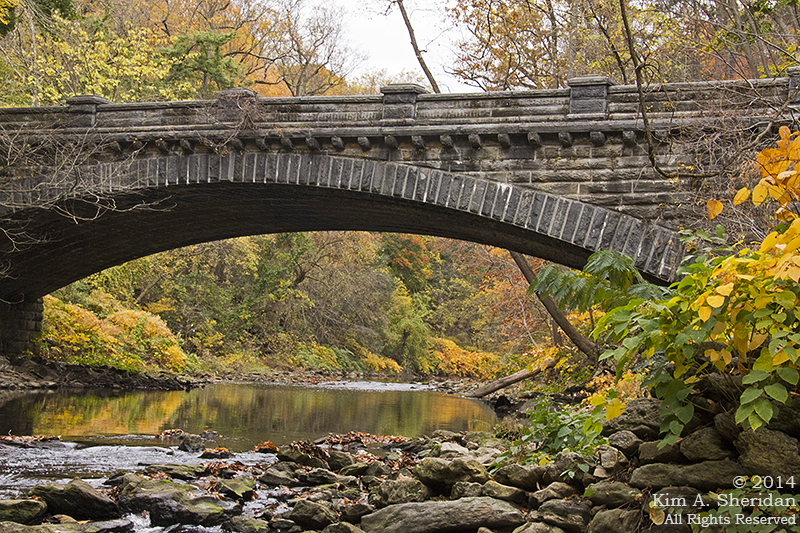
141031_Wissahickon Autumn_2792aAs do some creations of Man. The Bluestone Bridge was built in 1896 to carry travelers across the creek to the Lotus Inn. The old roadhouse is long gone, but the bridge remains.

141031_Wissahickon Autumn_2934aElsewhere, the Walnut Lane Bridge provides a more modern backdrop to Lady Autumn’s colorful dance.

141031_Wissahickon Autumn_2849acsNow the days grow short, and the hounds of the Winter Queen can be heard baying throughout the woods.

Lady Autumn’s entourage finds much preparation needed before the curtain closes.

141114_7D First Shoot_0058 acs copyThe smallest of her footmen searches busily through crimson raiments worn and then discarded. “There’s an acorn in here somewhere, I just know there is!”

Soon the last of Autumn’s finery, discarded along the wayside, will fade to brown, to be gathered and taken away. Not to be rushed is our Lady, though; before ceding the stage, she will have her encore, one last turn along the Wissahickon, one last dance in the gorgeous gorge.141031_Wissahickon Autumn_2745acs

Watery New Horizons: Part II

141030_Lake OswegoLaunch_124522acsOh, the places we’ll go!

No longer tied to the land, limited in our vision to the edge of the shore. Now the whole watery world opens up before us, and we are free to explore each cove, each inlet, each river bend. Wildlife, once skittish, will meet our gaze with fearlessness and dance for our pleasure. Oh, the places we’ll go!

141009_New Kayak _132554aYup, I finally got my own kayak. Here she is still in the store. She’s officially a “Pungo” model, but I have dubbed her Calypso, in honor of explorer and conservationist Jacques Cousteau.

141011_New Kayak_9248aReady to go home. The first thing everyone says is “It’s the same color as your car!” As if I would get anything other than blue. Blue, the color of the clear sky, azure butterflies, bluebells, and blueberries. Blue, the color of water…

Oh, the places we’ll go!

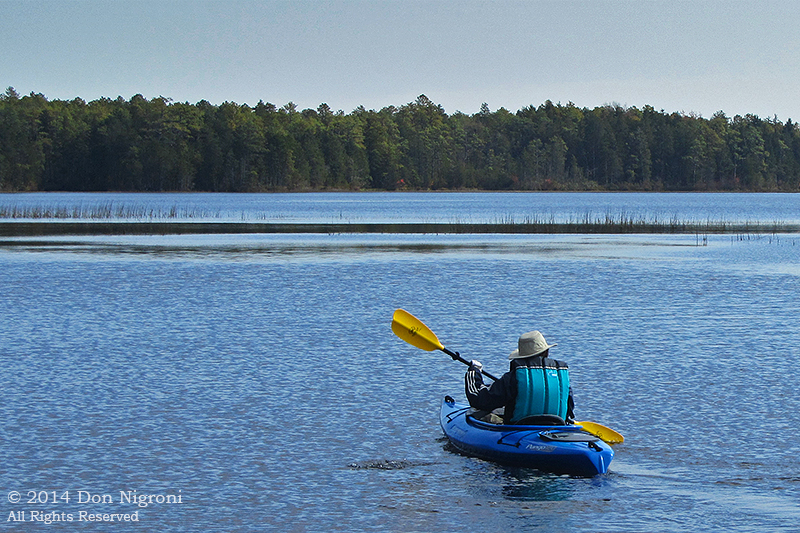
Like Lake Oswego in the Pine Barrens, for Calypso’s maiden voyage on a cool but bright October day.

141030_Lake Oswego Kayak Launch_2080aUnlike friends Don and Robb, I chose a hard-shell kayak over an inflatable model. No PUMPA-PUMPA-PUMPA for me. I just have to lift a 50 pound boat onto and off my car. That turned out to be easy. Reaching the tie-down straps, however, is another story. Nice to have a handy-dandy stepladder available.

141030_Lake Oswego Kayak Launch_2094acsA journey of a thousand miles begins with a single paddle stroke.

141030_Lake Oswego Kayak Launch_2096acsI had the lake to myself. Unfortunately, finding a warm calm day on a weekend to get the three of us together had proven impossible. On Launch Day, Robb was at work. Though Don accompanied me to the lake, he declined to paddle.  Something about a new book. No worries. I enjoyed the peace and solitude and the chance to get to know my new craft.

Oh, the places we’ll go!

130615_Pine Barrens Marthas Furnace_3371 aAnd where might we three voyagers go? Why, there’s a world of possibilities! We might explore the Oswego River downstream from the lake that shares its name.

131026_Pine Barrens_9849aThe tea-colored water of the Mullica River in the Pine Barrens looks inviting…

130615_Pine Barrens Batsto_3230 aAs do Batsto Lake and River.

Oh, the places we’ll go!

130927_OC 51st Street_5847 aThe Jersey Shore is a treasure trove of bays, marshes and tidal creeks to explore, like this creek near Ocean City.

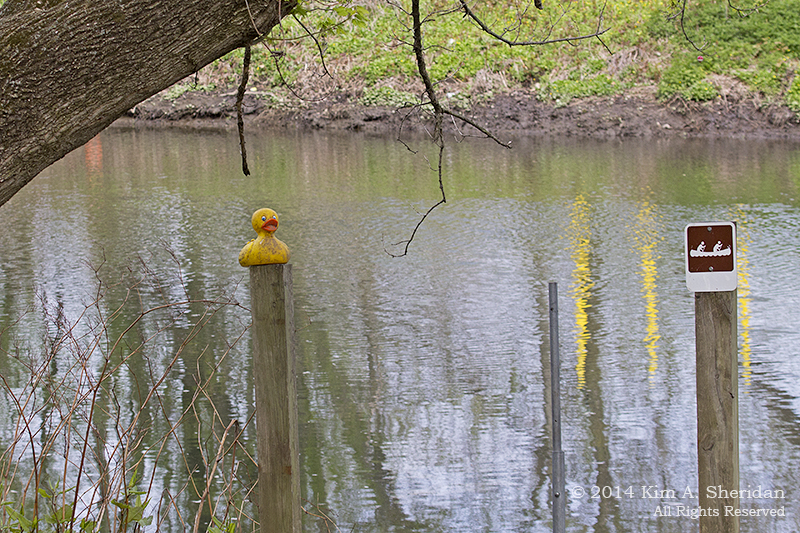
140422_HNWR Ducky_9986 acsOf course I want to explore Heinz Refuge on Darby Creek. The guys had already ventured out in their itty-bitty blow-up tub toys. On the canoe launch, their mascot awaited their safe return.

140511_Nockamixon Fishing Pier_8239 acsLake Nockamixon beckons, with Haycock Mountain looming on the watery horizon.

With the approach of winter, it’s likely that this would be my only trip with Calypso this year. But come next spring, I will be ready for adventure at the first hint of warmth.

For now, I have dreams, dreams of paddling…

Around the bend and out of sight, with a whole watery world shining on the horizon.

141030 Lake Oswego Kayak Launch_2097 acsOh, the places we’ll go!

Wild Horses

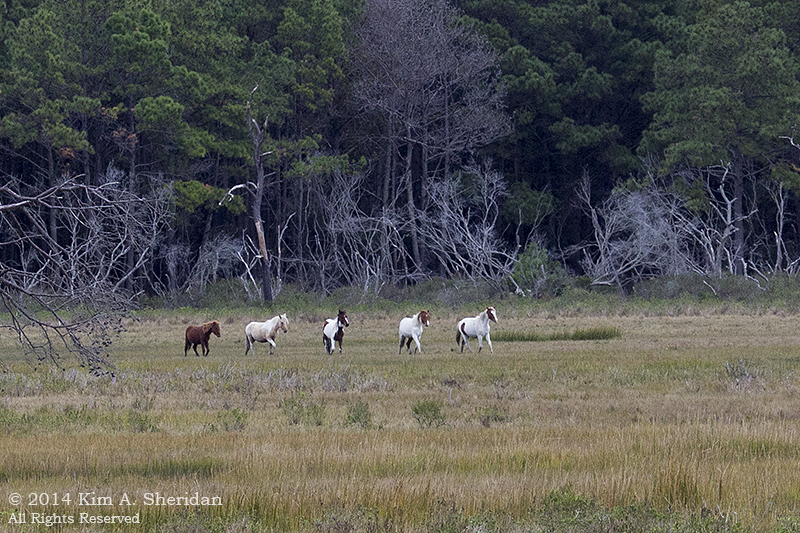
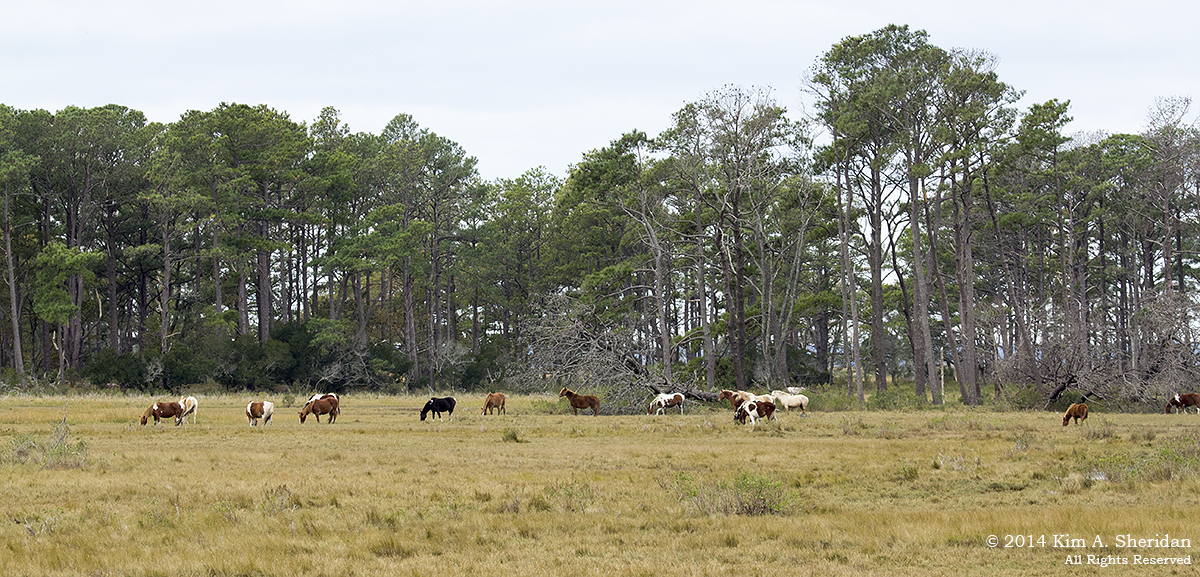
141017_Chincoteague NWR_9571 aThundering hooves pound the grasslands. Over the rise the herd appears, horses with manes flowing in the wind of their own passage. Their varied colors of chestnut and sorrel, palomino and pinto mirror the reds, tans and golds of the canyons and mesas that edge the Plains.

Say “wild horses” and this is the image that springs to mind, mustangs roaming the deserts and prairies, an echo of the Old West. Coastal salt marshes and maritime forests are not where you would expect to find these wild creatures. Yet the southeastern coast is dotted with small herds of ponies. One of the most famous of these herds lives in the Chincoteague National Wildlife Refuge, which is part of Assateague Island National Seashore in Virginia and Maryland.

141019_Chincoteague NWR Woodland Trail_1230 acsLocal legend says that the Assateague ponies are descendents of horses that struggled ashore from a shipwreck. More likely they are the offspring of tax-evaders! Farmers in the 17th century would turn their animals loose on the island to avoid the taxes levied on free-roaming mainland livestock.

141019_Chincoteague NWR Beach Road_1728Today there are two herds on Assateague Island. The northern Maryland herd is owned by the National Park Service, and roams free in the Assateague Island National Seashore. The southern Virginia herd is privately owned by the Chincoteague Volunteer Fire Department. Once a year, on “Pony Penning Days”, they are driven across the channel to Chincoteague Island. Many of the young foals are auctioned off before the herd is swum back to Assateague. This helps keep the horse population at a healthy level, and proceeds benefit the fire company.

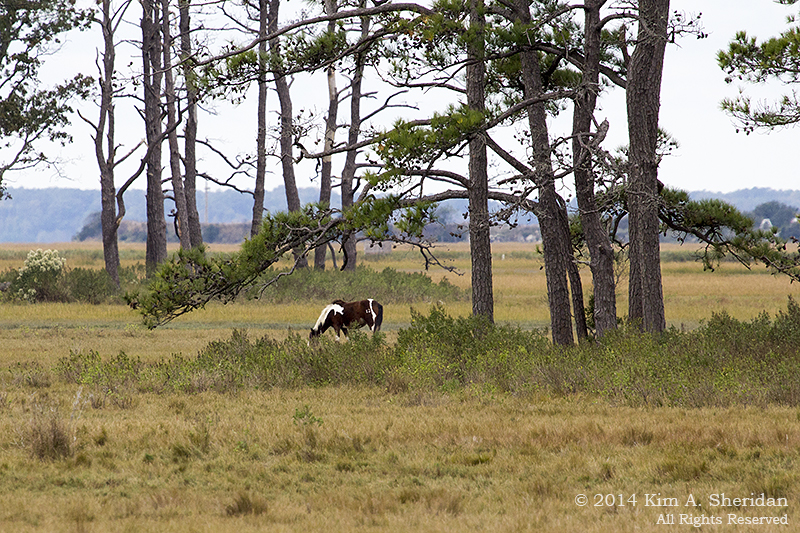
141019_Chincoteague NWR Beach Road_1742 aLone horse under a loblolly pine, the predominate tree of the maritime forest here.

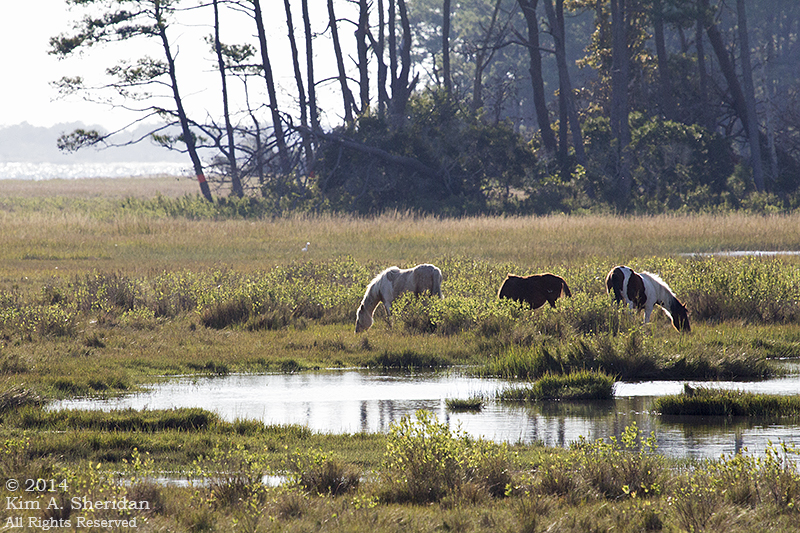
141019_Chincoteague NWR Woodland Trail_1226 acs2The wild horses live rough, no cushy stables for them. Cold stormy winters find them in the shrub thickets and woods. The moderate months of spring and fall are spent in the marshes. In summer, heat, humidity and hordes of biting insects drive them to the beach and into the water.

141019_Chincoteague NWR Woodland Trail_1331Dead trees and shrubs are everywhere, fascinating in their naked beauty. The salt marsh is a harsh mistress.

For the ponies, too. Most of my photos were of headless horses, their faces buried in the grass. They graze constantly. I thought their rotund appearance meant the ponies ate well. In fact, it’s just the opposite. Their diet of salt marsh cord grass and salt hay is abundant but poor in nutritional value. It’s also salty, which leads the horses to drink twice the amount of water a domestic horses would drink. Those round tummies are the result of water bloat.

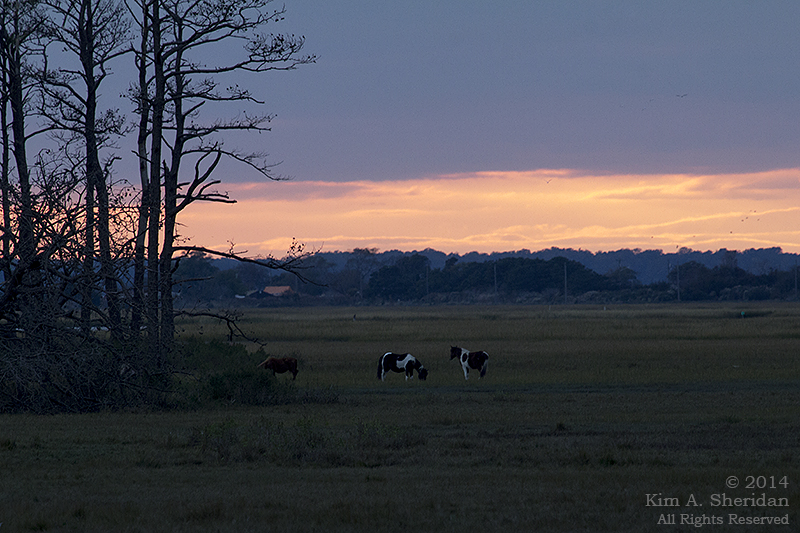
141018_Chincoteague NWR_0957 acsLike many children, I grew up on Marguerite Henry’s 1947 book Misty of Chincoteague, about Pony Penning Days. Little did I dream I’d someday get to see those wild ponies, grazing peacefully at sunset.

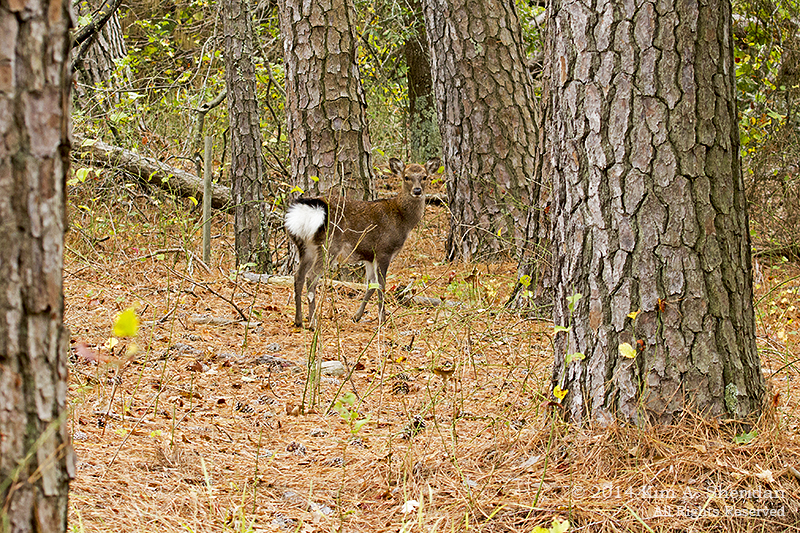
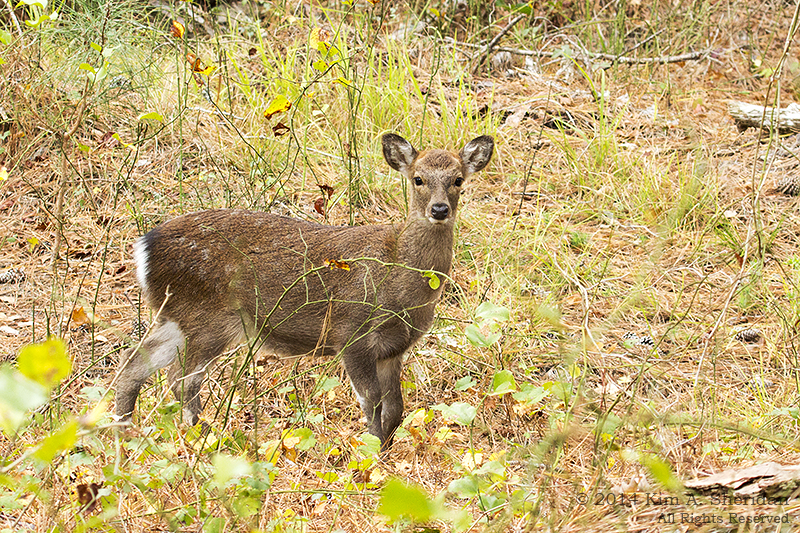
141019_Chincoteague NWR Woodland Trail_1209 aThere’s another critter with hooves at Chincoteague NWR that’s equally captivating. This is a Sika Elk.

They look like a smaller version of the native White-tailed Deer. But they are a non-native species introduced from Asia by an Eastern Shore man named Clemment Henry in the early 1900s. He released a half dozen elk onto James Island in Chesapeake Bay, and from there the population grew and spread.

141019_Chincoteague NWR Woodland Trail_1204 aWe encountered several Sika Elk on a walk through the woods. They regarded us with much curiosity, coming closer to us to get a good look when we stood quietly. See the spots on the white rump? They remain throughout adulthood, unlike the native White-tails. This elk demonstrated an unusual way of bounding away that I can only describe, poorly, as a stiff-legged bounce. Watching it hop had us in stitches.

Yes, like the wild horses of Assateague Island, these little Sika Elk are quite “endeering”!

141019_Chincoteague NWR Woodland Trail_1360 acs