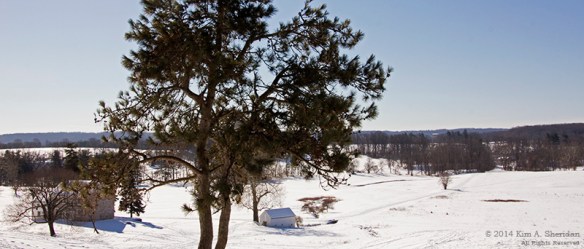
Winter in the Rearview Mirror

HNWR_4862 a It’s been a tough winter; it turned out to be the second snowiest winter on record. Thankfully the arrival of spring is both imminent and welcome. As the seasons change at Heinz Refuge, here’s a last look at winter, receding in the rearview mirror.

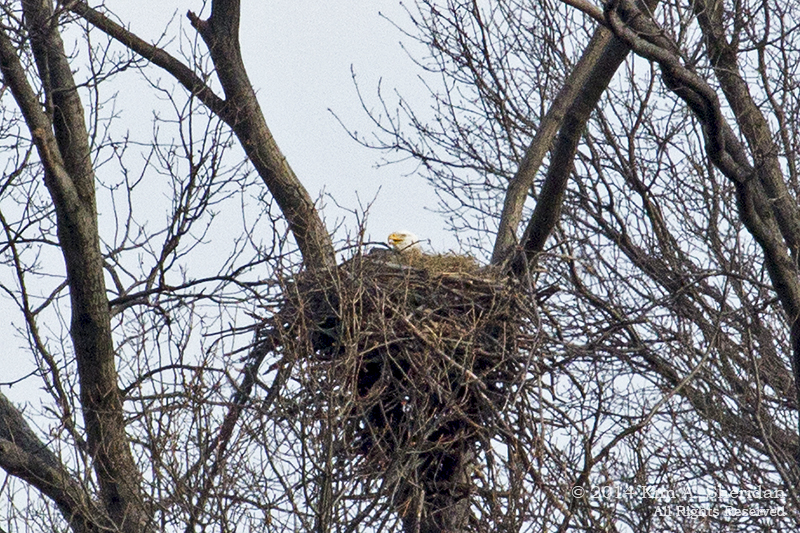
HNWR Eagle_5236 aAlready the promise of spring is being fulfilled. Our resident Bald Eagles are incubating eggs, and we are eagerly anticipating the arrival of eaglets soon.

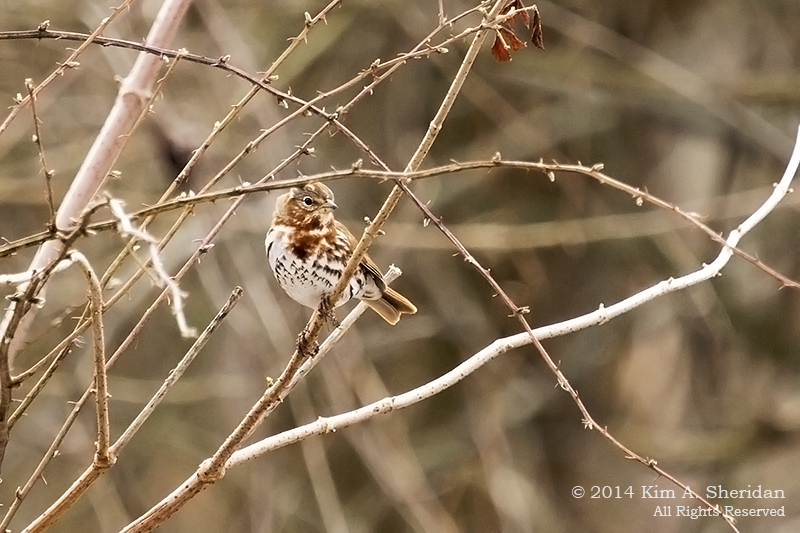
HNWR Sparrow Fox_6514 acs Fox Sparrow on the Pipeline Trail.

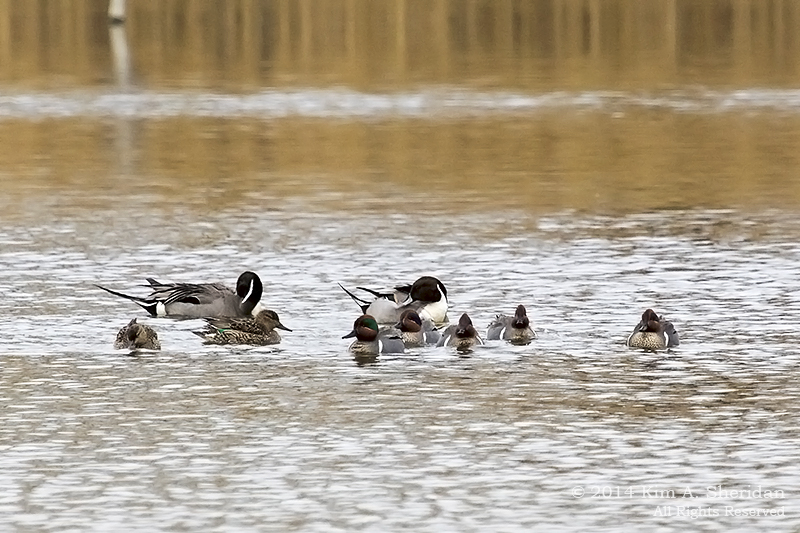
HNWR Duck Pintail Teal_6432 acsOld-timers at the Refuge can’t remember a winter where the impoundment has been frozen solid for so long. Now it’s open water, for the first time since January. And guess what that means? The ducks have come back! Northern Pintails are in the rear – note the long tails that give them their name. Green-winged Teal in front. If you look closely at the second Teal from the left, you can just see the green speculum, or wing patch. (Remember you can click the image for a larger view.)

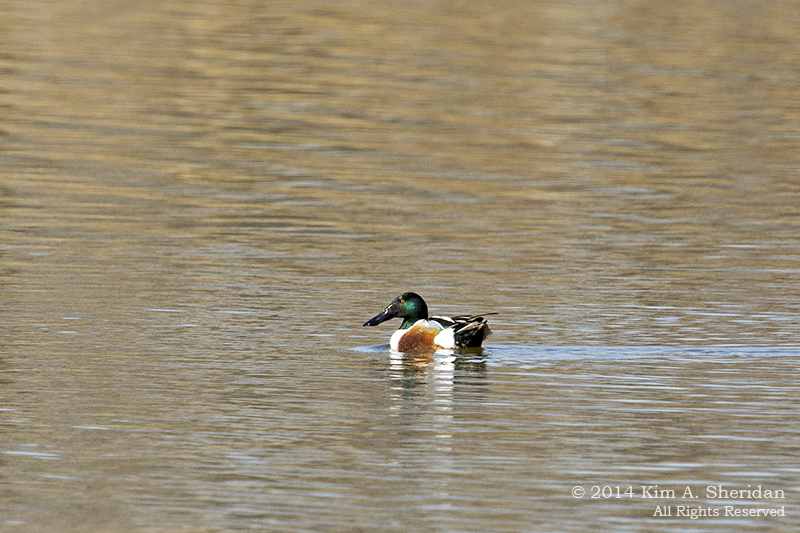
HNWR Duck Shoveler_6596 acs Northern Shoveler.

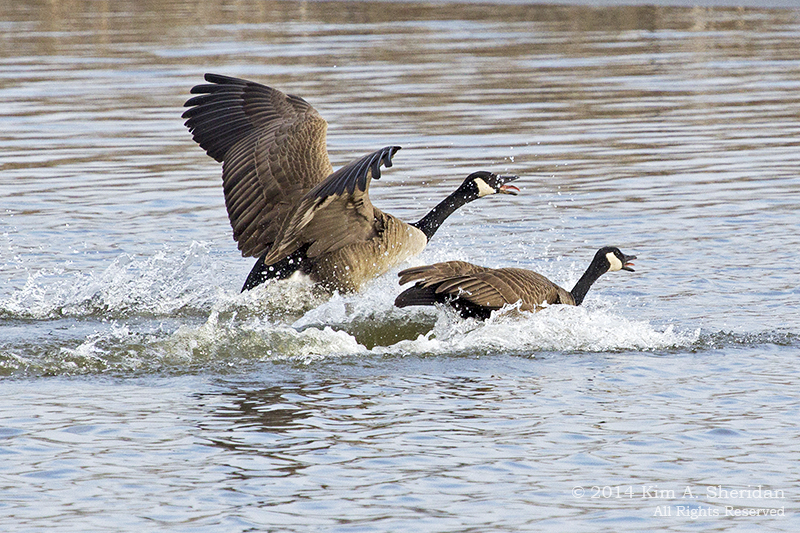
HNWR Goose_5184 acs2Duck, duck, goose. Ever wonder if birds have tongues? Here’s proof positive! Canada Geese, honking on the go.

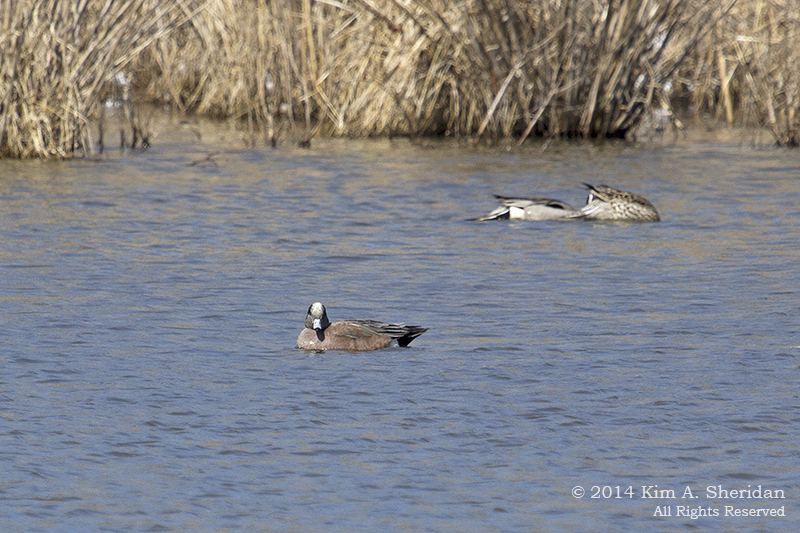
HNWR Duck Wigeon_6638 acs An American Wigeon tries to stare me down.

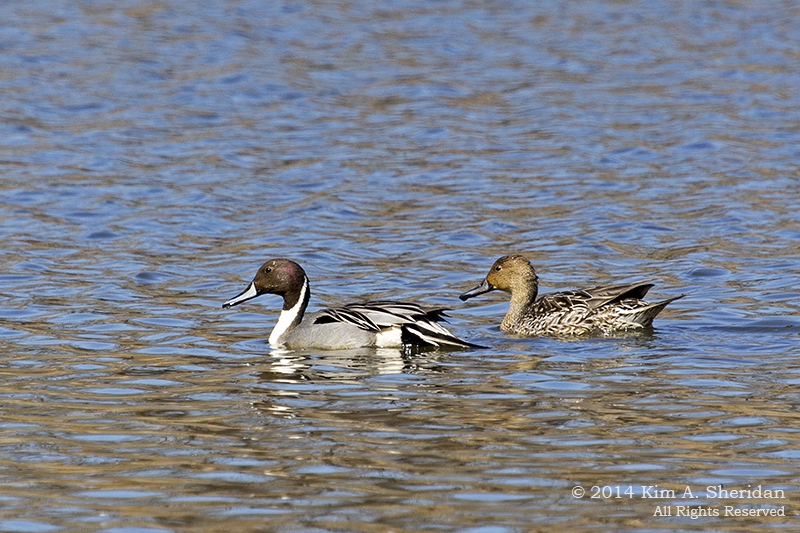
HNWR Duck Pintail_6630 acsA pair of Northern Pintails, male and female.

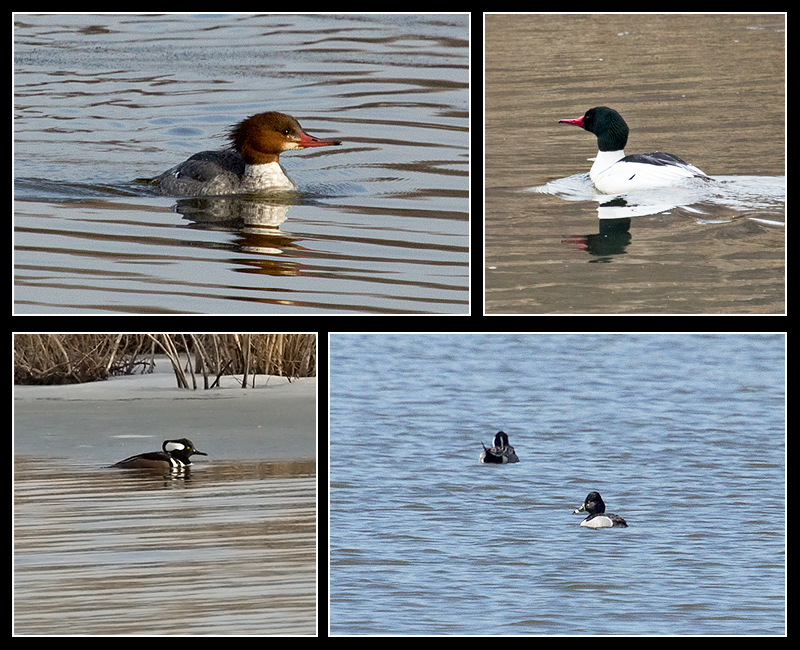
Duck Collage 4 Here’s a duck roundup. Clockwise from top left, female Common Merganser, male Common Merganser, Ring-necked Duck, Hooded Merganser.

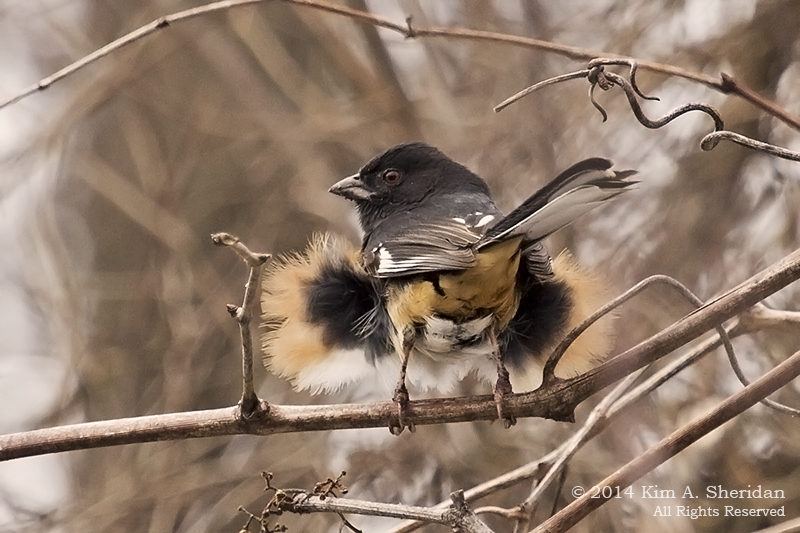
HNWR Towhee_6504 acsEastern Towhee is shaking his tail feathers, clearly excited to wave goodbye to winter.

Welcome Spring!

Ducking Out Of Winter

Barnegat Harlequin_3017 a It’s my fault, I admit. The snow, I mean. Two years in a row I lamented my lack of good snowy photographs to use for Christmas cards, and those years were marked by a decided lack of snowfall. Be careful what you wish for! This year Mother Nature had the last laugh. We’ve had just about 60 inches of snow, when the winter norm averages 22”. And March can still bring some big storms, so we may not be done yet.

I’m done, though. I loved the snow in January and early February, but I have all the snow photos I need, thank you very much. Enough already! I’ve had it with hiking on slippery, ankle-turning ice.

So the last three weekends I have escaped to the southeast, once to the Pine Barrens, twice to the Jersey Shore. No white stuff, and lots of ducks. I love ducks. They’re so colorful and varied, and they are always doing interesting things. In the winter, places like Barnegat Light and Avalon draw sea and bay ducks in droves. Great places to duck out of the snow.

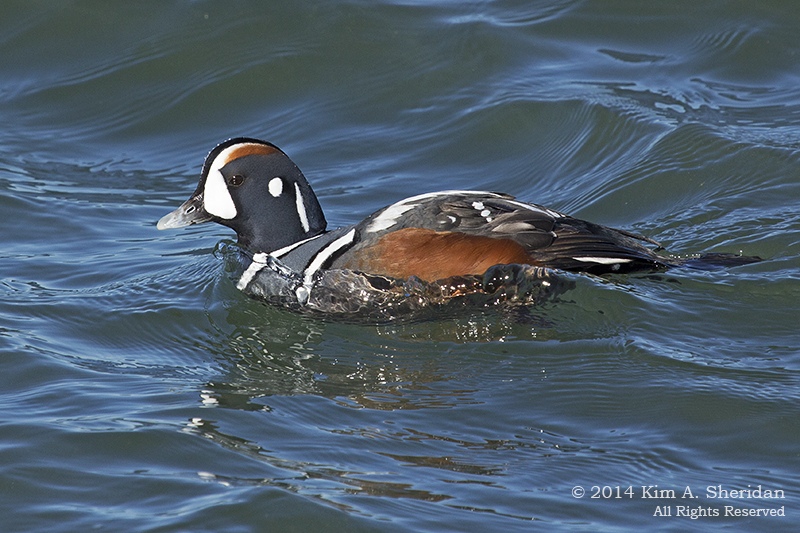
Barnegat Harlequin_3002 acsAbove and below are perhaps the most gorgeous of ducks, male Harlequins. Lots of birders take the adventurous trek atop the Barnegat Light jetty just to admire these beauties.Barnegat Harlequin_3189 acs

Barnegat Longtail_3455 acsI have a soft spot for Long-tailed Ducks. They have such endearing expressions.1 Avalon Long-tailed_3891 acs

1 Avalon Long-tailed_4062 aMales are comfortable enough with their masculinity to sport pink on their bills. Females stick to earth tones. Barnegat Longtail_3458 acs

1 Avalon Scoter Black_3912 aThe Scoters are new birds for me this year. They tend to hang out farther off-shore, so they’re not as easy to photograph. Here’s a large raft of Black Scoters in Avalon, above, with a few Long-tailed Ducks and gulls amongst them. Black Scoter, male, below.1 Avalon Scoter Black_3953 a

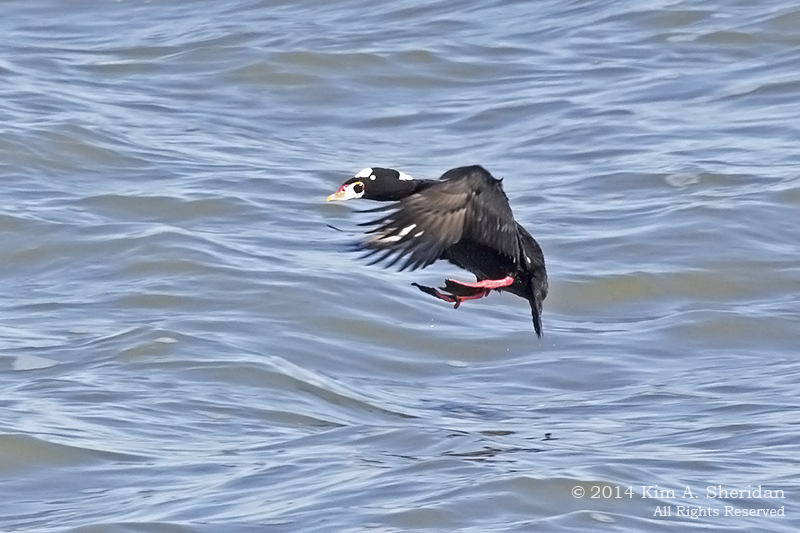
1 Surf Scoter at Avalon_4348 acs This fellow with the colorful proboscis is a male Surf Scoter. My first life bird of the day.

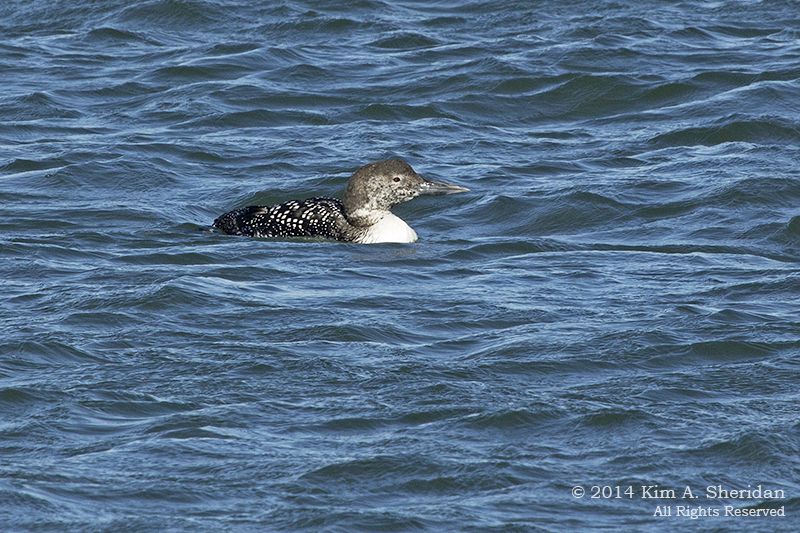
Barnegat Loon_3298 aThis is a Common Loon, transitioning into breeding plumage.

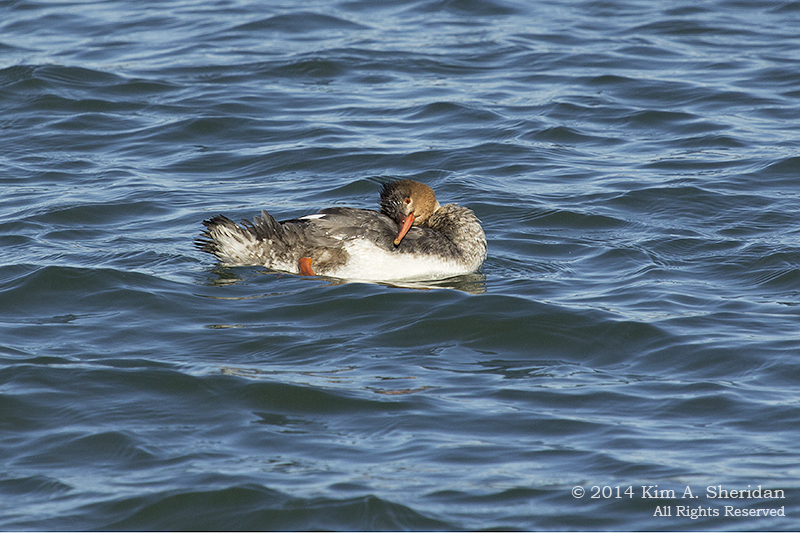
Barnegat Merganser_2858 acs Female Red-breasted Merganser at Barnegat Light, above and below.Barnegat Merganser_2909 acs

1 Avalon Sandpiper Purple_4378 acs Purple Sandpiper on the rocks at Avalon.

3 Bonaparte's Gull at Higbee_4492 acsI don’t usually take photos of gulls, unless they’re flying or doing something really interesting. Gulls pose identification problems, and usually I’m seeing the same species over and over. This particular gull flew past in West Cape May, and I’m glad I took the shot. When I got home, I realized I had something different – Bonaparte’s Gull, a life bird for me. It was my second lifer that day.

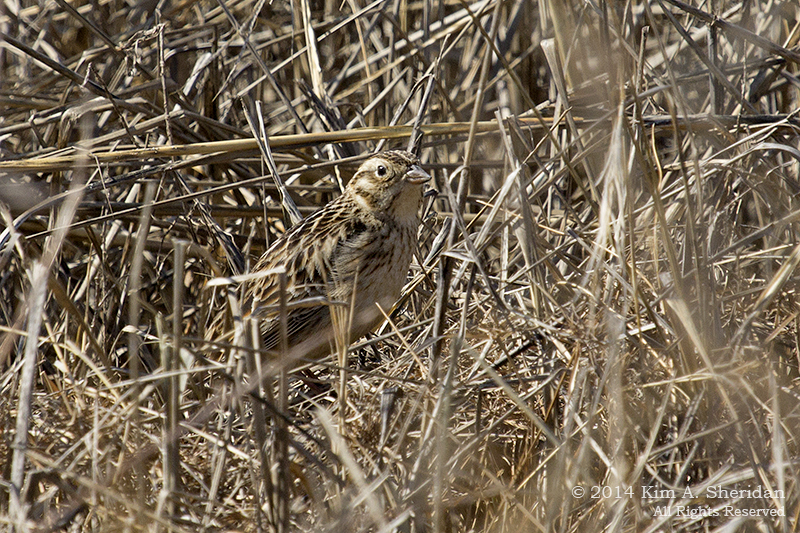
In popular birding places, you often run into other birders who are happy to share news of interesting birds. Two guys I met in Avalon suggested I go to Stone Harbor Point to look for the Smith’s Longspur that had been seen there. “Just look for a big group of people; that’s where it will be.” Sure enough, out in the grassy meadow between beach and bay was a group of people with binoculars and scopes, chasing a cryptically colored, sparrow-sized bird around. I never would have found it, much less identified it, by myself. Lifer #3 for the day.2 Smith's Longspur at  Stone Harbor Point_4421acsSmith’s Longspurs hang out in the middle of the country, and are quite rare in the East, which is why so many people wanted to see it. I’m sure this poor bird was wondering if he’d ever get a break from the crowds to eat in peace.

5 Ross's Goose at Seagrove Ave Cape May_4769 aI also heard from two different people of another unusual sighting, a Ross’s Goose in a field behind some homes in Cape May Point. Sure enough, there it was. A great way to end a day of birding at the Shore.

Barnegat Harlequin_3119 acsIn the last week or two, the weather has warmed enough that the foot-thick snow pack has all but disappeared. My crocuses are blooming, the first rays of sunny gold heralding the inevitability of spring.

The Bald Eagles at Heinz Refuge are incubating eggs. Geese have been migrating north for some time. Soon these winter ducks will take off for their breeding grounds to bring new life into the world. Flowers and trees will bloom, and baby animals will be born.

It won’t be long before spring is off to a flying start!

Presidents’ Day at Valley Forge

04 Valley Forge Chapel Area_ 2583acs Listen closely, the old tree said, and I will tell you of the birth of a nation.
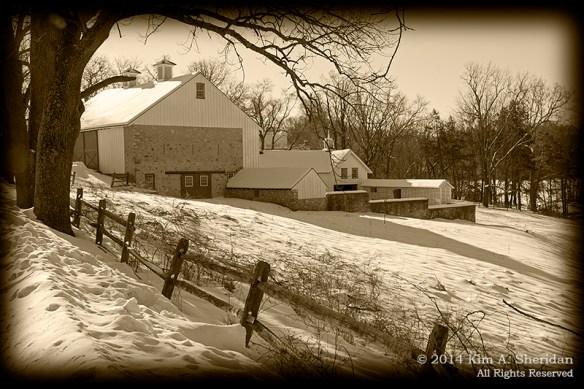
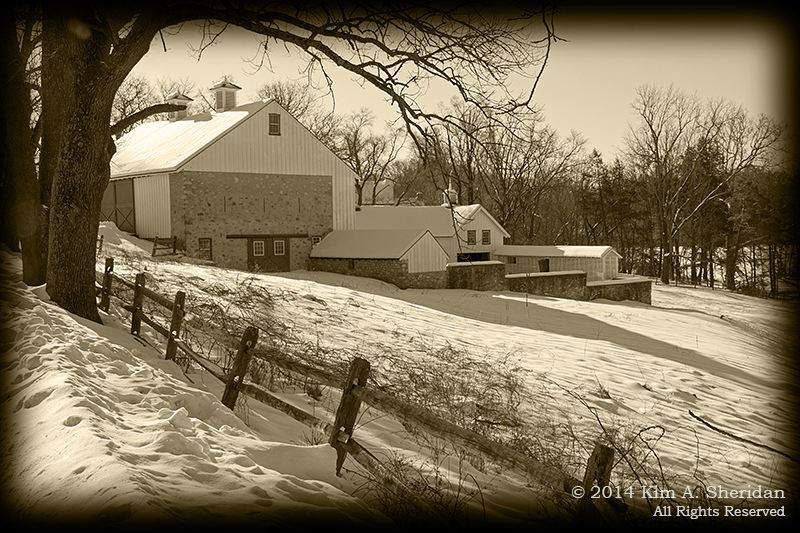
01 Valley Forge Farm_ 2342acs SepiaWhen I was but a young sapling, the rolling hills you see before you were dotted with farmsteads.
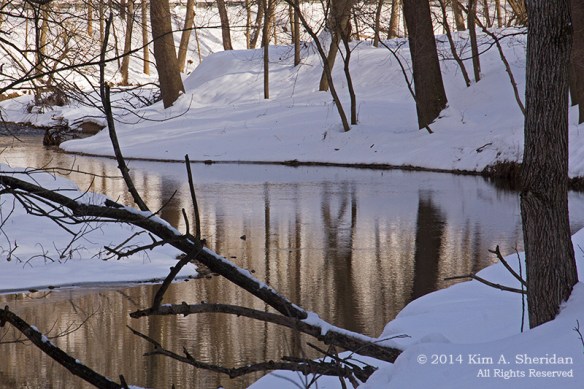
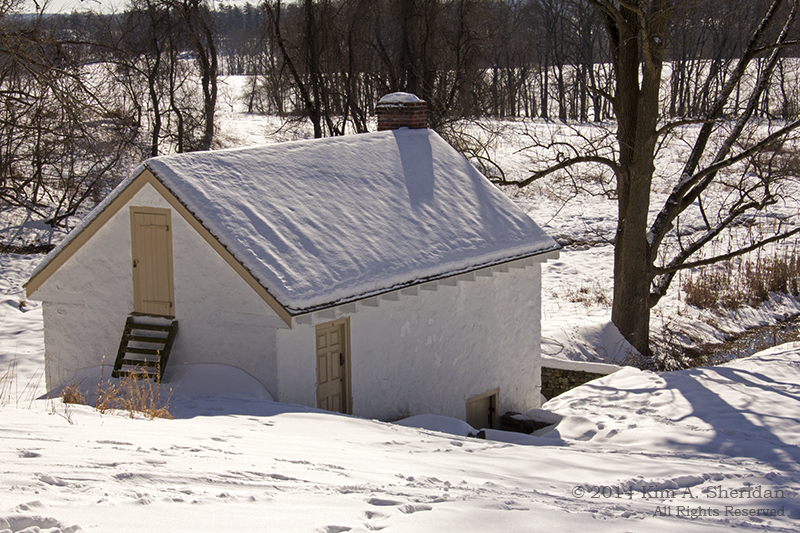
07 Valley Forge Valley Creek_ 2726aValley Creek flowed past iron forges before joining the Schuylkill River to the north.

01 Valley Forge Farm_ 2323aIt was the winter of 1777, the heart of the American Revolution, when General George Washington decided my home provided everything he needed for a safe place to encamp his troops for the winter: easily defensible high ground, proximity to Philadelphia to pressure the British, the river nearby for transportation.

05 Valley Forge Muhlenberg Brigade_ 2597acsI watched as 12,000 men marched into the valley on December 19, weary, bedraggled, but with their heads held high. They swiftly pitched tents as temporary shelter, then busily set about building log huts. They would complete nearly 2000 of these huts, chinked with clay and laid out along military avenues.

Valley Forge_0204acs2The men then fell to building defensive fortifications: trenches, redoubts, and a bridge over the Schuylkill River.

02 Valley Forge Knox_ 2357a Some of the officers made quarters in the houses of local farmers. It was more cramped than it may appear today. When General Henry Knox lived in the house above, it was half this size; expansion came after Revolutionary times. General James Varnum occupied only one room on the upper floor of this dwelling, below; the owner’s family continued to live in the rest of the house.03 Valley Forge Varnum_ 2449aMany of the officers, including Knox and Varnum, would later move into huts to be closer to their men.
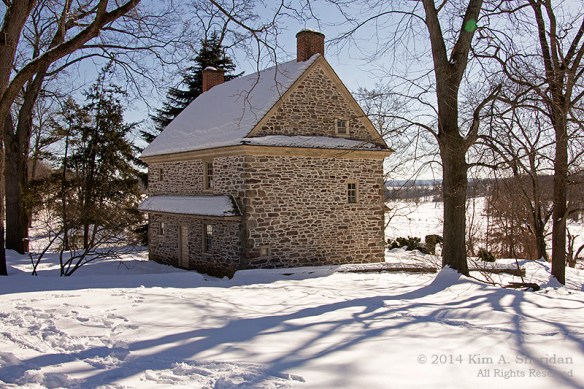
Valley Forge Washingtons HQ_9412ac sepia Washington himself had vowed to stay in his canvas tent until all the men were in huts, but the needs of command compelled him to move to larger quarters.

07 Valley Forge Valley Creek_ 2630aI have seen many winters in my long life, some mild, some harsh. That winter at Valley Forge was neither. Typical of a Philadelphia winter, there were occasional snowstorms, followed by thawing, rain, and then refreezing. The resulting mud and ice interfered greatly with supply shipments. Heavy snow in February was followed immediately by heavy rain, and mud made roads impassable for a time.
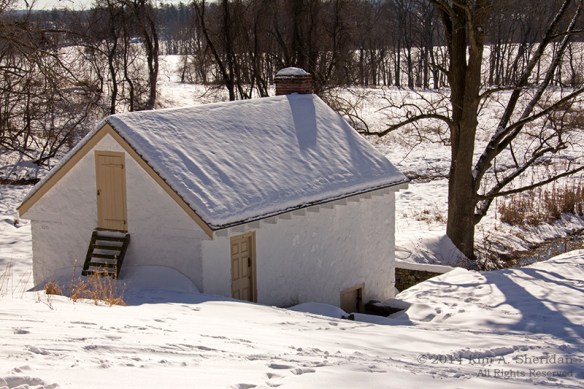
03 Valley Forge Varnum_ 2463a This was the real hardship the troops faced; not the weather, but the lack of supplies, particularly clothing adequate to the winter conditions. The lack of a true Quartermaster made the situation worse.  Sanitation was also an issue. Springs and streams provided water, but were frequently fouled.

Relief arrived with better weather, an early shad run on the Schuylkill, and the appointment of General Nathanael Greene as Quartermaster.

04 Valley Forge Chapel Area_ 2495aWhen they weren’t building, serving as sentries, or hunting for wood and food, they were engaged in military drill on the Grand Parade. In February, Baron Friedrich von Steuben arrived in camp, and was given the job of reforming the Army’s training and discipline. He began with the Commander-in-Chief’s Guards, and quickly won them over with his methods. The enthusiasm spread outward as ever large groups of men drilled and maneuvered skillfully. He also greatly improved the sanitation in camp.
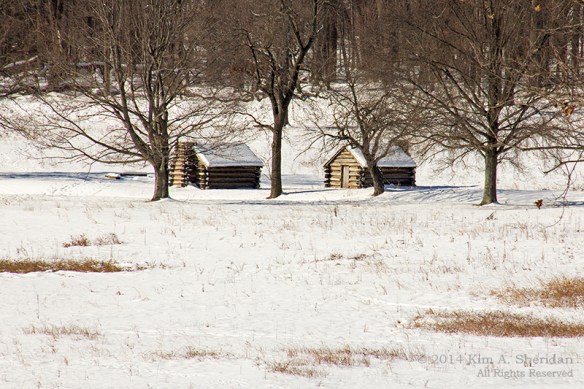
04 Valley Forge Chapel Area_ 2476a Far more soldiers died of disease than starvation or cold, and many of the deaths came in the warmer spring months.
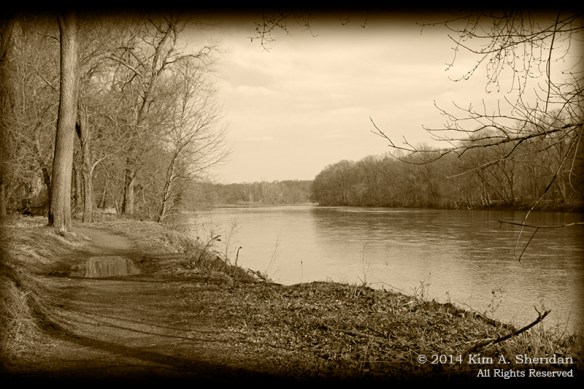
Valley Forge_2903General Washington ordered the chinking removed from the huts to improve air circulation, and in early June abandoned the huts altogether, moving the entire Army across the Schuylkill River to tents.

04 Valley Forge Chapel Area_ 2503a After France entered into an alliance with the United States, the British would abandon Philadelphia for New York. On June 19, 1778, Washington would lead the Continental Army out of the camp in pursuit. My valley returned to a place of peaceful farmsteads.
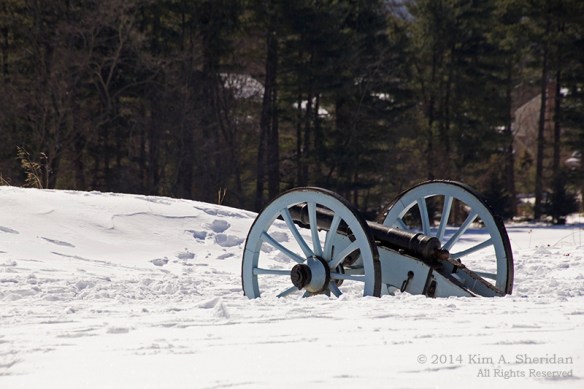
05 Valley Forge Muhlenberg Brigade_ 2591aNot a shot fired was fired at Valley Forge in battle. Yet the encampment marked a turning point in the war. France threw in its lot with the Americans. Conditions hardened the men. Von Steuben molded a skilled but inconsistently-trained army into a cohesive professional fighting force. Truly the Army that left Valley Forge was not the Army that arrived six months prior.
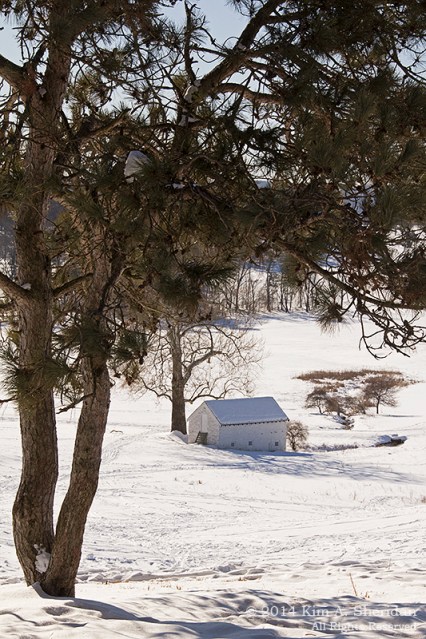
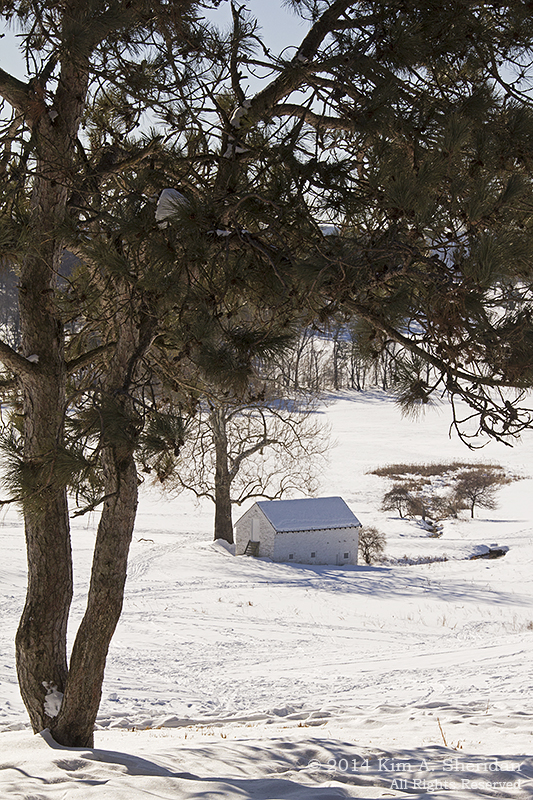
04 Valley Forge Chapel Area_ 2571aIn the passing years, I have seen the land consecrated by the men that followed, as first a state park in 1893 and then a National Park on July 4, 1776.

Many generations have come and gone. Yet I stand here still, my old limbs weary, honored to be a silent sentinel watching over the valley that forged a nation.
Variations on an Icy Theme

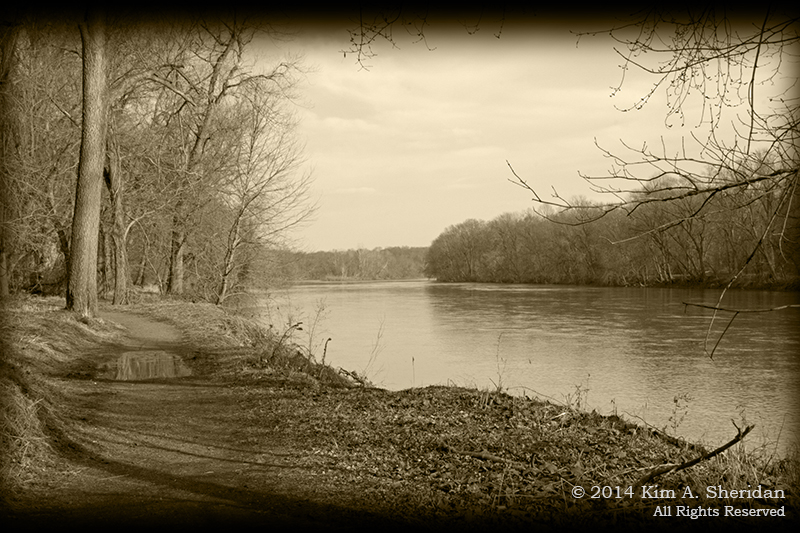
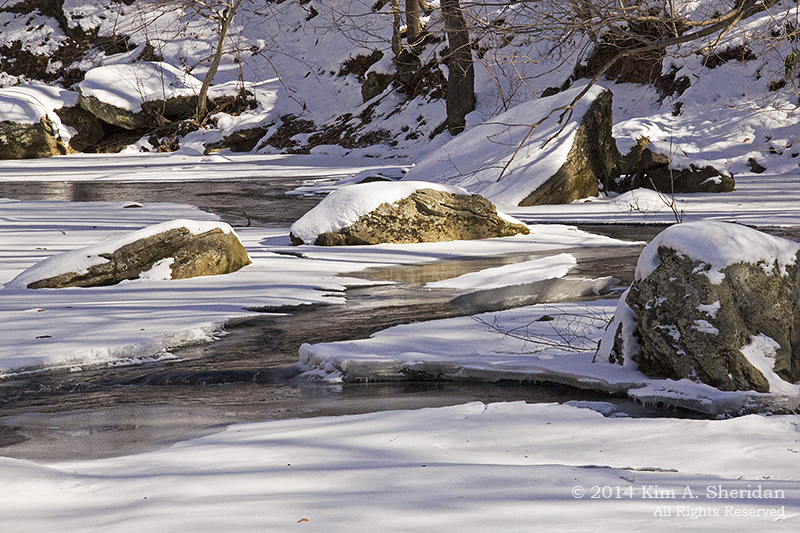
RCSP Ridley Creek Snow_ 0740 The old cliché says that the Inuit have fifty different words for snow. Around here this winter we have come up with some words of our own, none fit for polite company.

Philadelphia’s average snowfall is 22.2 inches, for a whole winter. So far this year we’ve had 58.4”, and there are still four weeks until spring.

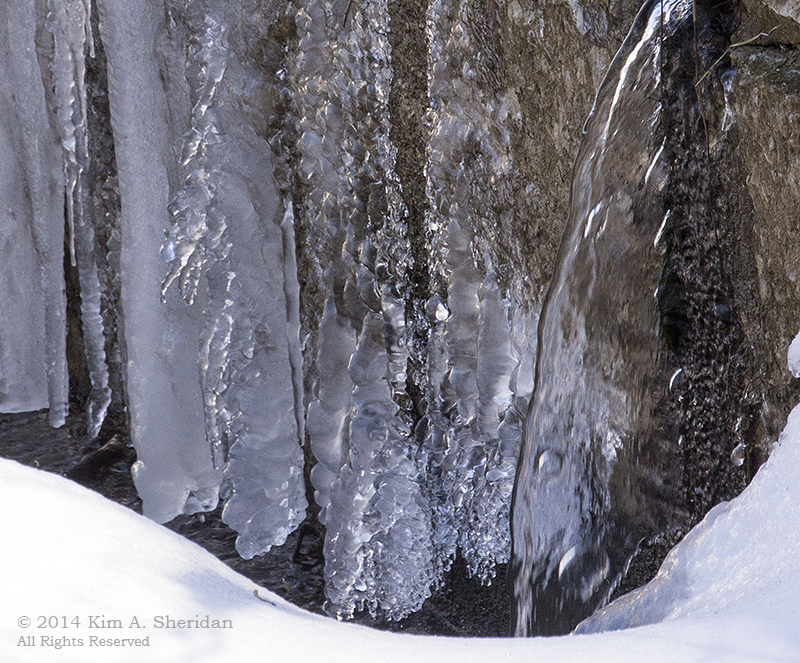
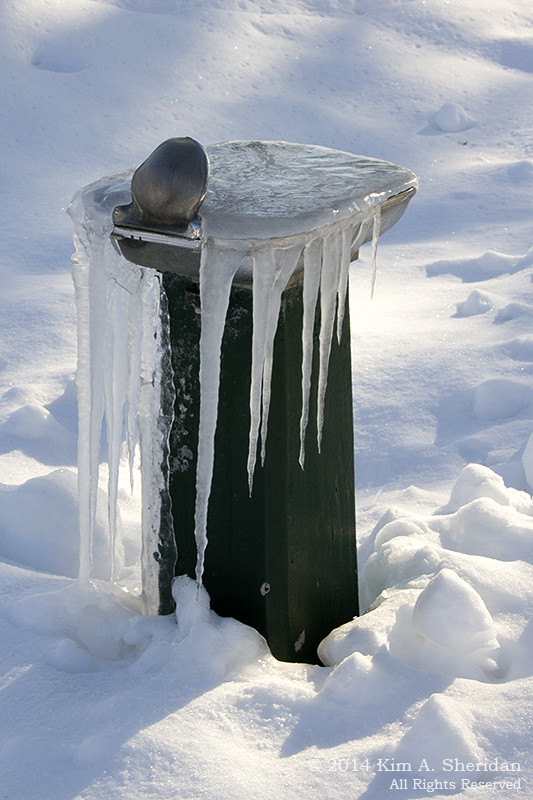
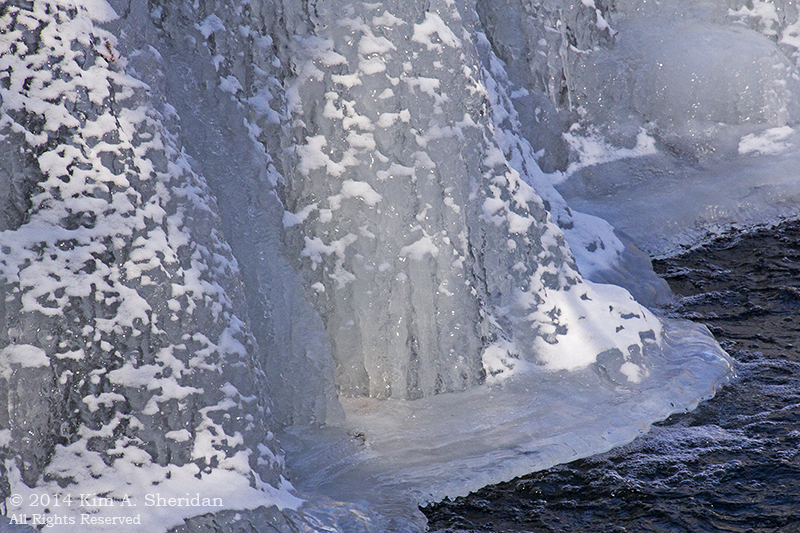
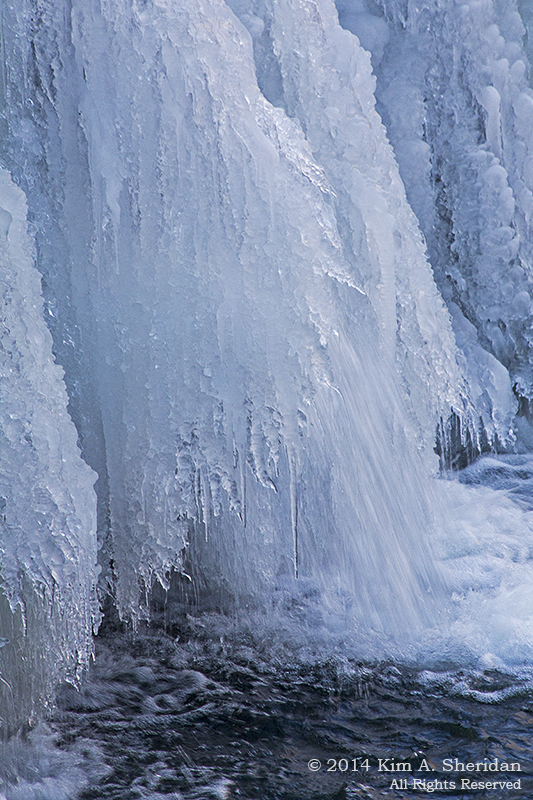
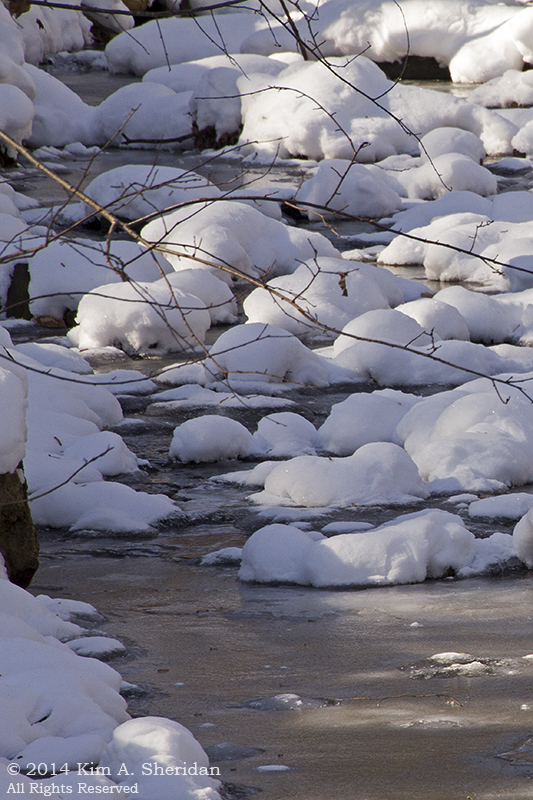
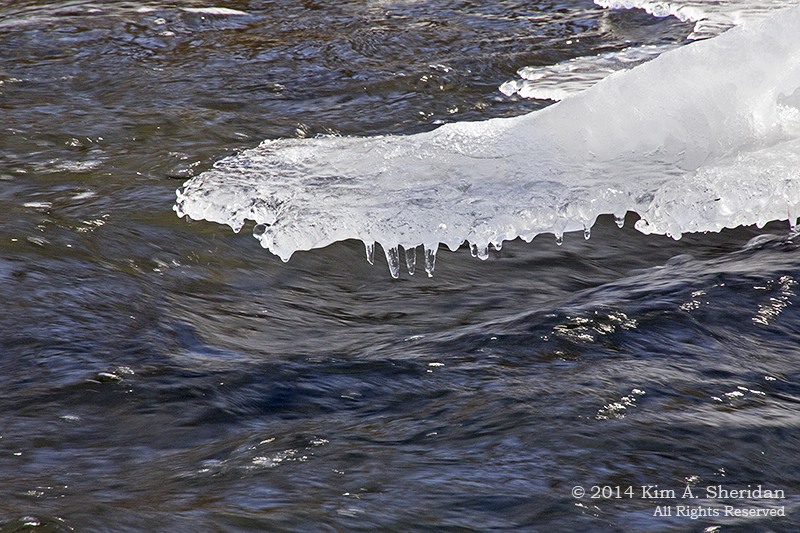
Taylor Arboretum Creek Ice_ 1147acsAll that snow, combined with a long stretch of sub-freezing temperatures, has created some magnificent ice formations, especially near moving water. Dripping moisture builds strange sculptures on Ridley Creek, above.

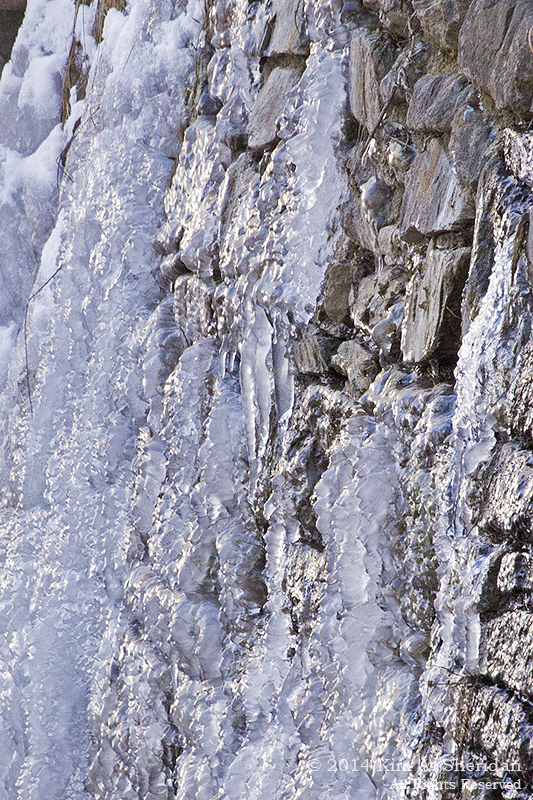
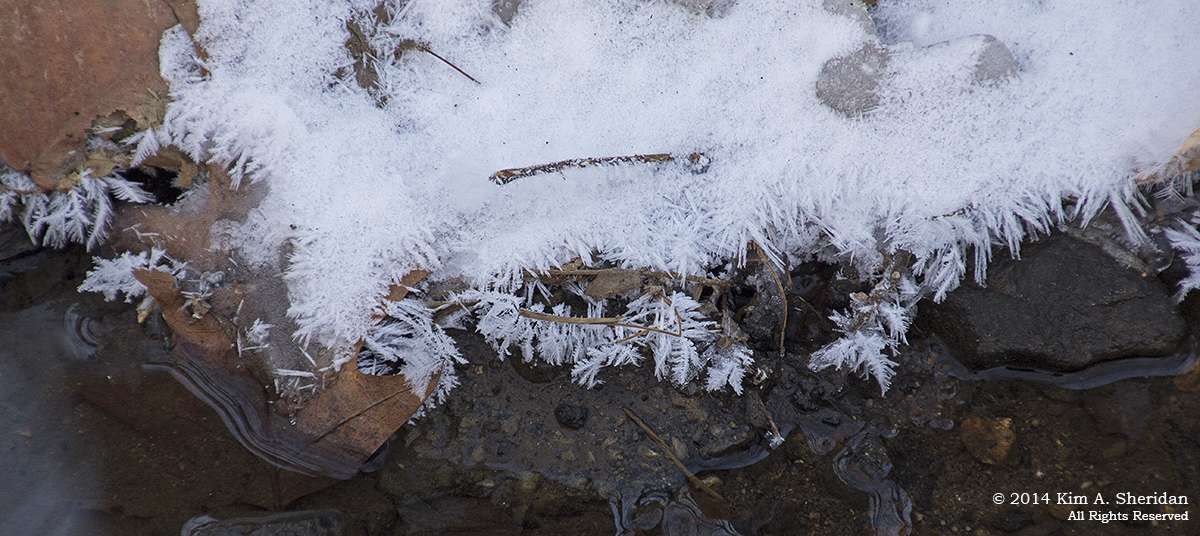
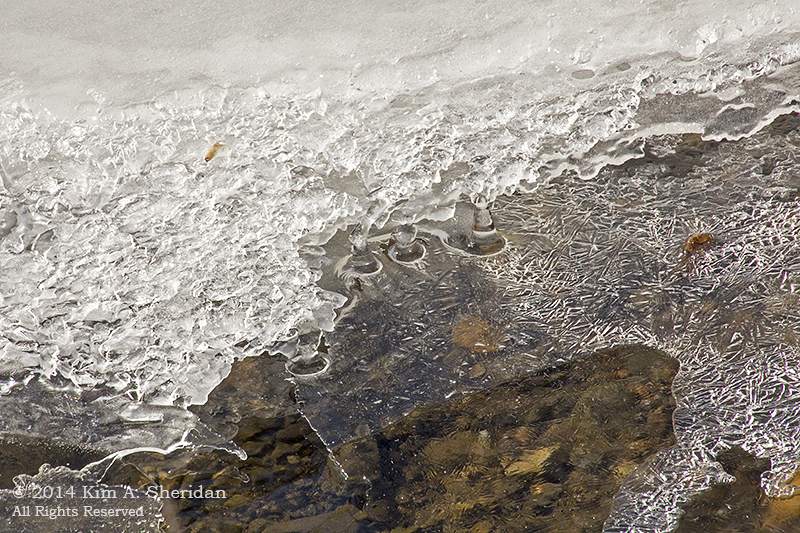
Intricate patterns etch cold surfaces on Crum Creek, below.

Smedley Crum Creek Ice_9957acs

TX White Rock Lake Frost_7282acsHoar frost on a leaf in Texas.

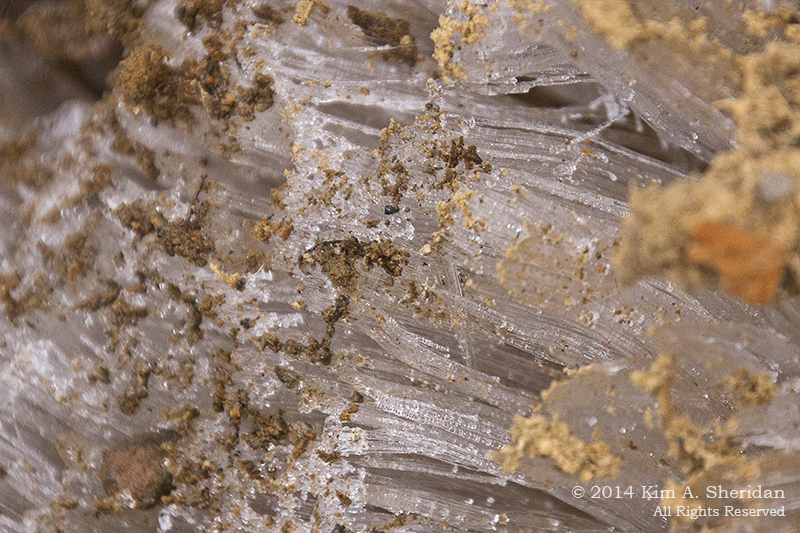
Ridley Creek Geocaching_9610acsLoyal readers of The Wild Edge will remember this photo from our Ridley Creek geocaching adventure. This is called “needle ice”. It forms when the air temperature is below freezing, but the ground temperature is above freezing. Water forces its way out of pores in the ground by capillary action. When it reaches the air, it freezes. As more water keeps pushing out behind it, it forms into a growing column of ice. Needle ice is most common on steep slopes with seeping ground water, which is exactly where we found it.

07 Valley Forge Valley Creek_ 2696a 07 Valley Forge Valley Creek_ 2697acsSome ice formations are man-made. Bubble-wrap shaped ice on the wall of the Valley Creek dam, Valley Forge National Historic Park.

01 Valley Forge Farm_ 2350 Whoops! Who left the water running?

FUN FACT: Snowflakes form when water vapor condenses into ice.  Snow crystals all start as simple hexagonal prisms. But as more water vapor condenses onto them and they continue to grow, they begin to grow branches. This creates an amazingly large variety of snowflake shapes, including columns, needles, plates, and dendrites. The classic six-armed shapes with side branches, like we cut from paper in school, are stellar dendrites.  Stellar dendrites with an abundance of side branches are called fernlike stellar dendrites, for their resemblance to ferns.

RCSP Ridley Creek Snow_ 0663The dry powdery snow we had in January showed off several different snowflake shapes to good advantage. Which shapes do you see here?

Blue Snow_2768a

FUN FACT: What color is snow? Actually, snow crystals individually look clear. When they get together with their friends, the incoming light is reflected by the crystals and bounces around before scattering back out. Since snow generally scatters all wavelengths equally, it usually looks white.

But, it also happens that red wavelengths are sometimes absorbed by the snow, making the snow look blue or aqua. The deeper you look into a hole in a snow bank, the bluer it will appear. Since heavy, wet snow absorbs a lot of red light, we’ve seen a lot of blue snow in February. This is a close-up of a snow boulder left by a snow plow.

RCSP Ridley Creek Dam_ 0444

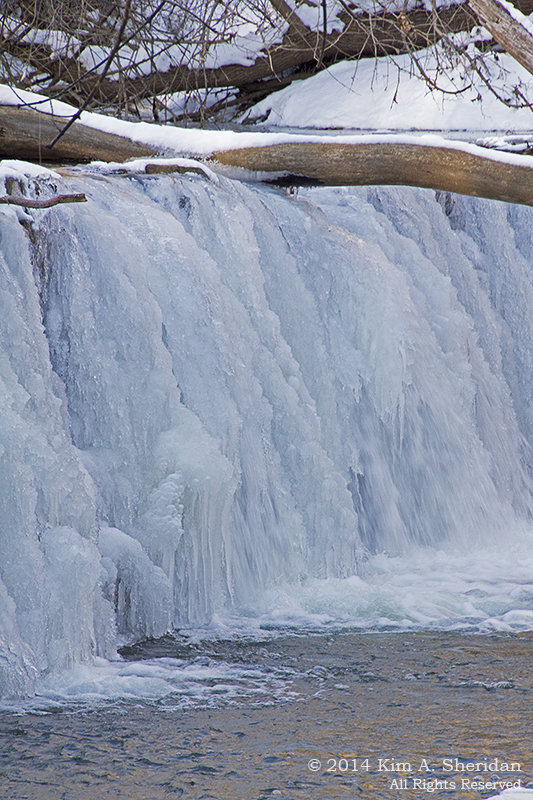
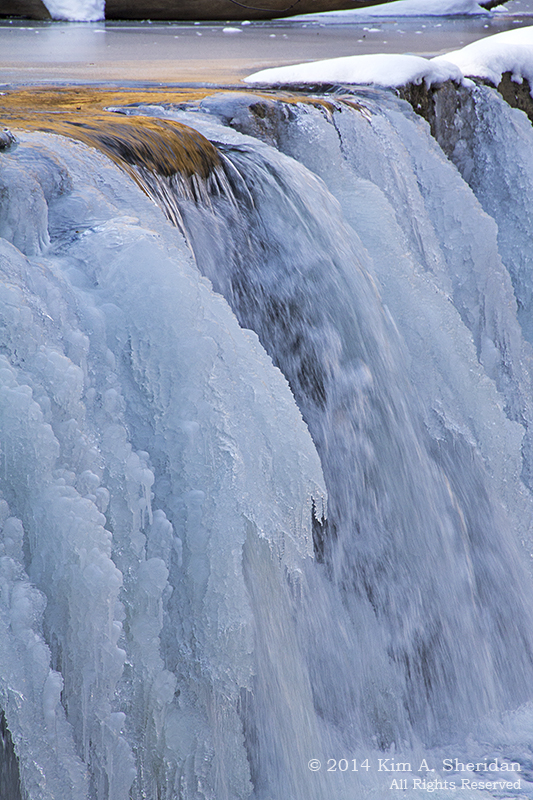
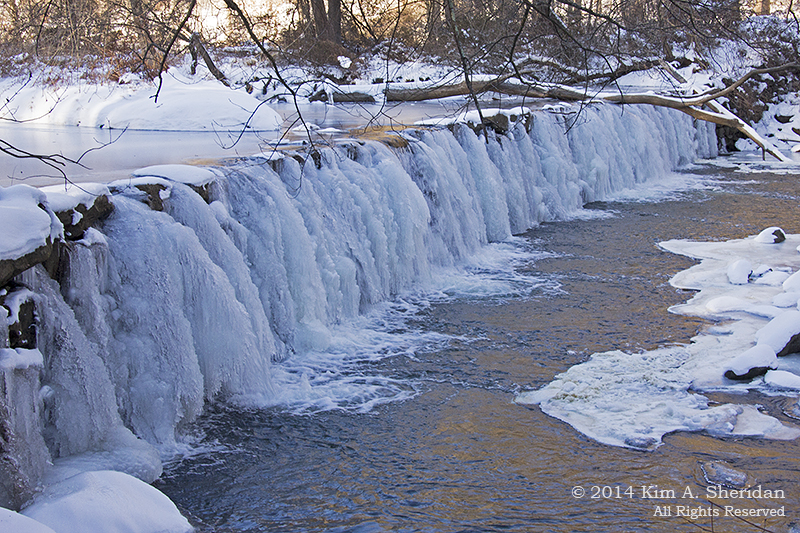
Also resplendent in shades of blue and aquamarine, the dam on Ridley Creek at Sycamore Mills was spectacular in late January. Bubbles and stalactites and little ice daggers, oh my!

RCSP Ridley Creek Dam_ 0440 There’s a lot of water flowing behind the spikes and icicles formed here. More and more of it froze every day. In only one week, the ice would grow into the thick solid curtain seen below, dusted with a recent snowfall.RCSP Ridley Creek Dam_ 0689

RCSP Ridley Creek Dam_ 0432

Fifty different words for snow? At the wild edge where the water runs, there’s just one word:

BEAUTYRCSP Ridley Creek Dam_ 0450

Unsweetened Iced Tree

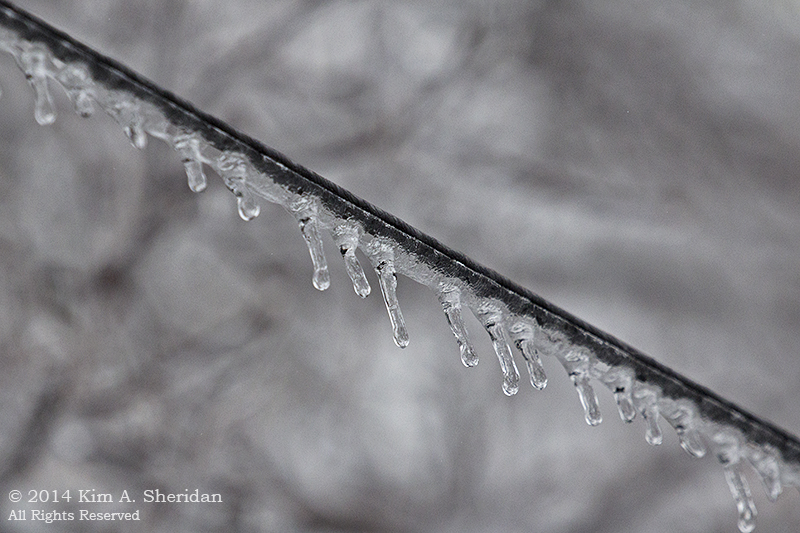
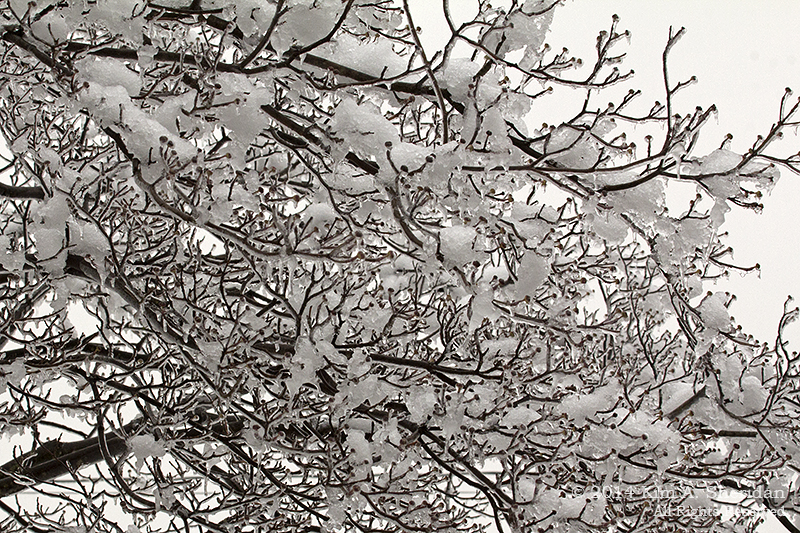
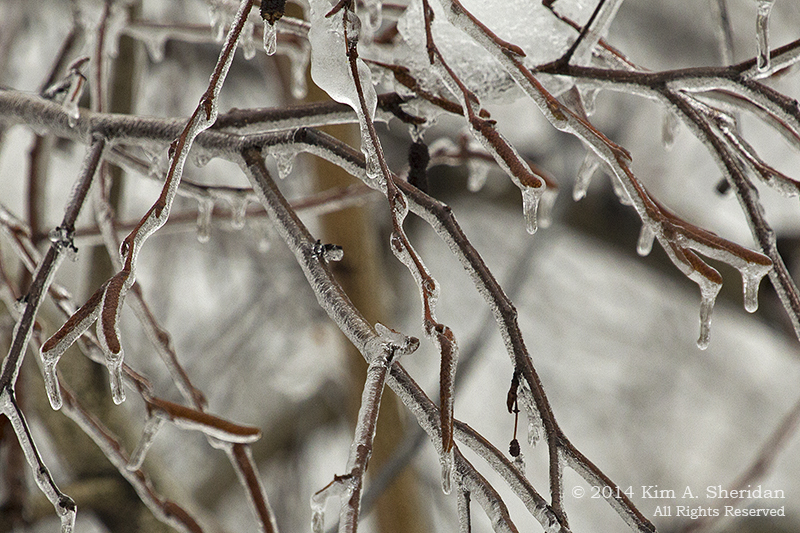
Ice Storm_ 1453 acs The wonderful thing about weather is that it’s never the same from day to day. Variety is the spice of life, right? Well, this was one variety we could have done without: ice.

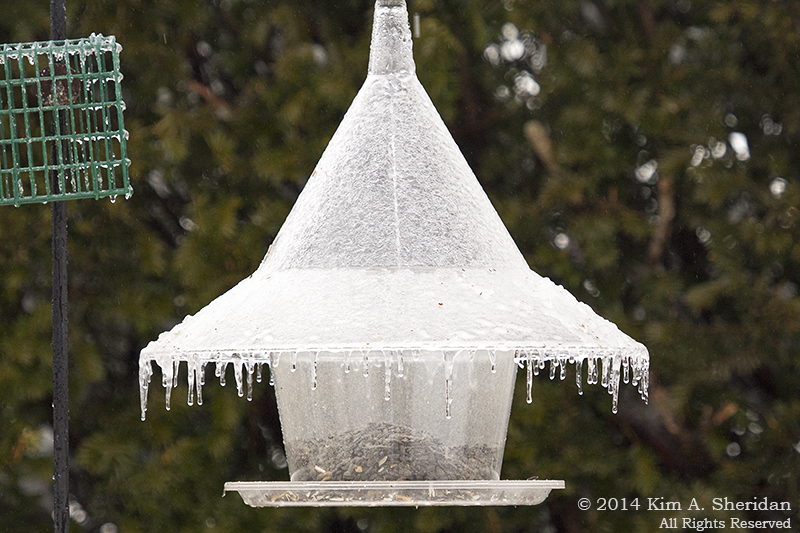
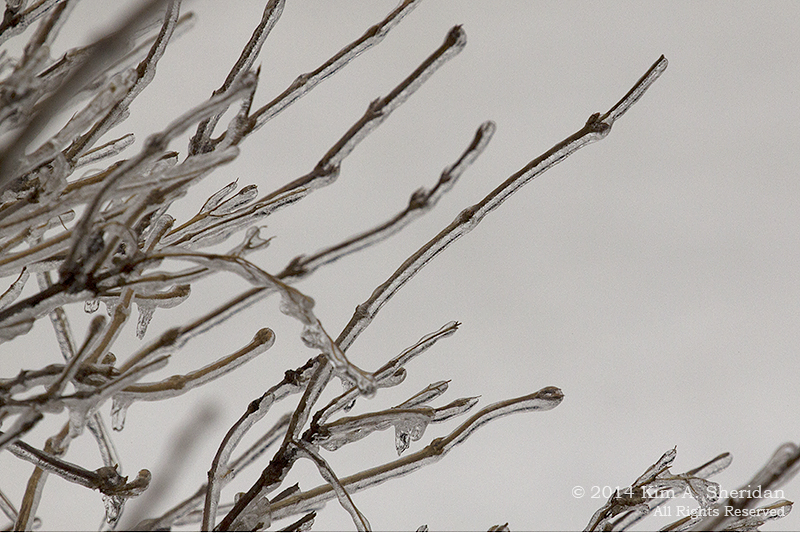
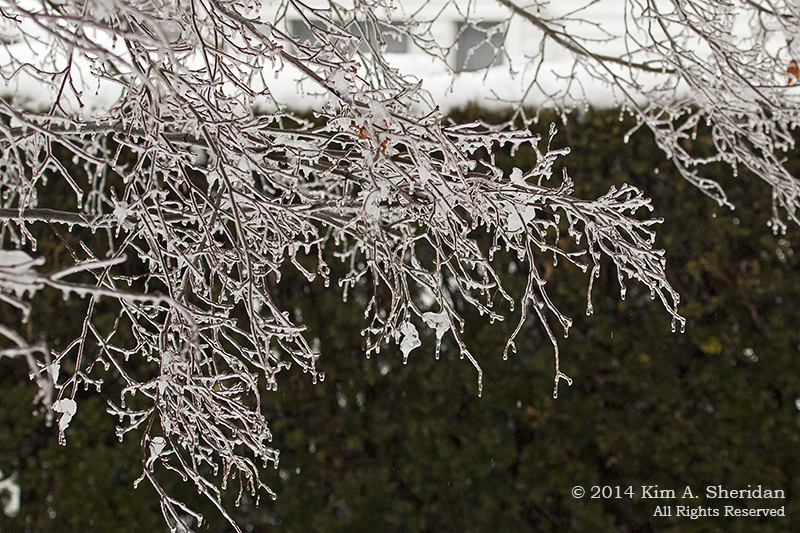
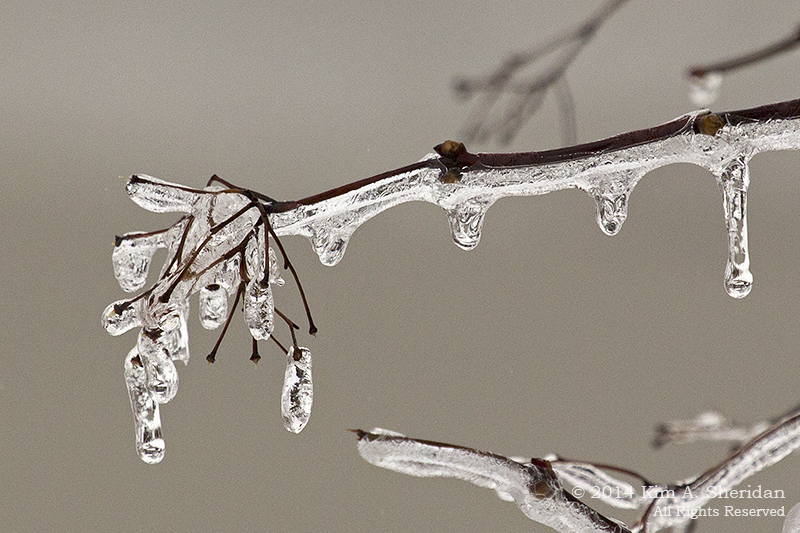
Ice Storm_ 1484aLast week we had a significant ice storm. Ice coated the branches and twigs of the trees, and many of the older, larger trees lost limbs or came down completely. Downed wires led to over 700,000 power outages in my area of Pennsylvania, and many homes and businesses were without power for days. It was just hours for me, and I’m counting my blessings for that.

Ice Storm_ 1533acsAfter the rain stopped, I tried to capture the beauty in the beast before the ice melted away.

Ice Storm_ 1471acs Ice Storm_ 1455acs Ice Storm_ 1493acs Ice Storm_ 1539a Ice Storm_ 1523a Ice Storm_ 1490aA friend said that the patterns in the ice remind her of crackled glass, and I realized that is why I have been so fascinated with the ice this winter. I love glass in all its forms. Really, anything transparent or reflective. I must have been a raven in a former life – I love shiny things. (The image above is worth clicking to see the intricate ice patterns.)

Ice Storm_ 1575acs This has been the winter of our discontent. As I write this, a Nor’Easter has once again buried us in snow, and wind and sleet assault my windows.

Yet, this too shall pass. As the ice of last week melted away, this winter will melt into our memories. Underneath the snow my crocuses sleep, well-watered and warm, waiting for the Spring yet to be.Ice Storm_ 1556a

Reflections of White Rock Lake

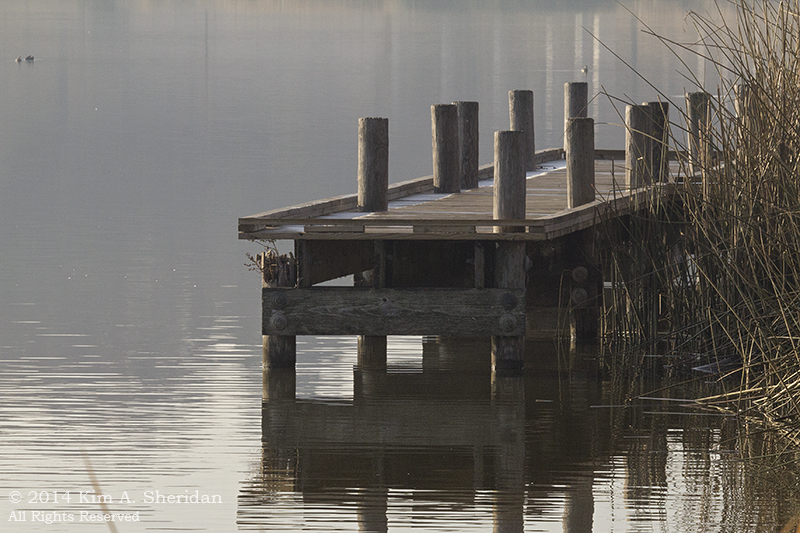
TX White Rock Lake_7280acs Mirror, Mirror, on the wall

Is there a haven in the Dallas sprawl?

Perhaps a park like White Rock Lake,

A place to watch the morning break?

TX White Rock Lake_7398ACSMirror, Mirror, I do insist,

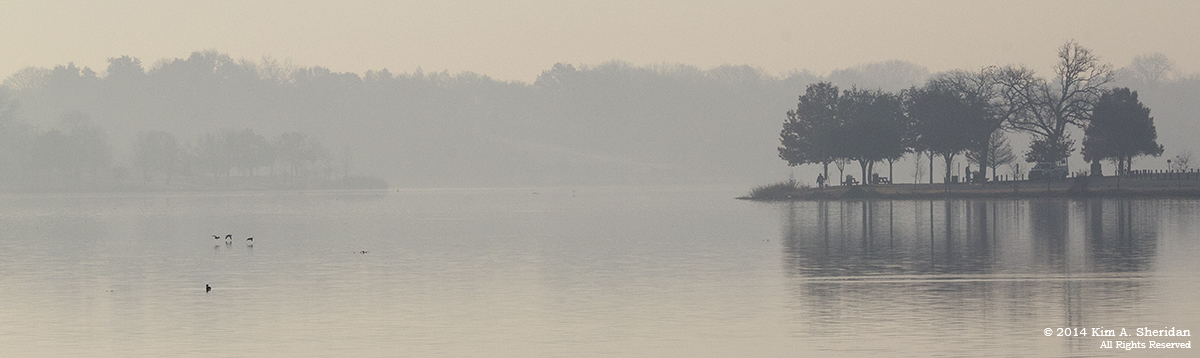
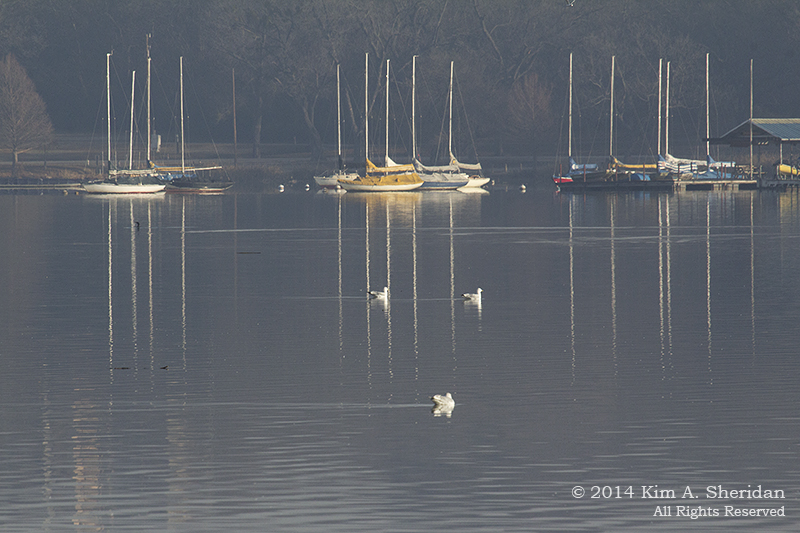
Show me White Rock in the mist

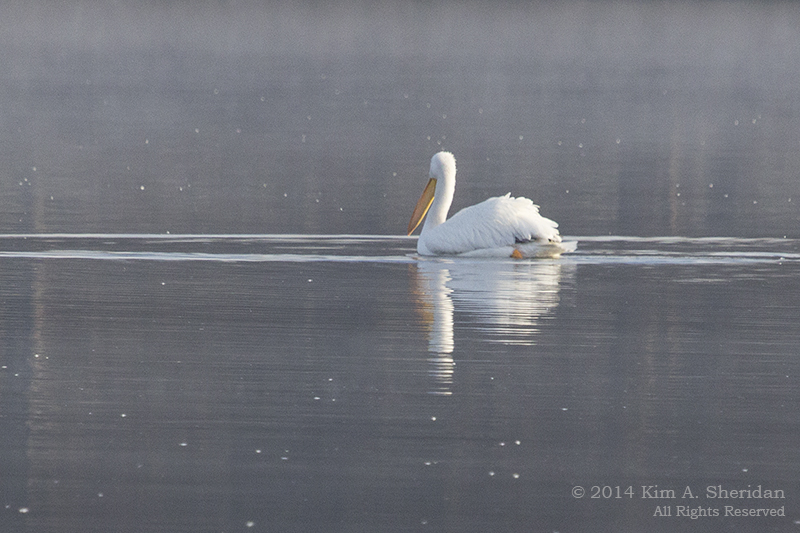
TX White Rock Lake Pelican_7241aTX White Rock Lake_7404A

Mirror, Mirror, hear my words

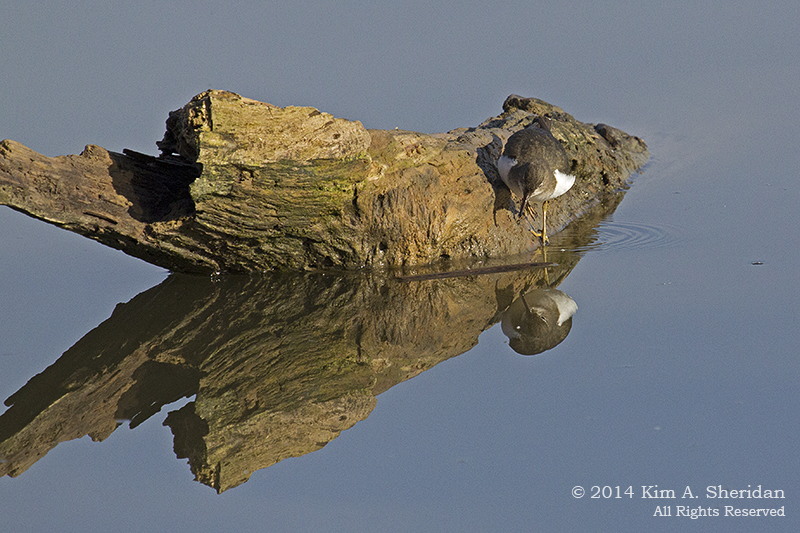
Who’s the fairest of the birds?TX White Rock Lake Yellowlegs_7780aLesser Yellowlegs certainly seems enamored of his own reflection…

TX White Rock Lake Cormorant_7805aTX White Rock Lake Coot_6951a

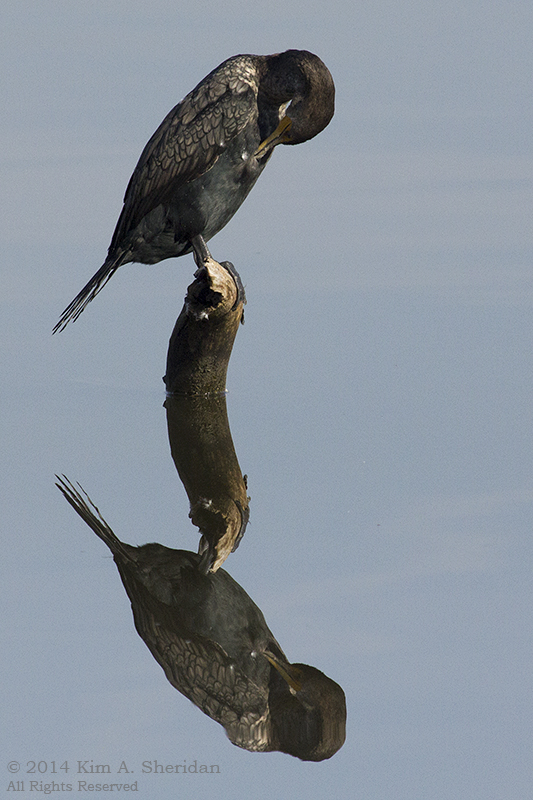
While Double-crested Cormorant (left) is primping for her photo op, and American Coot (right) is working it for the camera.

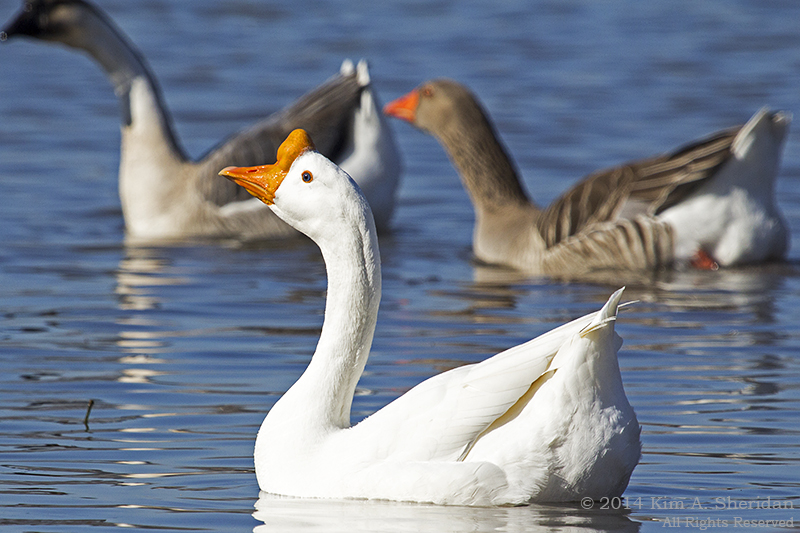
TX White Rock Lake Geese_6971acs Not all the birds in White Rock Lake Park are native, or even wild. A number of domestic geese and ducks prowl the shores. This is a White Chinese Goose.

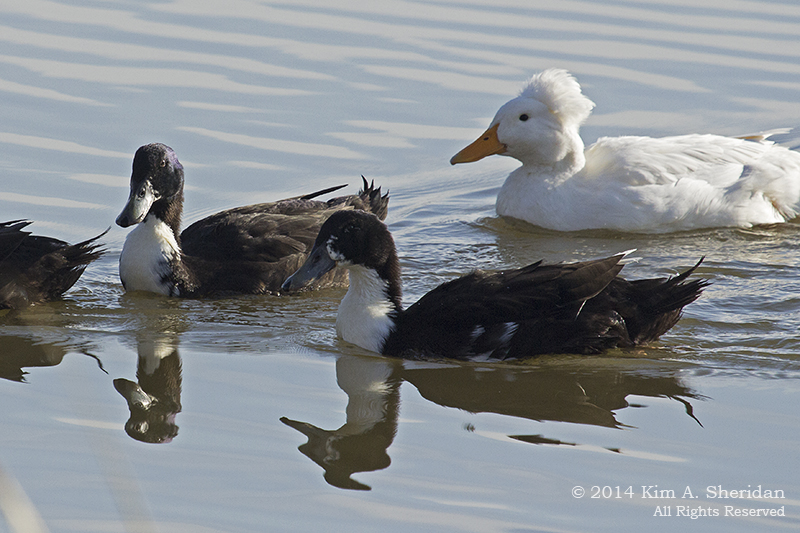
TX White Rock Lake Duck Domestic_7652aMore domestics: Black Swedish Ducks in front and the Crested Pekin Duck. And yes, there is no “g” in “Pekin”, despite the insistence of the spell-checker.

TX White Rock Lake Gadwall_7939a Ah, here are we are back to the wild critters. These Gadwalls are looking especially natty.

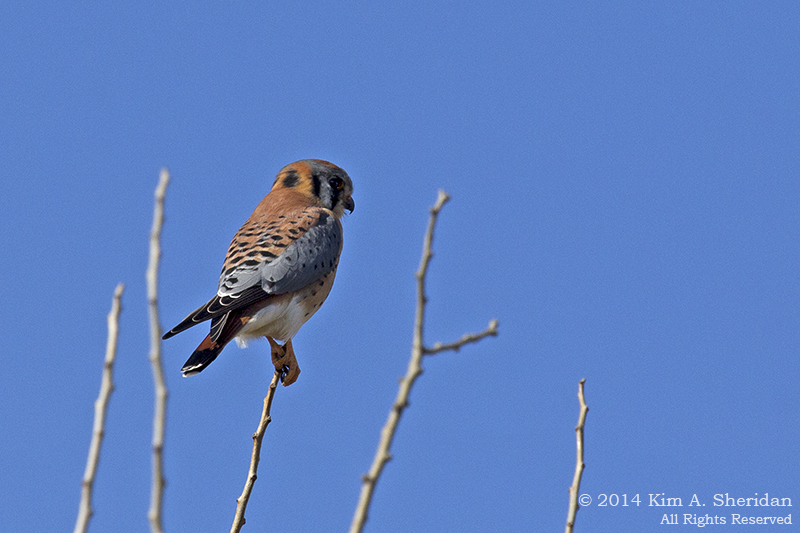
TX White Rock Lake Kestrel_7025acsAmerican Kestrels perch in trees on the edge of a meadow, looking for mice and voles to eat.

TX White Rock Lake Red-bellied Woodpecker_7816a Red-bellied Woodpecker, also looking for good things to eat, much prefers insects. Despite the moniker, the belly is only marginally reddish. The red on its head would seem a better inspiration for a name, but “Red-headed Woodpecker” was already taken.

Mirror, Mirror, on the Loch

Who’s the fairest on White Rock?

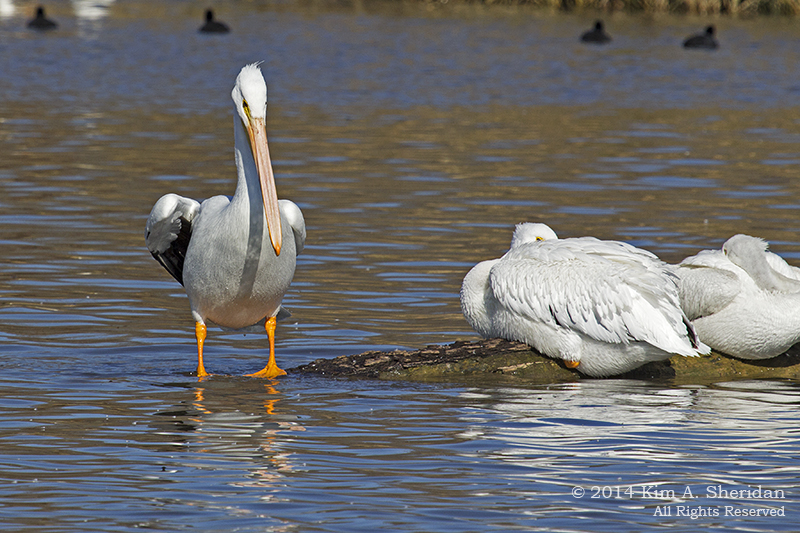
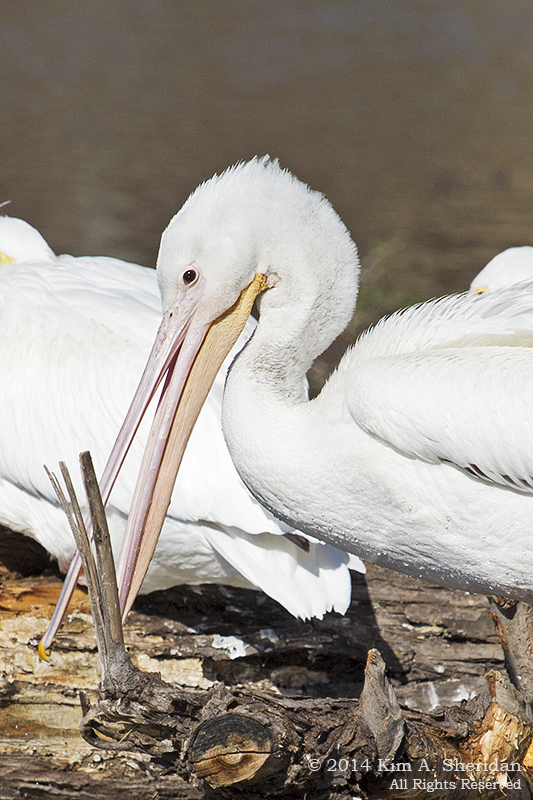
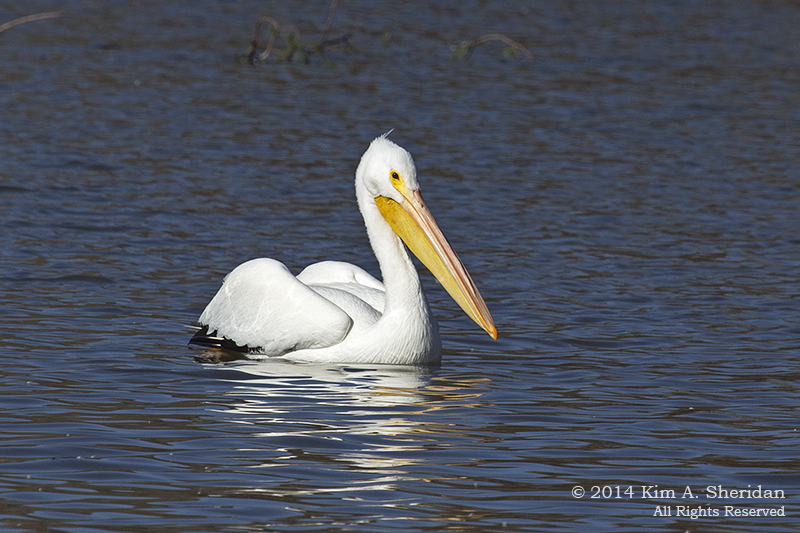
TX White Rock Lake Pelican_6995aThat’s an easy one! American White Pelicans are the stars of the show at White Rock Lake in winter. These HUGE birds roost and preen on logs near the lake shore. They look like they’re too big to get off the ground, but in fact they are graceful and powerful fliers. Watching them skim the lake’s surface is an impressive sight. Not one I’ve captured to my satisfaction yet, though.
TX White Rock Lake Pelican_6931aFUN FACT: How huge are White Pelicans? From beak tip to tail tip they are about 5’2”, nearly as tall as I am. Their wingspans are about 9 feet long. The pouch in their bills can hold 3 gallons of water. Take a look at a gallon of water in the supermarket, and then imagine holding three of them in your mouth! Ouch!
They catch fish by dipping their heads underwater, like bobbing for apples. Sometimes several Pelicans will get together and herd fish together to make them easier to catch.

TX White Rock Lake_7979ac no s  Mirror, Mirror, tell one, tell all

There’s a special place in the Dallas sprawl

Where humans gather, yet young birds fledge

It’s truly a park on the Wild EdgeTX White Rock Lake Pelican_6983a

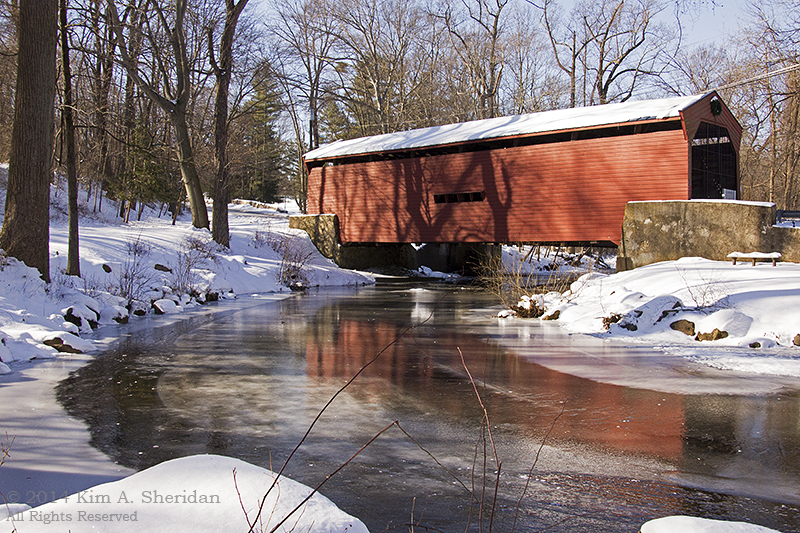
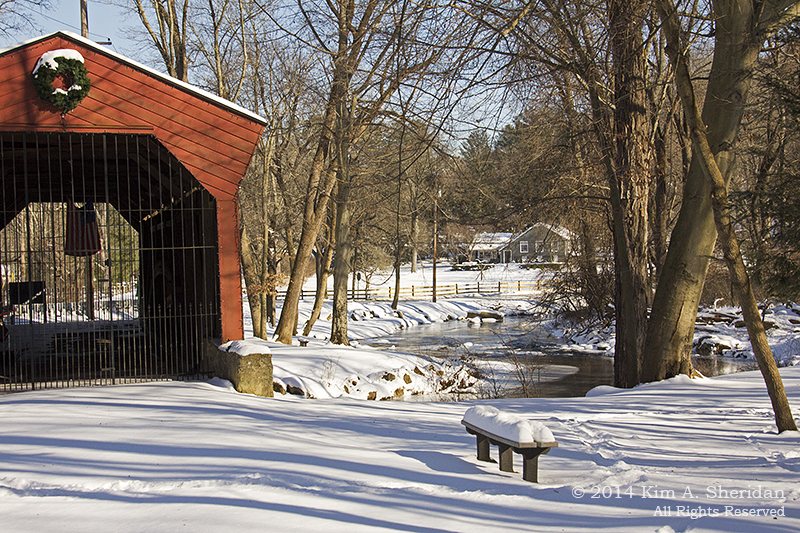
The One-Eyed Guardian of the Covered Bridge

Bartams Bridge Guardian_0280acsThe One-Eyed Guardian of the Covered Bridge

Keeps watch by day and by night;

Alert, he’s perched atop the ridge,

A jolly sort of sprite.

The bridge is old, none go across

Its glory days are past;

Few see the knight, to their great loss

They hurry by too fast.

Tedium does not plague the soul

Of our solitary deer,

For close at hand is a fishing pole

And a frosty mug of beer.
I do not know from whence he came

Or whither he may go,

Or why he thought, in Heaven’s name,

To watch here in the snow.

But he remains, though cold his post

In Mother Nature’s fridge;

So join me in a heartfelt toast:

The Guardian of the Bridge!Bartams Bridge Guardian_0288acs

Treasure Hunt

Ridley Creek Geocaching_9489acs ***SPOILER ALERT***

I’ve done my best not to be too specific with my descriptions of these geocaches. Nonetheless, my photos may give them away. If you’re into geocaching, and haven’t done Ridley Creek State Park yet, continue reading with extreme caution.

YOU HAVE BEEN WARNED.

In between snowstorms, we decided to go geocaching at Ridley Creek State Park. Never heard of geocaching?

Ridley Creek Geocaching_9452aBasically, it’s an outdoor treasure hunt. Game participants have hidden thousands – maybe millions – of containers in outdoor locations around the world. Containers usually hold a logbook and a number of small trinkets. The rule is that you can take an item from the container if you leave another item of similar value. Participants search for the containers, known as geocaches, by using GPS coordinates. Or a smart phone app, as we did.

There are three traditional geocaches in Ridley Creek SP. The first was hidden on a hill between two trails. We poked around in fallen logs and at the base of trees for quite some time until Master Tracker Robb spotted the geocache. Good eyes – it was in a tiny 35mm film canister. (Remember film?)

Ridley Creek Geocaching_9463acsMe Robb. Me make fire. Me real he-man.
There are several of these tipi structures around the park, and Robb is always happy to pose ridiculously.

The second cache took us to a different hillside on a different trail. This time I found the cache, which is why there are no pictures. In addition to my role as the official App Bearer, I’m also the Team Photographer. The logbook was frozen shut. It must’ve gotten wet at some point.

Ridley Creek Geocaching_9513acsThere may not have been snow, but it was cold enough for ice to decorate the fallen leaves along the creek.

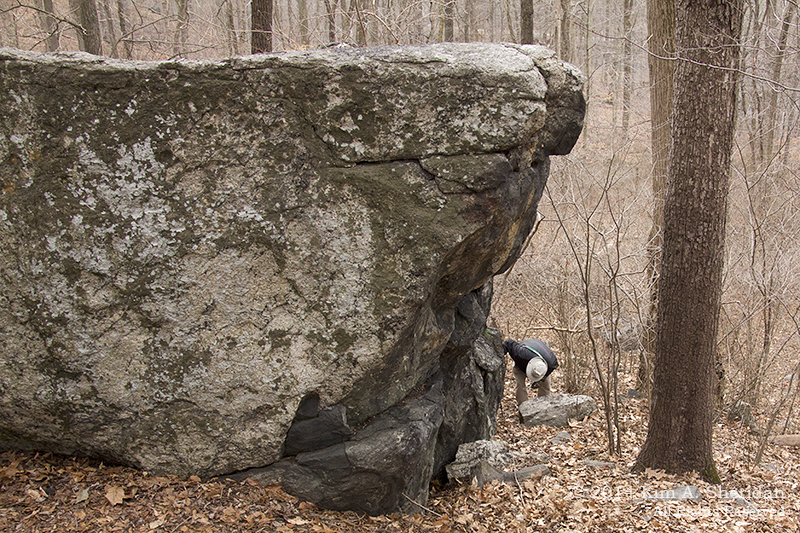
Ridley Creek Geocaching_9556acs We saved the best cache for last. First, it introduced us to a whole new trail, which instantly became our favorite. Second, the cache was challenging to get to, and even harder to find. The side trail led down another hill until it died out at a rock outcropping. The boulders just screamed “HIDING PLACE!”, and since the name of the cache was “Rock and Roll”, we felt certain we had found the spot.

Ridley Creek Geocaching_9545acsThe treasure proved elusive, though. Don was convinced that if he could just lift up the rock, our prize would be underneath.

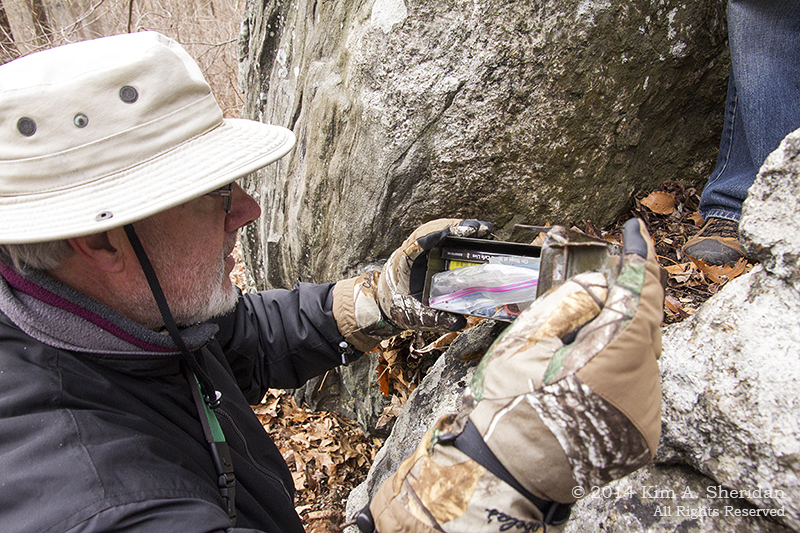
Ridley Creek Geocaching_9598acs We’d just about given up, deciding that perhaps the cache had gone missing (it happens). In checking the online logbook, I found a photo that rang a bell with Robb. He led us straight to this crevice, about four feet up on the side of the rocks. Of course, the cache wasn’t right at the front…

To retrieve it, Robb had to venture deep into the dark recesses of the rock, supported only by a flimsy branch, all the while beating off creepy, nefarious creatures with a magic staff. Is there no limit to his bravery?

Don would wish me to inform you that the magic staff belongs to him, and therefore he deserves all the huzzahs.

Ridley Creek Geocaching_9566acsEureka!

Ridley Creek Geocaching_9570aDon with the cache box.

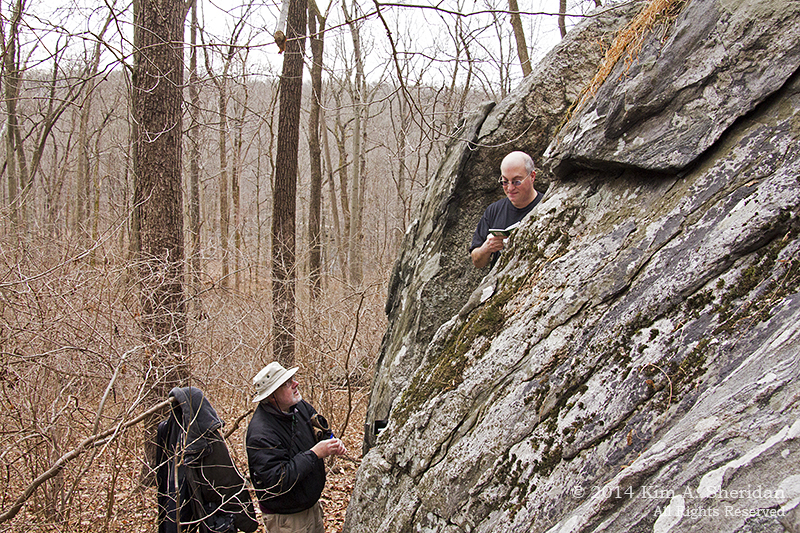
Ridley Creek Geocaching_9577a This is just a portion of the rock outcropping. It nearly ate Robb, while Don stayed safely out of danger. As Team Photographer and App Bearer, I, of course, was too valuable to risk.
We logged our latest triumph, then followed the trail back to its source. After a nice lung-busting climb up a hill, and  an even nicer knee-busting descent down the other side, much of the trail winds along the banks of Ridley Creek.

Ridley Creek Geocaching_9610acsWe saw quite a few of these tiny ice formations on the ground. They look like fiber-optic tubes. I kept expecting them to light up in neon disco colors. Try as we might, we could not figure out how they formed.

Ridley Creek Geocaching_9649acsTree of the day – Shagbark Hickory.

Geocaching was a lot of fun, and we are keen to try it again. It added a challenge to the trails we frequent regularly, and introduced us to a new trail. There is no shortage of geocaches to search for, either, so this hobby should keep us amused for quite awhile.

It will be quite some time before we can travel such easy and clear paths, however.

For more information about geocaching: http://www.geocaching.com/

Huntin’ Armadillos: Hagerman NWR

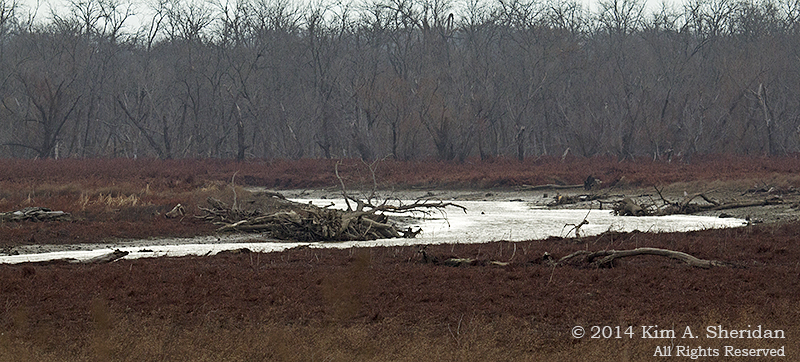
TX Hagerman NWR_5999a Hagerman National Wildlife Refuge: 11,320 acres on the Big Mineral arm of Lake Texoma, along the border of Texas and Oklahoma. Bit off the beaten path for a Pennsylvania chick, isn’t it? Except that last month found me in Dallas spending time with family. Inevitably I got itchy for the great outdoors. This year I conned my cousin Jensen into spending a day at Hagerman, mostly by promising him armadillos. Jensen is a talented photographer with a good eye who focuses on landscapes and sports. This would be his first time birding – and armadillo hunting.

TX Hagerman NWR_6017aThe day didn’t start out auspiciously. 45° to a Southern boy with thin blood and no socks is darn near intolerable. The wind wasn’t helping matters; nor were the thick gray clouds. The weather only served to accentuate the stark landscapes, and send us scurrying back to the warmth of Jensen’s SUV.

TX Hagerman NWR_6310acs Then we saw one good bird, a Red-tailed Hawk, and then another, this time a Northern Harrier (above) in flight. Suddenly the day didn’t look so bad! By the time we’d driven along the Wildlife Drive to where the Snow Geese were, the wind was abating and the sun was trying to break out.

TX HagermanSnow Geese_6256aAh, the Snow Geese! There were hundreds of them, as there always are, gathered in a grassy field across from the lake. TX HagermanSnow Geese_6340aMore poured in from somewhere over the trees. Watching large flocks of Snow Geese fly always amazes me. They never fly into each other, even when the flight paths of individual squadrons cross. When I looked at these photos later, I discovered that there were a few smaller but very similar Ross’s Geese mixed in.

TX Hagerman NWR_6488aOne of the odd things about Hagerman NWR is that it is dotted with oil wells. Many of them are sitting out at the end of narrow peninsulas jutting out into the lake. The Turkey Vulture above startled us as we were walking down one such spit of land. It burst up out of the vegetation at the water’s edge right next to us, and we’d never even known it was there. One of the many Turkey Vultures at Hagerman.

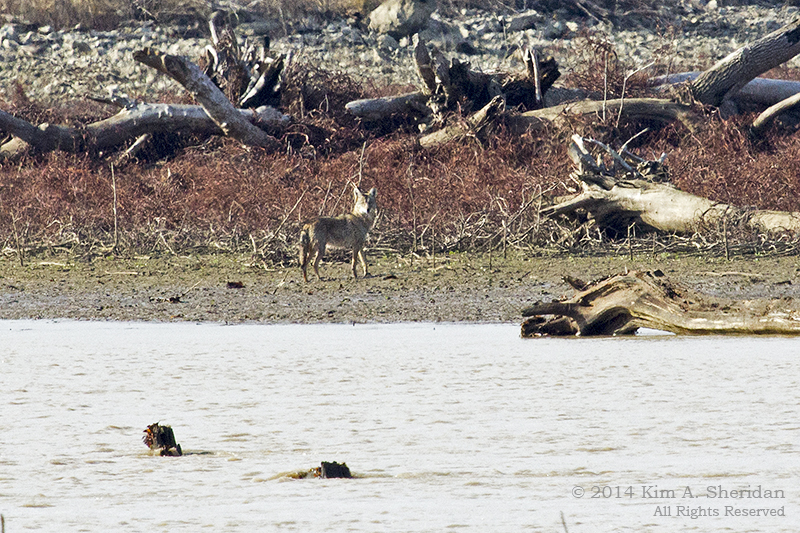
TX Hagerman NWR_6500acs Off in the distance, we saw something brown splashing across a creek. An armadillo? No such luck, but what we saw was just as good. Jensen said “Fox!” just as I yelled “Coyote!”  TX Hagerman NWR_6514aMr. Coyote turned and looked back at us before disappearing into the brush. I’d never seen a coyote before.

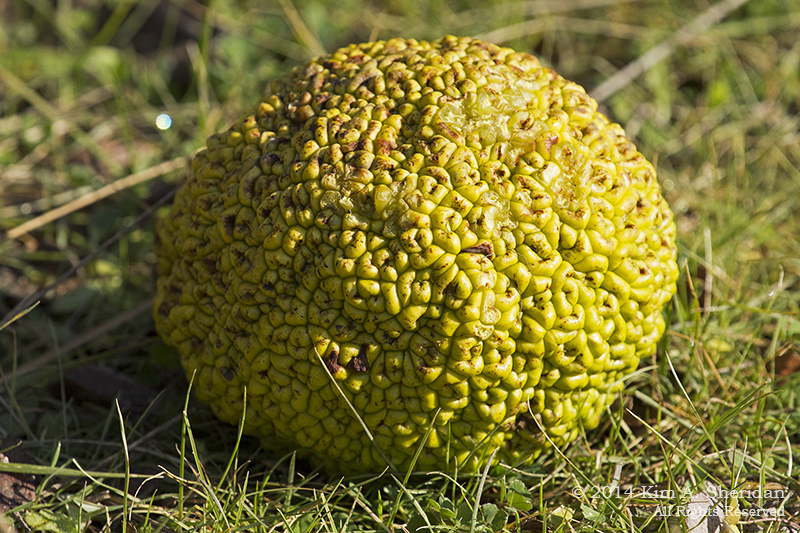
TX Hagerman NWR_6618acs We spent some time walking along a couple of different trails, across marshy areas and through woods. These strange seeds littered the ground. Jensen said they called them “crabapples” as kids. Sorry, cuz, wrong again. The sign says they’re the fruit of the Osage Orange.

FUN FACT: Well, okay, we have to give Jensen partial credit, because a common name for these fruits is “hedge apple”; in Texas, “horse apple” is common. For centuries the Osage Orange tree was found only in a limited area near the Red River valley, a portion of which is now Lake Texoma. They spread throughout the Plains after they were widely planted as living fences in long hedgerows. Aggressive pruning turned them into tight thorny hedges. Barbed wire made the trees obsolete, but their strong termite-resistant wood makes great fence posts that don’t rot.

Maybe those hedges are keeping the armadillos out?

TX Hagerman NWR_6634acsBoth Western and Eastern Meadowlark are found at Hagerman. I’m not a good enough birder to tell the difference from a photo. Supposedly, their songs are quite different, but these birds weren’t talking!

TX Hagerman NWR_6673acs The ponds around the Refuge are good wintering places for waterfowl. We saw several kinds of ducks, including Mallards, Ruddy Ducks, Gadwalls, and this Northern Shoveler. There were also a number of Great Blue Herons.

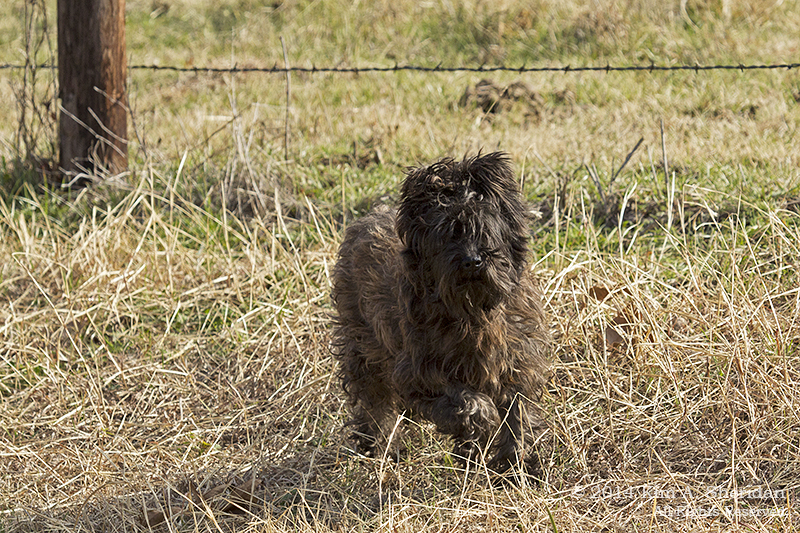
TX Hagerman NWR_6907acsAt one point, the Refuge road passed through a small cattle ranch. This little Texan farm dog chased our SUV fiercely through his territory, despite not being any taller than our hubcaps.

TX HagermanSnow Geese_6724acs Also escorting us along the road was this flock of snow geese. No more dark clouds now – nothing but blue skies!

THE ONE THAT GOT AWAY: There’s always one on every trip, isn’t there? This time it was a Greater Roadrunner, along the side of the road just feet away from our car. Of course this was AFTER we’d put our cameras away and left the Refuge!

The Road Runner and Wile E. Coyote in one day? I guess that was too much to ask!

And still no armadillos.TX Hagerman NWR_6686acs