On The Ridgeline

MI Ludington State Park_9626aLudington State Park is only five minutes away from my family’s home in Michigan. Its lakes, dunes, woodlands and miles of trails draw me there time and again.

MI Ludington State Park_9390acsThe Island Trail running between Hamlin Lake and Lost Lake is my favorite place to explore. Birch, maple and pine trees line the sandy path.

On one hand, grassy marsh meadows soon give way to dark Lost Lake. On the other, big Hamlin Lake lies sparkling in the sun.
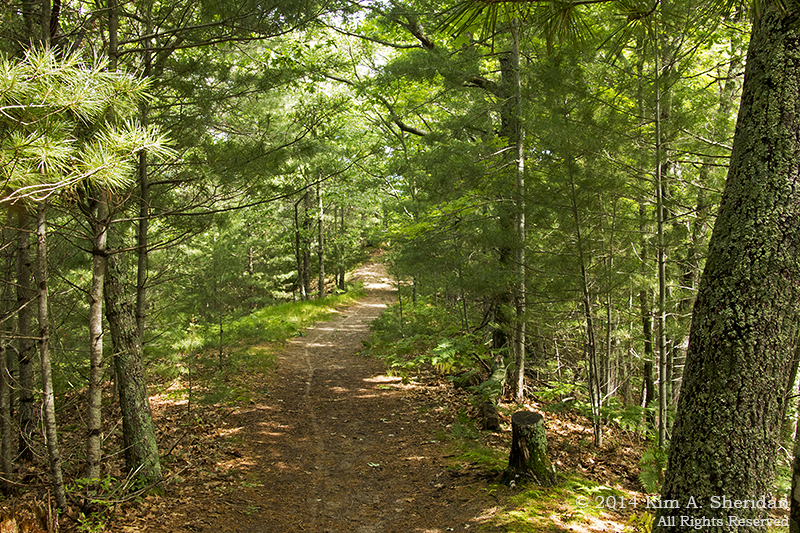
MI Ludington State Park_9420acsThis year I finally had a chance to walk the Ridge Trail and complete the loop. As you would expect from its name, the Ridge Trail runs along a sand dune ridge. Unlike the smaller grassy beach dunes, these dunes are wooded.

The trail climbs so steeply at first as to need wooden stairs, and then settles into a gentler rise. The top of the ridge is narrow; just on either edge of the trail, the land drops precipitously into deep valleys.

MI Ludington State Park_9516acsThe higher you climb, the more exposed the ridge becomes. Old tree stumps show the effects of wind, rain and sun.

MI Ludington State Park_9430acsIf you’re tired from the climb, you can have a seat. Dunes are living things, constantly shifting with the winds. Here the sand is slowly devouring this bench.

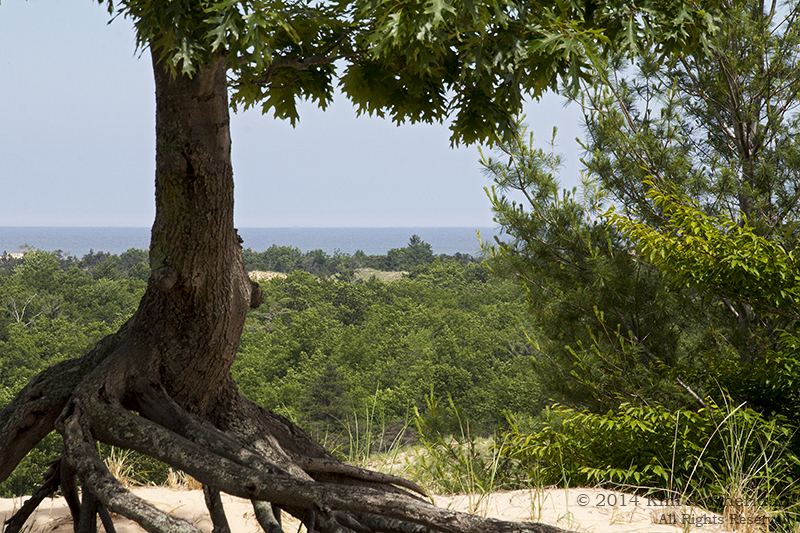
MI Ludington State Park_9541aAs the dune is blown away from the bases of the trees, it reveals a marvelous tangle of twisted roots. Lichen and moss clothe the exposed bark.

Roots like this and the weathered remains of old trees lie everywhere on the ridge, a sculpture garden left behind by elfin artists.
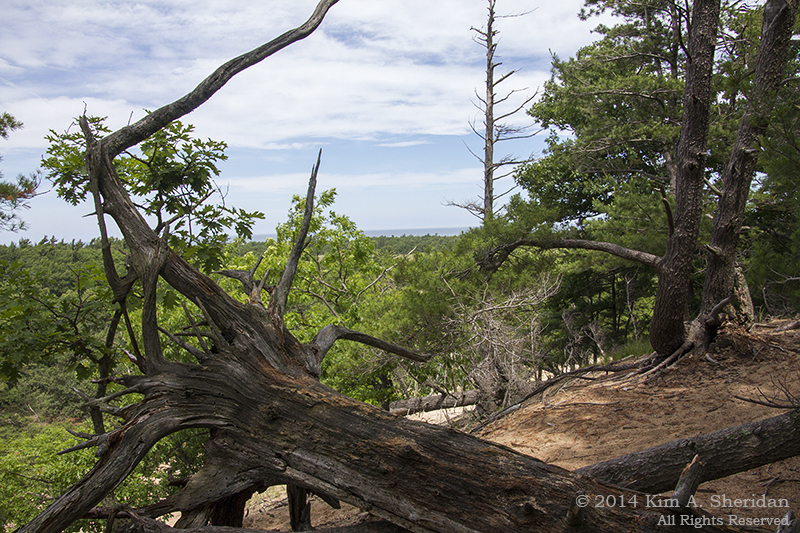
MI Ludington State Park_9578aFrom the summit, Lake Michigan appears, playing peek-a-boo between the fallen trees.
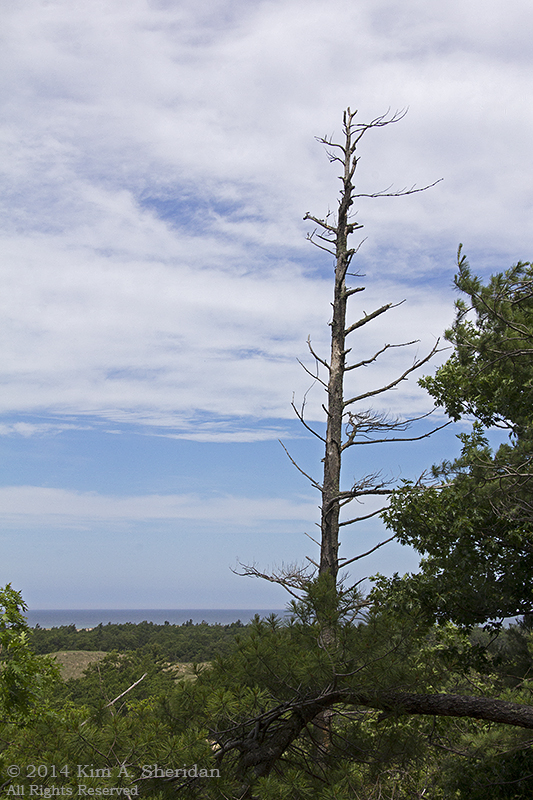
MI Ludington State Park_9586acsThe Old Sentinel.

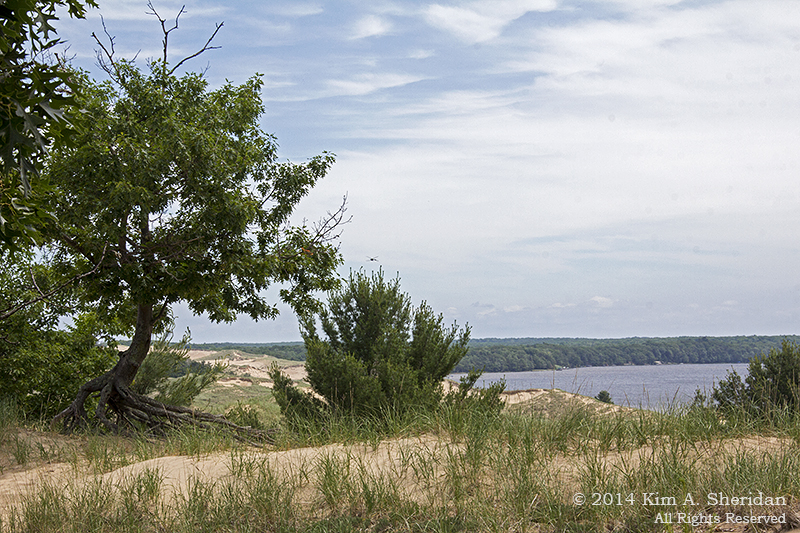
MI Ludington State Park_9616acsFurther along, a side trail winds through open dunes to overlook Hamlin Lake. A great spot for lunch, except for the mayflies. Can you see that X-shaped thing hovering over the small bush in the center? (As always, click the photo to see a larger image.)

No, that’s not a tiny spaceship. It’s a mayfly that managed to photo-bomb my perfectly nice landscape shot.

FUN FACT: Mayfly naiads (the immature stage) live a year or two on the bottom of lakes, molting several times. The final molt produces the adult mayfly, which will live only a day or two. They’re harmless to humans – except that often they all mature at once, creating swarms that can really annoy the unsuspecting picnicker.

MI Ludington State Park_9695aWhat goes up must come down, and soon enough the Ridge Trail descends to rejoin the Island Trail.

Last winter was rough here in Michigan, and portions of the path must be traversed with care. Erosion along the shore of Hamlin Lake undermines soil and trees alike.

MI Ludington State Park_9760aIn a marshy bay of Hamlin Lake, a Great Blue Heron pauses from fishing to offer a fitting benediction to a happy day on the trail.

The Forest Primeval

MI Hartwick Pines 1 Old Growth Forest_9078acsNo cathedral built by man could match the majesty of this forest sanctuary.

MI Hartwick Pines 1 Old Growth Forest_9082aRugged russet trunks rise straight and true to the arched ceiling of deep verdant green.

All is hushed but for the small rustlings of squirrel and chipmunk congregants below, and the whisperings of the wind in the pines that tower above.

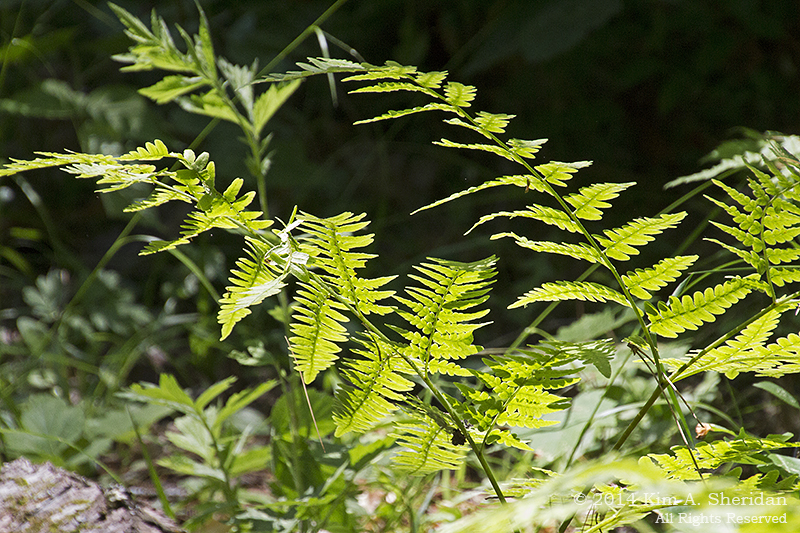
MI Hartwick Pines 1 Old Growth Forest_9104aThe floor is laid, not with stone, but lush ferns and wildflowers. Where some old giant has fallen, light streams through the canopy as through stained glass. Porcupines, pine martens and bears have all walked the aisles of this forest older than time.

The air is still, the mood solemn, the spirit mysterious, eerie, primeval.

MI Hartwick Pines 1 Old Growth Forest_9101aOnce upon a time, pine forests covered 10 million acres of the North Country. Now only small remnants remain. This 49 acre old growth white pine forest endures at Hartwick Pines State Park in Michigan.

The pines here are thought to be over 300 years old, stand 120 feet or more, and may reach four feet in diameter at breast height. Eastern hemlocks and red pines attend these kings. Below them is a shaded understory so dark, it seems eternally twilight.

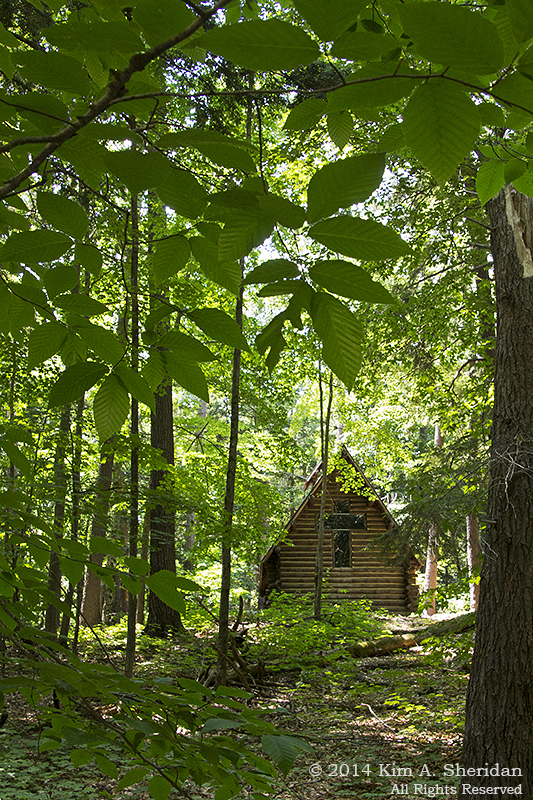
MI Hartwick Pines 1 Old Growth Forest_9116aAt the edges, where maples and beeches mingle with the pines, rests a small chapel.

A church within a church.

Quaint and cozy, yet somehow superfluous.

Are not the pines themselves enough to inspire reverence in such a setting?

Must people seek the Creator within walls while all of Creation stands without?

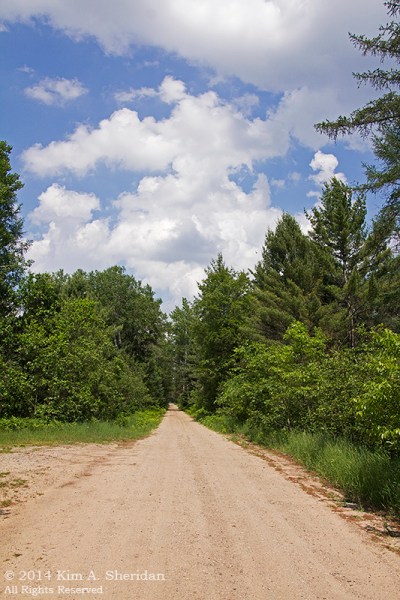
MI Hartwick Pines 2 Scenic Drive_9214sStep from the forest cathedral, and other mysteries beckon the soul.
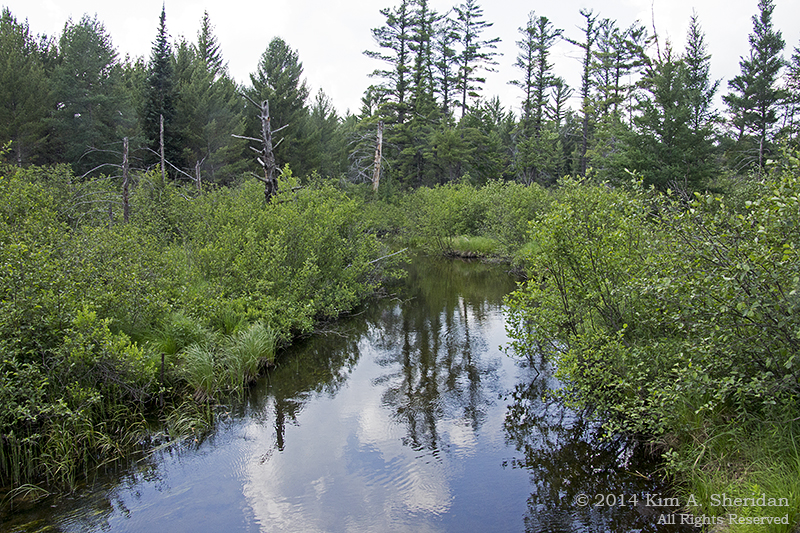


This dirt road, for instance.

Don’t you want to know what’s around the next bend?

Let’s see what we can find.

MI Hartwick Pines 2 Scenic Drive_9134aThe Au Sable River meanders its way through wetlands and woods, singing a soft hymn as it goes.

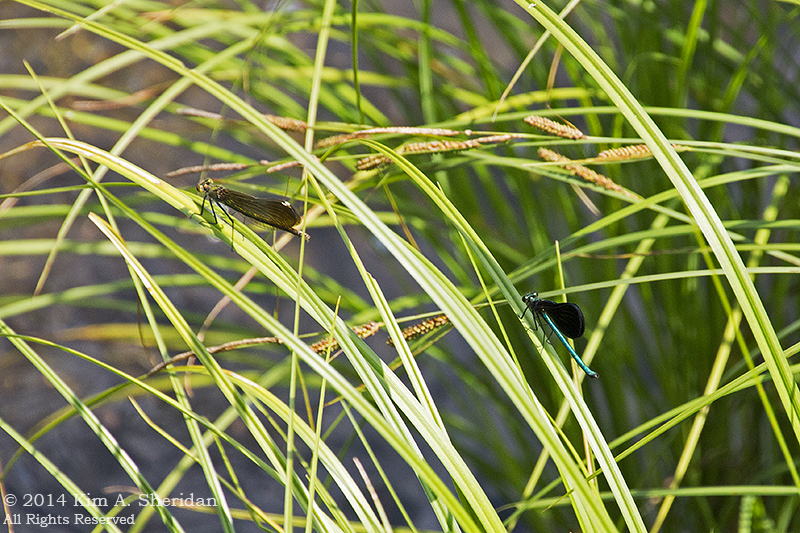
MI Hartwick Pines 2 Scenic Drive_9173aTwo very different dragonflies share a pew.

MI Hartwick Pines 2 Scenic Drive_9185acsA Northern Crescent butterfly preaches from a sunflower lectern.


MI Hartwick Pines 2 Scenic Drive_9211a

A choir of brightly cloaked angels.


MI Hartwick Pines 3 Nature Trail_9245acsGlory, Glory, Hallelujah!

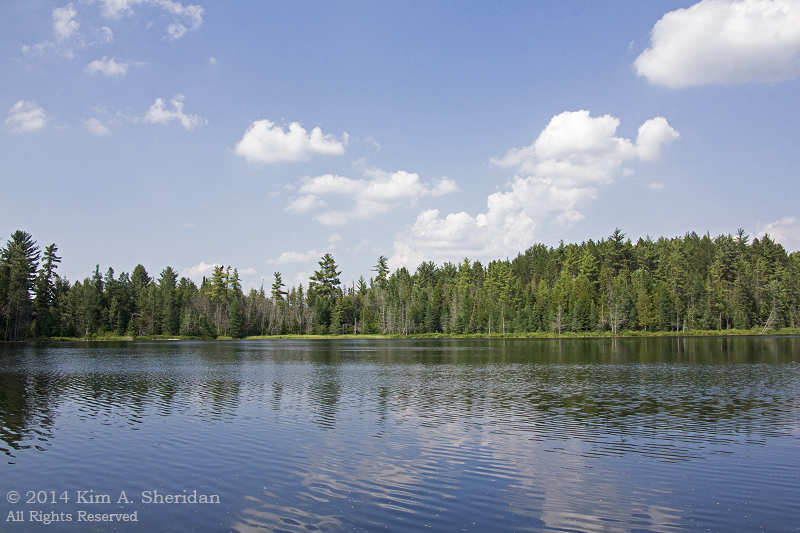
Glory Lake reflects the glory of northern Michigan in the colors of azure sky, cobalt water, and emerald pines. At the top of a tall tree nearby perches an Osprey, looking for prey.

Glory Lake, and its sister, Bright Lake, are kettle ponds formed during Michigan’s glacier period. Ice blocks that broke off from the glaciers formed depressions that filled with water after the glaciers retreated.

MI Hartwick Pines 3 Nature Trail_9294acsA trail leads from the ponds into a diverse woodland.

Besides the aspen at left, there are white, red and jack pines.

Spruce, hemlock, and cedar.

Beech, maple and oak trees.

Shrubs, ferns, wildflowers, and a potpourri of plants are also abundant.

It’s a botanist’s dream.


MI Hartwick Pines 3 Nature Trail_9286a

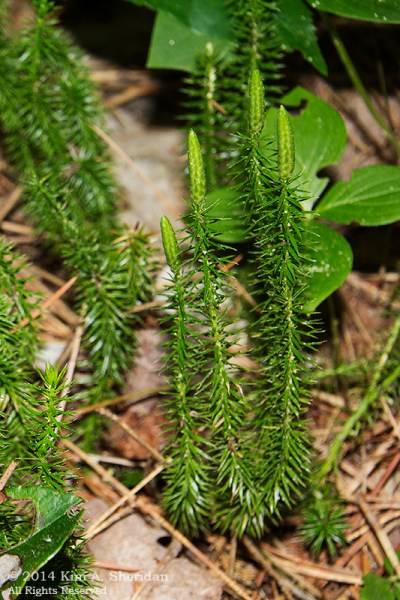
Behold! – Lycopodium!

These are club mosses, but don’t be fooled by that name. They are not true mosses at all, but vascular plants.

Like teeny tiny Christmas trees a few inches high, they bring joy to those who spot them.

These little plants are much favored by the true of heart.

MI Hartwick Pines 3 Nature Trail_9281aAt trail’s end, a quiet spot for contemplation. From towering pine trees to miniscule club mosses, ferocious dragonflies to gentle butterflies, the mysteries of the land inspire reverence and wonder.

May Nature’s blessings be with you all. Go in peace.
The Golden Cave

ImageWhat more likely place to go hunting for gold than in the heart of the city?

My merry band of adventurers caught wind of an abandoned mine deep in the wilds of the Wissahickon Valley, and quickly signed up for a tour. We set off one day for an easy stroll down Forbidden Drive where it borders cool, green and leafy Wissahickon Creek.

Wissahickon 6 Trail_9805acsThere was no shortage of flowers and greenery to admire along the way.

Further along, a staircase led down the embankment to a small dam in the creek.

One of our group is a talented professional photographer who is generous with his photographic wisdom, and I soak it all up like a sponge.

At the dam, Ned gave me a homework assignment: photograph the water flowing over the wall at different shutter speeds.

Dam Collage I know which one I like better – how about you? (Click to see larger image.)

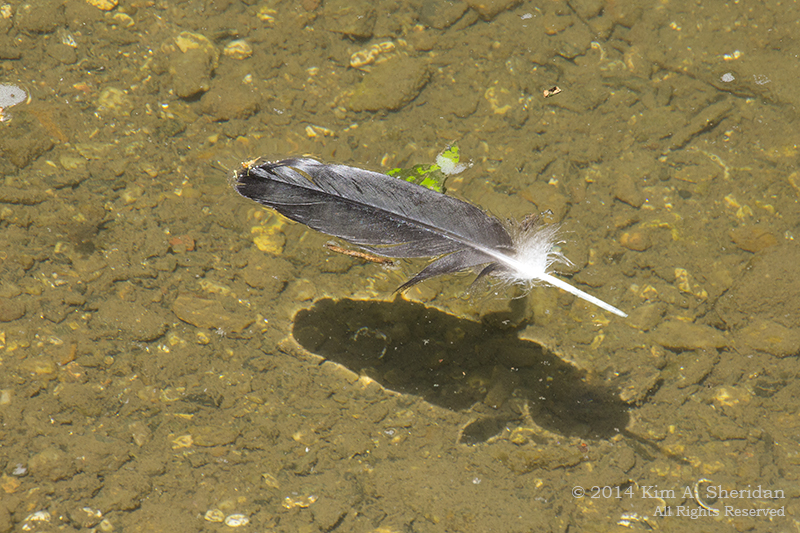
Wissahickon 2 Livezy Dam_9612aWhen he wasn’t looking, I forsook my homework and took a photo of a feather drifting lazily down the creek.

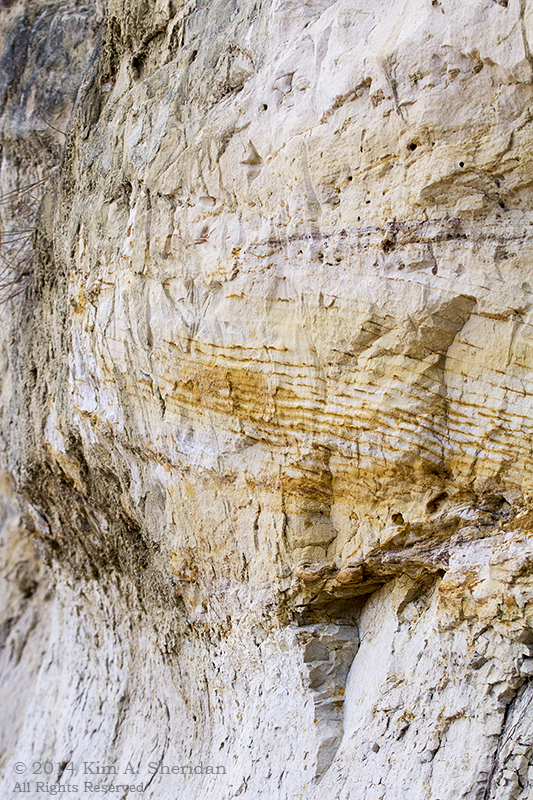
Wissahickon 3 Gold Mine Cave_9668aFrom a side trail, we got our first glimpse of the gold mine. This outcropping hides a small cave near its base that once was home to a mining operation, way back when in the 1760s.

The Roxborough Mining Company, consisting of a handful of German immigrants, excavated this manmade cave with hand drills and black powder. According to legend they were searching for gold, but having found none, soon abandoned the endeavor.

Wissahickon 3 Gold Mine Cave_9685acAnother legend claims this cave was a hidden storehouse of grain during Revolutionary days. Today it holds only tourists like us. Though the cave goes back some distance, the roof is low; here you can see the entrance is half a Robb high.

Wissahickon 4 Trail_9712acsAn old stone bridge carried us across the creek. A casual amble for us no longer; the trail was much more challenging on the other side.

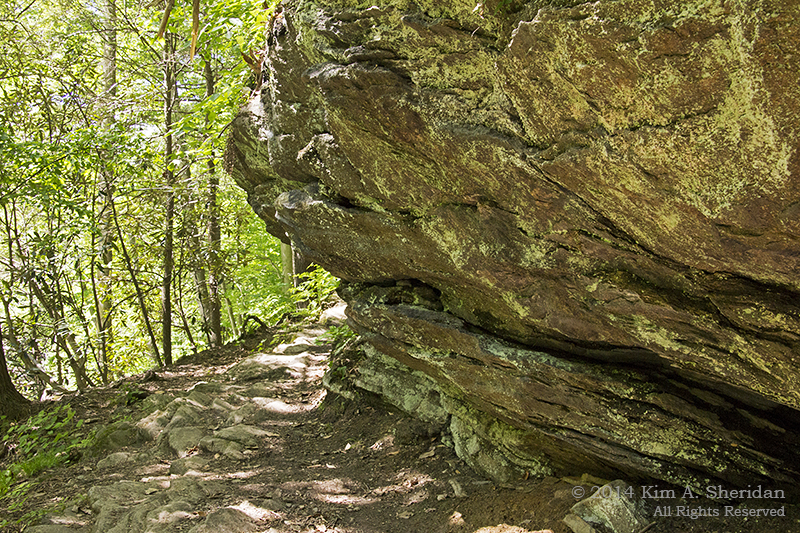
Wissahickon 4 Trail_9730aThe pathway wound around rocks, over tree roots, and up and down hillsides. At times, it was crossed by rivulets of water; at other times those rivulets made their bed in the trail.

Wissahickon 6 Trail_9772aThe Valley is actually a gorge, with steep rocky hillsides. Here’s Don picking his way down the trail, aided by his trusty walking stick, and a convenient set of stairs.

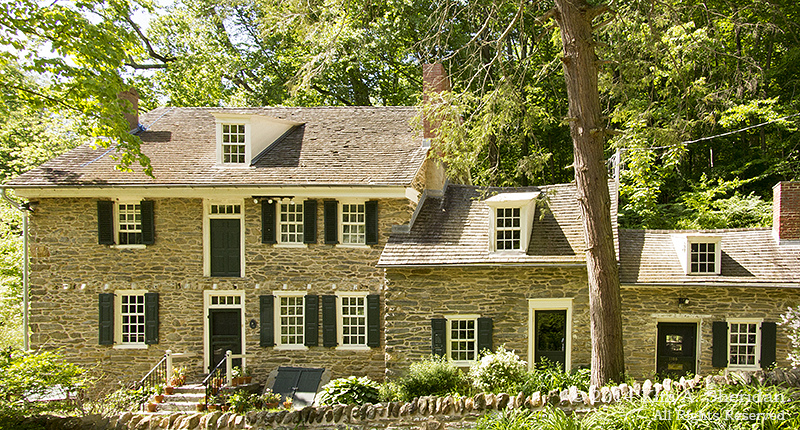
Wissahickon 7 Livezy House_9812aThis is the Livezy House, built by a Quaker farmer and miller in 1749.

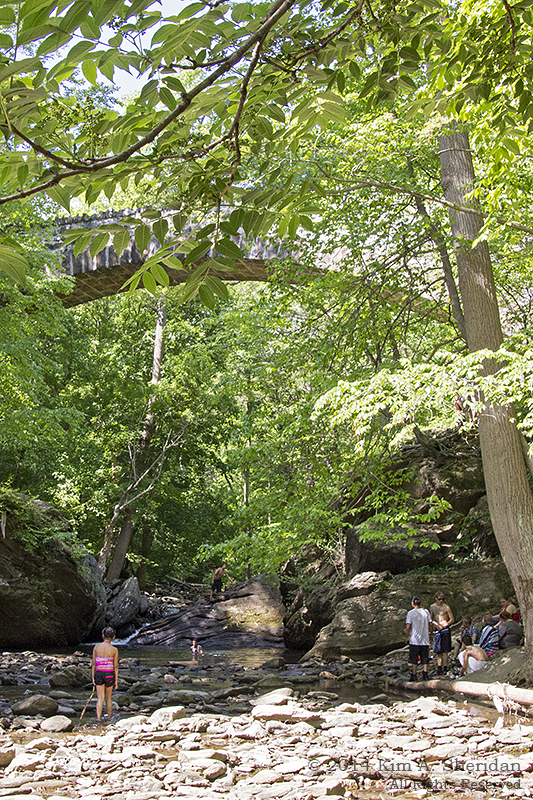
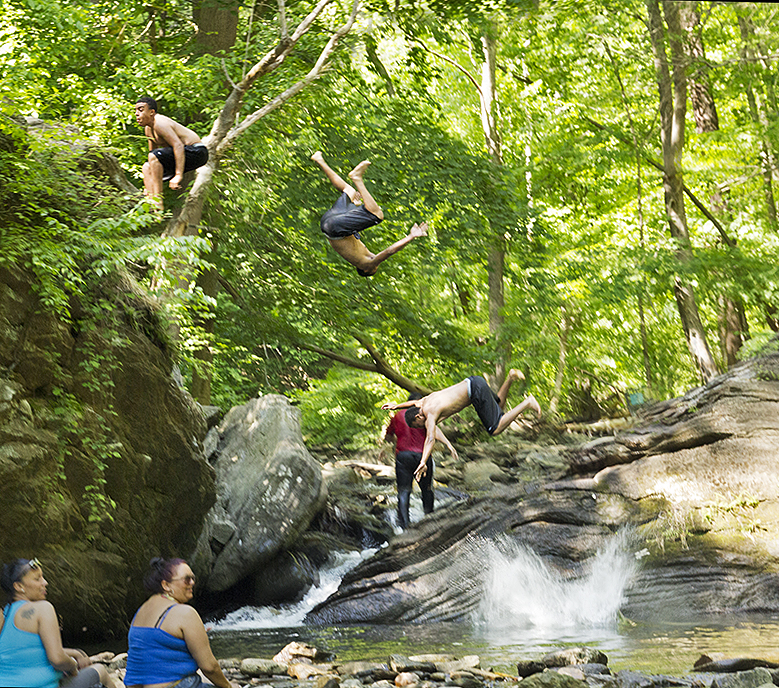
Wissahickon 8 Devils Pool_9839aAh, Devil’s Pool. Cresheim Creek drains into the Wissahickon here in this deep green glen. Like many of the watery places along the creek, it is a popular, and illegal, swimming hole.

It’s also dangerous. Too many people are tempted to jump from rocks up to 20 feet high into a pool that is just 5 to 7 feet at its deepest. Drownings are not unheard of here. Frequently polluted water adds to the list of hazards.

Devils Pool Collage 2bThis time-lapse photo proves that young daredevils are not easily deterred by the risks. Here I blended four shots into one to capture all the action of a backward somersault into the pool.

Wissahickon 4 Trail_9702aLike any urban area, Philadelphia is crowded, noisy, and paved-over. Yet within the city limits, in the Wissahickon Valley, Nature holds on as tenaciously as ferns cling to life in a rockface. Definitely urban living on the Wild Edge!


Git Along Little Doggies

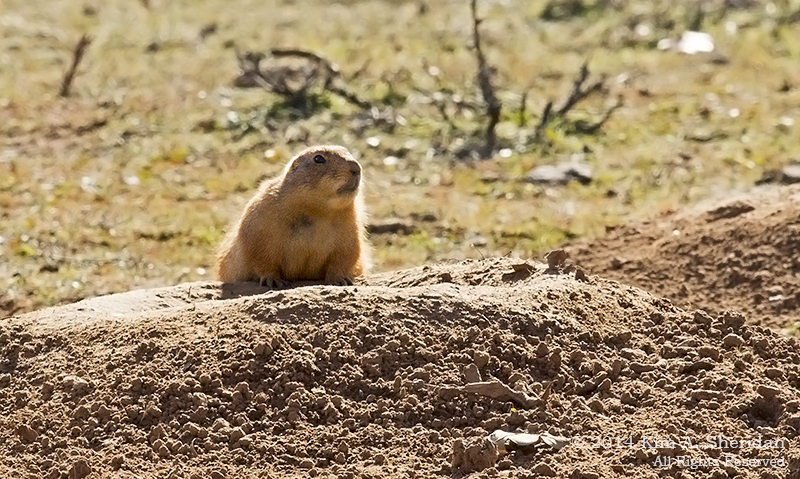
Fort Worth NCR Prairie Dog_8343acs Getting my daily dose of wildlife while visiting family on vacation can be frustrating. At home I know when and where to go to find cool critters. Heinz Refuge and Cape May in early May for warblers, the Delaware Bayshore in late May for horseshoe crabs and red knots, Hawk Mountain in the fall for raptors. When I go away to visit family, it’s an excellent opportunity to visit new places. But the timing of the visits isn’t always conducive to wildlife spotting.

Fort Worth NCR Prairie Dog_8314aI go to Texas in the winter. Except at White Rock Lake (where there’s always something happening) I pretty much have to take what I can get.
That means a lot of landscape and plant photography, and accepting that brown is the color of the day.

Fort Worth Nature Center and Refuge was no different when I visited; lots of neat habitat, not a lot of wildlife.

Except for the prairie dogs!

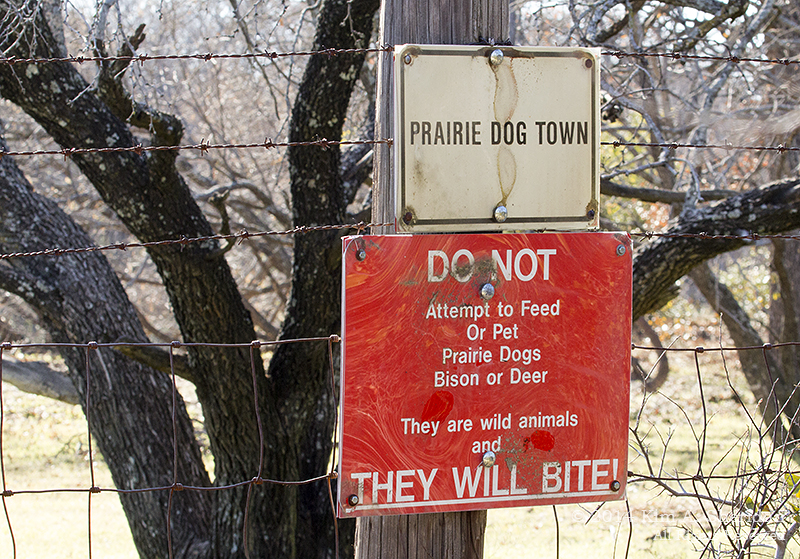
Fort Worth NCR Prairie Dog_8278acs The Nature Center has a prairie dog town. It’s a large area of fenced prairie; I’m not sure whether the fence is to keep the prairie dogs in, or the humans out. The sign above would seem to indicate the latter.

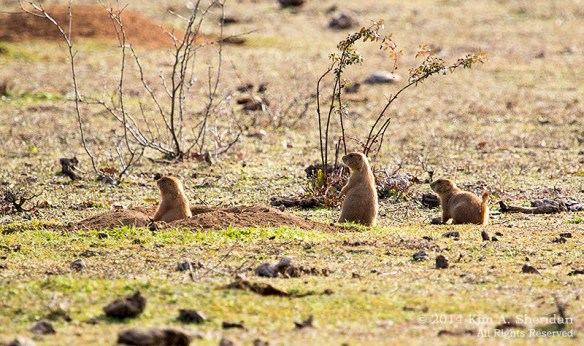
Fort Worth NCR Prairie Dog_8481acsInside the enclosure, a good number of the little rodents go about their lives. Yes, they are rodents, related to squirrels. The “dog” name comes from their high-pitched bark. Prairie dogs are highly social. They live together in family groups, sometimes called a coterie; a number of groups comprise a ward, and a number of wards make up a town.

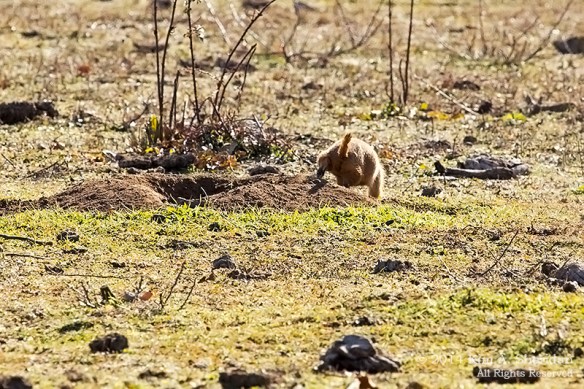
The land is peppered with the entrances to their burrows. Weather is harsh in the prairies, and burrows offer protection from floods, hailstorms, fires and temperature extremes. Below the ground are a number of separate chambers for sleeping, raising babies, food storage and elimination. There may be as many as 6 entrances to a burrow. The craters serve as lookout posts and ventilation.

FUN FACT: Burrow holes have different shapes and heights. When the wind blows, air moves into the burrow through the lower, more rounded dome craters; it passes through the burrow and exits through the higher, sharper-edged rim crater.

Fort Worth NCR Prairie Dog_8444acsPrairie dogs dance! Nuzzling and grooming is common among family groups. It’s ridiculously cute when they do this. Call it the Texas Two-step.

Fort Worth NCR Prairie Dog_8448acsCONSERVATION PIECE: Not everyone thinks prairie dogs are cute. They feed on grasses, sedges and roots, keeping the vegetation short and churning up the soil. This benefits the habitat by enriching the plant life and attracting other wildlife. Their burrows can provide homes for other critters as well. Because of their importance to the plains, prairie dogs are considered a keystone species.

Despite this, farmers and ranchers often consider them pests, and eliminate them where possible. This has contributed to a population nose-dive, which has had a ripple effect across the plains. The endangered black-footed ferret, which relies on prairie dogs for shelter and food, has been driven to near-extinction by their eradication.

Fort Worth NCR Prairie Dog_8359acsPrairie dogs have a number of predators besides humans, including raptors, coyotes, snakes and ferrets. So they need to be wary. Living communally affords them safety in numbers. One or more prairie dogs will be on lookout duty at all times.

FUN FACT: Things get interesting when a threat is detected. Prairie dogs have a large repertoire of barks and calls. Years of study have revealed that these calls are capable of indicating not only which species of animal is threatening the colony, but can describe the individual animal. A prairie dog call for a tall human is different than the call for a short one!

Fort Worth NCR Prairie Dog_8494acsAlways on the lookout, a lone sentry stands guard.

Fort Worth NCR Prairie Dog_8346aAll clear!

Fort Worth NCR Prairie Dog_8355acsAnd off we go.

Waiting

HNWR_7534acs2 There is a moment during the approach of a summer thunderstorm when nature teeters on a razor’s edge. To the east, the sky is a brilliant blue; to the west, dark storm clouds boil. In between, just for an instant, everything stops. The wind dies, squirrels go still, birds cease their chattering. The air is thick with tension, quivering with electricity and the promise of the storm to come. Soon enough the wind will rise and the heavens open. But in this serene snippet of time, Nature is hushed, holding her breath… waiting.

Early spring is equally on the cusp, at the meeting place of seasons. The frantic weeks when the trees and plants explode with flowers and new greenery are the future. The winter coat of brown the land still wears is the past. But now the sky is blue, and the sun is warm. On days such as these, it seems that humans and wildlife alike are filled with anticipation. Waiting.

Buds Magnolia_7861acsYoung spring buds of the magnolia dream of being flowers. The first bee of the season dreams of the flowers to be. Waiting.

Tyler Flowers_7646acsTyler Frogspawn_7677a Promise in a jelly filling floats in vernal bogs and pools. These are the eggs of the wood frog. Each dark spot holds the potential of a tadpole, each tadpole the hope of a frog.

Tyler Frog Wood_7753acsMale wood frogs, having passed the winter in a state of frozen animation, are alive and looking for love. Waiting.
FUN FACT: Wood frogs make antifreeze! They survive the winter by freezing, their metabolism shutting down and their hearts stopping. A special antifreeze substance they manufacture limits the freezing of their cells, although ice does form in between the cells. When the weather warms up, they thaw out and go in search of mates.

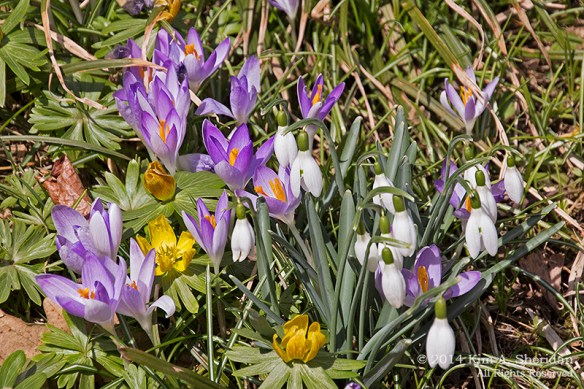
Tyler Flowers_7620aTyler Flowers_7609a Early blooming flowers like snowdrops, crocus, and winter aconite bring a welcome splash of color to a drab landscape. For them, the wait is over; this is their time to shine.

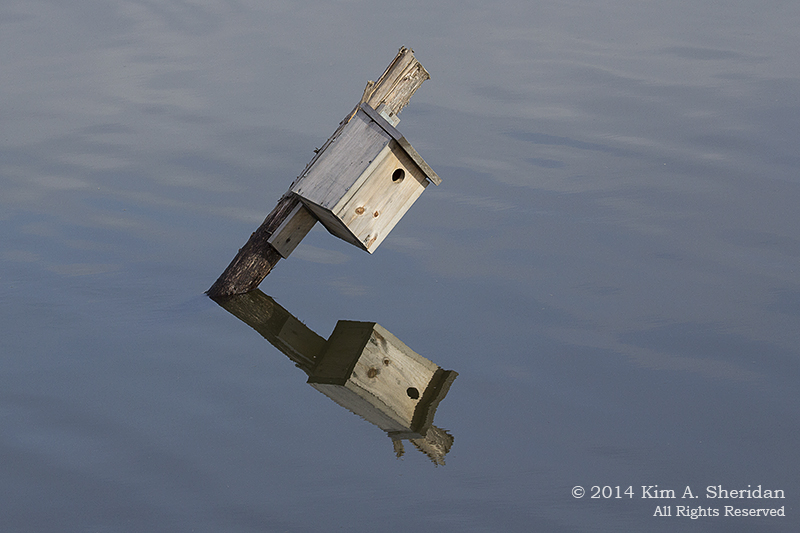
Nest Box Day 1_7793acs A new home has been constructed, in hopes of attracting a feathered family. Waiting.

Flowers Scilla_7823aCali_7901acsA sleepy dog in the sunshine waits for nothing, content to be in the moment.

3 HNWR Tree Swallow_5543 ASCold winds and rain will interrupt our reverie soon enough. The fullness of spring is yet over the horizon. For now, it is enough to join other creatures in the sun, listen to the liquid trill of the northern cardinal and watch the tree swallows twitter on their nest boxes. For now, in this still, quiet moment, Nature holds her breath, dreaming, anticipating…

Waiting.Flowers Crocus_7814acs

Whiteout

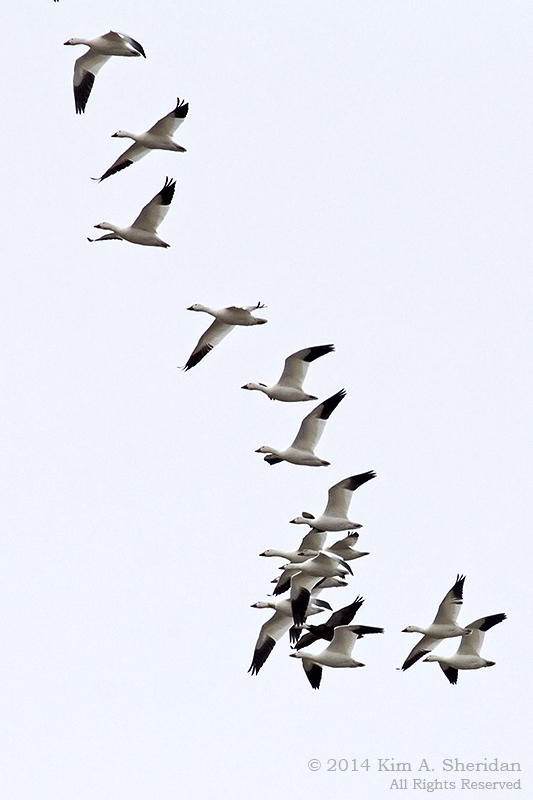
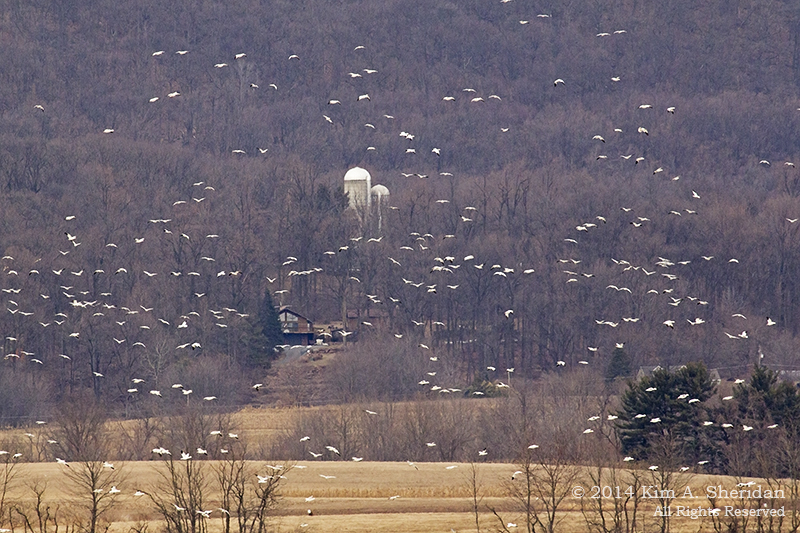
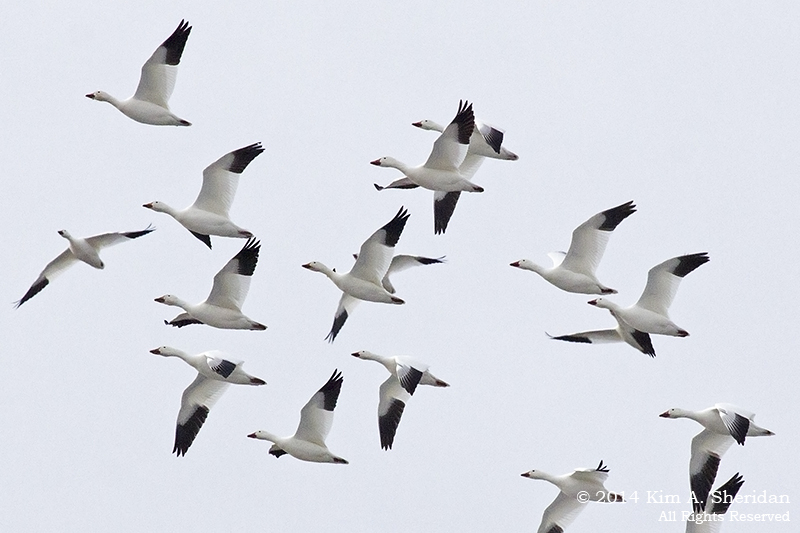
Middle Creek Snow Geese Distant_5773 acs3The cloud on the horizon slowly resolves into individual specks of white, whirling and spinning in synchronicity this way and that. Like dust motes in a shaft of sunlight or snowflakes in a breeze, they spiral slowly downwards to the ice. Without warning they loft up again to the sky, following paths no snowflake ever traveled; for these are not snowflakes, but Snow Geese.

Middle Creek Snow Geese Flight Skein_5967 aThe ice has begun to thaw at Middle Creek WMA in Lebanon County, and the geese have followed the thaw to these fields and impoundments. This is a popular stop on their migration from winter homes along the coast to their breeding grounds in the High Arctic.

Much of the year snow geese are highly gregarious, traveling in large flocks, and gathering on staging grounds like Middle Creek by the tens of thousands. Peak migration in Pennsylvania is in early to mid-March. Once open water begins to appear, the goose population here jumps from 3,000 to 60,000 in a week.

Middle Creek Snow Geese Flight Skein_5832 acsThis is farm country, and this is why the snow geese are here. Committed vegetarians, they feast on grasses, sedges and marsh plants on wetlands. A few decades ago, they discovered a new grocery store to their liking: farms. Waste grain left behind on harvested fields has proven to be an abundant food source.

Middle Creek Snow Geese Flight Skein_6157 a Snow geese are powerful fliers, capable of speeds up to 50 miles per hour. Where they breed in the Arctic, they are fiercely territorial, and family bonds are strong. The young will stay with their parents until their second or third year, when they will choose a lifelong mate.

FUN FACT: Snow geese walk as well as they fly. Within three weeks of hatching, goslings are walking everywhere their parents go. By the time they can fly, they may have covered 50 miles on foot.

The flight of a single bird is a miracle to behold. The flight of 50,000 snow geese is a spectacle.

Middle Creek Snow Geese On Ice_5668 aWhat possesses them to take off is a mystery. One moment there are thousands of honking geese on the ice.

Middle Creek Snow Geese Takeoff_6395 acsThe next, there is a great WHOOSH, and the entire flock lifts off as one. The decibel level goes up by a factor of ten; you need not look at the geese to know the birds have taken off.

Middle Creek Snow Geese Flight Mass_6014 aThey swirl about the sky in seemingly aimless meanderings  for a short while. Then, as suddenly as they took off, the geese come in for a landing – in the exact same place they stood moments before. Why? Perhaps someone saw something they didn’t like. Feeding flocks keep lookouts, who warn the other geese of danger, predators like foxes, coyotes and eagles.

Middle Creek Eagle_6210 aAnd yet – here sits a mature bald eagle, in the middle of a peaceful flock of snow geese. No alarm. No commotion. No panicked flight. The mind of a goose is a riddle wrapped in a mystery inside an enigma.

Middle Creek Tundra Swan_5721 acsThere’s another white bird on the ice at Middle Creek. Tundra Swans are here as well, albeit in smaller numbers. Less skittish than the geese, the swans fly lower, and stand closer to shore.

Middle Creek Tundra Swan_5918 a They also are dropping in for a short visit before pushing on to the north.

Middle Creek Tundra Swan_5892 aMost don’t choose to march, though. Except perhaps this squadron of swans, advancing on a duck detachment in lockstep.

Middle Creek Snow Geese Flight Skein_6349 asc2As the day draws to a close, skeins of tundra swans and snow geese fill the air. Some will fly off to search out a safe roost for the night. Many others will remain at the impoundment, where they will sleep on the open water. On the next day, or the next, a blizzard of snow geese will rise and wing their way north, towards the Arctic, towards the midnight sun, towards summer.

Winter in the Rearview Mirror

HNWR_4862 a It’s been a tough winter; it turned out to be the second snowiest winter on record. Thankfully the arrival of spring is both imminent and welcome. As the seasons change at Heinz Refuge, here’s a last look at winter, receding in the rearview mirror.

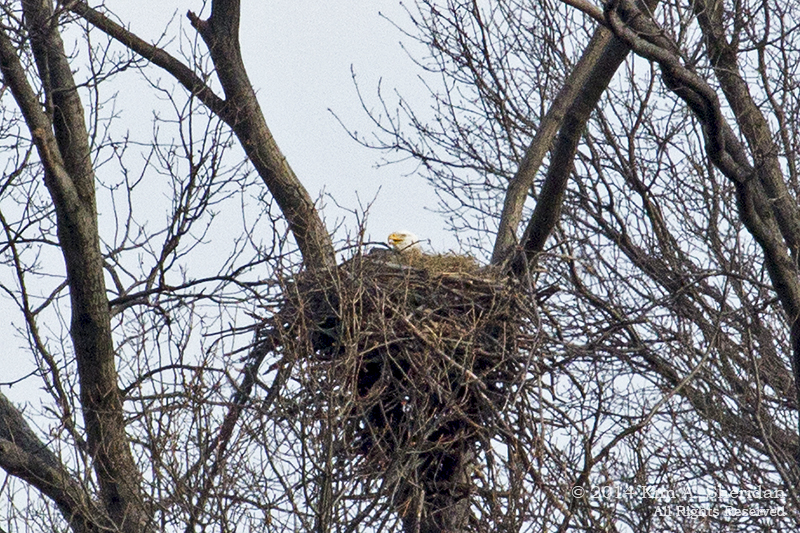
HNWR Eagle_5236 aAlready the promise of spring is being fulfilled. Our resident Bald Eagles are incubating eggs, and we are eagerly anticipating the arrival of eaglets soon.

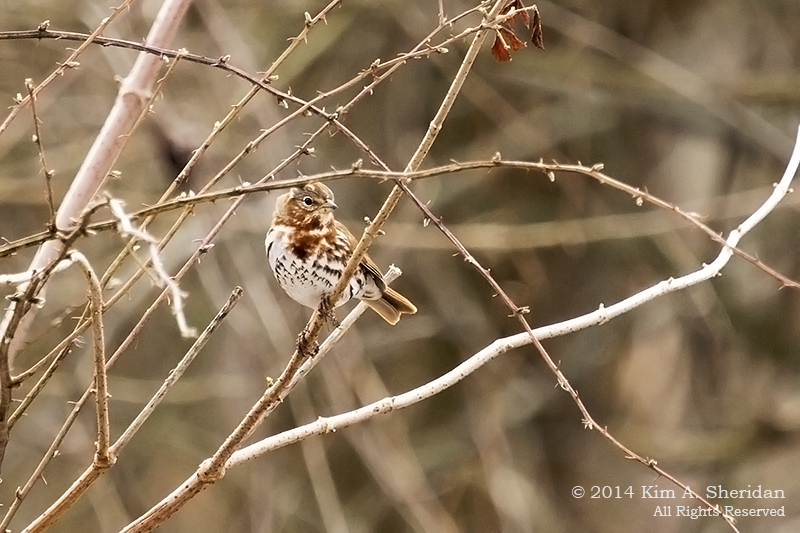
HNWR Sparrow Fox_6514 acs Fox Sparrow on the Pipeline Trail.

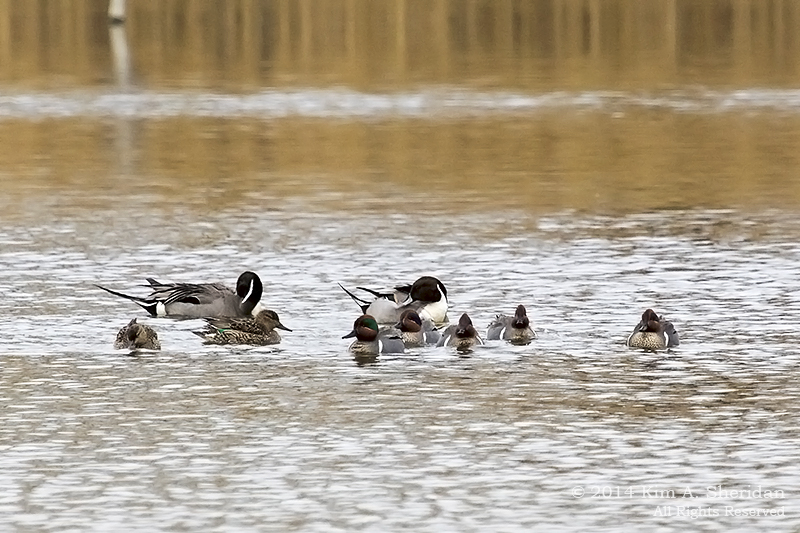
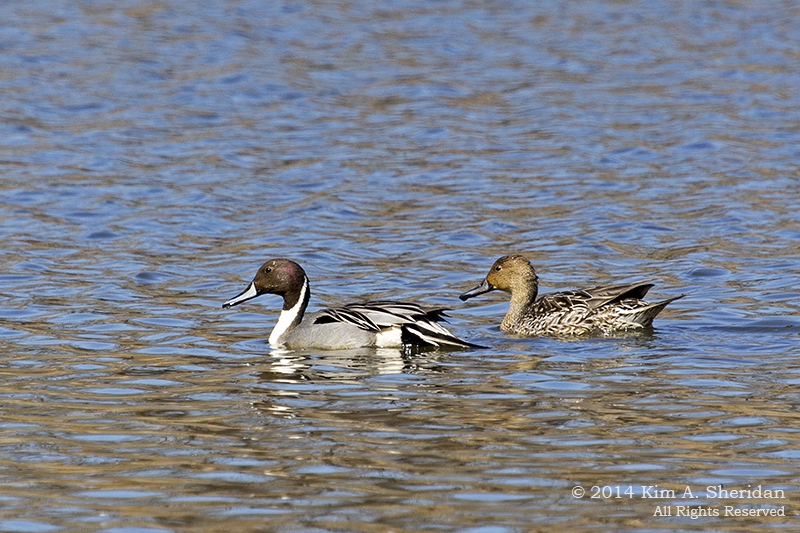
HNWR Duck Pintail Teal_6432 acsOld-timers at the Refuge can’t remember a winter where the impoundment has been frozen solid for so long. Now it’s open water, for the first time since January. And guess what that means? The ducks have come back! Northern Pintails are in the rear – note the long tails that give them their name. Green-winged Teal in front. If you look closely at the second Teal from the left, you can just see the green speculum, or wing patch. (Remember you can click the image for a larger view.)
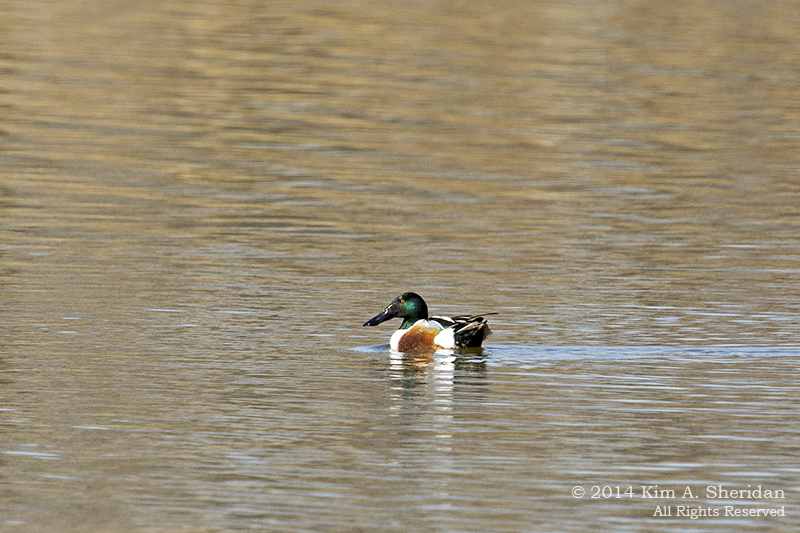
HNWR Duck Shoveler_6596 acs Northern Shoveler.

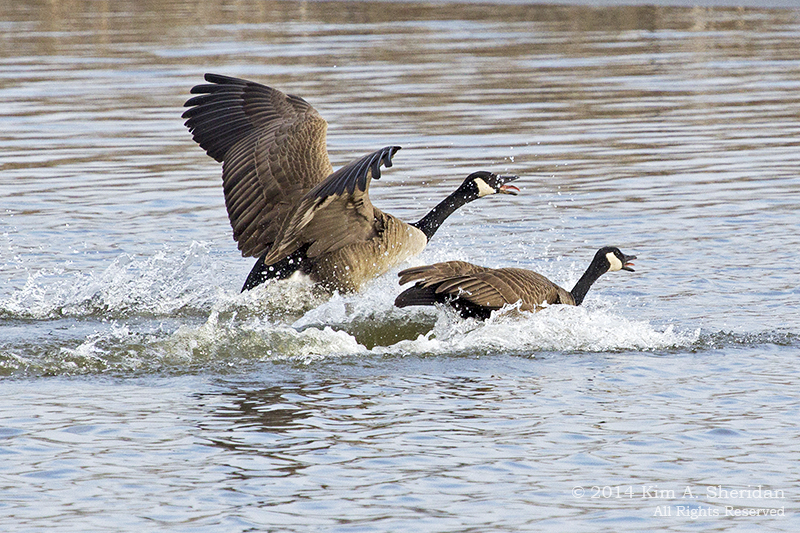
HNWR Goose_5184 acs2Duck, duck, goose. Ever wonder if birds have tongues? Here’s proof positive! Canada Geese, honking on the go.

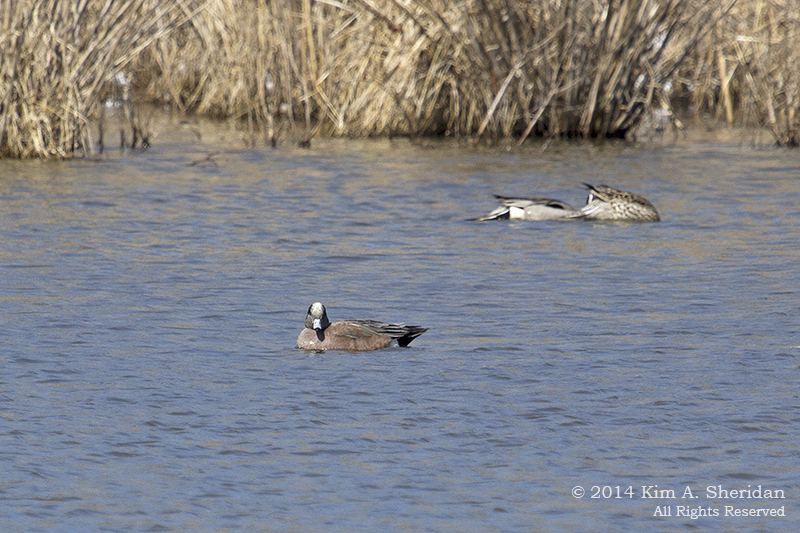
HNWR Duck Wigeon_6638 acs An American Wigeon tries to stare me down.

HNWR Duck Pintail_6630 acsA pair of Northern Pintails, male and female.

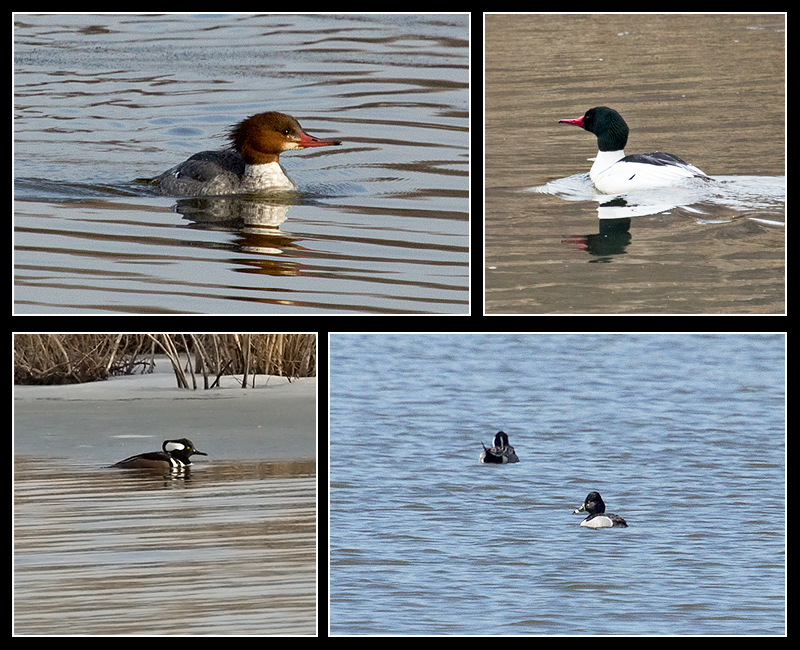
Duck Collage 4 Here’s a duck roundup. Clockwise from top left, female Common Merganser, male Common Merganser, Ring-necked Duck, Hooded Merganser.

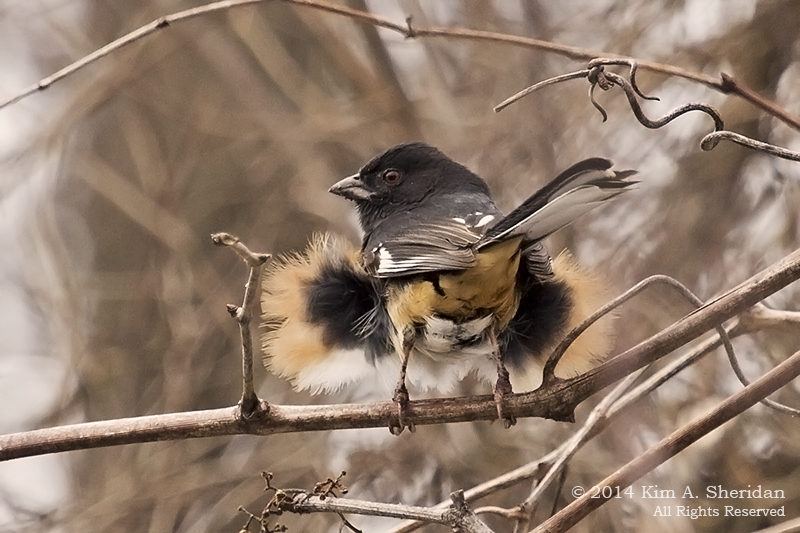
HNWR Towhee_6504 acsEastern Towhee is shaking his tail feathers, clearly excited to wave goodbye to winter.

Welcome Spring!

Variations on an Icy Theme

RCSP Ridley Creek Snow_ 0740 The old cliché says that the Inuit have fifty different words for snow. Around here this winter we have come up with some words of our own, none fit for polite company.

Philadelphia’s average snowfall is 22.2 inches, for a whole winter. So far this year we’ve had 58.4”, and there are still four weeks until spring.

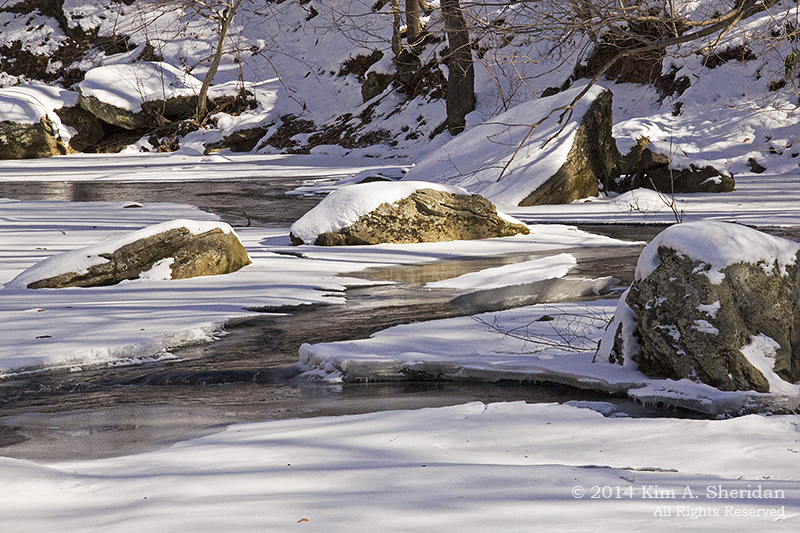
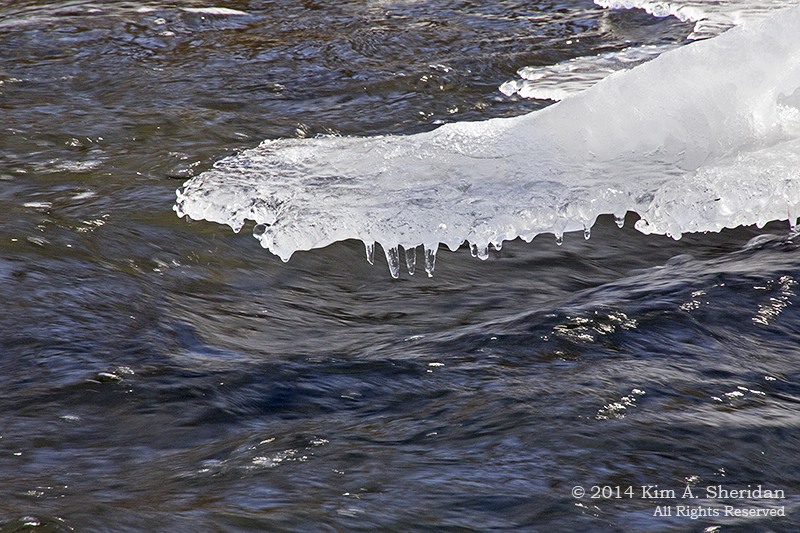
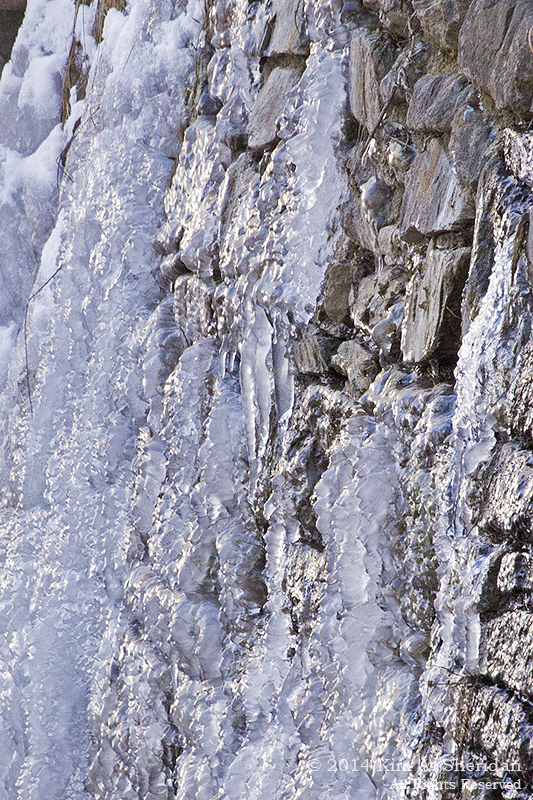
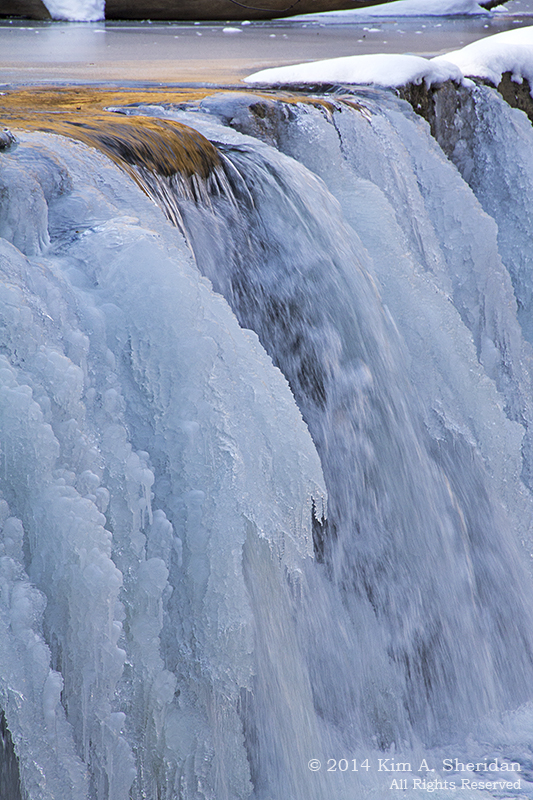
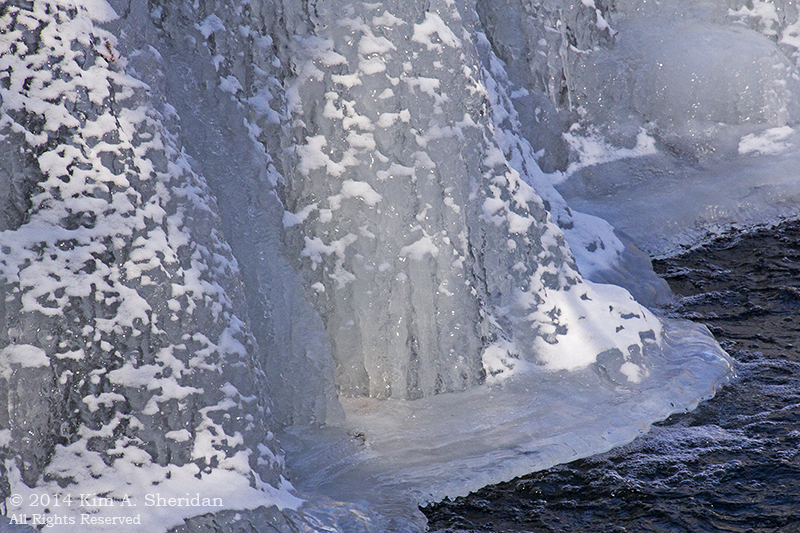
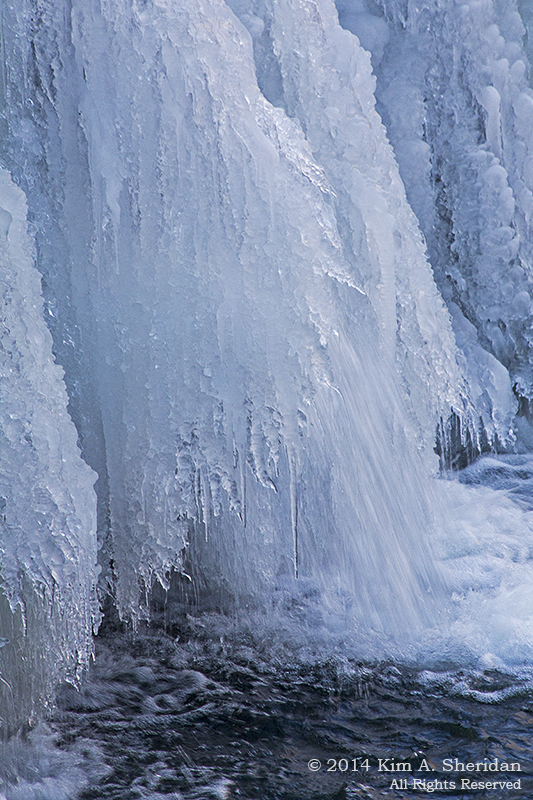
Taylor Arboretum Creek Ice_ 1147acsAll that snow, combined with a long stretch of sub-freezing temperatures, has created some magnificent ice formations, especially near moving water. Dripping moisture builds strange sculptures on Ridley Creek, above.

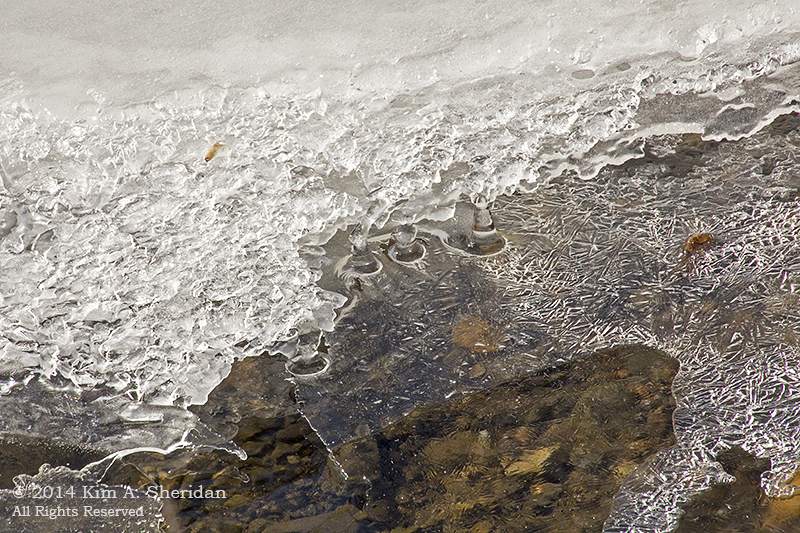
Intricate patterns etch cold surfaces on Crum Creek, below.

Smedley Crum Creek Ice_9957acs

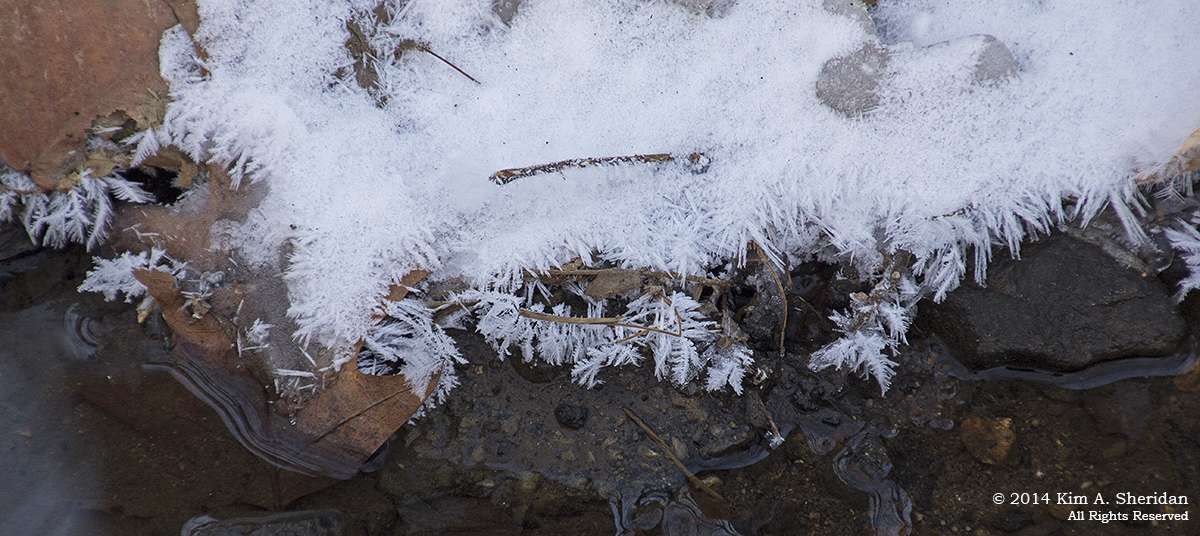
TX White Rock Lake Frost_7282acsHoar frost on a leaf in Texas.

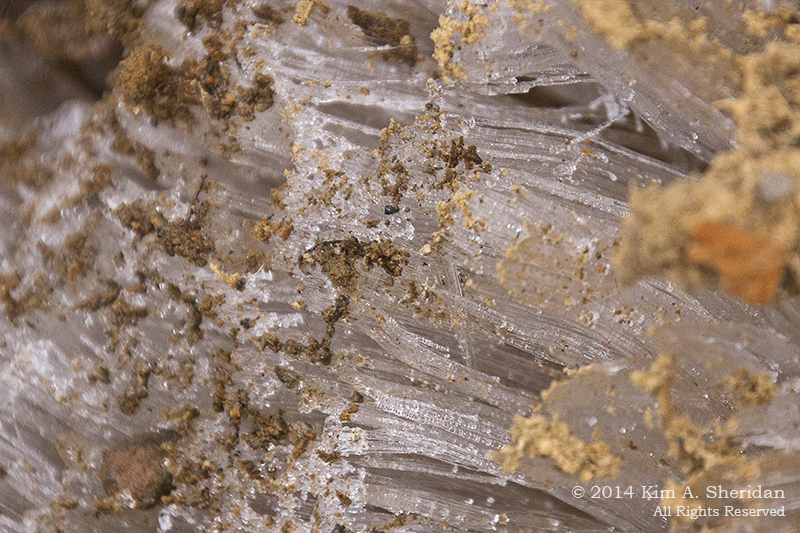
Ridley Creek Geocaching_9610acsLoyal readers of The Wild Edge will remember this photo from our Ridley Creek geocaching adventure. This is called “needle ice”. It forms when the air temperature is below freezing, but the ground temperature is above freezing. Water forces its way out of pores in the ground by capillary action. When it reaches the air, it freezes. As more water keeps pushing out behind it, it forms into a growing column of ice. Needle ice is most common on steep slopes with seeping ground water, which is exactly where we found it.
07 Valley Forge Valley Creek_ 2696a 07 Valley Forge Valley Creek_ 2697acsSome ice formations are man-made. Bubble-wrap shaped ice on the wall of the Valley Creek dam, Valley Forge National Historic Park.

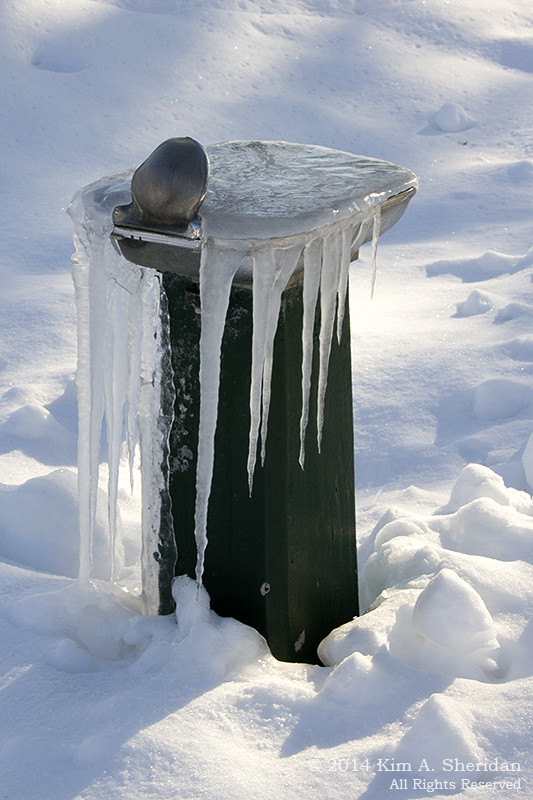
01 Valley Forge Farm_ 2350 Whoops! Who left the water running?

FUN FACT: Snowflakes form when water vapor condenses into ice.  Snow crystals all start as simple hexagonal prisms. But as more water vapor condenses onto them and they continue to grow, they begin to grow branches. This creates an amazingly large variety of snowflake shapes, including columns, needles, plates, and dendrites. The classic six-armed shapes with side branches, like we cut from paper in school, are stellar dendrites.  Stellar dendrites with an abundance of side branches are called fernlike stellar dendrites, for their resemblance to ferns.

RCSP Ridley Creek Snow_ 0663The dry powdery snow we had in January showed off several different snowflake shapes to good advantage. Which shapes do you see here?

Blue Snow_2768a

FUN FACT: What color is snow? Actually, snow crystals individually look clear. When they get together with their friends, the incoming light is reflected by the crystals and bounces around before scattering back out. Since snow generally scatters all wavelengths equally, it usually looks white.

But, it also happens that red wavelengths are sometimes absorbed by the snow, making the snow look blue or aqua. The deeper you look into a hole in a snow bank, the bluer it will appear. Since heavy, wet snow absorbs a lot of red light, we’ve seen a lot of blue snow in February. This is a close-up of a snow boulder left by a snow plow.

RCSP Ridley Creek Dam_ 0444

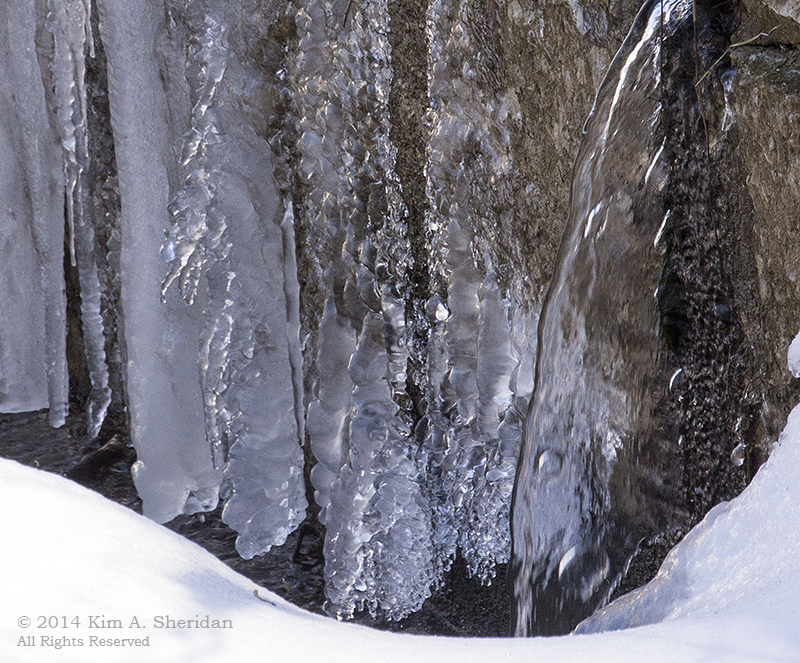
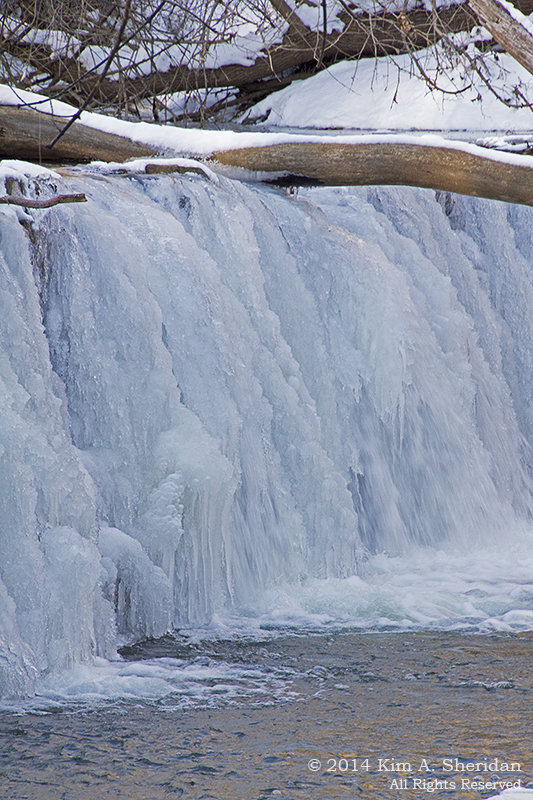
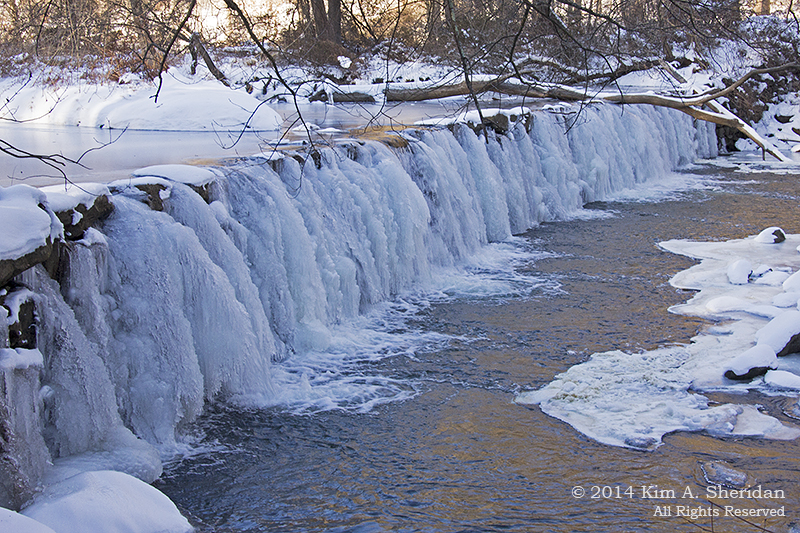
Also resplendent in shades of blue and aquamarine, the dam on Ridley Creek at Sycamore Mills was spectacular in late January. Bubbles and stalactites and little ice daggers, oh my!

RCSP Ridley Creek Dam_ 0440 There’s a lot of water flowing behind the spikes and icicles formed here. More and more of it froze every day. In only one week, the ice would grow into the thick solid curtain seen below, dusted with a recent snowfall.RCSP Ridley Creek Dam_ 0689

RCSP Ridley Creek Dam_ 0432

Fifty different words for snow? At the wild edge where the water runs, there’s just one word:

BEAUTYRCSP Ridley Creek Dam_ 0450