Where Is The Wildlife?

Tree Swallow, John Heinz NWR

Tree Swallow, John Heinz NWR

Where is the wildlife? It’s been all Appalachians and kayak adventures on The Wild Edge this summer. Shouldn’t there be birds? Where can they be hiding?

Black Vultures, Bombay Hook NWR

Black Vultures, Bombay Hook NWR

Are the songbirds singing in the sun while I am inside in meetings and museums and antique shops?

Goldfinch, John Heinz NWR

Goldfinch, John Heinz NWR

Are the shorebirds and herons wading in wild wet places while I am at forts and canals and cliffs?

Glossy Ibis & Snowy Egret, John Heinz NWR

Glossy Ibis & Snowy Egret, John Heinz NWR

Are the soras and rails strutting their stuff in the early morning and late evening while I’m busy with the nuisances of everyday life?

Marsh Wren, John Heinz NWR

Marsh Wren, John Heinz NWR

Are the tricolored herons posing for close-ups in the middle of the day while I am too hot and too frustrated to be bothered with carrying a camera?

Wood Duck, John Heinz NWR

Wood Duck, John Heinz NWR

Are the orioles and waxwings flitting through the treetops while I am kayaking in urban and suburban rivers, armed only with a point and shoot camera inadequate for wildlife photography?

Avocets, Bombay Hook NWR

Avocets, Bombay Hook NWR

Are the avocets and black-necked stilts feeding far, far away when I do have the right gear in the right place?

Maybe the wildlife has been there all along. Maybe it’s me who’s missing.

Maybe I’m always in the wrong place at the wrong time with the wrong equipment doing the wrong thing.

Maybe the real question is –

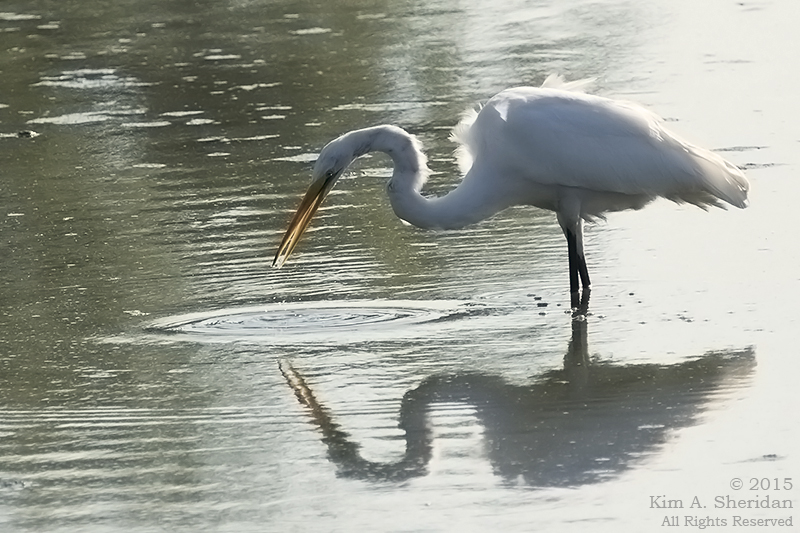
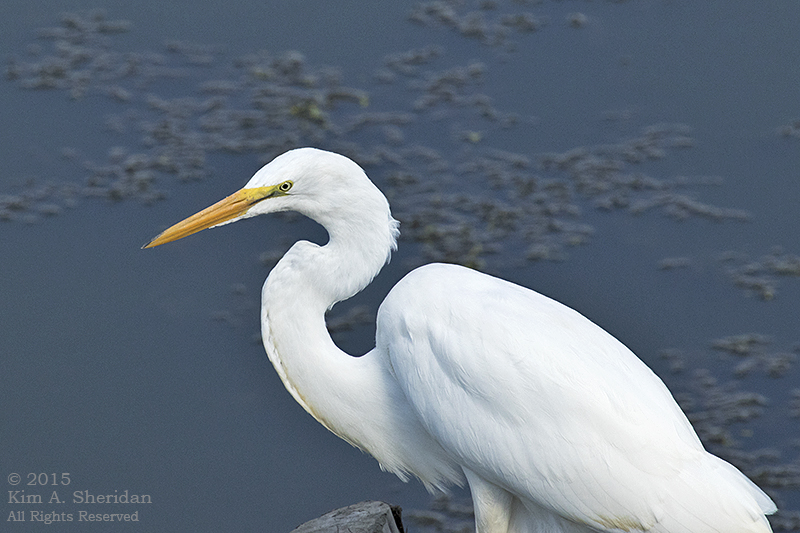
Great Egret, John Heinz NWR

Great Egret, John Heinz NWR

Where is the wildlife photographer?

The Guest Request Fest

Critter Radio Logo v3Well, hel-loooo to all you birds, bugs and beasties out there in Critter Land. You’re tuned to KRTR 99.9 FM, Critter Radio. I’m Opal White, that’s right, white hot and bright. So glad you could join me tonight for the Guest Request Fest.

Yes, boys and gulls, it’s time for you loyal listeners to let us know what you want to hear. Don’t wait, don’t hesitate! Call, text or tweet now with your requests. Miss Opal will make all your dreams take flight, that’s right.

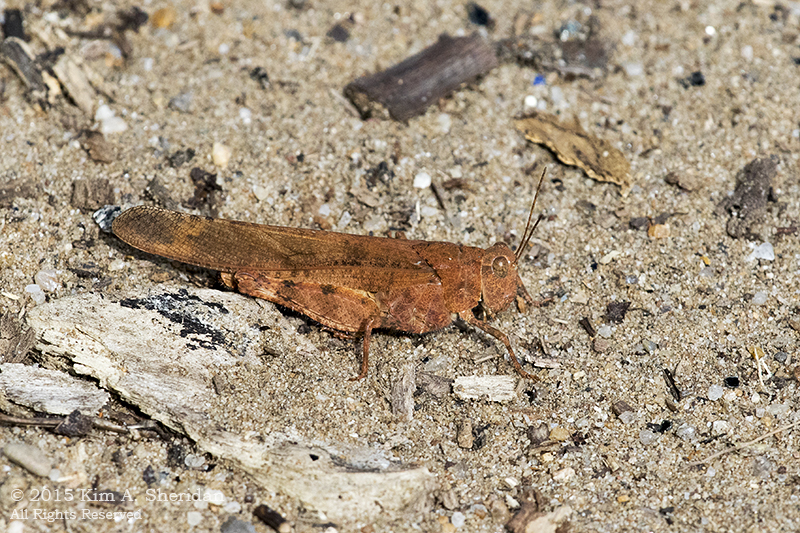
150809_NJ Palmyra Cove_3540acsWe’ll start right in on the ground floor, shall we? Master Grasshopper brings our first entreaty of the hour: “Kung Fu Fighting”.

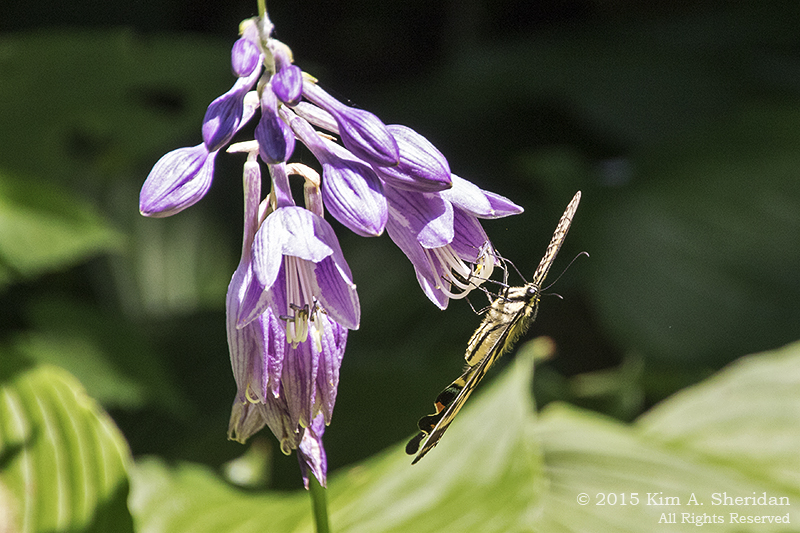
150711_PA Nockamixon Cliffs_1293acsThe butterfly brigade chimes in with this weighty wish from slim Ms. Tiger Swallowtail. She’s an edgy sort of dame, that’s right. Her fave tune? “Edge of Seventeen”.

150809_NJ Palmyra Cove_3502acsFor a Red-spotted Purple, what could be more appropriate than “Blue On Black”? How apt.

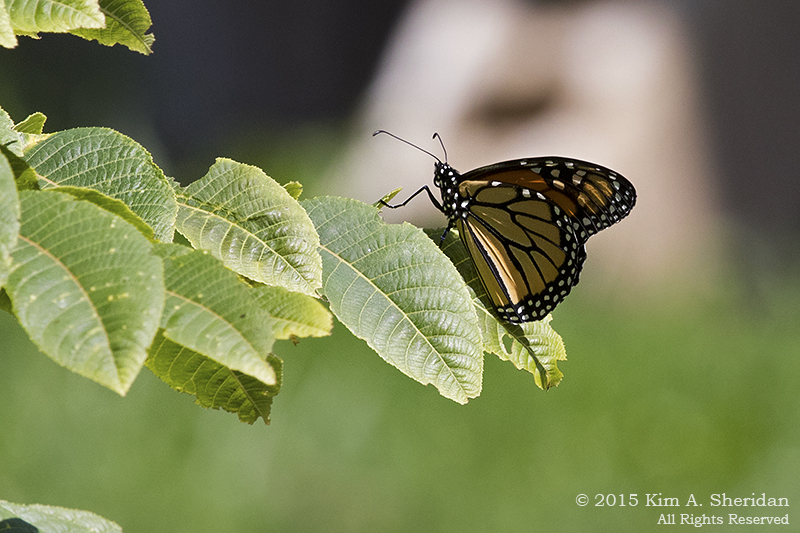
150722_DE Bombay Hook_1761aWell, what have we here – a twin tweet! A pair of lookalikes indeed, the Monarch…

150809_NJ Palmyra Cove_3764acs… and the Viceroy.

Monarchs taste bad, Viceroys don’t, but most butterfly gourmets will shun both. Viceroys are big copycats, and more than once that has saved their silly little – oh, excuse me, family show, that’s right.

Let’s get back to their song, “Me and My Shadow”, shall we?

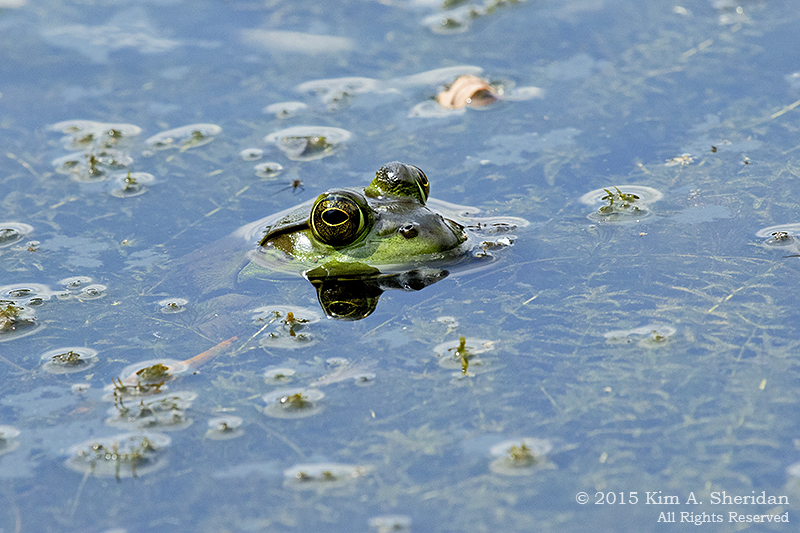
150809_NJ Palmyra Cove_3705acsIs that the phone ringing? Yes, I think it is. And who have we here? Why it’s the Rev. Green Frog, he of the roly-poly peepers. What dark secrets have been confessed to the good preacher?

He wants to hear “Your Lying Eyes”.

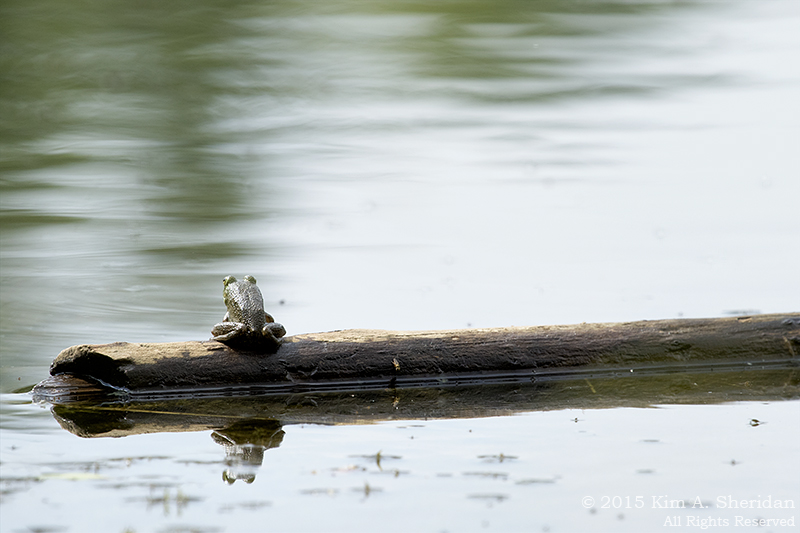
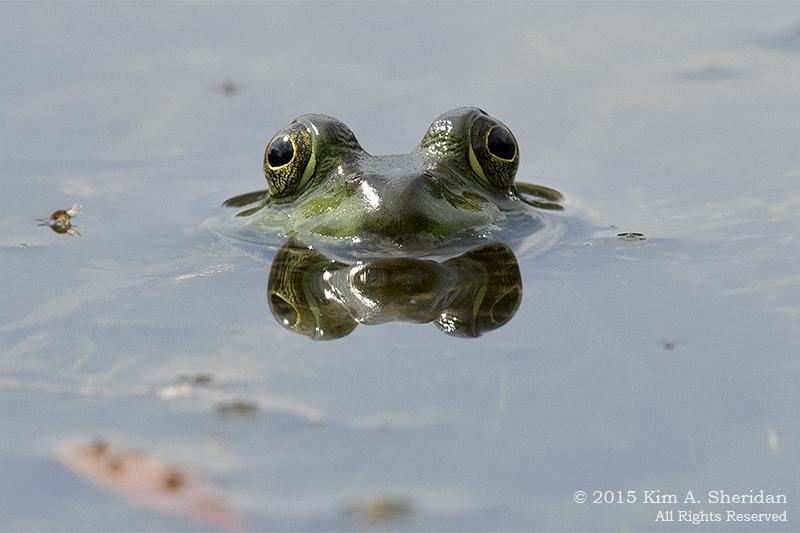
150809_NJ Palmyra Cove_3628acsOn the other side of town, someone is lonely tonight. Jeremiah Bullfrog feels he’s lost his only friend. Here’s a little ditty for his melancholy blues as he contemplates the vastness of the pond – “It’s Not Easy Being Green”.

Miss Opal could cheer up this sprite, that’s right.

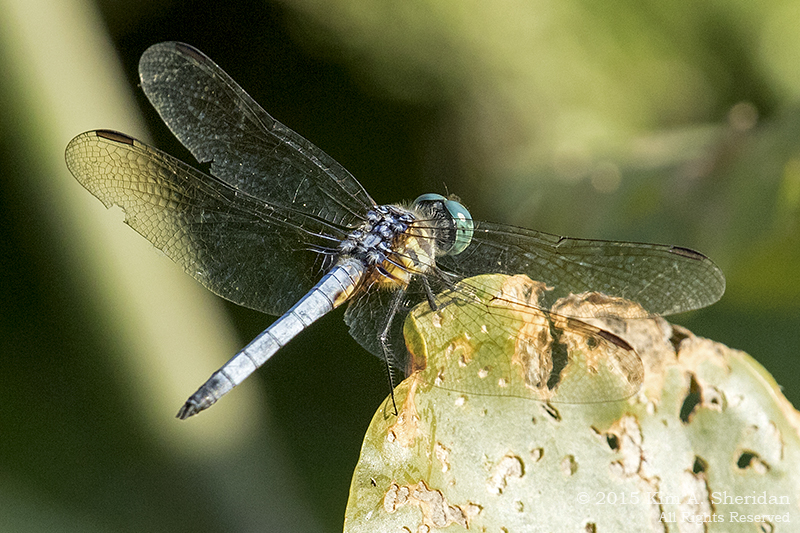
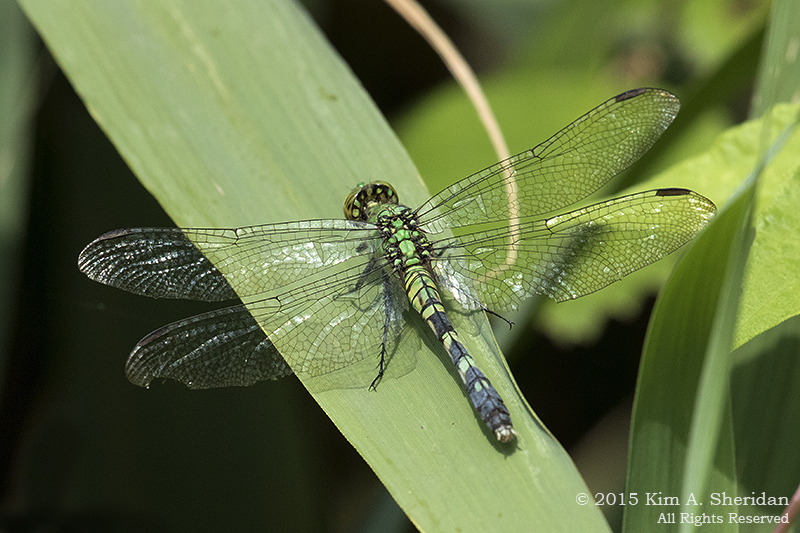
150804_PA HNWR Dragonfly_3428acsMr. Pondhawk has a request…

150809_NJ Palmyra Cove_3557acs…and wait, we’ve got Mrs. Pondhawk on the other line. What a lovely couple – they’ve both asked for that romantic oldie, “I Got You Babe”.

150809_NJ Palmyra Cove_3675acsWe have time for one more rhythmic requisition, and it comes tonight from a croaker immersed in self reflection. “Can’t Take My Eyes Off of You”, how true!

Oh, my, my, Miss Opal hears her theme song; it’s always too soon to leave you. Another splendiferous edition of the musical petition, the Guest Request Fest, has come to a close.

Until next time, I’m Opal White, that’s right, white hot and bright, and this is KRTR 99.9 FM, Critter Radio. I bid you farewell with Ol’ Blue Eyes himself, like me, doing it “My Way”.

150804_PA HNWR Great Egret_3208 acs“Egrets, I’ve had a few…”

Watery Weekend

In which, Captain Robb takes us Pontooning, and a Short Kayak Excursion nearly leaves us Marooned on a Deserted Island.

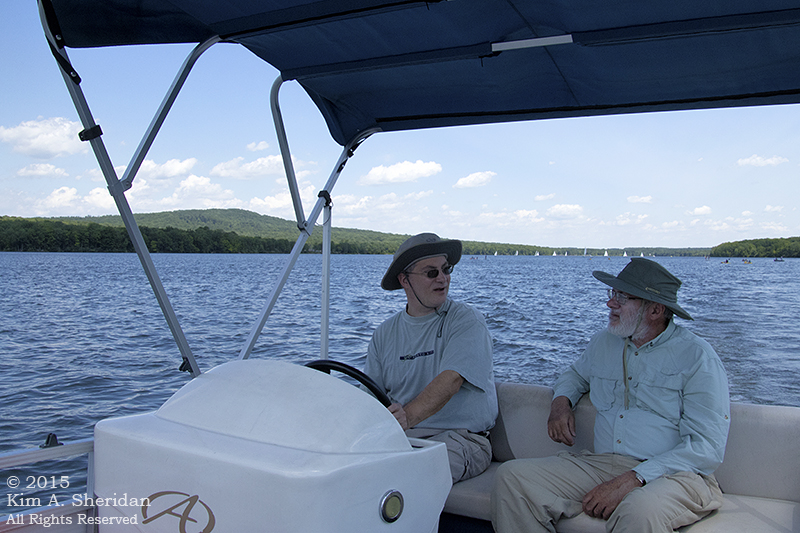
150801_PA Nockamixon Pontoon_2651aOne of our favorite things to do in the summer is to go to Lake Nockamixon and rent a pontoon boat for a couple of hours. A gorgeous Saturday, blue water, a light breeze, a shady boat canopy; what could be more relaxing?

150801_PA Nockamixon Pontoon_2521aDon was so relaxed he took a little nap, trusting in Captain Robb’s superb piloting skills.

150801_PA Nockamixon Pontoon_2646acsOne of the rock outcroppings along the shoreline.

150801_PA Nockamixon Pontoon Sailboat_2854acsSailboats in front of the marina.

150801_PA Nockamixon Pontoon Haycock Mt_2764acsHaycock Mountain. Calling Haycock a “mountain” is a bit of a stretch, in my book. It’s only 960′ in elevation, nothing more than a hill. But it is the highest “summit” in Bucks County.

150801_PA Nockamixon Pontoon_2876acsThe guys chit-chat away, with Haycock in the background. All in all, it was a lovely day on the lake.

150802_PA Little Tinicum Island_1024acsSunday morning we set out on a much-anticipated kayaking expedition, down Darby Creek to the Delaware River and across to Little Tinicum Island. It’s a small uninhabited island about 3 miles long by 500 feet wide. Most of the island is overgrown with impenetrable vegetation, but the shore is lined with narrow sand beaches.

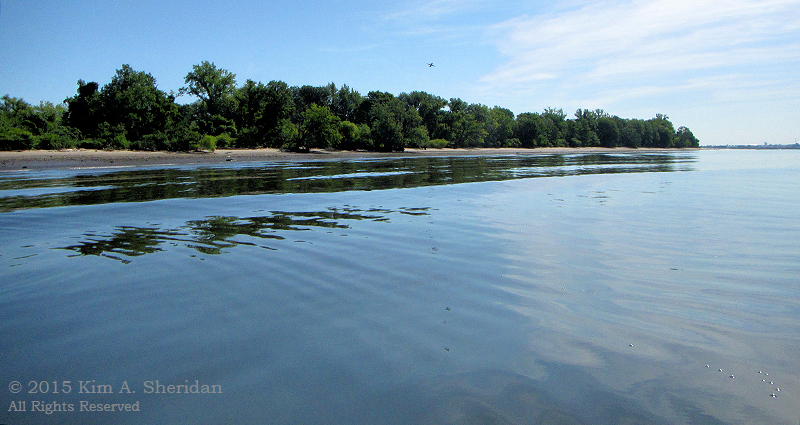
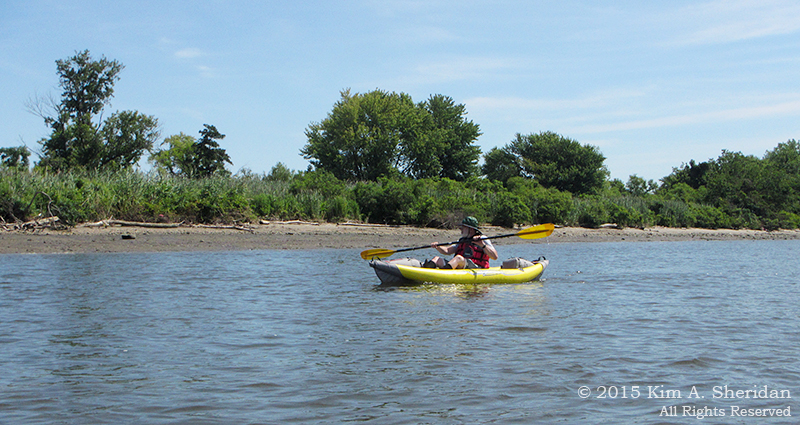
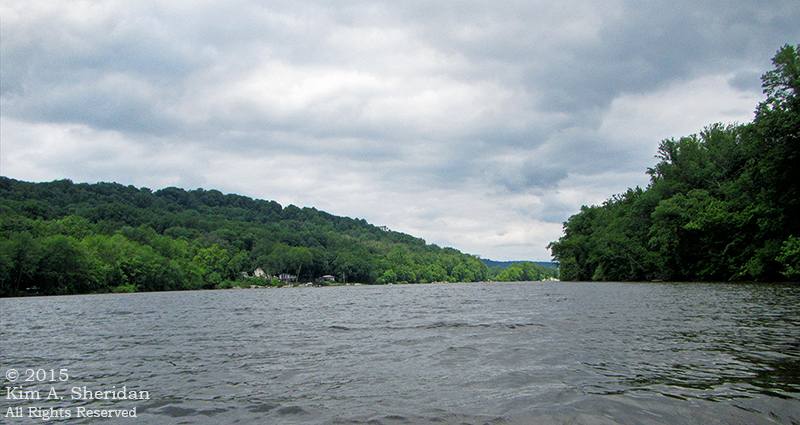
150802_PA Little Tinicum Island_1018acsWe paddled out on a day so calm the water was like glass. The tide was out, and we were surprised at how shallow the river was. Robb saw a crab swim by his kayak. Here’s Robb and Don paddling around the southern tip of the island.

Partway up the New Jersey side, we decided to land. This meant walking across a long stretch of slippery, sticky mudflats while dragging our boats behind us. Yuck! Once we reached the sand, we had a grand time exploring the shoreline.

150802_PA Little Tinicum Island_1083acsLooking north from the beach.

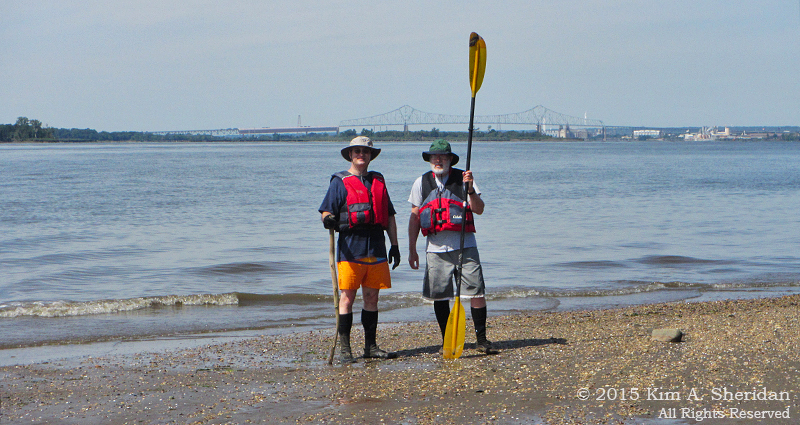
150802_PA Little Tinicum Island_1090acsRobb and Don on Little Tinicum Island, looking south, with the Commodore Barry Bridge in the background.

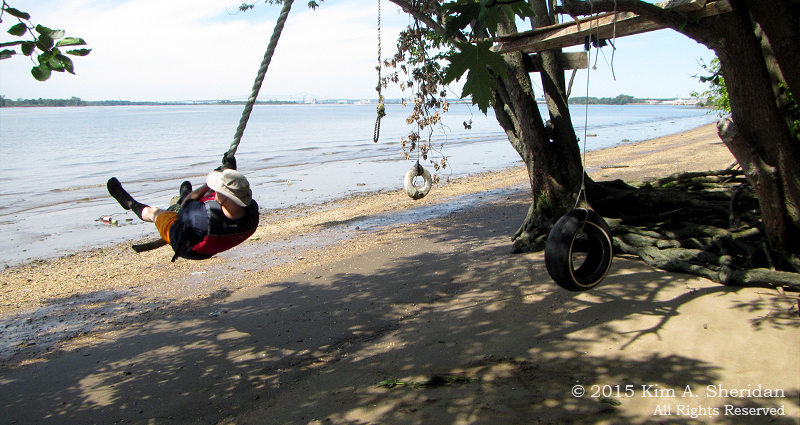
150802_PA Little Tinicum Island_1119acsWe found two cozy little “camps” on the island, one on each side. People had set up chairs, a table, tire swings, even fire rings. Probably fishermen, since each camp had its own skillet. Robb couldn’t resist one of the swings. Really, he’s just a big kid.

When we left the Jersey side, there was a large freighter out in the main channel. I was back on the water first and glanced back to see the guys sitting in their floating kayaks, ready to paddle away. Then I heard Robb shout something. I turned around to see them still in their kayaks, still in the same place – but now high and dry on the mudflats! No water anywhere near them!

FUN FACT: Why did the water drain away from the shore? Something called bank suction, created by that large ship that was passing by. The increased velocity of water past the hull of a ship in a restricted channel causes a decrease in pressure which draws the ship bodily toward the near bank. That decreased pressure also draws the water towards the ship. The effect is temporary; the water flows back in a moment or two.

150802_PA Little Tinicum Island_1144acsDon paddling along the Jersey side of the island, once he’d gotten some actual water to paddle in.

150802_PA Little Tinicum Island_1348acsA “lazaretto” or “lazaret” is a quarantine station for marine travelers. The Philadelphia Lazaretto, on the Delaware County shore of the Delaware River, was built in 1799 in response to the 1793 yellow fever epidemic. All ships were required to stop here for inspection, and ill passengers were quarantined. It operated as a hospital until 1895. A century older than Ellis Island’s inspection station in New York, this is the oldest surviving quarantine hospital in the U.S. The view of the building from the river is something a lot of people never see.

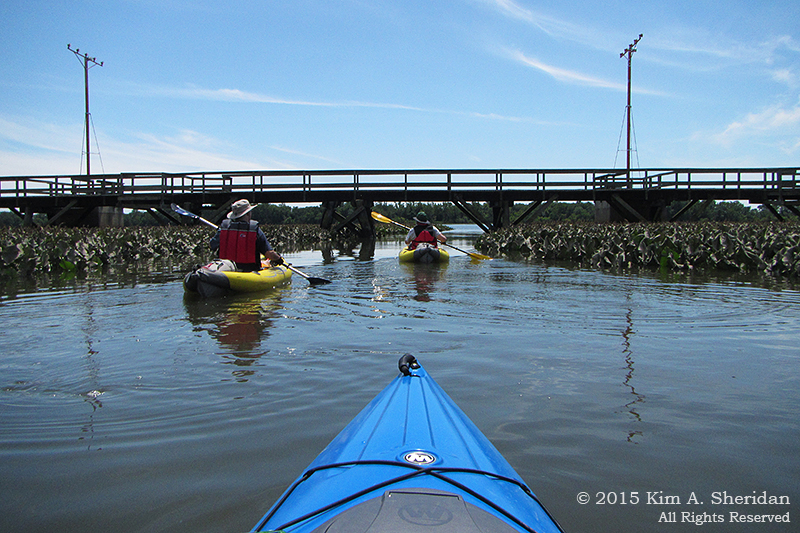
150802_PA Little Tinicum Island_1301acsNot everyone can say they’ve paddled under the runway lights of the Philadelphia Airport, either. These are on a long wooden pier extending obliquely along the shore. Needless to say, there were a lot of planes taking off and flying overhead while we were out on the river.

The first three hours of our fateful trip were relaxing and fun. The second three hours, not so much.

Tides are tricky things. We had only planned to paddle partway up the Philadelphia side of the island, for about 45 minutes. But we reached the north end in 30, thanks to the incoming tide.

Then it took us over 2 hours of HARD paddling to cover the same three miles against the tide. We seriously underestimated the strength of the flood current. At times we were making no progress at all.

And that’s how our three-hour tour turned into a six-hour marathon, and nearly left us castaways on a deserted isle!

150802_PA Little Tinicum Island_1282acsAll in a wonderful watery weekend.

Oh, Shenandoah! (Verse 2)

Appalachian Spring Title SubtitleOn the last two days of our two-week sojourn through the southern Appalachian Mountains, Don and I returned to Shenandoah National Park. By now we were wiser, and more experienced in the ways of the mountains. This time we planned to drive the length of Skyline Drive from south to north, spending a night at Skyland Resort in the Park, and hopefully getting a little hiking in.

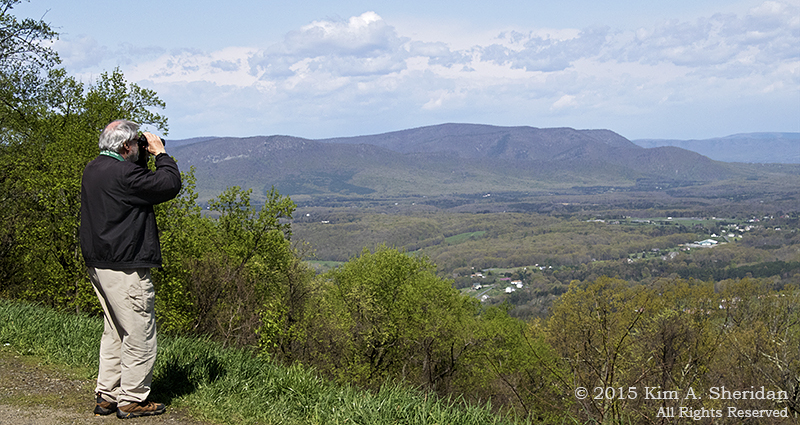
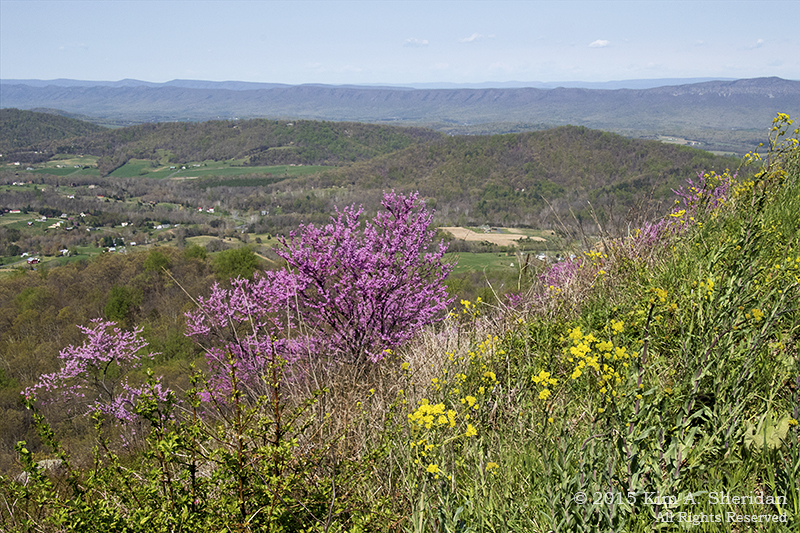
150422_VA SNP Skyline Drive_6563acsWe found spring a little more advanced since 11 days before. More trees and shrubs had covered their bare brown branches with bright green spring coats. Flowers and trees put out blooms that nicely framed the mountain and valley views. Best of all, we had blue skies and white fluffy clouds – and no fog!

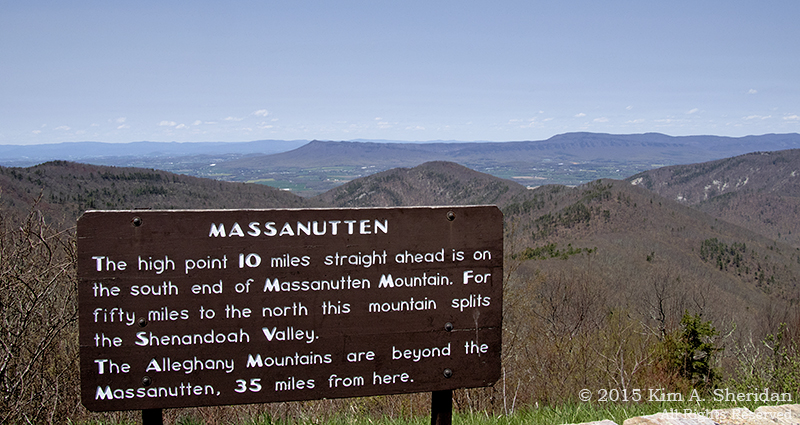
150421_VA SNP Skyline Drive_6132acsDon was fascinated with a mountain called The Massanutten (yes, it’s called that, and yes, he insists “The” be capitalized.) The Massanutten runs 50 miles down the heart of the Shenandoah Valley. Why is there a mountain in the middle of the valley? As the valley gradually eroded away, the harder Massanutten Sandstone that forms the ridge remained. It makes for spectacular viewing from all along Skyline Drive. This is the southern end.

150421_VA SNP Skyline Drive_6260Mountain pinks on the mountainside.

150421_VA SNP Skyline Drive_6272acsOld Rag looks like fun to scramble around on. Peaks like Old Rag exist because the rock they are made of is extremely resistant to the weathering that eroded the softer rock around them. The rock that makes up Old Rag is called – wait for it – Old Rag granite.

150421_VA SNP Stony Man_6346We took a walk at the end of the day on the Stony Man Trail. It’s a 1 ½ mile path to the peak of Stony Man Mountain, which at 4011’ is the second highest peak in Shenandoah NP. Near the peak, red spruce and balsam fir grow, remnants of a colder climate. The trail wound around fascinating boulders before coming out of the woods onto the top of the rock outcropping that forms Stony Man’s profile.

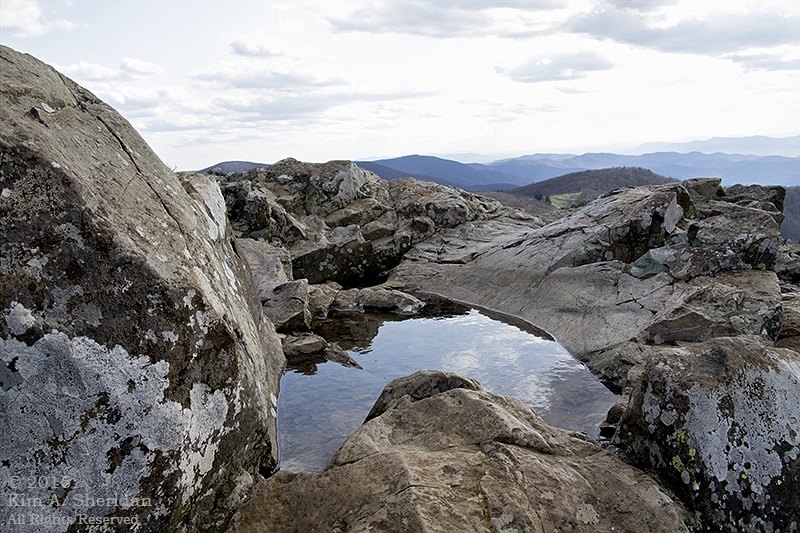
150421_VA SNP Stony Man_6320acsSky reflection in a boulder puddle. Don and I had a blast scrambling all over the rocks here.

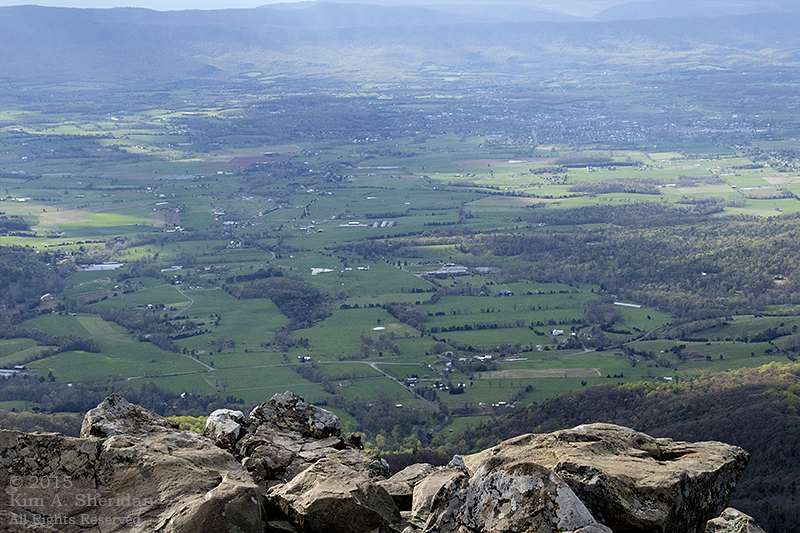
150421_VA SNP Stony Man_6316acsLooking into the valley from Stony Man’s forehead.

150421_VA SNP Skyland_6283acs copyThis is the view from my hotel room at Skyland Resort. Not too shabby, huh?

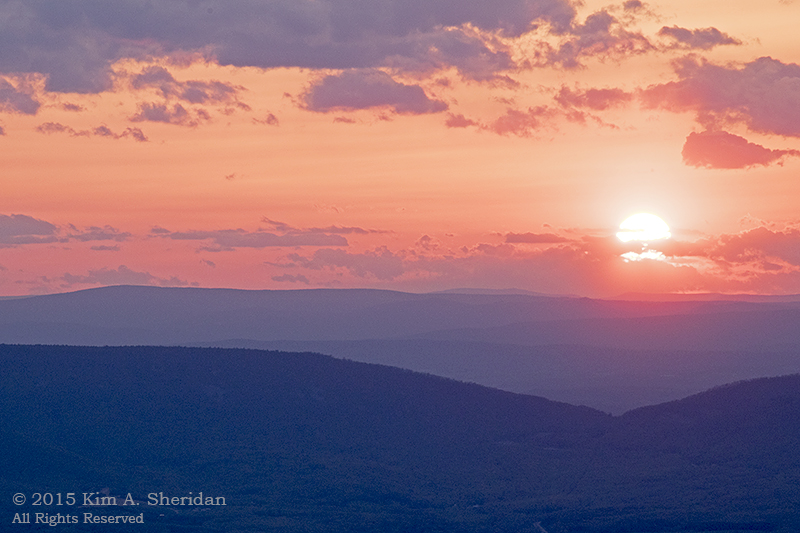
150421_VA SNP Skyland_6384After dinner I spent some time on my porch watching the sun set …

150421_VA SNP Skyland_6431ac…And the moon come out.

With the dawn it was time to move on. A beautiful but bittersweet day, as I knew it was our last in the mountains, and we’d be home by nightfall. We spent the morning driving the remaining 40 miles of Skyline Drive to its northern terminus.

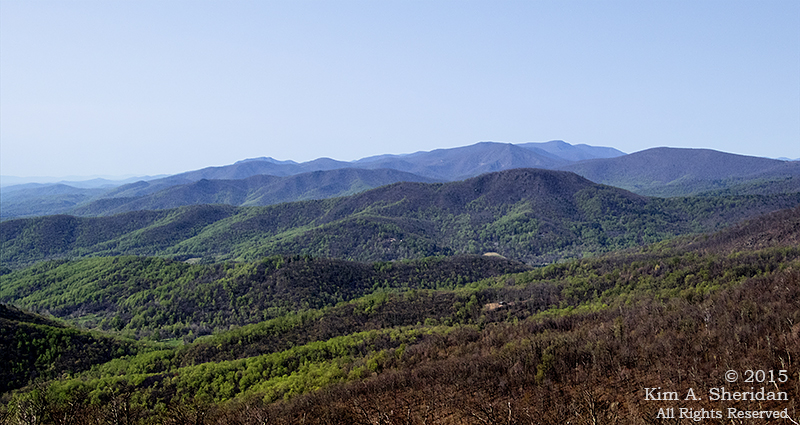
150422_VA SNP Skyline Drive_6521aLooking along the Blue Ridge Mountains. Old Rag, Mary’s Rock and Stony Man are all visible in this vista. Can you find Stony Man?

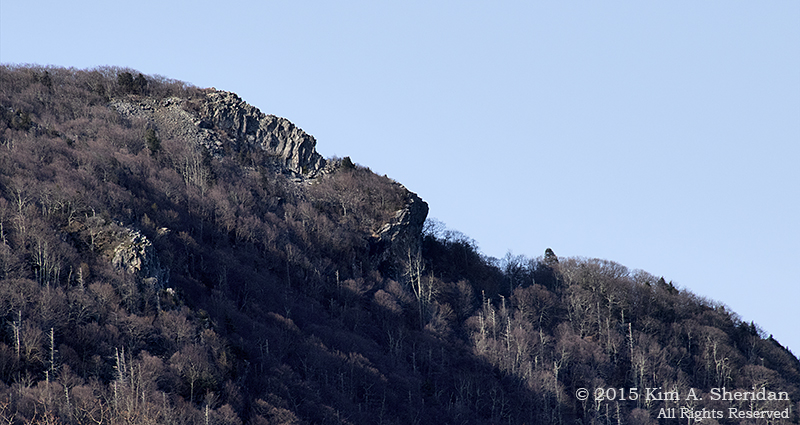
150422_VA SNP Skyline Drive_6447acsThis might help. Here’s the famous Stony Man profile. In April it’s easy to see the shape of the rock outcroppings that form the face.

150421_VA Shenandoah NP_4167_HDR acs copyHere I am at Franklin Cliffs. More rock scrambling!

At the very north tip of The Massanutten is Signal Knob, a high point used by Confederate troops in the Civil War to send signals. It was lost in the fog on our previous trip through the Park, and Don and I really hoped to get a peek at it this time.

150422_VA SNP Skyline Drive_6672acsSignal Knob, at last. Don getting some much-delayed gratification.

150422_VA SNP Skyline Drive_6544acsOne last glimpse of the mountains and the Shenandoah Valley. Then it was time to leave the Appalachians for good and make our way home. Soon enough the skies darkened and the rain began.

Two weeks is a long time to be on the road, living out of suitcases, eating fast food and sleeping in hotels. Don and I came home thoroughly exhausted. There were a lot of challenges, some uncooperative weather and not nearly enough bears.

But, oh, what a trip! From the waterfalls, balds and peaks of Great Smoky Mountains National Park along the winding path of the Blue Ridge Parkway to the mountain and valley views of Shenandoah National Park, it was a trip I will never forget. Four months later, I have but one parting thought:

150418_NC BRP High Peaks_5751_tonemapped acs copy

I WANT TO GO BACK!

Oh, Shenandoah! (Verse 1)

Appalachian Spring Title Subtitle2150729_VA SNP Books_2483acsThe Great Appalachian Odyssey of 2015 filled a shelf full of adventure tales for Don and me this April. Each day was like opening a brand-new book and not knowing what to expect. One day in Nashville, six days in Great Smoky Mountains National Park, four days on the Blue Ridge Parkway. Shenandoah National Park played the role of bookends. We visited there on the drive down, and again on the drive back, spending two half days each time. The two visits could not have been more different.

SNP Full MapShenandoah National Park is a long narrow park along the spine of the Blue Ridge Mountains in western Virginia. The highlight of the park is Skyline Drive, which runs the length of the Park along that spine, 105 miles from Front Royal to Rockfish, where it meets the northern terminus of the Blue Ridge Parkway. The road is a narrow two-lane byway that winds and twists along the edge of the mountains. There are numerous scenic overlooks along the road from which to see the Shenandoah Valley and Massanutten Mountain on one side and the rolling hills of the Piedmont on the other. 500 miles of hiking trails criss-cross the Park, leading to waterfalls, peaks and grand views.

Don, Robb and I had planned a visit the previous Thanksgiving, but were thwarted by a heavy snowfall. So Don and I were getting a second chance.

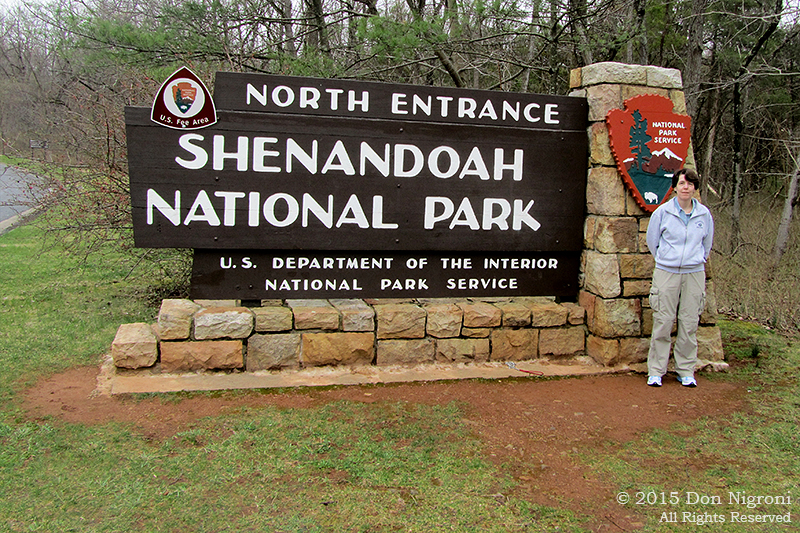
150408_VA SNP Skyline Drive_3770 acs (dfn)On the first day of our two-week trip, we arrived at the northern entrance of Shenandoah after nearly 7 hours on the road. Here’s the obligatory sign photo! Which was followed by the obligatory visitor’s center stop, in this case the visitor’s center and gift shop at Dickey Ridge.

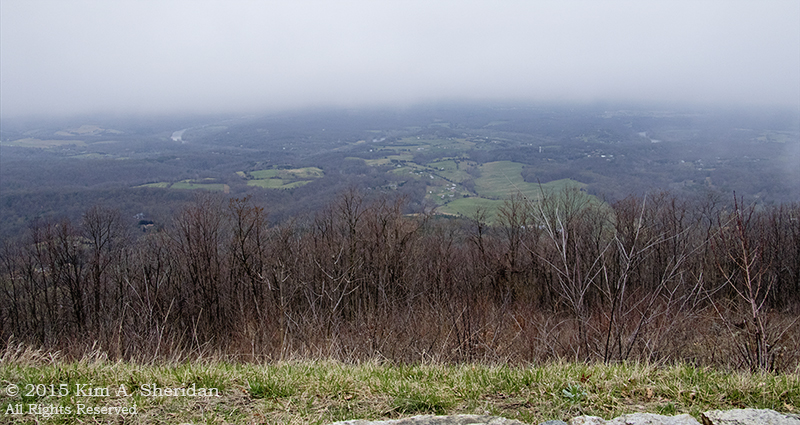
150408_VA SNP Skyline Drive_3642acsI was looking forward to driving the two-lane Skyline Drive after all those hours on the highway. Be careful what you wish for. Not long after leaving Dickey Ridge we stopped at an overlook – I think it was Signal Knob – where I took my first photo from Shenandoah National Pak, with the Shenandoah Valley and River below. Clouds hung over the mountains beyond. We tried in vain to spot Signal Knob on the northern tip of Massanutten.

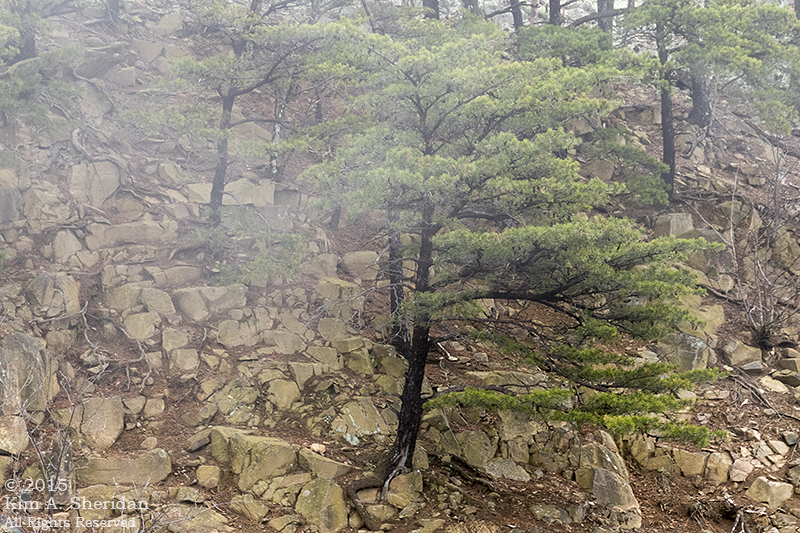
150408_VA SNP Skyline Drive_3674acsWe also watched as the fog rolled in from both sides. I gave up trying to photograph the view, and turned my attention to trees clinging to the rocky slopes.

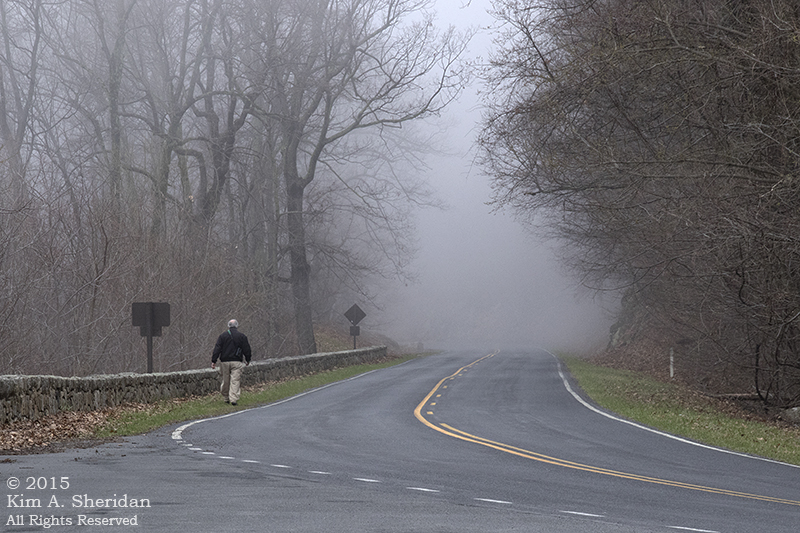
150408_VA SNP Skyline Drive_3649acsDon disappeared into the mist to investigate.

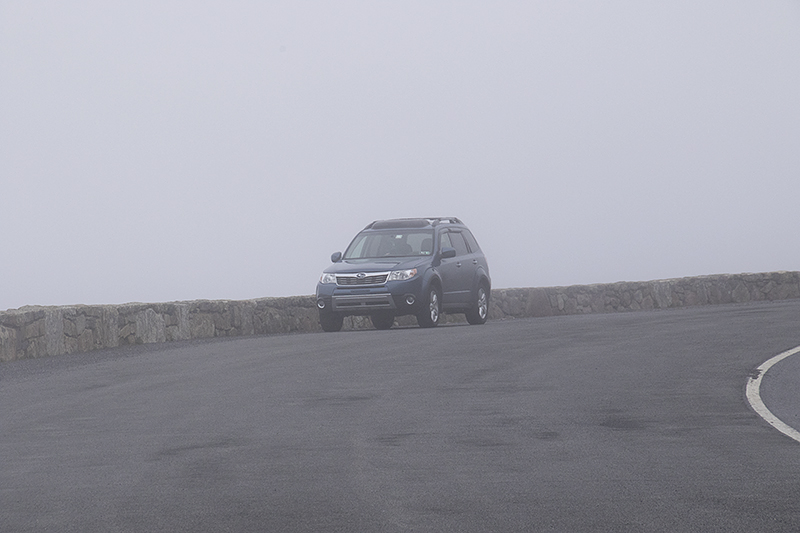
150408_VA SNP Skyline Drive_3693The fog quickly grew so thick it swallowed the mountains, river, valley and even the trees and shrubs just beyond the roadside. It threatened to swallow my car as well. We saw no more of Shenandoah National Park that day.

What followed was 25 miles of the most difficult driving I’ve ever experienced. We made the decision to push south to the Thornton Gap entrance, hoping the fog would lift. We couldn’t see beyond the side of the road, even the rock overhangs; much of the time I couldn’t see the left side of the road. I could see ahead of me for maybe twenty feet. I drove the with my hazard blinkers on, following the yellow lines on the road and using my GPS to anticipate the frequent twisty curves. At one point a band of bicyclists materialized out of the clouds too close for comfort. By the time we left the Park and descended out of the fog into Luray I was exhausted.

Too exhausted to sleep that night. Not surprisingly, I wasn’t feeling well the next day, so Don declared a one-day layover in Luray to rest and recuperate. After a morning of me moping about, he found a cure for my malaise by suggesting we try Shenandoah again. We entered at Thornton Gap and immediately ran into our old friend the fog at the entrance station. Don insisted we push south for a bit, and this time I’m glad he did. The gloom began to lift, my mood with it, and we pulled into an overlook.

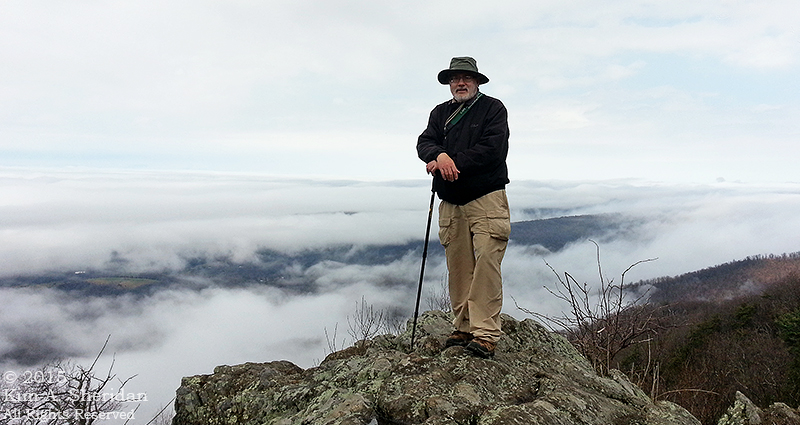
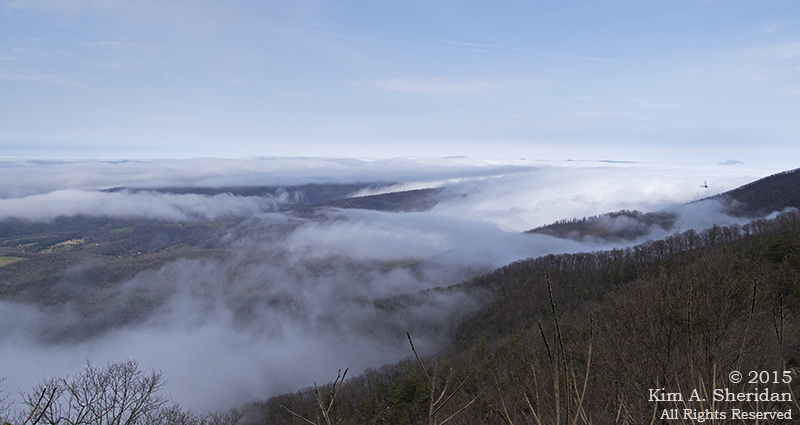
150409_VA SNP Skyline Drive_3713acsI took one look at the amazing sight of the tops of the mountains poking out of the cloud blanket below and forgot all my troubles. Photography time!

150409_VA SNP Skyline Drive_132827acsDon on top of the world.

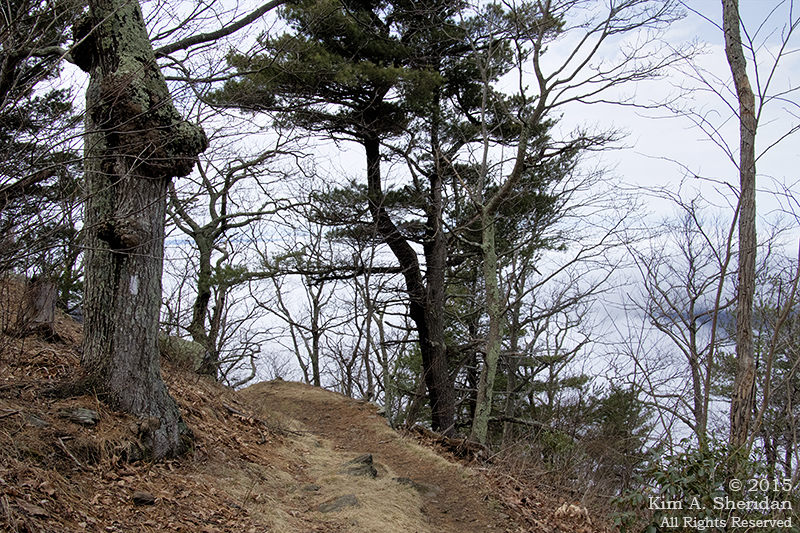
150409_VA SNP Skyline Drive_3807acs 2 (dfn)It seemed like a perfect time for a little hike along the Appalachian Trail, my first AT segment outside of Pennsylvania. The white blazes mark the Trail.

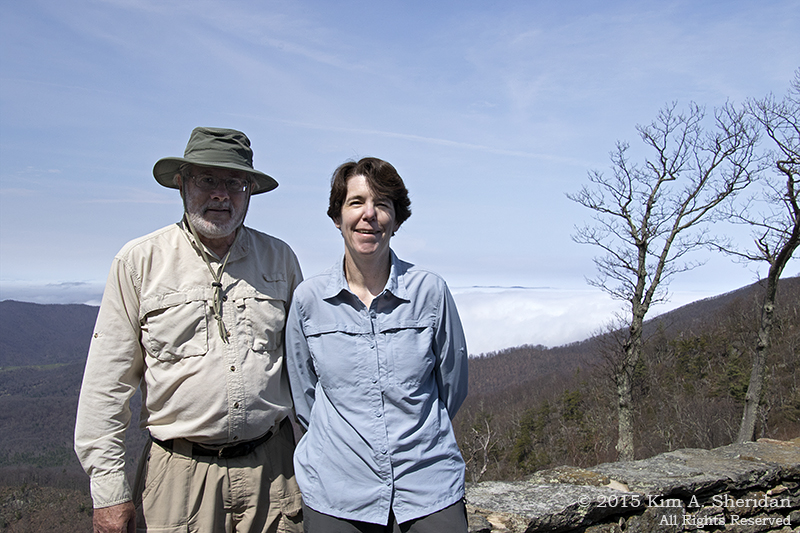
150409_VA SNP Skyline Drive_3752acs150409_VA SNP Skyline Drive_3813acsAbove the clouds the sun was coming out. And suddenly it got warm! We enjoyed a close-up view of a groundhog, and posed for the only picture of both of us taken on the trip, Don trying to hide in the shadow of his hat.

Our destination for the day was Skyland Resort. It has a lodge with a gift shop and two restaurants, and we were eager for a late lunch. While there, the clouds rolled back in. It wasn’t long before we were driving through the fog again on the way back to town, but by now I was an old hand. Driving through the Mary’s Rock Tunnel was dicey, though.

150409_VA SNP Skyline Drive_3766acsThis would be the last we’d see of Shenandoah for awhile. Nashville and the Smokies awaited!

On The Blue Ridge Parkway

Appalachian Spring Title BRPThe Blue Ridge Parkway, which stretches through the Blue Ridge Mountains in Virginia and North Carolina, was conceived in the 1930s as a scenic highway that would connect Great Smoky Mountains and Shenandoah National Parks. Our Appalachian odyssey was leaving the Smokies and passing through Shenandoah on our way home. Hey, why not take a few days, avoid the highways, and drive home on the Blue Ridge Parkway?

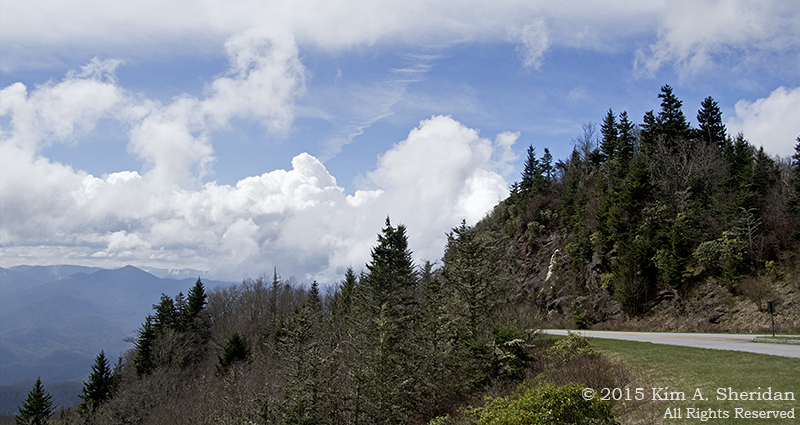
150418_NC BRP High Peaks_5751acsLike many of our plans, this one went awry from the start. I thought I had planned it well, with short drives the first two days, where there was the most to see. The second two days would be longer drives, ending in Shenandoah. Hotel reservations were made along the route, thus assuring Don and me of a nice place to rest for the next day’s travels.

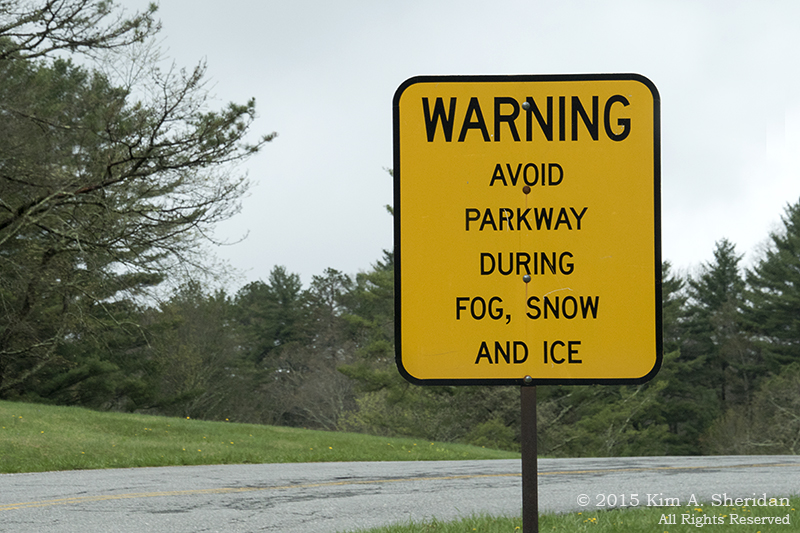
I didn’t count on a few things, though. Like detours that forced us off the Parkway in three places. Or the rain that prevented us from actually seeing anything one day. In the end, we drove 282 miles of the Parkway, about 60% of its 469 mile length. Those convenient hotel reservations meant we had deadlines to meet each night, and we lacked the flexibility to fit our trip to the Parkway, and the weather. Clearly it would have been better not to plan, for once.

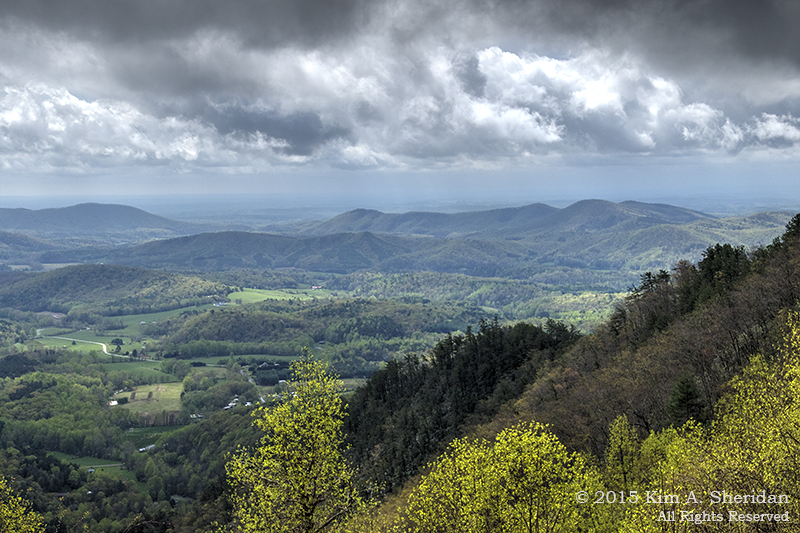
150418_NC BRP High Peaks_5708acsThe first day, which turned out nice after the fog cleared, was spent driving through the highest peaks on the Parkway. We stopped at every overlook to marvel at the endless lines of mountains marching off into the distance. After awhile it all began to look the same.

150418_NC BRP High Peaks_5745acsWaterrock Knob, elevation 6400’ at Milepost 451, stood out with its panoramic views and some interesting rock formations.

150418_NC BRP High Peaks_5733acs2We declined to make the short walk to the top here.

Our legs were still worn out from climbing Andrews Bald and Clingman’s Dome the day before!

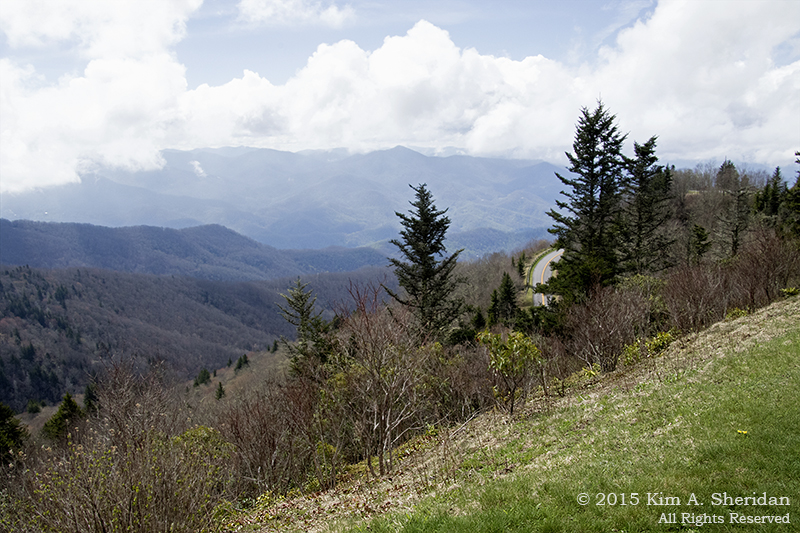
Instead we enjoyed looking down on the Parkway winding far below us.

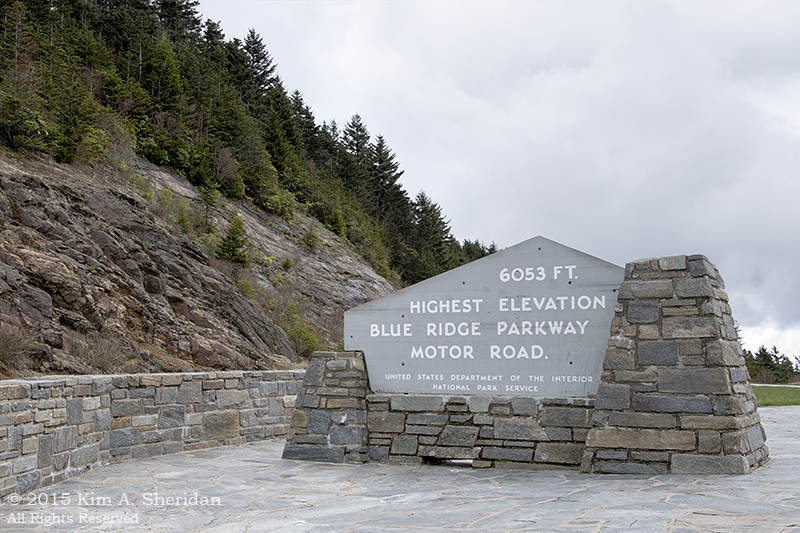
150418_NC BRP High Peaks_5793acsThe highest point on the Blue Ridge Parkway is the Richland Balsam Overlook at 6053’, Milepost 431.

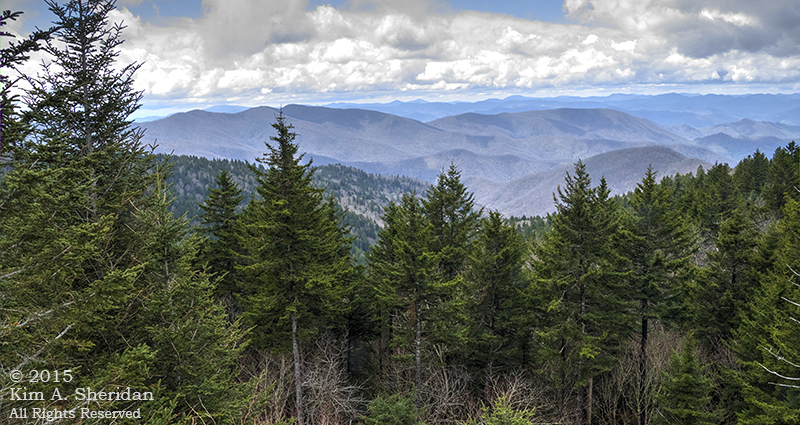
150418_NC BRP High Peaks_5781_HDR acs copyThe views are pretty nice!

After Richland Balsam, I was looking forward to Graveyard Fields, Looking Glass Rock and lunch at the Mt. Pisgah Inn. Not this time! A closure on the Parkway at Milepost 423 forced us into a long twisty side trip on some mountain road, and by the time we’d reached an intersection, it was too late in the day to drive all the way back to the Parkway. Instead, we continued on to Asheville, NC, for the night.

Day 2 was supposed to be the highlight of the trip. Craggy Gardens, Glassmine Falls, Mt. Mitchell, Linville Falls, and the Linn Cove Viaduct all waited. Only one little problem… the rain. It rained so hard Don and I could barely see the edge of the road. Fog and low clouds just made it worse. Funny thing, though; two of the highlights of the Parkway for me came on this stretch, getting to the top of Mt. Mitchell at Milepost 355 (see Climb Ev’ry Mountain) and seeing a bear run across the road (see Bearly There.) Otherwise, this section of the Parkway was pretty much a washout. (We did cover all the mileage on the trip from Asheville to Blowing Rock, NC, something we couldn’t say of any other day!)

150420_VA BRP Farm Country_5894acsThe weather on Day 3 was much better. The morning fog was picturesque for once instead of obscuring the view. This is the agricultural heart of the Blue Ridge Mountains, and the road overlooked a patchwork of farms and fields.

150420_VA BRP Farm Country_5910_HDRacs copyThe clouds on our entire trip tended towards the dramatic – when we could see them at all. This was one of the better days for cloud formations. Because he expressed an interest, I bought Don a book on weather in the Asheville Visitor’s Center. I thought maybe he’d like to learn the names of the clouds. Nope. To this day he still calls cumulus formations “fluffy white clouds.” There’s no educating some people.

150420_VA BRP Farm Country_5897acsOh, great. NOW you tell us!

At Milepost 216.9, we crossed into Virginia.

150420_VA BRP Mabry Mill_5942acsMabry Mill, at Milepost 176, is one of the highlights of the Parkway. The mill was in operation from around 1910 to the mid-1930s, when the Parkway was being planned. Now it serves as an exhibit of rural life. The mill itself is the most photographed place on the entire Parkway, particularly for catching reflections of the mill in fall foliage or spring flowering trees.

150420_VA BRP Mabry Mill_5972acsSince the trees were still bare and the water muddy, I found the mill race more interesting.

150420_VA BRP Farm Country_6078acsOur last stop on the Blue Ridge Parkway before our night in Roanoke was the Metz Run waterfall along the roadway at Milepost 128.

It was also our last stop along the Parkway. As hard as it was to leave the Blue Ridge Parkway, we opted to skip the last 121 miles.

150420_VA BRP Farm Country_6025acsOur new plan was to drive the entire length of Skyline Drive in Shenandoah National Park over the following two days. A quick trip north on the highways took us to Rockfish Gap, where the last chapter of our Appalachian odyssey awaited us.

Map of BRP


Climb Ev’ry Mountain

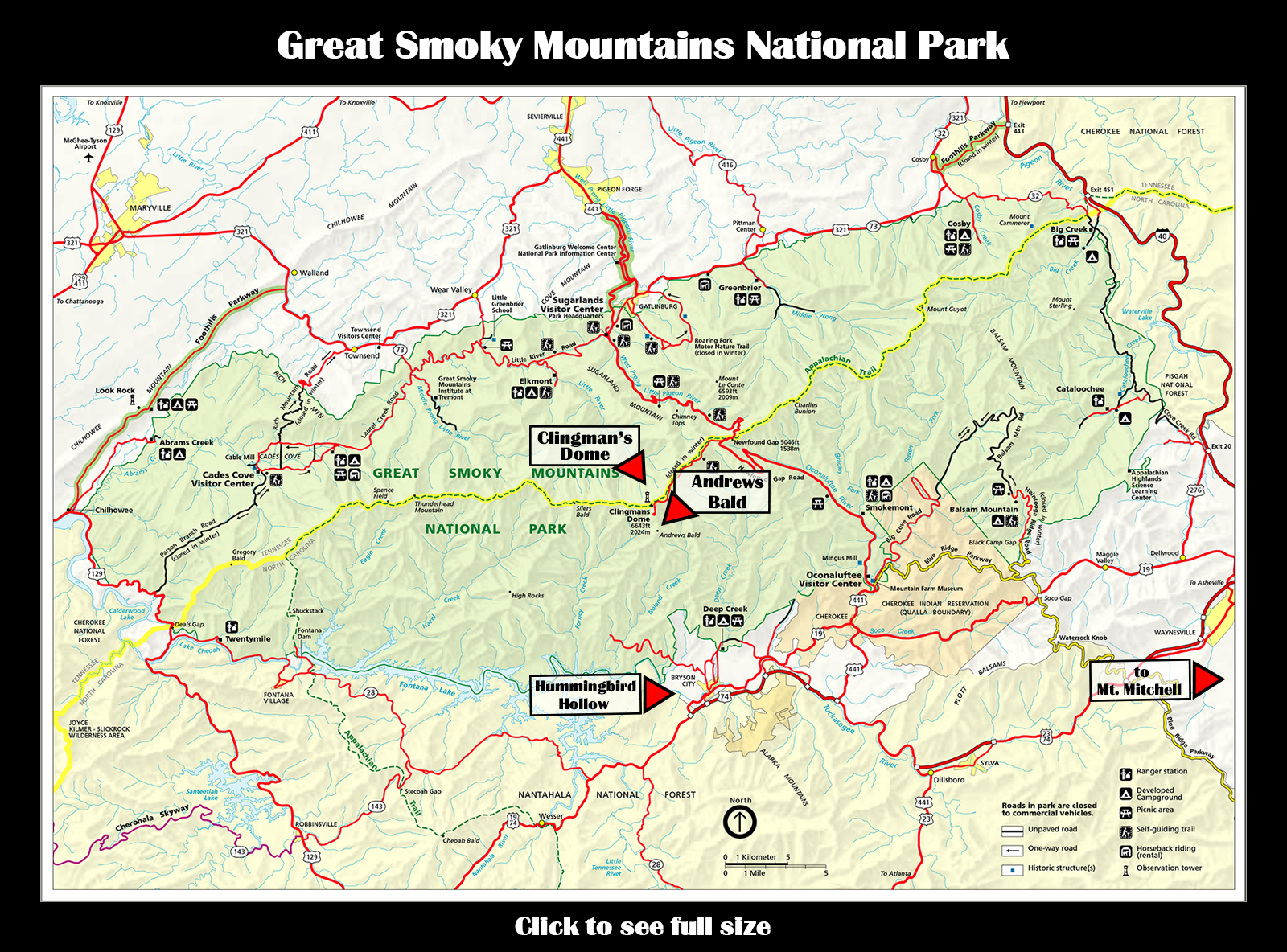
Appalachian Spring Title SubtitleAndrews Bald, elevation 5,906′. Clingman’s Dome, elevation 6,644′, the highest peak in the Smokies, the third highest mountain east of the Mississippi. Mt. Mitchell, 6,684’, the highest peak east of the Mississippi.

And we climbed them all.
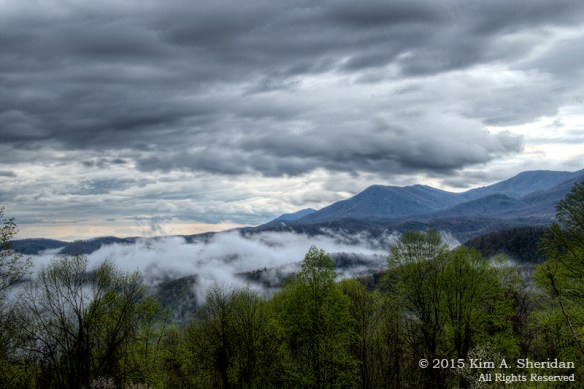
150414_TN GSMNP Maloney Point_4575-9acs copyMany were the Appalachian Peaks that felt our boot steps. Now, can we say that Don and I climbed each of these mountains from bottom to top? No. But we did get to the summit of each. Even if getting there involved driving a nice cushy road to within a quarter mile of the peak, and walking from there!

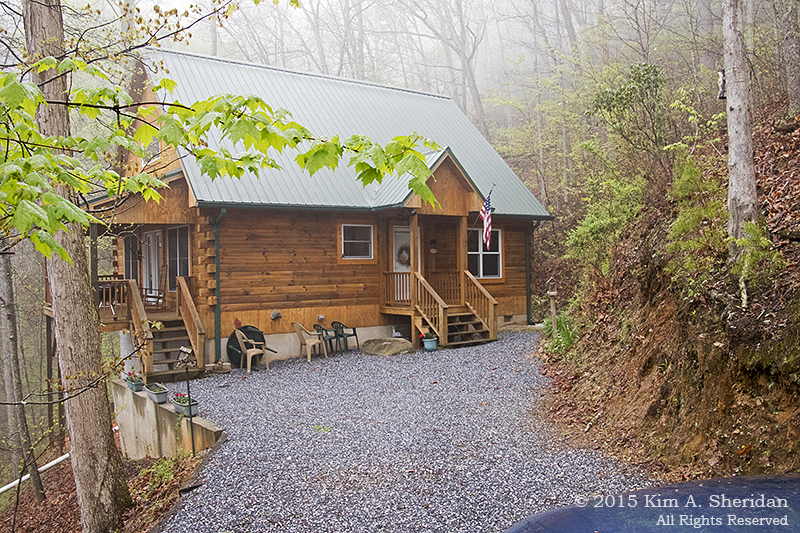
150418_NC Bryson City Cabin_5614acsLife in the Smokies began and ended each day at Hummingbird Hollow, our little rental cabin in Bryson City. Just the driveway was an adventure. Perched on the side of a cliff and too small to turn around in, it was situated at the outer corner of a tight switchback. Don had to stand in the road to guide me in backing out. Then we’d crawl down a narrow winding gravel road to another blind corner, where he walked across the road to look for traffic before I could turn out safely. Then it was down more twisty country roads to town.

150418_NC Bryson City Cabin_5619acsI wouldn’t have traded it for the world. Our cabin was comfy and cute, a homey haven at the end of the long days. And a nice break from hotel rooms!

Don wanted to see an unusual mountain habitat known in the Appalachians as a bald. These are mountain tops devoid of trees, though there is no tree line in the Smokies. Some balds are rocky; others are covered with grasses and a few shrubs. Many people have speculated on how these balds came to be, and why they remain treeless, but no one really knows for sure. Maybe it was fire, or grazing, or dry winds… Whatever the reason for their existence, they are fascinating places.

150417_NC GSMNP Andrews Bald_5264acsDon and I walked to Andrews Bald one day. This involved driving to the Clingman’s Dome parking lot, walking down the side of Clingman’s Dome on the Forney Ridge Trail, and then back up to the top of Andrews Bald.

Down, up.

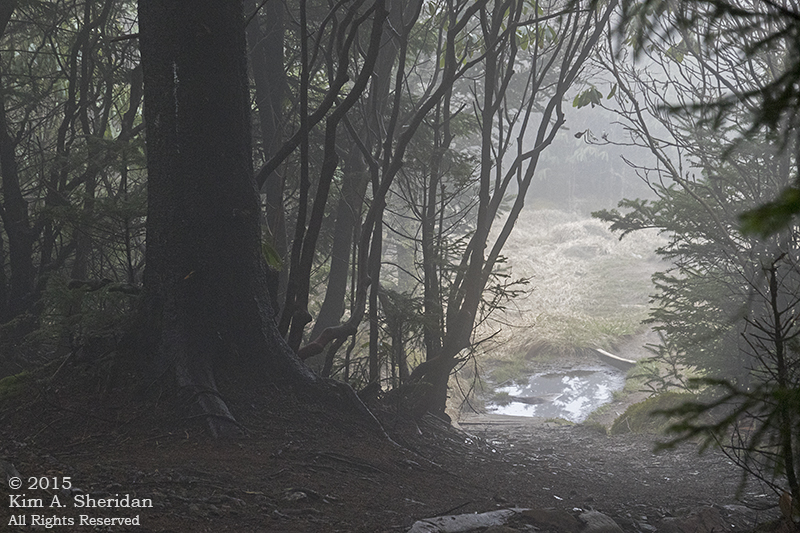
The day was damp and foggy (so what else is new?), and it got damper and foggier once on the trail. We walked through a boreal forest dripping with mist.

Don picked his way down the steep and rocky trail, over stone and log steps built by the trail crews.
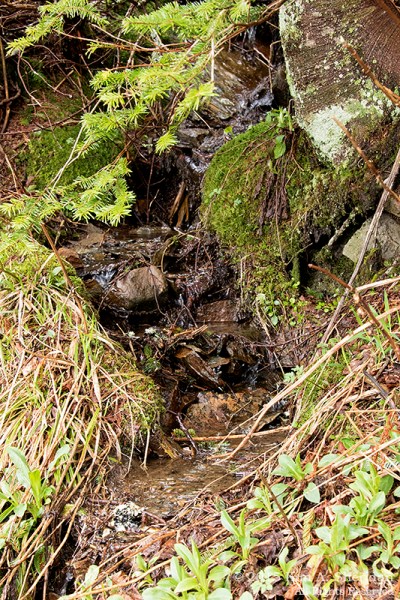
150417_NC GSMNP Andrews Bald_5441acsEvery few feet a tiny run spilled out of the side of the hill, splashing over moss covered stones.

After awhile, we left the rocky trail behind as we climbed back up to Andrews Bald, striding over ground made soft with the needles of spruce and fir.

150417_NC GSMNP Andrews Bald_5295acsAfter a mile and a half, we saw the light at the end of the tunnel. The dark greenery of the trees shrouding the path formed the tunnel, and the light spilled from open meadows just beyond.

We emerged into another world. Thick hummocks of tawny grass covered the ground. Mist drifted amongst widely scattered shrubs. Nary a tree in sight.

Just walking here was an adventure. The grass was spongy, and easily hid the bumpy surface from our unsuspecting ankles. We explored for a long time and our experiences were quite different. Don’s a big-picture kind of guy. In his words:

150417_NC GSMNP Andrews Bald_5338acsThe interesting thing about the bald was the abrupt transition from grasslands to trees.  You are walking on a field of grass surrounded by fully grown trees high up on a mountain. Grass surrounded by trees happens in parks but is unexpected in the wild on a mountaintop since you’d expect as you get higher up to go from big trees to little trees to shrubs to just grasses somewhere above the tree line. 

150417_NC GSMNP Andrews Bald_5361acsA unique habitat indeed, and the grasses and shrubs were interesting. But I was captivated by the small things.

Like a cluster of very tiny orange sporophytes on some sort of lichen. And a neat dew-laden spider web.

150417_NC GSMNP Andrews Bald_5418-22_HDRacs copyThe fog started to break up, and we got hints of the spectacular views to be found here.

Then we retraced our steps. Down, up.

3.6 miles of down, up, down, up; 1200’ of elevation gain (and loss) all told.

And then… More up.

The half mile walk to the top of Clingman’s Dome awaited us. This was worse than Andrews Bald. Though it was just a paved, sloped path, it was relentless in its climb, with no variation in either topography or scenery to distract us from the 12% grade.

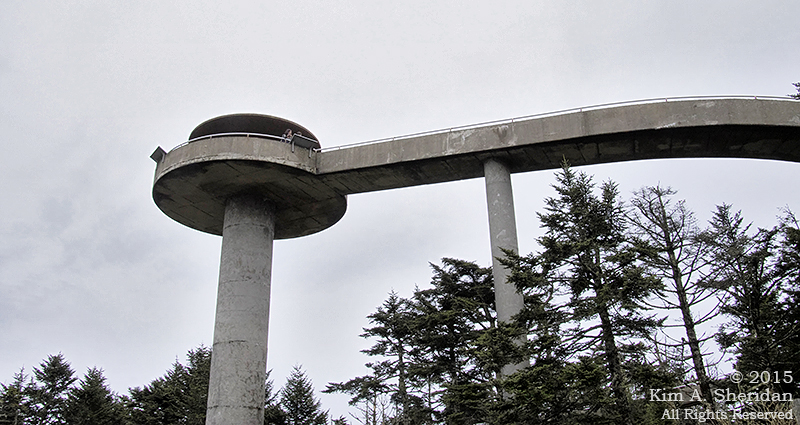
150417_NC GSMNP Clingmans Dome_5503acsAt the top was the Clingman’s Dome observation tower, a futuristic spaceship built in 1959.

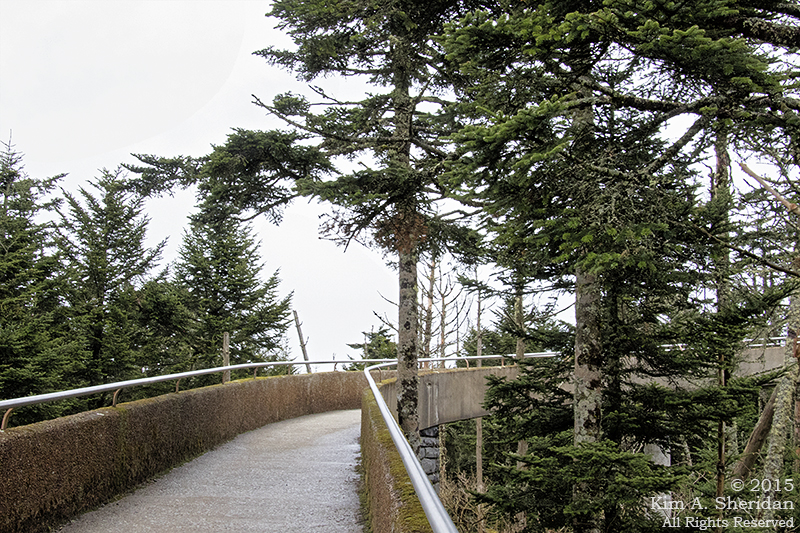
150417_NC GSMNP Clingmans Dome_5504acsThe long curving ramp swept us through the tree tops to the lookout above the spruces and firs. Without this tower, no one would see anything from Clingman’s Dome but trees.

With the tower, from Clingman’s Dome we saw…Trees. And clouds. Ok, it wasn’t that bad; there were enough breaks in the cloud cover to see at least some of the mountains.
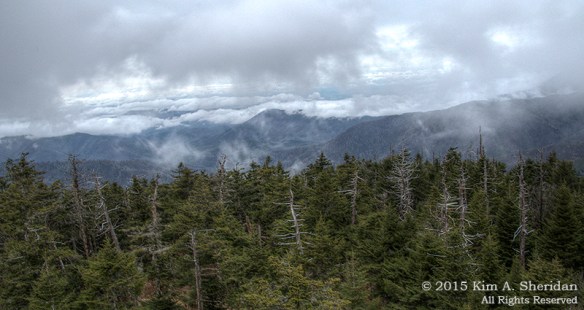
150417_NC GSMNP Clingmans Dome_5521-5_HDR acs copyAnd then… Down.

Walking down was harder than walking up. Particularly on the knees. I was glad to reach level ground.

By the end of this day, Don and I had walked 6 miles and climbed over 1500′ of elevation, all from a starting elevation of over 6000′. Down, up, down, up, up, down. Boy, were we tuckered! Our little cabin never looked as good as it did that night.

That was to be our last night there, and our last day in Great Smoky Mountains National Park. The next morning, we started our northbound journey on the Blue Ridge Parkway.

On the second day, we visited Mt. Mitchell State Park, just a short drive off the Parkway. Mt. Mitchell is the highest peak anywhere east of the Mississippi. And from the parking lot to the summit it’s only a quick 280 yard walk up 300’ in elevation. Of course we could do that! Easy-peasy. What could go wrong?

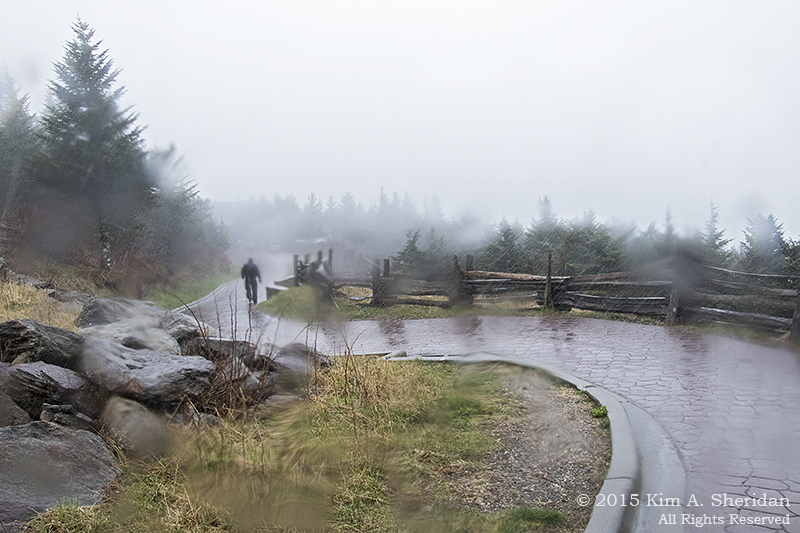
The weather, that’s what. This was one of the rainiest days of the trip, and the clouds pressed so close to the road we couldn’t see a thing beyond the grassy verge. On Mt. Mitchell, it was 47° and so windy it was raining sideways. Undeterred, we forged onward and upward.
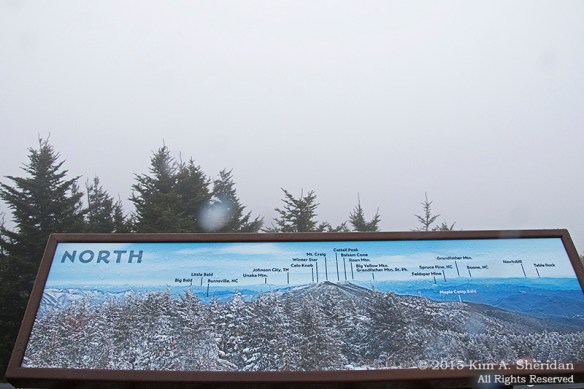
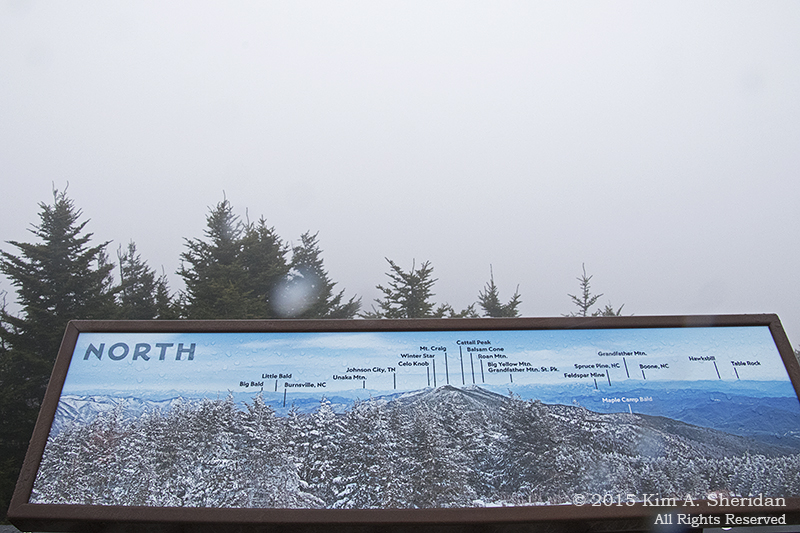
150419_NC BRP Mt Mitchell_5815acsWe saw nothing the closest trees. Our best views of the mountains that surrounded us came from the photographs on the interpretive displays. We had to take the mountains on faith.
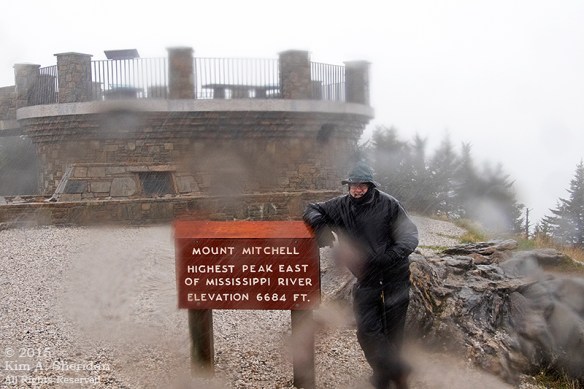
150419_NC BRP Mt Mitchell_5832acsBut at least we can say we climbed to the top of the highest peak in the Smokies, and to the top of the highest peak in the Eastern United States. I’ve got this lovely photo of Don enjoying a fine day on Mt. Mitchell to prove it.
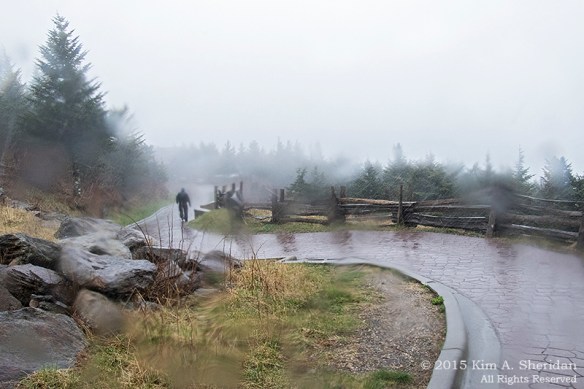
150419_NC BRP Mt Mitchell_5833acsOur Appalachian trip was all downhill from there…

Map GSMNP Mountains

Bearly There

Appalachian Spring Title SubtitleDon and I didn’t go to the Appalachians for the wildlife. Well, I did, as you’ll see later. But our main interest was in exploring habitats vastly different from what we are used to in our little corner of the Piedmont. Appalachian mountains, coves, boreal forests, balds – we wanted to experience it all.

It’s not that critters weren’t on our radar; it’s just that we were trying to cover too much ground to spend a lot of time in one place looking for birds and such. What wildlife we saw would have to find us.

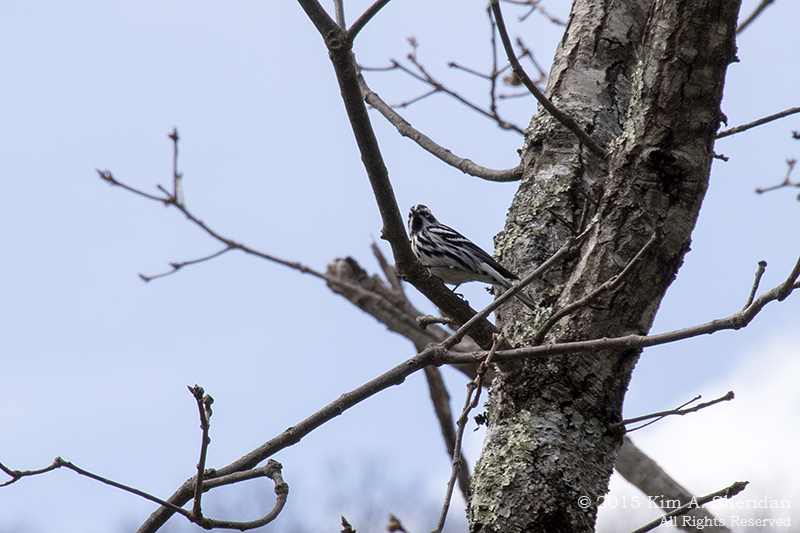
150412_TN GSMNP_3949acsAnd it did. A Pileated Woodpecker on the banks of the Little River, a Black and White Warbler near Laurel Falls, a Cooper’s Hawk on the Blue Ridge Parkway. Hummingbirds on the feeders of our cabin porch. There were lots of Wild Turkeys and lots of Turkey Vultures. A few gray squirrels. Several very tame deer at Cade’s Cove. Nothing we hadn’t seen before, but all enjoyable to watch. Especially the Pileated.

We did see three species new to us, and none of them were birds. All were exciting. And all were found by somebody else first, and we just followed the crowds.

On the Laurel Falls Trail, it was the children who led the way. We came upon a father and some kids staring intently at the rocky cliff rising above us. “Look!” they said “it’s a salamander!” Sure enough, basking in the warm sun was a six-inch striped long-tailed salamander.

150412_TN GSMNP_4018acsOr so I thought.

We saw three of these critters, and for two months I thought they were salamanders. No warning bells went off in my thick skull. Despite the fact that the animal we saw didn’t look like any of the salamanders in the Reptiles and Amphibians of the Smokies book. Despite the fact that this little guy had scales. Despite the fact he was basking in the sun, which no amphibian in its right mind would ever do. No, despite all these obvious signs, I stubbornly persisted in believing that I had found one of the Smokies’ famous salamanders.

And I call myself an amateur naturalist? This was amateur hour at its finest.

150413_TN GSMNP Cades Cove_4450 acsFinally, upon reviewing the photographic evidence I saw what I should have known in April. This was no amphibious salamander, but a lizard, a reptile. In fact, it’s one of the skinks that call the Smokies home. The scales are one clue; reptiles have them, amphibians don’t. But it’s the behavior and the habitat that should have tipped me off. Salamanders are moist skinned critters, and stick to shady, damp places, like under rocks at the edges of streams. Skinks, like all reptiles, are cold-blooded, and like to sunbathe to help regulate their body temperature.

Properly identified at the time or not, these were cute little animals. We saw two that first day on the Laurel Falls Trails, both found by kids.

150412_TN GSMNP_4036acsHere’s Don posing with one.

I found our third skink myself at the base of a farm building in Cades Cove.

150418_NC BRP Hawk_4495acsThere were no such identification issues with our next new species. I knew these magnificent animals frequented this particular area of the park, had almost been expecting them, but did not dare to hope. Yet at the end of a very long day, there they were. They stood out, big and dark in the light green grass of the open field.

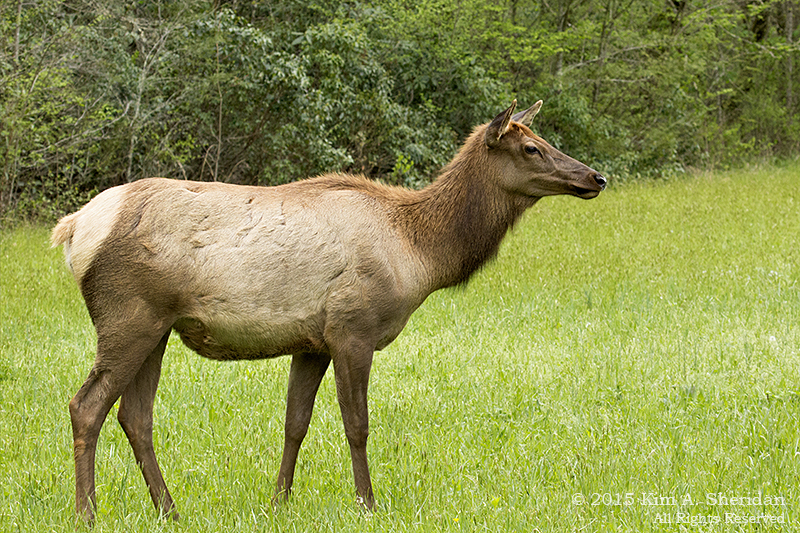
Elk!

150417_NC GSMNP Oconaluftee Elk_4252acsElk used to roam the Smokies and the southern Appalachians, but they were eliminated from the area by the mid-1800s. In 2001 the National Park Service began a program to restore elk to the park. Here’s proof it’s been successful!

150417_NC GSMNP Oconaluftee Elk_4354acsOne of the places the elk like to hang out is Oconaluftee, at the eastern end of Newfound Gap Road, which is where we came upon them that late afternoon. I quickly pulled the car onto a side road and Don and I joined the small crowd of visitors and NPS volunteers watching the elk do basically nothing.

Eleven elk all lying down, placidly munching on grass. What entertainment! One got up and walked across the field, which stirred the crowd into a tizzy.

150417_NC GSMNP Oconaluftee Elk_4403aImagine our excitement when another elk appeared behind us and started grazing just feet away.

150412_TN GSMNP_3929acsWhile Don and I went to the Smokies for the mountains and varied habitats, I was secretly hoping for bears. The American black bear is my all-time favorite animal – let’s be honest, it’s the cute factor. I’ve never seen one before, though. There are an estimated 1800 black bears in the Smokies. That’s two bears a square mile, so my odds of seeing one must have been good, yes?

No. Bears are shy creatures who avoid contact with humans at all costs, unless there’s food involved.

Early in our tour of Cades Cove, Don asked a local what our odds of seeing a bear were. “About 1%”, he replied.

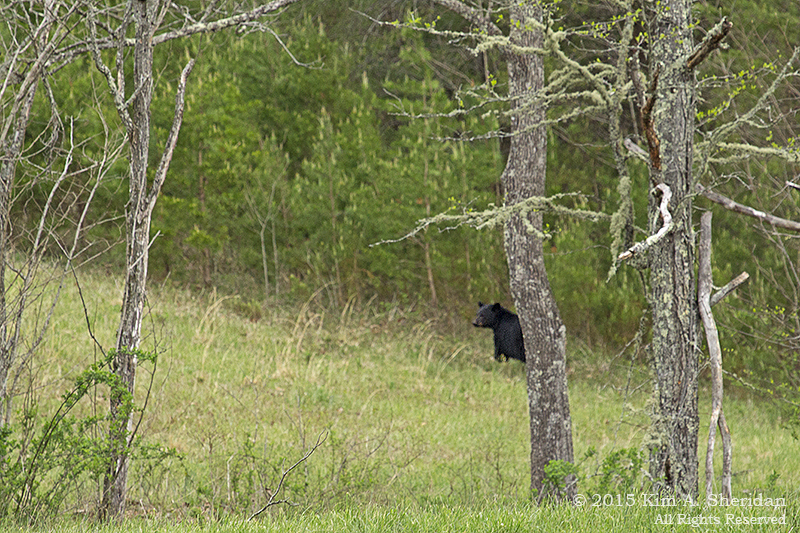
Five minutes later we had our first bear.

150413_TN GSMNP Cades Cove Bear_4108acsBears in the Smokies frequently cause “bear jams”, carloads of tourists on the side of the road looking at bears. So when we came upon a lot of parked cars and lots of people standing around, all supervised by a ranger, we knew what was going on. Don, being the gentleman that he is, jumped out of the car to see before I could get properly parked.

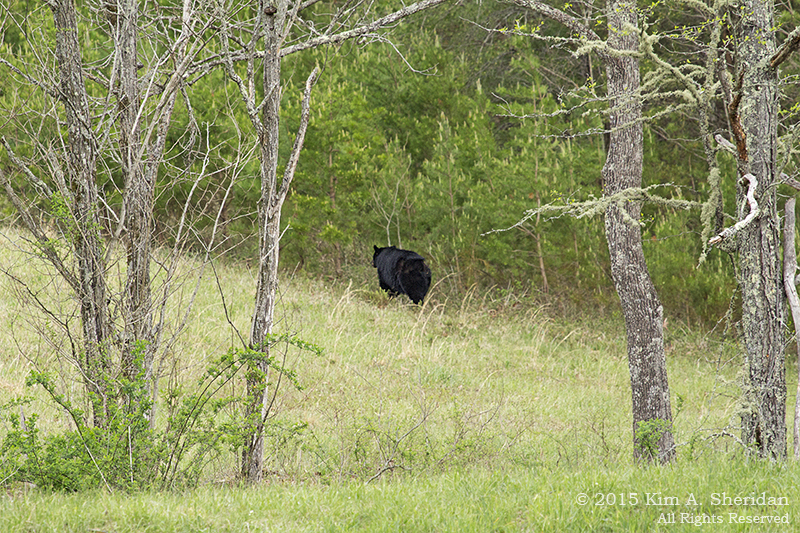
Our bear was about 200 yards away, and disappearing into the trees by the time I could get my camera on him. I only got a few shots, all blurry.

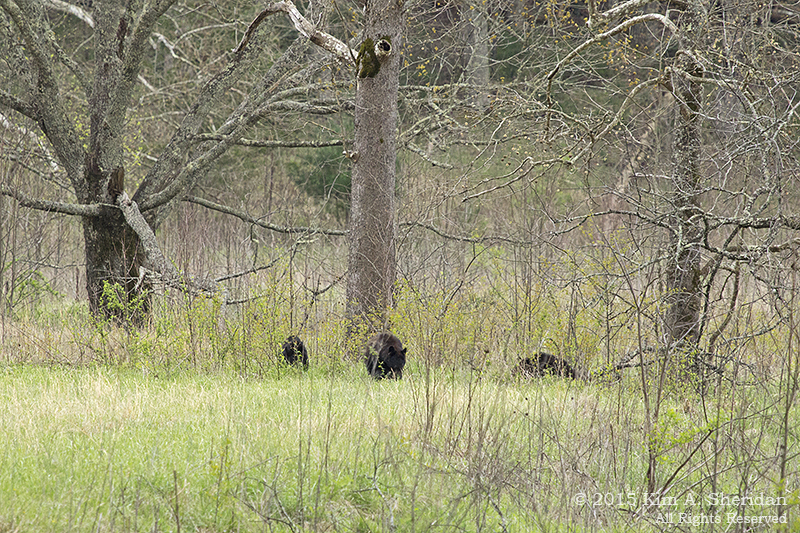
150413_TN GSMNP Cades Cove Bear_4132acsIt wasn’t long before I got another chance. This time, a bigger crowd was watching not one but three bears about 300 yards away. A mother and two yearling cubs. We got a longer look, and I tried hard to get good shots, but once again distance led to fuzzy photos. Usually I wouldn’t show photos this bad – and believe it or not, this is my sharpest shot.

150413_TN GSMNP Cades Cove Bears_4163 acs2But what the heck, I’d finally gotten to see black bears, and here’s the proof!

Don and I had one other encounter with a black bear, and it happened too fast for either of us to get a photo. We were driving home from the Smokies on the Blue Ridge Parkway near Mt. Mitchell. It was pouring rain, and the fog masked everything but the trees lining the road.

Suddenly a bear appeared from the woods on the right, maybe 10 yards away, crossed the road in front of us and disappeared into the woods on the other side. We only had time to point and start shouting “Bear! Bear! BEAR!” before it was gone. Not more than 5 seconds, but by far the best look we got at a black bear on the trip.

That quick but exciting view of a black bear was an apt metaphor for the wildlife Don and I saw on our two week Appalachian excursion. Every brief sighting was thrilling, but in the Smokies the wildlife was…

150413_TN GSMNP Cades Cove Bear_4118acsBEARLY there.

Map GSMNP Bearly There

In the Garden of Stone

150417_PA Susquehanna Conowingo Pool_0328aHold on to your hats, folks, as the Wild Edge takes a sharp detour from the Great Smoky Mountains of the South to the Piedmont of Pennsylvania. We’ll return to the Appalachians soon. But sometimes a trip so excites me that I just have to share it RIGHT NOW.

And what could tear me away from the Smokies? A simple kayak trip Robb, Don and I took to the Susquehanna River. At least it looked simple. Guide books and satellite map research only hinted at a river dotted with rocky islands. That didn’t come close to preparing us for what we found.

150417_PA Susquehanna Conowingo Pool_0214acsNeither did our initial half hour on the river. We paddled across to Lower Bear Island, a wooded island in mid-stream whose southern end sports a series of power lines.

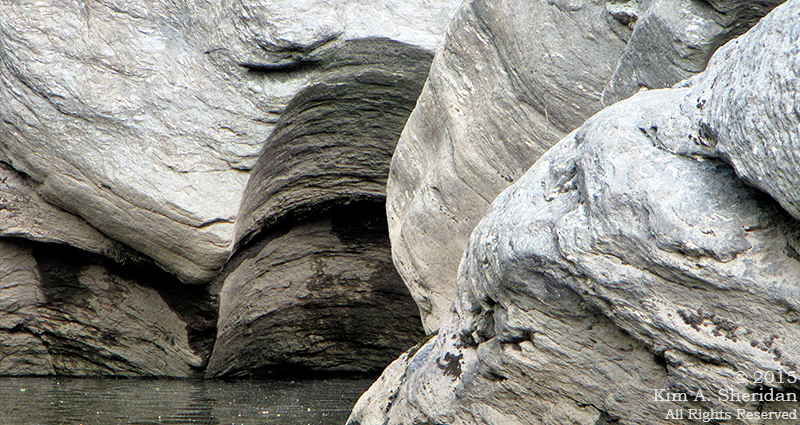
150417_PA Susquehanna Conowingo Pool_0350acsThe Susquehanna River is punctuated here by three hydro-electric dams. Between the dams is the Susquehanna Gorge. At one time it was 400’ or more deep, where the river carved through bedrock of Wissahickon schist, forming spectacular sculpted rock formations, potholes and three levels of terraces. Now much of it is below the still, lake-like waters. Only where the water is shallow, just below the dams, do the geological wonders appear.

150417_PA Susquehanna Conowingo Pool_0219acsThese wonders revealed themselves slowly as we paddled upstream along the shore of Lower Bear Island. At first we saw islets no more than a foot high. Even the smallest had some sort of vegetation on it. Gradually the islets became larger islands, and the shores became steeper and rockier.

150417_PA Susquehanna Conowingo Pool_0289acsWhen we reached the channel between Lower Bear and Upper Bear Island, we began to really appreciate this amazing place. Islands of stone were everywhere. Fantastical sculptures lined the cliffs on both sides of us. I started to give the formations names.

2 Susquehanna - Mount RushmoreMt. Rushmore.

3 Susquehanna - Robb at the Fist of GodThe Fist of God. Robb in devout worship.

4 Susquehanna GorgeAbove Upper Bear Island, about a mile and a half from the dam, we began to see signs of trouble. Or rather, we didn’t see trouble, which came in the form of shallow rocks just below the opaque surface. You’d be paddling along, admiring the scenery, and suddenly find yourself spinning sideways and threatening to tip over. Getting unstuck was challenging, and left me with wet shirt sleeves.

Another quarter mile up, the water got too low for our kayaks. We tried a cross channel around Crow Island, but had to turn back. By this time we were hungry and itching to stretch our legs. But where to land? There were no soft beaches in this garden of stone.

150417_PA Susquehanna Conowingo Pool_0303acsWell, yes, there was, just one. When we passed it earlier it had been occupied by two kayaks, with two kayakers above on the rocks. Now the beach was empty. We stopped, picked up our little lunch sacks, and threaded our way through the trees to the top. I was first to arrive, and this is what I saw:

150417_PA Susquehanna Conowingo Pool_0381acsOh, my goodness. Yes, this will do quite nicely.

6 Susquehanna - Robb & Don at the Lunch SpotRobb, Don and I spent a lovely siesta eating, admiring the scenery, taking photos of butterflies, a snake and each other, and taking care of other (ahem) necessities.

Or not. I  really have to put a bell on Don.

(There you go, Don. See how nice I am to you? I put this photo in at your request, even though you insist on continually disturbing my (ahem) solitary moments.)

1 Susquehanna GorgeThe little pool formed by the rocks below our lunch spot made for a serene place to explore.

7 Susquehanna  - Don & Robb in SyncIt’s rare that I put people in my photographs. The gorge requires it, to give a sense of scale. Don and Robb paddled on, dwarfed by the surrounding stone walls.

150417_PA Susquehanna Conowingo Pool_0444acsMany of the rocks show a strong tilt, the result of thousands of years of geological forces far beyond my comprehension. (Really. I read a scientific paper about the gorge. Didn’t understand a third of it.)

150417_PA Susquehanna Conowingo Pool_0464acsFor something completely different, we took the channel (right) between Upper and Lower Bear Islands to the other side. Here we found the river even wider, and not nearly so rocky. The main channel passes close to the far shore.

By the time we passed Lower Bear Island, Don was ready to call it a day and headed in.

Not Robb and I. He’d been talking all day about some cove on Big Chestnut Island he’d spotted on a satellite photo. I thought he meant a small beach. Little did I know.

150417_PA Susquehanna Conowingo Pool_0494 acsThe approach to the cove was narrow, and nearly invisible. It took some deft paddling to wind through the tight and twisty opening. A couple of Bald Eagles flew close overhead, a good omen if ever there was one.

We found ourselves inside a small hidden lagoon, a secret garden. Wooded rock walls towered above us on all sides, cool and green and shady. It was amazing.

8 Susquehanna - Robb in the Secret GardenWe wanted to linger awhile longer, but needed to press on. The exit was far too narrow for passage, so we left the way we came, and crossed the river to the boat launch. Our day was over, and we were tired but elated.

It’s taken me a while to find a place as awesome as the Smokies. Hard to believe I’d find it so close to home. Even harder to believe a landscape as dramatic as the Susquehanna Gorge exists so close to home.

I can’t wait to wander again through this watery garden of stone.

5 Susquehanna - Lunch Spot

Wildflowers and Woods

Appalachian Spring Title Subtitle

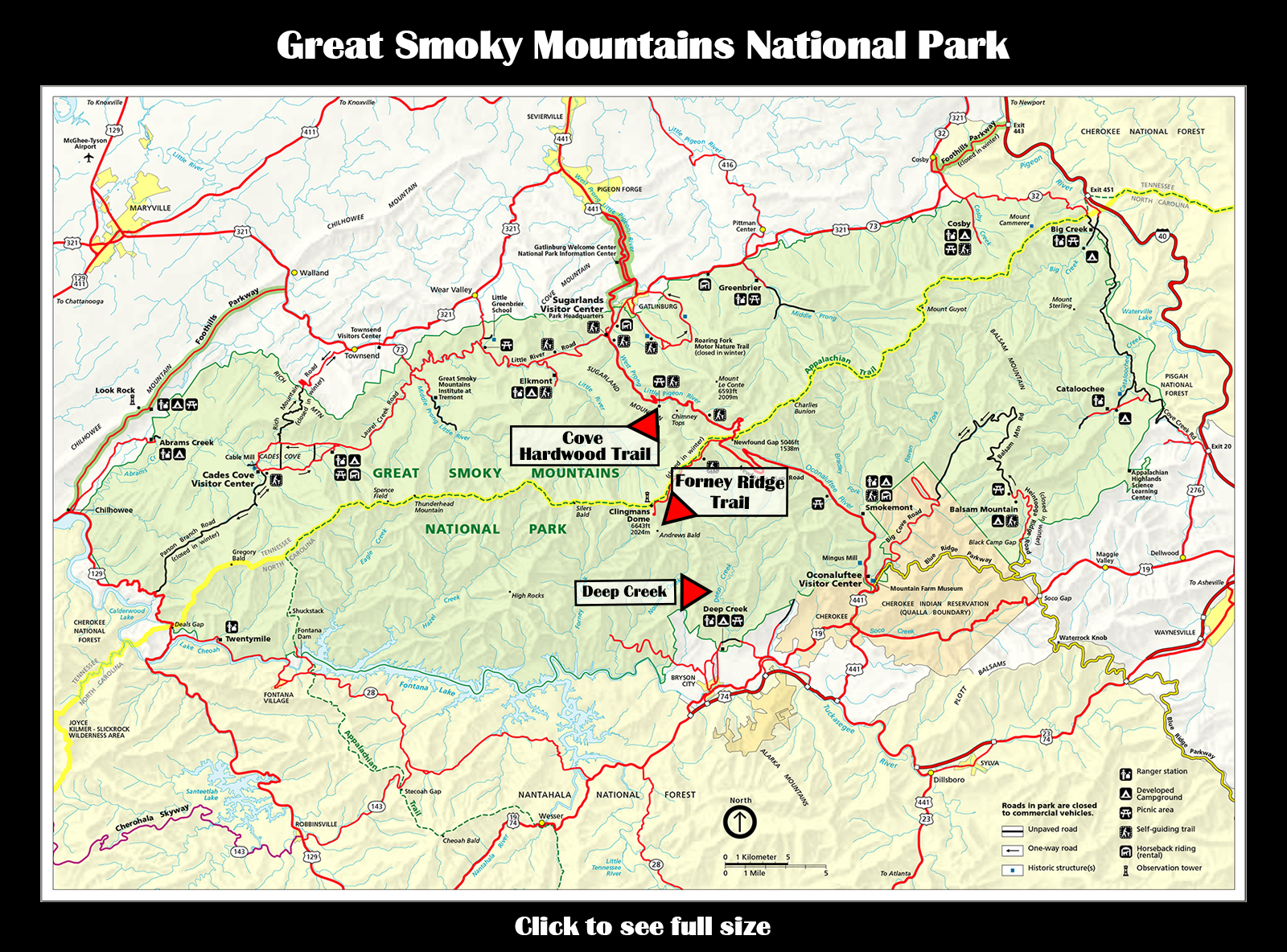
Old trees float on a sea of wildflowers, Cove Hardwood Nature Trail, Great Smoky Mountains National Park.

Old trees float on a sea of wildflowers, Cove Hardwood Nature Trail, Great Smoky Mountains National Park.

Our timing was way off.

Best to visit Great Smoky Mountains National Park during the peak of fall foliage season, or in summer when the mountains are a lush deep green. Instead we were there during mid-April, before the trees leafed out. The mountains were still a dull grayish brown in all my photos. And did I mention the rain?

Squirrel Corn, Cove Hardwood Nature Trail.

Squirrel Corn, Cove Hardwood Nature Trail.

Our timing was spot-on in one sense, though – we visited in the peak of the spring ephemeral wildflower season.

Many wildflowers live their entire above-ground life in a few weeks in the spring.

Taking advantage of warm soil, abundant moisture, and the full force of the unfiltered sunlight, these fleeting beauties awaken in early spring.

Drawing on last year’s reserves of energy, they send up stems and leaves while gathering and storing as much fresh energy as they can. They bloom, and set and disperse seeds.

Not all violets are purple. Clockwise, from top left: Canadian Violet, Early Yellow Violet, Woolly Blue Violet, Bird's Foot Violet.

Not all violets are purple. Clockwise, from top left: Canadian Violet, Early Yellow Violet, Woolly Blue Violet, Bird’s Foot Violet.

Feeding and reproduction complete, the flowers, stems and leaves wither and die, leaving the strong roots and rhizomes below the soil to enter dormancy until the next year.

Rue-anemone, Deep Creek Trail.

Rue-anemone, Deep Creek Trail.

All of this activity in just a few short weeks, and we happened to be there to see it!

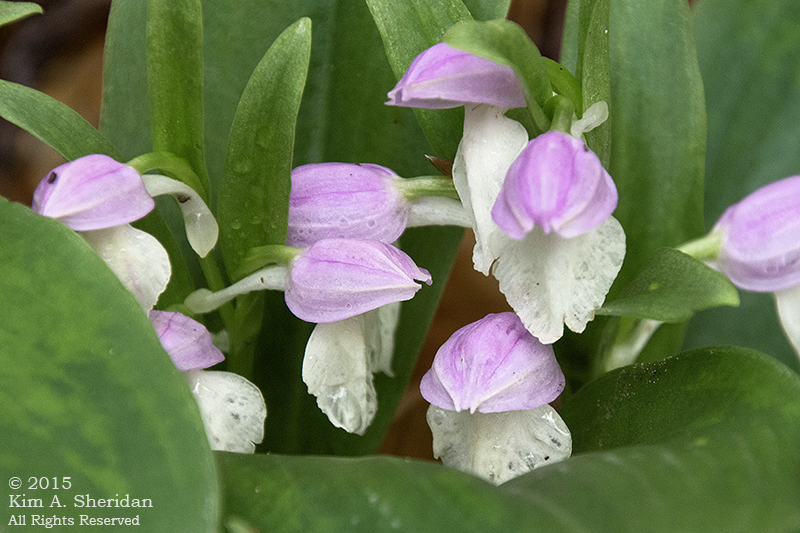
Showy Orchis, Deep Creek Trail.

Showy Orchis, Deep Creek Trail.

Plant diversity in the Smokies is matched by only a few areas worldwide. Nearly 1500 kinds of flowering plants call the southern Appalachians home.

Fringed Phacelia, Cove Hardwood Nature Trail.

Fringed Phacelia, Cove Hardwood Nature Trail.

Abundant rainfall, coupled with a wide range of elevations, provides a variety of habitats for our leafy friends. Most of the park is heavily forested. There are eight distinct forest types.

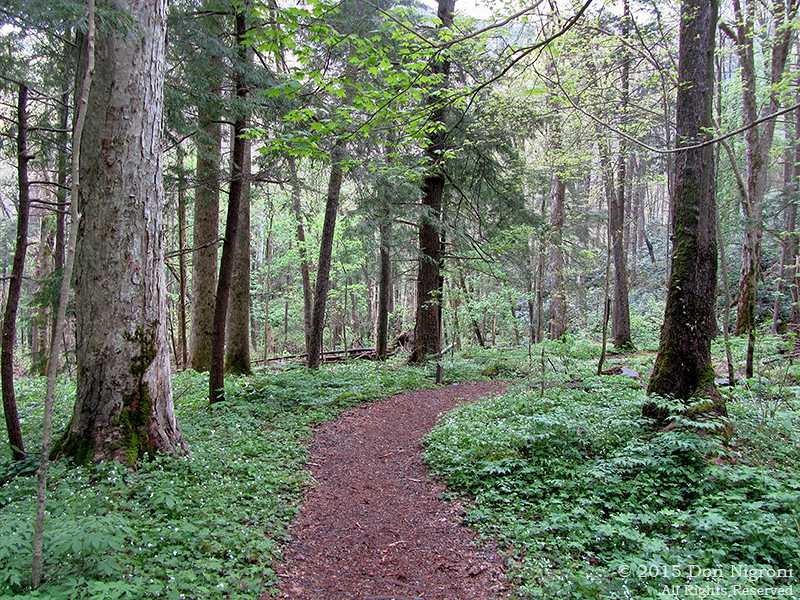
The Cove Hardwood Nature Trail.  Photo by Don Nigroni.

The Cove Hardwood Nature Trail.
Photo by Don Nigroni.

Don and I wanted to explore an old-growth forest, something neither of us had experienced before. We chose the Cove Hardwood Nature Trail, which winds through a cove hardwood forest in Sugarlands Valley.

This cove is cool, sheltered and very moist, with tiny runs seeping from the slopes everywhere. Thirty species of trees are found here, including white basswood, yellow birch, tulip poplar, and hemlocks.

Yellow buckeye tree, Cove Hardwood Nature Trail.

Yellow buckeye tree, Cove Hardwood Nature Trail.

The old-growth forest area starts in the upper reaches above the logging limit, where the forest has never been altered.

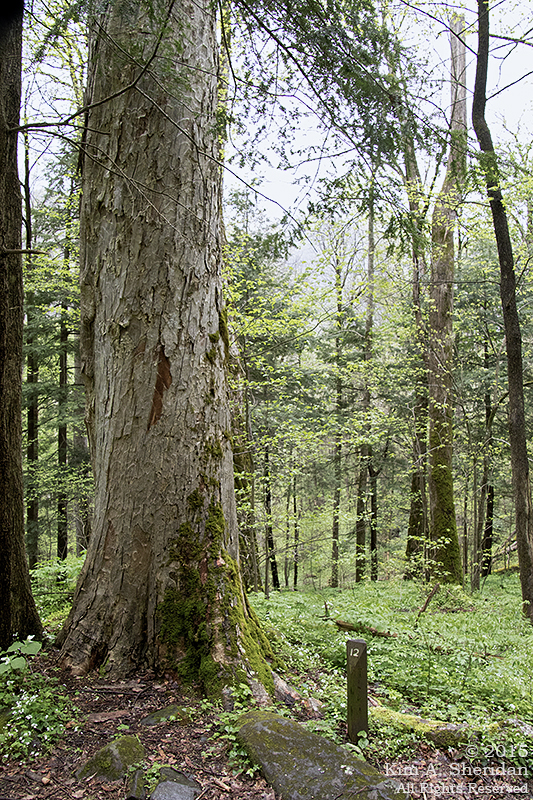
Many of the trees have lived a long time, and are really big.

This venerable giant, a 150 year old yellow buckeye, stands 100 feet tall.

Unlike the disturbed forests we are used to, the understory below the widely spaced trees is wide open.

The ground is not, though. A riot of mosses, shade-adapted plants and those wonderful spring ephemerals carpet the soil.

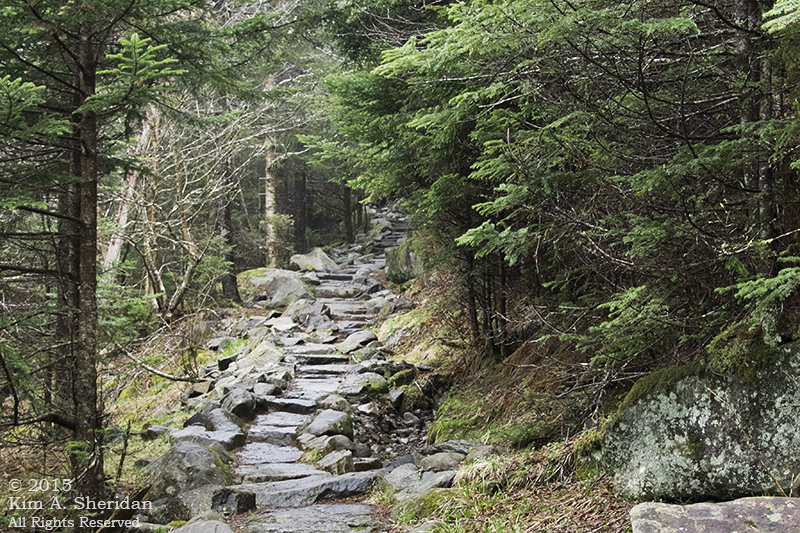
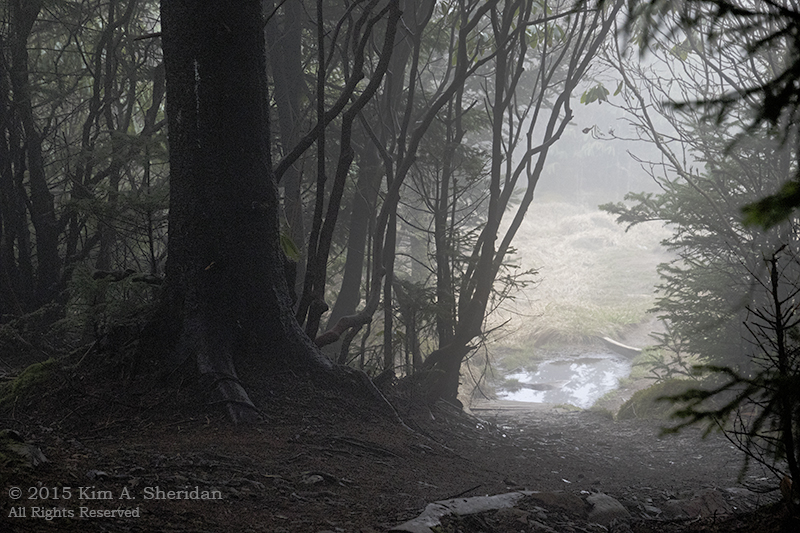
The Forney Ridge Trail winds through a boreal spruce-fir forest.

The Forney Ridge Trail winds through a boreal spruce-fir forest.

I fell in love with another unique forest ecosystem we encountered a number of times, the boreal spruce-fir forest. This type of forest is found in the North Woods of Maine and Canada. So what’s it doing in the Southern Appalachians? Ice, ice, baby. During the glacial periods, the trees and plants of the far north migrated here ahead of the glaciers. They found a favorable climate in the high altitudes of the Smokies and stayed after the glaciers retreated.

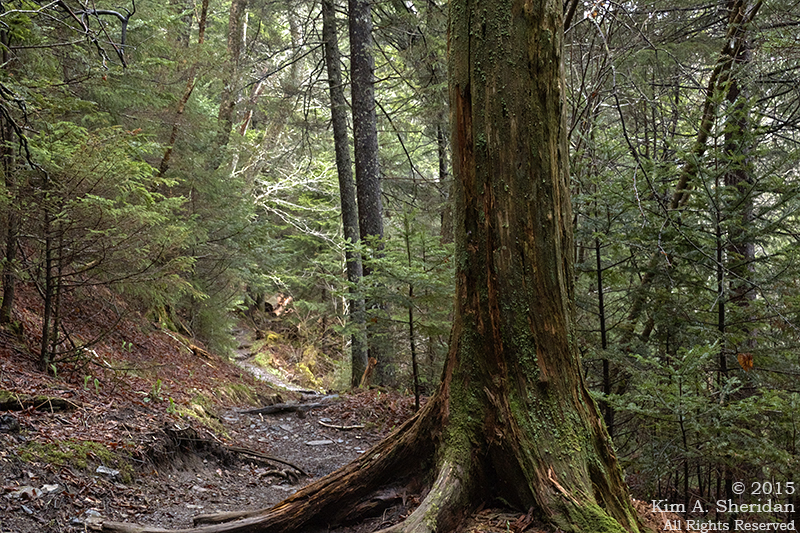
Spruce-fir forest on the Forney Ridge Trail.

Spruce-fir forest on the Forney Ridge Trail.

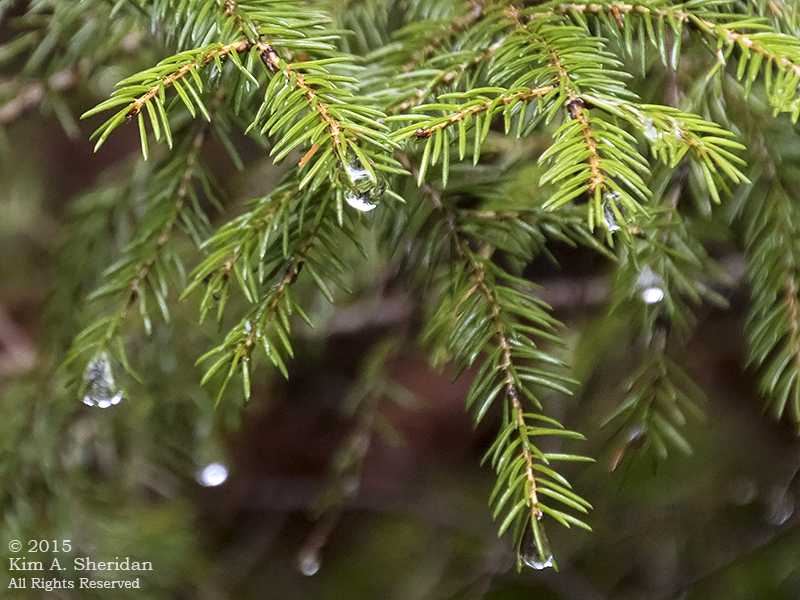
The loftiest slopes of Clingman’s Dome and other high peaks are draped in red spruce and Fraser firs. The day we trekked the Forney Ridge and Appalachian Trails, the woods were cloaked in a heavy mist. I felt we had entered a mysterious fairyland, softly decorated in deepest green and luscious auburn. Little dewdrops hung suspended from spruce needles. Mosses clung to both standing and fallen trees, while lichens coated the rocks.

Mist dripping from spruce needles.

Mist dripping from spruce needles.

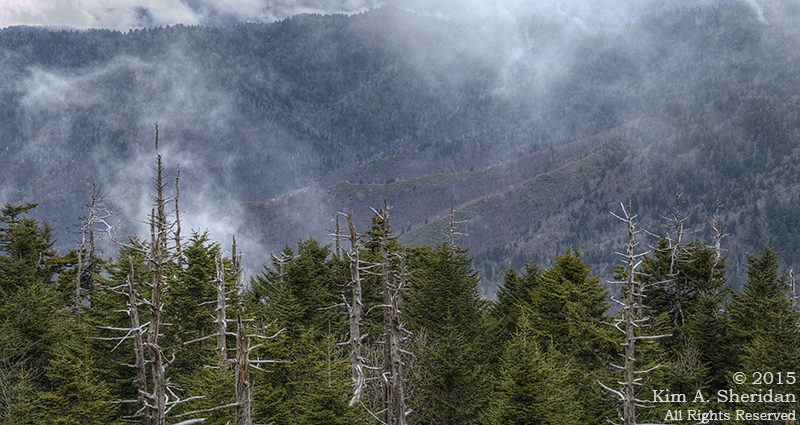
Living and skeletal Fraser fir on Clingman's Dome.

Living and skeletal Fraser fir on Clingman’s Dome.

There is a sadness in the boreal woods, though.

Since the 1960s, the Fraser firs have been decimated by a non-native invasive insect known as the balsam woolly adelgid.

This nasty critter eats the sap of the tree while injecting a toxin that kills a tree in a few short years.

The forests are littered with the ghostly skeletons of dead Fraser firs. It is all too common to see numerous bare tree trunks standing amidst live firs.

What a shame it would be to lose these majestic trees altogether.

Fraser firs on Clingman's Dome.

Fraser firs on Clingman’s Dome.

During our time in the Great Smoky Mountains National Park, I counted 25 different flower species that I was able to identify, and more that I couldn’t put a name to. We walked through southern woodlands, and forests more common to the far North.

We came to the Smokies for the mountains, but left awed by the wildflowers and the woods.

Spruce-fir forest along the Appalachian Trail.

Spruce-fir forest along the Appalachian Trail.

Maybe our timing wasn’t so bad after all!

Map GSMNP Wildflowers & Woods