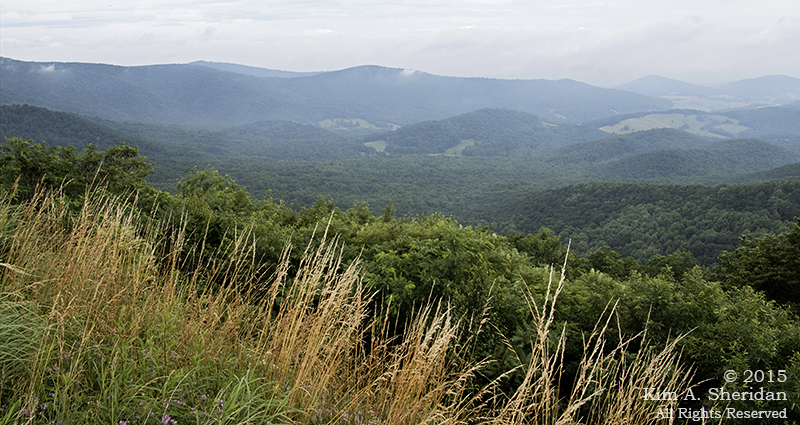
Oh, Shenandoah! (Reprise)

150704_VA Shenandoah National Park_0514acsIndependence Day, 2015. The day Don and I returned to the scene of the crime. The offense? Visiting a National Treasure without Robb. This Fourth of July we were to serve the term of our punishment.

Three months after we left Shenandoah National Park, we returned for a weekend, this time with Robb in tow. A chance for Don and I to introduce him to the wonders of Skyline Drive.
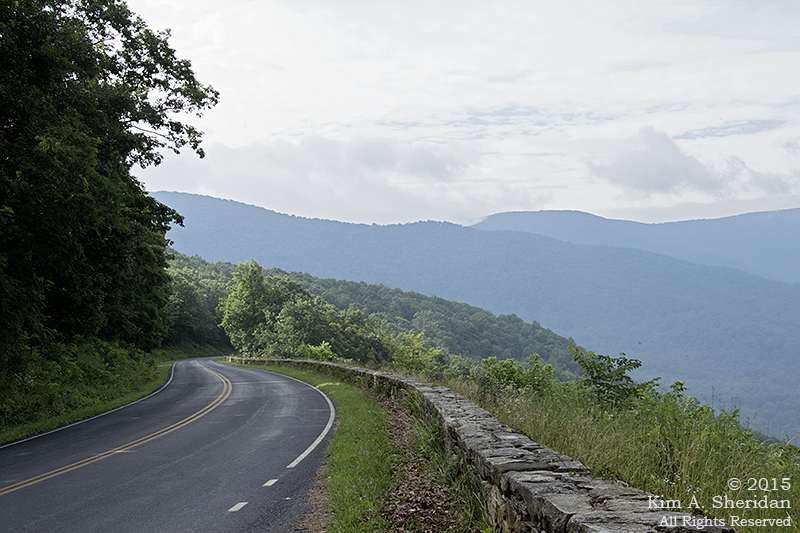
150704_VA Shenandoah National Park_0485 aWhat a change in the landscape! When we left in April, the mountainsides were mostly brown with tinges of the lime green of new spring growth. Now all is lush dark green.
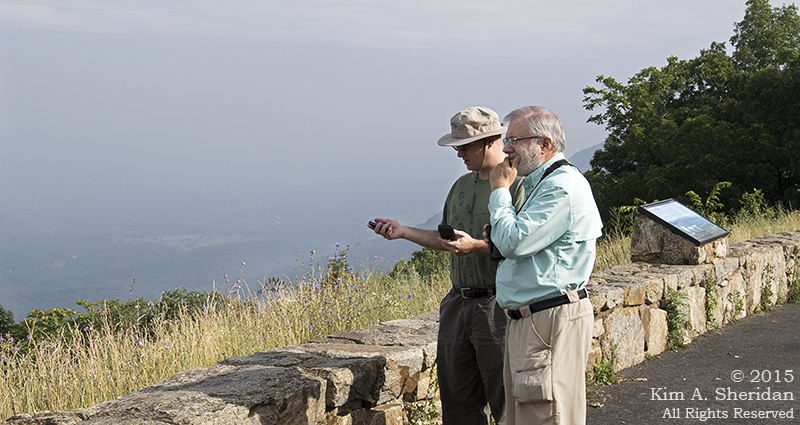
150704_VA Shenandoah National Park_0400 acsWith plans to hike to up The Massanutten toward Signal Knob the next day, Robb and Don took the opportunity to take a compass heading and puzzle over the proper approach.
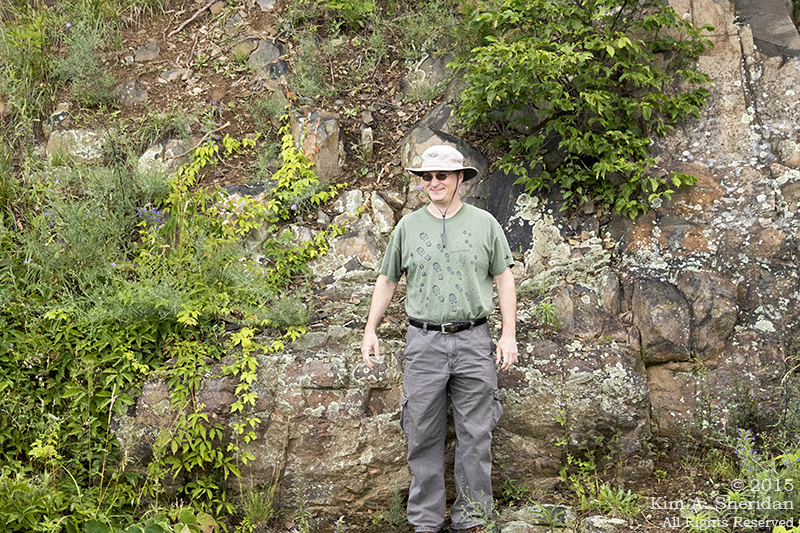
150704_VA Shenandoah National Park_0423 acsRobb on one of the rock faces that line parts of the east side of Skyline Drive. Now who’s doing the hard time?
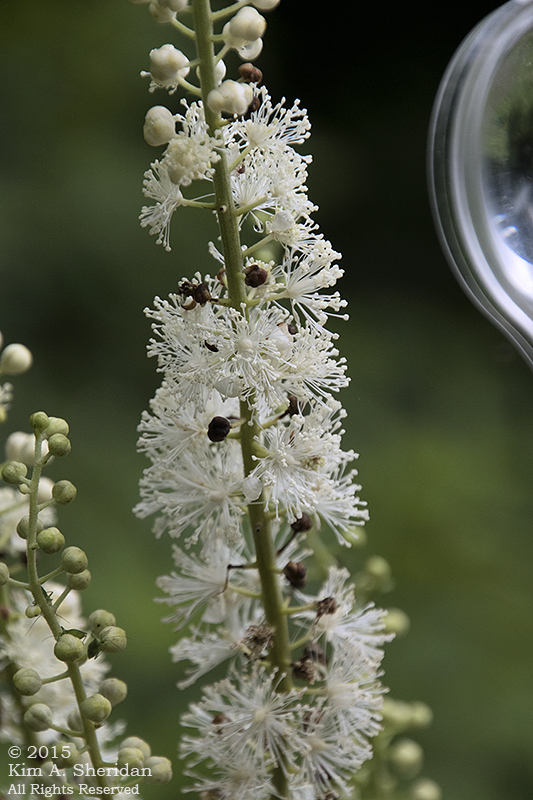
150704_VA Shenandoah National Park_0551acsWith all these vast mountain vistas and valley views in a new environment, what’s Robb looking at? Plants, of course.

There’s this one spiky flower we kept seeing along the roadsides as we were driving.

We couldn’t identify it on the move, but it was never present at the overlooks.

Finally Robb and I walked back along the road to take a closer look.
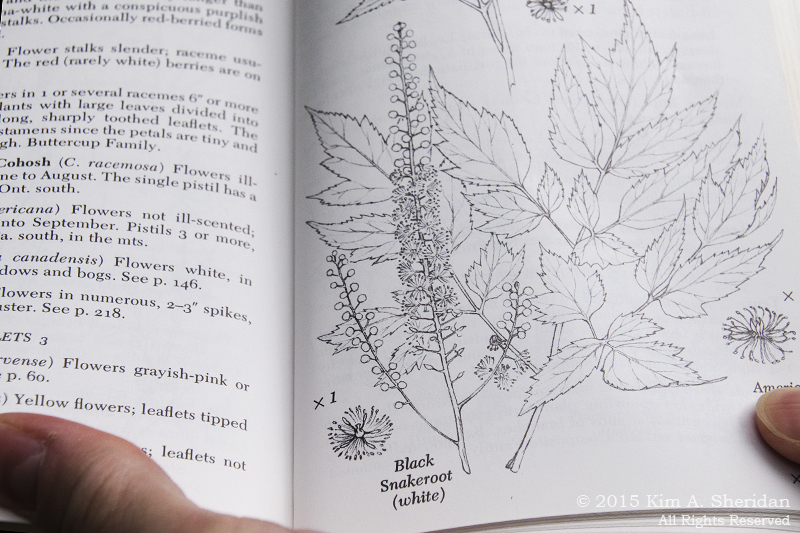
150704_VA Shenandoah National Park_0559acsArmed with a hand lens and Newcomb’s Wildflower Guide, we were able to identify it as Cimicifuga racemes, commonly called Black Snakeroot or Black Cohosh. Mystery solved!
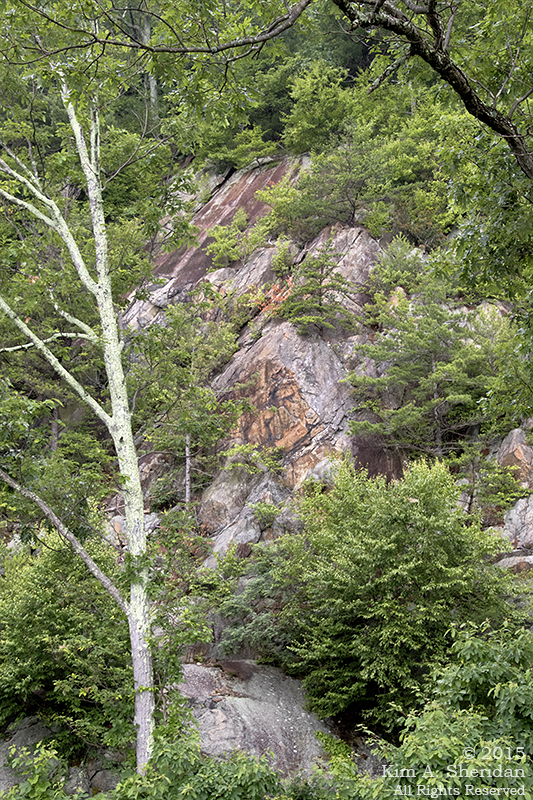
150704_VA Shenandoah National Park_0616acsA tree and granite vignette.

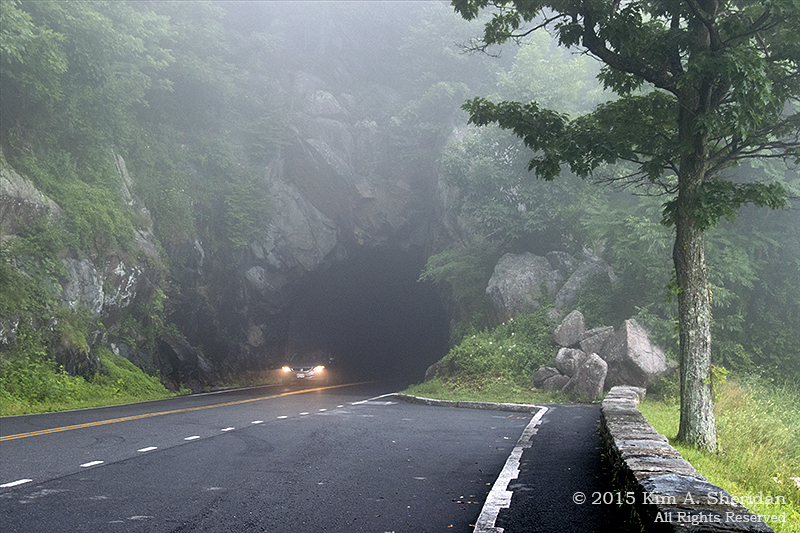
150704_VA Shenandoah National Park_0585acsHeadlights appear from the mist. Shenandoah’s only tunnel bores 670 feet through the granite of Marys Rock. Fog along the Skyline Drive. How – familiar.
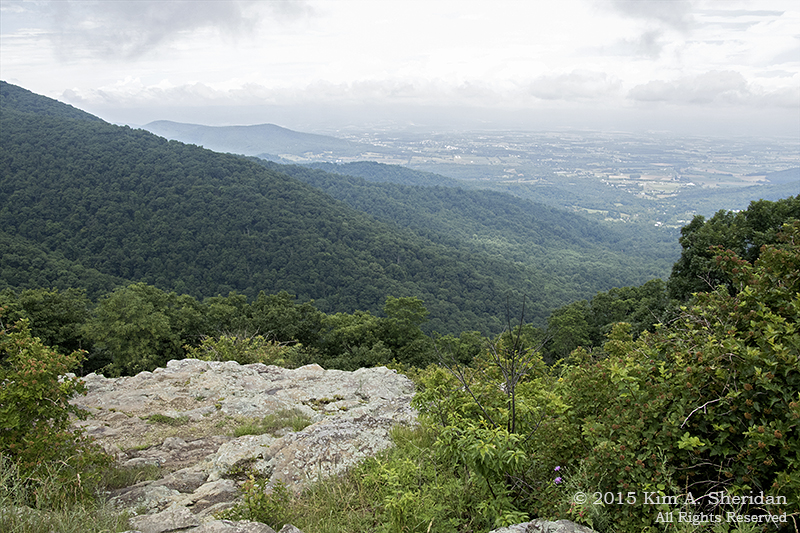
150704_VA Shenandoah National Park_0619acsFranklin Cliffs never ceases to delight. I could spend the whole day here, clambering around on the rocks. Who says crime doesn’t pay?
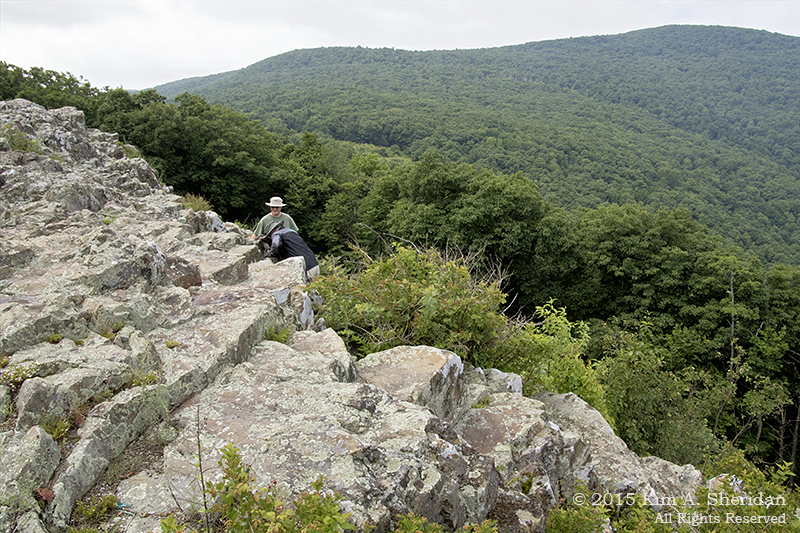
150704_VA Shenandoah National Park_0647acsMan vs. mountain. From the looks of it, the mountain won.
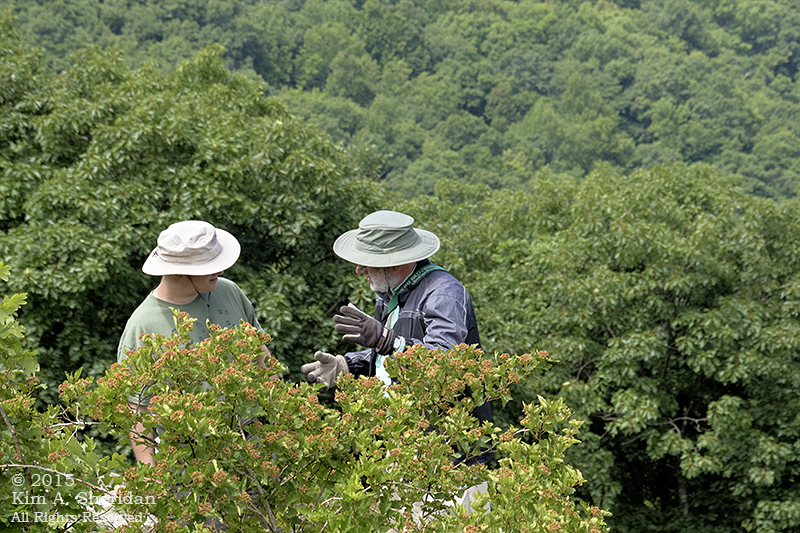
150704_VA Shenandoah National Park_0686acsAlways an argument with these two.

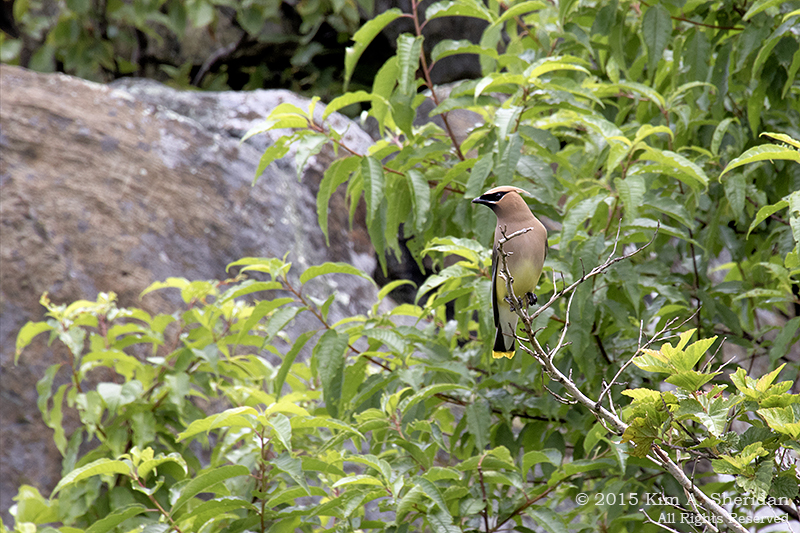
150704_VA Shenandoah National Park_0628acsCedar Waxwing, wearing a robber’s mask.
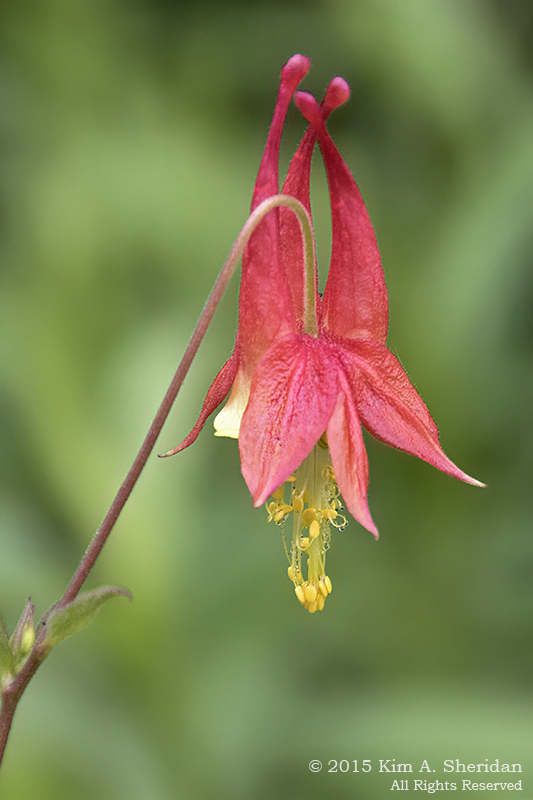
150704_VA Shenandoah National Park_0548acs copyColumbine.

Robb and I had wanted to walk to a waterfall. Small problem – the crowds. It was the Fourth of July in one of America’s most popular National Parks, after all.

We opted instead to take the hike to the top of Stony Man, knowing Robb would love scrambling around on the boulders.
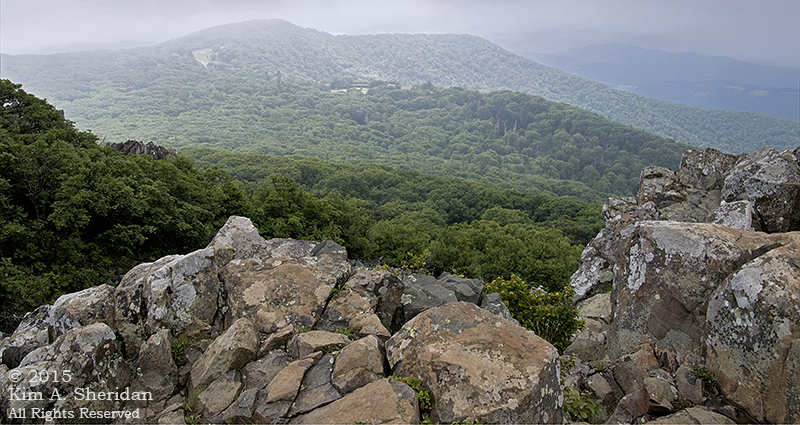
 

150704_VA Shenandoah National Park_0690acsExcept that those boulders were covered with people. On the horizon, ominous dark clouds were quickly swallowing the views. And as we turned to leave, the skies opened up.

Oh great. Thunder and lightning. And there were Don and I on the second highest peak in Shenandoah, clutching metal trekking poles. Cruel and unusual punishment.

The rain was relentless, and we were walking downhill in a rushing streambed that used to be a trail. Oddly, I was thoroughly enjoying it. I’d not been feeling well that day, but the rain was cooling and rejuvenating. Even when I had to pour it out of my “waterproof” boots at trail’s end.

As we reached our car, the rains stopped. But of course. By the time we returned to Skyland Resort for a brief stop, the skies were clearing and the sun was coming out. The mountain air had a delicious washed-clean feel to it.

Later, in a nondescript hotel room, a different kind of washing took place. Don used a hair dryer on his cash, blowing dry each individual paper bill. Money laundering at its most elemental.

Same scenery, different crime.
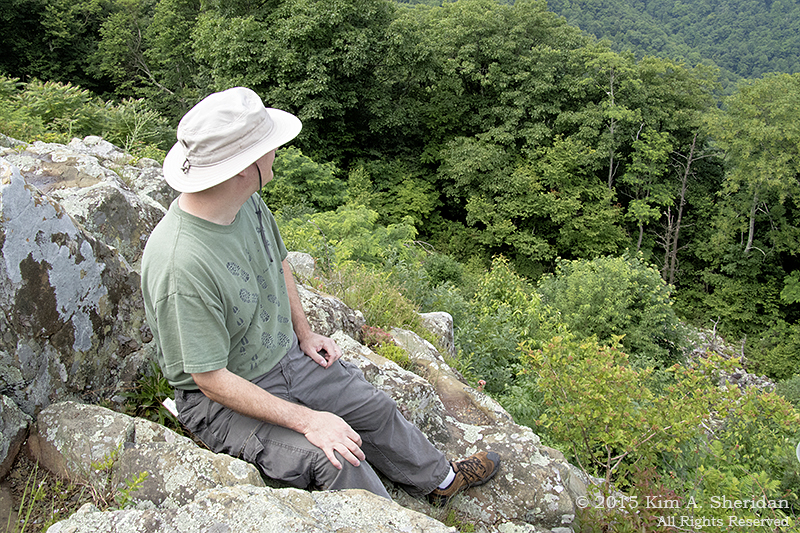
150704_VA Shenandoah National Park_0666aRobb relishing the view from Franklin Cliffs, while Don and I served out our sentence for neglecting him, with no time off for good behavior.

If spending a day in Shenandoah National Park is “punishment”, I’m going to have to be very, very naughty.

Where The Wild Things Are

150829_PA HNWR Little Blue Heron_6388acs

Little Blue Heron, Juvenile

This time, I did it right. After months of not putting myself in position to make good nature images, of always being in the wrong place at the wrong time with the wrong equipment doing the wrong thing – this time I did it right.

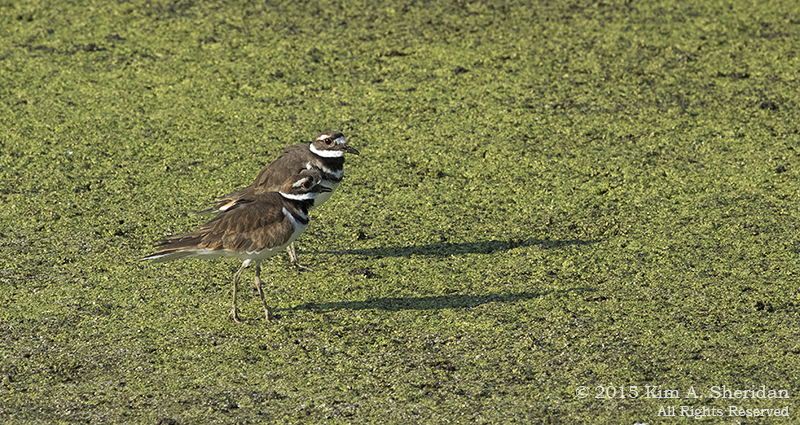
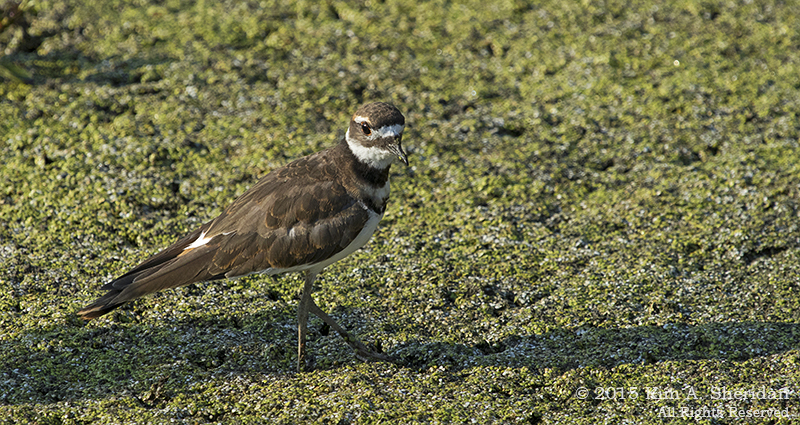
Killdeer

Killdeer

Right time? Early morning when the light is good and the wildlife is active – check.

Sora

Sora

Right place? The boardwalk at John Heinz National Wildlife Refuge, where interesting birds like Soras and Virginia Rails and Glossy Ibises have been the talk of the town, and social media, for weeks – check.

A small bug casts a big shadow

A small bug casts a big shadow

Right equipment? Binoculars and Canon 7D Mark II camera with the 100-400mm lens, in my hands and not back in the car – check.

150829_PA HNWR Marsh Wren_6201acs

Marsh Wren, juvenile

Doing the right thing? Two hours of watching and waiting patiently, on my own, instead of rushed by the need to keep up with fast-moving friends – check.

Sora

Sora

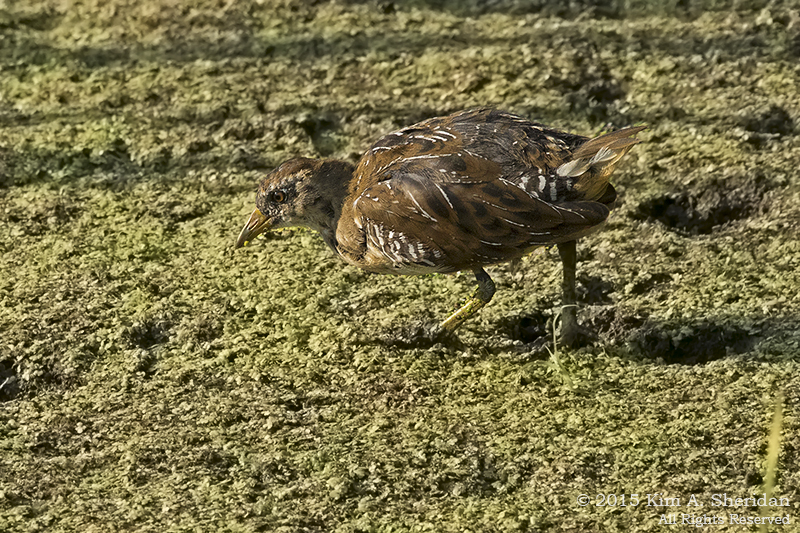
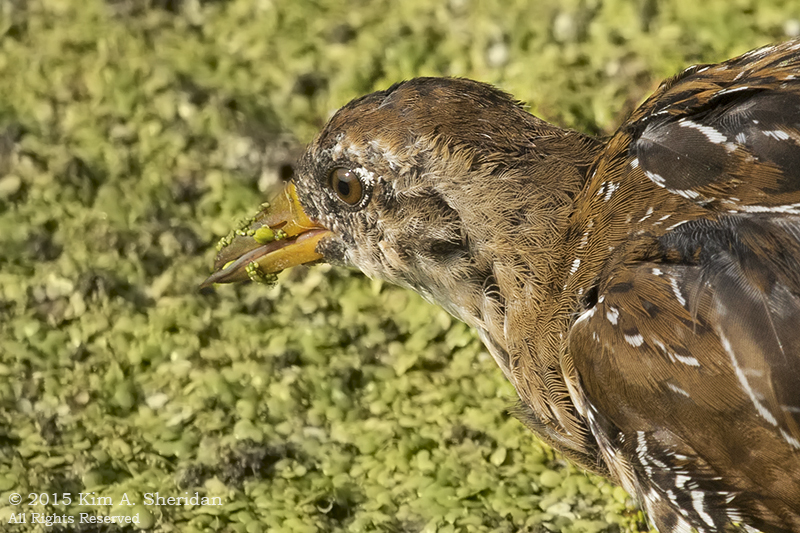
The result? Actual photos of wildlife! Killdeer. Sora.

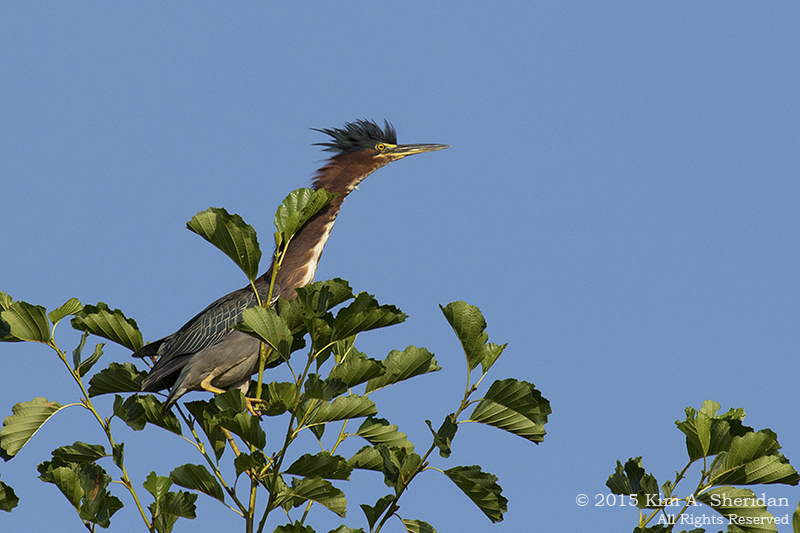
Green Heron

Green Heron

Little Blue Heron. Green Heron, at the top of a tree, no less!

Bug standoff

Bug standoff

Even a stand-off between two bugs on a leaf.

150829_PA HNWR Killdeer_6009acs

Killdeer

This is where the wild things are.

150829_PA HNWR Sora_6132acs

And I think we found the wildlife photographer.

Where Is The Wildlife?

Tree Swallow, John Heinz NWR

Tree Swallow, John Heinz NWR

Where is the wildlife? It’s been all Appalachians and kayak adventures on The Wild Edge this summer. Shouldn’t there be birds? Where can they be hiding?

Black Vultures, Bombay Hook NWR

Black Vultures, Bombay Hook NWR

Are the songbirds singing in the sun while I am inside in meetings and museums and antique shops?

Goldfinch, John Heinz NWR

Goldfinch, John Heinz NWR

Are the shorebirds and herons wading in wild wet places while I am at forts and canals and cliffs?

Glossy Ibis & Snowy Egret, John Heinz NWR

Glossy Ibis & Snowy Egret, John Heinz NWR

Are the soras and rails strutting their stuff in the early morning and late evening while I’m busy with the nuisances of everyday life?

Marsh Wren, John Heinz NWR

Marsh Wren, John Heinz NWR

Are the tricolored herons posing for close-ups in the middle of the day while I am too hot and too frustrated to be bothered with carrying a camera?

Wood Duck, John Heinz NWR

Wood Duck, John Heinz NWR

Are the orioles and waxwings flitting through the treetops while I am kayaking in urban and suburban rivers, armed only with a point and shoot camera inadequate for wildlife photography?

Avocets, Bombay Hook NWR

Avocets, Bombay Hook NWR

Are the avocets and black-necked stilts feeding far, far away when I do have the right gear in the right place?

Maybe the wildlife has been there all along. Maybe it’s me who’s missing.

Maybe I’m always in the wrong place at the wrong time with the wrong equipment doing the wrong thing.

Maybe the real question is –

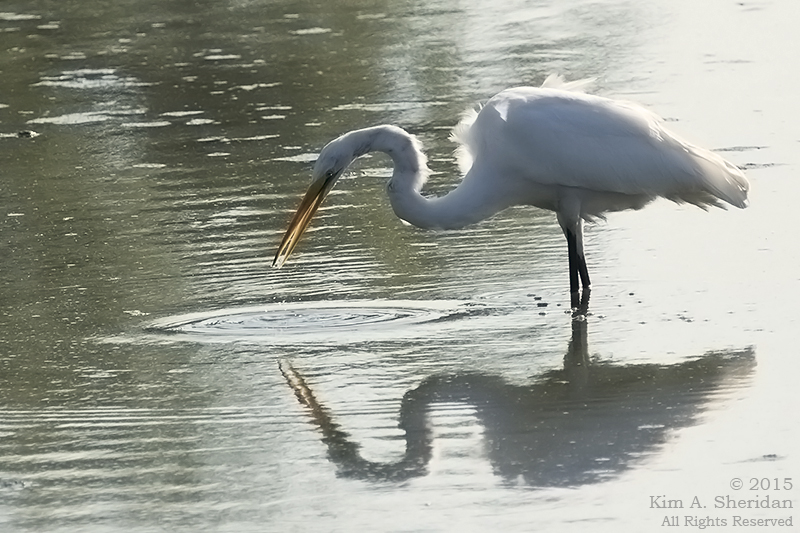
Great Egret, John Heinz NWR

Great Egret, John Heinz NWR

Where is the wildlife photographer?

Wild Goose Chase

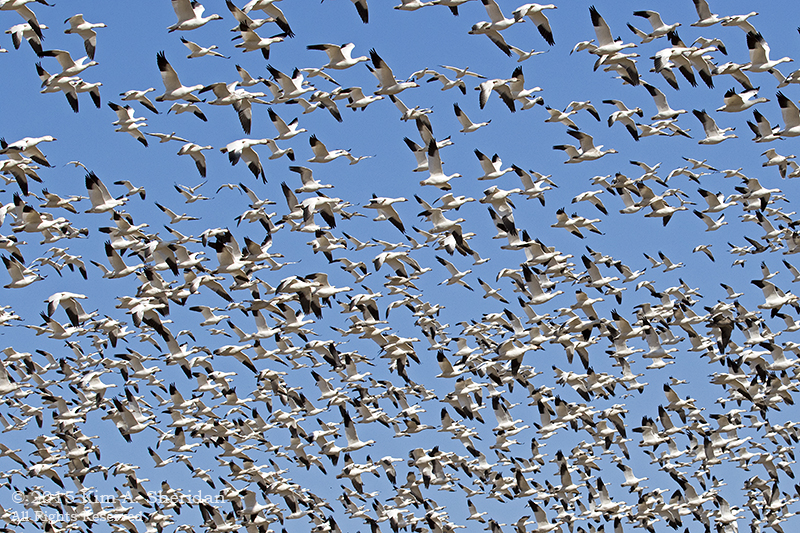
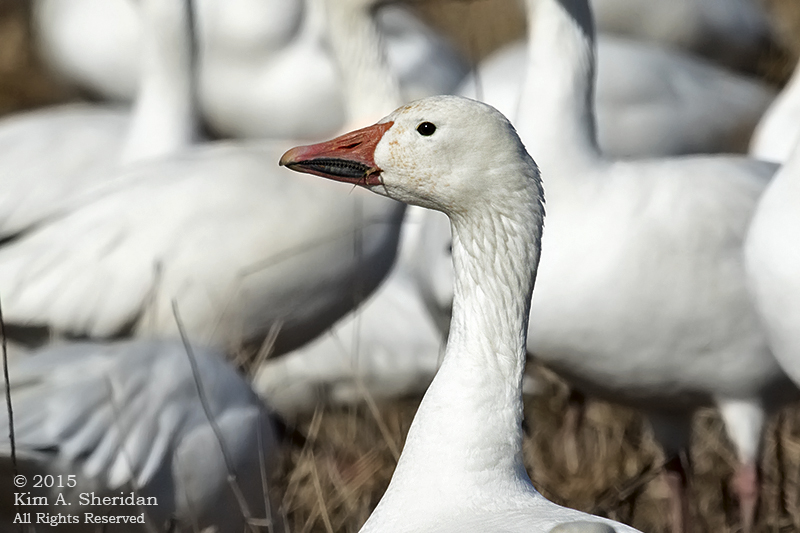
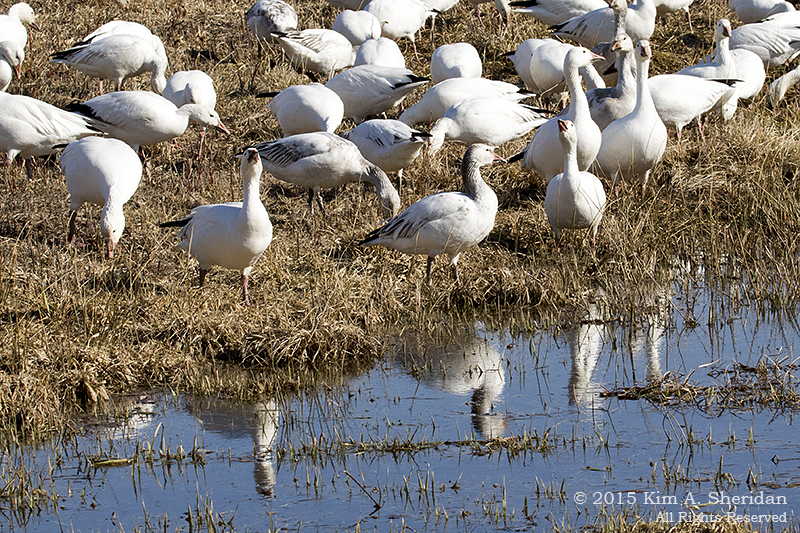
150323_Middle Creek_2249acsMarch brings the annual Snow Goose migration show to Middle Creek. At the peak, there were 110,000 birds there. By the time I got there the numbers had dropped significantly. There were still a lot of birds!

Middle Creek Snow Geese_2763Blast off!

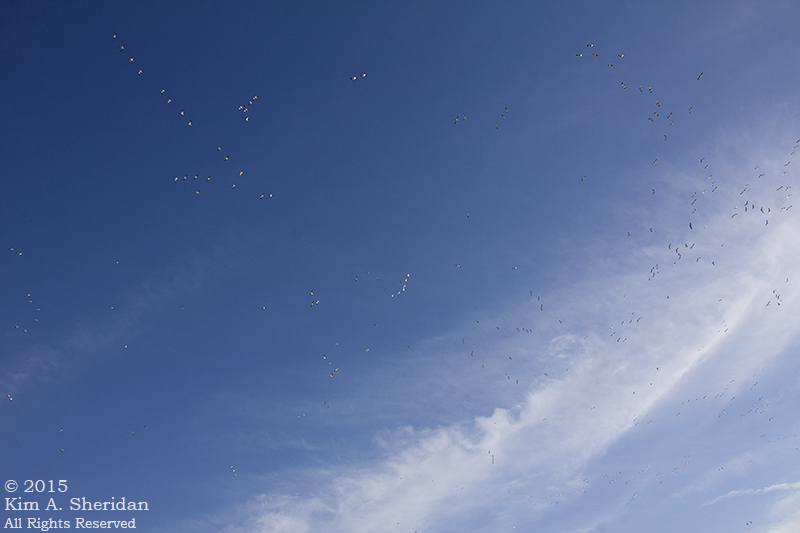
150323_Middle Creek_2800acsSnow Geese will suddenly take off and fly for no apparent reason. They fly one way…

150323_Middle Creek_2687acsAnd right back the other way.

150323_Middle Creek_2977acsA goose outstanding in his field.

150323_Middle Creek_3020aChecking their look in the mirror.

150323_Middle Creek_3124acsShow-off.

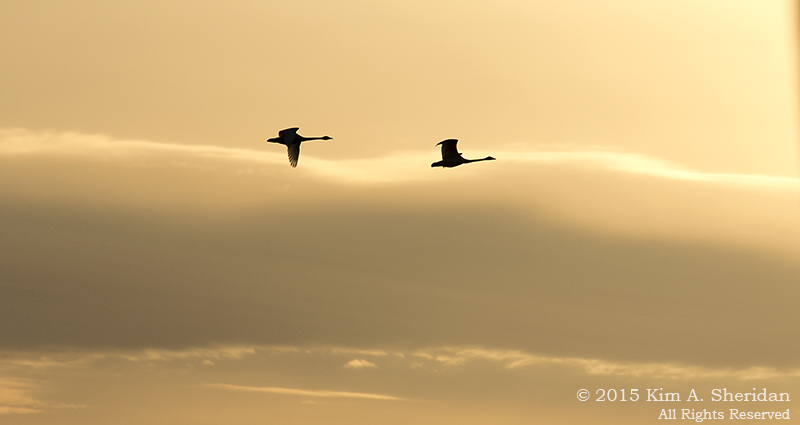
150323_Middle Creek_3065acsTundra Swans were also at Middle Creek in large numbers.

150323_Middle Creek_3897acsNear evening the Snow Geese began to fly in from the fields to roost on the water.

150323_Middle Creek_3964acsSkeins of geese and gossamer clouds on a canvas of sky.

150323_Middle Creek_3409Tundra Swans at sunset.


Duck, Duck, Sandpiper

150110_NJ Barnegat Light Harlequin_4278acs2It’s become an annual tradition now, the winter pilgrimage to Barnegat Light to see the winter waterfowl. Every year it gets colder and windier, and every year the jetty gets longer.

Or at least it seems longer! Especially this year, as it was my first time picking my way from rock to rock with a tripod on my shoulder. I’m not the most sure-footed of creatures, as my friends will be happy to tell you. But I also don’t have the steadiest of hands, so having the tripod was a big help.

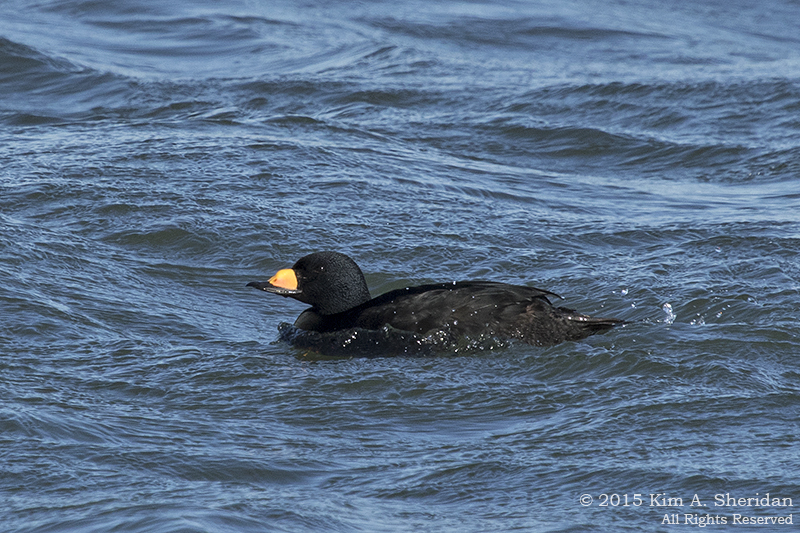
150110_NJ Barnegat Light Scoter_4124acsThe day started with a Black Scoter near the Lighthouse. Hmmm… Dark bird on dark water. Helpful of him to have a bright yellow bill.

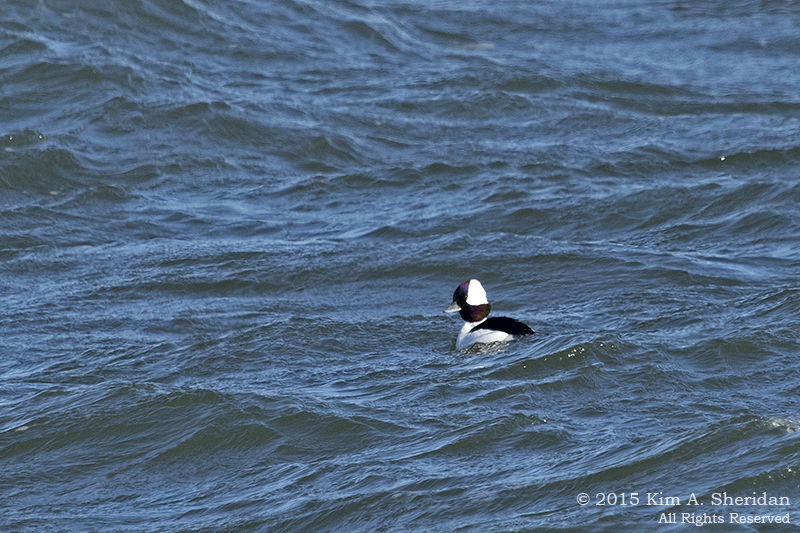
150110_NJ Barnegat Light Bufflehead_4186aA small duck bobbed alone in the big bay. I was a little surprised to see this Bufflehead out here in the Inlet. I’m used to seeing them in fresh water lakes. But they frequent the salty bays too.

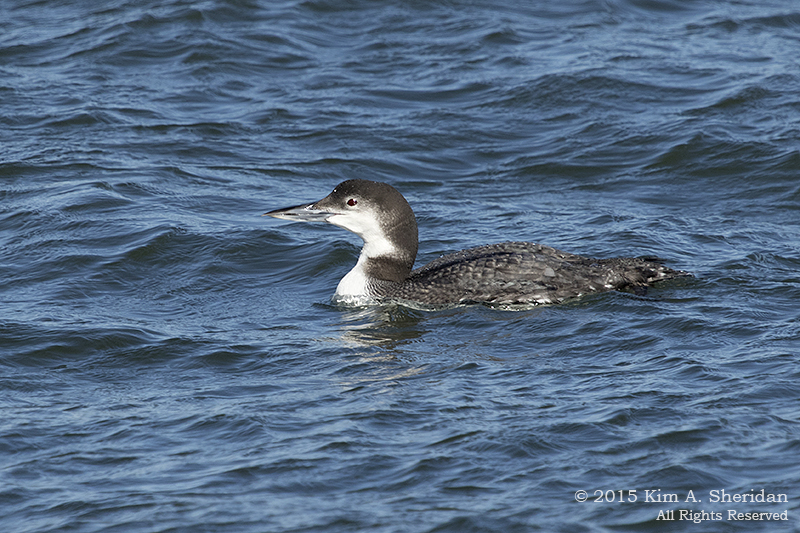
150110_NJ Barnegat Light Loon_4220acsCommon Loon. Someday I hope to see them in full breeding plumage, and hear them call.

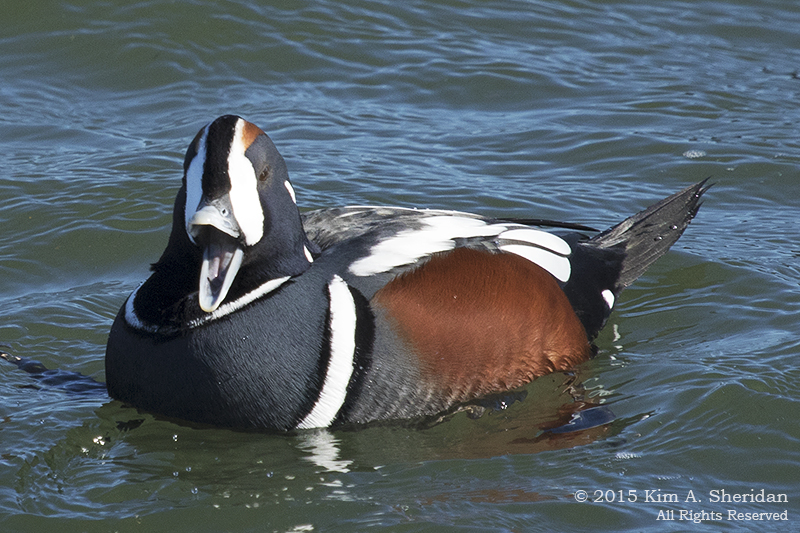
150110_NJ Barnegat Light Harlequin_4292aThe birds we came to see are the Harlequin Ducks. Two males swam near the rocks at the end of the jetty. There were only four Harlequins there this day, two males and two females. We didn’t mind. Quality over quantity.
150110_NJ Barnegat Light Harlequin_4284It was 22° with winds gusting over 20 mph. I wore heavy wool socks, long underwear, lined pants under rain pants, a turtleneck, fleece AND insulated vest under a down jacket, a scarf, two hats and three pairs of gloves, with hand warmers inside. This duck thought I was the funniest thing he’d seen in awhile.
FUN FACT: Why are the ducks comfortable swimming in the frigid water while we humans are shivering on shore?

It starts with their feathers. Next to the skin lies a thick insulating layer of down feathers. Above the down are layers of interlocking and overlapping feathers that leave a minimum of bare skin exposed to the elements. The birds attend meticulously to feather maintenance with liberal doses of preen oil.150110_NJ Barnegat Light Harlequin_4377acs3

Look closely at a duck after it surfaces from a dive, and you will see the water beading up and running from its waterproof feathers like rain from a freshly waxed car.

Ducks’ feet and legs lack feathers to protect them, and could be a dangerous source of heat loss. But water birds have evolved to combat this by utilizing a countercurrent heat exchange system. As hot blood in the arteries flows into the upper leg, it transfers heat to the cold venous blood returning from the feet. Blood that reaches the feet is much colder than the body, close to the temperature of the water in which the duck swims, but the blood that returns to the heart is warm. This heat exchange minimizes heat loss from the legs, while maintaining a healthy body core temperature. Cold feet, warm heart!

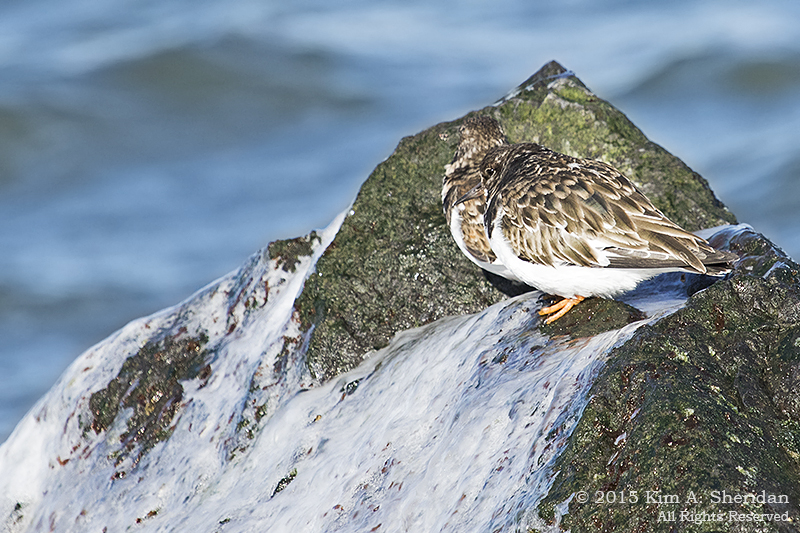
150110_NJ Barnegat Light Turnstone_4337acsSandpipers were in attendance as well as ducks. Two small gatherings of Ruddy Turnstones perched precariously on the icy rocks.

150110_NJ Barnegat Light Turnstone_4416acsYou put your right foot in, you put your right foot out…

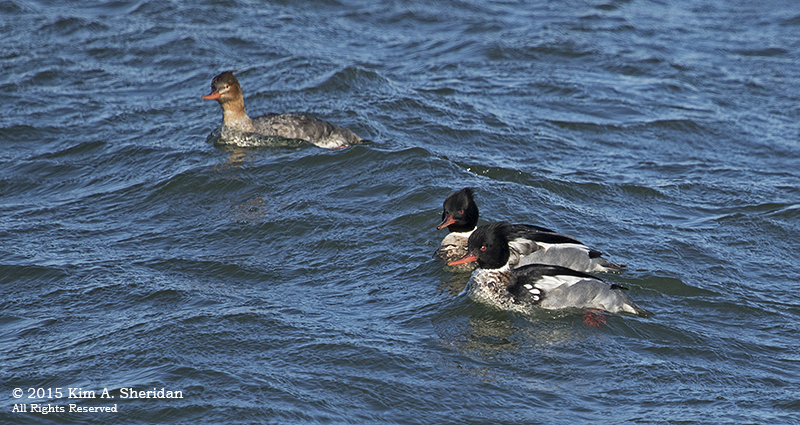
150110_NJ Barnegat Light Merganser_4578acsBack near the Lighthouse were three Red-breasted Mergansers, one female (rear left) and two males.

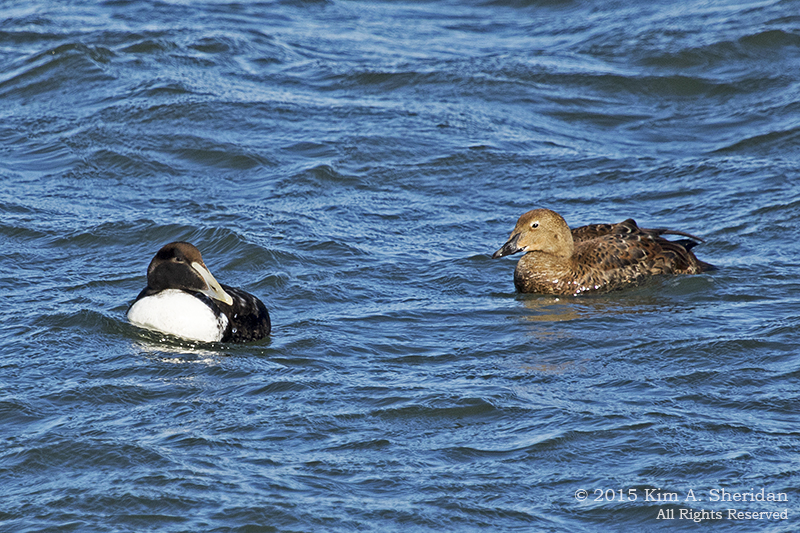
150110_NJ Barnegat Light Eider_4581aAccompanying the Mergansers were a young male Common Eider (left) and a female King Eider. The King Eider was a new bird for me. Common Eiders I’ve seen before, but only females at a distance. Seeing both this close was a treat. I’d have been happy with Eider one!

150110_NJ Barnegat Light Turnstone_4465acsTime to snuggle in somewhere warm at the end of a cold day at Barnegat Light.

Winter’s Edge

141122_NJ Stone Harbor Point_1513acsLong gone are the warm days of summer, days when families crowded the beach with their beach blankets and umbrellas, their sand pails and horseshoe sets. The only creatures frolicking in the surf are ducks. The stiff ocean breeze, so welcome when the temperature was 80°, is a torment at 35°. Autumn lingers, but teeters on the edge of winter. The beach is empty.

Of humans, but not of wonders.

At last, the beach is ours!

141122_NJ Stone Harbor Point_1563acsFrom late fall to mid-spring, the Jersey Shore is ours to explore, empty of crowds and noise. Now there are plenty of treasures to collect, shells and rocks and sea glass, safe from the many feet and the mechanical beach-sweepers of summer.

141122_NJ Stone Harbor Point_1555acs2Lines of dune fencing stretch across white sand to the horizon.

141128_NJ Holgate_2948acsThe winter birds arrive at the Shore with the colder weather. Long-tailed Ducks bob in the waves. The females seem to have a lot to say to the pink-billed males.

141128_NJ Holgate_2706acsThis sparrow-like bird is a Snow Bunting.

141128_NJ Holgate_2774acsAs we walked along the beach at Holgate one November day, we kept seeing these odd tree sculptures. For a bit, we thought some enterprising soul had placed driftwood on end as an artistic expression. Then we realized that these were the broken stumps of dead trees, and we were walking amidst what once had been wooded dunes.

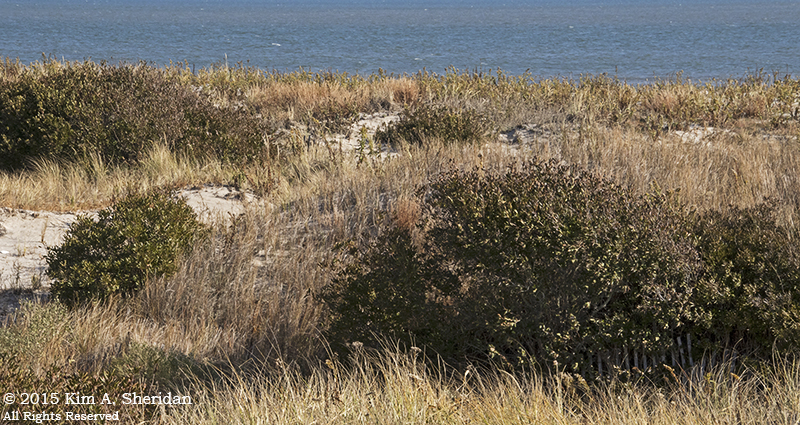
141128_NJ Holgate2902-5 Pan acsThe dunes at Holgate, looking west toward Barnegat Bay. The southern tip of Long Beach Island is a part of the Edwin B. Forsythe National Wildlife Refuge. It didn’t always look like this. Only a few years ago, it was a thicket of dune plants and shrubs. Then Superstorm Sandy paid a visit, inundating the entire area, breeching the island from bay to ocean in places. These weathered roots, trunks and branches are what are left of once vital vegetation. Devastated, but starkly beautiful.

FUN FACT: These plants were flooded with water, but died of thirst. Why? Fresh water flows easily into a plant through the tissues of the roots, a process called osmosis. But this was a saltwater inundation. Ever have a salt shaker gum up in humid weather? Salt absorbs water very easily, pulling water from the plants into the soil and leading to dehydration. It also interferes with the chemical processes by which a plant obtains nutrients. The combination of nutrient and water deficiencies has laid waste to the dune plants.

141122_NJ Stone Harbor Point_1480acsThis is what a healthy dune community should look like. Stone Harbor Point.

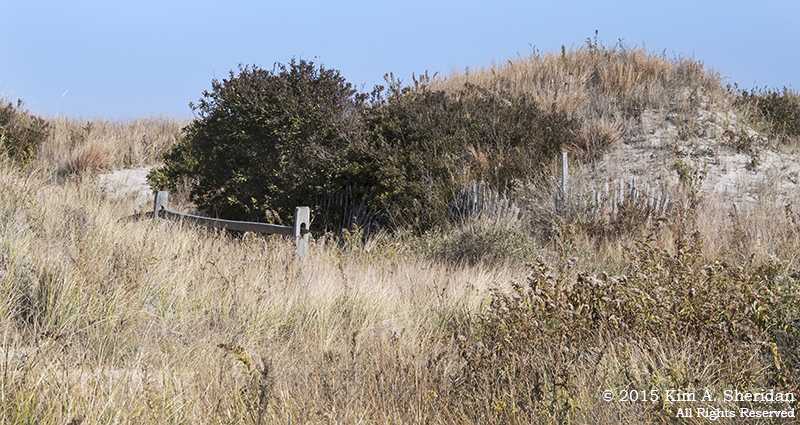
141122_NJ Stone Harbor Point_1520acsGood fences make good neighbors.

141122_NJ Stone Harbor Point_1489acsDune fences make good dunes, and if successful, good dune grasses and plants.

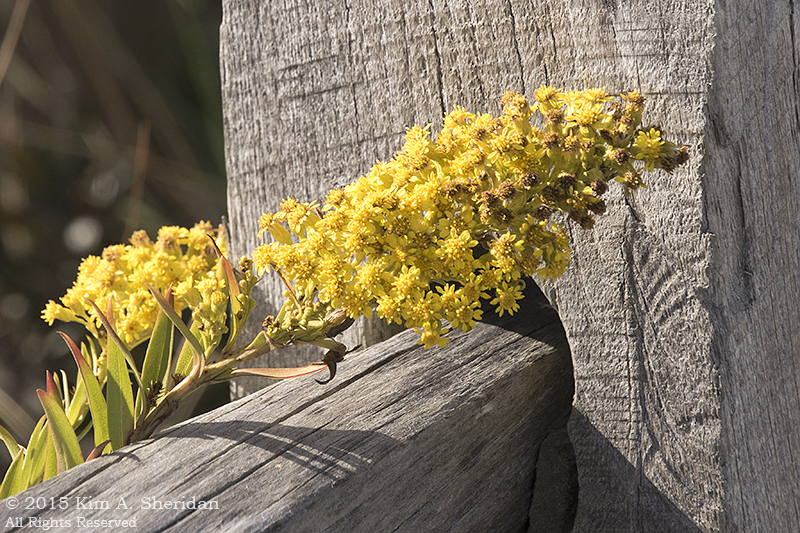
141122_NJ Stone Harbor Point_1552aGood fences make good backdrops for wildflowers, still abloom in mid-November.

141122_NJ Hereford Inlet_1646acsOne doesn’t have to go far from the beach to find woodland critters. The gardens at Hereford Lighthouse provide a fine place for squirrels to make a living.

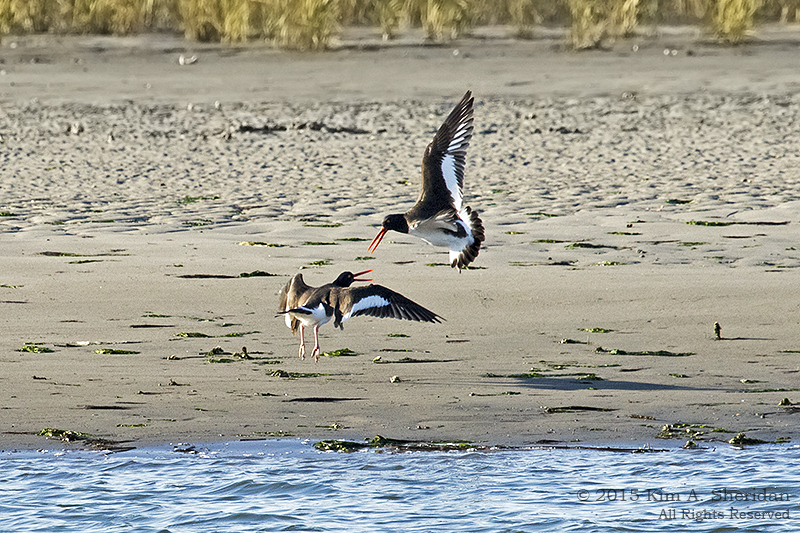
141122_NJ Nummys Island_1892acsIn the late light of day, a pair of American Oystercatchers squabbles.

Even on the edge of winter, wonders abound at the wild edge.

Junior Prom

141017_Chincoteague NWR_9813acsIt’s prom season at Chincoteague National Wildlife Refuge.

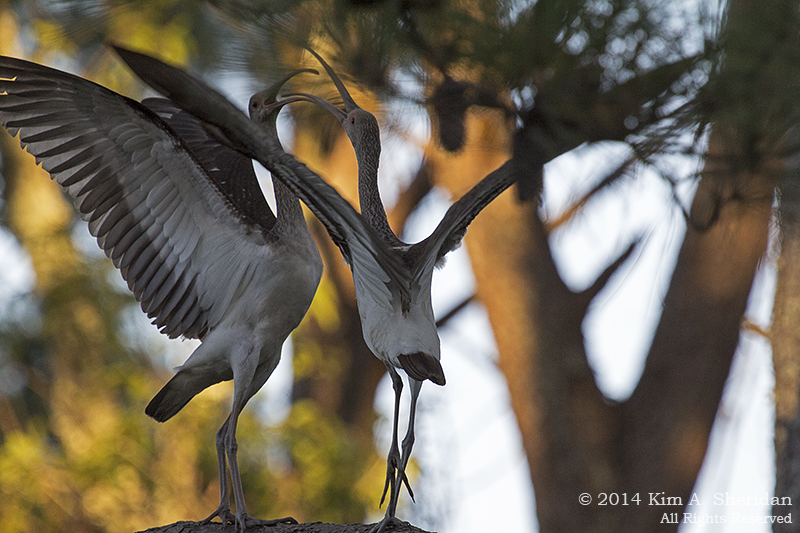
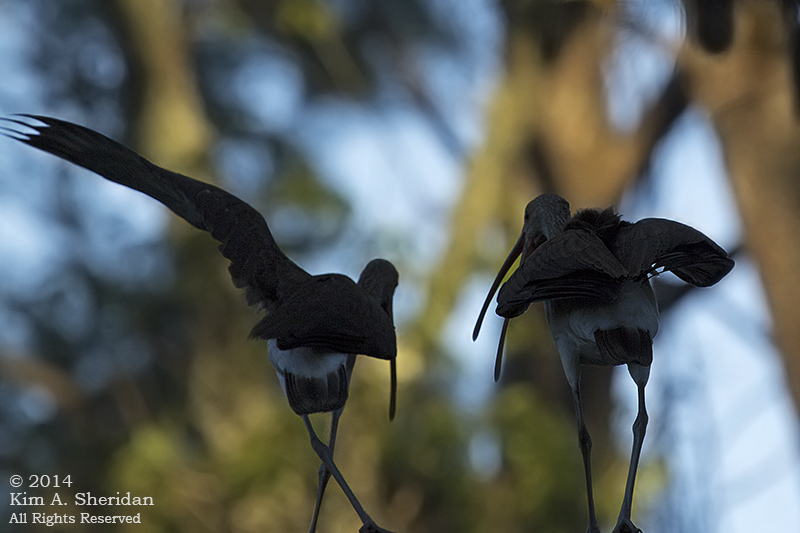
Fall is the time for young birds to gather in flocks and socialize. Like teenagers at the junior prom, they strut, preen and dance. Juvenile White Ibises show off their moves.

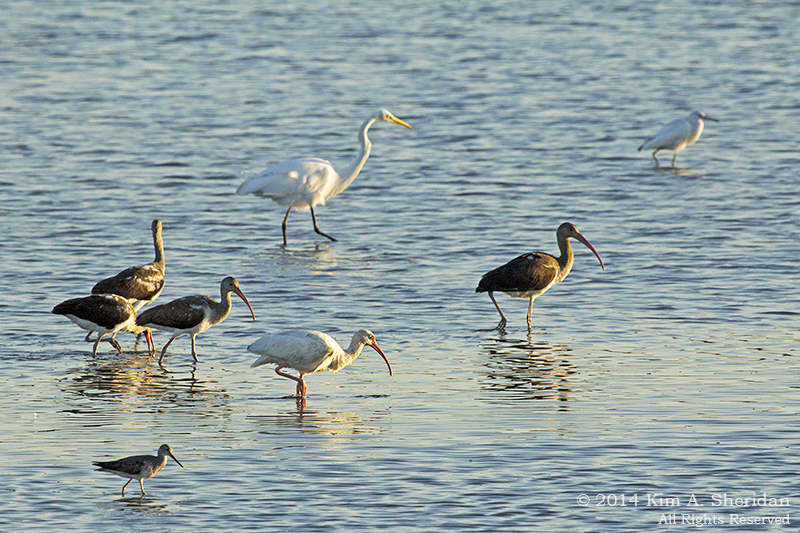
141018_Chincoteague NWR AM Swan Cove_0168aJuvenile birds have their own fashion style; they never dress like the grown-ups. White Ibis favor brown; Little Blue Herons wear white. It’s all so confusing. Especially when the adult chaperones are around. Here’s an adult White Ibis in white plumage with four young Ibis. In front is a Greater Yellowlegs; center rear is a Great Egret, and all the way in the back a juvenile Little Blue Heron.

141018_Chincoteague NWR AM Swan Cove_0464acsA Tri-colored Heron paces the dance floor.

141017_Chincoteague NWR_9868acsIn the evening the birds come to the woods along Beach Road. Loblolly pines offer a nice perch to soak up the late day sun. Twelve Snowy Egrets, three White Ibis… and a partridge in a pine tree?

141017_Chincoteague NWR_9649acsA shy young Black-crowned Night-heron waits for a dance invitation.

141018_Chincoteague NWR_0849axsDouble-crested Cormorants hang out in the small stream that bordered the road. Somebody’s gotta handle the refreshments.

141018_Chincoteague NWR_0841aGreat Blue Heron. There are a lot of wallflowers at this prom.

141017_Chincoteague NWR_9753acsThe highlight of the evening is the crowning of the Prom King and Queen. This year the honor goes to a pair of White Ibises.

141017_Chincoteague NWR_9784acsProm pictures are de rigueur.

141017_Chincoteague NWR_9816acsTime to take a bow. It’s been some enchanted evening!

Tern, Tern, Tern

140917_Osprey_1010acsAll across the Jersey Shore, dainty dancers are on the wing. These elegant ballerinas in crisp black, gray and white dart and pirouette effortlessly. At times they hover almost motionlessly high above the stage, then plummet to the surface and back up in one smooth motion. Who are these dazzling performers taking a turn around the dance floor? Why, Terns of course!

This September, the Cape May birding community was abuzz with the arrival of a rare bird. A Whiskered Tern, which breeds in Eastern Europe and winters in Africa, had somehow found its way across the Atlantic Ocean. This is only the third appearance of this species in North America. The bird split its time between Bunker Pond and the beach for a number of days, giving lots of birders a thrill. Of course, I wanted to see it too.

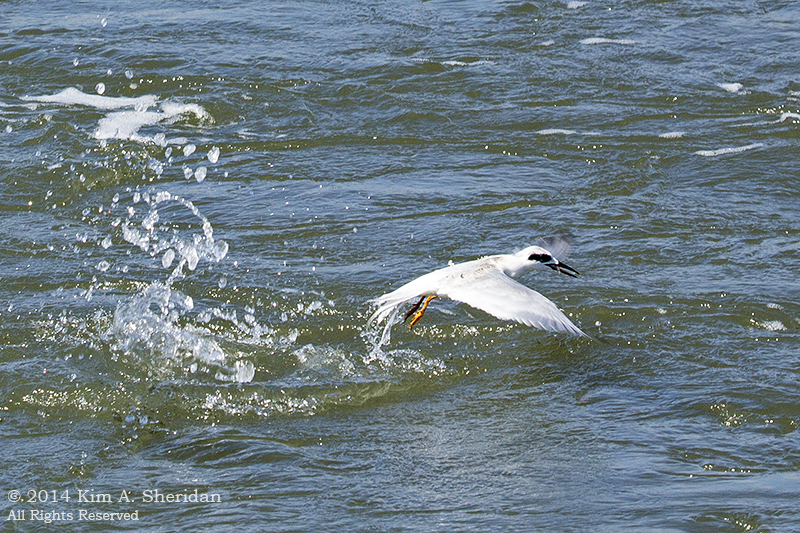
140917_Cape May Point Whiskered Tern_1504aI arrived just in time for the performance. The Whiskered Tern was only there a short while, and never stopped flying. Unlike terns that dive into the water to feed, Whiskered Terns swoop low along the water’s surface where they pick up bugs. The movement is distinctive.

140917_Cape May Point Whiskered Tern_1538acs3Lots of people got great images of the Whiskered Tern; I wasn’t one of them. Here’s why it was so hard to photograph – the Tern was very far away and in constant motion. Click on this wide-angle photo and try to find it; the arrow points to it in the inset at top right.

140917_Cape May Point Black Tern_1463aAnother uncommon bird was the Black Tern, above. Again, always flying and always far away. It shares the same swoop-and-pluck feeding style as the Whiskered Tern, and they were often seen together.

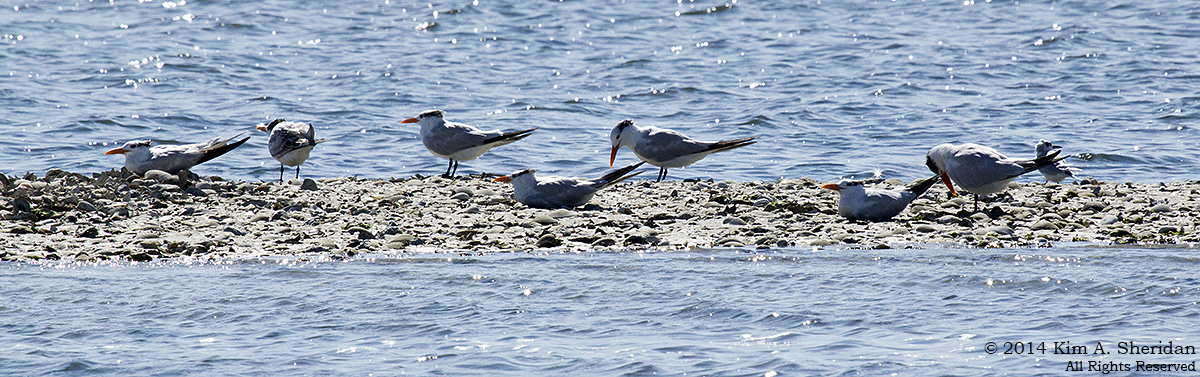
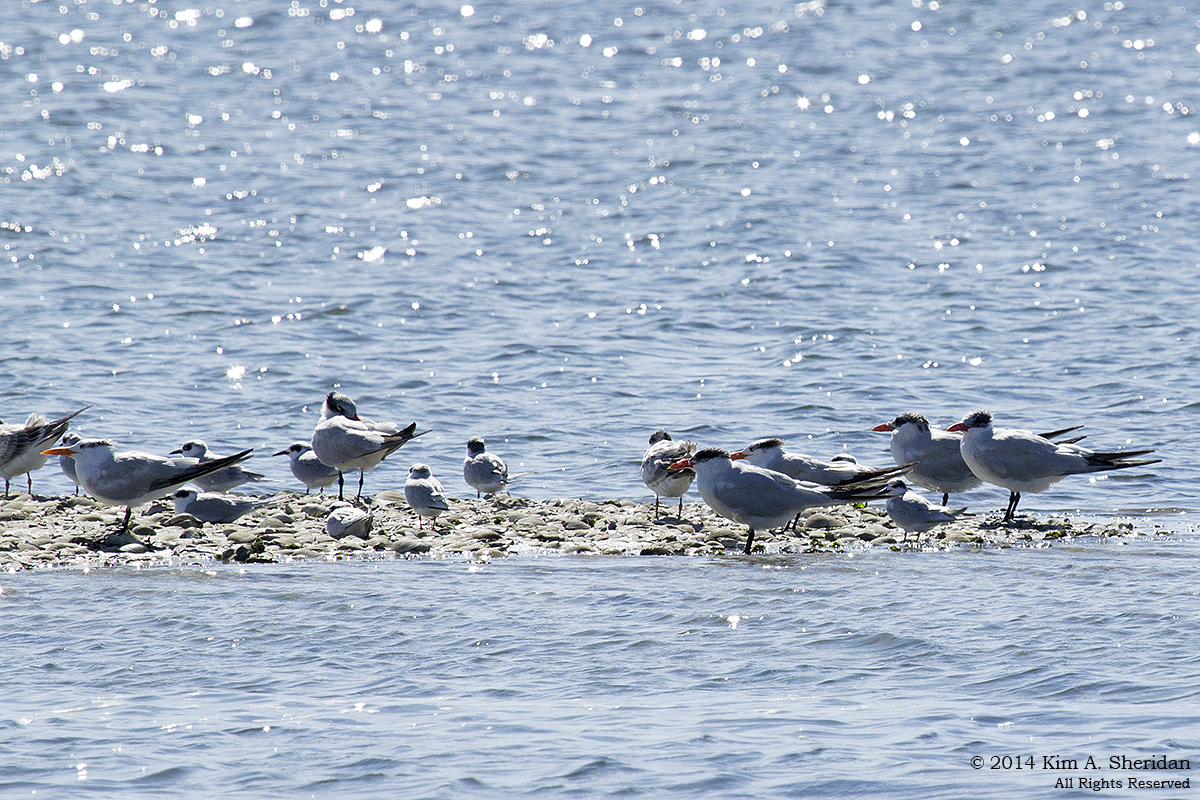
140917_Osprey_1019acsOn a sliver of sand in the middle of the bay a cluster of Terns waits to take the stage. There are three different species here. The small birds are Forster’s Terns, the supporting players of the company. The large bird on the left with the orange bill is a Royal Tern. At the other end of the island, from left to right, we have a red-billed Caspian Tern, a Royal just behind him, and two more Caspians.

140926_Forsythe NWR_3357Farther north at Edwin B. Forsythe National Wildlife Refuge, the theater is an intake where the tidal water flows into and out of the impoundment.

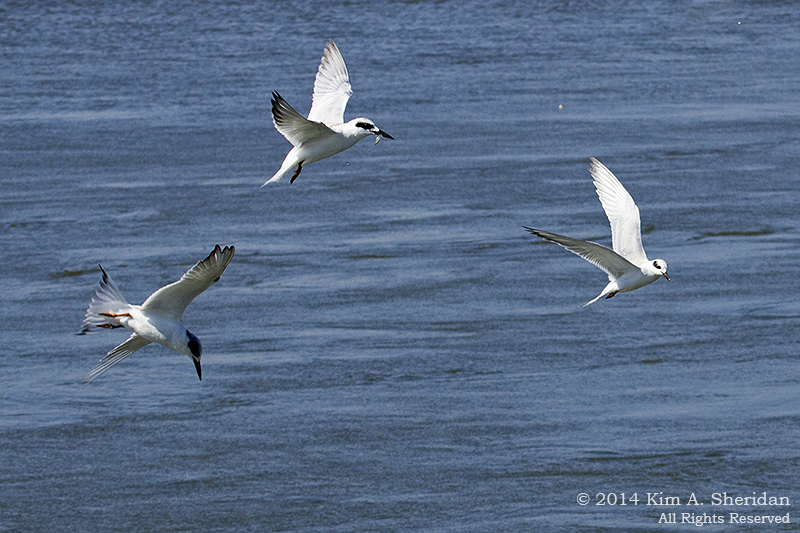
The fishing here is great, and the Forster’s Terns take full advantage of it.

Photographing them is simply a matter of pointing your camera at them and letting them fly in and out of the frame. And they do.

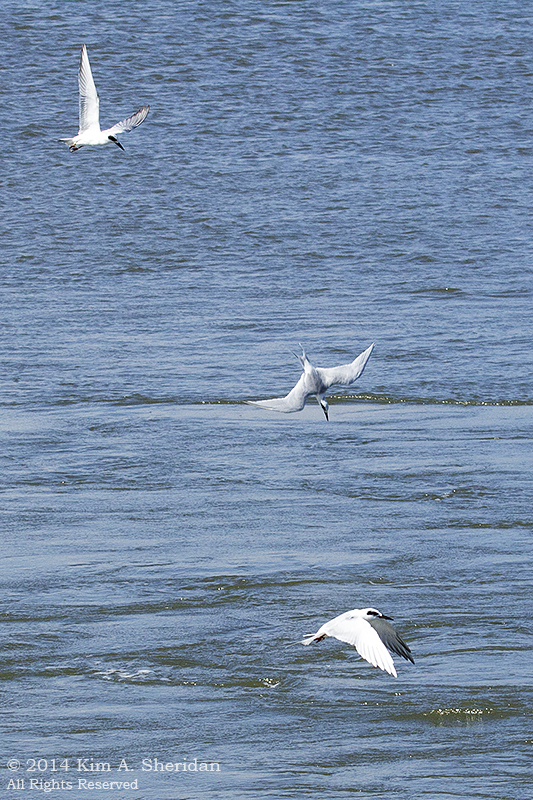
Delicate little terns swirl, twirl and whirl continuously. In turn they dive straight downward and plunge under the water, to come up in a burst of spray, circle around and dive again. It’s an aerial ballet.

140926_Forsythe NWR_3380acsEntrée.

140926_Forsythe NWR_3379acsEn pointe.

140926_Forsythe NWR_3446acsPas de deux.

140926_Forsythe NWR_3398acsPas de trois.

140926_Forsythe NWR_3393aThe corps de ballet.

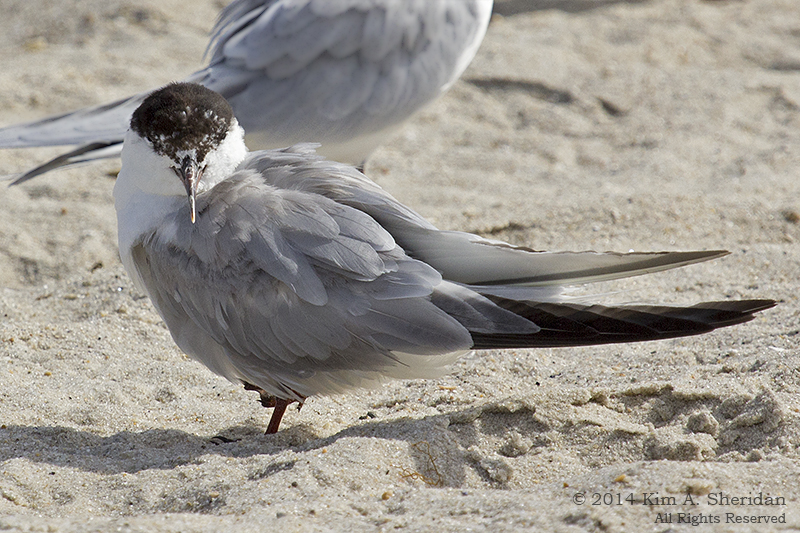
140923_Cape May Point State Park_2452acs 2Common Tern takes a bow, as the curtain falls on today’s performance.

Last of the Summer Wine

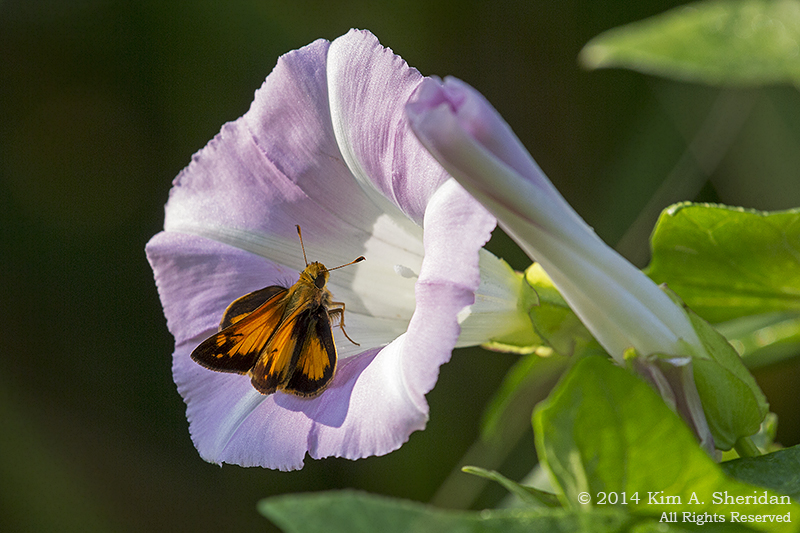
140809_HNWR 420_6686acsSkipper butterfly, John Heinz National Wildlife Refuge at Tinicum, PA

140729_HNWR Evening_4767a   Wild rice, Heinz NWR

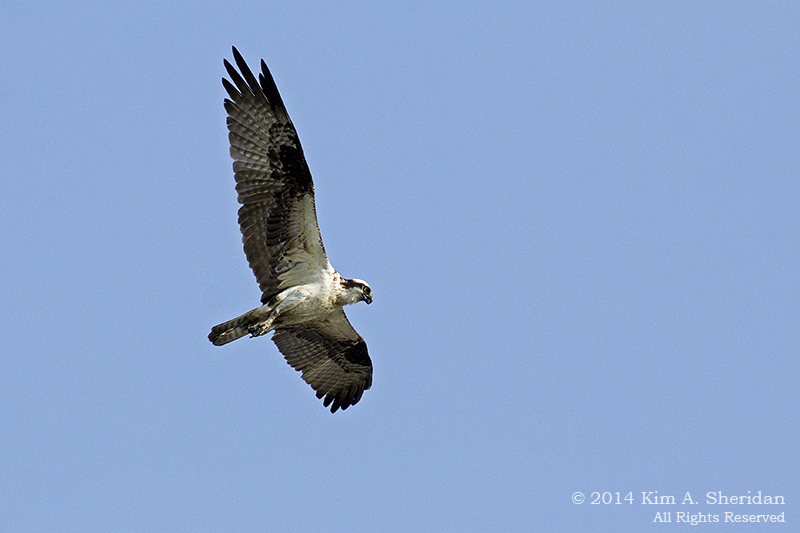
140809_HNWR 420_6926acsOsprey, Heinz NWR

140809_HNWR 420_7286acsCabbage white butterflies, Heinz NWR

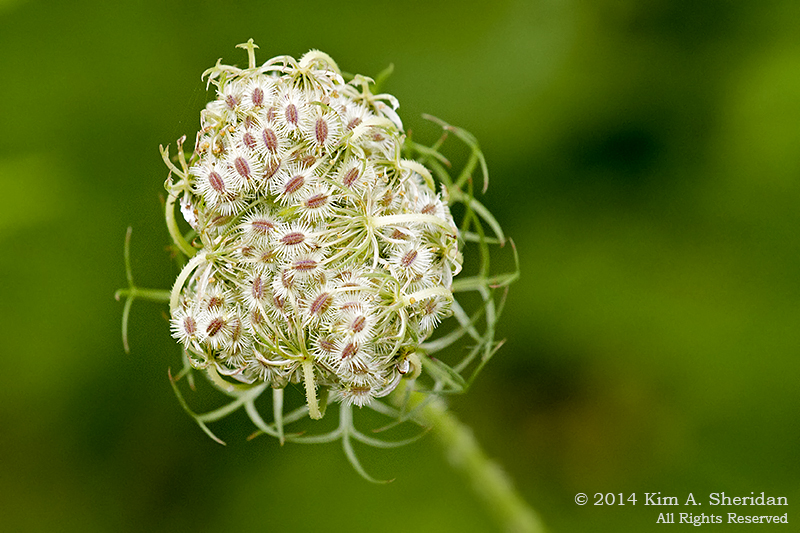
140729_HNWR Evening_4619acsQueen Anne’s lace, Heinz NWR

140729_HNWR Evening_4942acsRed-eyed Vireo, Heinz NWR

140719_Elk Neck State Park_2495acsZebra swallowtail, Elk Neck State Park, MD

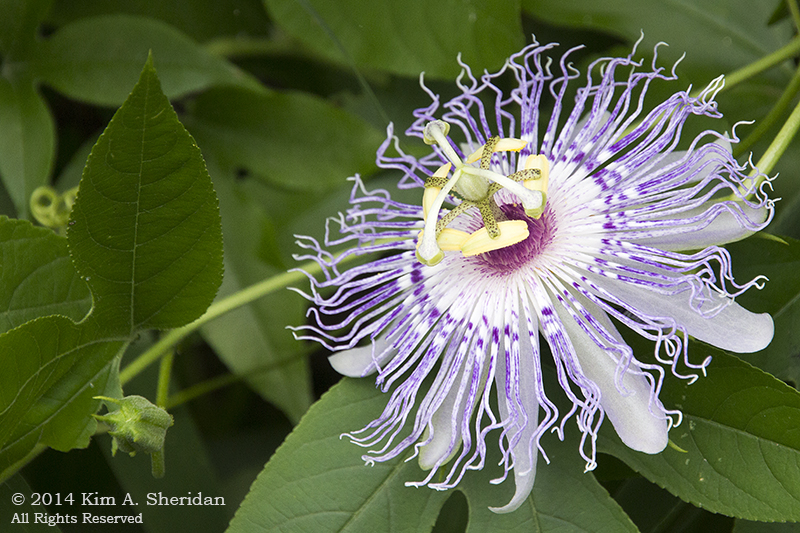
140809_Bartrams Garden_7591aPassion vine flower, Bartram’s Garden, PA

140809_HNWR 420_6636acsSkipper butterfly, Heinz NWR

140729_HNWR Evening_4678aGreat Blue Heron, Heinz NWR

140809_HNWR 420_7222acsBlack swallowtail, Heinz NWR

140729_HNWR Evening_4986acsGreat Egrets, Heinz NWR

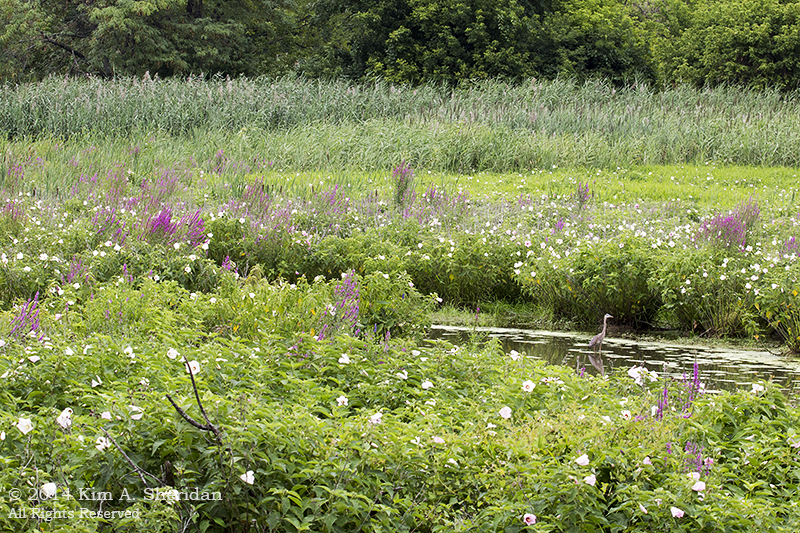
140809_HNWR 420_7173acsSkyline and marsh view, Heinz NWR

140809_HNWR 420_6916acsBlue dasher dragonfly, Heinz NWR