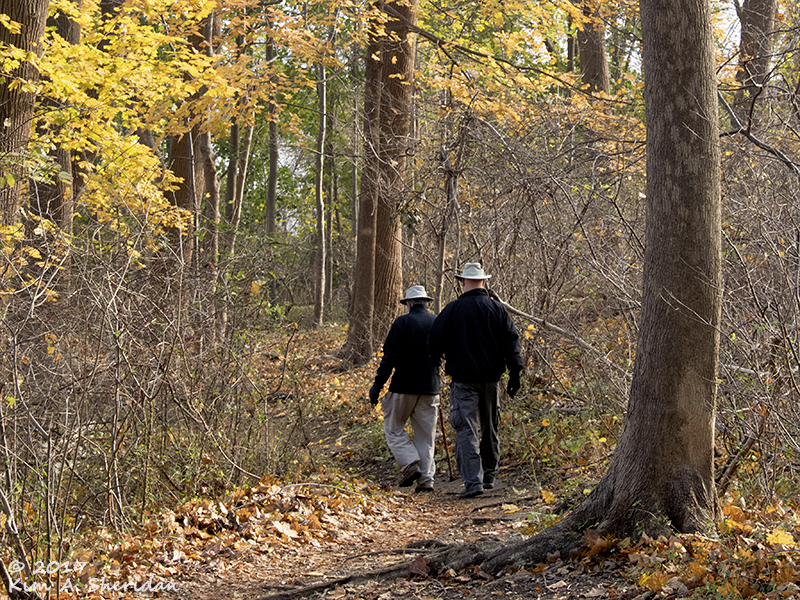
 It started as a typical walk through the woods. After all, the word “woods” is in its name: Hartshorne Woods Park. So we weren’t too surprised to find ourselves walking through a woodland that felt all too familiar.
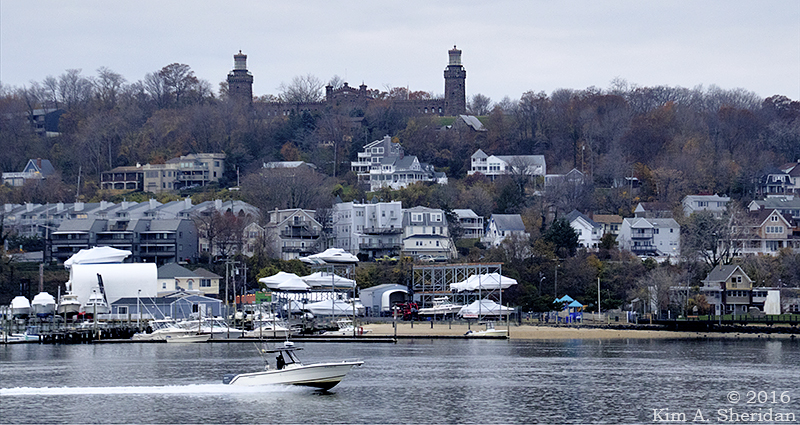
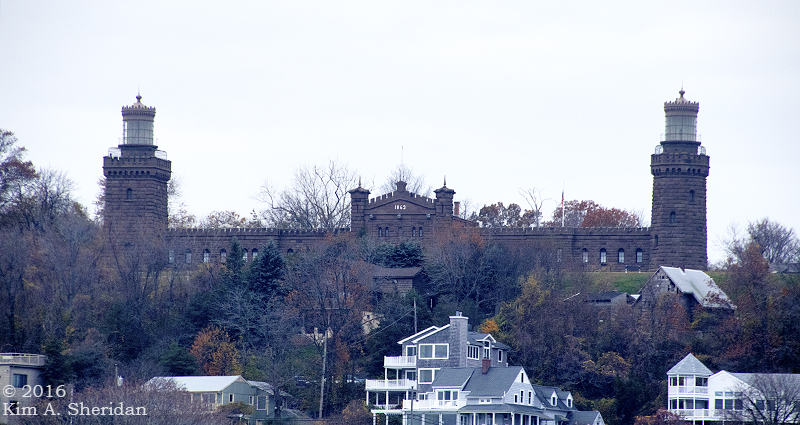
My friends and I had come to the northernmost tip of the Jersey Shore on Thanksgiving weekend specifically to visit Sandy Hook and the Twin Lights of Navesink. These were places we’d not been before, places with a different flavor than the southern Jersey coast. A visit to nearby Hartshorne Woods, a small Monmouth County park, wasn’t on the original itinerary. Heck, we didn’t even know it existed until we arrived in the area. A short morning walk there was mostly a way to kill time until Sandy Hook Light opened for tours in the afternoon.
It ended up being the highlight of the day.
 Not for the woods, though they were nice enough. We hiked down, up and back down steep hills, more akin to our native Piedmont than the Atlantic Coastal Plain.
The maple, oaks and hickories were still adorned in a smattering of gold and russet, set off by the dark green of abundant American hollies.
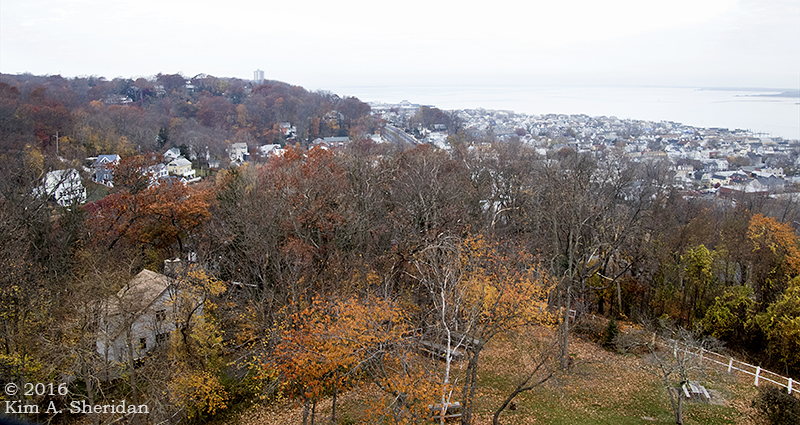
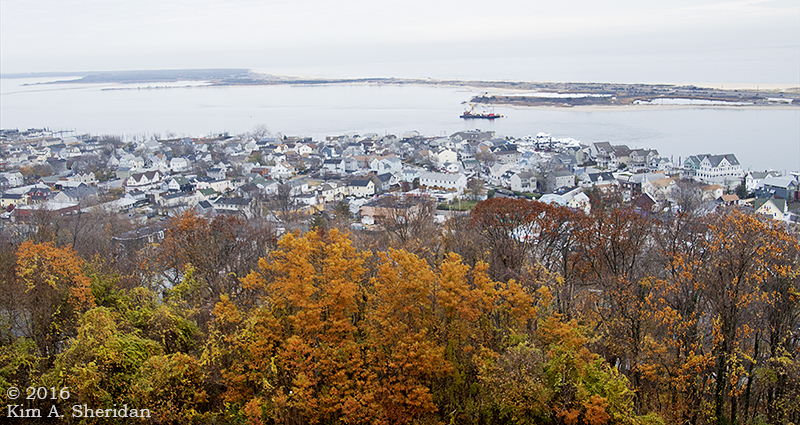
 The first glimpses of blue water through the trees tipped us off: this was NOT a typical Piedmont walk. The trail traveled along the top of a bluff overlooking the Shrewsbury River. Beyond the river lay a narrow spit of land, the town of Sea Bright, and the Atlantic Ocean. Nope, don’t see that in Pennsylvania!
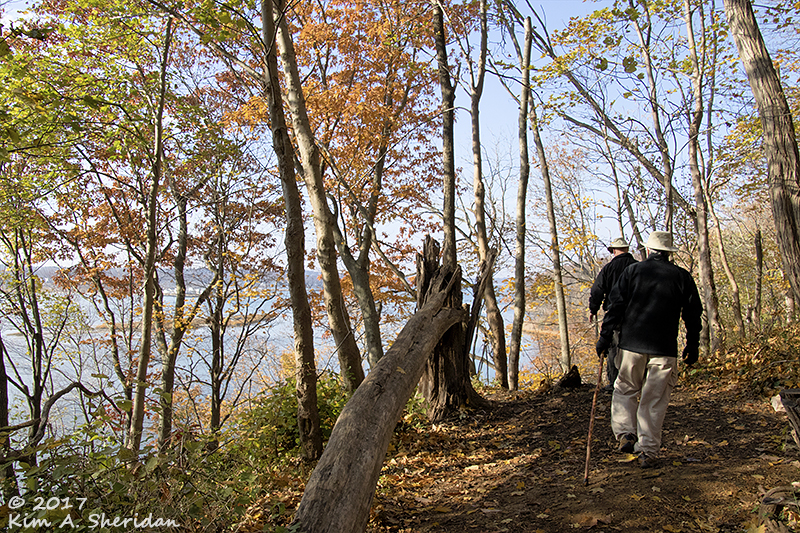 A little further along, the Navesink River joins the Shrewsbury. By this time, we were actively seeking a way to get down the hill to the water. If we are anywhere near water, we want to be at its edge. Not up above it.
The bluff was too steep to brave a descent. We continued along the trail until we came to a green lawn that sloped downhill – to the pier and boat launch of Black Fish Cove. Ah, much better.
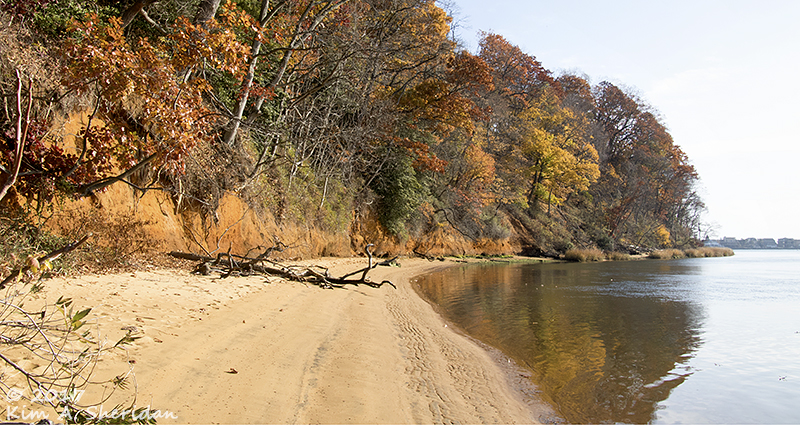
 Once on the beach, the walk suddenly became much more interesting. All thoughts of completing the 2.3-mile Rocky Point Trail loop were quickly abandoned in favor of exploring along the river’s edge. With views like this? The beach beckoned.
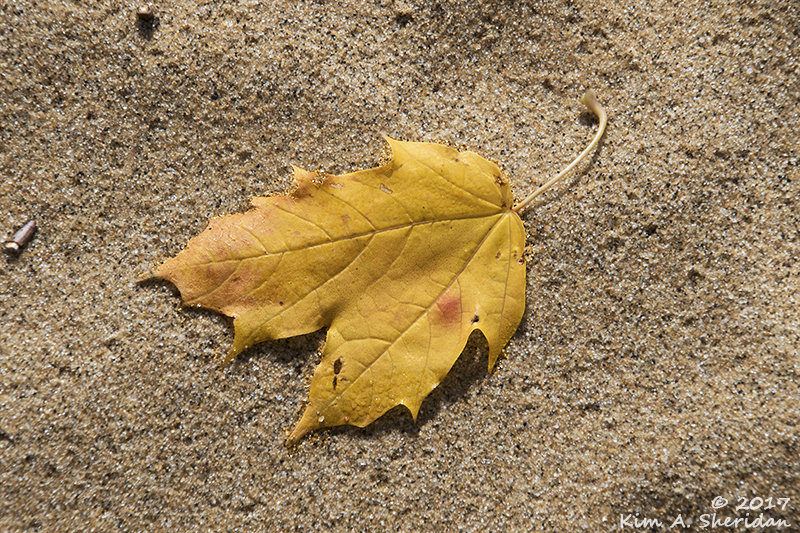 Golden leaf on sand. Seems a strange juxtaposition to me. Should be either beach, or woods, not both. That’s a South Jersey conceit, though. There are many wonderful places where the two habitats play nicely with each other.
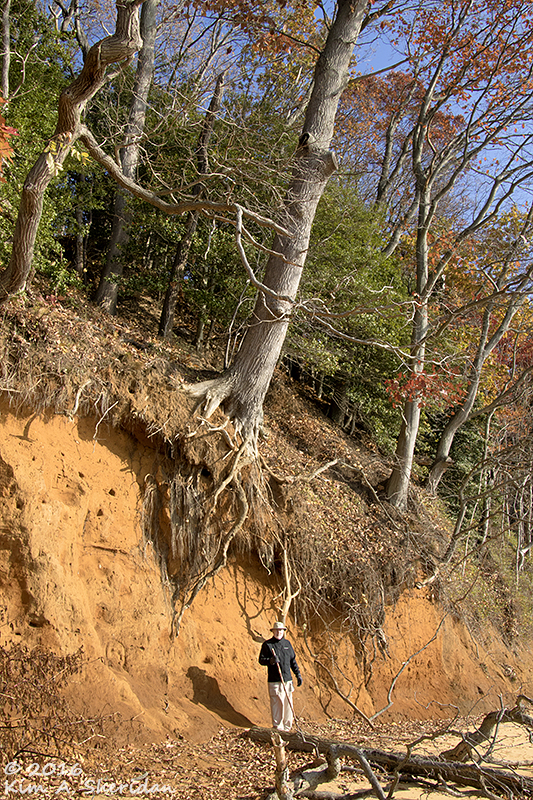 Here the boundary between woods and beach was quite dramatic. A tall cliff loomed, topped by towering trees that clung to its edge, their roots exposed for all to see.
Don, for scale, risking life and limb under a widow maker tree.
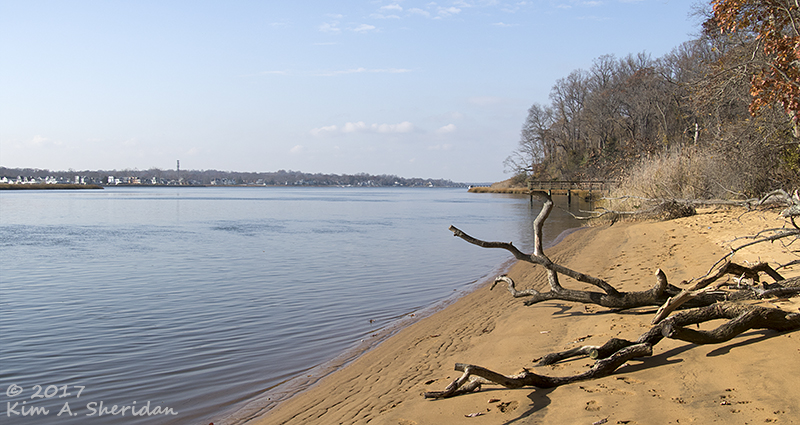 The view upriver. The sand was yellowish, picking up the strange ocher tones of the exposed soil above the beach.
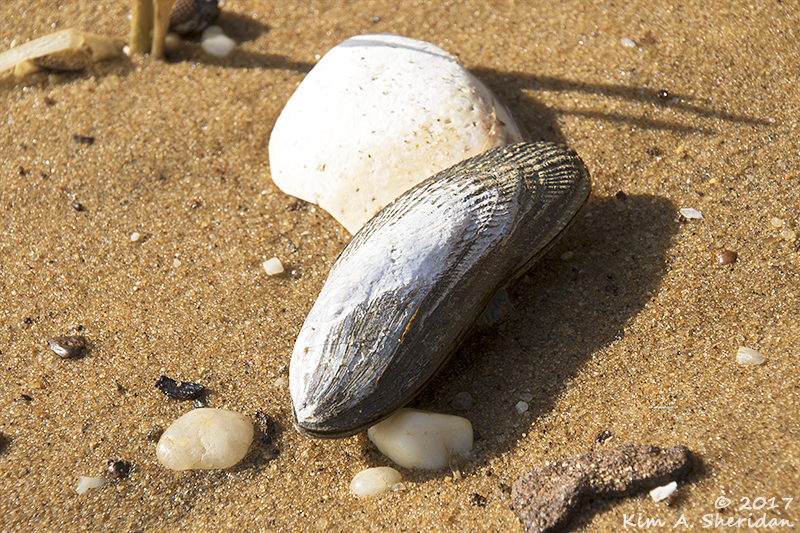 We ventured downriver, picking our way over fallen branches and trees. There’s only so much erosion a tree can take before it loses its grip and falls. The beach widened, covered in cordgrass and phragmites and cottony groundsel trees. Pathways to the water led us to troves of mussels.
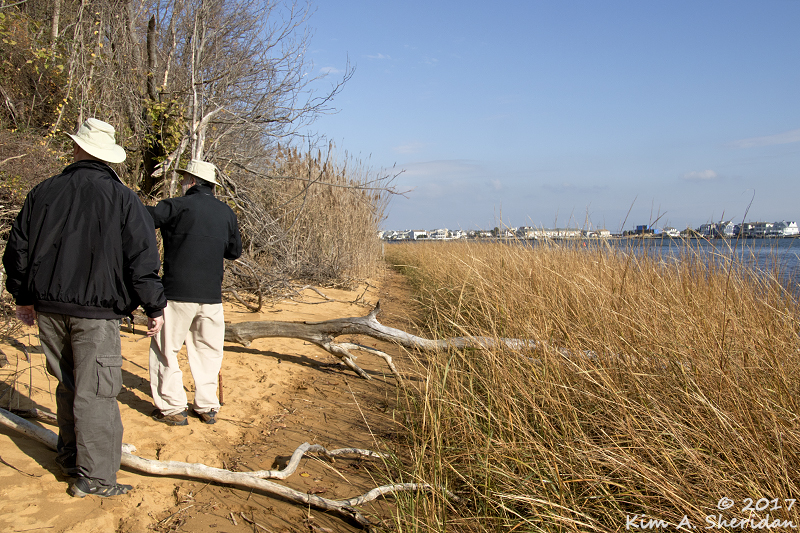 At the water’s edge. Weathered white driftwood was everywhere. I wanted to take it all home and decorate my house with its silken beauty. But no – best to leave it where it lies for others to enjoy.
 Under the water, a bed of pebbles and shells. And what is this on the largest of shells? “A tube worm,” I said, not sure why I thought so. “NO!” said Robb. “It’s not a tube worm!”
Well, guess what? It is a tube worm – or rather the tubes that tube worms used to live in.
FUN FACT: Tube worms are invertebrates in the class Polychaeta. They are sessile animals, meaning they are anchored to a hard surface underwater. Once its tail is anchored, a worm secretes a calcium carbonate substance that hardens into a whitish tube. The worm can retreat into this shell completely. It cannot survive for long outside of the tube. Tubes of some species of polychaeta worms are long and snakelike; other species coil into a spiral.
All too soon, we came to a place where the beach ended, where there was nowhere else to go but up. Up, using exposed tree roots as hand holds and steps. Up, along the Rocky Point Trail. Up, through the hilly woods and back to our car.
 Never again will I take for granted a simple walk in the woods.






 The Wild Edge