Duck, Duck, Sandpiper

150110_NJ Barnegat Light Harlequin_4278acs2It’s become an annual tradition now, the winter pilgrimage to Barnegat Light to see the winter waterfowl. Every year it gets colder and windier, and every year the jetty gets longer.

Or at least it seems longer! Especially this year, as it was my first time picking my way from rock to rock with a tripod on my shoulder. I’m not the most sure-footed of creatures, as my friends will be happy to tell you. But I also don’t have the steadiest of hands, so having the tripod was a big help.
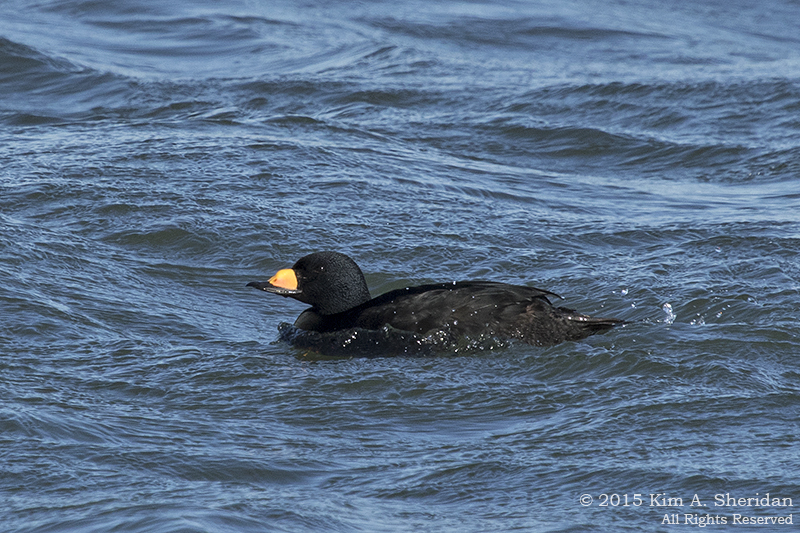
150110_NJ Barnegat Light Scoter_4124acsThe day started with a Black Scoter near the Lighthouse. Hmmm… Dark bird on dark water. Helpful of him to have a bright yellow bill.
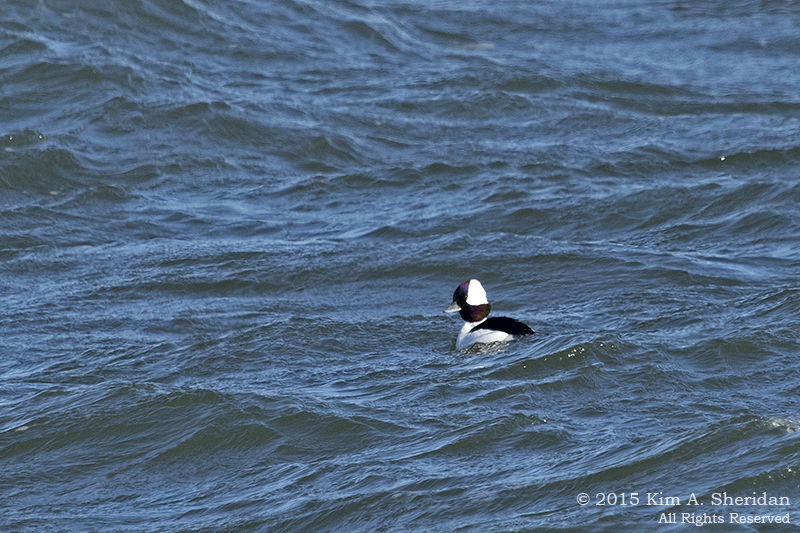
150110_NJ Barnegat Light Bufflehead_4186aA small duck bobbed alone in the big bay. I was a little surprised to see this Bufflehead out here in the Inlet. I’m used to seeing them in fresh water lakes. But they frequent the salty bays too.
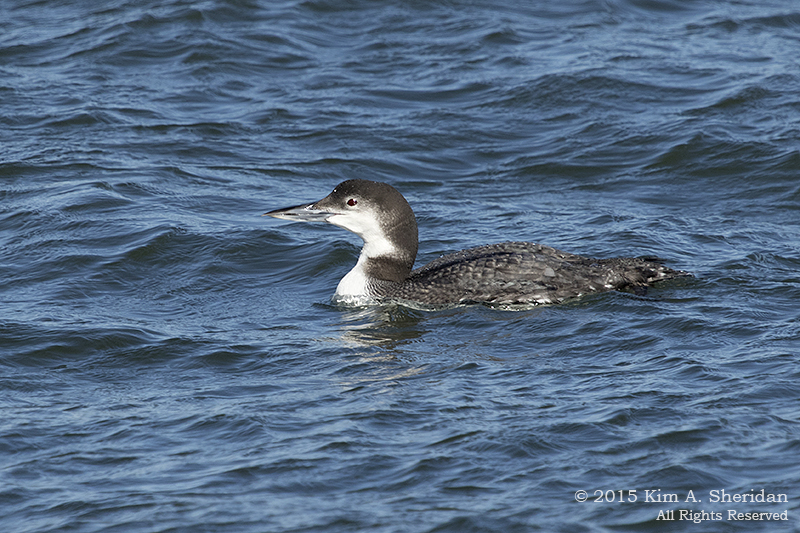
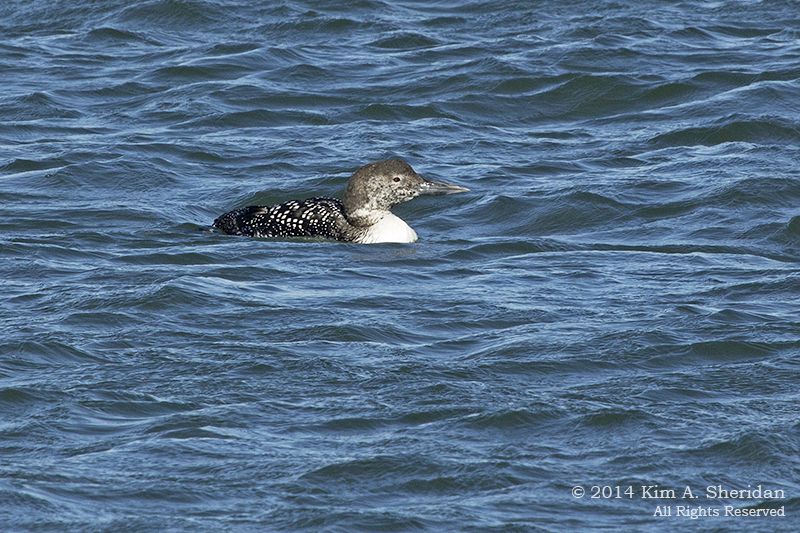
150110_NJ Barnegat Light Loon_4220acsCommon Loon. Someday I hope to see them in full breeding plumage, and hear them call.

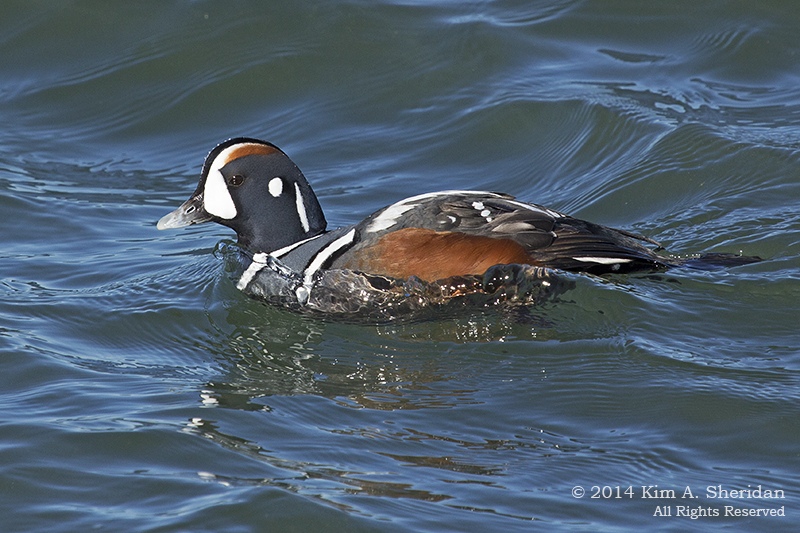
150110_NJ Barnegat Light Harlequin_4292aThe birds we came to see are the Harlequin Ducks. Two males swam near the rocks at the end of the jetty. There were only four Harlequins there this day, two males and two females. We didn’t mind. Quality over quantity.
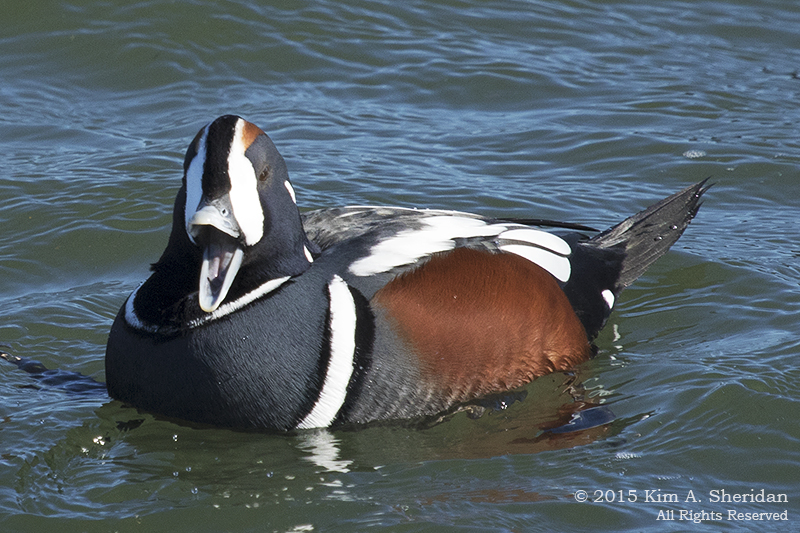
150110_NJ Barnegat Light Harlequin_4284It was 22° with winds gusting over 20 mph. I wore heavy wool socks, long underwear, lined pants under rain pants, a turtleneck, fleece AND insulated vest under a down jacket, a scarf, two hats and three pairs of gloves, with hand warmers inside. This duck thought I was the funniest thing he’d seen in awhile.

FUN FACT: Why are the ducks comfortable swimming in the frigid water while we humans are shivering on shore?

It starts with their feathers. Next to the skin lies a thick insulating layer of down feathers. Above the down are layers of interlocking and overlapping feathers that leave a minimum of bare skin exposed to the elements. The birds attend meticulously to feather maintenance with liberal doses of preen oil.150110_NJ Barnegat Light Harlequin_4377acs3

Look closely at a duck after it surfaces from a dive, and you will see the water beading up and running from its waterproof feathers like rain from a freshly waxed car.

Ducks’ feet and legs lack feathers to protect them, and could be a dangerous source of heat loss. But water birds have evolved to combat this by utilizing a countercurrent heat exchange system. As hot blood in the arteries flows into the upper leg, it transfers heat to the cold venous blood returning from the feet. Blood that reaches the feet is much colder than the body, close to the temperature of the water in which the duck swims, but the blood that returns to the heart is warm. This heat exchange minimizes heat loss from the legs, while maintaining a healthy body core temperature. Cold feet, warm heart!
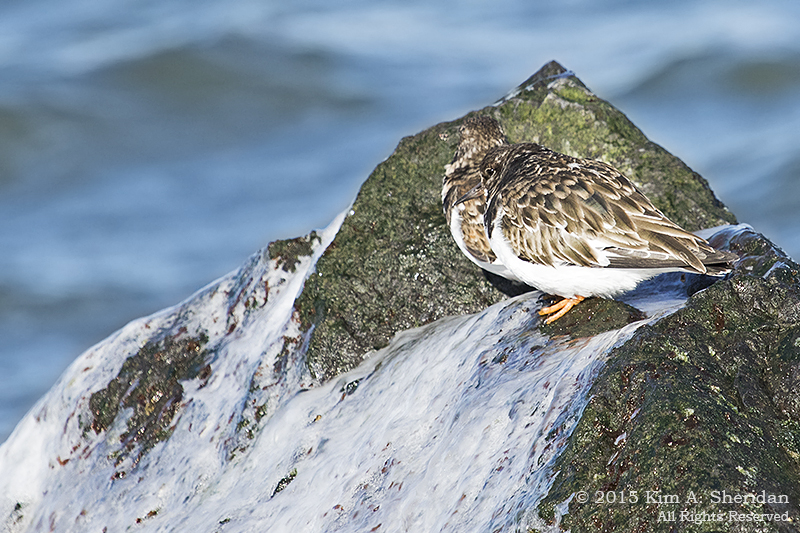
150110_NJ Barnegat Light Turnstone_4337acsSandpipers were in attendance as well as ducks. Two small gatherings of Ruddy Turnstones perched precariously on the icy rocks.

150110_NJ Barnegat Light Turnstone_4416acsYou put your right foot in, you put your right foot out…
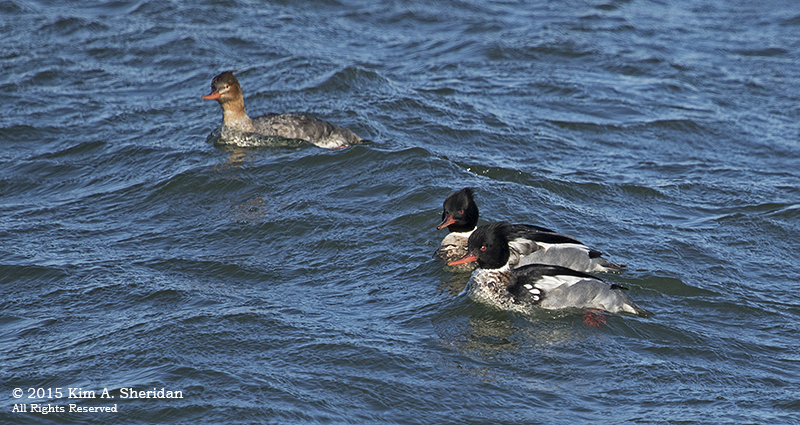
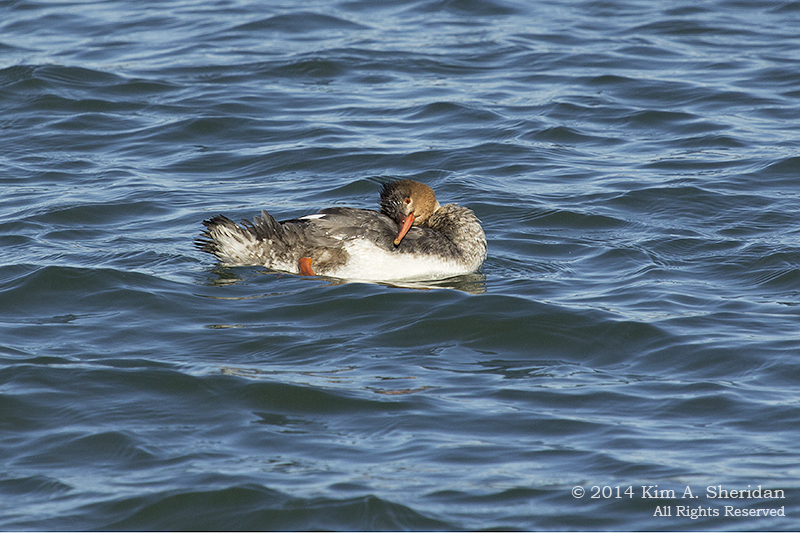
150110_NJ Barnegat Light Merganser_4578acsBack near the Lighthouse were three Red-breasted Mergansers, one female (rear left) and two males.
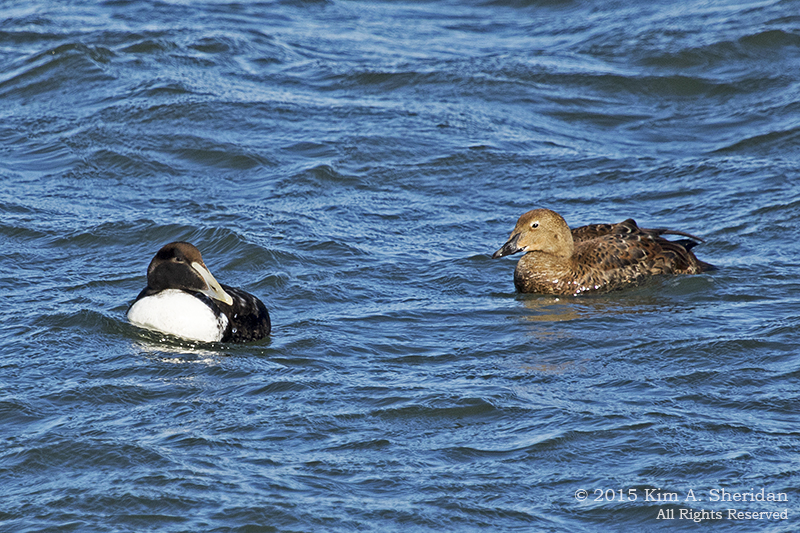
150110_NJ Barnegat Light Eider_4581aAccompanying the Mergansers were a young male Common Eider (left) and a female King Eider. The King Eider was a new bird for me. Common Eiders I’ve seen before, but only females at a distance. Seeing both this close was a treat. I’d have been happy with Eider one!

150110_NJ Barnegat Light Turnstone_4465acsTime to snuggle in somewhere warm at the end of a cold day at Barnegat Light.
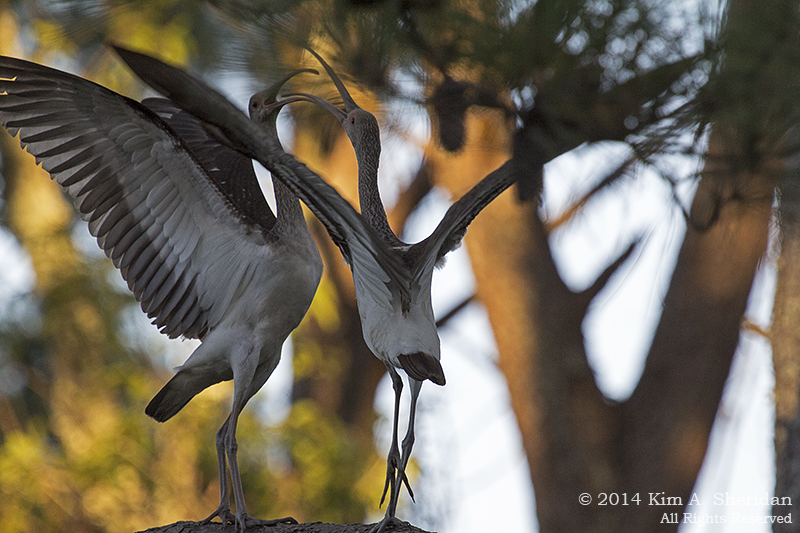
Junior Prom

141017_Chincoteague NWR_9813acsIt’s prom season at Chincoteague National Wildlife Refuge.

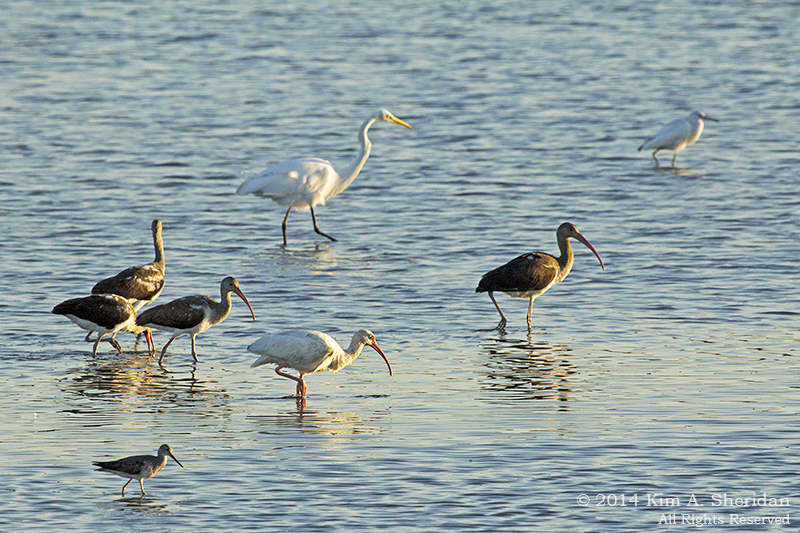
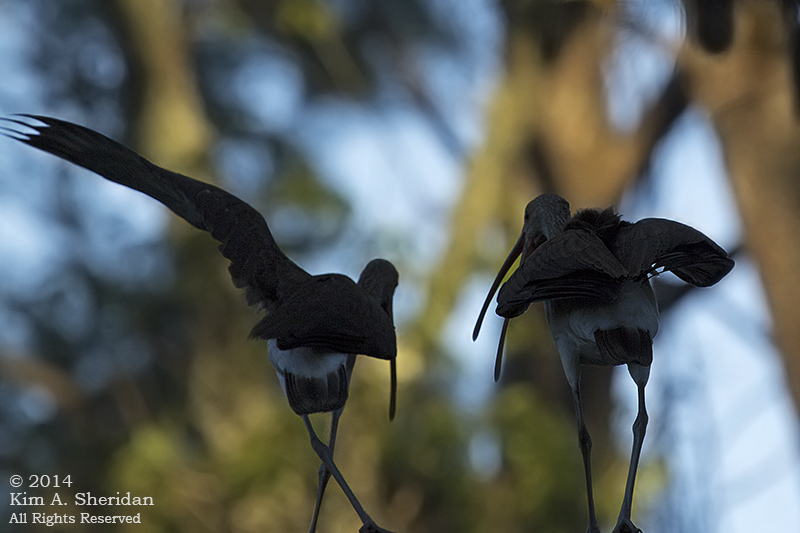
Fall is the time for young birds to gather in flocks and socialize. Like teenagers at the junior prom, they strut, preen and dance. Juvenile White Ibises show off their moves.

141018_Chincoteague NWR AM Swan Cove_0168aJuvenile birds have their own fashion style; they never dress like the grown-ups. White Ibis favor brown; Little Blue Herons wear white. It’s all so confusing. Especially when the adult chaperones are around. Here’s an adult White Ibis in white plumage with four young Ibis. In front is a Greater Yellowlegs; center rear is a Great Egret, and all the way in the back a juvenile Little Blue Heron.

141018_Chincoteague NWR AM Swan Cove_0464acsA Tri-colored Heron paces the dance floor.

141017_Chincoteague NWR_9868acsIn the evening the birds come to the woods along Beach Road. Loblolly pines offer a nice perch to soak up the late day sun. Twelve Snowy Egrets, three White Ibis… and a partridge in a pine tree?

141017_Chincoteague NWR_9649acsA shy young Black-crowned Night-heron waits for a dance invitation.

141018_Chincoteague NWR_0849axsDouble-crested Cormorants hang out in the small stream that bordered the road. Somebody’s gotta handle the refreshments.

141018_Chincoteague NWR_0841aGreat Blue Heron. There are a lot of wallflowers at this prom.

141017_Chincoteague NWR_9753acsThe highlight of the evening is the crowning of the Prom King and Queen. This year the honor goes to a pair of White Ibises.

141017_Chincoteague NWR_9784acsProm pictures are de rigueur.

141017_Chincoteague NWR_9816acsTime to take a bow. It’s been some enchanted evening!

Tern, Tern, Tern

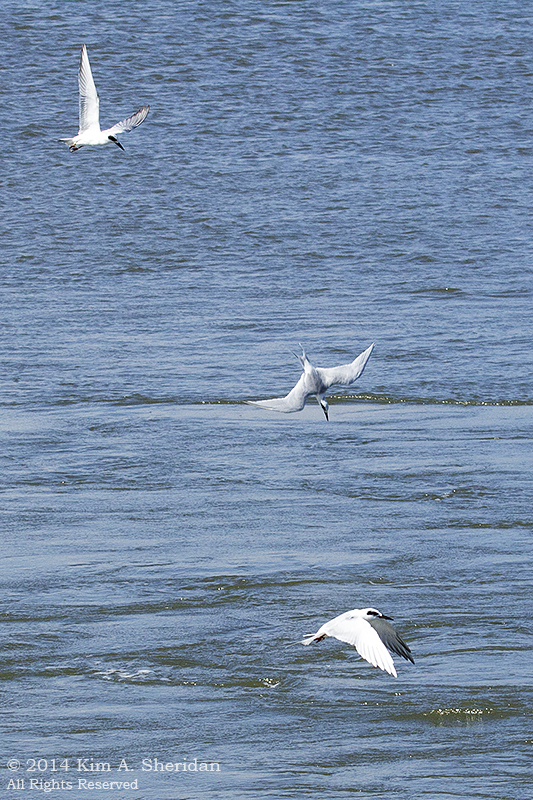
140917_Osprey_1010acsAll across the Jersey Shore, dainty dancers are on the wing. These elegant ballerinas in crisp black, gray and white dart and pirouette effortlessly. At times they hover almost motionlessly high above the stage, then plummet to the surface and back up in one smooth motion. Who are these dazzling performers taking a turn around the dance floor? Why, Terns of course!

This September, the Cape May birding community was abuzz with the arrival of a rare bird. A Whiskered Tern, which breeds in Eastern Europe and winters in Africa, had somehow found its way across the Atlantic Ocean. This is only the third appearance of this species in North America. The bird split its time between Bunker Pond and the beach for a number of days, giving lots of birders a thrill. Of course, I wanted to see it too.

140917_Cape May Point Whiskered Tern_1504aI arrived just in time for the performance. The Whiskered Tern was only there a short while, and never stopped flying. Unlike terns that dive into the water to feed, Whiskered Terns swoop low along the water’s surface where they pick up bugs. The movement is distinctive.

140917_Cape May Point Whiskered Tern_1538acs3Lots of people got great images of the Whiskered Tern; I wasn’t one of them. Here’s why it was so hard to photograph – the Tern was very far away and in constant motion. Click on this wide-angle photo and try to find it; the arrow points to it in the inset at top right.

140917_Cape May Point Black Tern_1463aAnother uncommon bird was the Black Tern, above. Again, always flying and always far away. It shares the same swoop-and-pluck feeding style as the Whiskered Tern, and they were often seen together.

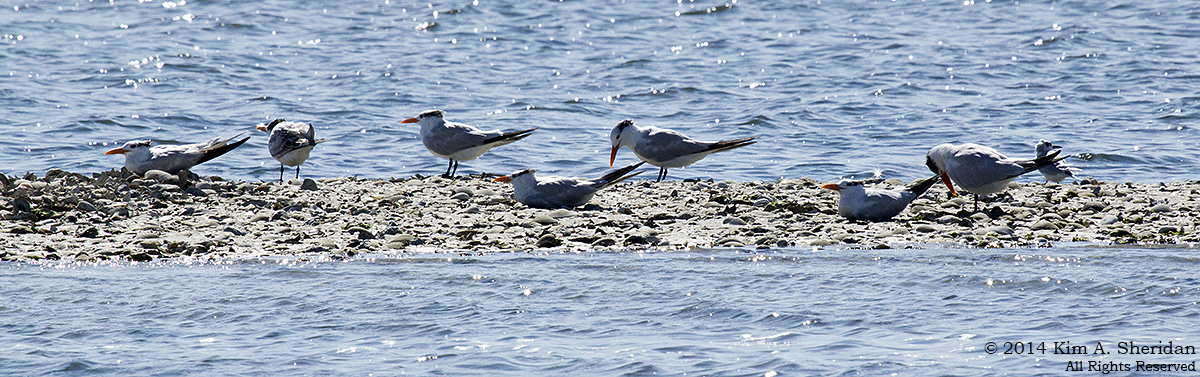
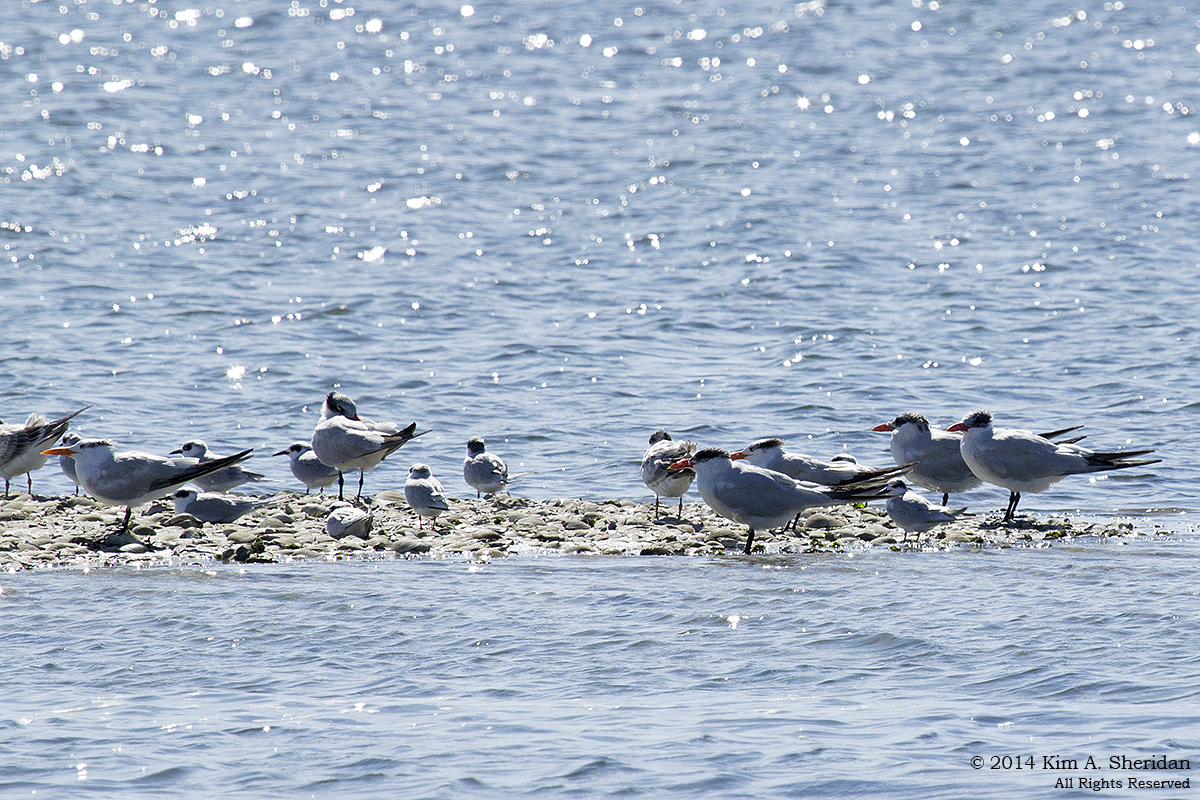
140917_Osprey_1019acsOn a sliver of sand in the middle of the bay a cluster of Terns waits to take the stage. There are three different species here. The small birds are Forster’s Terns, the supporting players of the company. The large bird on the left with the orange bill is a Royal Tern. At the other end of the island, from left to right, we have a red-billed Caspian Tern, a Royal just behind him, and two more Caspians.

140926_Forsythe NWR_3357Farther north at Edwin B. Forsythe National Wildlife Refuge, the theater is an intake where the tidal water flows into and out of the impoundment.

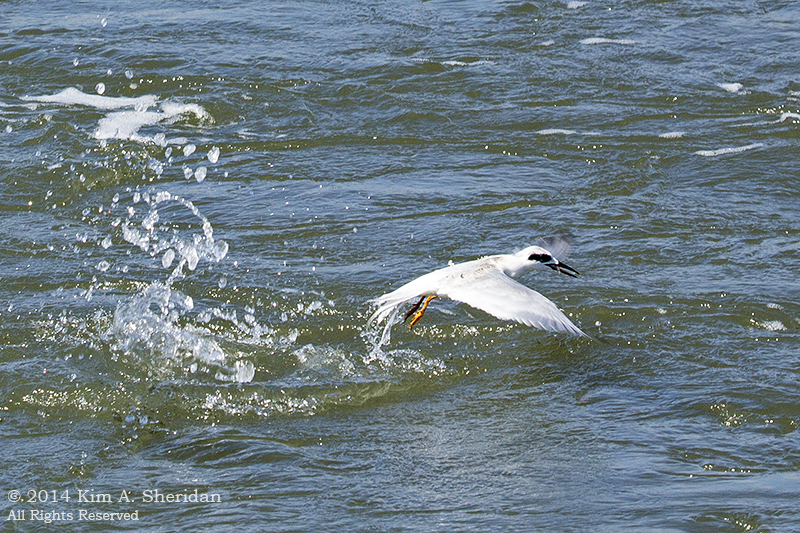
The fishing here is great, and the Forster’s Terns take full advantage of it.

Photographing them is simply a matter of pointing your camera at them and letting them fly in and out of the frame. And they do.

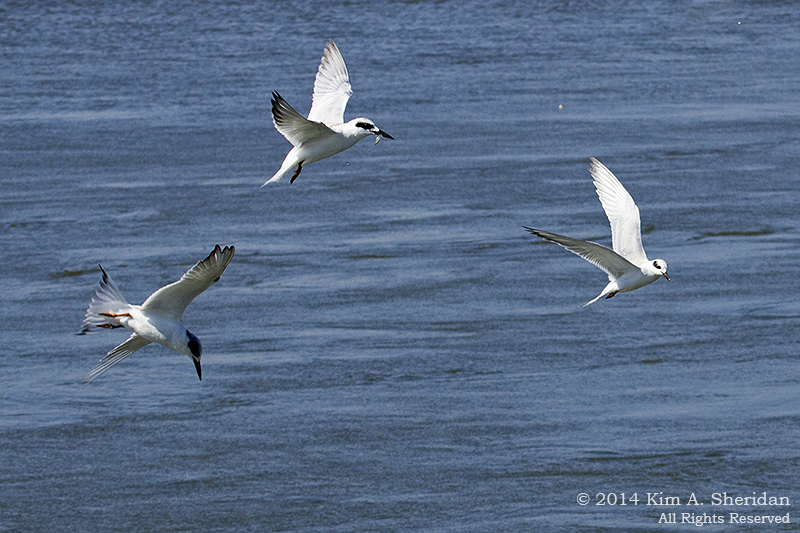
Delicate little terns swirl, twirl and whirl continuously. In turn they dive straight downward and plunge under the water, to come up in a burst of spray, circle around and dive again. It’s an aerial ballet.

140926_Forsythe NWR_3380acsEntrée.

140926_Forsythe NWR_3379acsEn pointe.

140926_Forsythe NWR_3446acsPas de deux.

140926_Forsythe NWR_3398acsPas de trois.

140926_Forsythe NWR_3393aThe corps de ballet.

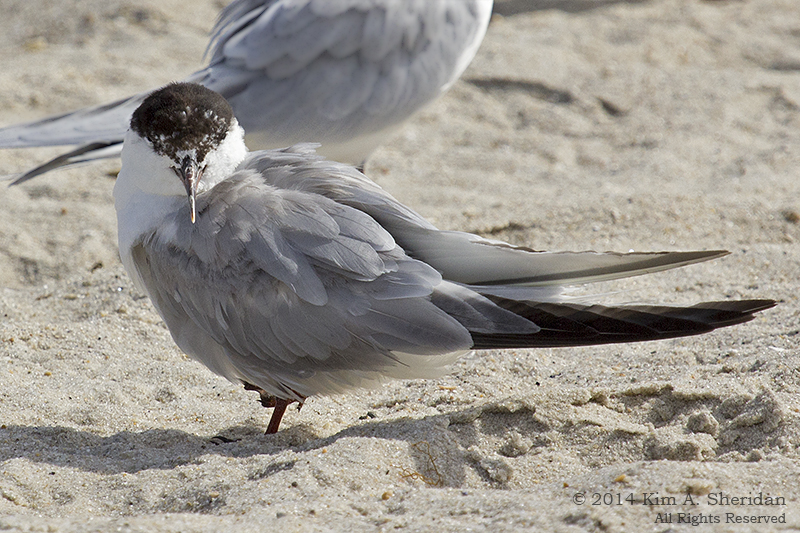
140923_Cape May Point State Park_2452acs 2Common Tern takes a bow, as the curtain falls on today’s performance.

Baby Wrens

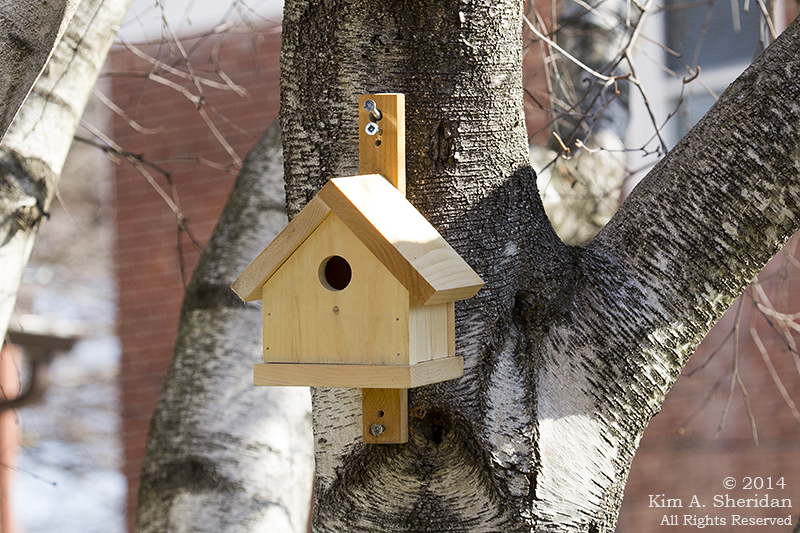
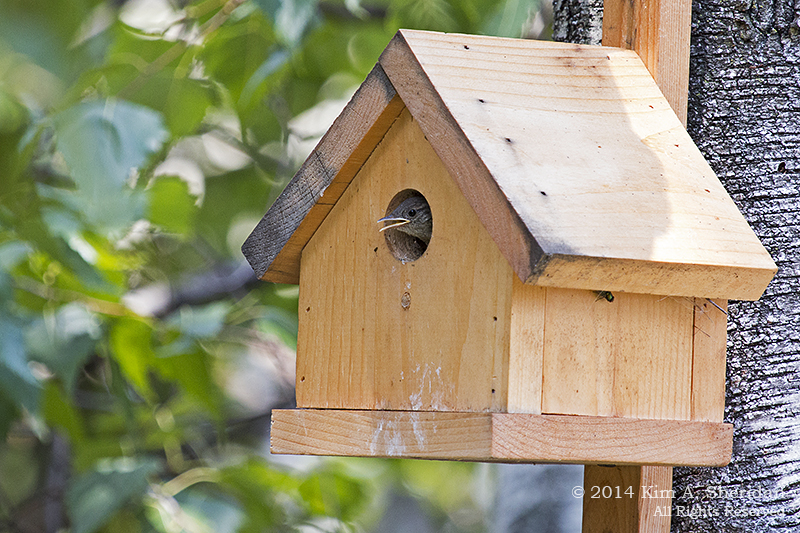
140401_Nest Box Day 1_7793acsApril 1: FOR RENT – CHEEP!
One room condo, great location, close to schools, kind landlady. Perfect for growing family! House sparrows need not apply.

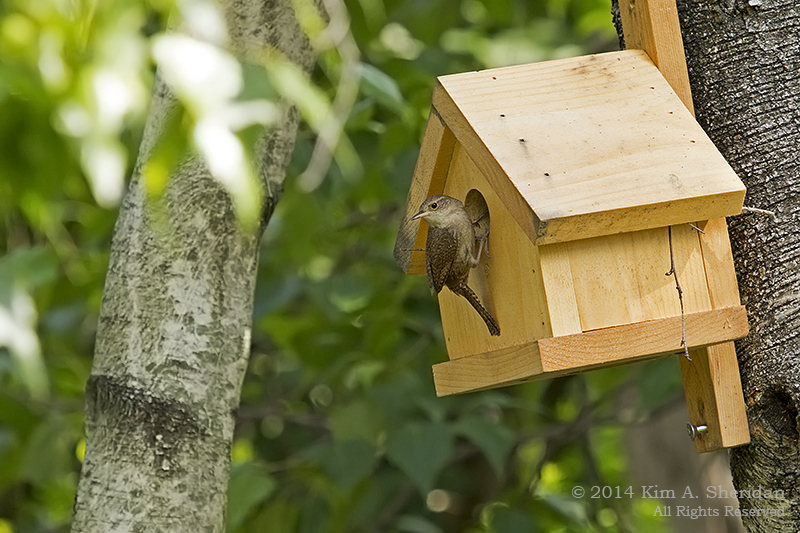
140622_Wren Move In_8806 acsJune 22: Move-in day!

July 21: I’m a baby bird hostess again! Finally there are baby wrens in the nest box. Can’t see them, but I hear their chatter when a parent comes in with food.

140726_Wren Nestlings_4188acs copy

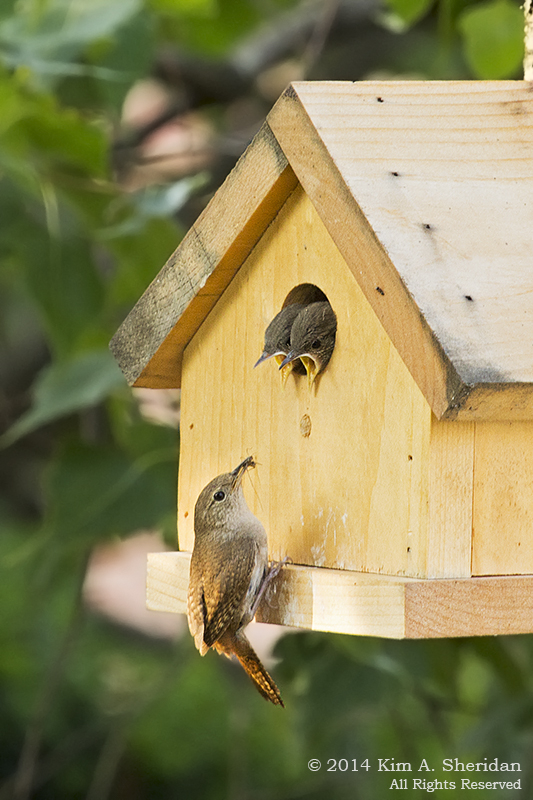
July 26: Feed me!

140727_Wren Nestlings_4520aFeed me!

140727_Wren Nestlings_4509aFEED ME!

140727_Wren Nestlings_4372acsJuly 27: No dessert until you eat your bees!

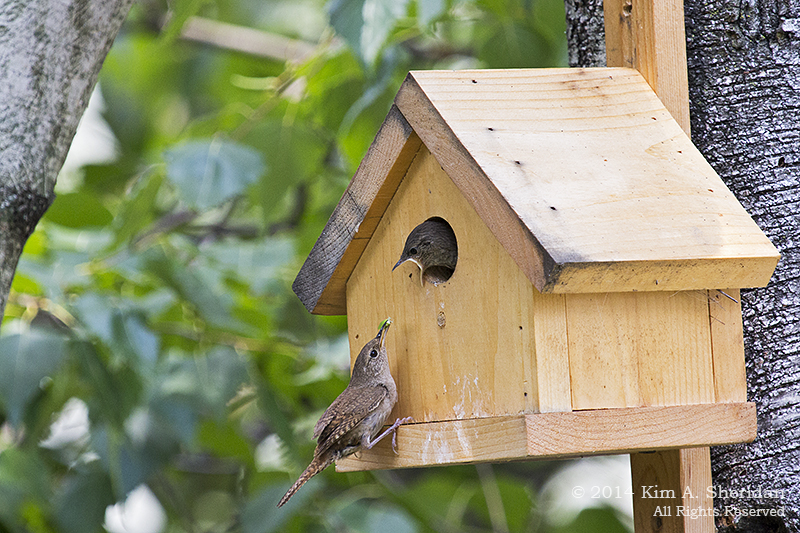
140727_Wren Nestlings_4453acsThere are at least 3 baby wrens in my box.

140727_Wren Nestlings_4486acsJuly 28: It’s a big wide world out there, little one. Are you sure you’re ready?

Apparently so, my wren babies have left the nest box!

140729_HNWR Evening_4653aJuly 29: Meanwhile, back at the Refuge…other baby wrens are out of the nest and being fed by other harried parents.

The always amazing Circle of Life.

Michigan Rara Avis

MI Grayling State Forest Kirtlands_8872acsHow far would you travel to see a rare bird?

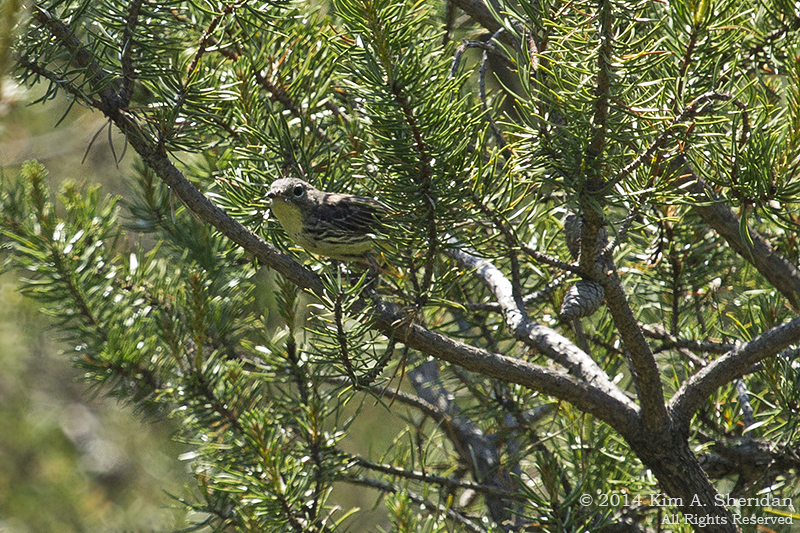
I flew 800 miles and then drove 150 more to see this one: a Kirtland’s Warbler (Life Bird #188).

Okay, full disclosure; I was going to Michigan anyway. I did plan my trip for late June and then drive across the state for a glimpse of this bird, though. I didn’t fool around trying to find this rare, flitty little warbler by myself, either. I took a tour sponsored by Michigan Audubon and led by a very knowledgeable young woman.

What’s so special about this bird that people travel hundreds of miles and take tours to see it?

MI Grayling State Forest Kirtlands_8914aKirtland’s Warbler is a Federal Endangered Species, and it nests only in young jack pine forests in Michigan and Wisconsin. It was listed as an Endangered Species in 1967. In 1973 the Kirtland’s Warbler Recovery Team was created, with representatives from the U.S. Fish and Wildlife Service, U.S. Forest Service, Michigan Department of Natural Resources, Michigan Audubon and other organizations. The following year 167 singing male warblers were recorded, a record low number.

Conservation measures enacted by the Kirtland’s Warbler Recovery Team are working. In 2011, 1,828 singing males were recorded, well beyond the plan goal of 1,000. In fact, the number of warblers has exceeded the recovery goal for over a decade.

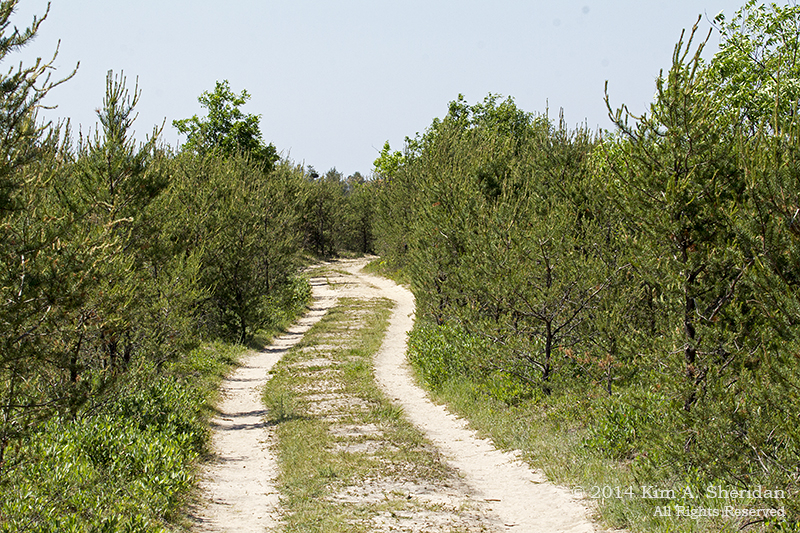
MI Grayling State Forest Jack Pine_8868aTwo-track road through a jack pine plantation in Grayling State Forest, an area actively managed for Kirtland’s Warbler.

MI Grayling State Forest Jack Pine_9039acsPine cone of a jack pine tree. See how it’s closed up, with its seeds still inside? This is a serotinous cone. It only opens and drops its seeds under the high temperatures of a wildfire. Jack pines have adapted to take advantage of frequent fires.

MI Grayling State Forest Kirtlands_8892acsKirtland’s Warblers have adapted to take advantage of jack pines. Young pines, that is. They nest on the ground under cover of the drooping lower branches. One pair needs at least 8 acres, and maybe as much as 30, of small pines. Once those trees reach twenty feet, the birds no longer nest there. Historically, frequent wildfires maintained this young jack pine habitat. Since this is the only tree the warblers nest in, they are dependent not only on jack pines, but frequent fire.

Except that fire is a tricky thing to manage. In 1980 a controlled burn got out of control and led to a wildfire that burned 25,000 acres and killed a USFS biologist. So now the Recovery Team relies on that nemesis of many environmentalists, clear-cutting. Areas of about 4,000 acres each year are logged and replanted with jack pine seedlings on a rotating basis, ensuring that there is always suitable habitat for the Kirtland’s Warbler.

Also, Brown-headed Cowbirds frequently lay their eggs in Kirtland’s Warbler nests, leading the warblers to raise cowbirds rather than their own young. So cowbird control is a critical part of the plan.

MI Grayling State Forest Kirtlands_8901acsEven though the Kirtland’s Warbler has exceeded its recovery goal, the need to suppress natural wildfires to protect life and property means that continued management with human intervention will be needed. But it’s not just this little half-ounce warbler that benefits. Young jack pine habitat is beneficial for wild turkeys, badgers, white-tailed deer, snowshoe hares, numerous birds and at least two threatened plant species.

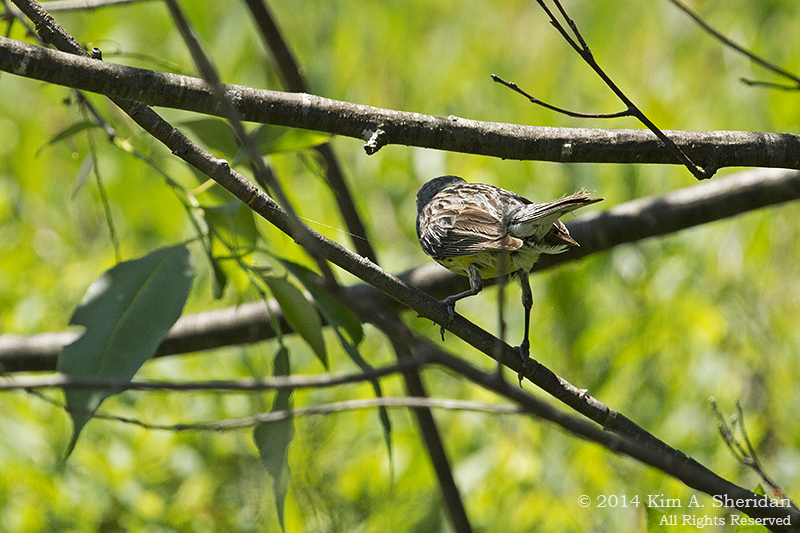
MI Grayling State Forest Kirtlands_9054aOh, it figures. My closest and sharpest photo of a Kirtland’s, and what do I get? A bird butt! Turn around, please…

Please?

MI Grayling State Forest Kirtlands_9055aThat’s better, but now there’s a stick in the way. Move a little to the left, please?

These fashion models, they’re just so flighty.

MI 2 Buttersville South Breakwater_9960acsHere’s a bird I did not plan for. This is a Piping Plover (Life Bird #189). I found him in Buttersville Park, just south of the Ludington South Breakwater.

On the Atlantic Coast Piping Plovers have Threatened status, but in the Great Lakes region they are officially Endangered. These little guys like to nest right on the beach and dunes, in cobblestones or sparse vegetation. Humans and pets using the beach disturb the birds, sometimes leading to nest abandonment. In addition, people and vehicles may accidentally crush eggs or tiny young chicks. Add in predation by wild animals and habitat loss due to beach development and it’s no wonder this tiny bird is in trouble.

People are helping the Piping Plover, though. Nesting habitat is identified and monitored, with human access restricted where necessary. Active nests are fenced to keep people and predators out.

MI 2 Buttersville South Breakwater_9976aWait! Don’t fly away mad!

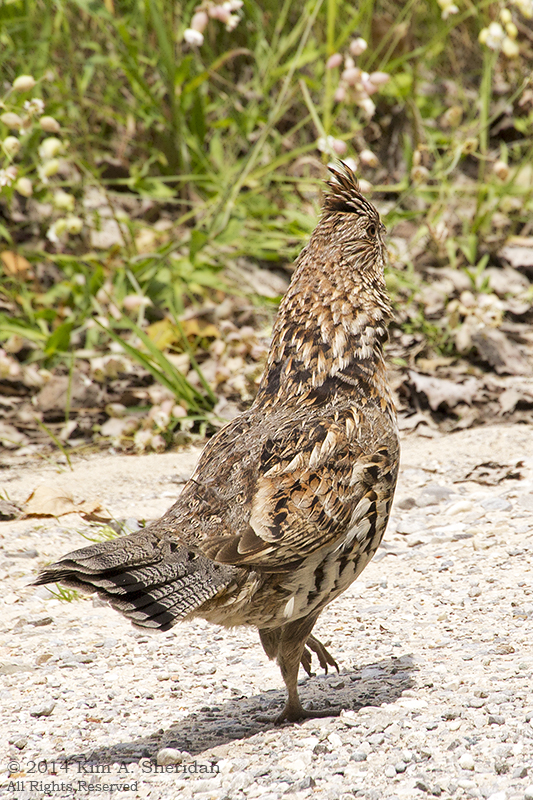
MI 4 SLBE Port Oneida Grouse_0916aAnother completely unexpected bird, this Ruffed Grouse (Life Bird #190) is anything but rare. In fact, they are widespread all across the U.S. They are really elusive and hard to see, though – in some areas.

My friend Don, convinced he’ll never see a Ruffed Grouse, has made it his life’s goal to hear one drumming in its spring courtship ritual.

Imagine his surprise when I e-mailed this photo taken at Sleeping Bear Dunes National Lakeshore.

MI 4 SLBE Port Oneida Grouse_0892acsFor that matter, imagine my surprise when I turned down a dirt road and came upon this bird strutting around. It paraded slowly down the road for quite some time while I took photos right from the front seat of my car. It didn’t seem at all concerned by my presence. It appears that, unlike shy Eastern grouse, Midwestern birds are much bolder.

MI 4 SLBE Port Oneida Grouse_0890acs

I’m ready for my close-up now.

Nesting Instinct

HNWR Goose Nest_0455 acsWell, what’s with Miss Grumpy? Here she is giving me the old stare-down. What’s got her tail feathers in a twist?

She’s sitting on eggs, that’s what. For some reason she decided to build her nest awfully close to one of Heinz Refuge’s trails. A heavily traveled trail at that, especially in the heart of warbler migration season. She got very little privacy as she incubated the next generation of Canada Geese. Geese are known for being aggressive at times. Fortunately for Refuge bird watchers, she wasn’t going to leave that nest unattended.

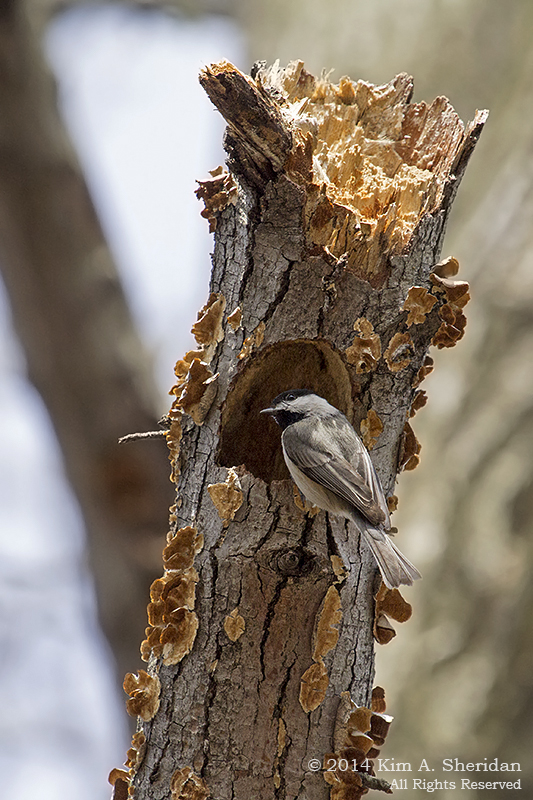
HNWR Chickadee_0041 acsNearby a pair of Carolina Chickadees were moving into a nice home in an older development. Chickadees are a personal favorite, and I was looking forward to seeing these two raise a family. Darned if I could find that tree again, though.

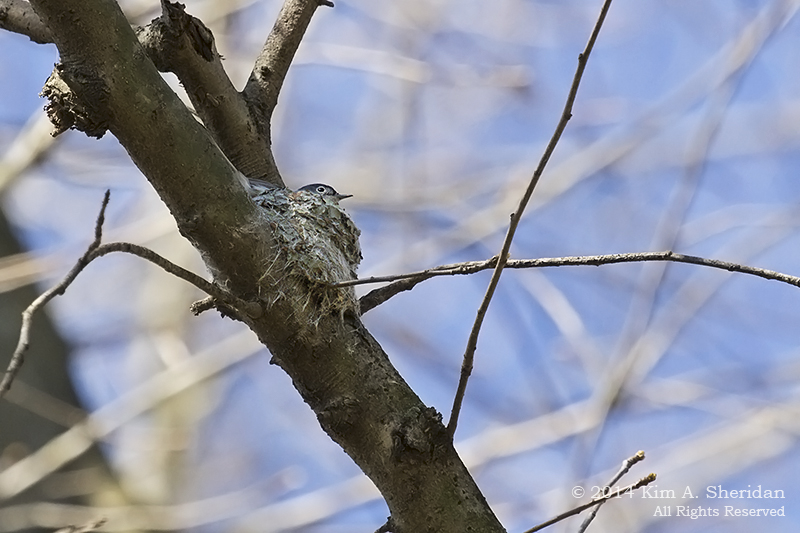
HNWR Gnatcatcher_4976 acsBlue-gray Gnatcatchers were really busy building nests all around Heinz during late April. We watched this one pick up pieces of a spider web to fortify the construction.

HNWR Eagle_9390 acsNot every nesting attempt is successful. This was the fifth season our resident Bald Eagles have incubated eggs at Heinz. Unfortunately, about the time the eggs were expected to hatch, the adults stopped sitting on the nest. They would never have abandoned viable eggs or nestlings. Something went wrong, but just what remains a mystery. It’s not uncommon for Eagles – or any other bird – to have a nest fail occasionally. Sad, but a part of life in the wild. The Eagles are still around, and they will try again next year.

HNWR Owlet_1189 acsGreat Horned Owls returned to a favorite place at the Refuge. Here’s the result, a bouncing baby owlet. This was taken in late April, when he was still covered in down and looked much like a Muppet. A few weeks ago he started “branching”, moving out of the nest to nearby branches in preparation for his first flight.

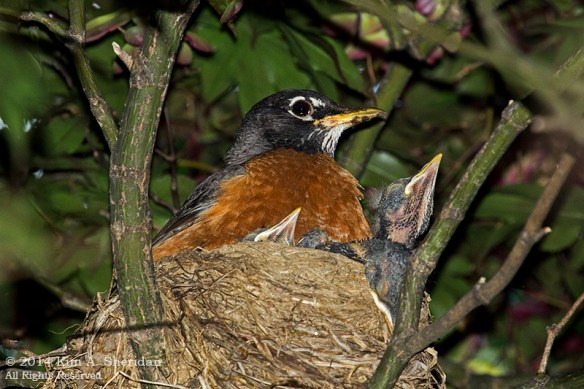
Meanwhile, back at my house in the suburban wilds, I watched as an American Robin with a beak full of caterpillars flew into the red maple tree that stands in front of my porch. Sure enough, I found the tree occupied by a nest and four baby robins.

Robin Nest_9888 acsWhen I first saw them on a Sunday evening, they were only partially feathered, with heads that barely reached over the side of the nest. Both robin parents share in the care of the babies. Every time Mom or Dad appeared, the little ones craned their heads on wobbly necks and opened their beaks in hopes of something yummy. Then they would go quiet until the next food delivery a few minutes later.

Robin Nest_9915 acsThey kept both parents hopping from sunup until nightfall, when Mom and her brood finally settled in for the night.
Robin Nest_0310What a difference a few days makes! By Friday the chicks were fully feathered and much larger. The nest was overflowing with birds! When one youngster turned around and flexed his wings, the others were pushed to the side of the nest and looked as if they might fall out completely.

Robin Nest_0088 aThey still looked to their parents for all their needs.

FUN FACT: Robins eat insects and fruit, with a preference for insects in the morning and fruit later in the day. Ever seen a robin run a few feet across a lawn, stop and cock his head? He’s listening for worms; robins find a lot of their prey by hearing its movements underground. In the fall, when fruit is a larger part of their diet, they may overindulge in ripened and fermented berries, and become intoxicated.

Robin Nest_0272I knew it was only a matter of time before the kids left home. Young robins stay in the nest about two weeks, and time was almost up. Sunday night the nest was empty. Juvenile robins still need to be fed for awhile, and it will take them up to two weeks to become good fliers. After they left the nest, the chicks scattered; one in my tree, another in a neighbor’s, the last two who knows where. Four times the work for Mom and Dad! The parents are still protective, too. I saw one chase a squirrel all the way across the street. Five days after fledging, I watched a parent feeding one of the youngsters in my garden. When this group of siblings is independent, the parents will likely nest again; robins normally have two to three broods a year.
Raising a brood of hungry growing chicks is demanding, time-consuming work. Knowing what she has in store, perhaps our Mother Goose could be forgiven for being a little grumpy!

Whiteout

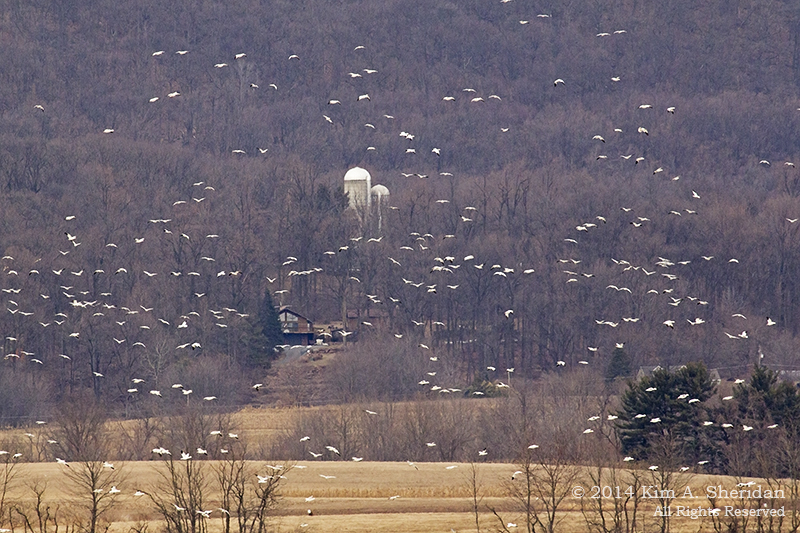
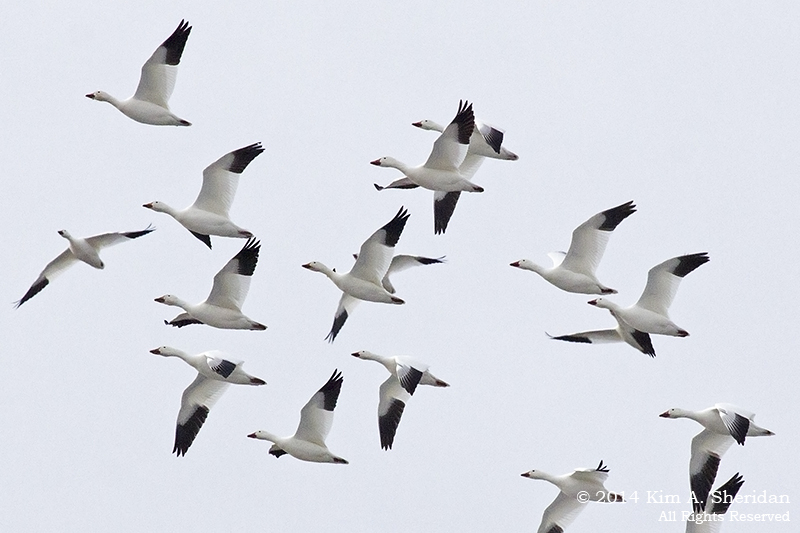
Middle Creek Snow Geese Distant_5773 acs3The cloud on the horizon slowly resolves into individual specks of white, whirling and spinning in synchronicity this way and that. Like dust motes in a shaft of sunlight or snowflakes in a breeze, they spiral slowly downwards to the ice. Without warning they loft up again to the sky, following paths no snowflake ever traveled; for these are not snowflakes, but Snow Geese.

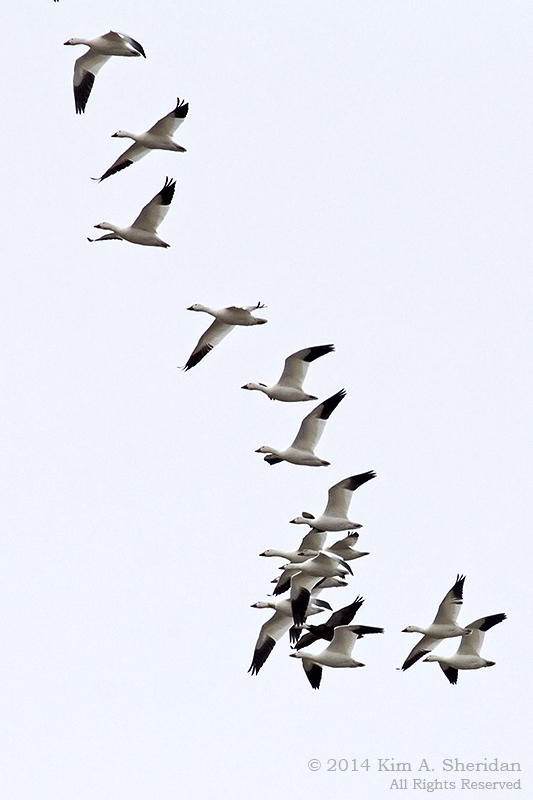
Middle Creek Snow Geese Flight Skein_5967 aThe ice has begun to thaw at Middle Creek WMA in Lebanon County, and the geese have followed the thaw to these fields and impoundments. This is a popular stop on their migration from winter homes along the coast to their breeding grounds in the High Arctic.

Much of the year snow geese are highly gregarious, traveling in large flocks, and gathering on staging grounds like Middle Creek by the tens of thousands. Peak migration in Pennsylvania is in early to mid-March. Once open water begins to appear, the goose population here jumps from 3,000 to 60,000 in a week.

Middle Creek Snow Geese Flight Skein_5832 acsThis is farm country, and this is why the snow geese are here. Committed vegetarians, they feast on grasses, sedges and marsh plants on wetlands. A few decades ago, they discovered a new grocery store to their liking: farms. Waste grain left behind on harvested fields has proven to be an abundant food source.
Middle Creek Snow Geese Flight Skein_6157 a Snow geese are powerful fliers, capable of speeds up to 50 miles per hour. Where they breed in the Arctic, they are fiercely territorial, and family bonds are strong. The young will stay with their parents until their second or third year, when they will choose a lifelong mate.

FUN FACT: Snow geese walk as well as they fly. Within three weeks of hatching, goslings are walking everywhere their parents go. By the time they can fly, they may have covered 50 miles on foot.

The flight of a single bird is a miracle to behold. The flight of 50,000 snow geese is a spectacle.

Middle Creek Snow Geese On Ice_5668 aWhat possesses them to take off is a mystery. One moment there are thousands of honking geese on the ice.

Middle Creek Snow Geese Takeoff_6395 acsThe next, there is a great WHOOSH, and the entire flock lifts off as one. The decibel level goes up by a factor of ten; you need not look at the geese to know the birds have taken off.

Middle Creek Snow Geese Flight Mass_6014 aThey swirl about the sky in seemingly aimless meanderings  for a short while. Then, as suddenly as they took off, the geese come in for a landing – in the exact same place they stood moments before. Why? Perhaps someone saw something they didn’t like. Feeding flocks keep lookouts, who warn the other geese of danger, predators like foxes, coyotes and eagles.

Middle Creek Eagle_6210 aAnd yet – here sits a mature bald eagle, in the middle of a peaceful flock of snow geese. No alarm. No commotion. No panicked flight. The mind of a goose is a riddle wrapped in a mystery inside an enigma.

Middle Creek Tundra Swan_5721 acsThere’s another white bird on the ice at Middle Creek. Tundra Swans are here as well, albeit in smaller numbers. Less skittish than the geese, the swans fly lower, and stand closer to shore.

Middle Creek Tundra Swan_5918 a They also are dropping in for a short visit before pushing on to the north.

Middle Creek Tundra Swan_5892 aMost don’t choose to march, though. Except perhaps this squadron of swans, advancing on a duck detachment in lockstep.

Middle Creek Snow Geese Flight Skein_6349 asc2As the day draws to a close, skeins of tundra swans and snow geese fill the air. Some will fly off to search out a safe roost for the night. Many others will remain at the impoundment, where they will sleep on the open water. On the next day, or the next, a blizzard of snow geese will rise and wing their way north, towards the Arctic, towards the midnight sun, towards summer.

Ducking Out Of Winter

Barnegat Harlequin_3017 a It’s my fault, I admit. The snow, I mean. Two years in a row I lamented my lack of good snowy photographs to use for Christmas cards, and those years were marked by a decided lack of snowfall. Be careful what you wish for! This year Mother Nature had the last laugh. We’ve had just about 60 inches of snow, when the winter norm averages 22”. And March can still bring some big storms, so we may not be done yet.

I’m done, though. I loved the snow in January and early February, but I have all the snow photos I need, thank you very much. Enough already! I’ve had it with hiking on slippery, ankle-turning ice.

So the last three weekends I have escaped to the southeast, once to the Pine Barrens, twice to the Jersey Shore. No white stuff, and lots of ducks. I love ducks. They’re so colorful and varied, and they are always doing interesting things. In the winter, places like Barnegat Light and Avalon draw sea and bay ducks in droves. Great places to duck out of the snow.

Barnegat Harlequin_3002 acsAbove and below are perhaps the most gorgeous of ducks, male Harlequins. Lots of birders take the adventurous trek atop the Barnegat Light jetty just to admire these beauties.Barnegat Harlequin_3189 acs

Barnegat Longtail_3455 acsI have a soft spot for Long-tailed Ducks. They have such endearing expressions.1 Avalon Long-tailed_3891 acs

1 Avalon Long-tailed_4062 aMales are comfortable enough with their masculinity to sport pink on their bills. Females stick to earth tones. Barnegat Longtail_3458 acs

1 Avalon Scoter Black_3912 aThe Scoters are new birds for me this year. They tend to hang out farther off-shore, so they’re not as easy to photograph. Here’s a large raft of Black Scoters in Avalon, above, with a few Long-tailed Ducks and gulls amongst them. Black Scoter, male, below.1 Avalon Scoter Black_3953 a

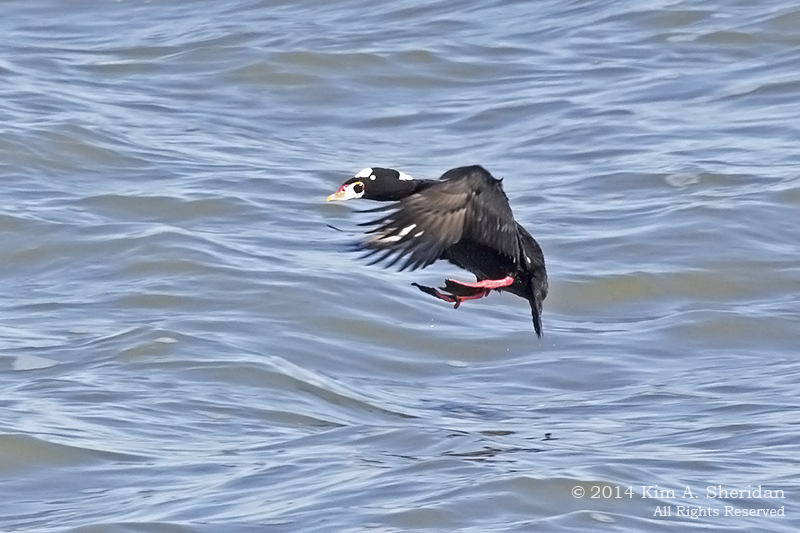
1 Surf Scoter at Avalon_4348 acs This fellow with the colorful proboscis is a male Surf Scoter. My first life bird of the day.

Barnegat Loon_3298 aThis is a Common Loon, transitioning into breeding plumage.

Barnegat Merganser_2858 acs Female Red-breasted Merganser at Barnegat Light, above and below.Barnegat Merganser_2909 acs

1 Avalon Sandpiper Purple_4378 acs Purple Sandpiper on the rocks at Avalon.

3 Bonaparte's Gull at Higbee_4492 acsI don’t usually take photos of gulls, unless they’re flying or doing something really interesting. Gulls pose identification problems, and usually I’m seeing the same species over and over. This particular gull flew past in West Cape May, and I’m glad I took the shot. When I got home, I realized I had something different – Bonaparte’s Gull, a life bird for me. It was my second lifer that day.

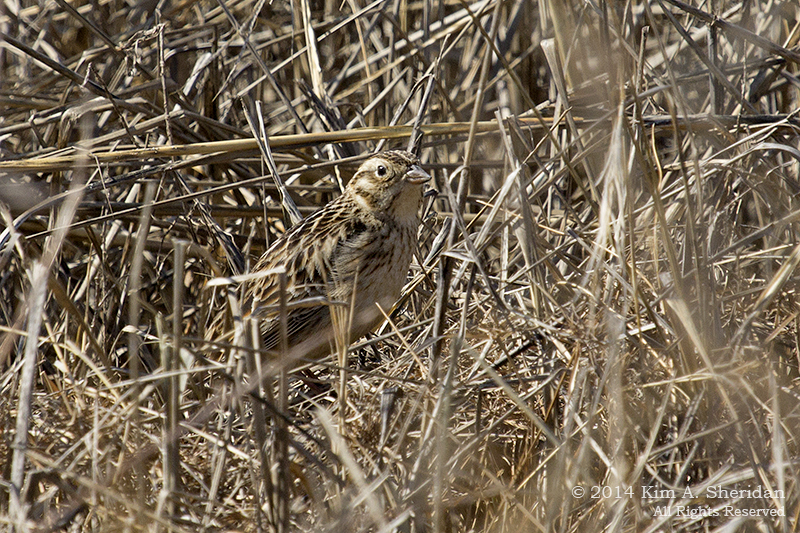
In popular birding places, you often run into other birders who are happy to share news of interesting birds. Two guys I met in Avalon suggested I go to Stone Harbor Point to look for the Smith’s Longspur that had been seen there. “Just look for a big group of people; that’s where it will be.” Sure enough, out in the grassy meadow between beach and bay was a group of people with binoculars and scopes, chasing a cryptically colored, sparrow-sized bird around. I never would have found it, much less identified it, by myself. Lifer #3 for the day.2 Smith's Longspur at  Stone Harbor Point_4421acsSmith’s Longspurs hang out in the middle of the country, and are quite rare in the East, which is why so many people wanted to see it. I’m sure this poor bird was wondering if he’d ever get a break from the crowds to eat in peace.

5 Ross's Goose at Seagrove Ave Cape May_4769 aI also heard from two different people of another unusual sighting, a Ross’s Goose in a field behind some homes in Cape May Point. Sure enough, there it was. A great way to end a day of birding at the Shore.

Barnegat Harlequin_3119 acsIn the last week or two, the weather has warmed enough that the foot-thick snow pack has all but disappeared. My crocuses are blooming, the first rays of sunny gold heralding the inevitability of spring.

The Bald Eagles at Heinz Refuge are incubating eggs. Geese have been migrating north for some time. Soon these winter ducks will take off for their breeding grounds to bring new life into the world. Flowers and trees will bloom, and baby animals will be born.

It won’t be long before spring is off to a flying start!

Reflections of White Rock Lake

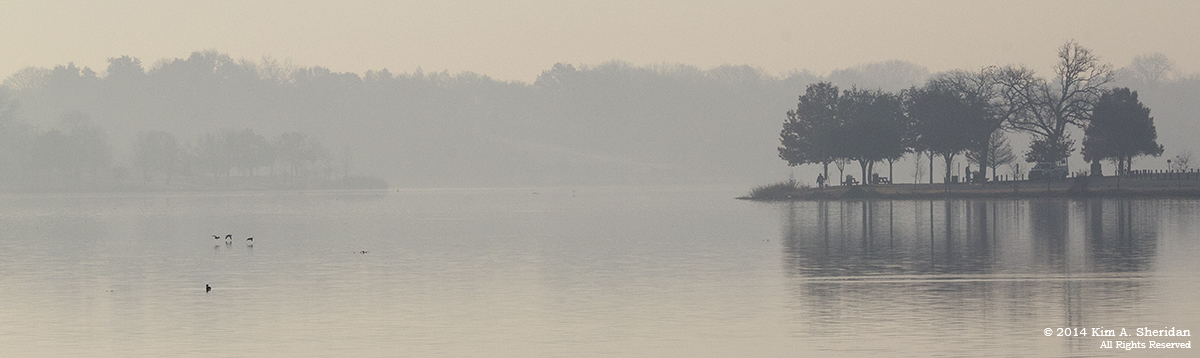
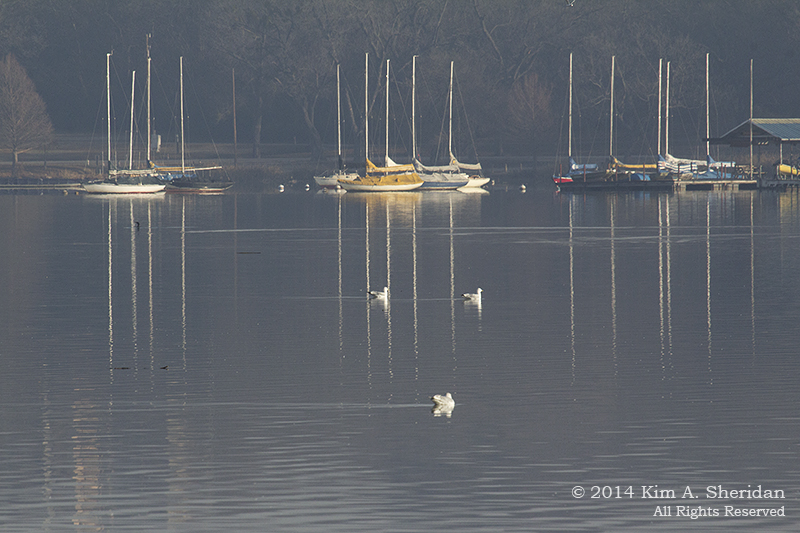
TX White Rock Lake_7280acs Mirror, Mirror, on the wall

Is there a haven in the Dallas sprawl?

Perhaps a park like White Rock Lake,

A place to watch the morning break?

TX White Rock Lake_7398ACSMirror, Mirror, I do insist,

Show me White Rock in the mist

TX White Rock Lake Pelican_7241aTX White Rock Lake_7404A

Mirror, Mirror, hear my words

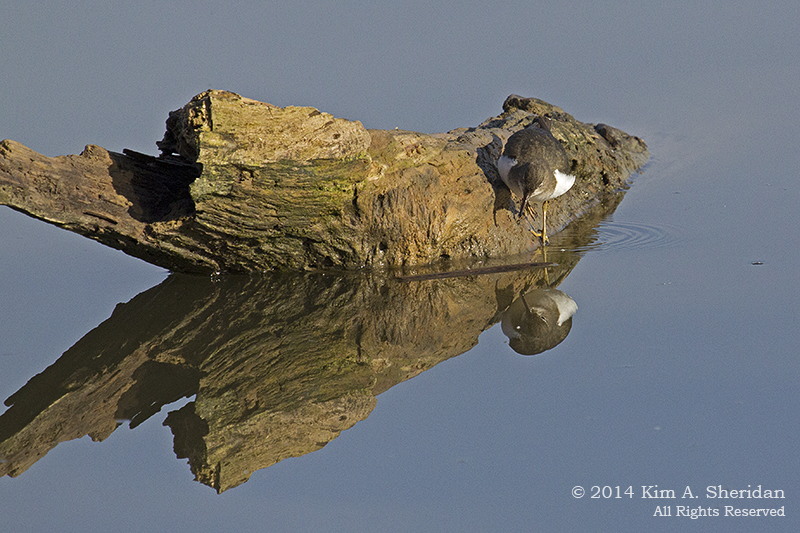
Who’s the fairest of the birds?TX White Rock Lake Yellowlegs_7780aLesser Yellowlegs certainly seems enamored of his own reflection…

TX White Rock Lake Cormorant_7805aTX White Rock Lake Coot_6951a

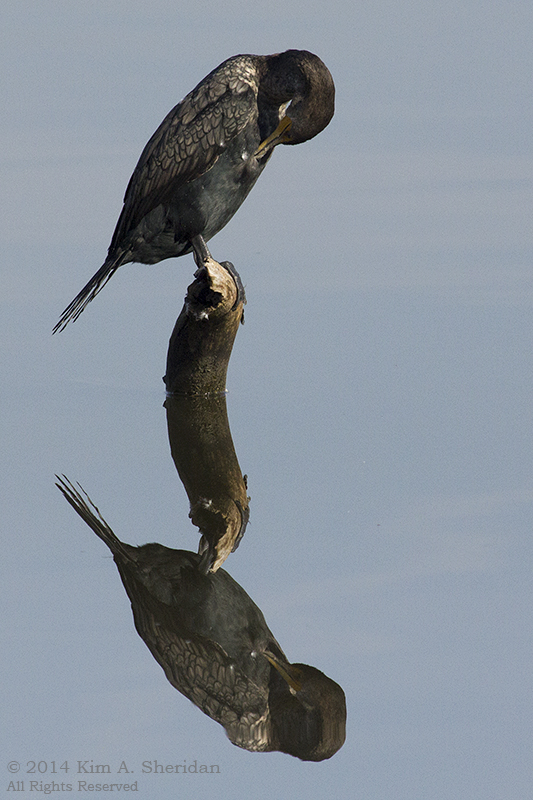
While Double-crested Cormorant (left) is primping for her photo op, and American Coot (right) is working it for the camera.

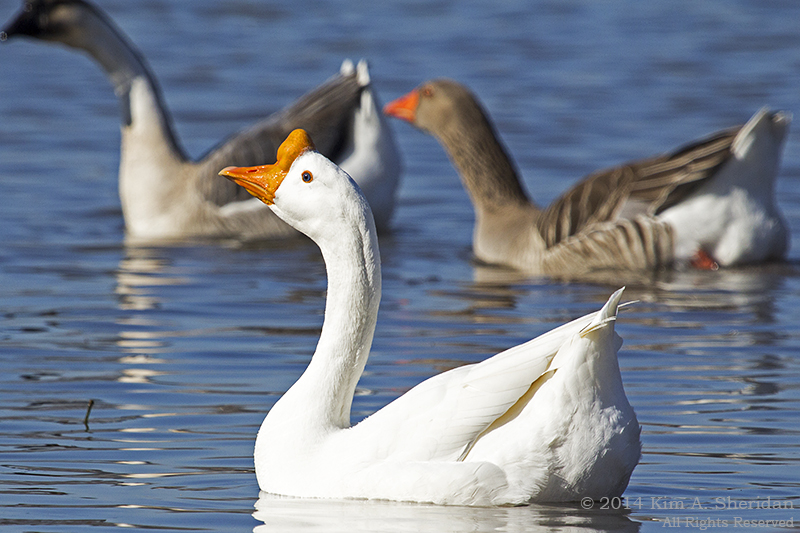
TX White Rock Lake Geese_6971acs Not all the birds in White Rock Lake Park are native, or even wild. A number of domestic geese and ducks prowl the shores. This is a White Chinese Goose.

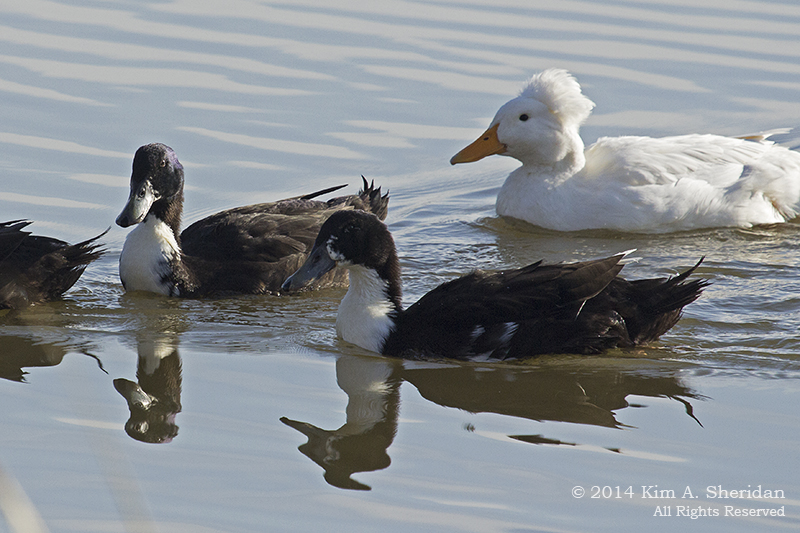
TX White Rock Lake Duck Domestic_7652aMore domestics: Black Swedish Ducks in front and the Crested Pekin Duck. And yes, there is no “g” in “Pekin”, despite the insistence of the spell-checker.

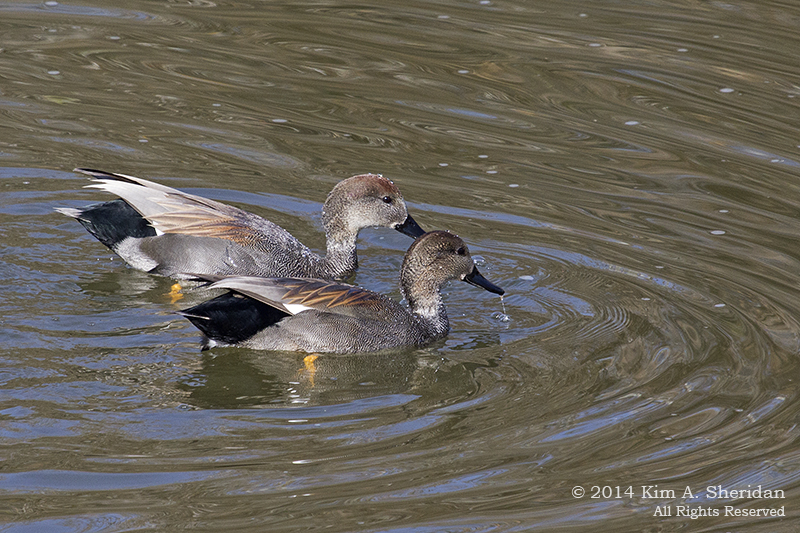
TX White Rock Lake Gadwall_7939a Ah, here are we are back to the wild critters. These Gadwalls are looking especially natty.

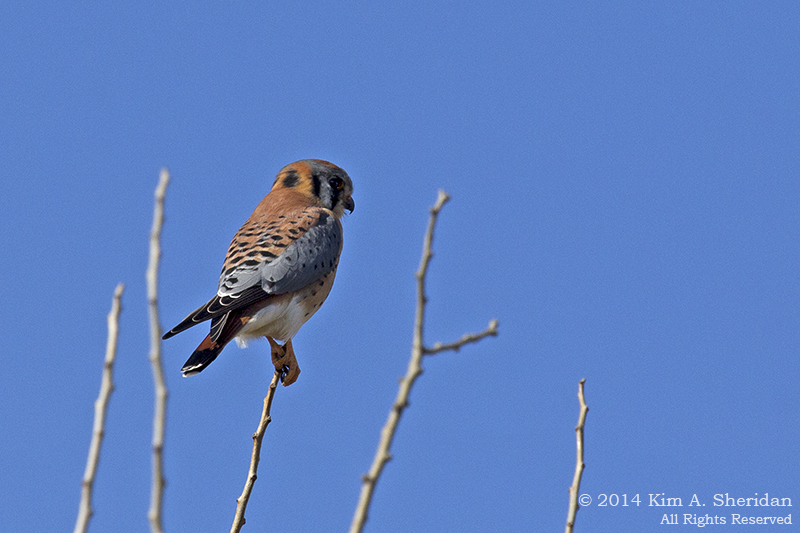
TX White Rock Lake Kestrel_7025acsAmerican Kestrels perch in trees on the edge of a meadow, looking for mice and voles to eat.

TX White Rock Lake Red-bellied Woodpecker_7816a Red-bellied Woodpecker, also looking for good things to eat, much prefers insects. Despite the moniker, the belly is only marginally reddish. The red on its head would seem a better inspiration for a name, but “Red-headed Woodpecker” was already taken.

Mirror, Mirror, on the Loch

Who’s the fairest on White Rock?

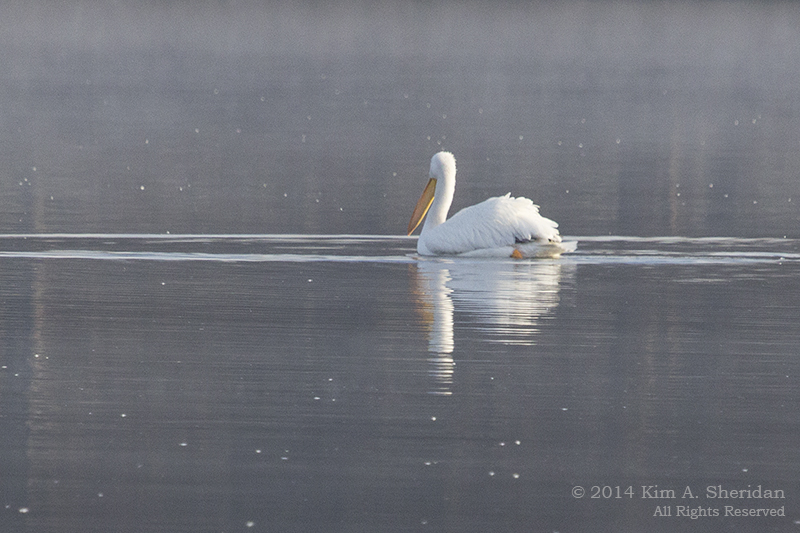
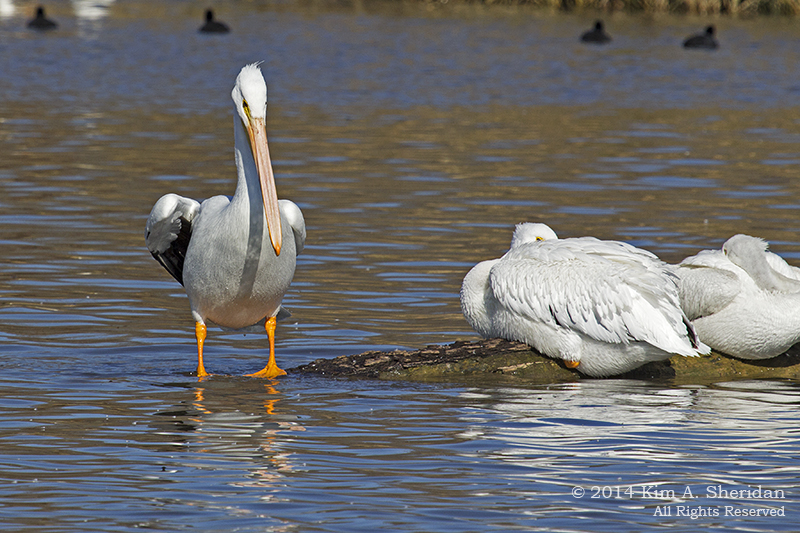
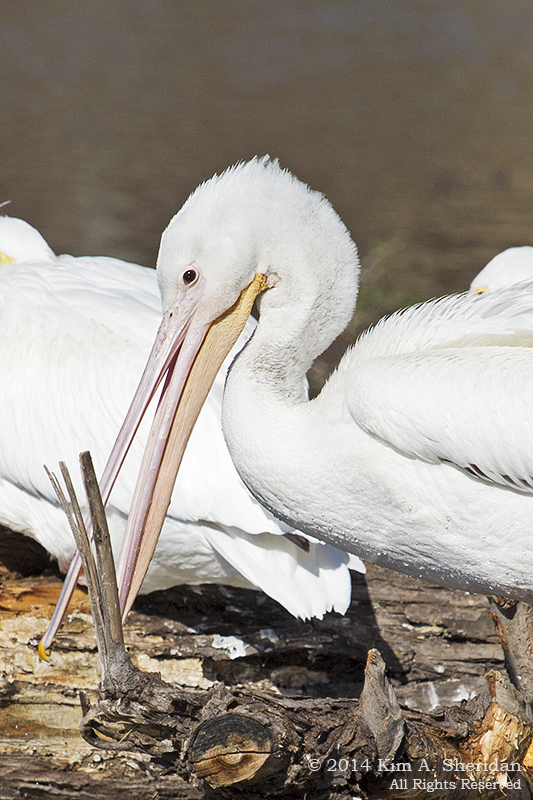
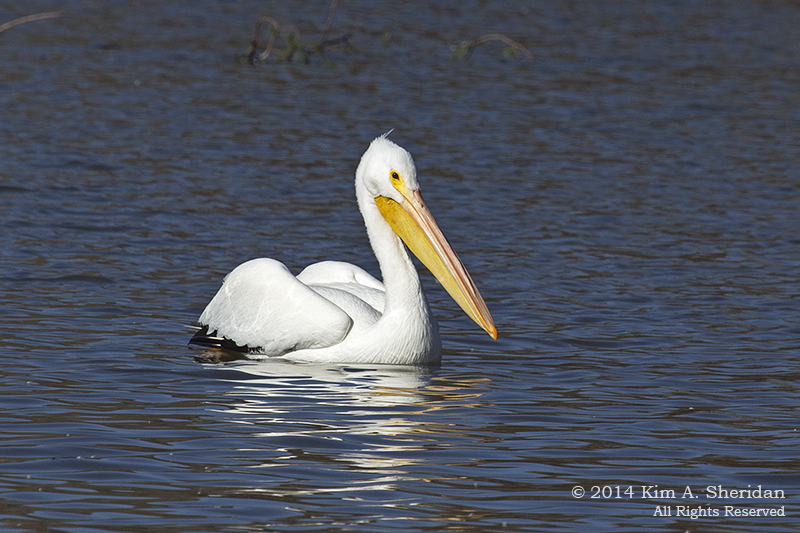
TX White Rock Lake Pelican_6995aThat’s an easy one! American White Pelicans are the stars of the show at White Rock Lake in winter. These HUGE birds roost and preen on logs near the lake shore. They look like they’re too big to get off the ground, but in fact they are graceful and powerful fliers. Watching them skim the lake’s surface is an impressive sight. Not one I’ve captured to my satisfaction yet, though.

TX White Rock Lake Pelican_6931aFUN FACT: How huge are White Pelicans? From beak tip to tail tip they are about 5’2”, nearly as tall as I am. Their wingspans are about 9 feet long. The pouch in their bills can hold 3 gallons of water. Take a look at a gallon of water in the supermarket, and then imagine holding three of them in your mouth! Ouch!

They catch fish by dipping their heads underwater, like bobbing for apples. Sometimes several Pelicans will get together and herd fish together to make them easier to catch.

TX White Rock Lake_7979ac no s  Mirror, Mirror, tell one, tell all

There’s a special place in the Dallas sprawl

Where humans gather, yet young birds fledge

It’s truly a park on the Wild EdgeTX White Rock Lake Pelican_6983a

More Winter Birds

Feeder Birds_8384 ACS Feeder Birds_8392 ACSYes, I know it’s barely fall. While we’re waiting for the leaves to turn here in the East, it seemed a good time to look back at some images from last winter. To remind us what lies in store when it gets cold…

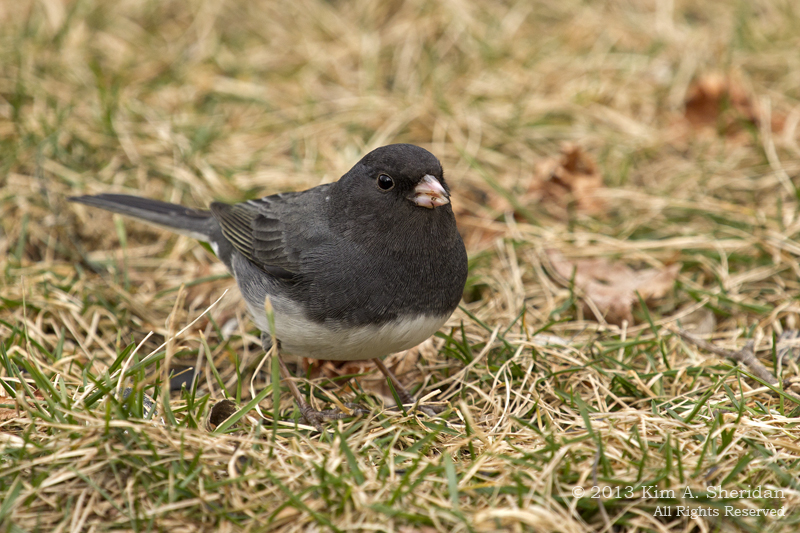
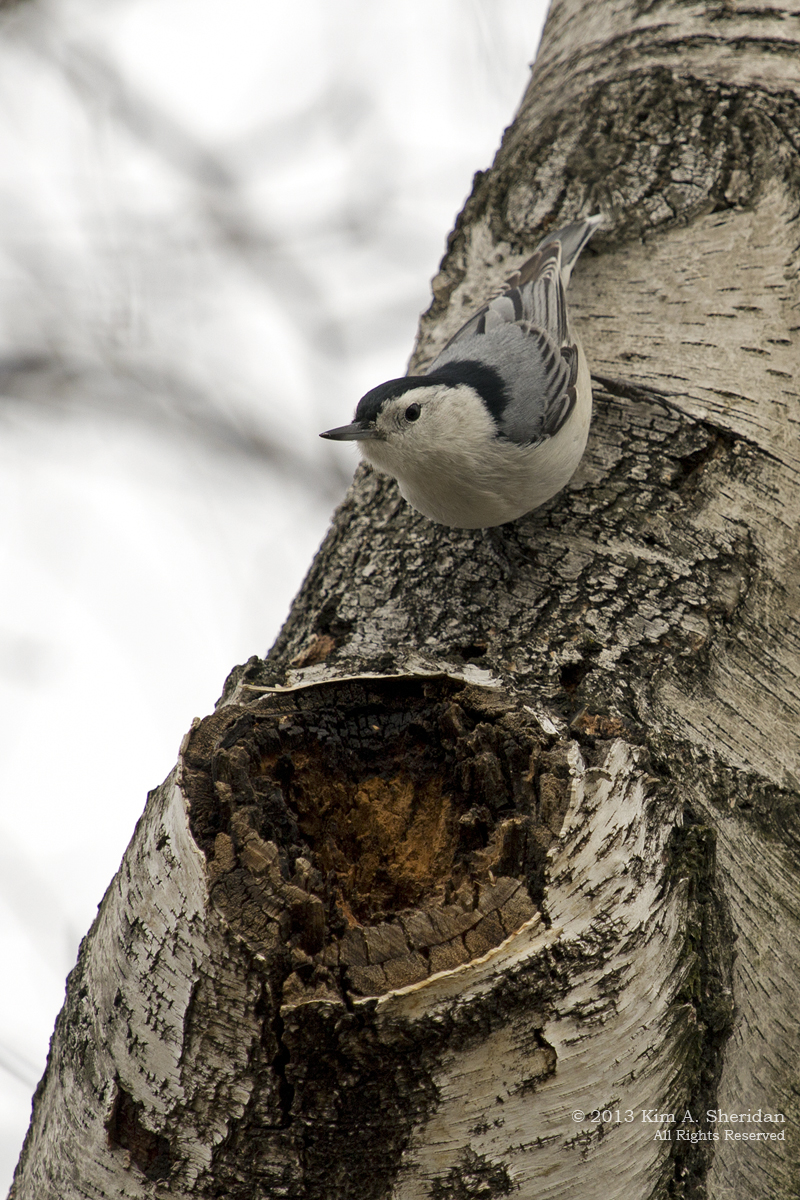
The Dark-eyed Junco (above) and White-breasted Nuthatch were feeder visitors in my backyard. Also the first subjects for my new 400mm zoom lens.

HNWR Pintail_9336 ACS Northern Pintail, John Heinz National Wildlife Refuge

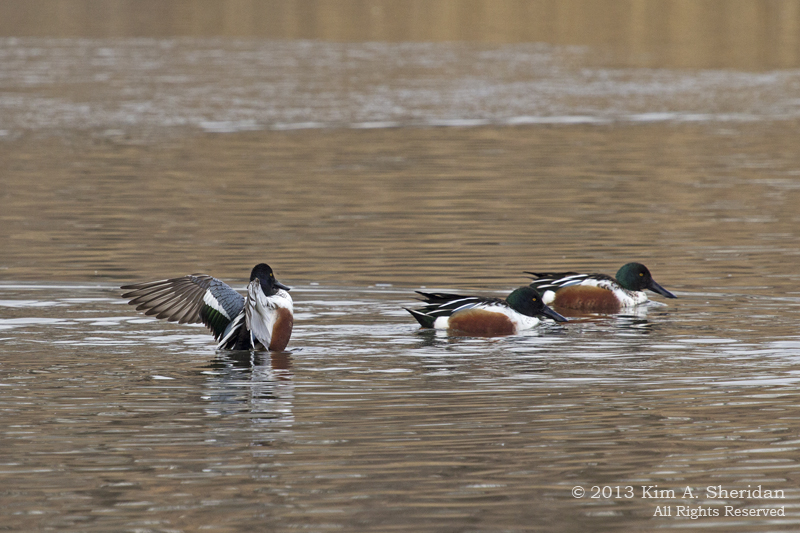
HNWR Shoveler_9383 ACSNorthern Shovelers, Heinz NWR

Ocean City Sanderling_1191 ACS Sanderling, Ocean City, NJ

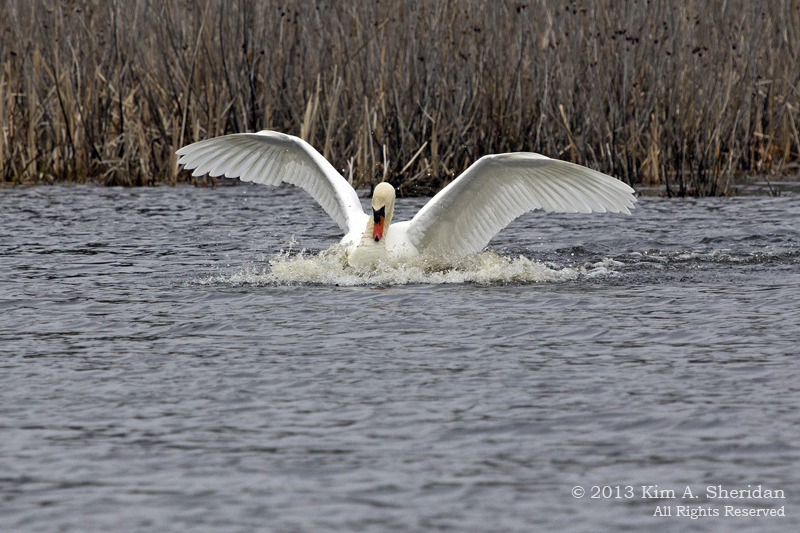
Cape May SP Swan_1425 ACSMute Swan, Cape May Point, NJ

HNWR Merganser_2441 ACS Common Merganser female, Heinz NWR

HNWR Evening_4352 ACSCarolina Wren, Heinz NWR

Middle Creek WMA_3463 ACS Middle Creek WMA_3447 ACSSnow Geese at Middle Creek Wildlife Management Area in Lancaster County, PA. Snow Geese gather by the thousands on their winter feeding grounds. I had no sooner pulled up to a hill covered with geese when they took off. A giant cloud of geese, whirling and spinning as one. It was an amazing sight.

I like to look at this image at the right, pick out a goose, and imagine what he may be thinking.

  • “Does anyone know where we’re going?”
  • “Mom always told me not to follow the crowd.”
  • “Can’t a guy get some peace and quiet around here?”
  • “Why is everybody following me?”
  • “If you’re not the lead horse, the view never changes.”
  • “I wish that goose next to me had used deodorant this morning…”

Middle Creek WMA_3490 ACS Clone

Coming up: Something more seasonal, I promise!