Baby Wrens

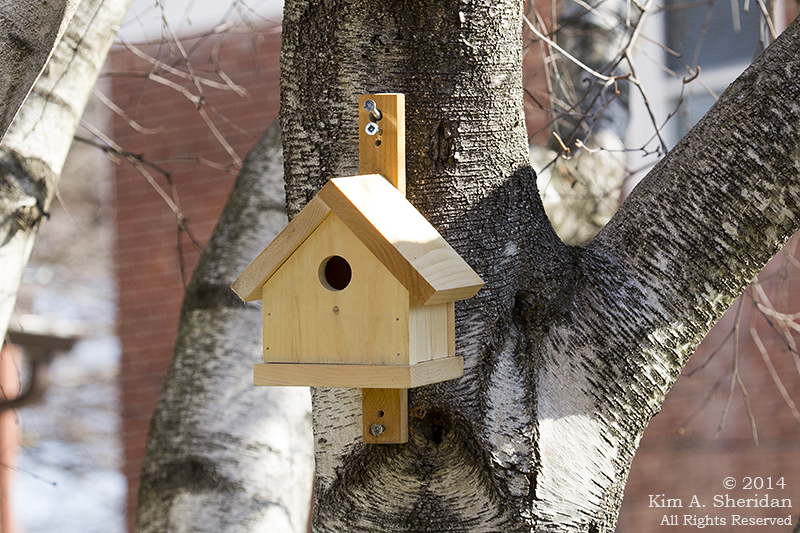
140401_Nest Box Day 1_7793acsApril 1: FOR RENT – CHEEP!
One room condo, great location, close to schools, kind landlady. Perfect for growing family! House sparrows need not apply.

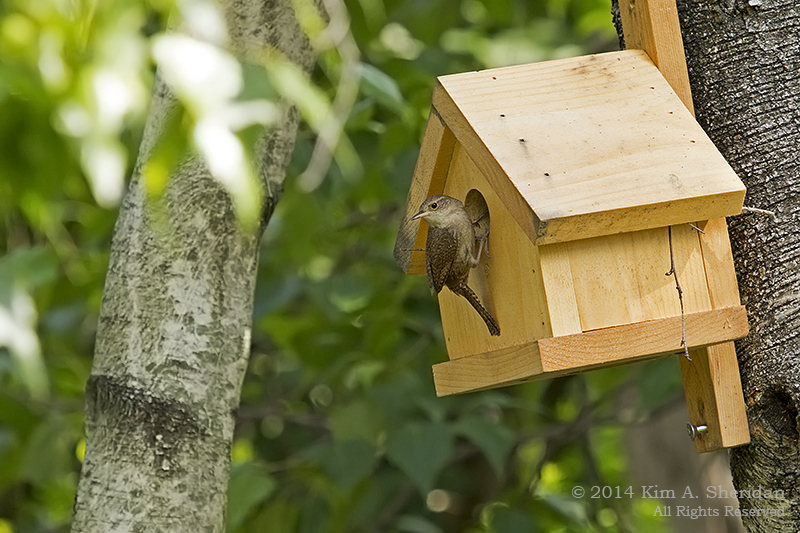
140622_Wren Move In_8806 acsJune 22: Move-in day!

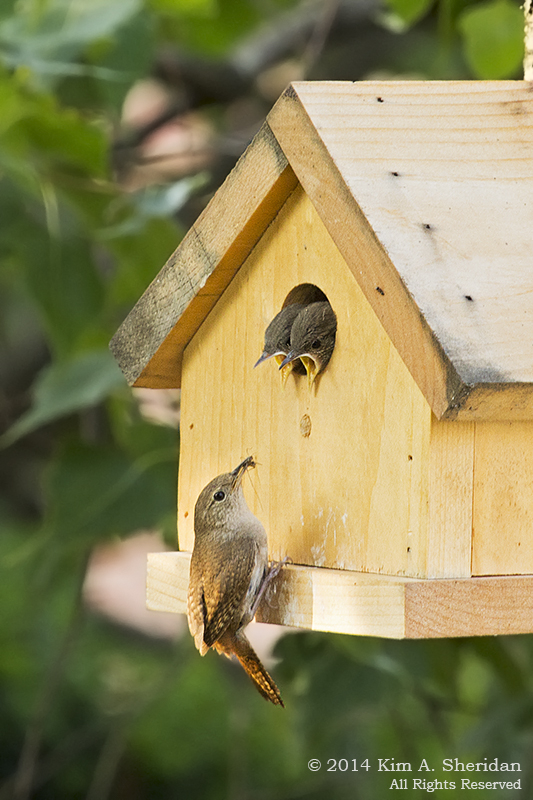
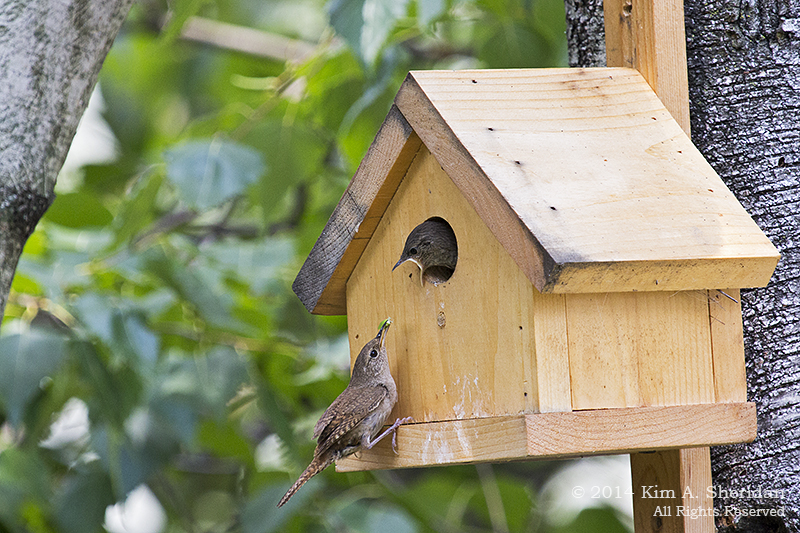
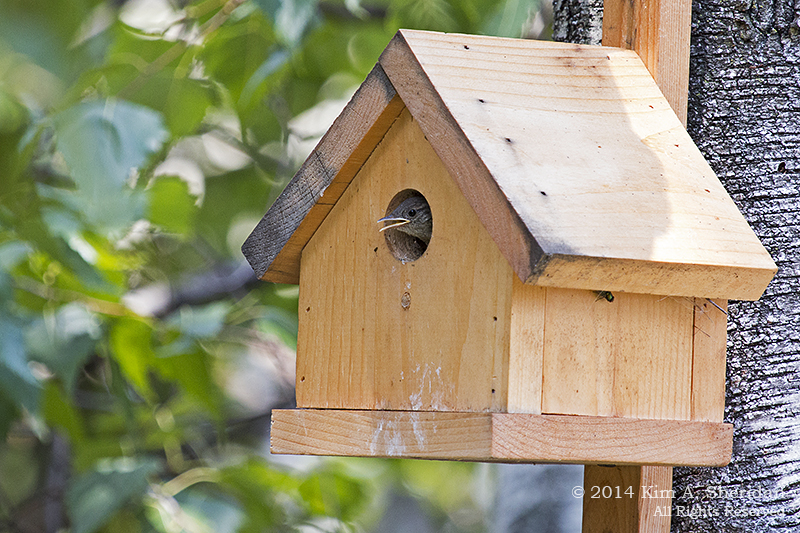
July 21: I’m a baby bird hostess again! Finally there are baby wrens in the nest box. Can’t see them, but I hear their chatter when a parent comes in with food.

140726_Wren Nestlings_4188acs copy

July 26: Feed me!

140727_Wren Nestlings_4520aFeed me!

140727_Wren Nestlings_4509aFEED ME!

140727_Wren Nestlings_4372acsJuly 27: No dessert until you eat your bees!

140727_Wren Nestlings_4453acsThere are at least 3 baby wrens in my box.

140727_Wren Nestlings_4486acsJuly 28: It’s a big wide world out there, little one. Are you sure you’re ready?

Apparently so, my wren babies have left the nest box!

140729_HNWR Evening_4653aJuly 29: Meanwhile, back at the Refuge…other baby wrens are out of the nest and being fed by other harried parents.

The always amazing Circle of Life.

Michigan Rara Avis

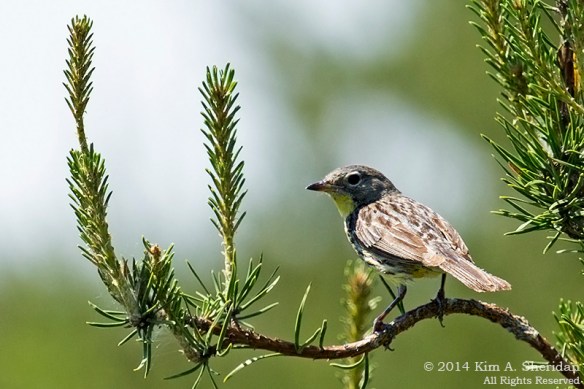
MI Grayling State Forest Kirtlands_8872acsHow far would you travel to see a rare bird?

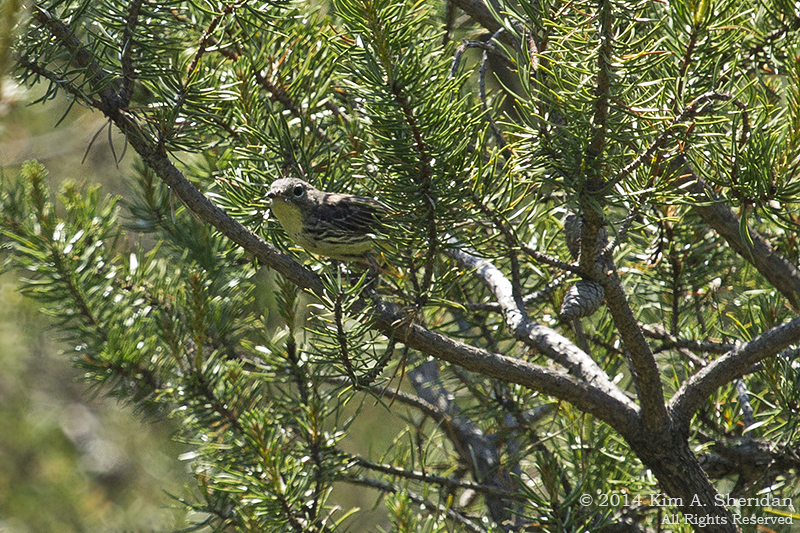
I flew 800 miles and then drove 150 more to see this one: a Kirtland’s Warbler (Life Bird #188).

Okay, full disclosure; I was going to Michigan anyway. I did plan my trip for late June and then drive across the state for a glimpse of this bird, though. I didn’t fool around trying to find this rare, flitty little warbler by myself, either. I took a tour sponsored by Michigan Audubon and led by a very knowledgeable young woman.

What’s so special about this bird that people travel hundreds of miles and take tours to see it?
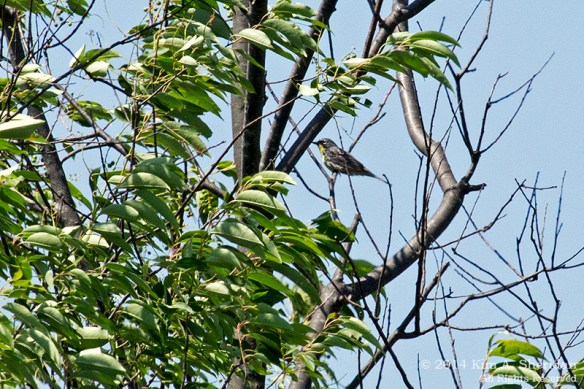
MI Grayling State Forest Kirtlands_8914aKirtland’s Warbler is a Federal Endangered Species, and it nests only in young jack pine forests in Michigan and Wisconsin. It was listed as an Endangered Species in 1967. In 1973 the Kirtland’s Warbler Recovery Team was created, with representatives from the U.S. Fish and Wildlife Service, U.S. Forest Service, Michigan Department of Natural Resources, Michigan Audubon and other organizations. The following year 167 singing male warblers were recorded, a record low number.

Conservation measures enacted by the Kirtland’s Warbler Recovery Team are working. In 2011, 1,828 singing males were recorded, well beyond the plan goal of 1,000. In fact, the number of warblers has exceeded the recovery goal for over a decade.

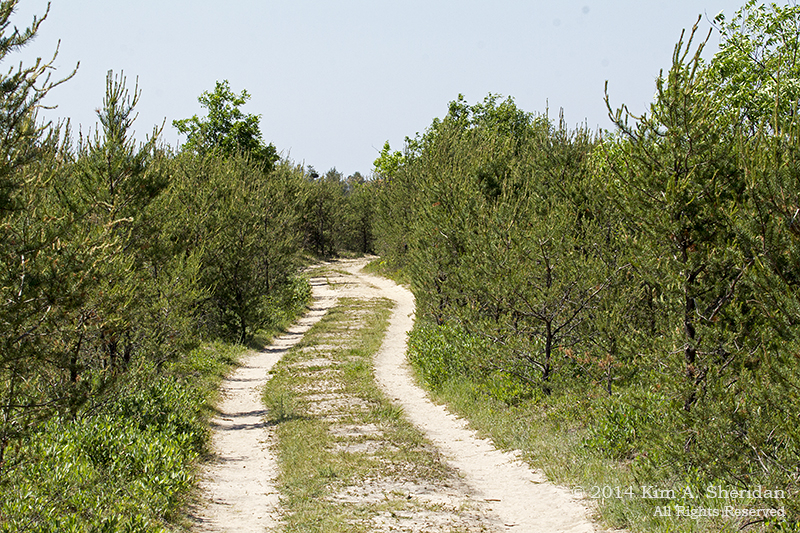
MI Grayling State Forest Jack Pine_8868aTwo-track road through a jack pine plantation in Grayling State Forest, an area actively managed for Kirtland’s Warbler.
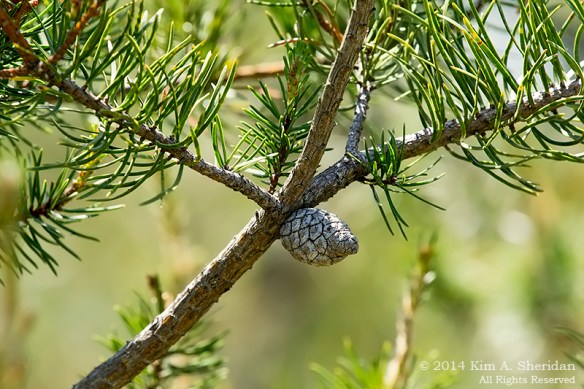
MI Grayling State Forest Jack Pine_9039acsPine cone of a jack pine tree. See how it’s closed up, with its seeds still inside? This is a serotinous cone. It only opens and drops its seeds under the high temperatures of a wildfire. Jack pines have adapted to take advantage of frequent fires.
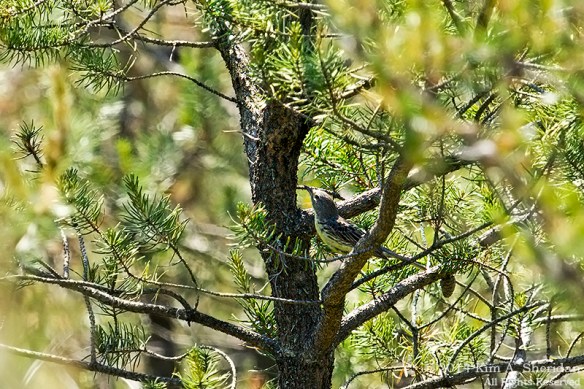
MI Grayling State Forest Kirtlands_8892acsKirtland’s Warblers have adapted to take advantage of jack pines. Young pines, that is. They nest on the ground under cover of the drooping lower branches. One pair needs at least 8 acres, and maybe as much as 30, of small pines. Once those trees reach twenty feet, the birds no longer nest there. Historically, frequent wildfires maintained this young jack pine habitat. Since this is the only tree the warblers nest in, they are dependent not only on jack pines, but frequent fire.

Except that fire is a tricky thing to manage. In 1980 a controlled burn got out of control and led to a wildfire that burned 25,000 acres and killed a USFS biologist. So now the Recovery Team relies on that nemesis of many environmentalists, clear-cutting. Areas of about 4,000 acres each year are logged and replanted with jack pine seedlings on a rotating basis, ensuring that there is always suitable habitat for the Kirtland’s Warbler.

Also, Brown-headed Cowbirds frequently lay their eggs in Kirtland’s Warbler nests, leading the warblers to raise cowbirds rather than their own young. So cowbird control is a critical part of the plan.

MI Grayling State Forest Kirtlands_8901acsEven though the Kirtland’s Warbler has exceeded its recovery goal, the need to suppress natural wildfires to protect life and property means that continued management with human intervention will be needed. But it’s not just this little half-ounce warbler that benefits. Young jack pine habitat is beneficial for wild turkeys, badgers, white-tailed deer, snowshoe hares, numerous birds and at least two threatened plant species.
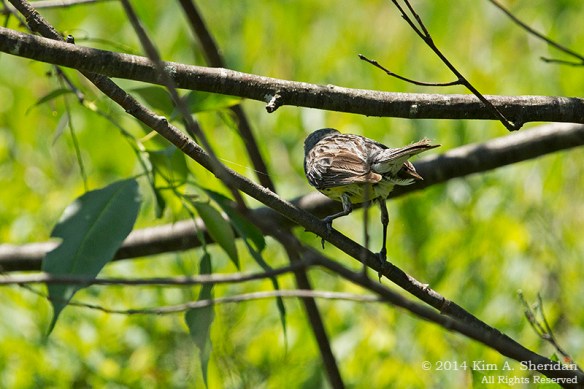
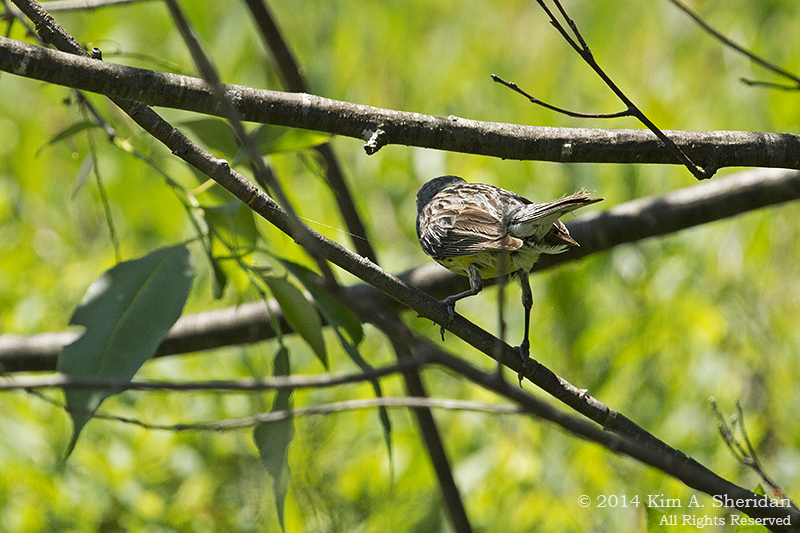
MI Grayling State Forest Kirtlands_9054aOh, it figures. My closest and sharpest photo of a Kirtland’s, and what do I get? A bird butt! Turn around, please…

Please?

MI Grayling State Forest Kirtlands_9055aThat’s better, but now there’s a stick in the way. Move a little to the left, please?

These fashion models, they’re just so flighty.
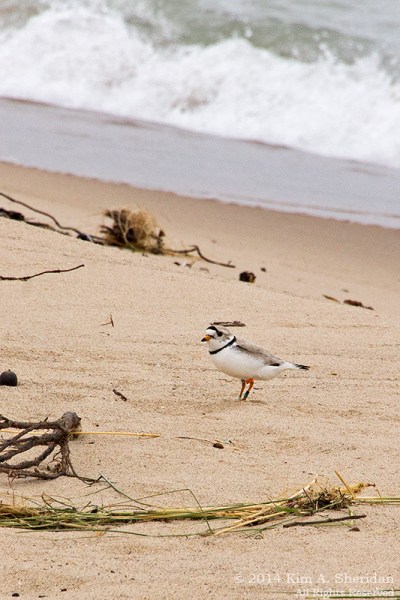
MI 2 Buttersville South Breakwater_9960acsHere’s a bird I did not plan for. This is a Piping Plover (Life Bird #189). I found him in Buttersville Park, just south of the Ludington South Breakwater.

On the Atlantic Coast Piping Plovers have Threatened status, but in the Great Lakes region they are officially Endangered. These little guys like to nest right on the beach and dunes, in cobblestones or sparse vegetation. Humans and pets using the beach disturb the birds, sometimes leading to nest abandonment. In addition, people and vehicles may accidentally crush eggs or tiny young chicks. Add in predation by wild animals and habitat loss due to beach development and it’s no wonder this tiny bird is in trouble.

People are helping the Piping Plover, though. Nesting habitat is identified and monitored, with human access restricted where necessary. Active nests are fenced to keep people and predators out.
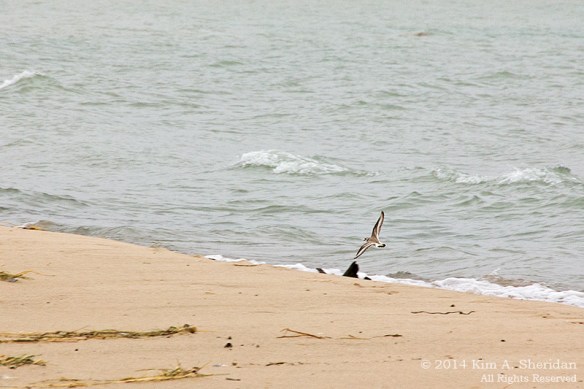
MI 2 Buttersville South Breakwater_9976aWait! Don’t fly away mad!

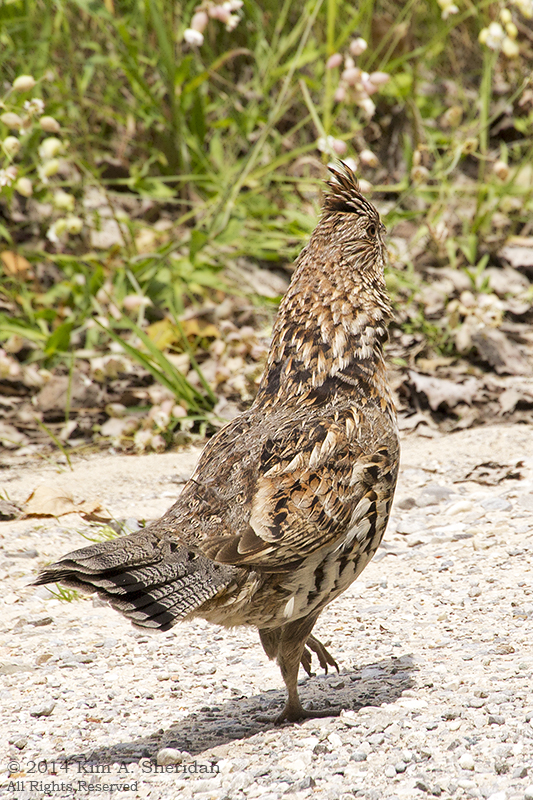
MI 4 SLBE Port Oneida Grouse_0916aAnother completely unexpected bird, this Ruffed Grouse (Life Bird #190) is anything but rare. In fact, they are widespread all across the U.S. They are really elusive and hard to see, though – in some areas.

My friend Don, convinced he’ll never see a Ruffed Grouse, has made it his life’s goal to hear one drumming in its spring courtship ritual.

Imagine his surprise when I e-mailed this photo taken at Sleeping Bear Dunes National Lakeshore.
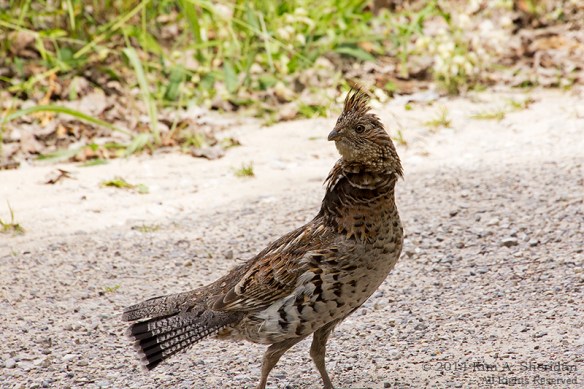
MI 4 SLBE Port Oneida Grouse_0892acsFor that matter, imagine my surprise when I turned down a dirt road and came upon this bird strutting around. It paraded slowly down the road for quite some time while I took photos right from the front seat of my car. It didn’t seem at all concerned by my presence. It appears that, unlike shy Eastern grouse, Midwestern birds are much bolder.

MI 4 SLBE Port Oneida Grouse_0890acs

I’m ready for my close-up now.

Nesting Instinct

HNWR Goose Nest_0455 acsWell, what’s with Miss Grumpy? Here she is giving me the old stare-down. What’s got her tail feathers in a twist?

She’s sitting on eggs, that’s what. For some reason she decided to build her nest awfully close to one of Heinz Refuge’s trails. A heavily traveled trail at that, especially in the heart of warbler migration season. She got very little privacy as she incubated the next generation of Canada Geese. Geese are known for being aggressive at times. Fortunately for Refuge bird watchers, she wasn’t going to leave that nest unattended.

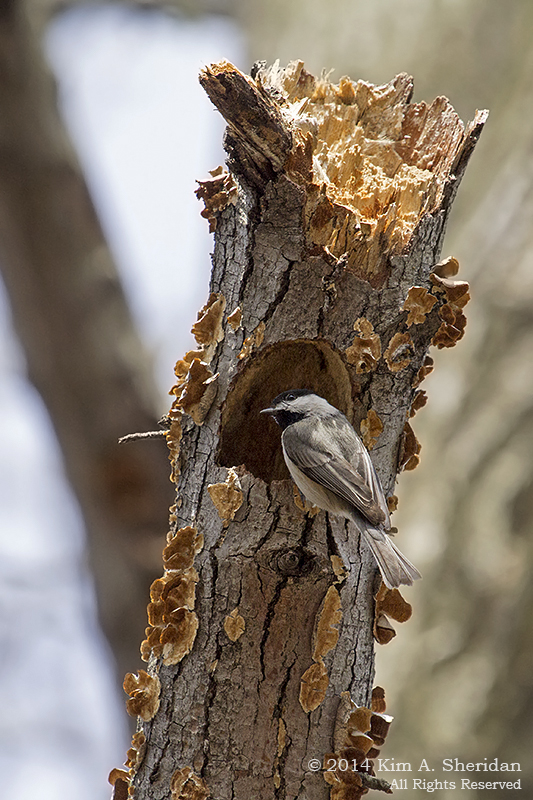
HNWR Chickadee_0041 acsNearby a pair of Carolina Chickadees were moving into a nice home in an older development. Chickadees are a personal favorite, and I was looking forward to seeing these two raise a family. Darned if I could find that tree again, though.

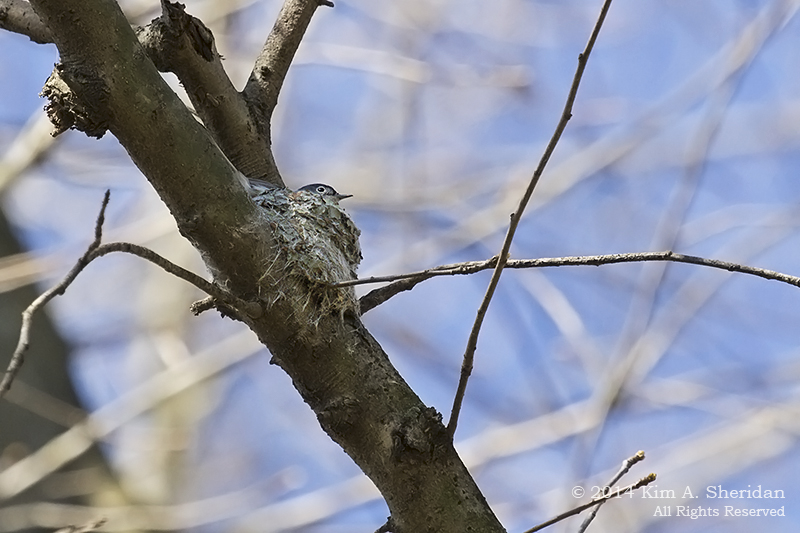
HNWR Gnatcatcher_4976 acsBlue-gray Gnatcatchers were really busy building nests all around Heinz during late April. We watched this one pick up pieces of a spider web to fortify the construction.

HNWR Eagle_9390 acsNot every nesting attempt is successful. This was the fifth season our resident Bald Eagles have incubated eggs at Heinz. Unfortunately, about the time the eggs were expected to hatch, the adults stopped sitting on the nest. They would never have abandoned viable eggs or nestlings. Something went wrong, but just what remains a mystery. It’s not uncommon for Eagles – or any other bird – to have a nest fail occasionally. Sad, but a part of life in the wild. The Eagles are still around, and they will try again next year.

HNWR Owlet_1189 acsGreat Horned Owls returned to a favorite place at the Refuge. Here’s the result, a bouncing baby owlet. This was taken in late April, when he was still covered in down and looked much like a Muppet. A few weeks ago he started “branching”, moving out of the nest to nearby branches in preparation for his first flight.

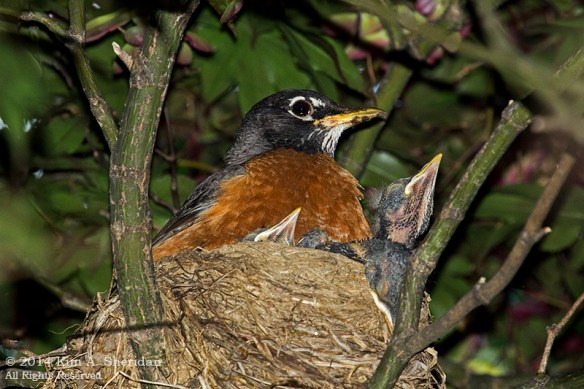
Meanwhile, back at my house in the suburban wilds, I watched as an American Robin with a beak full of caterpillars flew into the red maple tree that stands in front of my porch. Sure enough, I found the tree occupied by a nest and four baby robins.

Robin Nest_9888 acsWhen I first saw them on a Sunday evening, they were only partially feathered, with heads that barely reached over the side of the nest. Both robin parents share in the care of the babies. Every time Mom or Dad appeared, the little ones craned their heads on wobbly necks and opened their beaks in hopes of something yummy. Then they would go quiet until the next food delivery a few minutes later.

Robin Nest_9915 acsThey kept both parents hopping from sunup until nightfall, when Mom and her brood finally settled in for the night.

Robin Nest_0310What a difference a few days makes! By Friday the chicks were fully feathered and much larger. The nest was overflowing with birds! When one youngster turned around and flexed his wings, the others were pushed to the side of the nest and looked as if they might fall out completely.

Robin Nest_0088 aThey still looked to their parents for all their needs.
FUN FACT: Robins eat insects and fruit, with a preference for insects in the morning and fruit later in the day. Ever seen a robin run a few feet across a lawn, stop and cock his head? He’s listening for worms; robins find a lot of their prey by hearing its movements underground. In the fall, when fruit is a larger part of their diet, they may overindulge in ripened and fermented berries, and become intoxicated.

Robin Nest_0272I knew it was only a matter of time before the kids left home. Young robins stay in the nest about two weeks, and time was almost up. Sunday night the nest was empty. Juvenile robins still need to be fed for awhile, and it will take them up to two weeks to become good fliers. After they left the nest, the chicks scattered; one in my tree, another in a neighbor’s, the last two who knows where. Four times the work for Mom and Dad! The parents are still protective, too. I saw one chase a squirrel all the way across the street. Five days after fledging, I watched a parent feeding one of the youngsters in my garden. When this group of siblings is independent, the parents will likely nest again; robins normally have two to three broods a year.

Raising a brood of hungry growing chicks is demanding, time-consuming work. Knowing what she has in store, perhaps our Mother Goose could be forgiven for being a little grumpy!

Campfire Tales

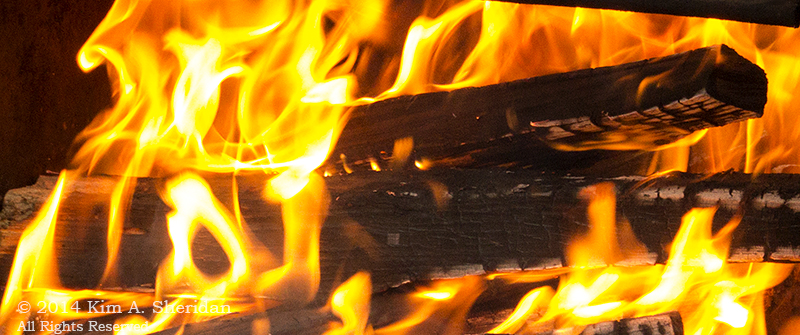
Nockamixon Camp Chow_7729The twilight falls gently with a wisp of cool breeze, indigo sky playing peek-a-boo in the spaces between the trees. Hush! Be still and drink in the evening. Listen to the crackle and hiss of the campfire, see the tongues of flames dancing, sparks spiraling upwards toward the stars they yearn to be. Breathe deep of the tangy scent of wood smoke, the flowering trees, the rich earth.

Nockamixon Cabin_7985 acsIt is the enchantment hour, a quiescent moment suspended betwixt sunshine and moonbeams. Now is the time to tell tales of today and of days of yore.

Friends have gathered at lakeside cabins to spend a rustic weekend in the woods. What adventures will this motley crew undertake? What stories shall we hear at this fire?

Nockamixon Fishing Pier_8239 acsThe blue waters of Lake Nockamixon beckon our campers to explore on a pontoon boat. Haycock Mountain looms on the horizon, and osprey and eagles ride escort for the boat as it plays tag with unwillingly cormorants.

Nockamixon Fishing Pier_8144 aAt the water’s edge an Eastern Kingbird perches sprightly on a gray-barked branch. In his dark ash suit and white waistcoat, he looks the part of a nattily attired young businessman.

Nockamixon Fishing Pier_8187 acsLook sharp! There a Northern Water Snake, on business of his own, slithers out of sight.

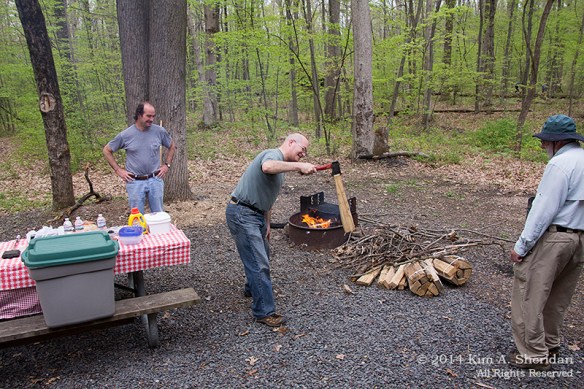
Nockamixon Camp Chow_7687No camping trip is complete without the nightly campfire. Preparation requires skill, dexterity and, with luck, no bandages.
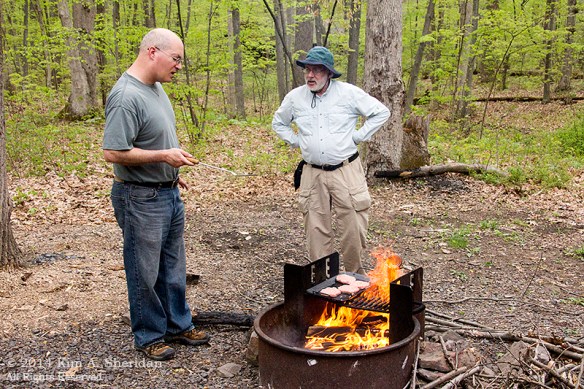
Is it the wood smoke or the fresh air that makes a dinner of hamburgers and hotdogs taste better when cooked over an open fire?

Nockamixon Camp Chow_7726 acsEach meal on this weekend comes with an appetizer of impassioned discussion. Eavesdrop now as the debate rages over the finer points of burger-flipping. Soon these two, innocent of the temptations of s’mores, will lose their dessert virginity to the siren’s call of marshmallows and chocolate.
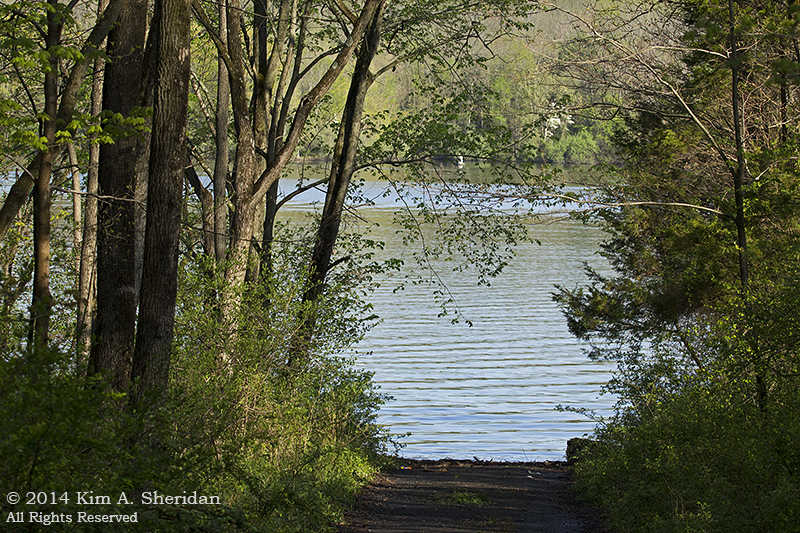
An evening in the woods offers the chance to experience the sights and sounds of a forest at night. There will be owls hooting, foxes barking and ruffed grouse drumming, while the Milky Way arches brilliantly overhead. Or perhaps not, for the critters will not cooperate, and the sky is a thick blanket of dark clouds. The Milky Gray!

Instead, a brightly lit fishing boat takes a short tour. During its voyage, a kayak and its paddler materialize from the darkness beyond the shore.

Nockamixon AM Walk_8106 aDaylight brings new adventures. Hikes are taken down paths through verdant woods, fallen pines and rocky slopes. Powwows are held over the identity of this or that plant. The flock’s incurable wanderer strays from the trail, and must be shepherded back like a lost little lamb.

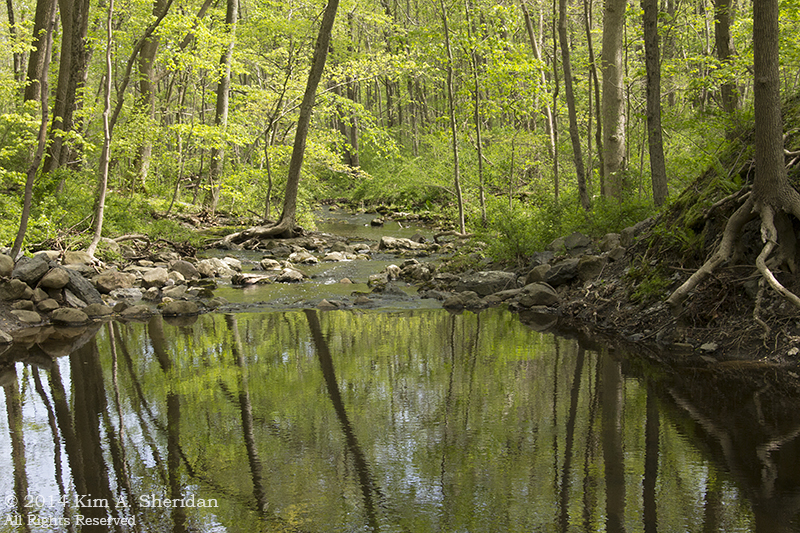
Nockamixon Old Mill Trail_8325 acsAlong the way a creek bubbles through moss-bound rocks, calm pools and swampy meadows before tumbling over a dam to find its rest in the lake.

Tohickon CollageSome spend a morning exploring the park by horseback. Others go on a driving tour around the lake. Treasures revealed on this sojourn include a bright red barn, the watery geometry of a dam spillway, and an eccentric old church. Behind the church, gravestones inscribed in German march in disorderly rows, leaning this way and that. Further on, Covered Bridge Road surprises with an actual covered bridge. An old grist mill and antique car are additional delights.

A steady rainfall late in the day is not to be lamented, but enjoyed from the sanctuary of the cabin porch. Dry and cozy, the gentle patter of raindrops on the leaves is balm for tired souls. The wetness does not deter from another campfire after dark, and another round of story-telling.

Nockamixon Cabin_8006 aThe morning after the rain dawns with clear blue skies above the tree canopy. Below, the cabin hides behind an ethereal mist.

Moisture glistens on every leaf, and drips from every leaf tip, sunlight refracting into a rainbow of colors.

From everywhere bird song echoes through the woods. A ray of bright red reveals a scarlet tanager; an iota of orange, an orchard oriole.

A clear two-note song rings out from all directions. A search for the singer is met with success. Ovenbird, a lifer!Nockamixon AM Walk_8003 acs

To walk out the front door into a deep wood filled with chattering birds and rippling creeks is perhaps the greatest gift of this weekend idyll. Too soon the fire burns low, the tales draw to a close, and the road leads out of the woods toward civilized society. As the lake recedes in the rear-view mirror, the inevitable end-of-camp blues set in.

Memories must sustain us until the happy day when we shall return, when trails to explore unfold before us and campfires flicker anew.Nockamixon Cabin_8020 a

Essence of Gold

Tyler Flowers_8591 a

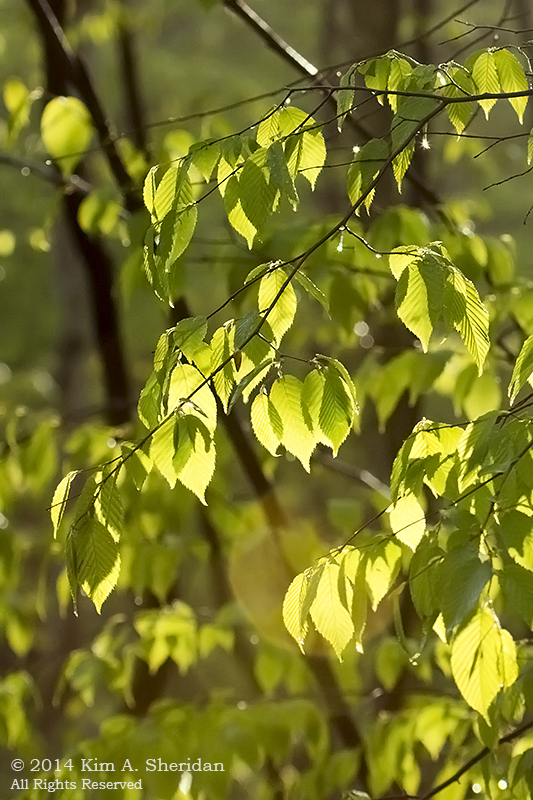
Nature’s first green is gold,

Her hardest hue to hold.

Her early leaf’s a flower;

But only so an hour.

Then leaf subsides to leaf.

So Eden sank to grief,

So dawn goes down to day.

Nothing gold can stay.

-Robert Frost

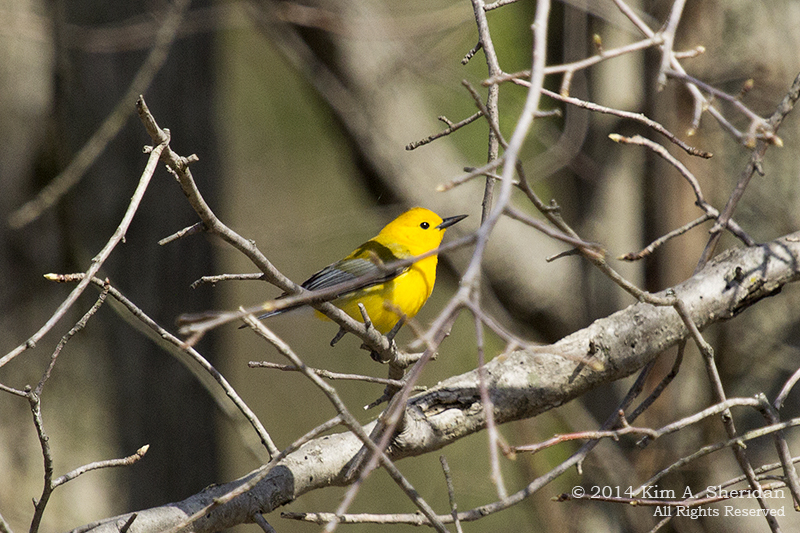
HNWR Warbler Prothonotary_9247 acsProthonotary Warbler

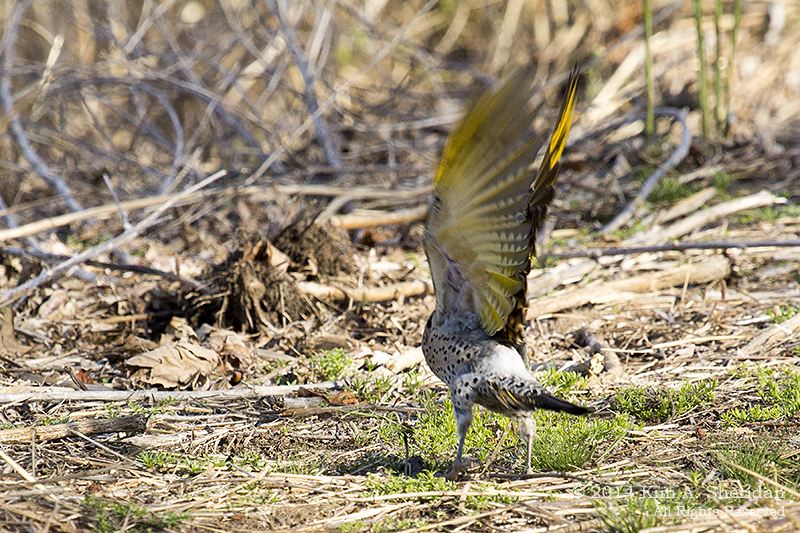
HNWR Flicker_9449 acsNorthern Flicker, showing why it is known as “Yellow-shafted Flicker”

HNWR Warbler Palm_9707 aPalm Warbler

HNWR Bee Redbud_0162 aBumblebee on redbud blossoms

HNWR Sparrow Savannah_0343 aSavannah Sparrow

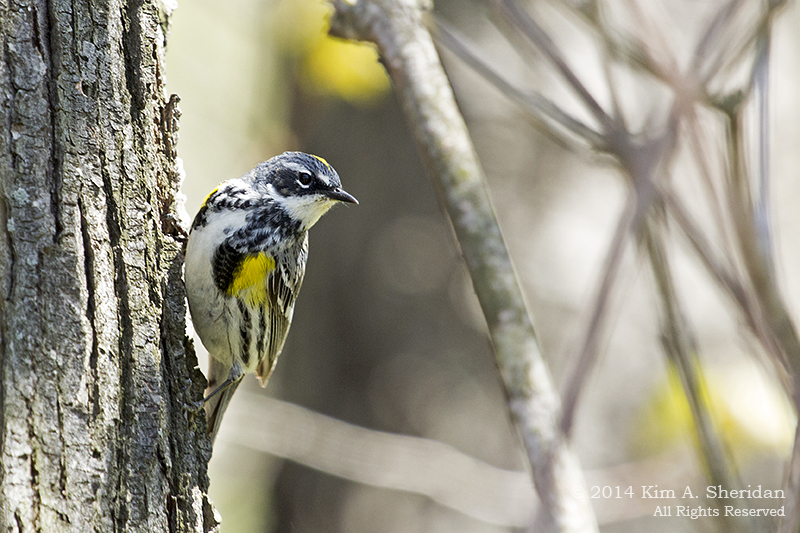
HNWR Warbler YeRu_5420 acsYellow-rumped Warbler

HNWR Warbler YeRu_5437 aYellow-rumped Warbler, showing the yellow rump

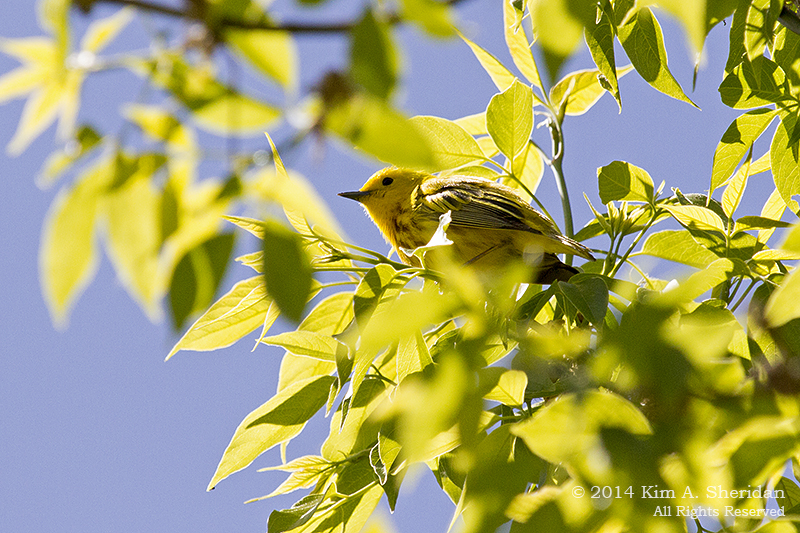
HNWR Warbler Yellow_5327 aYellow Warbler

Mt Cuba_6194 a

The golden days of Spring, soon to give way to the deep green of Summer

Mt Cuba_6557 acs

The Five O’clock Flock Rock

Critter Radio Logo v3Good evening, critters! This is KRTR 99.9 FM Critter Radio!
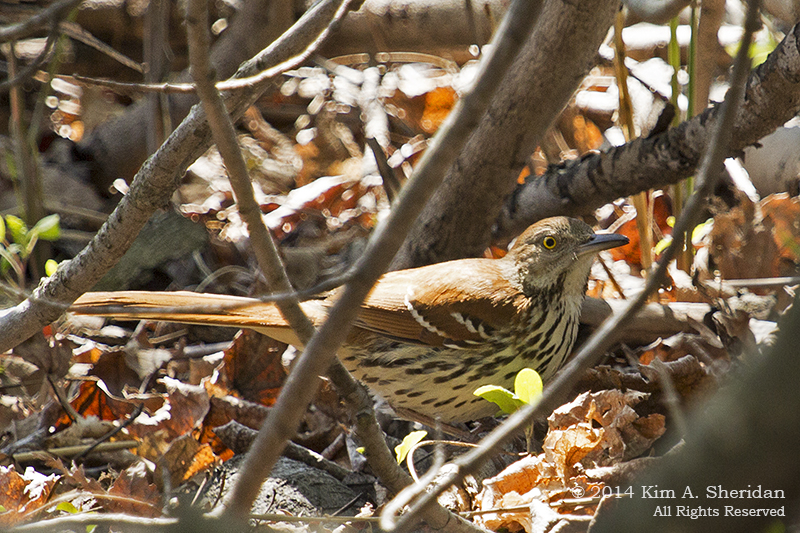
HNWR Thrasher_9454 acsI’m Thrasher Locke, the top jock on the avian block. Welcome to the Five O’clock Flock Rock, where we take stock every Thursday of the tunes that make our listeners swoon. Now that spring has finally sprung, our intrepid band of roving reporters is roaming the Refuge, rounding up requests from right and left.

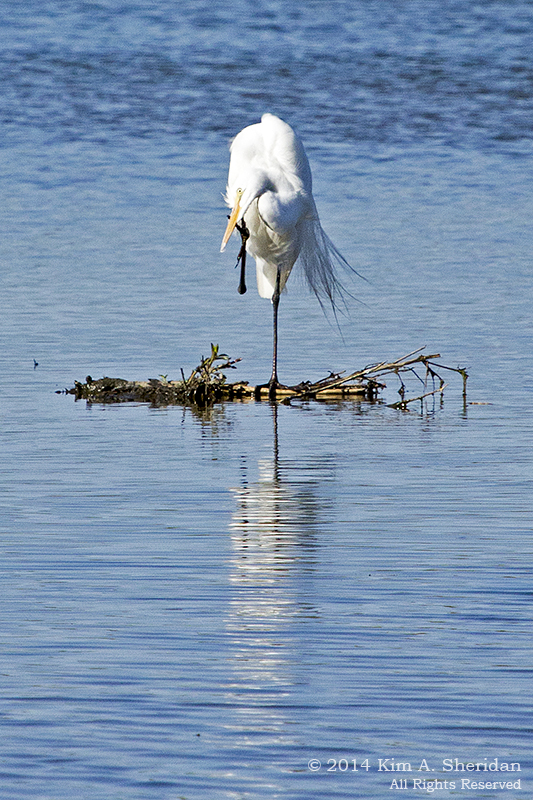
HNWR Egret_1243 aWell, waddya know?

A request is coming through my Egret tech’s earpiece right now!

Let’s get this party started, shall we?

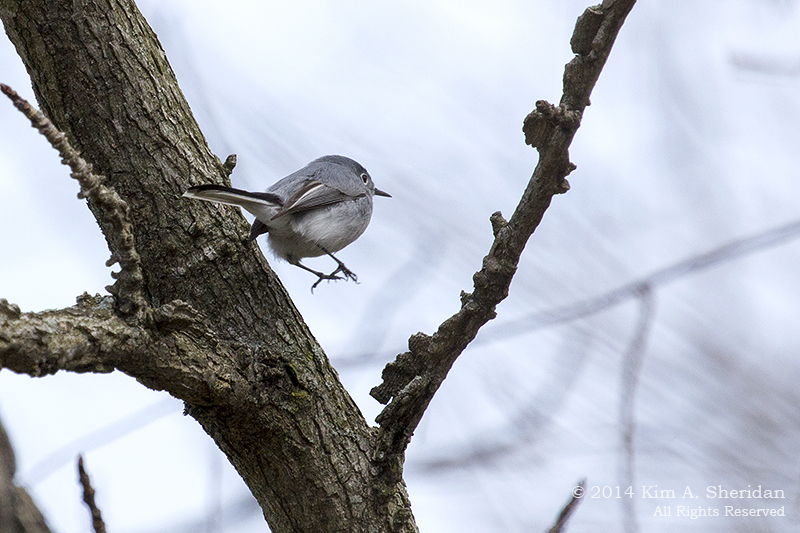
HNWR Gnatcatcher_0122 a And here’s the perfect party-starter, requested by a hearty Blue-gray Gnatcatcher smartly darting from branch to branch: “Jump! (For My Love)”.

HNWR WP Downy_5314 acsAll day long the Downy Woodpecker has been a-hammerin’ and a-drillin’ on the job. Now that the whistle’s blown, it’s time to blow off steam with “If I Had A Hammer”.

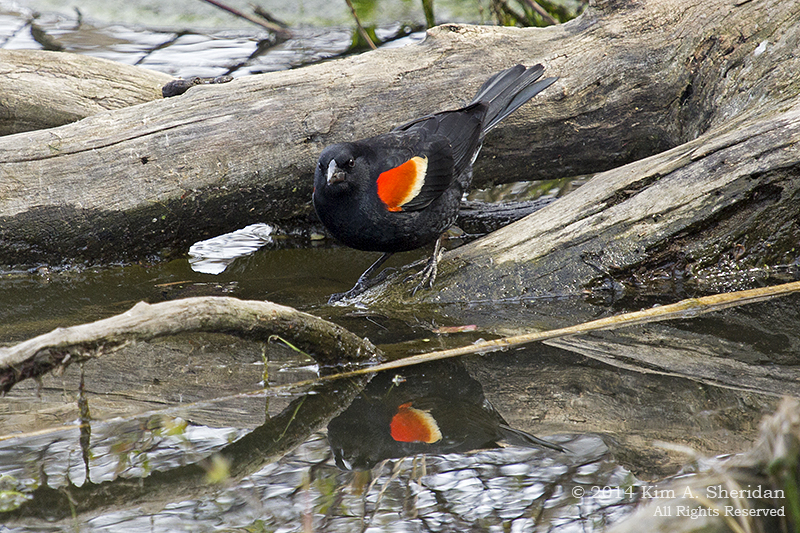
HNWR RWBB_9997 acs Red-winged Blackbirds have always been smart-alecky showoffs, posturing and preening in the tree tops. What would this puffed up poser admiring his reflection at the pond’s perimeter suggest but “I’m Too Sexy”?

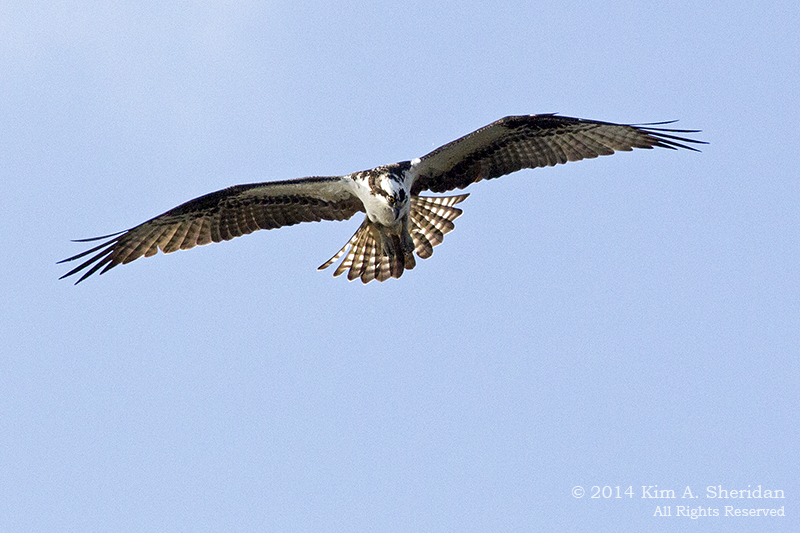
HNWR Osprey_9522 acsDinnertime is nigh, and for an Osprey on the sly, fish are no small fry. Time to fly high in the deep blue sky to “Take A Look Around”.

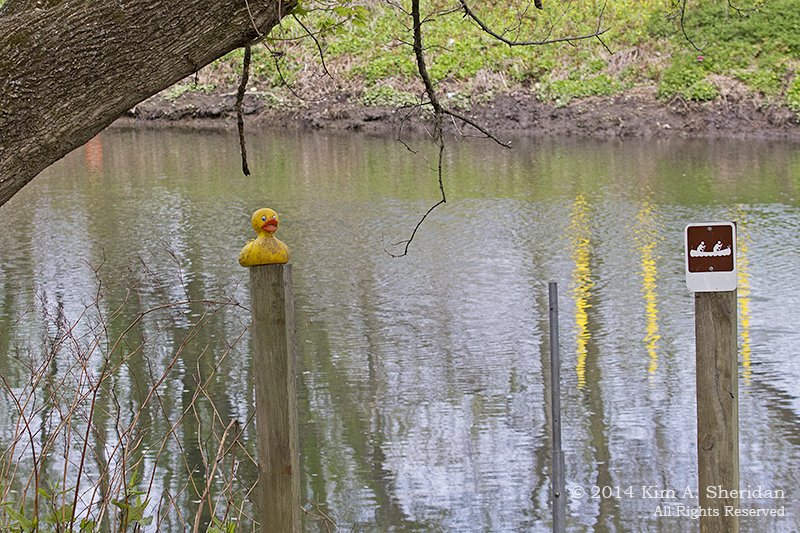
HNWR Ducky_9986 acs There’s a controversial newcomer in the Tinicum Marsh. He claims to be a new subspecies of Yellow Warbler. The locals say he’s full of hot air. Scolding songbirds suppose that “Rubber Duckie” will set him straight.

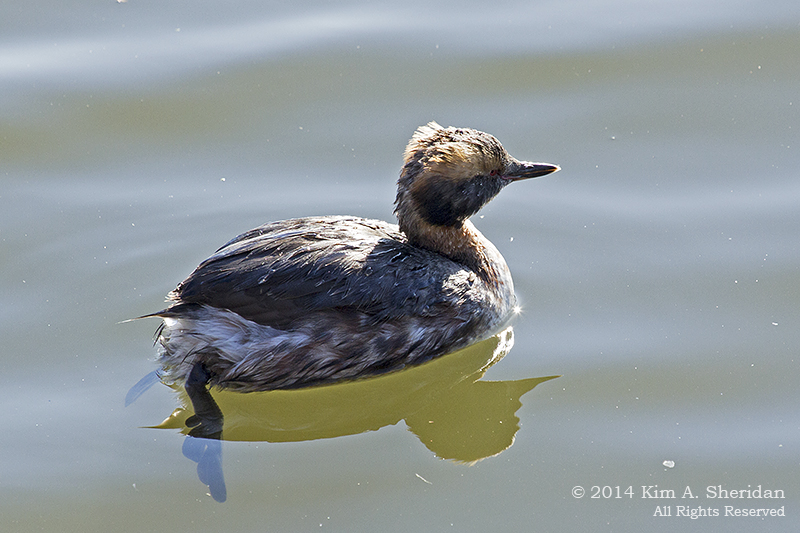
HNWR Grebe_8434 a Horned Grebes are groovy dudes. This bohemian bird by the boardwalk can’t bear the bickering and believes “Bridge Over Troubled Waters” will smooth some ruffled feathers.

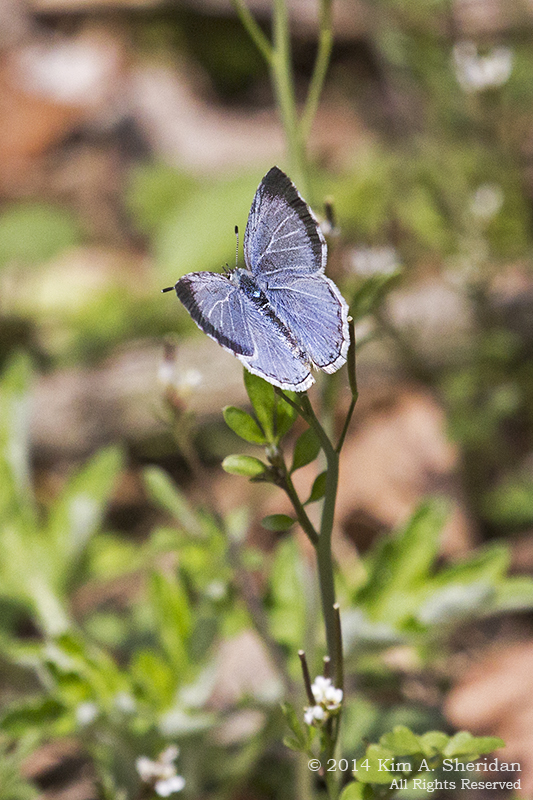
HNWR Butterfly_9952 acs Butterflies are similarly sensitive, the gentle peacemakers of meadows and woods.

This Spring Azure means to maintain the mellow mood with “Blue Velvet”.

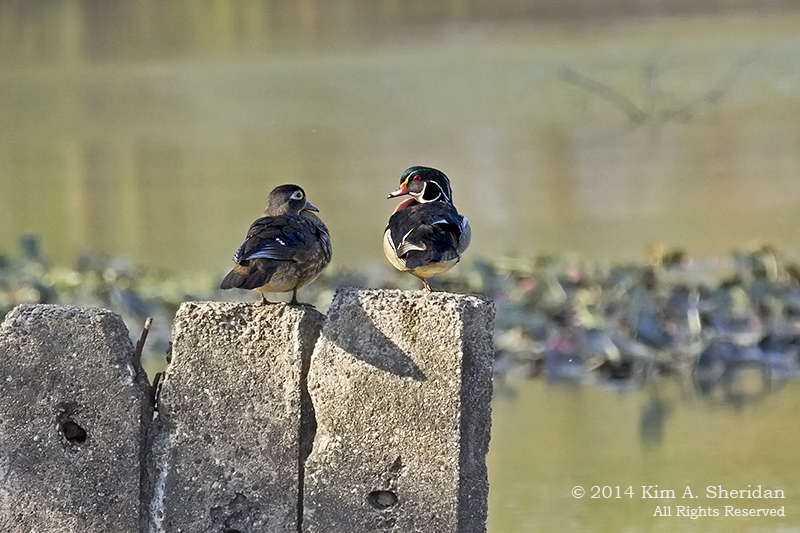
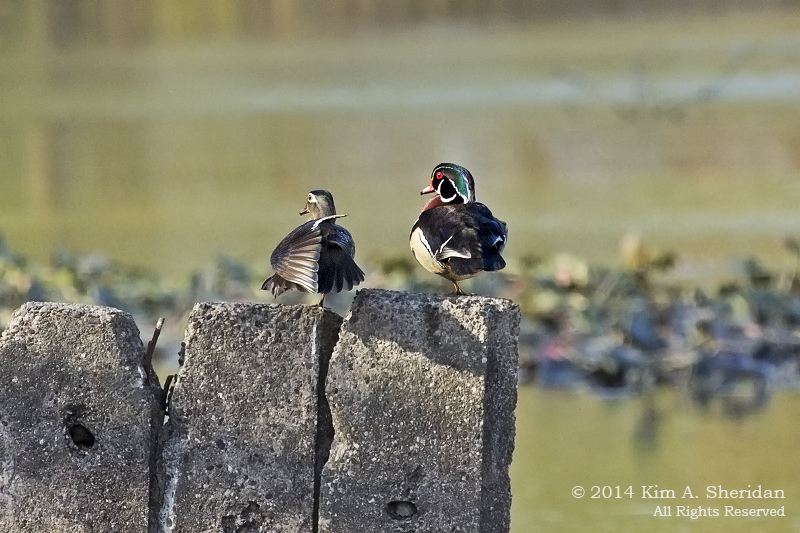
HNWR Wood Duck_1281 acsBack on the lake, it’s make or break for a Wood Duck drake with romance on his mind. “I Only Have Eyes For You” is the song of choice to woo his lady love. Surely this champion charmer will sweep her off her webbed feet.

HNWR Wood Duck_1320 acs No such luck! This lady duck has too much pluck to be stuck with sappy love songs. She just wants to dance! Cue up “Shake Your Groove Thing” for this disco mama!

HNWR Swallow_9815 acsThe feathered flock has the final word as the Five O’clock Flock Rock comes to a close. As the swallows knock their socks off to “Rock Around The Clock”, we’ll shimmy off into the shadows. Never fear, our roving reporters will be here, out and about next Thursday to see who’s rockin’ at the Refuge! I’m Thrasher Locke the avian jock here on KRTR 99.9 FM, Critter Radio, keeping it funky and keeping it wild!

Little Park on the Prairie

Fort Worth NCR Landscape_8216acs

Fort Worth NCR Grass_8111 aDeep in the heart of Texas’s largest metroplex is the Fort Worth Nature Center and Refuge. Its 3,621 acres include a number of different habitats, from lake and river to marsh, woodland to prairie.

The Visitor Center offers exhibits and educational programs, and there are miles of trails to explore.

All this in a city-owned and operated nature center that has been a National Natural Landmark since 1980.

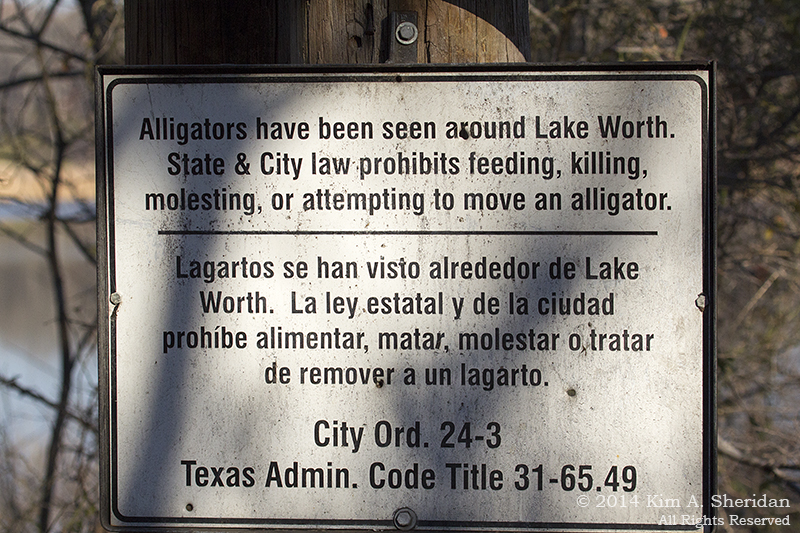
Fort Worth NCR Landscape_7982 a Fort Worth NCR Sign_7991aBison have their own range to roam here, and prairie dogs have a town. Other critters that call the Nature Center home include armadillos, raccoons, bobcats, deer, opossum, beaver, lizards, snakes – and alligators!

I didn’t see an alligator, and I don’t know whether I am sad or glad about that. All I saw of the bison were the calling cards they left behind. No bobcats, or lizards.

And not one dang armadillo!

Fort Worth NCR Landscape_7998a

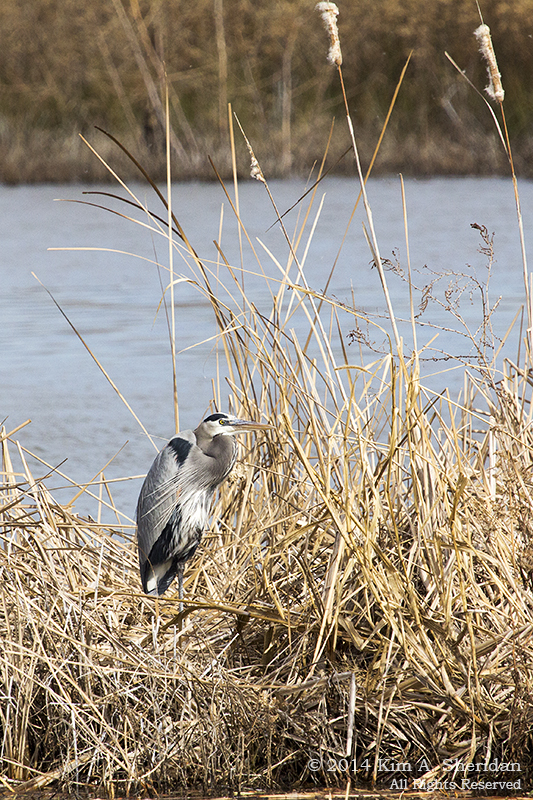
Fort Worth NCR Bird_8087 a I did get to see ducks, cormorants and herons on Lake Worth. Great Blue Heron, at left.

Fort Worth NCR Landscape_8108 a This is the West Fork of the Trinity River, which flows into Lake Worth. A kayaker paddled slowly past. Surely he had the best views of the day. There was a small mob of cardinals moving through the trees at the river’s edge. It was the most cardinals I’ve ever seen in one place before.

Fort Worth NCR Cowboy_8182 aWhat a REAL cowboy in Texas does is drive to a place of natural beauty on a blue-sky day. Then proceed to dry-wash and wax his car in the parking lot. In his Stetson.
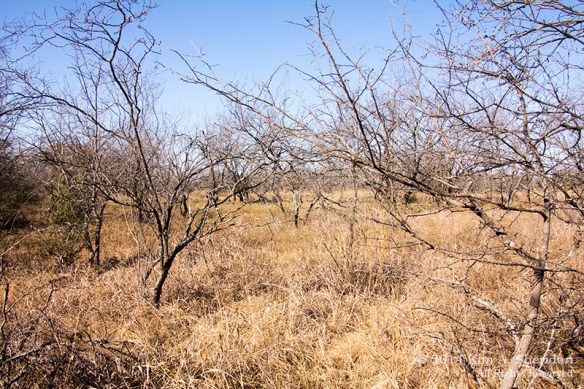
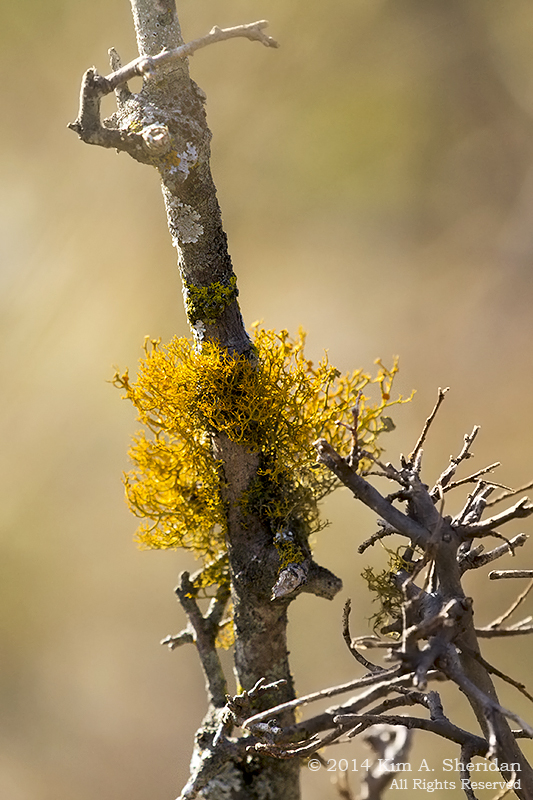
Fort Worth NCR Landscape_8251 acs My favorite landscape here at the Nature Center was the prairie. To my Eastern eyes, it’s exotic. Full of grasses, odd plants, and small twisted trees.Fort Worth NCR Landscape_8270 aFort Worth NCR Plant_8535 acs Fort Worth NCR Grass_8513 a

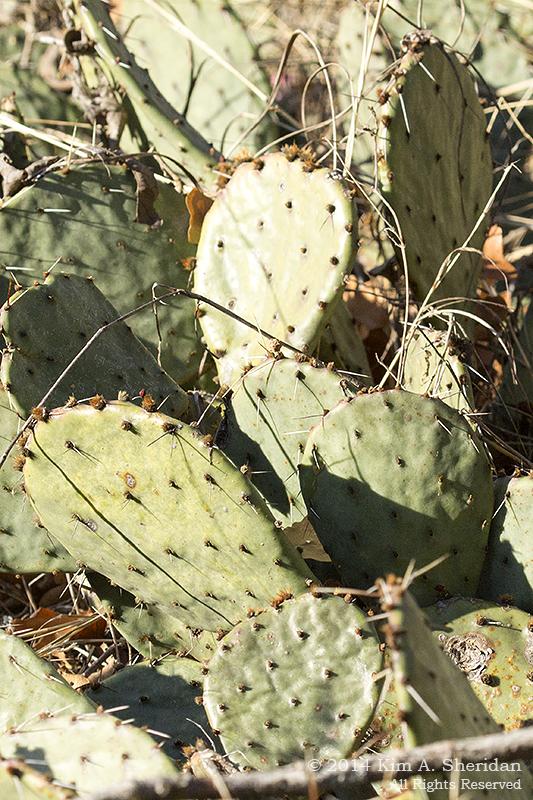
Fort Worth NCR Cactus_8036 acs Cactus.

Of course.

Fort Worth NCR Rock & Dirt_8254 acsThe red dirt was pockmarked with the footprints of strange creatures. At first I thought these might be the tracks of a feral pig, which are abundant in Texas. Upon reading a little about it, I learn that the dewclaws of the pig, which are the small impressions in the lower right of the track, are usually spaced wider than the main hoof.

This track likely belonged to the more familiar animal below.

Fort Worth NCR Deer_8557 acsA lone deer grazes contentedly as the sun sank low in the sky. She seems unaware of the highways and overpasses, gas stations and strip malls of the city so close. For her, and other inhabitants of the Fort Worth Nature Center, life is good here on the wild edge.

Waiting

HNWR_7534acs2 There is a moment during the approach of a summer thunderstorm when nature teeters on a razor’s edge. To the east, the sky is a brilliant blue; to the west, dark storm clouds boil. In between, just for an instant, everything stops. The wind dies, squirrels go still, birds cease their chattering. The air is thick with tension, quivering with electricity and the promise of the storm to come. Soon enough the wind will rise and the heavens open. But in this serene snippet of time, Nature is hushed, holding her breath… waiting.

Early spring is equally on the cusp, at the meeting place of seasons. The frantic weeks when the trees and plants explode with flowers and new greenery are the future. The winter coat of brown the land still wears is the past. But now the sky is blue, and the sun is warm. On days such as these, it seems that humans and wildlife alike are filled with anticipation. Waiting.

Buds Magnolia_7861acsYoung spring buds of the magnolia dream of being flowers. The first bee of the season dreams of the flowers to be. Waiting.

Tyler Flowers_7646acsTyler Frogspawn_7677a Promise in a jelly filling floats in vernal bogs and pools. These are the eggs of the wood frog. Each dark spot holds the potential of a tadpole, each tadpole the hope of a frog.

Tyler Frog Wood_7753acsMale wood frogs, having passed the winter in a state of frozen animation, are alive and looking for love. Waiting.
FUN FACT: Wood frogs make antifreeze! They survive the winter by freezing, their metabolism shutting down and their hearts stopping. A special antifreeze substance they manufacture limits the freezing of their cells, although ice does form in between the cells. When the weather warms up, they thaw out and go in search of mates.

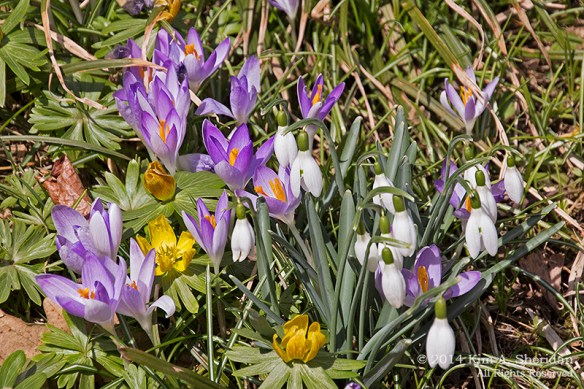
Tyler Flowers_7620aTyler Flowers_7609a Early blooming flowers like snowdrops, crocus, and winter aconite bring a welcome splash of color to a drab landscape. For them, the wait is over; this is their time to shine.

Nest Box Day 1_7793acs A new home has been constructed, in hopes of attracting a feathered family. Waiting.

Flowers Scilla_7823aCali_7901acsA sleepy dog in the sunshine waits for nothing, content to be in the moment.

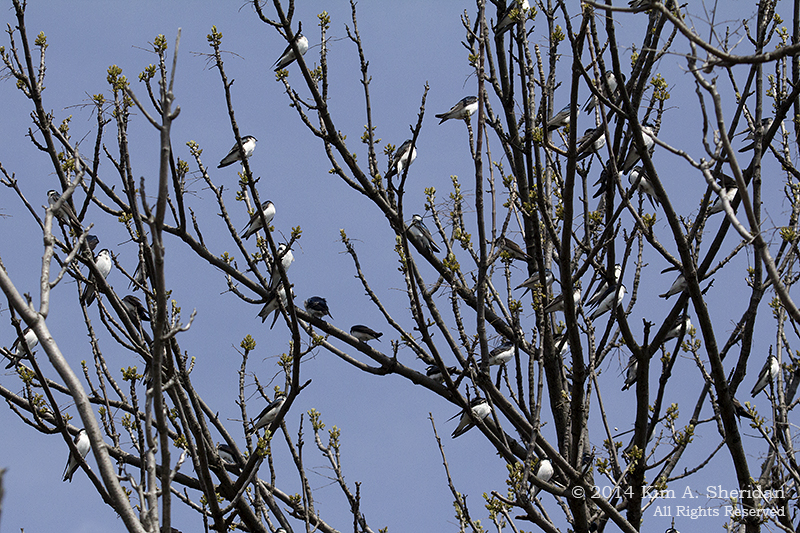
3 HNWR Tree Swallow_5543 ASCold winds and rain will interrupt our reverie soon enough. The fullness of spring is yet over the horizon. For now, it is enough to join other creatures in the sun, listen to the liquid trill of the northern cardinal and watch the tree swallows twitter on their nest boxes. For now, in this still, quiet moment, Nature holds her breath, dreaming, anticipating…

Waiting.Flowers Crocus_7814acs

The Sounding Board: To Hunt or Not to Hunt?

The Sounding Board Header 1 cs2

First in an occasional series exploring a motley collection of issues. Opinions expressed here are solely those of the Wild Edge Blog Mistress, not WordPress.com. Furthermore they are constantly evolving. Feel free to comment, applaud or argue. Try to change my mind! Please keep it respectful and pleasant.

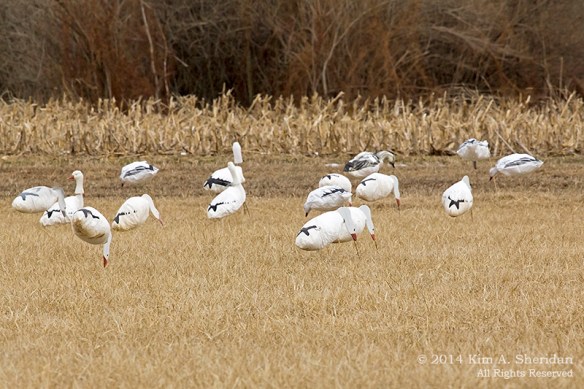
While driving around the perimeter of Middle Creek WMA, I came upon a small flock of geese in a field. I couldn’t believe my luck – they were SO close. Then I put my camera up to my eye, and this is what I saw:

Middle Creek Decoys_5751 acsHmm. Snow goose windsocks. A loudspeaker was playing goose calls, and a man in white coveralls lay prone amidst the faux geese. My first thought was that there was some sort of research project going on.
How naïve. It took several days for me to realize that this was a hunting layout.

Snow goose hunting was banned in 1916 when population numbers were too low. Since the geese discovered the waste grain bounty in the 1970s, snow goose populations have boomed. The Atlantic Flyway population that passes through Pennsylvania has grown from 50,000 in the mid-1960s to over one million in recent years. Other flyway populations are expanding even more. Estimates have placed total growth at close to 9% a year.

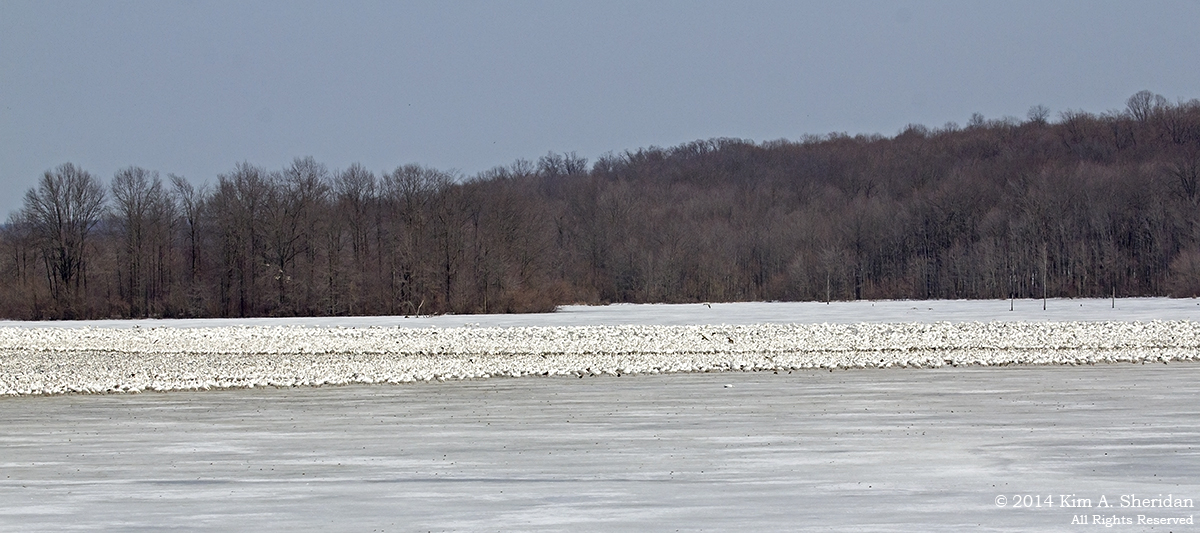
Middle Creek Snow Geese Distant_5442 acsIt turns out you can have too much of a good thing. The exploding numbers of snow geese have put tremendous pressure on habitats the goose uses. Particularly vulnerable are the fragile Arctic wetlands where the goose breeds. The damage caused by these voracious eating machines not only impacts their own breeding success, but threatens that of nesting shorebirds and other species that share their habitats.

Snow goose hunting was reinstated in the 1970s for population control. Today, a population goal of 500,000 has been set for the Atlantic Flyway population, and in 2008, the USFWS has finalized a Conservation Order allowing Pennsylvania and other states to conduct a Conservation Hunting Season for snow geese. The conservation season differs in that it extends into the migration season, and allows the use of electronic recordings and decoys. Middle Creek WMA is both a refuge for migratory snow geese, and a strictly-monitored hunting area where specially licensed sportsmen can hunt geese for the purpose of population control.

I should mention that there were no live geese to be seen anywhere near that field. Those goose decoys? Clearly the real ones weren’t buying it.

I’ve got a love/hate thing going with hunting. On an individual basis, I hate to see any animal die before its time. Nature has other ideas, of course; big fish eat the little fish, bigger fish eat the big fish, and so on. The cycle of life.

But Man stepped in and started monkeying around with the system, removing predators, destroying habitat, suppressing wildfires, hunting, or banning hunting. We humans bear a heavy burden of responsibility to step in and manage populations so they don’t get out of control.

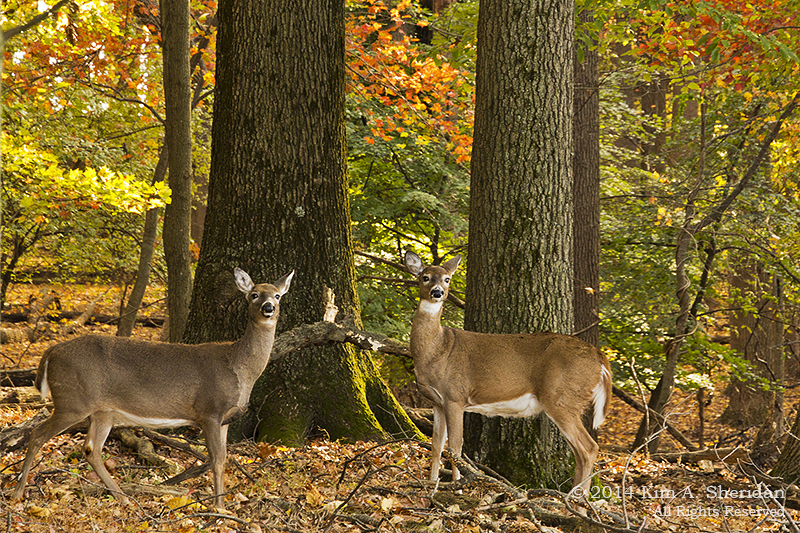
Valley Forge_0246a ACS Print Take the white-tailed deer, for instance. In Pennsylvania, like so many other places, it’s a pest. Way too many deer are living in habitat that can support a population a tenth of its actual size. The deer destroy the understory that many other critters, from songbirds to small mammals, depend on. Not to mention the damage a car-deer collision can do, to both car and deer, and in my area these encounters are legion.

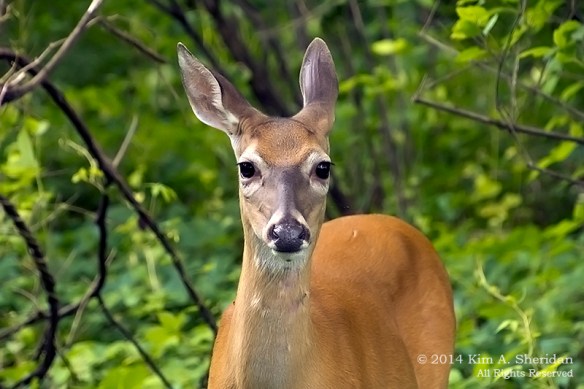
HNWR Deer_7189 ASCDeer, and snow geese, are beautiful animals, and I love seeing and photographing them. But I also see the bigger picture. Populations have exploded, largely due to the intervention of Man. Is it right to allow other animals suffer from the habitat depredation caused by the deer and geese? Is it right to allow the deer to starve in the winter when there isn’t enough browse to support the whole population?

I don’t believe so. Are there answers other than hunting? Maybe. I won’t go into deer contraception here. That’s a controversial issue that is beyond the scope of my expertise. I will say only that my gut tells me it’s inadequate to the job of managing the deer effectively. Man created this problem, and has a moral imperative to seek solutions. Well-regulated hunting is an important tool maintaining animal populations at a level healthy for themselves and the other species with which they share their environment.

Sometimes you have to take a step back to see the forest rather than the trees.Tinicum_7427 AS Orig