Extraordinary Birds, Woodland Edition

Extraordinary (adjective): 1. beyond what is usual, ordinary, regular, or established. 2. exceptional in character, amount, extent, degree, etc.; noteworthy; remarkable. SYNONYMS: uncommon, singular, rare, phenomenal, special. (Dictionary.com)

If the commonplace birds that frequent our everyday world are “ordinary”, then “extraordinary” birds must be those that are unusual or rare visitors in our lives.

What’s ho-hum to one birder might be remarkable to another, however. Here are a few of the extraordinary birds I saw in the woods this spring, each one more special than the last.

I see Yellow-rumped Warblers like the one above all the time. Common, yes, but far from ordinary.  Because there’s no such thing as an ordinary bird. Yellow-rumps in breeding plumage are quite striking.

Yellow Warblers are also at Heinz NWR in large numbers in the spring. They’re plain, but very bright. And they are always cheerfully singing their little heads off.

In the Pine Barrens, a Prairie Warbler spent a long time perched  at the top of a pitch pine in the sun.
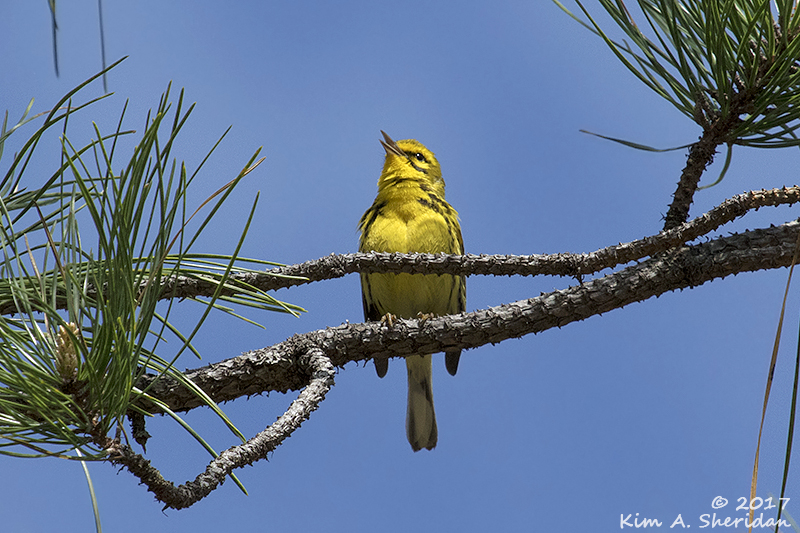
Then he started caroling. Prairie Warblers are more frequently heard than seen, for me at least.
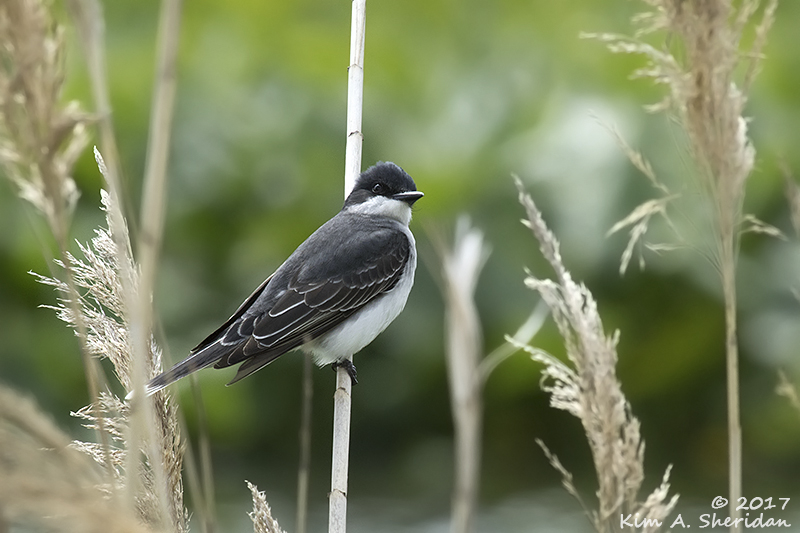
Back at Heinz, an Eastern Kingbird at the water’s edge.
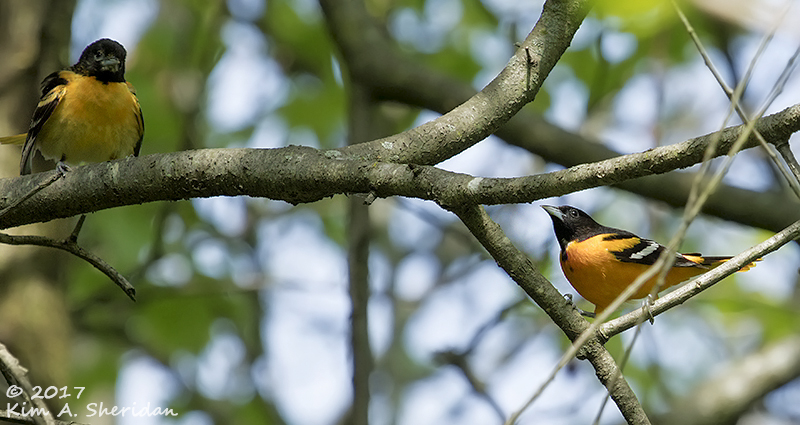
I see Baltimore Orioles from time to time in the spring. If one oriole is good, two must be better!

Spring migration brought the warbler hit parade to Heinz. Magnolia Warbler.

I don’t see Black-throated Green Warblers too often, and had never photographed one before. Catching this one was tough. It hung around for a long time, but like most warblers, it never stayed in one place, and was always just a little too far away.

Canada Warbler. Another bird new to my photo collection, though not my life list.

I can’t show you my favorite warbler of the spring. There was a brilliant Blackburnian Warbler in a treetop at Heinz. I’ve only caught brief glimpses of Blackburnians in Michigan. This time I got a good look at the bird, but you’ll have to take my word for it. He didn’t come close enough for a portrait.

Rarer still was this bright confection in Higbee Beach WMA in New Jersey. It’s a Yellow-breasted Chat, only the second one I’ve ever seen. I was shooting here from a tall observation platform at treetop level, the perfect perch from which to watch this warbler sing and dance.

Walking along the path at Cape May Point State Park, I spotted a flash of bright blue. Bluebird? Blue Jay? Tree Swallow?

Nope!

At the edge of the woods, a Blue Grosbeak was feeding on grass seeds. I’ve never seen one before. That makes this a life bird, the first one of its species I’d ever spotted.

Warblers to orioles, kingbirds to grosbeaks, there’s no such thing as an ordinary bird. They’re all special in their own way.

How extraordinary!
The Third Time’s the Charm

If at first you don’t succeed, try, try again.

Confined as I was to plant and rock photography all winter, I ached to go somewhere known for wildlife. Bombay Hook NWR in Delaware beckoned. My Facebook feed had been full of close-up photos of the wonders to be seen there. Foxes. Owls. Meadow birds like Bobwhites, Horned Larks and Meadowlarks. Raccoons. Foxes. Bald Eagles by the dozens. Glossy Ibises. Avocets and Black-necked Stilts. Did I mention foxes?

Getting to Bombay Hook felt jinxed. Something always went wrong. In January, a trip was planned with a group of photographer friends – and it was too rainy. In March, a trip was planned with another friend – and he was under the weather.

Finally, in mid-April, all the stars aligned, and I made my much-anticipated visit to Bombay Hook. The landscape was still wearing its winter coat of dried tan grasses. No Bobwhites or Horned Larks lurked in the meadows and grassy areas.

I set out on the Wildlife Drive to see what I might find further afield.

My first bird was – a Grackle. Common, I think. Not usually what one would consider a pretty bird, but look closely at the iridescence of the feathers.

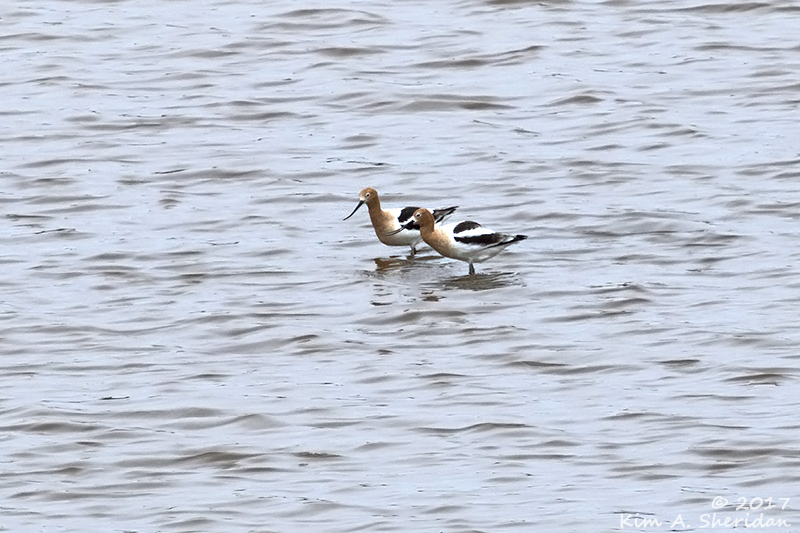
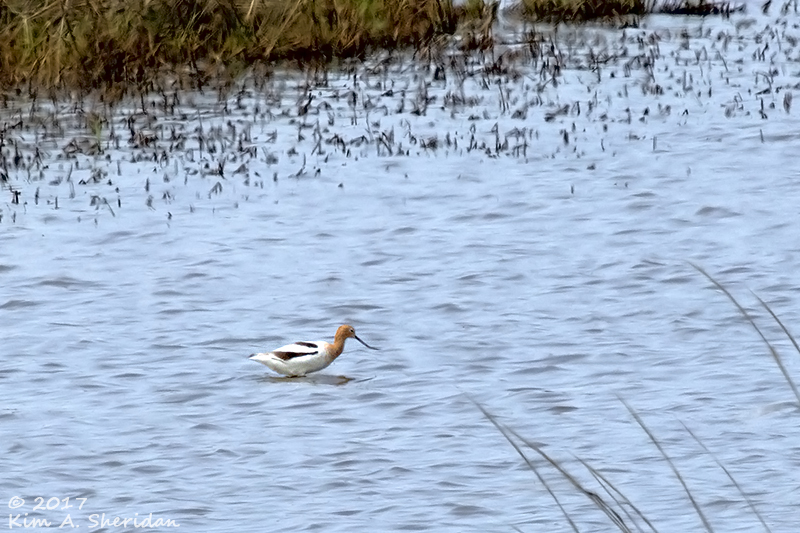
A handful of American Avocets graced Raymond Pool. Most of them were too far off to photograph. One of the downsides of wildlife photography on a budget. I was lucky that two wandered a little closer.

Photography at this distance is marginal at best with my 400mm lens – I’m really stretching the limit here. But I do love this bird. Avocets are one of the bird species that we don’t see at John Heinz NWR, but they are common just a little farther south in Delaware. These birds alone are worth the trip. I also saw two Black-necked Stilts, another mid-sized sandpiper that are a Bombay Hook specialty. They didn’t want to pose, however.

No sign of foxes yet. I wondered what I might see on the Salt Marsh boardwalk trail.

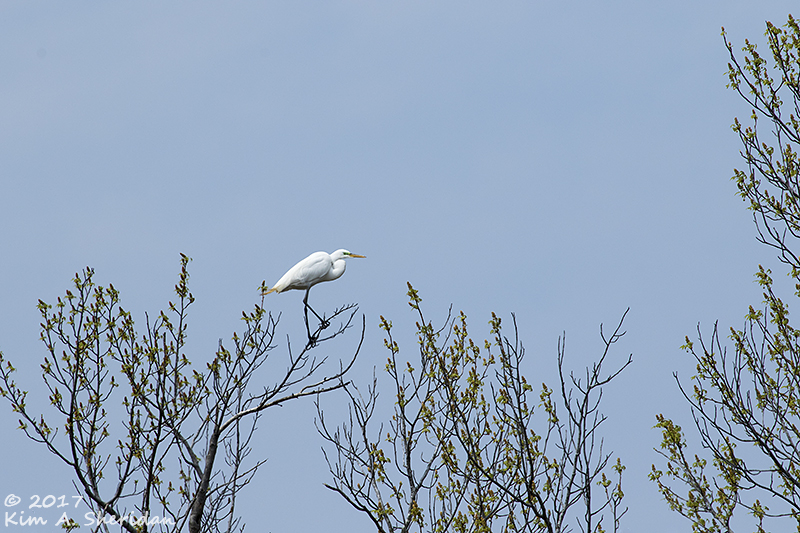
Ah, a Great Egret, at the top of a tall tree. I’m always startled to see an Egret in a tree. Seems far too big to be perched on that thin branch. Wading in shallow water is a much safer place to be.

Nearby a pair of Tree Swallows were bickering over a tree cavity. Swallows argue a lot. There’s never enough housing on the market.

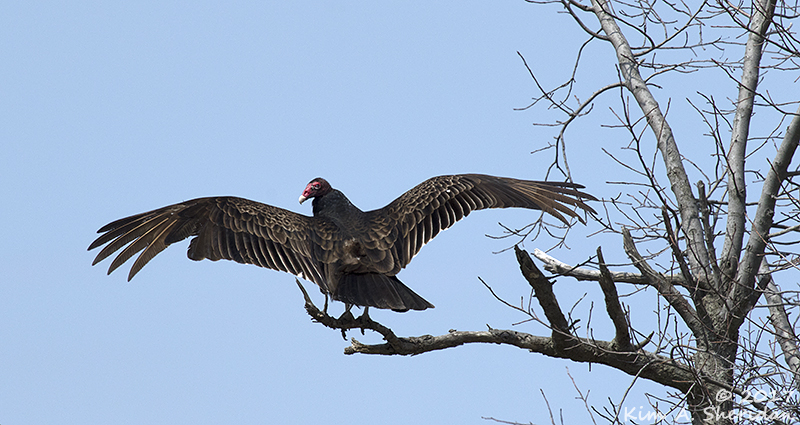
Back on the road, I came across another bird not known for its beauty. Usually I see dark-faced Black Vultures at Bombay Hook, but this one’s a real turkey – a Turkey Vulture.

Sunbathing in vultures serves two purposes. At night, they keep their body temperature at a lower level, and so often spread their swings in the sun to warm up. It was one o’clock in the afternoon, though, so it seems more likely this fellow was drying his feathers.

Bald Eagles flew past, the juvenile chasing his elder. They say imitation’s the sincerest form of flattery. I doubt the adult appreciated this expression of adulation.

Far across Raymond Pool I saw several Bald Eagles standing in the shallow water, looking down. This was curious behavior. Were they looking for fish? Admiring their reflections?

Maybe, like me, they couldn’t get enough of the deep blue water sparkling in the sun.

On the ponds, there were large numbers of Northern Shovelers and Green-winged Teals. Again, out of range of my camera. On the bay side, however, a small flock of Ruddy Ducks bobbed close to shore.

Ruddies are neat little ducks. Males sport a blue bill and marvelous cinnamon plumage in breeding season.

Did I ever see my fox? Nope. I drove through the meadows near Finis Pool, hoping to see one, or perhaps a Horned Lark or Meadowlark. No such luck. Nor did I see owls at Bear Swamp Pool.

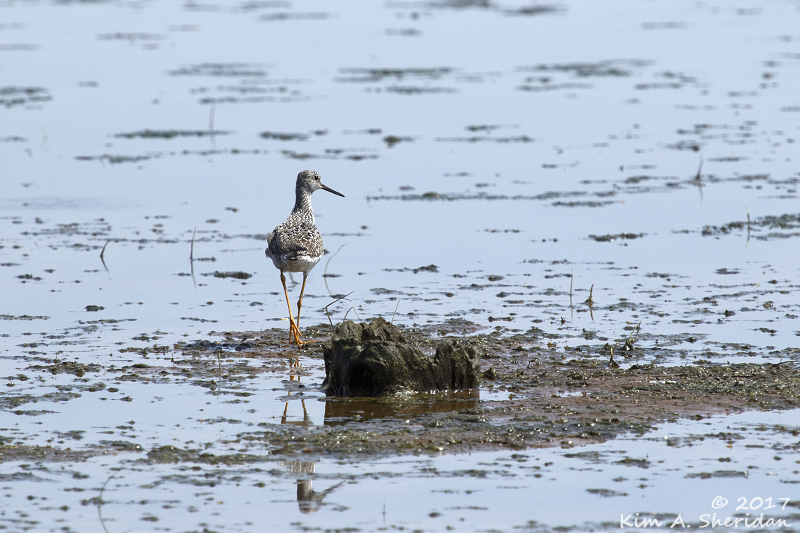
All is not lost. A Lesser Yellowlegs pranced near Parsons Point.

Wildlife photography is challenging. You have to put yourself in the right place at the right time. Then you have to be patient enough to wait in one spot until the critters get within camera range. That means ignoring all of Bombay Hook except that one spot, something I can’t bring myself to do. I might miss something!

So I make the most of the opportunities that present themselves. Like this Lesser Yellowlegs, doing a little yoga. After a winter spent too close to home, it was good to stretch my wings a little. Just being at Bombay Hook, watching the critters do their thing, was enough for me.

The third time’s definitely the charm!

It’s a Colorful World

I can see clearly now, the rain is gone.

The world looks different since I had cataract surgery. Brighter. Sharper. Cleaner. It’s as if I’d been looking through a very dirty windshield for a very long time, and someone came along and washed it clean.

And oh, the colors! Deeper, richer, more lifelike. Just in time for arrival of Lady Spring, dancing across a carpet of wildflowers in a shimmering gown that grows greener every day.

Without further ado, here is a sampling of my more colorful world.

Looking down on the bud and three bracts (not leaves) of a trillium not yet in bloom. Her Ladyship’s accent colors may be subtle or showy, but she sure doesn’t skimp on the green.  What color will this be when it blooms? Red? Pink? White? Yellow? Purple?

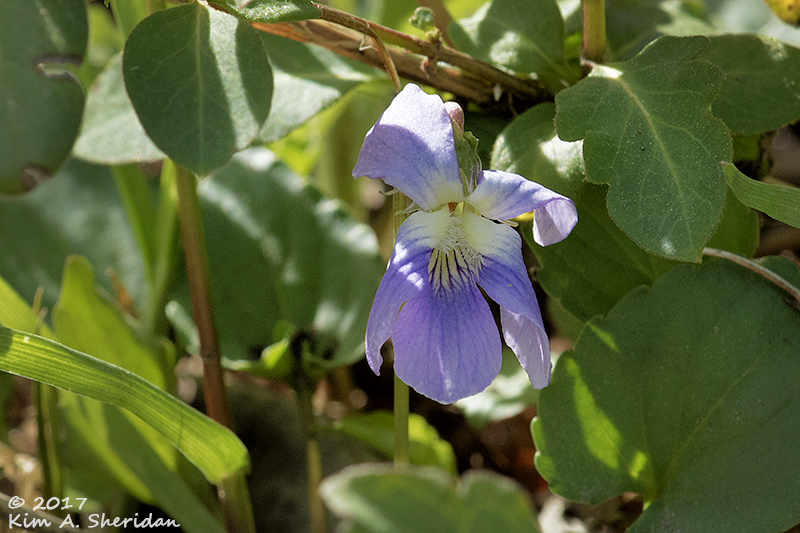
A violet. The name says it all.

I can see all obstacles in my way…

It’s not just seeing the obstacles. It’s the depth perception, a critical sense that had gone missing for some time.  It’s been hard to accurately judge where to put my feet, and I have a small phobia about falling.

This past weekend, we went to a nature preserve where the trail proved more challenging than we expected.

It was a narrow path that clung to the side of a steep ravine high above a creek. A thick layer of dry leaves hid the rocks and roots along the path, and made for a lot of slipping and sliding.

Not long ago, I would have been very uncomfortable, and possibly would have even turned back.

Not now. With more confidence in my vision, I really enjoyed this hike. I clambered up and down rock outcroppings like a mountain goat, and even made the numerous stream crossings easily.

Plus, there were wildflowers!

Dutchman’s breeches, one of our spring ephemerals, wildflowers that bloom in the brief time between when the snow melts and the trees leaf out.

Spring ephemerals carpet the forest floor with small splashes of color. They have a short time in which to grow, feed, bloom and set seed for the next year.

It seems Her Ladyship’s small footmen have hung their trousers out on the laundry line.

Gone are the dark clouds that had me blind…

The last few months I’ve been in a sort of creative funk.

Winter is partially to blame for that, especially a winter of bare brown earth and trees.

Not now. I find my enthusiasm for photography is awakening as the earth awakens.

Lady Spring has arrived, and I can see her beauty!
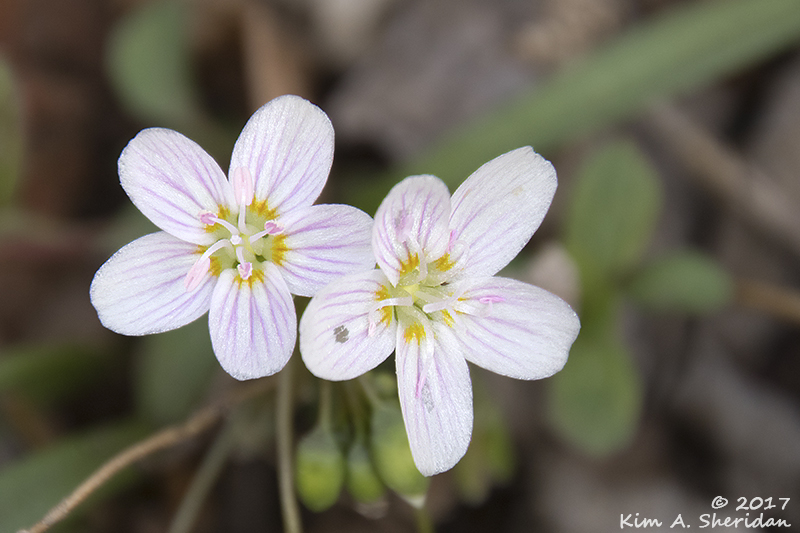
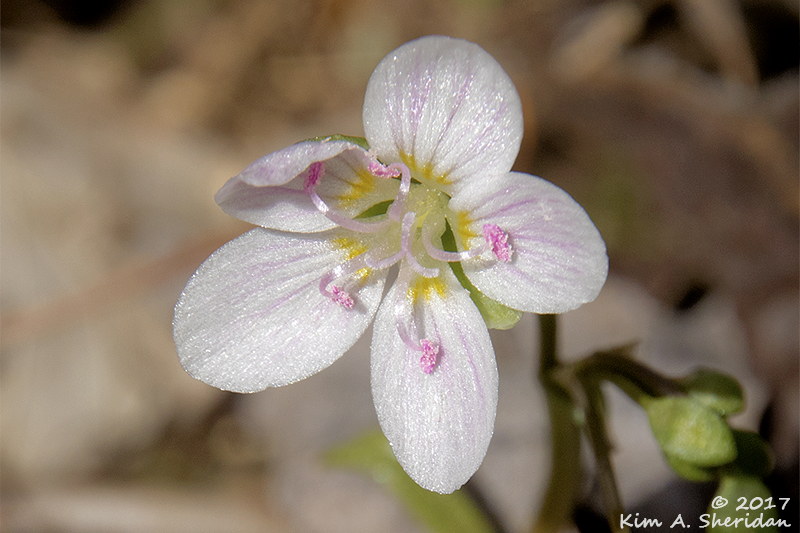
And here it is! The aptly named spring beauty, one of our earliest wildflowers, pretty in pink.
White is a color, too.

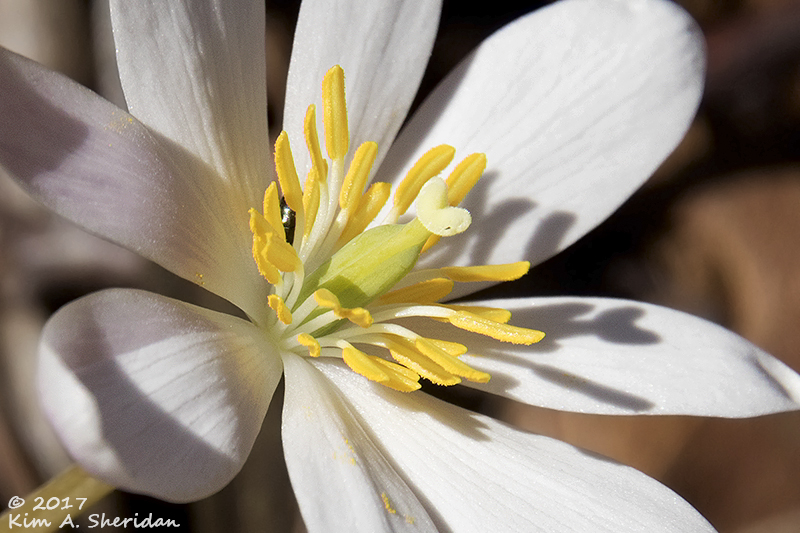
My cataracts had turned black and white to dark gray and yellowish tan. For an amateur photographer, seeing true black and true white again is a joy. Especially when the white adorns one of Her Ladyship’s loveliest flowers.

Bloodroot gets its name, not from the creamy white petals and bright golden stamens, but from the orange-red juice in its underground rhizomes.

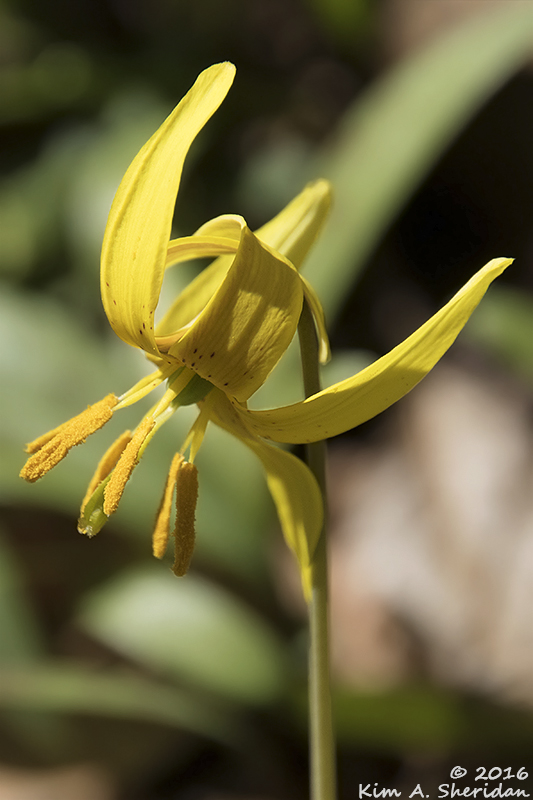
A trout lily nods in the shade of the forest floor.

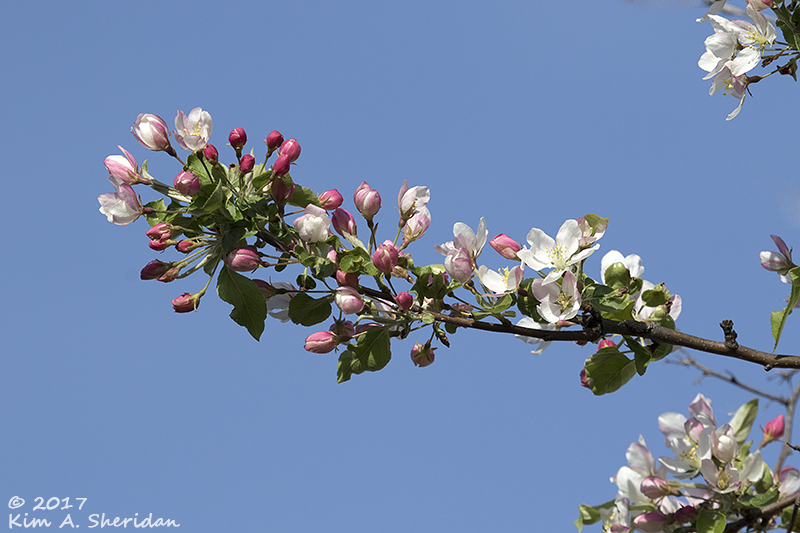
The scent of Lady Spring’s perfume drifts on the warm air, leading my eyes to crabapple blossoms of rose and white. Oh, that sky! I don’t remember the sky being this blue…
It’s gonna be a bright, bright sunshiny day.

What do you see?

Lyrics to “I Can See Clearly Nowby Jimmy Nash

March Madness

The first day of spring is one thing, and the first spring day is another. The difference between them is sometimes as great as a month. – Henry Van Dyke

Sometimes the first spring day comes well before the first day of spring. One shouldn’t be too surprised when winter has more to say…

We were blessed with a number of really warm days during February. Sunny days in the 60s, and even the 70s. Daffodils bloomed; trees began to bud. An early taste of spring.

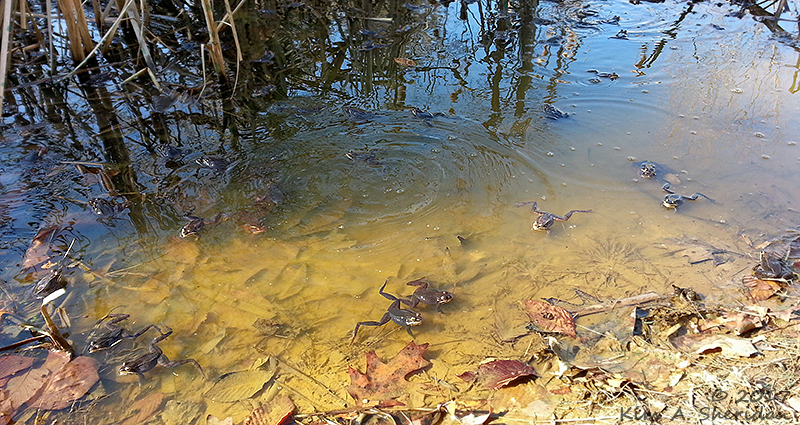
Eager to shake a bad case of cabin fever, I found myself supplementing my customary woodsy walks at a local park with frequent jaunts to Tyler Arboretum. One very warm day, I discovered that the frogs had come out to play. Spring peepers were secretive as always, impossible to see and impossible not to hear. And the wood frogs! Dozens of wood frogs. I’d never seen so many.

They were out of hibernation, looking for love, and finding it. Shortly thereafter, the pond was full of frogspawn.

My cell camera doesn’t zoom in very well; this is the best image I took of the army of wood frogs. (Yes, a group of frogs is called an “army!”)

And why do I only have cell phone images of the wood frogs?

I blame a lack of vision. Not the creative kind of vision. Literal vision – my eye sight.

I’ve been battling rapidly worsening cataracts in both eyes for some time. Cataracts are easily corrected by surgery, but the process has taken far longer than I expected. In the meantime, my impaired vision has dampened my enthusiasm for photography and limited my driving to a handful of nearby locales.

Most of the time, lacking all confidence, I haven’t even bothered to take my camera. Inevitably, I’ve found something neat that begged for a photograph, and I’ve had to resort to my cell phone. That’s been great for my Facebook page, not so much for the Wild Edge.

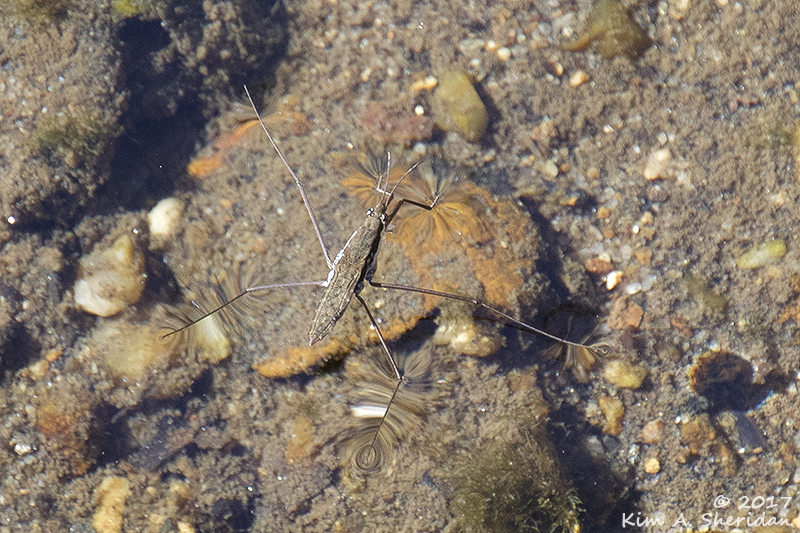
So the next very warm day, I went to Tyler, with a real camera, specifically looking for frogs. Of course, there were no frogs, but I found other subjects to shoot. The bridge across Dismal Run offered a unique view of a water strider skimming along the surface.

This is one of my favorite spots, a bench under eastern red cedar trees at the top of Pink Hill. After climbing the trail up from Dismal Run, a nice shady place to rest and cool off is welcome.

One warm Saturday, Robb, Don and I found ourselves in a bit of a hot spot. The day was sunny and blessedly free of other commitments. So we went to the Pine Barrens, in search of green trees.

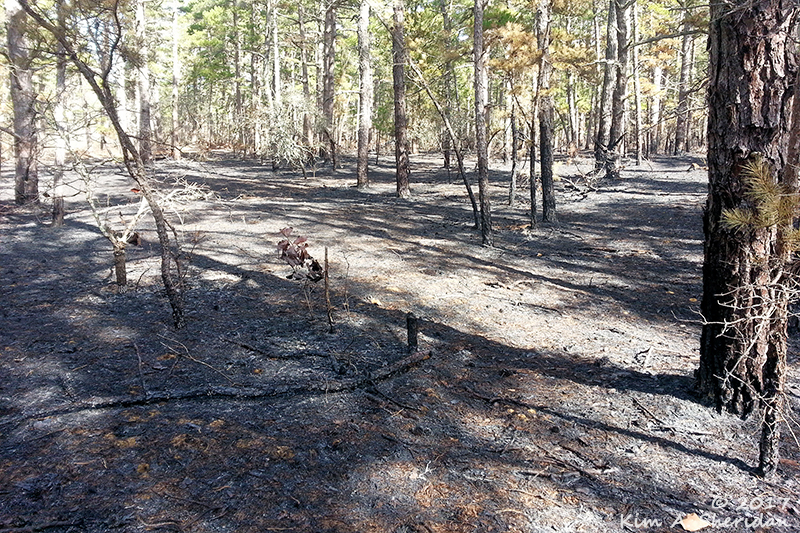
We weren’t expecting to find our chosen trail flanked by the site of a recent controlled burn.

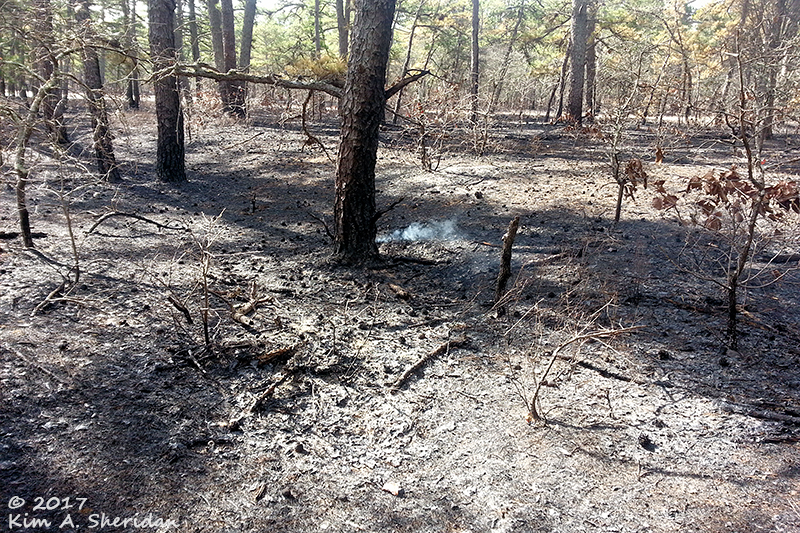
A very recent controlled burn. So recent, in fact, that there were quite a few plumes of smoke where the fire still smoldered.

Controlled burns are conducted in the Pinelands to clear the forest floor of deep layers of pine needles and other brush. If left in place, this duff could fuel disastrous wildfires.

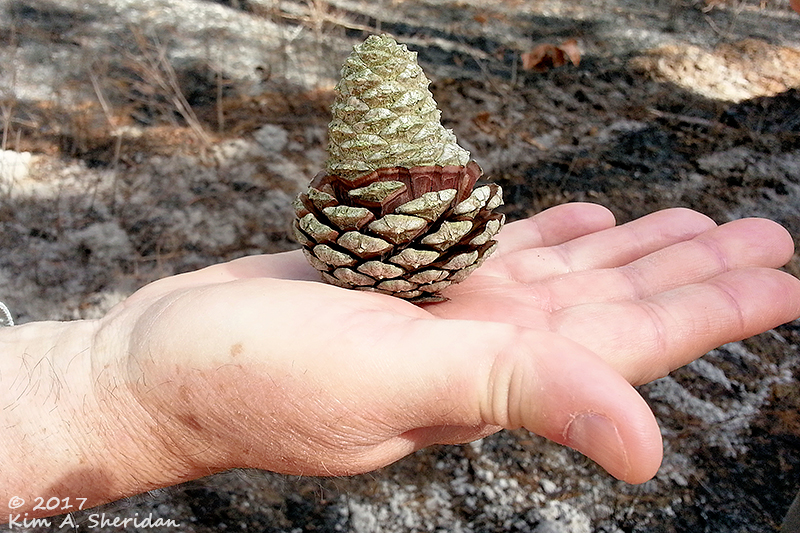
Burns like this help the pine trees, too. Pitch pine cones are serotinous. They require fire with temperatures above 108° to open and release their seeds. This strange cone got the job half done.

One of my favorite views in the Pine Barrens. White sand, tea-colored water, green trees, blue sky. Serenity on the Oswego River.

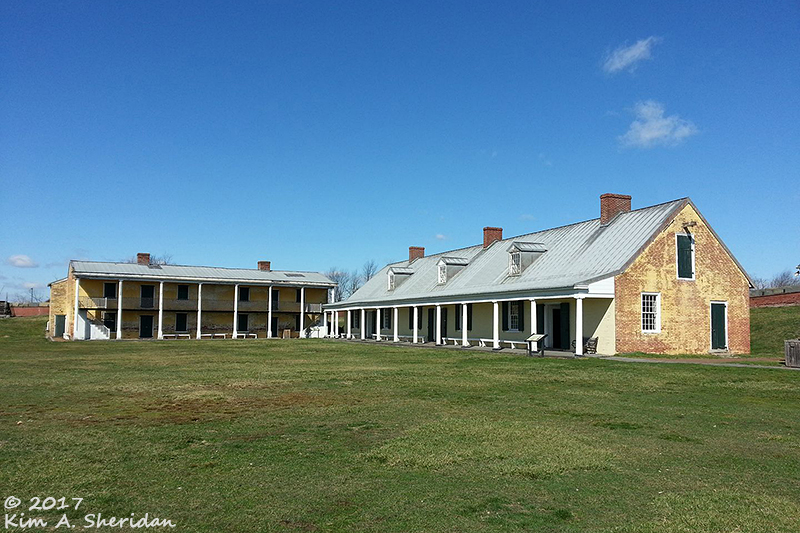
The calendar turned from fevered February to March madness, and suddenly winter returned. Don’t let the deep blue sky fool you. It was COLD this day at Fort Mifflin. And very windy. We took a walk along the outer seawall, and Don was almost blown into the Delaware River.

After a winter in which we’d had only two light snowfalls, a true winter storm was a rude awakening. Snow and sleet, frozen hard overnight, left an impenetrable layer 6” deep, even deeper to the north.

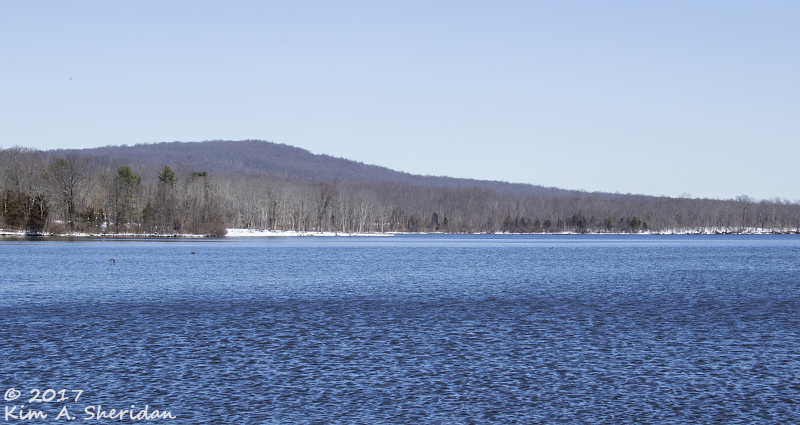
When the roads cleared, I went in search of interesting snow photographs. With a real camera. Lake Nockamixon and Haycock Mountain, in Bucks County.

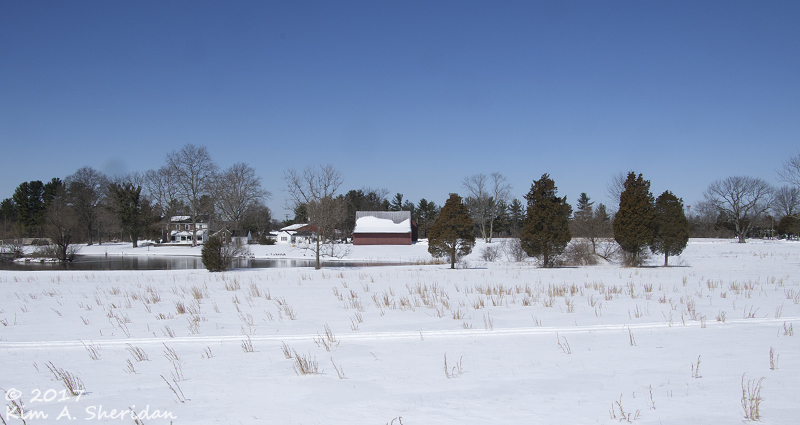
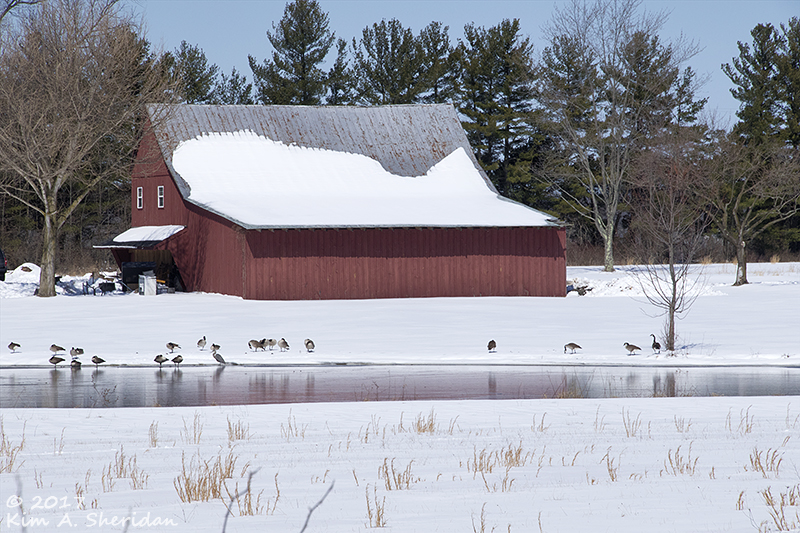
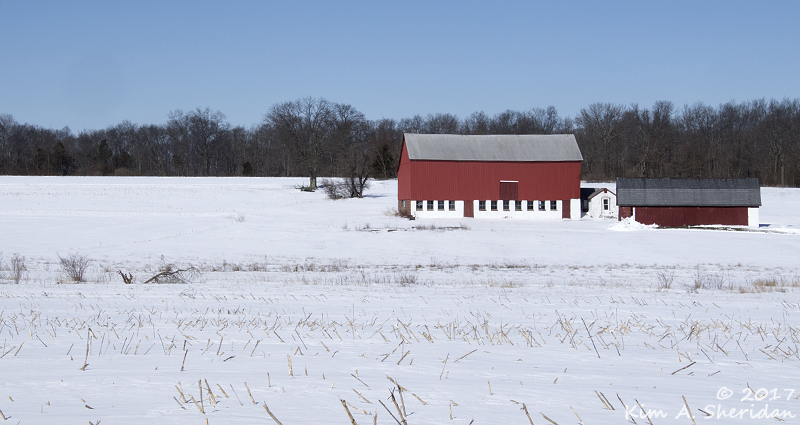
Mostly I was looking for red barns. Found one!

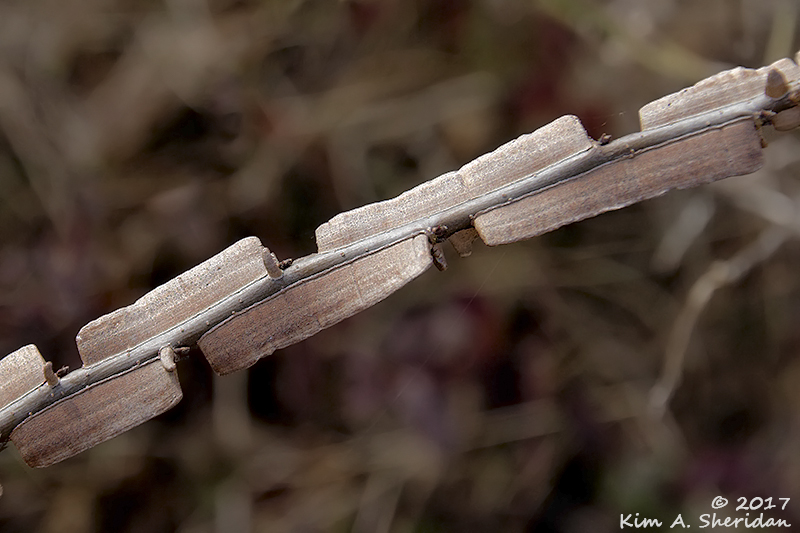
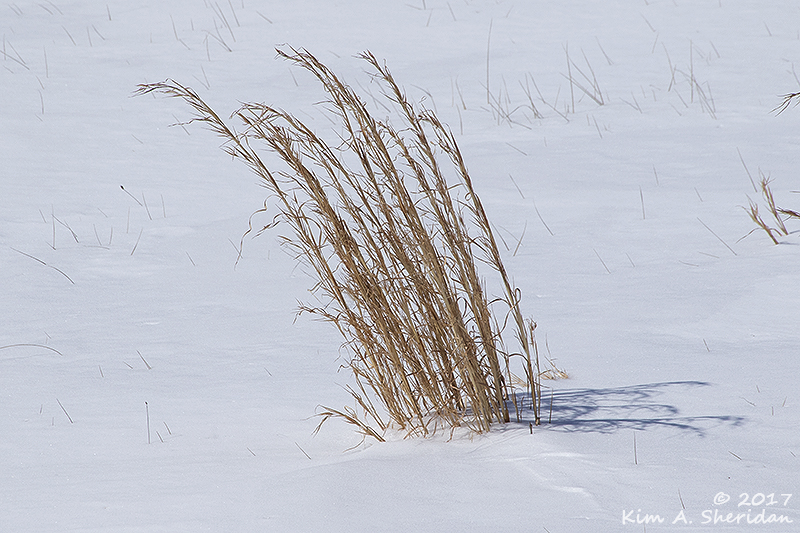
Winter grass and snow.

Found another barn!

This one came with a lovely farm pond, flanked by Canada Geese, and, as I learned later, a Great Blue Heron.

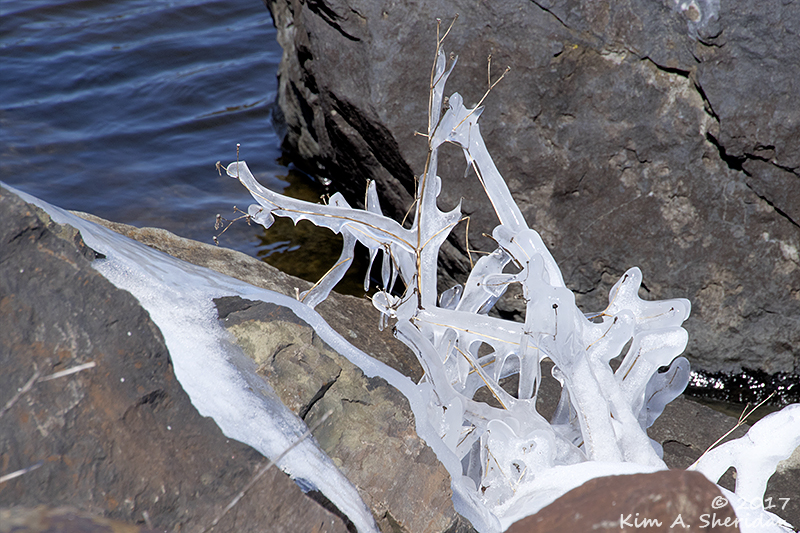
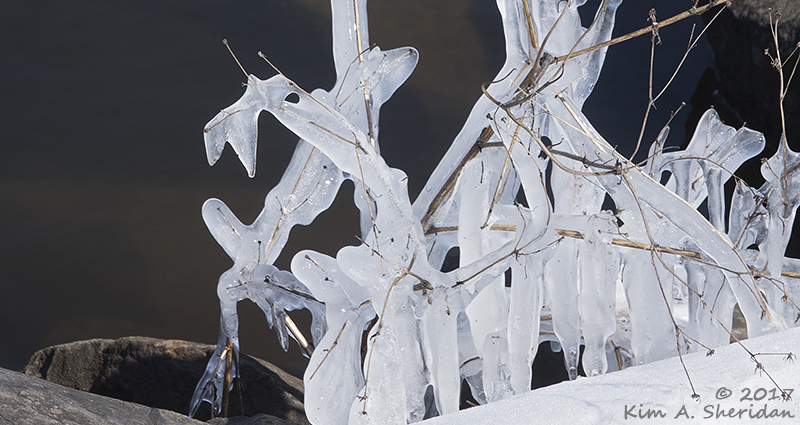
Back at the lake I found some of the plants encased in ice.

The snow and ice got me thinking about those wood frogs. Wood frogs can survive freezing. But on the warm days they laid thousands of eggs. The frogspawn was still there on my last visit, masses of strings of dark-centered gelatinous spheres. Will they survive? Will there be tadpoles? Or will the madness of winter following spring be the downfall of this new generation of frogs?

This topsy-turvy winter may not have been beneficial to the frogs. It certainly hasn’t been beneficial to my photography. I feel as if am simply killing time, enduring an endless maddening wait for something just over the horizon, like frogs waiting for a warm spring day.

Waiting can have its own benefits. The lessons I’ve learned from this period of my life? Never take good eyesight for granted. Don’t sit in the house and mope; time in nature heals the restless soul. Don’t overlook the wonders that abound at even the most familiar places.

And don’t leave the camera at home!

A Texas Ecology Lesson

161228_tx-heard-nature-sanctuary_7840acsEven in winter, the Blackland prairie habitat at the Heard Sanctuary in Texas was beautiful. Sunlight painted the grasses and plants with glowing shades of amber, russet and pale cream. A bird box awaited the arrival of new life.

I wasn’t expecting an ecology lesson when I wandered through the Heard Sanctuary. I was thinking about the variety of habitats and plant communities that I was seeing. I was also wondering where the critters were. But I soon realized that all the elements of a complex ecosystem were observable here, hiding in plain sight.

ECOSYSTEM (noun): a community of living organisms in conjunction with the nonliving components of their environment (things like air, water and mineral soil), interacting as a system. (Wikipedia)

A habitat is the natural environment for an organism. Add a variety of plants and animals, make it interconnected and self-sustaining, and now you’ve got an ecosystem!

An ecosystem is self-sufficient and cyclical; its nutrients go through a series of changes that transport them around the ecosystem in an unending web. Ecosystems need abiotic matter, producers and consumers, scavengers and decomposers. All of these were in evidence on my walk through the Heard Sanctuary.

161228_tx-heard-nature-sanctuary_8157aThis is the black soil of the Blackland Prairie. Soil, sediment and organic matter form the abiotic component of an ecosystem. Here the soil is an alkaline clay of chalk, limestone and shale. In dry weather, large deep cracks form in its surface. All the cycles of life – the carbon, nitrogen, oxygen, water cycles and more – start with the soil and come back to the soil. Abiotic matter, check.

161228_tx-heard-nature-sanctuary_7755acsGrowing in that rich dark soil were plants. Pretty plants…

161228_tx-heard-nature-sanctuary_7759acs… and strange plants. This one has winged stems. Plants are the producers of the ecosystem, taking nutrients from the soil and energy from the sun to grow and reproduce. Their seeds, fruit, stems and leaves become food for the animals. Producers, check.

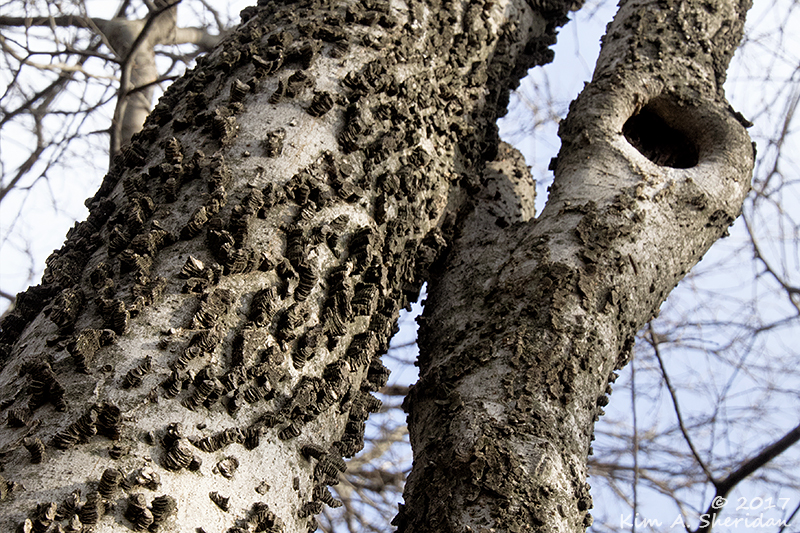
161228_tx-heard-nature-sanctuary_7538acsWalking along the trail through the woodlands, I heard the twitters of small birds – chickadees, nuthatches, a cardinal. While searching in vain for them, the nubby texture of this tree caught my eye. That big hole looked just right for an owl… but alas, no one was home.

161228_tx-heard-nature-sanctuary_8112aThese are galls, or they may be burls. The two growths are similar, and there are so many conflicting definitions online that I couldn’t sort out the difference. Insects, bacteria or fungi get under the tree’s skin, and an abnormal swelling of plant tissues forms around the invader. These growths are the result.

Most galls are small and appear on leaves or twigs, but they can be large and woody. Burls seem to be exclusively woody. Inside a burl, the rings of the wood twist into lovely shapes that are prized by woodworkers for their beauty.

161228_tx-heard-nature-sanctuary_8117acsI thought the outside was beautiful, too.

161228_tx-heard-nature-sanctuary_7897acsGoldenrod.

In this season, my wildflower guide was not a lot of help. Without flowers on the plants, I couldn’t identify much along the trail.

But I could admire everything! Except critters. So few critters to admire…


Then I came to the swamp, and suddenly there were animals everywhere.

Waterfowl swam placidly past. Coots. Mallards. A Northern Shoveler.

161228_tx-heard-nature-sanctuary_7986acsAnd turtles. Lots of turtles, basking in the 82° sunshine. There was plenty of plant material in the swamp for herbivores like turtles and ducks. Primary consumers, check.

161228_tx-heard-nature-sanctuary_7546acsOh, cool! Snakes!

Yes, that’s actually what I thought when I saw this sign. I’ve never seen either a copperhead or a cottonmouth. I was hoping to see one or both, though preferably at a safe distance. Not this day, though.

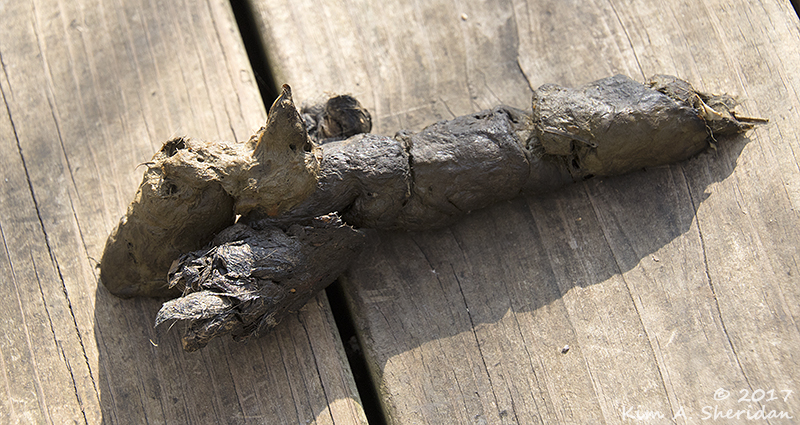
161228_tx-heard-nature-sanctuary_7802acsI found some droppings on the boardwalk. Why, oh why, you might ask. Why was I interested in this?

Because there was fur and bone in them, the calling card of something carnivorous like a fox or coyote. I never saw the animals themselves. For evidence of this component of the Heard ecosystem, a little scat had to do. Secondary consumers, check.

161228_tx-heard-nature-sanctuary_7785acsWheeling over the prairie, a Turkey Vulture. Even though I see them all the time back East, they somehow seemed appropriate in this dry environment. To our eyes, vultures are ugly birds with an ugly lifestyle – they eat dead animals. Scavengers like vultures play a really important role in consuming and passing on the nutrients that would otherwise remain locked inside an animal’s body after it dies. Scavengers, check.

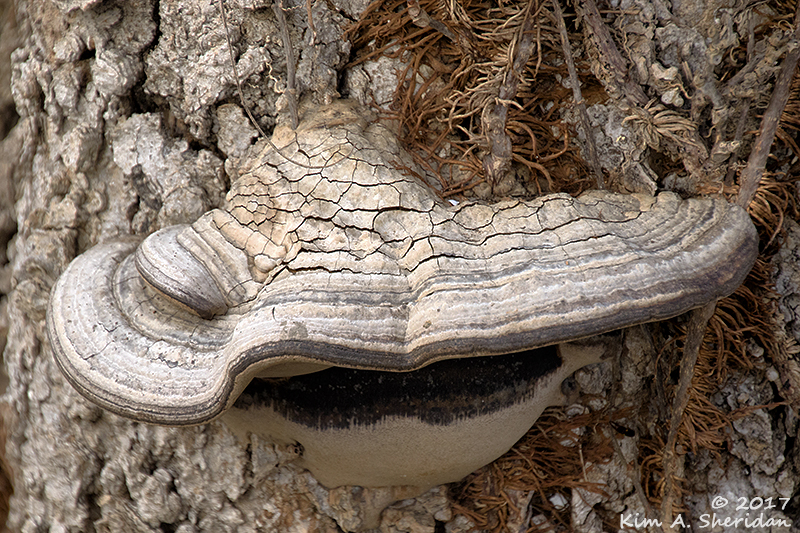
161228_tx-heard-nature-sanctuary_7541acsNearby, a bracket fungus clung to another tree like the bookshelf of a woodland elf.

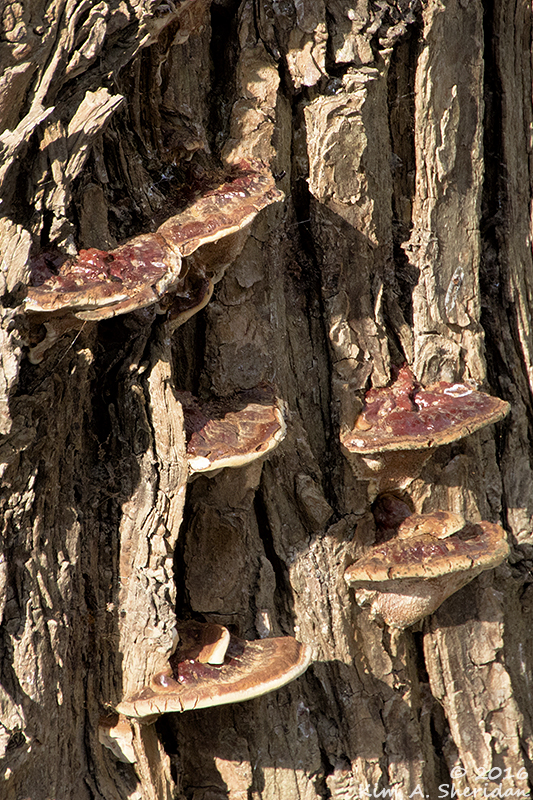
161228_tx-heard-nature-sanctuary_8012acsFungi are neither plant nor animal; they make up their own kingdom and play their own part in an ecosystem. Fungi’s role is to decompose organic matter.

The portion we see, the mushroom, is the fruiting body of the fungus.

Decomposers, check.

161228_tx-heard-nature-sanctuary_7915acsThe variety of plants in the swamp, cedar brake and prairie of the Heard Sanctuary was a marvel to behold. Studying it and photographing it kept me busy and happy on a warm December day.

161228_tx-heard-nature-sanctuary_7959acsAnimal life was less obvious. Turtles sunned themselves on logs, while birds sang in the trees. Scat revealed the presence of a carnivore, but the critters themselves were tucked away out of sight.

Soil, plants and animals; swamp, woodland and prairie. All the building blocks of an ecosystem were there in the Heard Sanctuary for me to see if I looked hard enough. A walking ecology lesson!

A Woodland Surprise

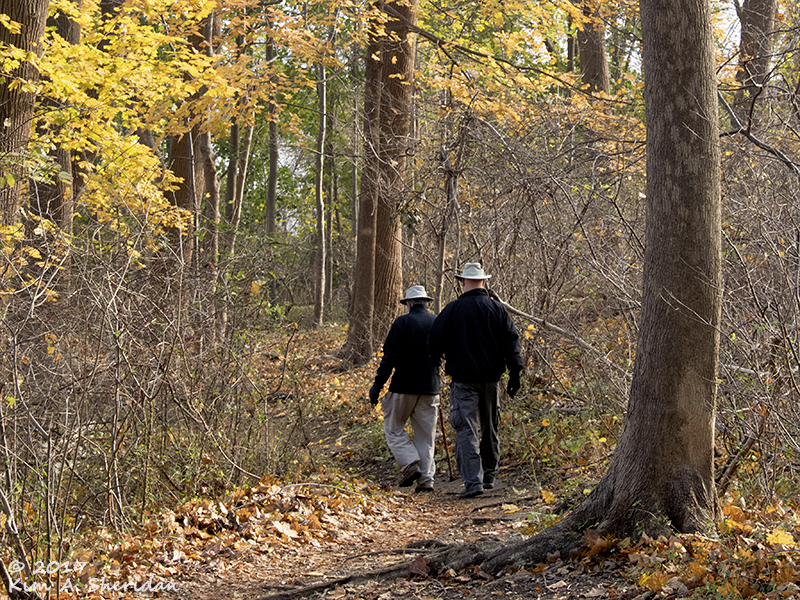
161126_nj-hartshorne-woods_6537acsIt started as a typical walk through the woods. After all, the word “woods” is in its name: Hartshorne Woods Park. So we weren’t too surprised to find ourselves walking through a woodland that felt all too familiar.

My friends and I had come to the northernmost tip of the Jersey Shore on Thanksgiving weekend specifically to visit Sandy Hook and the Twin Lights of Navesink. These were places we’d not been before, places with a different flavor than the southern Jersey coast. A visit to nearby Hartshorne Woods, a small Monmouth County park, wasn’t on the original itinerary. Heck, we didn’t even know it existed until we arrived in the area. A short morning walk there was mostly a way to kill time until Sandy Hook Light opened for tours in the afternoon.

It ended up being the highlight of the day.

161126_nj-hartshorne-woods_6656acsNot for the woods, though they were nice enough. We hiked down, up and back down steep hills, more akin to our native Piedmont than the Atlantic Coastal Plain.

The maple, oaks and hickories were still adorned in a smattering of gold and russet, set off by the dark green of abundant American hollies.

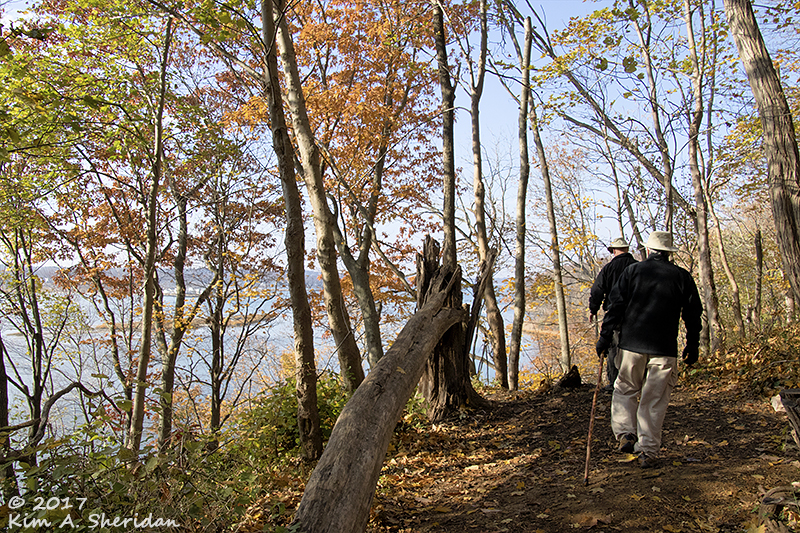
161126_nj-hartshorne-woods_6558acsThe first glimpses of blue water through the trees tipped us off: this was NOT a typical Piedmont walk. The trail traveled along the top of a bluff overlooking the Shrewsbury River. Beyond the river lay a narrow spit of land, the town of Sea Bright, and the Atlantic Ocean. Nope, don’t see that in Pennsylvania!

161126_nj-hartshorne-woods_6549acsA little further along, the Navesink River joins the Shrewsbury. By this time, we were actively seeking a way to get down the hill to the water. If we are anywhere near water, we want to be at its edge. Not up above it.

The bluff was too steep to brave a descent. We continued along the trail until we came to a green lawn that sloped downhill –  to the pier and boat launch of Black Fish Cove. Ah, much better.

161126_nj-hartshorne-woods_6582acsOnce on the beach, the walk suddenly became much more interesting.  All thoughts of completing the 2.3-mile Rocky Point Trail loop were quickly abandoned in favor of exploring along the river’s edge. With views like this? The beach beckoned.

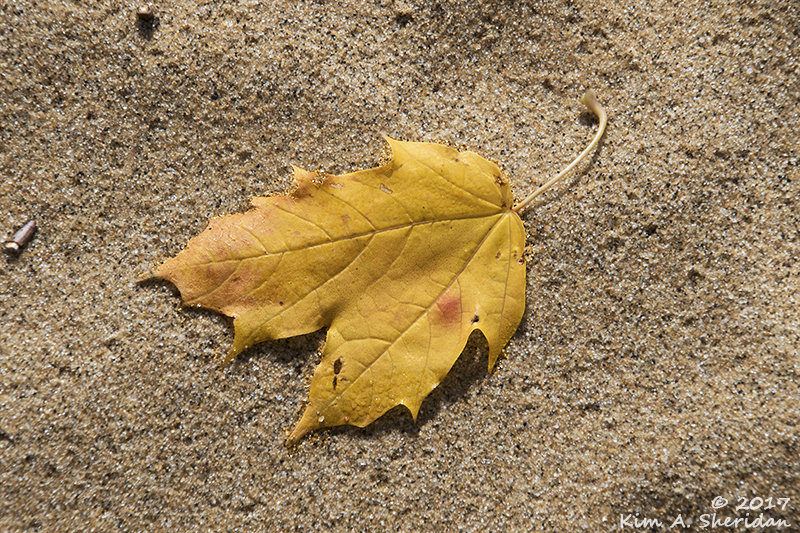
161126_nj-hartshorne-woods_6593acs-copyGolden leaf on sand. Seems a strange juxtaposition to me. Should be either beach, or woods, not both. That’s a South Jersey conceit, though. There are many wonderful places where the two habitats play nicely with each other.

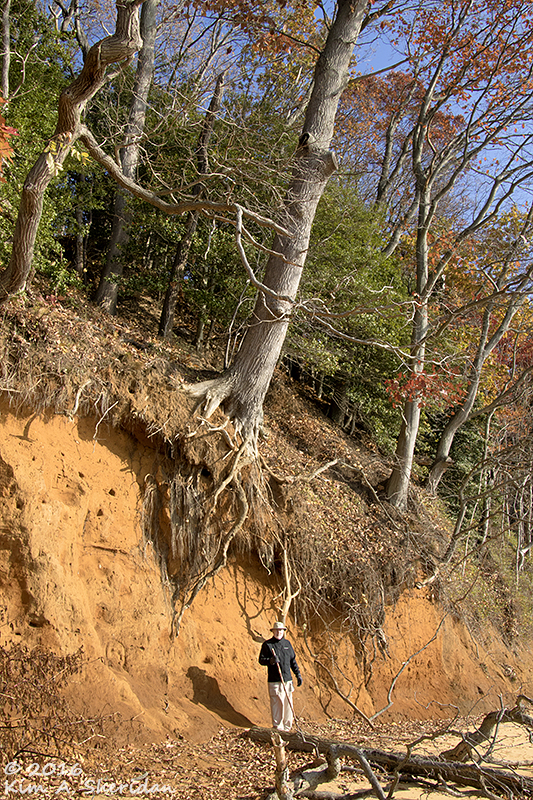
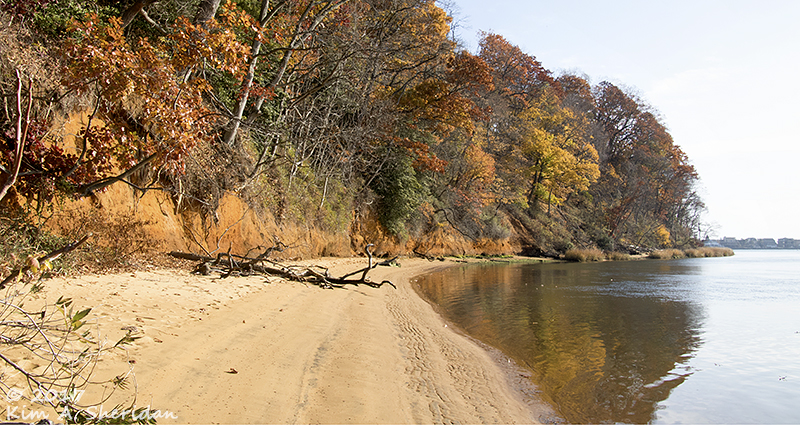
161126_nj-hartshorne-woods_6620acsHere the boundary between woods and beach was quite dramatic. A tall cliff loomed, topped by towering trees that clung to its edge, their roots exposed for all to see.

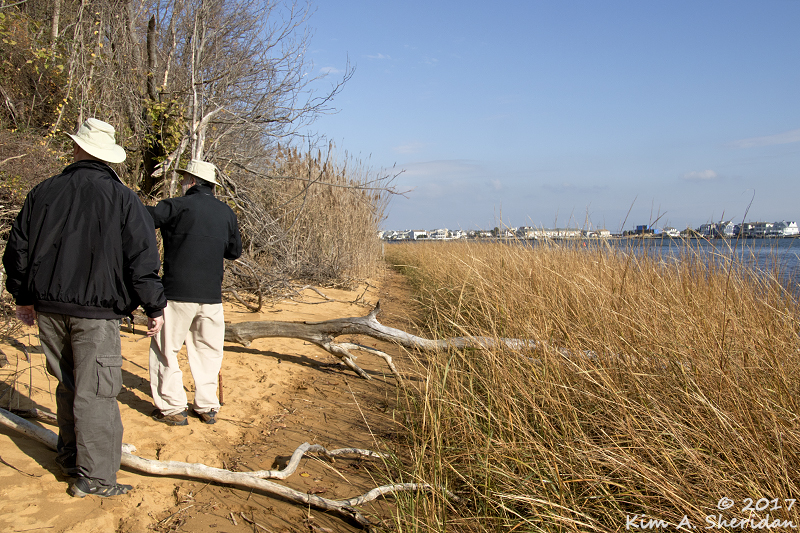
Don, for scale, risking life and limb under a widow maker tree.

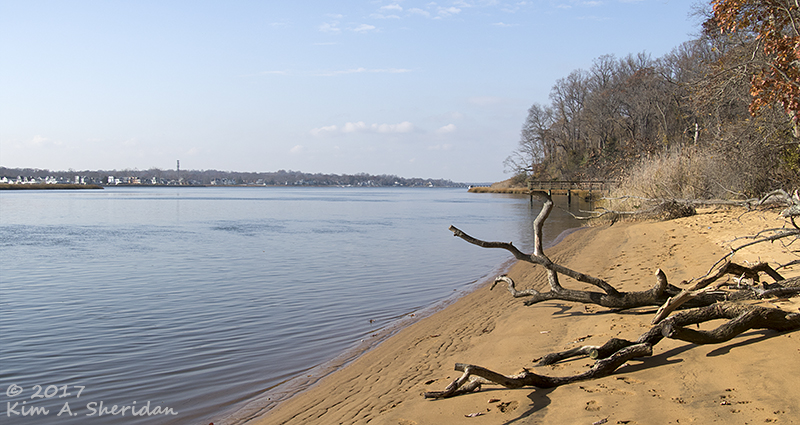
161126_nj-hartshorne-woods_6626acsThe view upriver. The sand was yellowish, picking up the strange ocher tones of the exposed soil above the beach.

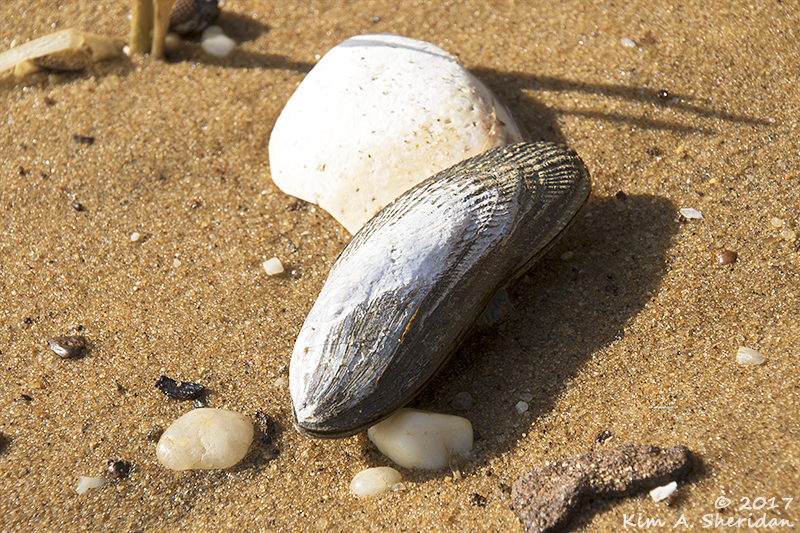
161126_nj-hartshorne-woods_6697acsWe ventured downriver, picking our way over fallen branches and trees. There’s only so much erosion a tree can take before it loses its grip and falls. The beach widened, covered in cordgrass and phragmites and cottony groundsel trees. Pathways to the water led us to troves of mussels.

161126_nj-hartshorne-woods_6699acsAt the water’s edge. Weathered white driftwood was everywhere. I wanted to take it all home and decorate my house with its silken beauty. But no – best to leave it where it lies for others to enjoy.

161126_nj-hartshorne-woods_6683acsUnder the water, a bed of pebbles and shells. And what is this on the largest of shells? “A tube worm,” I said, not sure why I thought so. “NO!” said Robb. “It’s not a tube worm!”

Well, guess what? It is a tube worm – or rather the tubes that tube worms used to live in.

FUN FACT: Tube worms are invertebrates in the class Polychaeta. They are sessile animals, meaning they are anchored to a hard surface underwater. Once its tail is anchored, a worm secretes a calcium carbonate substance that hardens into a whitish tube. The worm can retreat into this shell completely. It cannot survive for long outside of the tube. Tubes of some species of polychaeta worms are long and snakelike; other species coil into a spiral.

All too soon, we came to a place where the beach ended, where there was nowhere else to go but up. Up, using exposed tree roots as hand holds and steps. Up, along the Rocky Point Trail. Up, through the hilly woods and back to our car.

161126_nj-hartshorne-woods_6607aNever again will I take for granted a simple walk in the woods.

Sandy Hook Au Naturel

161126_nj-gateway-nra-sandy-hook-lifesaving-station_6769acs2Ahhh, Thanksgiving! Autumn draws to a close with a harvest feast. Now thoughts turn to the holidays and the coming winter: shopping, caroling and celebrations, cold and snow and ice. The long dark season approaches. So naturally on Turkey Day, we went to… the beach!

Not just any beach though. Sandy Hook, the Far North of the Jersey Shore, in sight of New York City’s towering skyscrapers. Unexplored territory, as far as I was concerned.

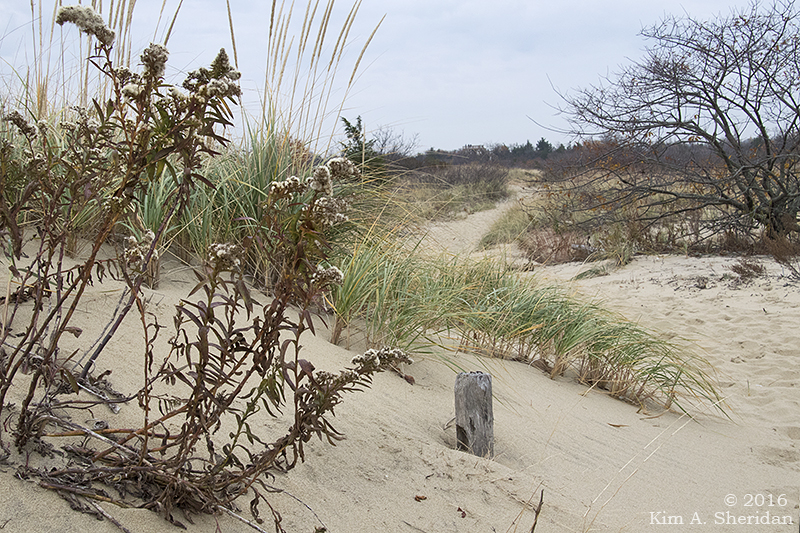
161125_nj-gateway-nra-sandy-hook_6429acsOn the trail to the tip of Sandy Hook. Sandy Hook is a peninsula nearly 6 miles long and part of Gateway National Recreation Area. It juts out between the Atlantic Ocean and Sandy Hook Bay, at the entrance to New York Harbor. A variety of habitats comprise Sandy Hook. Glad to see some late fall color in the sand dune and shrub thicket.

161125_nj-gateway-nra-sandy-hook_6473acs161125_nj-gateway-nra-sandy-hook_6432acs161125_nj-gateway-nra-sandy-hook_6448acsMore dunes. Other habitats in the park include grasslands, ponds, maritime forests and saltmarshes.

FUN FACT: Sandy Hook is a peninsula, but furthermore it is a sand spit. The Jersey Coast runs generally north-south. But the mainland at Highlands New Jersey takes a sharp turn to the northwest. This change of direction is called re-entry. The longshore current which has been carrying sand northward reaches this point and dissipates, dropping its sediment load.

Longshore drift continues to carry sand along the sand bar in the direction of breaking waves. Soon an above-water spit forms. Vegetation takes root and grows, establishing a stable peninsula. In the lee of the spit, salt marshes develop. Wave refraction (the change in direction of a wave) occurring carries sand and sediment around the end to form a hook. Hence, Sandy Hook!

161125_nj-gateway-nra-sandy-hook_6451acsAt last we reached the point. It was a gloomy day, but still picturesque. A gloomy day at the beach beats a good day indoors. Winter will be full of dark, cold, gloomy days. We have found the beach to be the perfect antidote. Visiting the Shore on Thanksgiving is like getting a vaccination against the malaise of winter.

161125_nj-gateway-nra-sandy-hook_6455aThe beach at the point was a treasure trove of shells. Shells upon shells upon shells. Those smaller shells aren’t just resting there, folks. They’re attached to the shells below them.

I could have stayed here for hours beachcombing through the shells. Alas, my companions had other priorities.

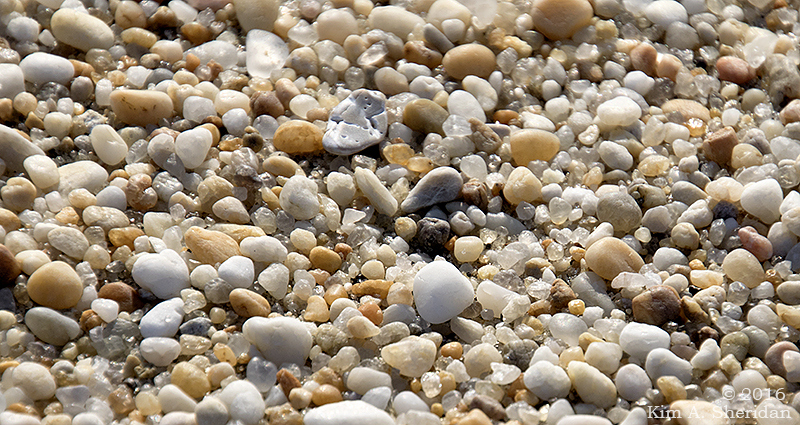
161126_nj-gateway-nra-sandy-hook-lifesaving-station_6789acsOver on the Atlantic side of the spit a long sandy beach lines the shore. The only thing different than other beaches along the Jersey Coast is the view of New York City in the distance. (See top photo.) Oh, and the thin layer of teeny tiny pebbles covering the sand.

161125_nj-gateway-nra-sandy-hook_6170acsBrant along the Shrewsbury River at the southern end of the park. The brant is a small goose that hangs out near oceans. Adult brant have black heads and wear a white necklace at their throats.

161126_nj-gateway-nra-sandy-hook_6855acsSpermaceti Cove is one of several coves on the Sandy Hook Bay side of the spit. A trail led to a boardwalk across the marsh.

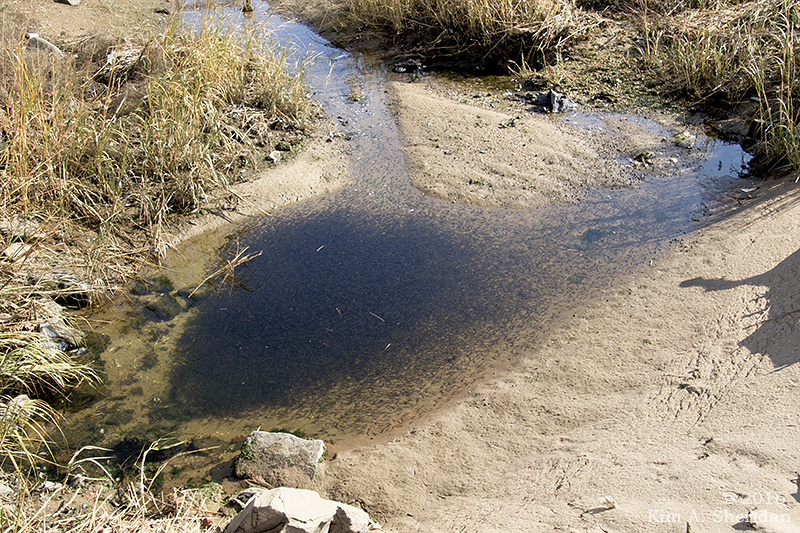
161126_nj-gateway-nra-sandy-hook_6849acsThe tide was dropping. In one of the nearly dry channels, we spotted this cloud of fish. They’d been left stranded by the outgoing water in a small pool, with no way out. How many fish do you think there are?

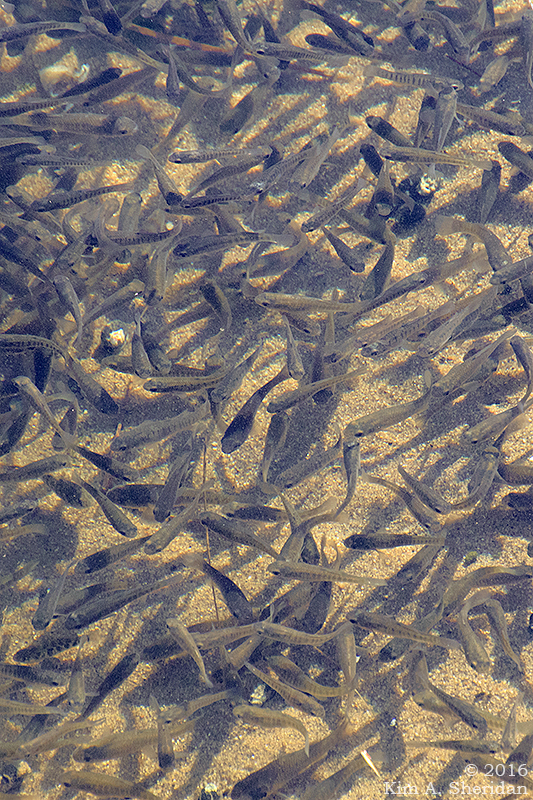
161126_nj-gateway-nra-sandy-hook_6846acsHere are a few of them, up close and personal. They were quite small, maybe an inch or two long.

Some of them appeared to have dark stripes or blotches.

I really need to learn more about fish.

161126_nj-gateway-nra-sandy-hook_6853acsNext to the pool there were other critters afoot, who had written their tales in the open book of sand. A heron had been here, and a raccoon, and at least one fox. Bet the fishing was good, for those content with hors d’oeuvres.

161126_nj-gateway-nra-sandy-hook_6873acsCedars, hollies and marsh grasses.

161126_nj-mt-mitchill-overlook_6958Spermaceti Cove from afar. Blue water, white sand, green trees. Who can think of winter with a view like this?

A Watery Cave

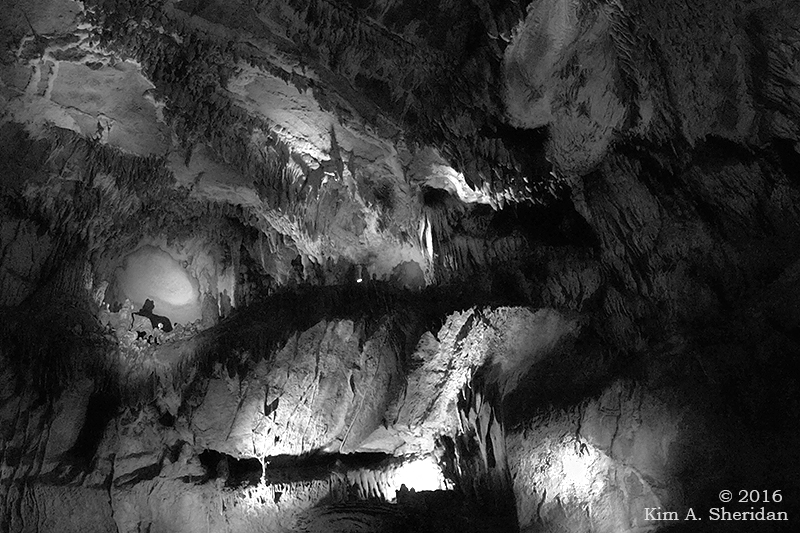
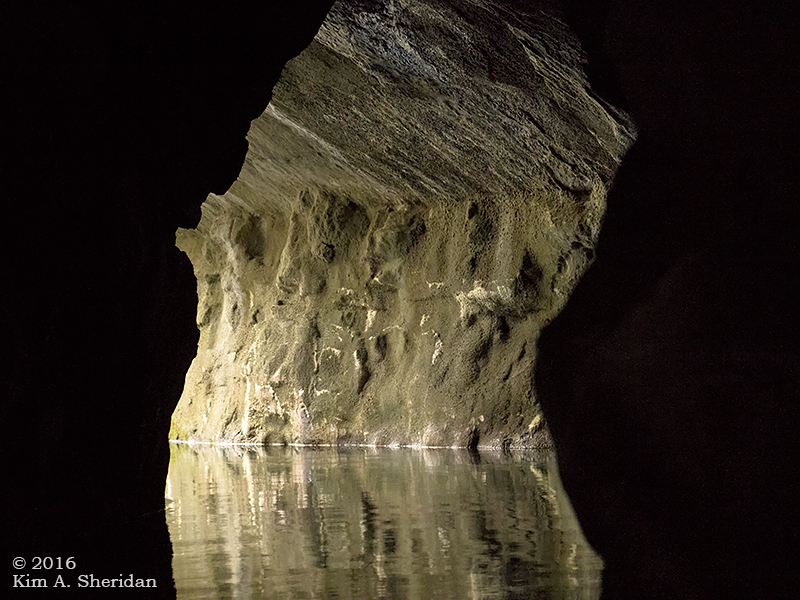
161029_pa-penns-cave_2373acsWe like caves.

My friends and I have been trying to get to Penn’s Cave for three years now. We’ve been to Crystal Cave and Lost River Caverns in Pennsylvania, Seneca Caverns in West Virginia, and Luray Cavern in Virginia. We’ve learned about stalactites and stalagmites, cave bacon, frozen waterfalls, cave draperies and fried eggs. We’ve seen columns and straws and flowstone. We’ve learned how dark it gets in a cave when the lights go out, and we’ve endured just about every bad joke a cave tour guide could come up with.

Luray Cavern pretty much spoiled me for any other cave experience. But Penn’s Cave, in the center of Pennsylvania, looked unique – an all-water journey through the cave in a boat. I mentioned it in my post about Crystal Cave three years ago; we’ve been talking about going to see it for a long time. At the end of October, we finally made it.

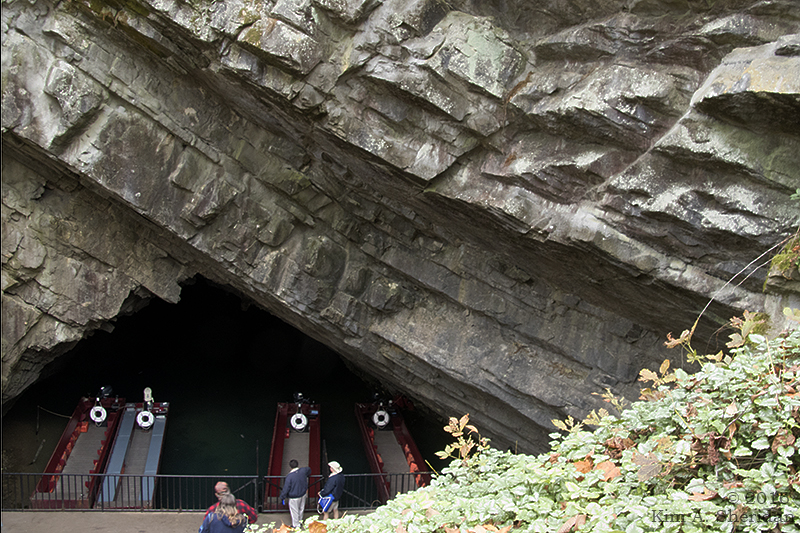
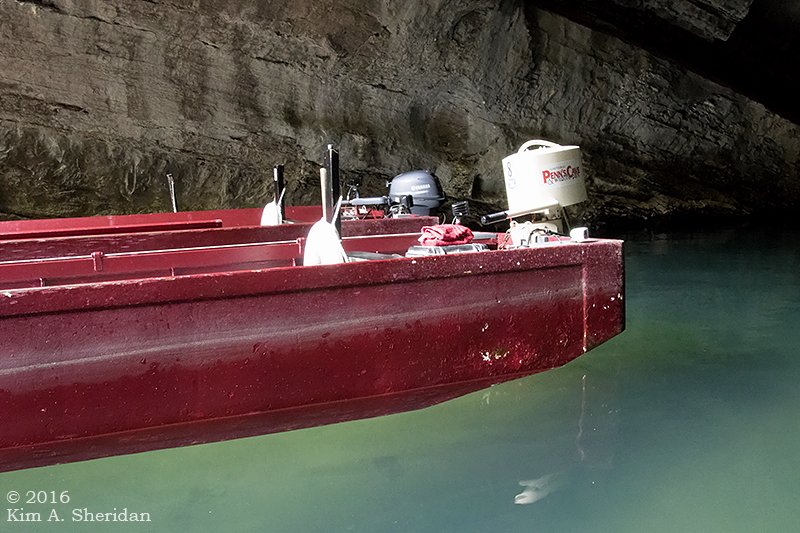
161029_pa-penns-cave_2287acsDown a long flight of stairs to the cave we went. A fleet of flat-bottomed boats awaited. These proved to be really tippy as the cave tourists came on board.

Our boat was also packed pretty tight. Turning to take photos was a challenge, and although the boat ceased to rock when it got underway, it was a far from motionless shooting platform. As if shooting in a dark cave wasn’t hard enough!

161029_pa-penns-cave_2294acsThere were fish in the water. Trout, of some sort. I know next to nothing about fish, unfortunately. I do know that’s a fish swimming there in the foreground of this photo.

The waterway flowing through Penn’s Cave is Penns Creek. Named for William Penn’s brother John, one of its sources is a spring in the cave.

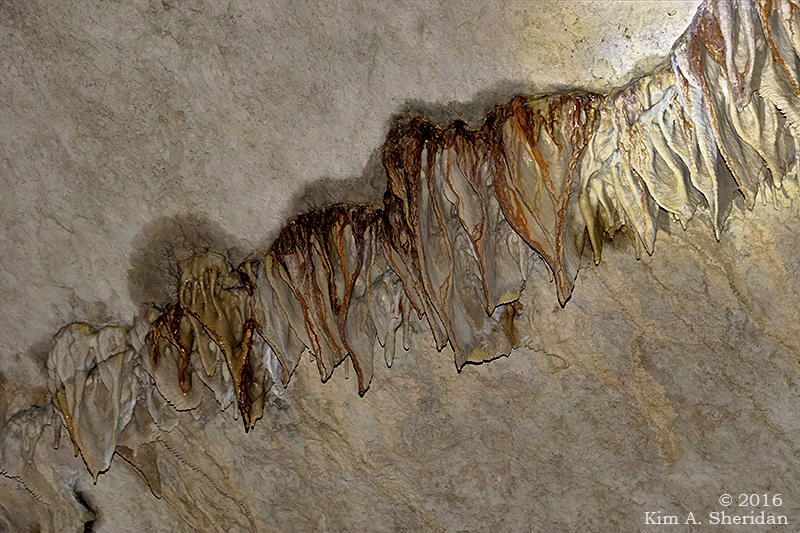
161029_pa-penns-cave_2472acsCave curtains, one type of formation typically found in caverns.

All caverns are caves, but not all caves are caverns. Wait, what?

Any cavity in the ground large enough that some portion does not receive sunlight is a cave. A cavern is a specific type of cave formed in soluble rock and decorated with speleothems.

With what?!?

A speleothem is a cave formation. You don’t remember learning all this from the Wild Edge three years ago? Read it again here, there will be a quiz later.

161029_pa-penns-cave_2334acsThe ceiling of Penns Cave. The scale is lost in this photo, but this room was huge, and the ceiling far away.

Like every cavern I’ve toured, the formations have names. Fittingly, there’s the Nittany Lion. The Statue of Liberty. The Straits of Gibraltar was a narrow passage with rock angling in on both sides. We had to duck.

161029_pa-penns-cave_2520acsThe light at the end of the tunnel. Penns Creek exits the cavern into a small man-made lake called Lake Nitanee.

161029_pa-penns-cave_2538acsLooking over Don’s shoulder as we approach Lake Nitanee. After a short cruise, we turned around and returned through the cavern to the entrance.

Quiz-time! (Didn’t believe me, did you?)

How do speleothems form?

161029_pa-penns-cave_2702acsBack on top of the earth. The surrounding area is mountainous and agricultural. Penn’s Cave offers a Farm, Nature & Wildlife Tour. The park’s 1600 acres are home to longhorn cattle, bison, bighorn sheep, black bears, mountain lions, bobcats and wolves.

161029_pa-penns-cave_3046acsSome live in roomy fenced enclosures, like this handsome wolf.

161029_pa-penns-cave_3072acsThere are five wolves in the Penn’s Cave pack.

Like all wolf packs, there’s a pecking order, with an alpha male and an alpha female.

These wolves were hand-raised from pups, so they are accustomed to humans.

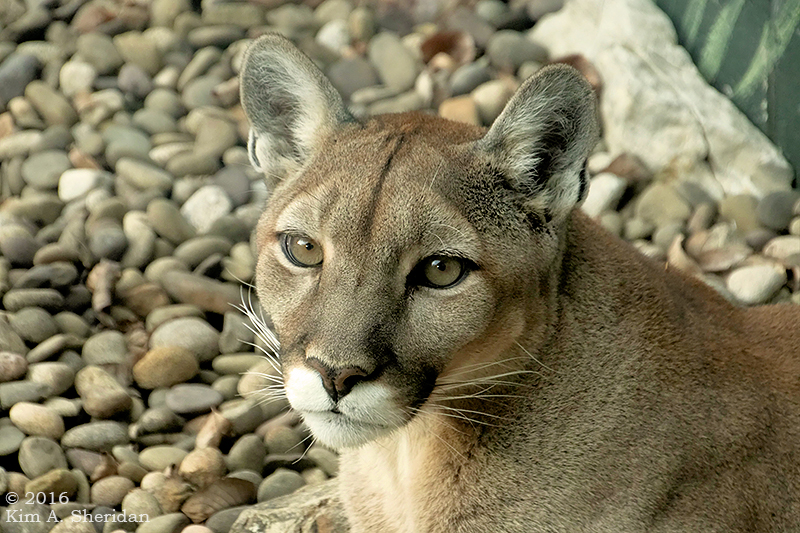
161029_pa-penns-cave_3310acsYou’re in Lion Country now, son. Penn State’s mascot, the Nittany Lion, is a mountain lion like this. She was housed in a zoo-like enclosure behind glass. When she heard my camera’s shutter, she turned and looked right at me for a long moment.

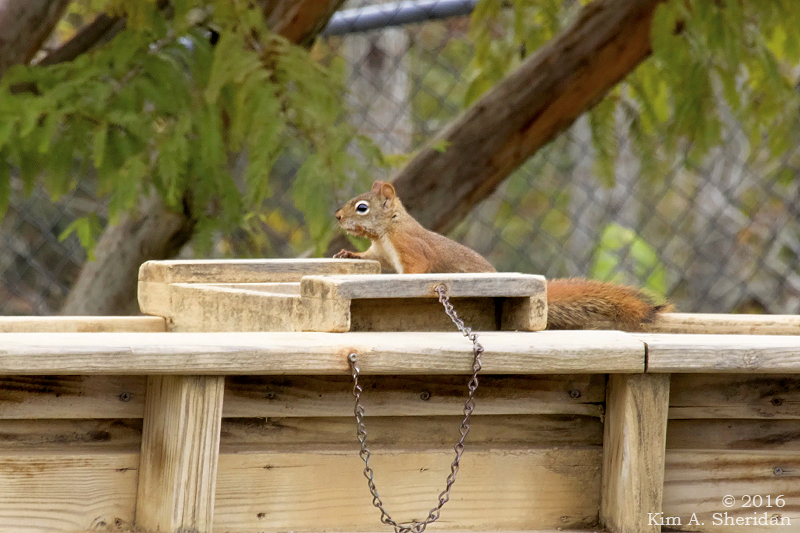
161029_pa-penns-cave_3377acsOur last wildlife of the day, a red squirrel. Not behind an enclosure, but free and strolling across the replica mining sluice. These critters make a call most unlike our familiar gray squirrels.

Got your quiz answer ready?

How do speleothems form?

That’s right, speleothems form when rainwater and calcium carbonate form an acid that eats through soluble rock like limestone. As it drips, it leaves behind calcite deposits.

Give yourself an A!

My friends and I gave Penn’s Cave an A, too. Three years we waited, and it was well worth it.

A Nittany Ramble

161030_pa-mt-nittany_3691acsGuided tours are fine. But sometimes I just want to get out in the woods and ramble!

My friends and I traveled to the center of Pennsylvania on Halloween weekend, to tour Penn’s Cave and Wildlife Park. It was a fascinating and enjoyable visit. It did, however, consist of sitting. In a boat and then a bus, with a small group of other tourists, all confined to a pre-planned route.

By the next day, we three free spirits were ready to strike out on our own for some leisurely exploring.

I’d attended Penn State University before health issues ended my freshman year. Lacking a car in those days, I’d never explored much beyond the campus boundaries.

This was the first time I’d gone back to the region. When Don and Robb were looking for places to hike on this trip, I quickly suggested we climb Mount Nittany. I was delighted when they agreed.

Mount Nittany is a ridge in the Ridge-and-Valley province of the Appalachian Mountains with a peak elevation of 2077’. Penn State lies a couple of miles to the southwest in the Nittany Valley. Penn State’s mountain lion mascot, the Nittany Lion, is named for Mount Nittany.

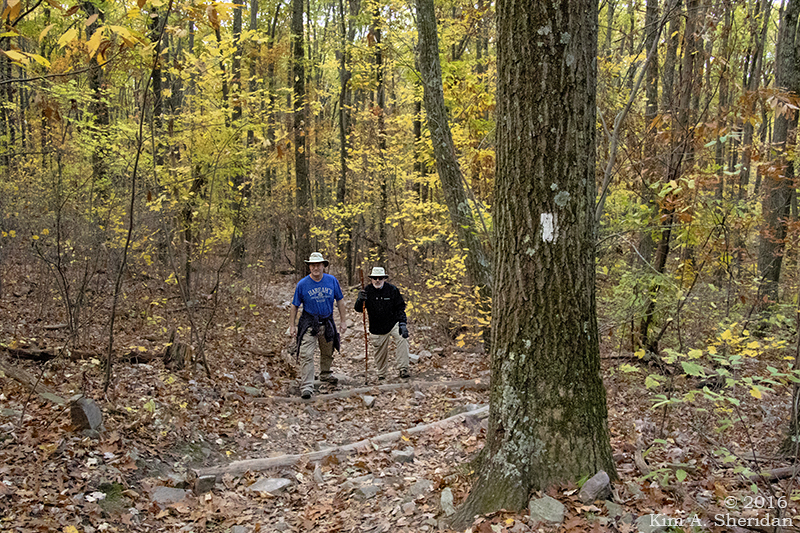
161030_pa-mt-nittany_3413acsThe hike started with a bit of a climb – 600 feet in the first half mile, up an uneven and rocky trail. Robb and Don clambered up it like a pair of billy goats.

161030_pa-mt-nittany_3495acsI had thought that the trees would have lost all their leaves by late October. I was pleasantly surprised to see lots of fall color on the mountain. This leaf couldn’t make up its mind what hue it wanted to be.

161030_pa-mt-nittany_3575acsOnce we reached the top, the ridge leveled out, and the walking became easier. Two trails go around the top of Mount Nittany. We took the shorter loop. Moss, leaves and a weathered log along the trail.

161030_pa-mt-nittany_3440acsSoon we came to the highlight of a Mount Nittany hike, the Mike Lynch Overlook. From here we had a great view of the campus of Penn State. I hadn’t seen the campus from above before. Happy Valley!

161030_pa-mt-nittany_3476aOf course, before I even got into position, Robb insinuated himself into the view, and my photographs. This is a frequent occurrence. Don joined him to examine a leaf. Because obviously a leaf is more fascinating than the expansive view of Nittany Valley.

161030_pa-mt-nittany_3432acsBeaver Stadium, home of Penn State football. I went to a few games there, long ago.

161030_pa-mt-nittany_3470acsThe cluster of buildings in the center include my old dorm. I don’t remember the buildings around it; they’re either new or remodeled. Somehow the campus seems much more built up than I remember it. But I can still find my dorm!

161030_pa-mt-nittany_3541acsBack on the trail. The path led through woodlands of oaks, maples, mountain laurel and stands of white pine, dark green against the vibrant splashes of red and gold.

161030_pa-mt-nittany_3545acsWitch hazel blossoms. Witch hazel blooms late in the year, a welcome spot of color in a landscape soon to turn brown.

At some point, as often happens when we are in likely habitat, someone suggested we should keep our eyes out for Lycopdium, a clubmoss we refer to as “teeny tiny Christmas trees.”

161030_pa-mt-nittany_3622acsSure enough, we found it. Or rather, I found it. It’s not often I spot something first, so I was pleased to have something to show the guys for a change. Here it is, Lycopdium dendroideum, aka ground pine, everybody’s favorite clubmoss.

161030_pa-mt-nittany_3671acsAnd here’s everybody’s favorite tiny mammal, the irrepressible chipmunk. There were lots of these cute little critters scurrying around. Photography was tough in the gloom of the deep forest, and I wish my images from the day were of a higher quality. But I was glad this fellow stopped long enough for me to get a photo of any kind.

161030_pa-mt-nittany_3699acsWhat goes up must come down, and all too soon we found ourselves making our way down the mountain. Cute critters, wonderful views and beautiful autumn foliage – what more could one ask of a Mount Nittany ramble?

Harvest Soup

161102_pa-ridley-creek-fall_3977acsLady Autumn drifted through the forest on a sparkling day, leaves rustling crisply under her feet. Wrapping her cloak tightly around herself against the chill, she swept her amber eyes across the landscape, seeking spices and herbs for her harvest soup.

A main ingredient was needed. Pumpkin?161102_pa-ridley-creek-fall_3934acs

161102_pa-ridley-creek-fall_3945acsButternut squash?


Or perhaps…

161105_pa-glen-providence-park-fall_4423acsCantaloupe?

161102_pa-ridley-creek-fall_4087acsAh, a pinch of saffron.

161110_pa-home-fall_5165acsSome cinnamon and nutmeg.

161102_pa-ridley-creek-fall_4046acsRusset potatoes, finally chopped to give the broth some heft.

161102_pa-ridley-creek-fall_3883acsAnd mushrooms. Always mushrooms.

Already her imagination conjured the aroma of bubbling broth, hearty and savory, laced with the essence of wood smoke.

161102_pa-ridley-creek-fall_4150acsA zest of lemon would do nicely, she thought.

Even a little lime.

161102_pa-ridley-creek-fall_3962acsNuts would have been a nice touch. Alas, one of Her Ladyship’s small footmen had found these acorns first. A field mouse, a chipmunk, or perhaps a gray squirrel had taken them for his larder.

Lady Autumn didn’t mind. She would not begrudge her creatures a tasty and nutritious morsel when they have need of such sustenance.

161103_pa-crec-fall_4365acsA splash of claret.

A good soup tastes better with wine, Her Ladyship knew.

161102_pa-ridley-creek-fall_3973acsA sprinkle of sage…

161105_pa-glen-providence-park-fall_4384acsGinger…

161110_pa-home-fall_5172acsAnd a generous dash of paprika to top it off.

161103_pa-crec-fall_4233acsLady Autumn walked through the forest on a golden afternoon, gathering the seasonings for a fine harvest soup.

161102_pa-ridley-creek-fall_3849acsWhat do you think it will taste like?