Duck, Duck, Sandpiper

150110_NJ Barnegat Light Harlequin_4278acs2It’s become an annual tradition now, the winter pilgrimage to Barnegat Light to see the winter waterfowl. Every year it gets colder and windier, and every year the jetty gets longer.

Or at least it seems longer! Especially this year, as it was my first time picking my way from rock to rock with a tripod on my shoulder. I’m not the most sure-footed of creatures, as my friends will be happy to tell you. But I also don’t have the steadiest of hands, so having the tripod was a big help.
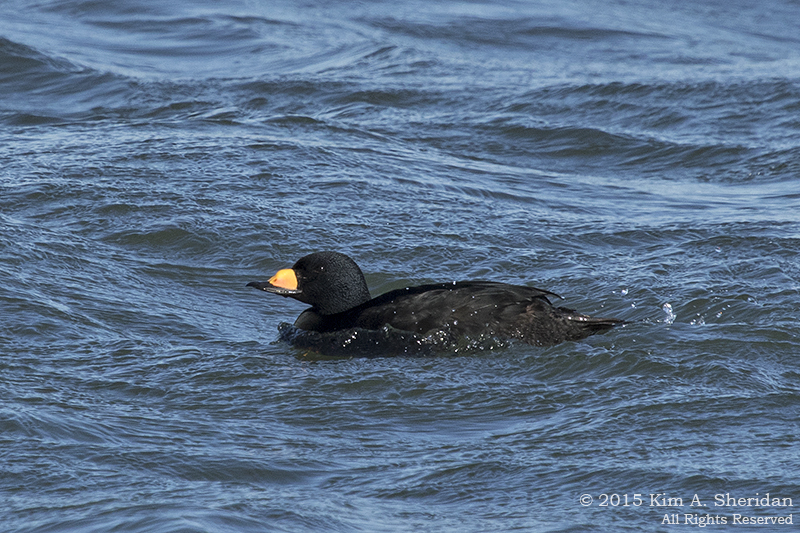
150110_NJ Barnegat Light Scoter_4124acsThe day started with a Black Scoter near the Lighthouse. Hmmm… Dark bird on dark water. Helpful of him to have a bright yellow bill.
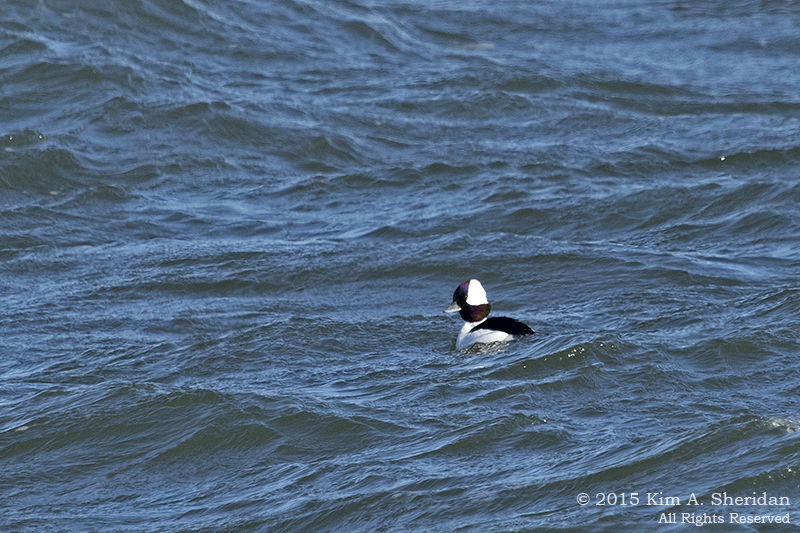
150110_NJ Barnegat Light Bufflehead_4186aA small duck bobbed alone in the big bay. I was a little surprised to see this Bufflehead out here in the Inlet. I’m used to seeing them in fresh water lakes. But they frequent the salty bays too.
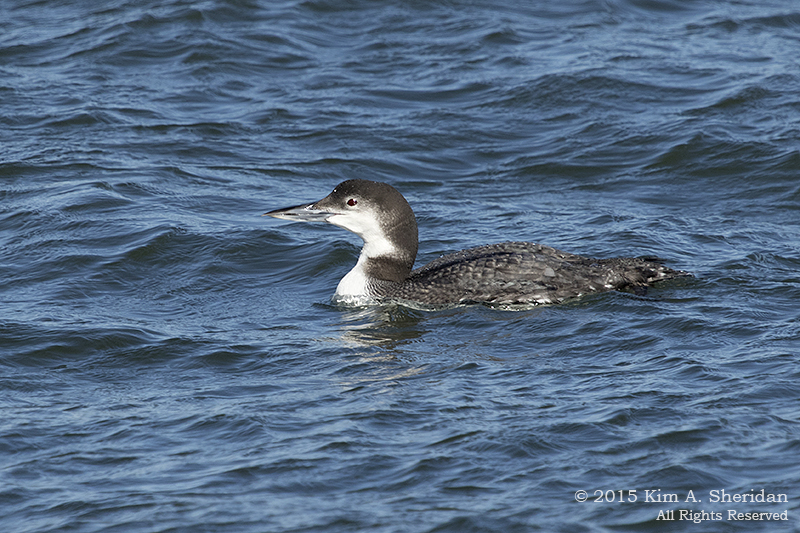
150110_NJ Barnegat Light Loon_4220acsCommon Loon. Someday I hope to see them in full breeding plumage, and hear them call.

150110_NJ Barnegat Light Harlequin_4292aThe birds we came to see are the Harlequin Ducks. Two males swam near the rocks at the end of the jetty. There were only four Harlequins there this day, two males and two females. We didn’t mind. Quality over quantity.
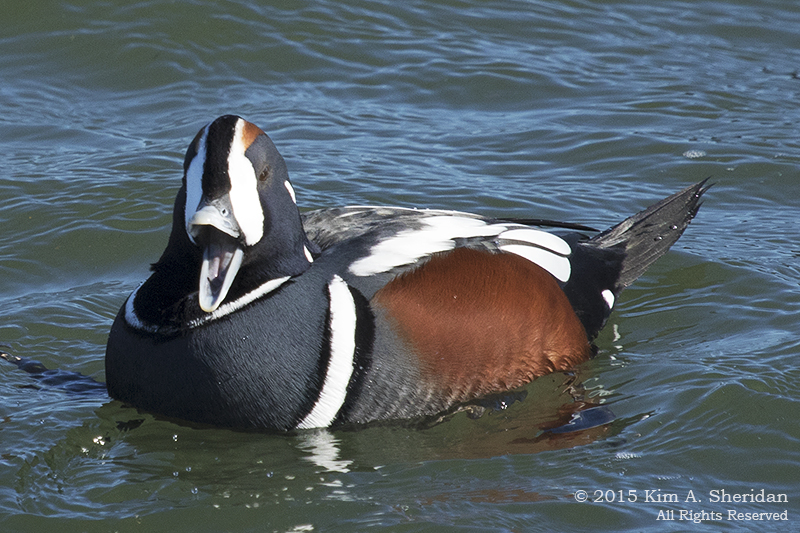
150110_NJ Barnegat Light Harlequin_4284It was 22° with winds gusting over 20 mph. I wore heavy wool socks, long underwear, lined pants under rain pants, a turtleneck, fleece AND insulated vest under a down jacket, a scarf, two hats and three pairs of gloves, with hand warmers inside. This duck thought I was the funniest thing he’d seen in awhile.

FUN FACT: Why are the ducks comfortable swimming in the frigid water while we humans are shivering on shore?

It starts with their feathers. Next to the skin lies a thick insulating layer of down feathers. Above the down are layers of interlocking and overlapping feathers that leave a minimum of bare skin exposed to the elements. The birds attend meticulously to feather maintenance with liberal doses of preen oil.150110_NJ Barnegat Light Harlequin_4377acs3

Look closely at a duck after it surfaces from a dive, and you will see the water beading up and running from its waterproof feathers like rain from a freshly waxed car.

Ducks’ feet and legs lack feathers to protect them, and could be a dangerous source of heat loss. But water birds have evolved to combat this by utilizing a countercurrent heat exchange system. As hot blood in the arteries flows into the upper leg, it transfers heat to the cold venous blood returning from the feet. Blood that reaches the feet is much colder than the body, close to the temperature of the water in which the duck swims, but the blood that returns to the heart is warm. This heat exchange minimizes heat loss from the legs, while maintaining a healthy body core temperature. Cold feet, warm heart!
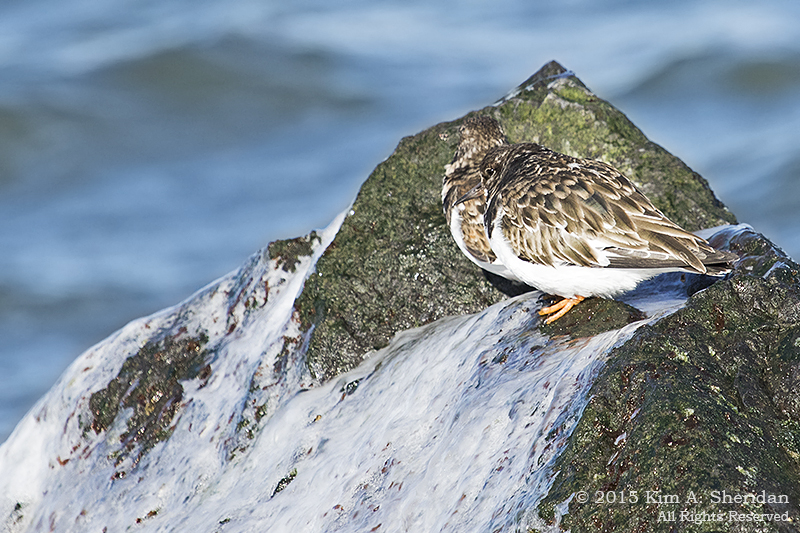
150110_NJ Barnegat Light Turnstone_4337acsSandpipers were in attendance as well as ducks. Two small gatherings of Ruddy Turnstones perched precariously on the icy rocks.

150110_NJ Barnegat Light Turnstone_4416acsYou put your right foot in, you put your right foot out…
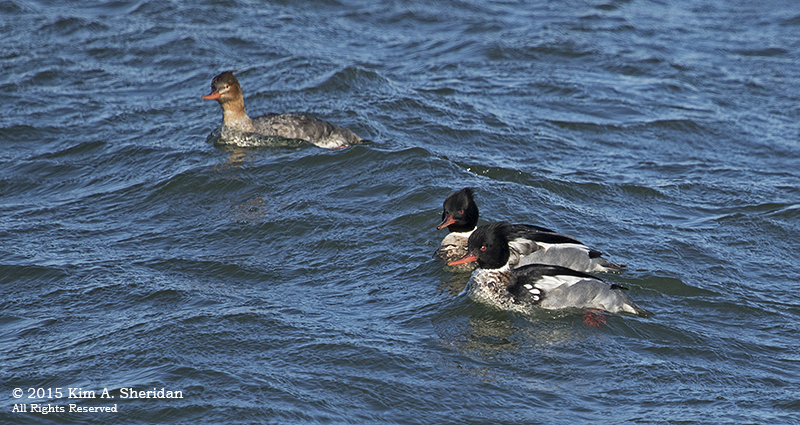
150110_NJ Barnegat Light Merganser_4578acsBack near the Lighthouse were three Red-breasted Mergansers, one female (rear left) and two males.
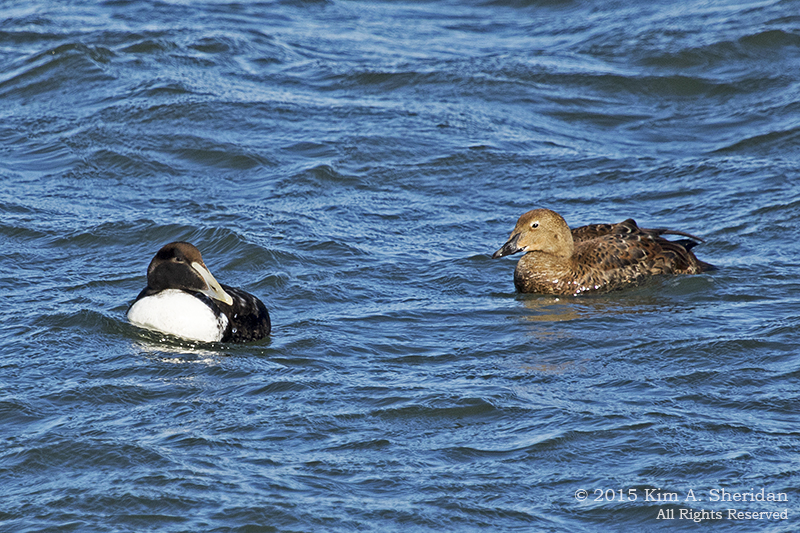
150110_NJ Barnegat Light Eider_4581aAccompanying the Mergansers were a young male Common Eider (left) and a female King Eider. The King Eider was a new bird for me. Common Eiders I’ve seen before, but only females at a distance. Seeing both this close was a treat. I’d have been happy with Eider one!

150110_NJ Barnegat Light Turnstone_4465acsTime to snuggle in somewhere warm at the end of a cold day at Barnegat Light.
Winter’s Edge

141122_NJ Stone Harbor Point_1513acsLong gone are the warm days of summer, days when families crowded the beach with their beach blankets and umbrellas, their sand pails and horseshoe sets. The only creatures frolicking in the surf are ducks. The stiff ocean breeze, so welcome when the temperature was 80°, is a torment at 35°. Autumn lingers, but teeters on the edge of winter. The beach is empty.

Of humans, but not of wonders.

At last, the beach is ours!

141122_NJ Stone Harbor Point_1563acsFrom late fall to mid-spring, the Jersey Shore is ours to explore, empty of crowds and noise. Now there are plenty of treasures to collect, shells and rocks and sea glass, safe from the many feet and the mechanical beach-sweepers of summer.

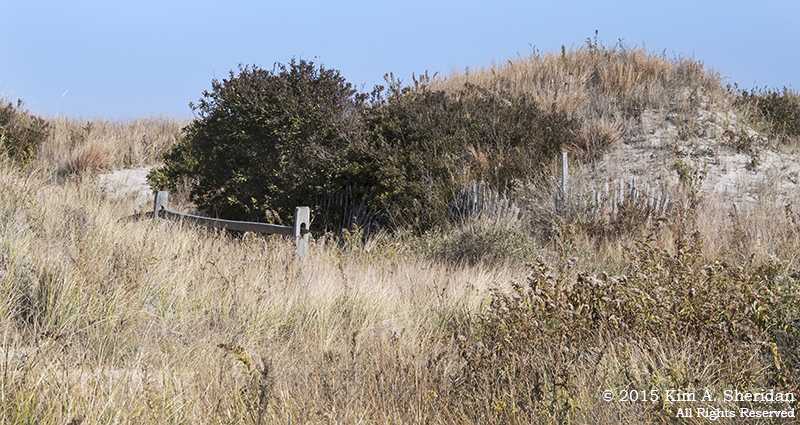
141122_NJ Stone Harbor Point_1555acs2Lines of dune fencing stretch across white sand to the horizon.

141128_NJ Holgate_2948acsThe winter birds arrive at the Shore with the colder weather. Long-tailed Ducks bob in the waves. The females seem to have a lot to say to the pink-billed males.

141128_NJ Holgate_2706acsThis sparrow-like bird is a Snow Bunting.

141128_NJ Holgate_2774acsAs we walked along the beach at Holgate one November day, we kept seeing these odd tree sculptures. For a bit, we thought some enterprising soul had placed driftwood on end as an artistic expression. Then we realized that these were the broken stumps of dead trees, and we were walking amidst what once had been wooded dunes.

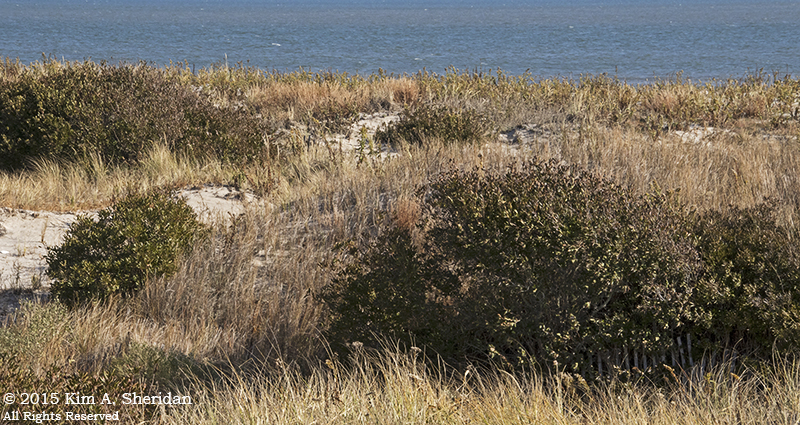
141128_NJ Holgate2902-5 Pan acsThe dunes at Holgate, looking west toward Barnegat Bay. The southern tip of Long Beach Island is a part of the Edwin B. Forsythe National Wildlife Refuge. It didn’t always look like this. Only a few years ago, it was a thicket of dune plants and shrubs. Then Superstorm Sandy paid a visit, inundating the entire area, breeching the island from bay to ocean in places. These weathered roots, trunks and branches are what are left of once vital vegetation. Devastated, but starkly beautiful.

FUN FACT: These plants were flooded with water, but died of thirst. Why? Fresh water flows easily into a plant through the tissues of the roots, a process called osmosis. But this was a saltwater inundation. Ever have a salt shaker gum up in humid weather? Salt absorbs water very easily, pulling water from the plants into the soil and leading to dehydration. It also interferes with the chemical processes by which a plant obtains nutrients. The combination of nutrient and water deficiencies has laid waste to the dune plants.

141122_NJ Stone Harbor Point_1480acsThis is what a healthy dune community should look like. Stone Harbor Point.

141122_NJ Stone Harbor Point_1520acsGood fences make good neighbors.

141122_NJ Stone Harbor Point_1489acsDune fences make good dunes, and if successful, good dune grasses and plants.

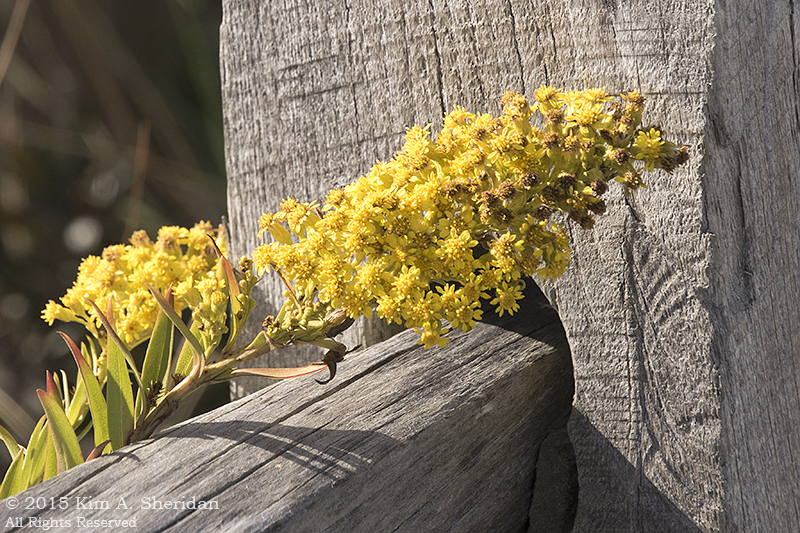
141122_NJ Stone Harbor Point_1552aGood fences make good backdrops for wildflowers, still abloom in mid-November.

141122_NJ Hereford Inlet_1646acsOne doesn’t have to go far from the beach to find woodland critters. The gardens at Hereford Lighthouse provide a fine place for squirrels to make a living.

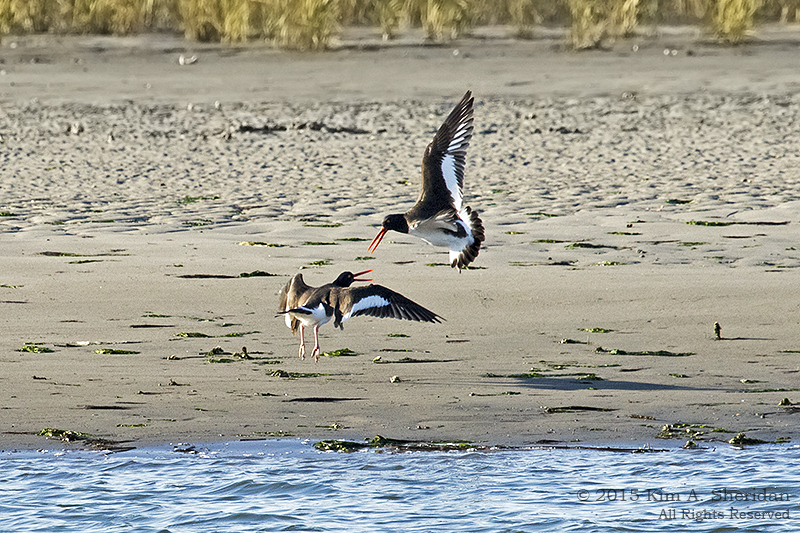
141122_NJ Nummys Island_1892acsIn the late light of day, a pair of American Oystercatchers squabbles.

Even on the edge of winter, wonders abound at the wild edge.

Junior Prom

141017_Chincoteague NWR_9813acsIt’s prom season at Chincoteague National Wildlife Refuge.

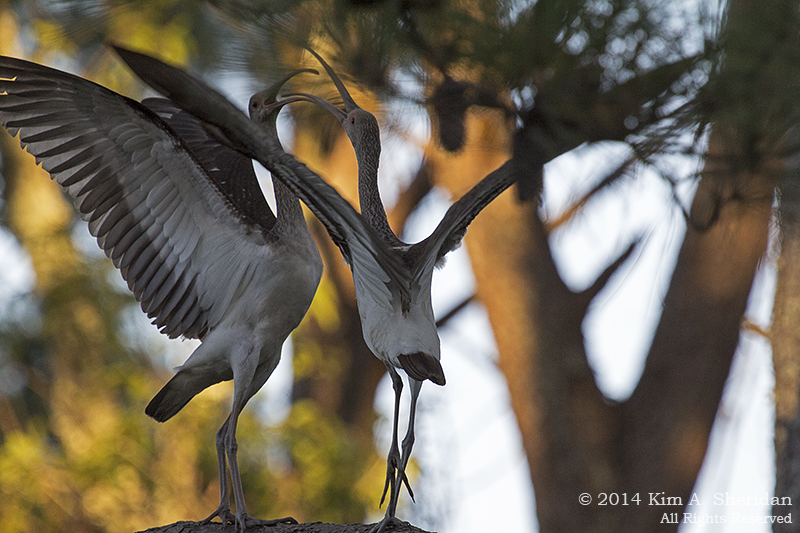
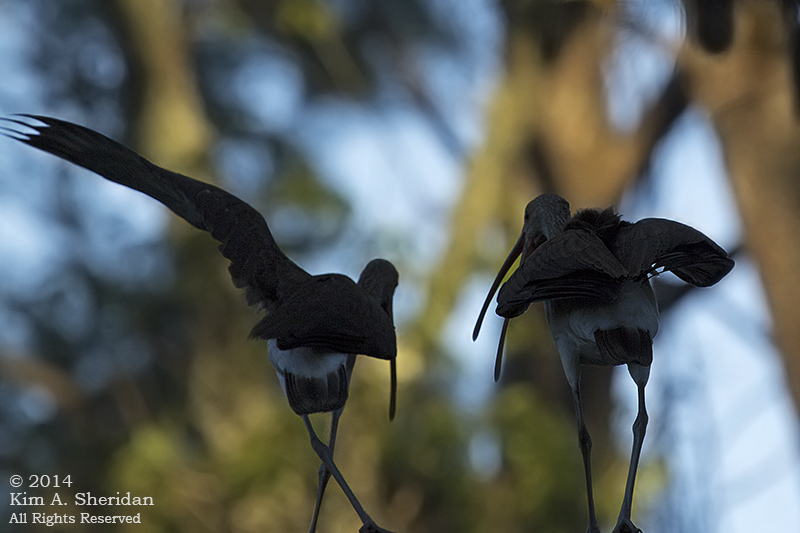
Fall is the time for young birds to gather in flocks and socialize. Like teenagers at the junior prom, they strut, preen and dance. Juvenile White Ibises show off their moves.

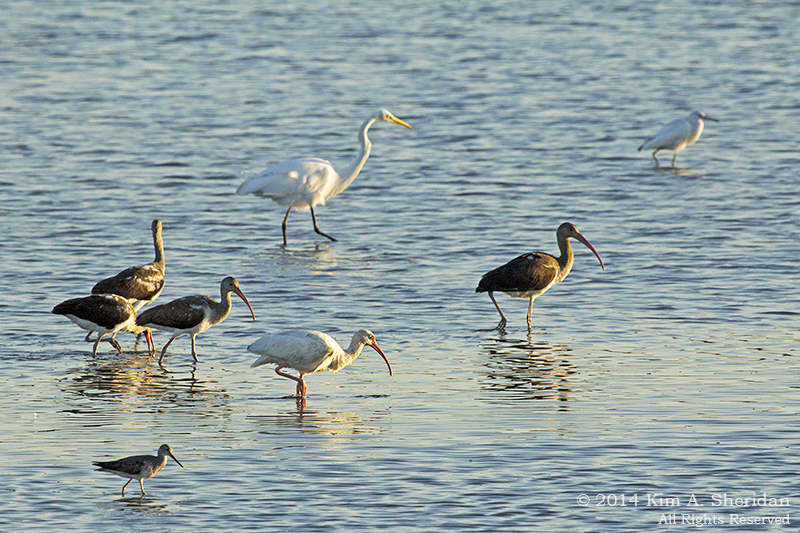
141018_Chincoteague NWR AM Swan Cove_0168aJuvenile birds have their own fashion style; they never dress like the grown-ups. White Ibis favor brown; Little Blue Herons wear white. It’s all so confusing. Especially when the adult chaperones are around. Here’s an adult White Ibis in white plumage with four young Ibis. In front is a Greater Yellowlegs; center rear is a Great Egret, and all the way in the back a juvenile Little Blue Heron.

141018_Chincoteague NWR AM Swan Cove_0464acsA Tri-colored Heron paces the dance floor.

141017_Chincoteague NWR_9868acsIn the evening the birds come to the woods along Beach Road. Loblolly pines offer a nice perch to soak up the late day sun. Twelve Snowy Egrets, three White Ibis… and a partridge in a pine tree?

141017_Chincoteague NWR_9649acsA shy young Black-crowned Night-heron waits for a dance invitation.

141018_Chincoteague NWR_0849axsDouble-crested Cormorants hang out in the small stream that bordered the road. Somebody’s gotta handle the refreshments.

141018_Chincoteague NWR_0841aGreat Blue Heron. There are a lot of wallflowers at this prom.

141017_Chincoteague NWR_9753acsThe highlight of the evening is the crowning of the Prom King and Queen. This year the honor goes to a pair of White Ibises.

141017_Chincoteague NWR_9784acsProm pictures are de rigueur.

141017_Chincoteague NWR_9816acsTime to take a bow. It’s been some enchanted evening!

Gorgeous

141028_HNWR Autumn_2271acsWhat’s this? Has Lady Autumn been playing in her wardrobe again?

141109_Nockamixon Fall Camping_3230aIn the manner of all divas, this elusive elf has made us wait for her appearance. At last she has graced the stage. First to feel the touch of her hand were the mountains and high hills. Haycock Mountain wears Her Ladyship’s colors along the shimmering blue shores of Lake Nockamixon.

141025_Hawk Mountain_1962aHawk Mountain is similarly adorned. One can do worse than to sun oneself on an outcropping of Tuscarora sandstone, watching while raptors journey past, and vultures circle lazily over the slopes.

141025_Hawk Mountain_1840acsHere flies a courier of the autumn elf. A Red-tailed Hawk wings its determined way south on a mission of migration.

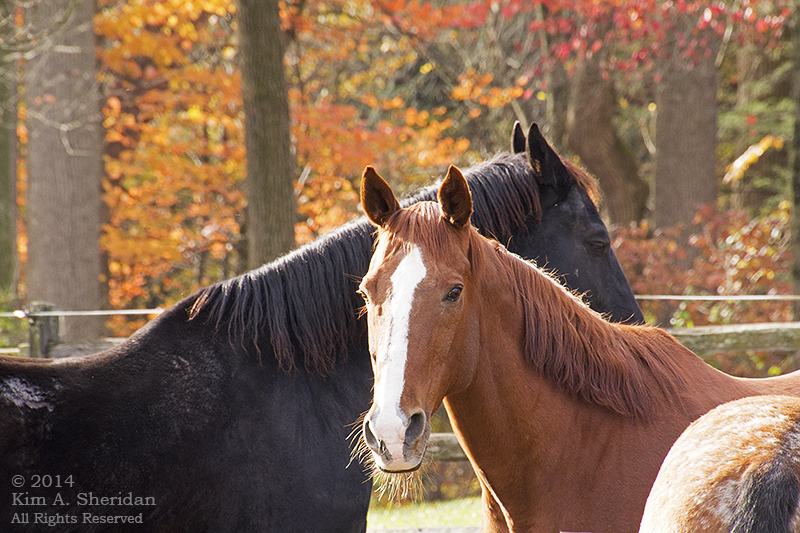
141031_Wissahickon Autumn_2458aHer Ladyship’s steeds soak up the sunshine on a fine autumn day.

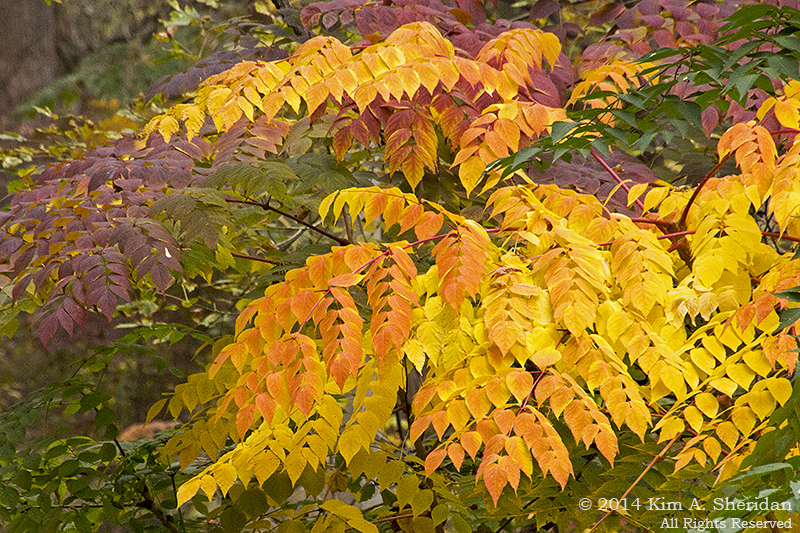
141031_Wissahickon Autumn_2667acsFun Fact: The Summer Queen bedecks herself in leaves of green, while Lady Autumn chooses golden yellows, fiery reds and blood-deep purples. Yet these are in fact the same leaves. Why do they change color? Like much in life, it has to do with food. Plants use the chemical chlorophyll to make food from sunlight, a process known as photosynthesis. Chlorophyll gives leaves their green color. When the day shortens and sunlight fades in fall, the chlorophyll also fades. This reveals the yellows and oranges of the carotenoid pigments, which have been present all along. In addition, some trees produce anthocyanins in the fall, which turn leaves red and even purple. Leaves are vulnerable to freezing, so to protect the tree throughout the cold winter, the leaves close their veins and fall away.

141031_Wissahickon Autumn_2587acsLady Autumn samples many smaller stages before she is ready to take her act to Broadway.

The theater of choice this year is the Wissahickon Valley.

A wise choice it is indeed. The slopes of the deep gorge abound with trees that can best show off her finery.

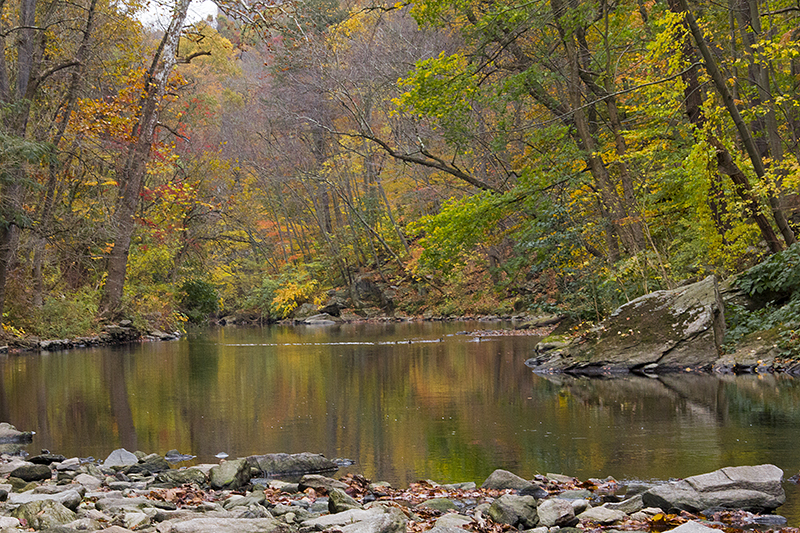
She cannot help but admire herself in the mirrored surface of Wissahickon Creek.

141031_Wissahickon Autumn_2638aNo unblemished mirror is this Creek. All along its course are boulders of Wissahickon schist, smoothed and weathered with time. Far from detracting from Her Ladyship’s beauty, they seem somehow to enhance it.141031_Wissahickon Autumn_2885a

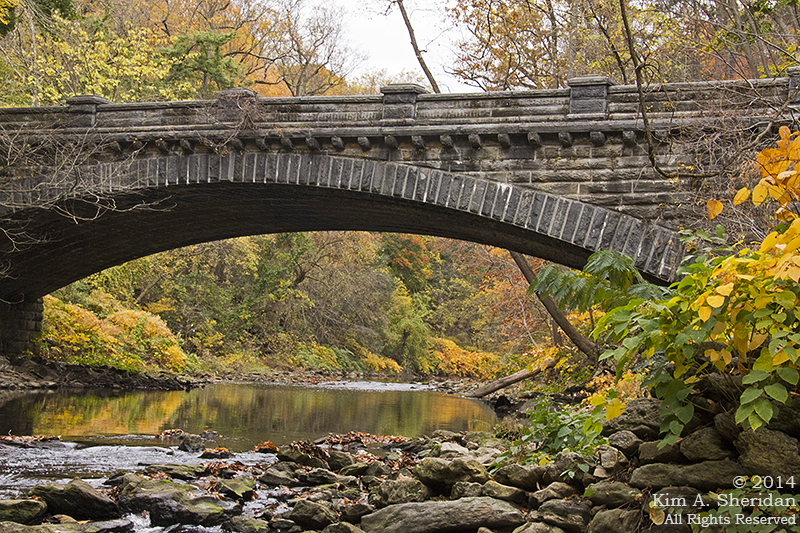
141031_Wissahickon Autumn_2792aAs do some creations of Man. The Bluestone Bridge was built in 1896 to carry travelers across the creek to the Lotus Inn. The old roadhouse is long gone, but the bridge remains.

141031_Wissahickon Autumn_2934aElsewhere, the Walnut Lane Bridge provides a more modern backdrop to Lady Autumn’s colorful dance.

141031_Wissahickon Autumn_2849acsNow the days grow short, and the hounds of the Winter Queen can be heard baying throughout the woods.

Lady Autumn’s entourage finds much preparation needed before the curtain closes.

141114_7D First Shoot_0058 acs copyThe smallest of her footmen searches busily through crimson raiments worn and then discarded. “There’s an acorn in here somewhere, I just know there is!”

Soon the last of Autumn’s finery, discarded along the wayside, will fade to brown, to be gathered and taken away. Not to be rushed is our Lady, though; before ceding the stage, she will have her encore, one last turn along the Wissahickon, one last dance in the gorgeous gorge.141031_Wissahickon Autumn_2745acs

Wild Horses

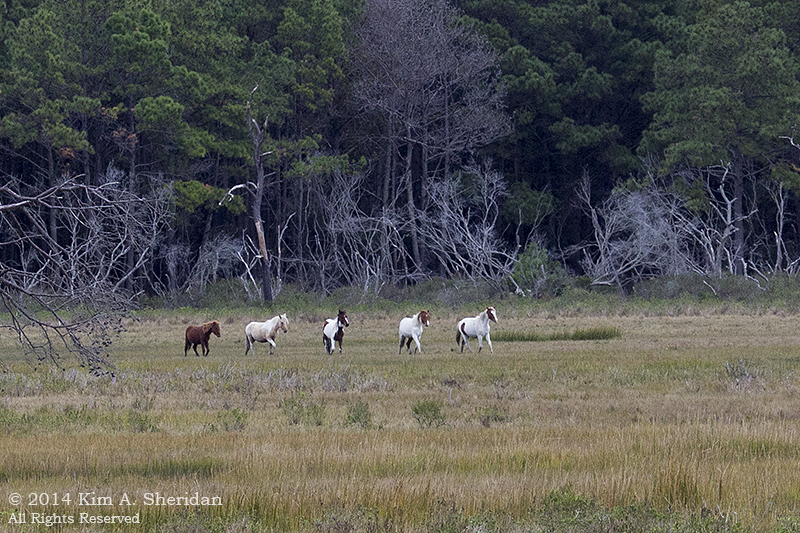
141017_Chincoteague NWR_9571 aThundering hooves pound the grasslands. Over the rise the herd appears, horses with manes flowing in the wind of their own passage. Their varied colors of chestnut and sorrel, palomino and pinto mirror the reds, tans and golds of the canyons and mesas that edge the Plains.

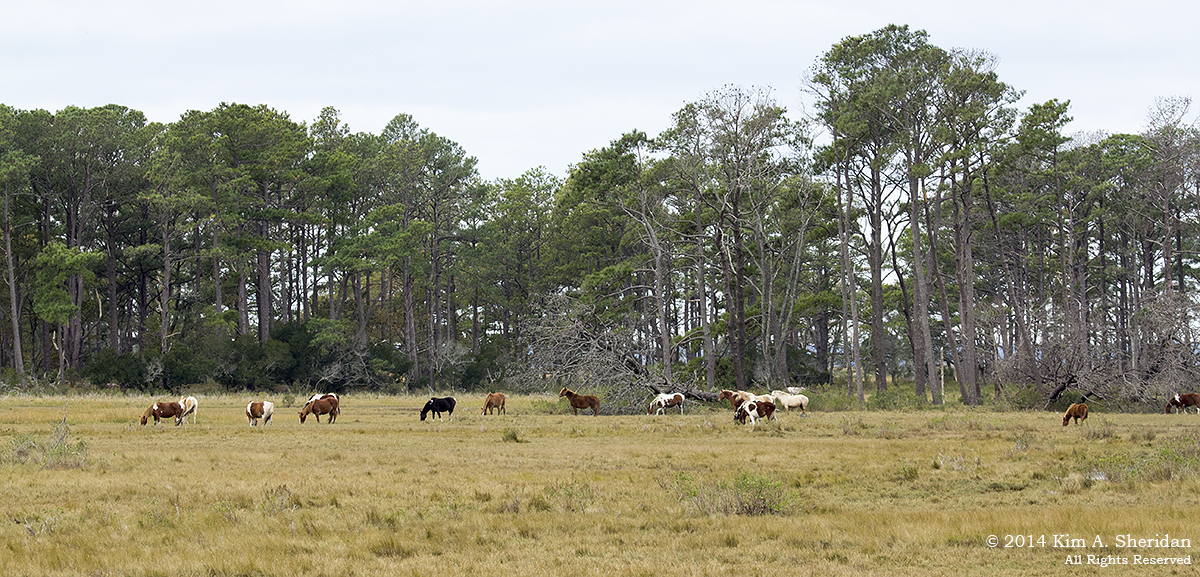
Say “wild horses” and this is the image that springs to mind, mustangs roaming the deserts and prairies, an echo of the Old West. Coastal salt marshes and maritime forests are not where you would expect to find these wild creatures. Yet the southeastern coast is dotted with small herds of ponies. One of the most famous of these herds lives in the Chincoteague National Wildlife Refuge, which is part of Assateague Island National Seashore in Virginia and Maryland.

141019_Chincoteague NWR Woodland Trail_1230 acsLocal legend says that the Assateague ponies are descendents of horses that struggled ashore from a shipwreck. More likely they are the offspring of tax-evaders! Farmers in the 17th century would turn their animals loose on the island to avoid the taxes levied on free-roaming mainland livestock.

141019_Chincoteague NWR Beach Road_1728Today there are two herds on Assateague Island. The northern Maryland herd is owned by the National Park Service, and roams free in the Assateague Island National Seashore. The southern Virginia herd is privately owned by the Chincoteague Volunteer Fire Department. Once a year, on “Pony Penning Days”, they are driven across the channel to Chincoteague Island. Many of the young foals are auctioned off before the herd is swum back to Assateague. This helps keep the horse population at a healthy level, and proceeds benefit the fire company.

141019_Chincoteague NWR Beach Road_1742 aLone horse under a loblolly pine, the predominate tree of the maritime forest here.

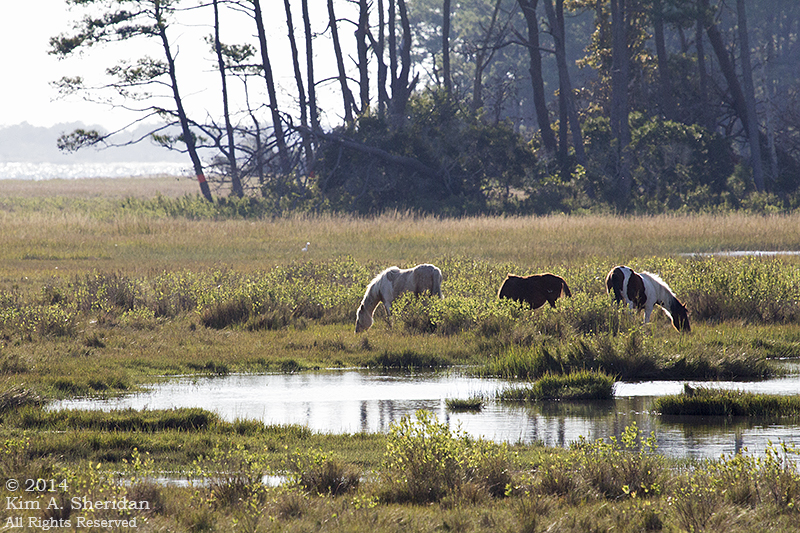
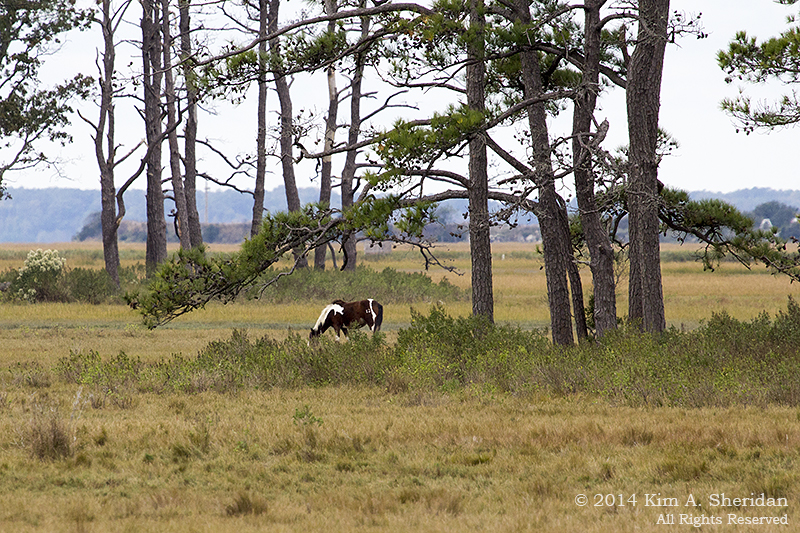
141019_Chincoteague NWR Woodland Trail_1226 acs2The wild horses live rough, no cushy stables for them. Cold stormy winters find them in the shrub thickets and woods. The moderate months of spring and fall are spent in the marshes. In summer, heat, humidity and hordes of biting insects drive them to the beach and into the water.

141019_Chincoteague NWR Woodland Trail_1331Dead trees and shrubs are everywhere, fascinating in their naked beauty. The salt marsh is a harsh mistress.

For the ponies, too. Most of my photos were of headless horses, their faces buried in the grass. They graze constantly. I thought their rotund appearance meant the ponies ate well. In fact, it’s just the opposite. Their diet of salt marsh cord grass and salt hay is abundant but poor in nutritional value. It’s also salty, which leads the horses to drink twice the amount of water a domestic horses would drink. Those round tummies are the result of water bloat.

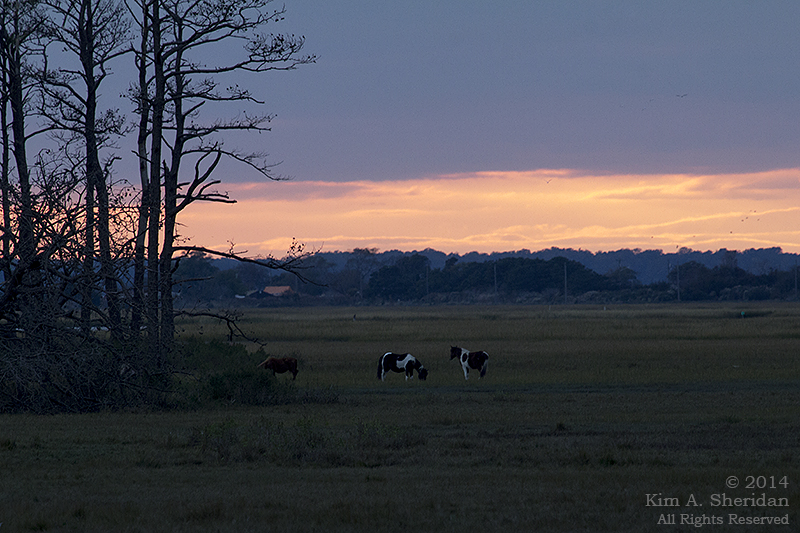
141018_Chincoteague NWR_0957 acsLike many children, I grew up on Marguerite Henry’s 1947 book Misty of Chincoteague, about Pony Penning Days. Little did I dream I’d someday get to see those wild ponies, grazing peacefully at sunset.

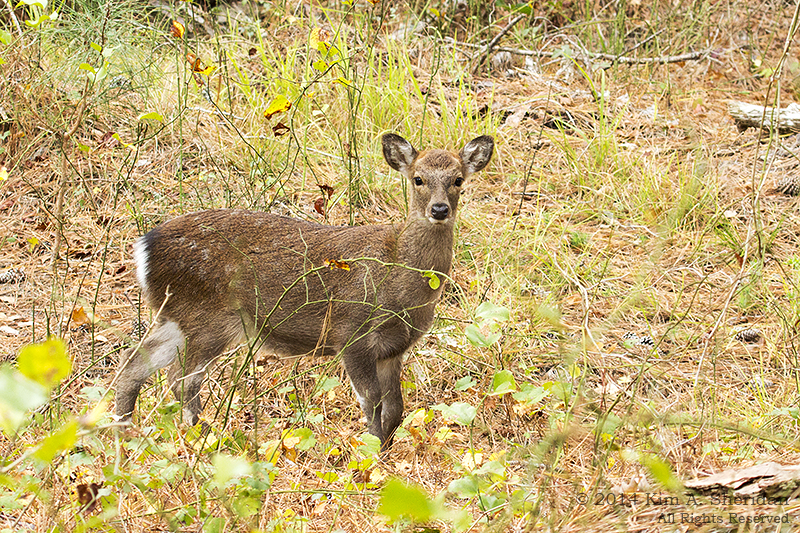
141019_Chincoteague NWR Woodland Trail_1209 aThere’s another critter with hooves at Chincoteague NWR that’s equally captivating. This is a Sika Elk.

They look like a smaller version of the native White-tailed Deer. But they are a non-native species introduced from Asia by an Eastern Shore man named Clemment Henry in the early 1900s. He released a half dozen elk onto James Island in Chesapeake Bay, and from there the population grew and spread.

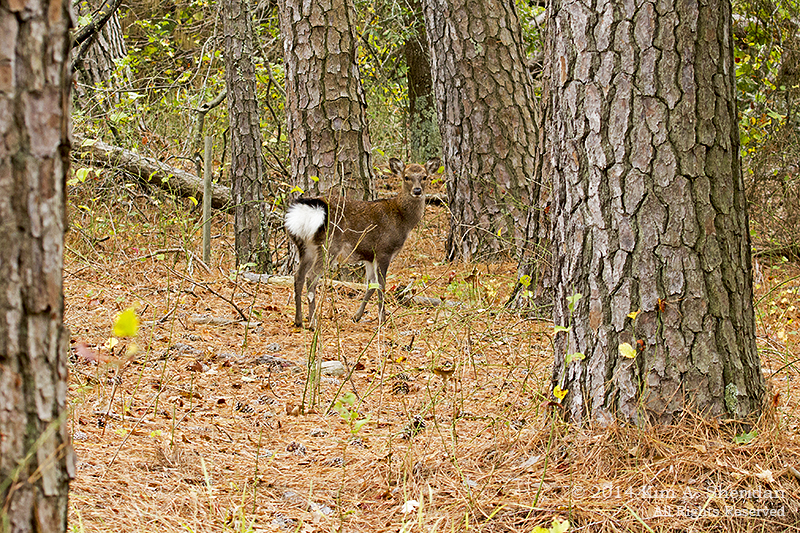
141019_Chincoteague NWR Woodland Trail_1204 aWe encountered several Sika Elk on a walk through the woods. They regarded us with much curiosity, coming closer to us to get a good look when we stood quietly. See the spots on the white rump? They remain throughout adulthood, unlike the native White-tails. This elk demonstrated an unusual way of bounding away that I can only describe, poorly, as a stiff-legged bounce. Watching it hop had us in stitches.

Yes, like the wild horses of Assateague Island, these little Sika Elk are quite “endeering”!

141019_Chincoteague NWR Woodland Trail_1360 acs

Small Delights

140918_OC Corsons Inlet_1489 acs

The beauty of the natural world lies in the details.

– Natalie Angier

It’s a big world out there, and sometimes overwhelming. Serenity can be found in tiny treasures. Spend time looking closely at the form of a flower, the lacy veins of a leaf, the tiny grains of sand, and feel the wider world melting away.

 Notice the small things. The rewards are inversely proportional.

– Liz Vassey

Regular readers of the Wild Edge may notice that I am drawn to small subjects: dragonflies, snails, lizards, flowers, seeds. While I enjoy landscape photography, it usually isn’t long before I’m isolating part of a scene, or zooming in close on some little detail.

So it was inevitable; I recently purchased a macro lens. For the uninitiated, macro lenses take extreme close-up photos, often of very small subjects. I took it for a walk along the bay beach at Corson’s Inlet State Park, at the southern tip of Ocean City.

140918_OC Corsons Inlet_1466 acsNow I will readily admit I violated the First Law of Macro Photography: I didn’t use a tripod. This was just a trial run, and I didn’t expect anything of the session. To my surprise, a few photos seemed worthy of sharing here. If only to inspire you with the beauty to be found if you take a really close look at the small details of Nature around you.

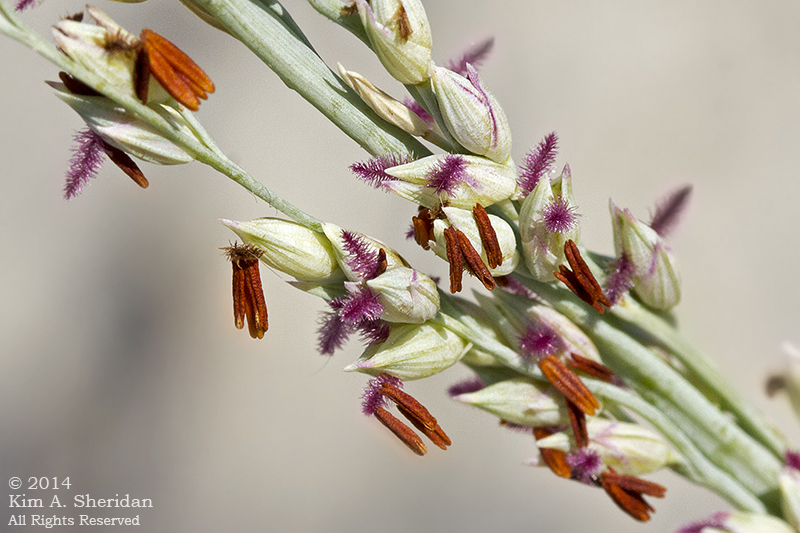
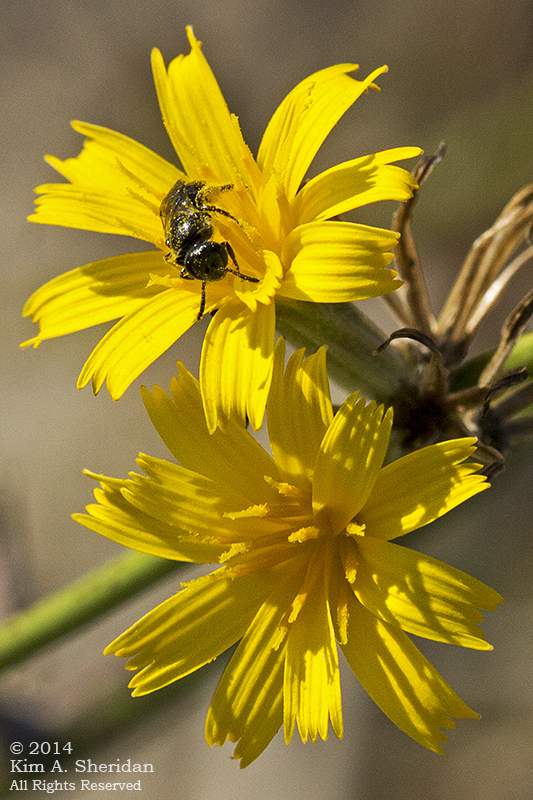
Notice not just the flowers, but the wasp. Not just the wasp, but the grains of pollen on the wasp. Pollen hitching a ride on flying insects is one way plants reproduce.

 Details create the big picture.

– Sanford I. Weill

140918_OC Corsons Inlet Crabs_1638 aA tiny Ghost Crab stares down a leaf. His mottled coloration camouflages him against the sand. We’ll meet his kind again soon.

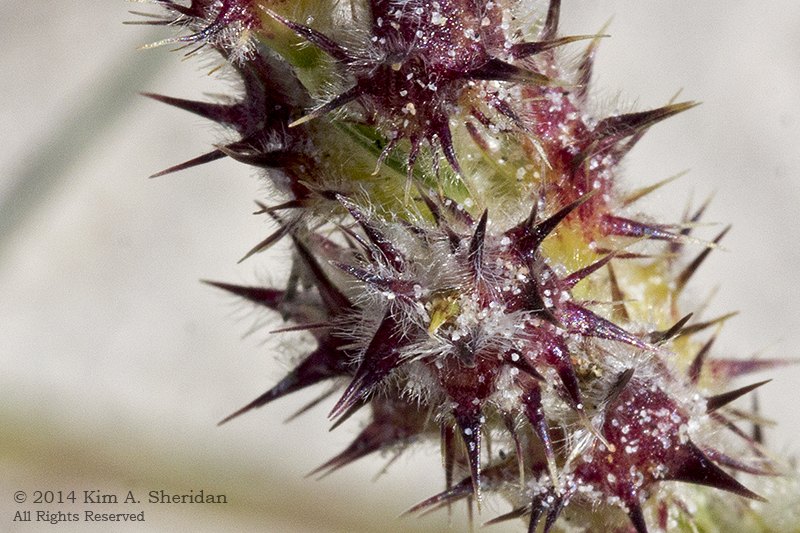
140918_OC Corsons Inlet_1507acsHairs for catching pollen. Spikes for – what? Protection against being eaten?

140918_OC Corsons Inlet_1553 acsAnother seed pod sports the punk-rock spiky look.

 To see a world in a grain of sand and heaven in a wild flower

Hold infinity in the palms of your hand and eternity in an hour.

– William Blake

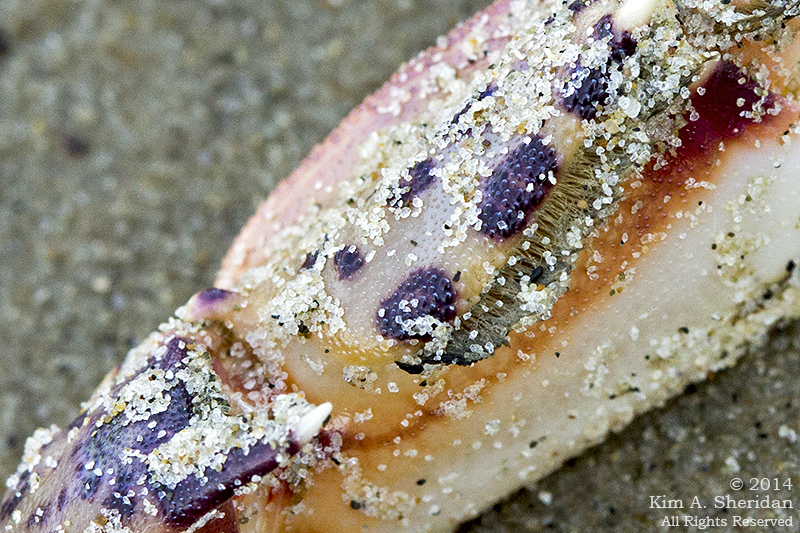
140918_OC Corsons Inlet_1568 aGrains of sand on a clam shell. Sand is nothing less than teeny-tiny rocks and minerals, many grains as translucent as glass.

140918_OC Corsons Inlet_1599 acsSand and shell on an autumn leaf. The lacy veins carry vital materials in and out of the leaf, including chlorophyll, a green pigment critical to the energy production of photosynthesis. When chlorophyll production ceases in fall, the green fades away and the red and yellow pigments already present in the leaf are revealed.

 I still get wildly enthusiastic about little things… I play with leaves. I skip down the street and run against the wind.

– Leo Buscaglia

 140918_OC Corsons Inlet_1605 acsA closer look at a crab leg, dressed in the colors of a sunset.

140918_OC Corsons Inlet_1488 acs 2When it all feels too much, take  time for a walk, and lose yourself in the tiny details of life at the wild edge.

In all things of nature there is something of the marvelous.

– Aristotle

Tern, Tern, Tern

140917_Osprey_1010acsAll across the Jersey Shore, dainty dancers are on the wing. These elegant ballerinas in crisp black, gray and white dart and pirouette effortlessly. At times they hover almost motionlessly high above the stage, then plummet to the surface and back up in one smooth motion. Who are these dazzling performers taking a turn around the dance floor? Why, Terns of course!

This September, the Cape May birding community was abuzz with the arrival of a rare bird. A Whiskered Tern, which breeds in Eastern Europe and winters in Africa, had somehow found its way across the Atlantic Ocean. This is only the third appearance of this species in North America. The bird split its time between Bunker Pond and the beach for a number of days, giving lots of birders a thrill. Of course, I wanted to see it too.

140917_Cape May Point Whiskered Tern_1504aI arrived just in time for the performance. The Whiskered Tern was only there a short while, and never stopped flying. Unlike terns that dive into the water to feed, Whiskered Terns swoop low along the water’s surface where they pick up bugs. The movement is distinctive.

140917_Cape May Point Whiskered Tern_1538acs3Lots of people got great images of the Whiskered Tern; I wasn’t one of them. Here’s why it was so hard to photograph – the Tern was very far away and in constant motion. Click on this wide-angle photo and try to find it; the arrow points to it in the inset at top right.

140917_Cape May Point Black Tern_1463aAnother uncommon bird was the Black Tern, above. Again, always flying and always far away. It shares the same swoop-and-pluck feeding style as the Whiskered Tern, and they were often seen together.

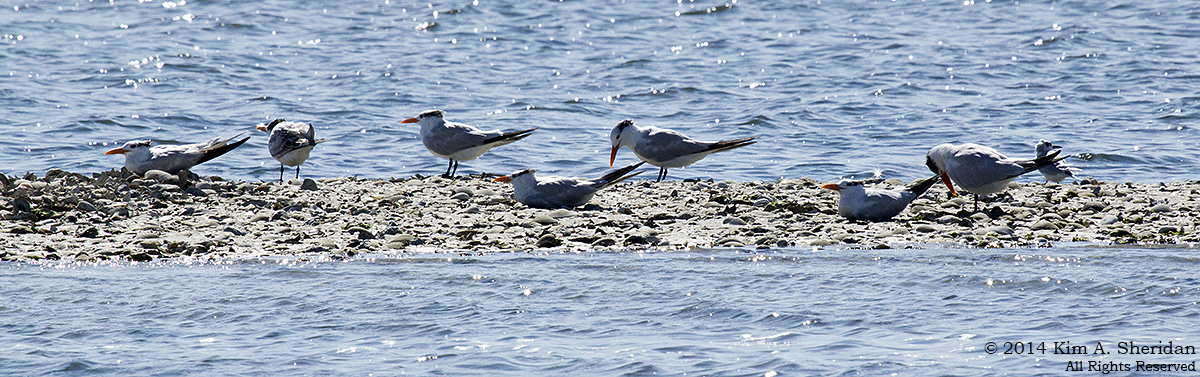
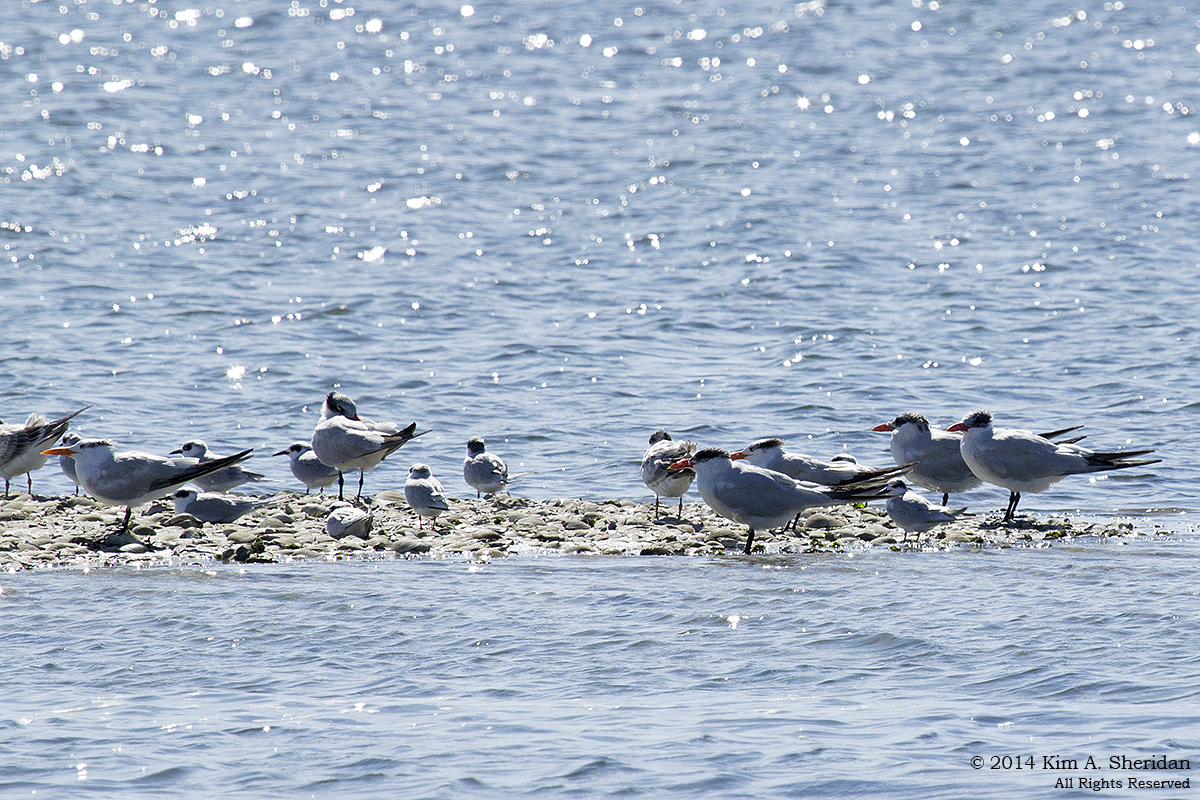
140917_Osprey_1019acsOn a sliver of sand in the middle of the bay a cluster of Terns waits to take the stage. There are three different species here. The small birds are Forster’s Terns, the supporting players of the company. The large bird on the left with the orange bill is a Royal Tern. At the other end of the island, from left to right, we have a red-billed Caspian Tern, a Royal just behind him, and two more Caspians.

140926_Forsythe NWR_3357Farther north at Edwin B. Forsythe National Wildlife Refuge, the theater is an intake where the tidal water flows into and out of the impoundment.

The fishing here is great, and the Forster’s Terns take full advantage of it.

Photographing them is simply a matter of pointing your camera at them and letting them fly in and out of the frame. And they do.

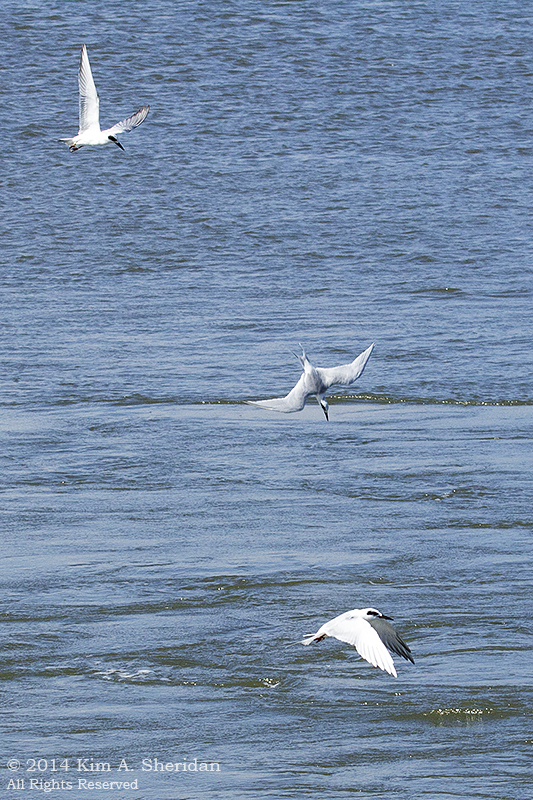
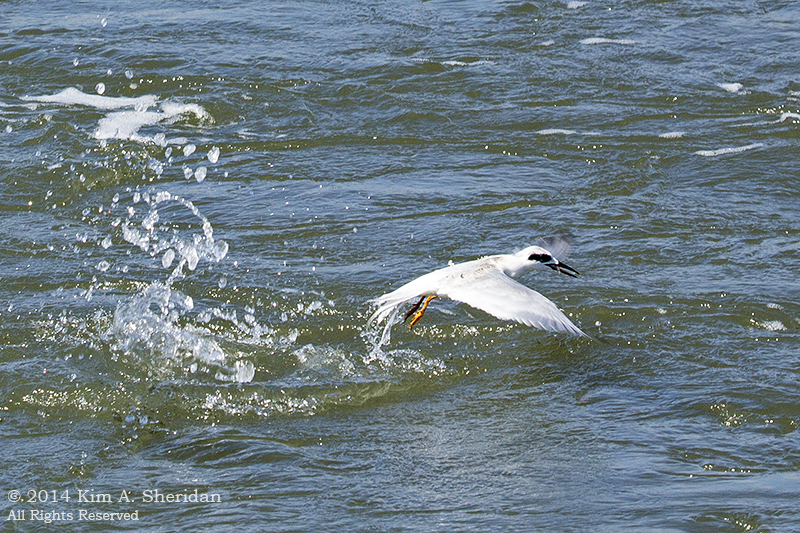
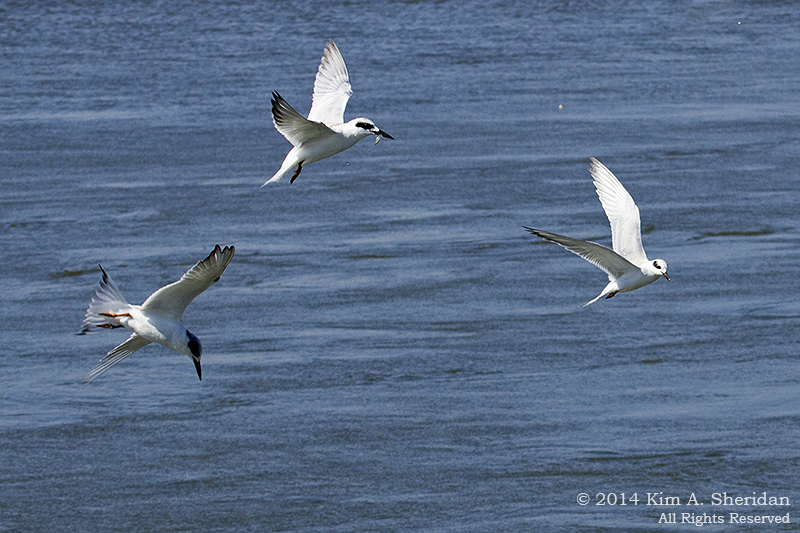
Delicate little terns swirl, twirl and whirl continuously. In turn they dive straight downward and plunge under the water, to come up in a burst of spray, circle around and dive again. It’s an aerial ballet.

140926_Forsythe NWR_3380acsEntrée.

140926_Forsythe NWR_3379acsEn pointe.

140926_Forsythe NWR_3446acsPas de deux.

140926_Forsythe NWR_3398acsPas de trois.

140926_Forsythe NWR_3393aThe corps de ballet.

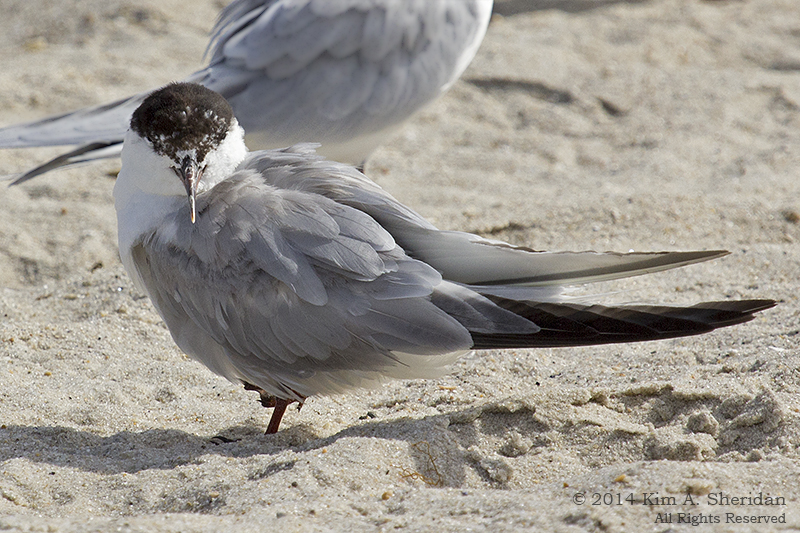
140923_Cape May Point State Park_2452acs 2Common Tern takes a bow, as the curtain falls on today’s performance.

Storm Morning

140924_OC Stormy Beach_2878acsSometimes a day at the beach isn’t “a Day at the Beach”…

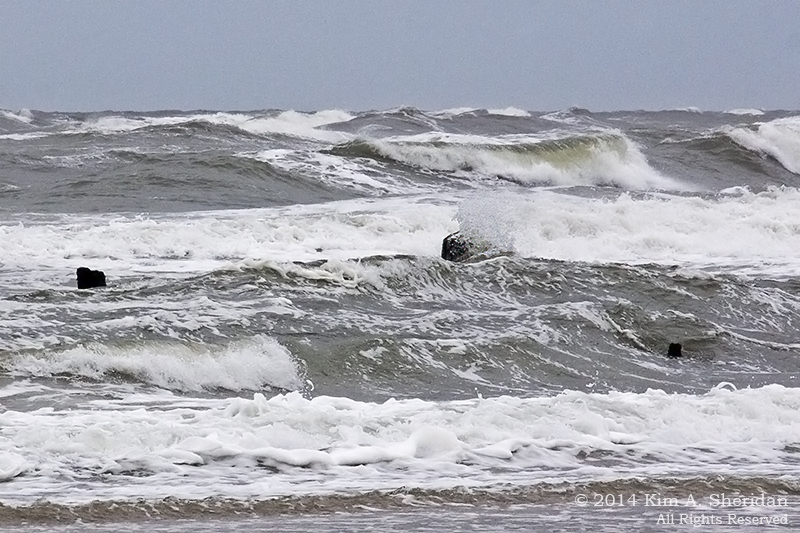
140924_OC Stormy Beach_2886acsFor two days the Jersey Shore was buffeted by high winds and draped with ominous gray clouds. The heavy rains came at night.

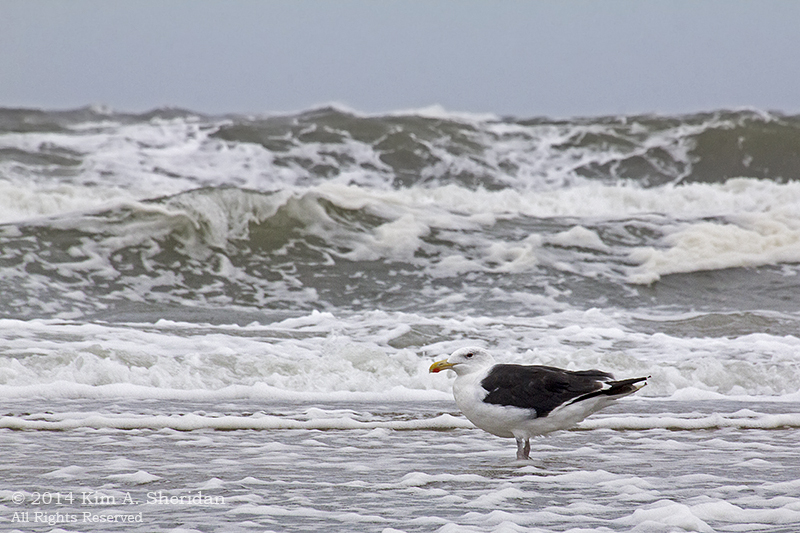
140924_OC Stormy Beach_2870acs140924_OC Stormy Beach_2816acsGreat Black-backed Gulls have the bulk to cope with the wind. The tiny Sanderlings were blown this way and that.

140924_OC Stormy Beach Seafoam_2774aSea foam at the water’s edge jiggled in its best Jell-o impression, trembling violently before breaking loose to dance up the beach. Small dollops skimmed just above the sand’s surface like pucks on an air hockey table.

FUN FACT: A scientifically-minded friend saw sea foam and burdened it with the moniker of “surfactant”. Unromantic, but partially correct. Foam is formed of air, water and a surfactant. Surfactants are compounds that reduce the surface tension of water, allowing air bubbles to form. Each surfactant molecule has a hydrophobic (water-repellent) end and a hydrophilic (water-loving) end. In a group, they line up in such a way that a thin layer of water is between the hydrophilic ends and takes the shape of a sphere – a bubble. Put lots of bubbles together, throw in wind-agitated wave action, and you’ve got foam.

140924_OC Stormy Beach_2885acsSurfactants can be man-made, like fertilizers, emulsifiers and detergents; that’s why soap lathers into bubbles when you take a bath. In the ocean, the surfactants are usually dissolved organic matter such as algae, seaweed, and other tiny marine organisms. That organic matter is a vital part of the marine food web that would otherwise go unnoticed. In a way, sea foam is microscopic life made visible in quivering, dancing morsels of bubbles.

A Tempestuous Tanka
Or, The Downside of Scientific Correctness

Tempest-tossed waves crash
Wind-blown surfactant dances
‘Neath scudding gray skies.
Surfactant? No! On my beach,
Wind-blown sea-foam dances by.

140924_OC Stormy Beach_2696acs A creamy mist hovered inches above the ground. Creamy, by appearance. The sensation was of being pelted with a thousand stinging little grains of sand.

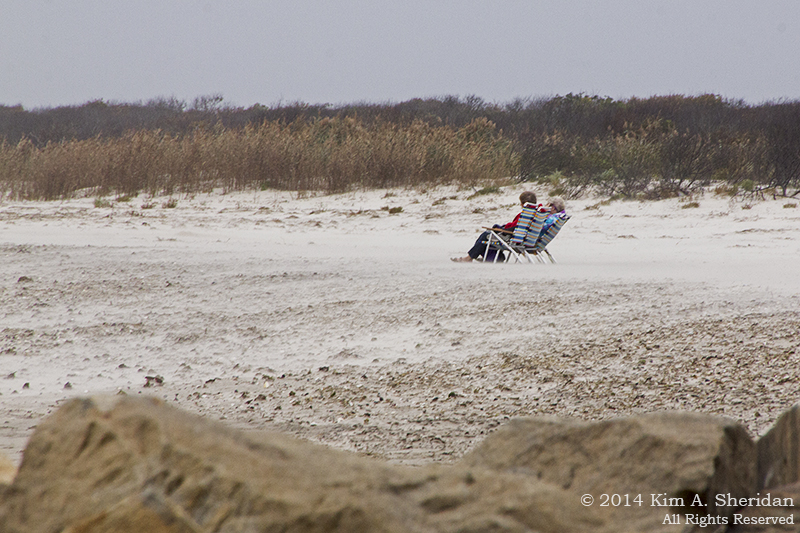
140924_OC Stormy Beach_2888acs…Which didn’t dissuade these two beach goers. There’s always someone who will sit on the beach, no matter what the weather.

140924_OC Stormy Beach_2899acsA bad day at the beach is better than a good day anywhere else!

140924_OC Stormy Beach_2679acs

Frogger

140821_Bartrams Garden_8021acsOnce upon a time, there was a handsome frog. He sat upon the edge of a pond, waiting. But not for the kiss of a human lassie to change him into a human prince, for he was happy and proud to be a bullfrog. So proud that he soon burst into robust song. His skillful bellowing quickly drew a pretty female frog to him. All around him that spring, frogs and toads were staging similar little romantic dramas in ponds and bogs throughout the land.

140409_Tyler_8623 FrogspawnNot long after, little clumps of clear jelly filled with dark spots began to appear. Eggs! Thousands of them. This is the frogspawn of the wood frog, and the tadpoles-to-be are already visible.

140416_Tyler Toadspawn & Tadpoles_8961 acsToads lay their eggs not in round masses, but long strings. When the tadpoles emerge, they will consume the gelatinous casing for the nutrients it holds.

140423_Tyler Frog Bog_0969 acsIn spring and early summer, tadpoles are everywhere, swimming above the leaves left behind the prior fall…

140503_Mt Cuba_6509Harassing a fish who has no interest in them as a snack…

140416_Tyler Tadpoles_9041 acsAnd just doing what tadpoles do, eating and growing. Tadpoles are exclusively aquatic, and breathe through gills like fish. Dinner is algae and water plants. The length of time frogs and toads spend in the tadpole stage varies according to the species; in bullfrogs it may be up to two years. Eventually tadpoles begin the amazing transformation from aquatic larvae to terrestrial adult. Legs appear, and then arms. Their bodies change shape, the tail shortens, and gills are replaced by lungs.

140809_Bartrams Garden_7524acsBehold the froglet. Not yet fully mature, but no longer a tadpole, this youngster can breathe air and move about on land. He’s still got that tail, though.

140821_Bartrams Garden_8078acsYoung bullfrog, finding shade from the hot August sun in the lily pads. The tail has been absorbed into his body, and he’s fully mature, but he will continue to grow in size. Adult bullfrogs rest during the day, and hunt at night. Anything they can catch becomes prey – insects, fish, birds, even small mammals.

140821_Bartrams Garden_7983acsThe small pond is home to a surprisingly tame group of young bullfrogs. The presence of humans with cameras doesn’t seem to bother them much. Bullfrogs will remain near water much of the time, as they must keep their skin moist.
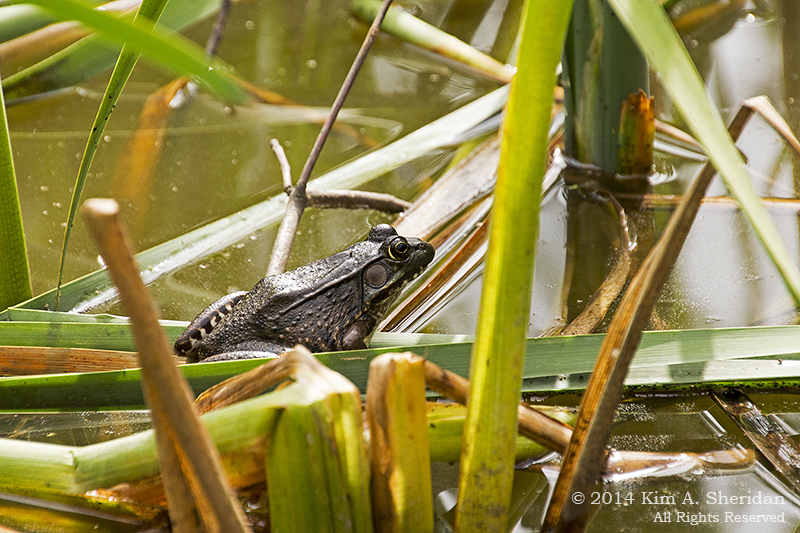
140813_Tyler_7665aAnother pond finds a green frog amidst the cattails. Green frogs are also primarily aquatic. See the ridges running along the frog’s back? That’s the best way to tell green frogs from bullfrogs; the latter lack these dorsolateral ridges.
FUN FACT: The roundish circle behind the frog’s eye is the tympanum, an external “ear” of sorts. It transmits sound to the frog’s inner ear. In females, the tympanum is about the same size as the eye; in males it’s twice as big. An easy way to tell the boys from the girls!

140810_Mineral Hill_7643acsA wood frog sports a robber’s mask as he lingers on the leaves scattered across the forest floor. Wood frogs live in low moist woodlands and forested swamps. In the winter they migrate to nearby uplands, returning in the spring to the vernal pools, to search out a mate and begin the cycle anew.