Dallas, On the Wild Edge

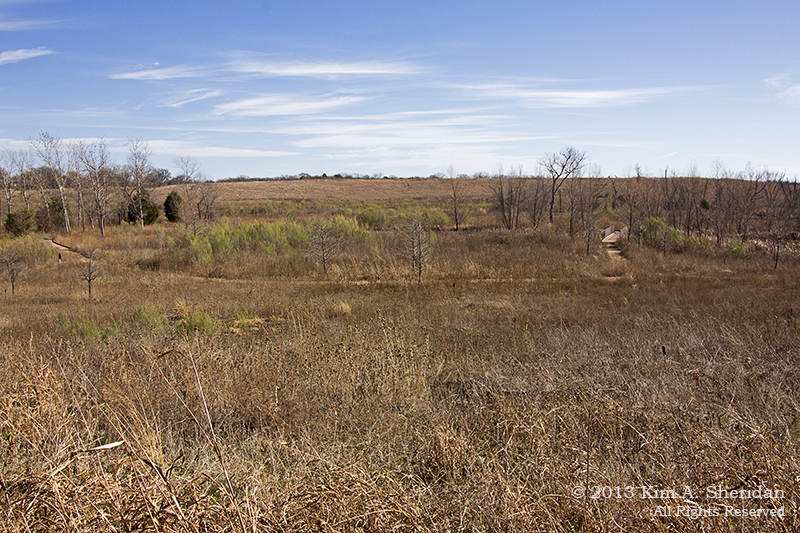
White Rock Lake Birds_5593a Winter scenery from deep in the heart of Texas. All in an urban or suburban setting. All within a short drive of Dallas.

Great-tailed Grackle at White Rock Lake, above.

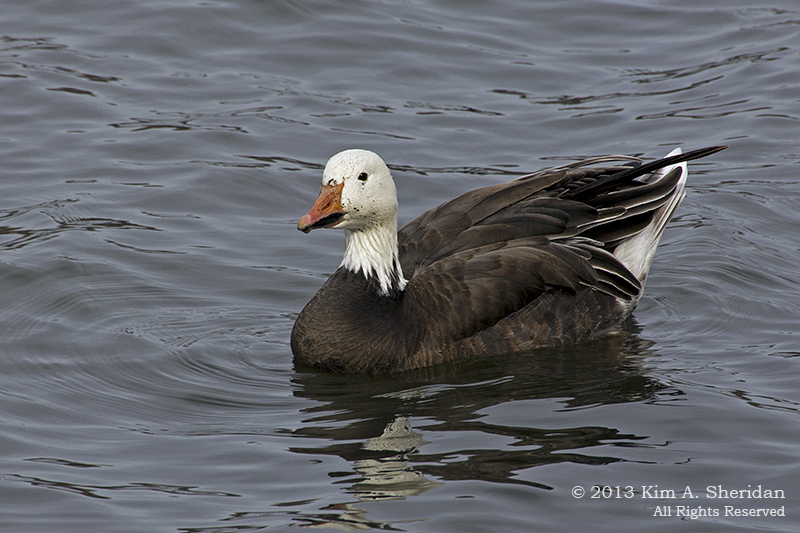
White Rock Lake Birds_5616aSnow Goose, White Rock Lake – the “Blue Goose” color morph.

White Rock Lake_6637b Eastern Fox Squirrel, White Rock Lake.

White Rock Lake_6857aMonk Parakeets, White Rock Lake.

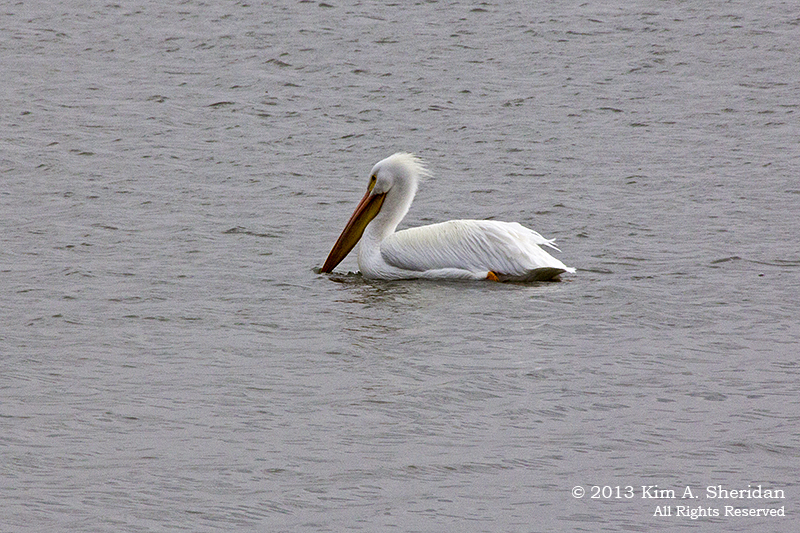
White Rock Lake_6802a American White Pelican, White Rock Lake, above and below.White Rock Lake_6877a

Trinity River AC_5434a Trinity River Audubon Center.

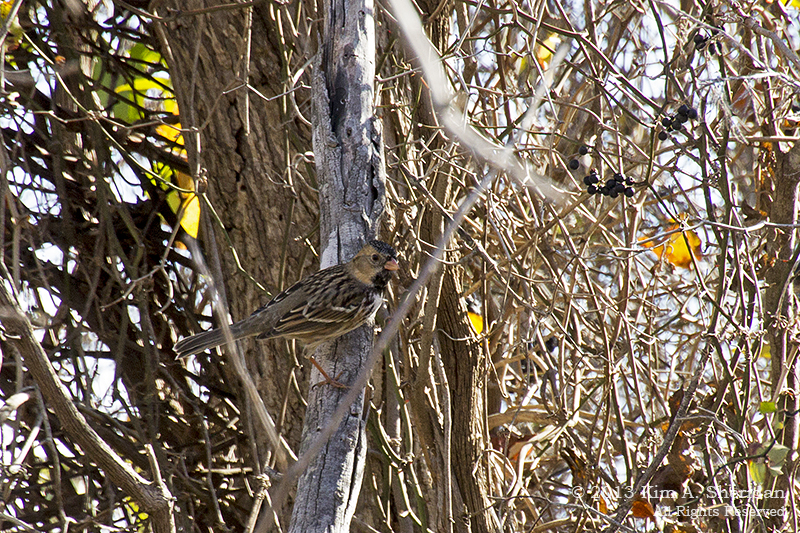
Trinity River AC_5304aHarris’s Sparrow, Trinity River Audubon Center.

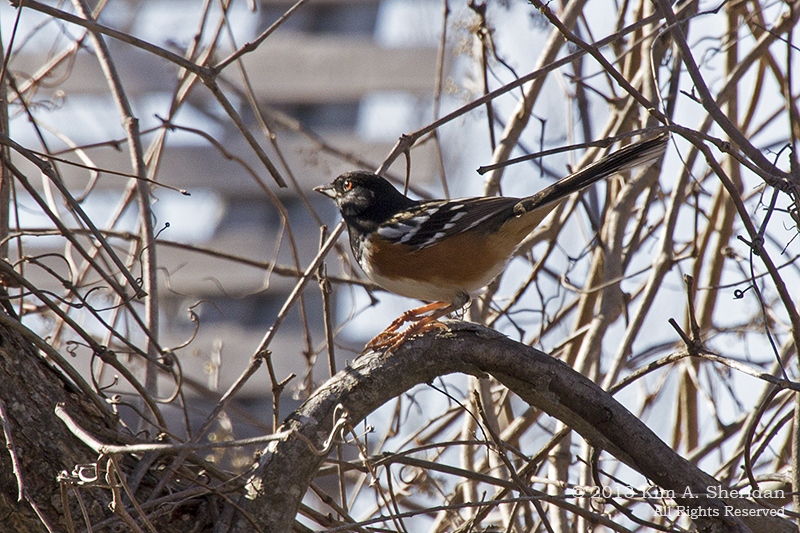
Trinity River AC_5349a Spotted Towhee, Trinity River Audubon Center.

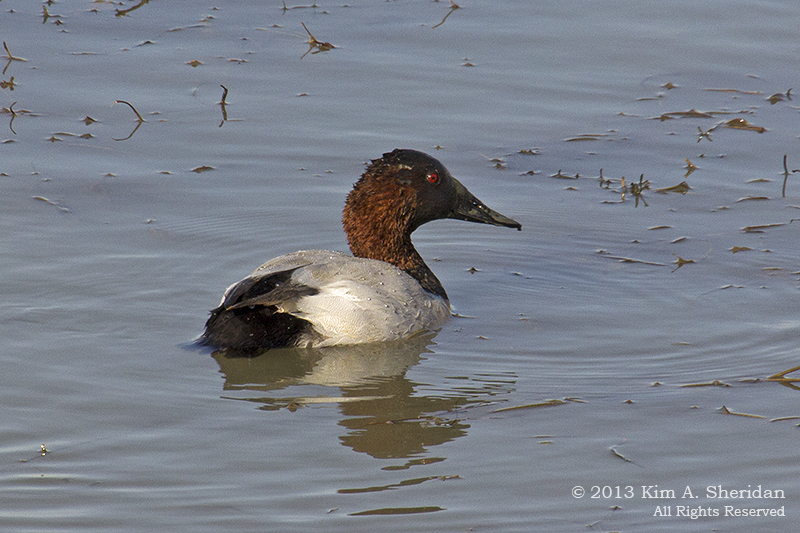
Cedar Hill State Park_6087a Canvasback, Cedar Hill State Park.

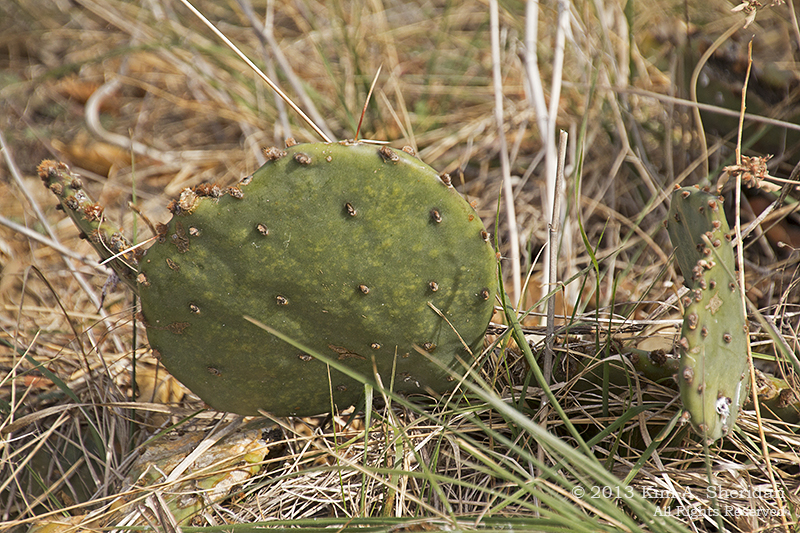
Cedar Hill State Park_6234aCactus, of course. Cedar Hill State Park.

Cedar Hill State Park_6204aGreater Roadrunner, Cedar Hill State Park.

BEEP-BEEP!

Coming up: Christmas at Longwood Gardens

The Kids’ Table

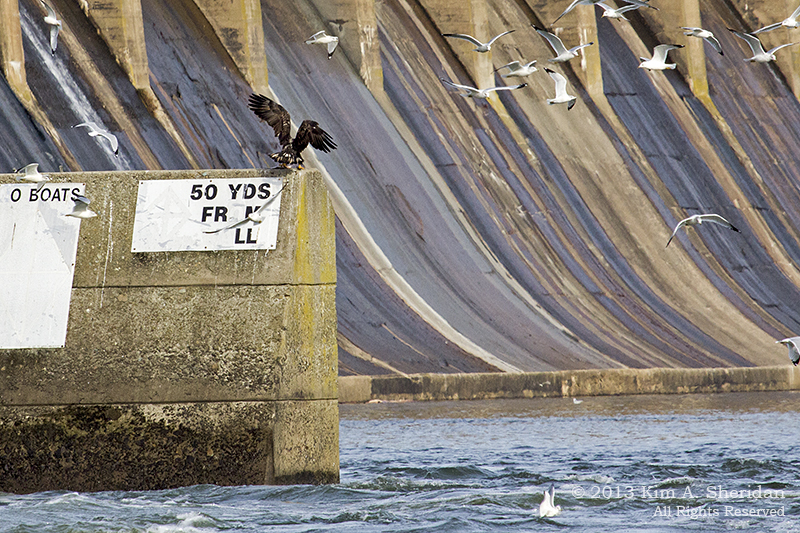
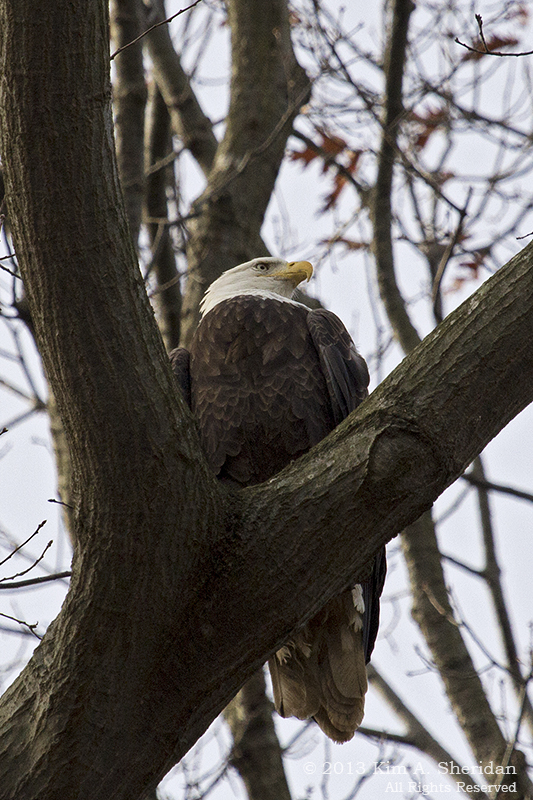
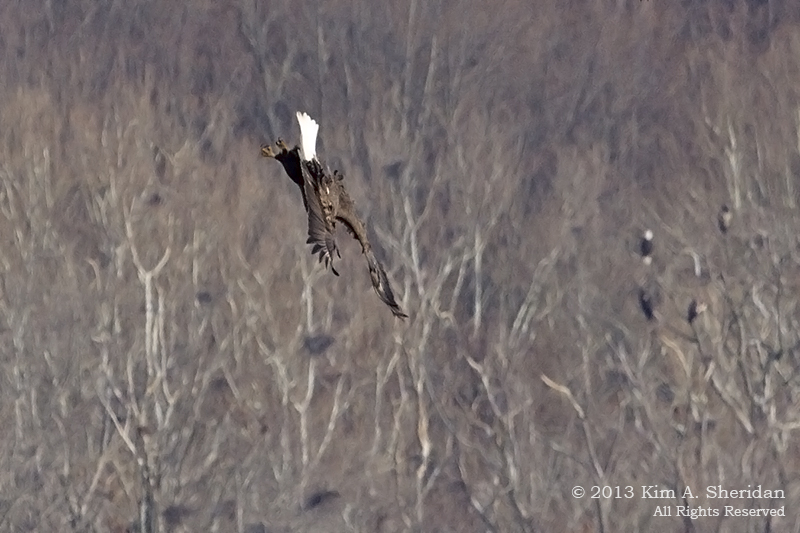
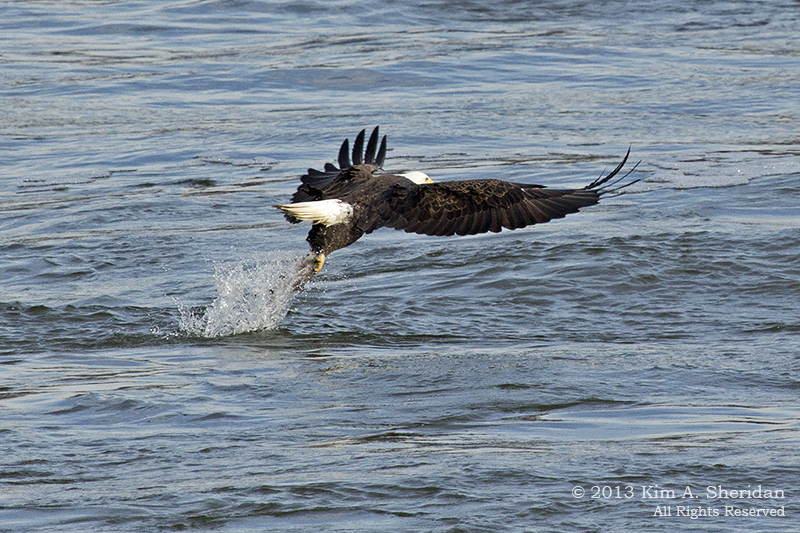
Conowingo Eagle_3877a Life’s tough when you’re a juvenile Bald Eagle trying to get your share of the Thanksgiving feast at Conowingo Dam. Young fellows like this one above have to fight for their meals. It’s all tough love once an eagle reaches adolescence.

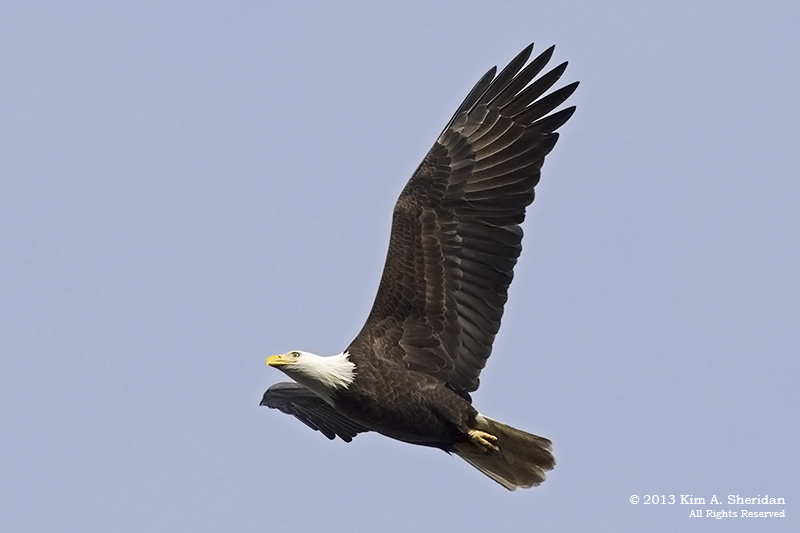
It takes four or five years for a Bald Eagle to reach maturity. They won’t get their characteristic white heads and tails until that point. Before then, their plumage is primarily brown, mottled with varying amounts of white.

Remember being stuck at the kids’ table on holidays? Now imagine that just when a nice plate of food is served, one of the grown-ups suddenly steals your place, and your food.

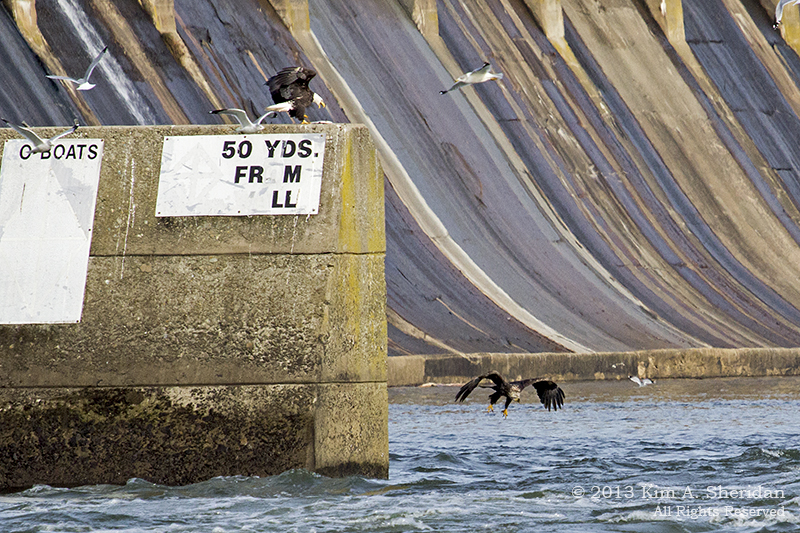
Conowingo Eagle_4590aThis young eagle knows exactly how that feels. He’s successfully caught a fish and landed on the dam to eat his meal…

Conowingo Eagle_4595a Only to have an adult swoop in, chase him off and settle in to enjoy the ill-gotten gains, while he’s left to beat an unceremonious retreat.

Fun Fact: Bald Eagles are thieves by nature. They will harass each other and other birds like Ospreys until their victim drops its prey. They also eat carrion when it’s available. Probably why Benjamin Franklin dismissed them as birds “of bad moral character”.

Juvenile eagles must learn how to catch prey. They do this by watching their parents when they’ve first fledged. Gatherings like at Conowingo offer juveniles invaluable opportunities to watch the adults fish – and steal fish. Even thievery must be learned.

Conowingo Eagle_4136aIt’s all a life lesson. If juvenile eagles don’t learn to stand up for themselves, they won’t survive. Here’s a plucky youngster trying his best to steal a part of an adult’s dinner. The adult is having nothing of it, however. Hey, can’t fault a guy for trying!

I  wonder if either of the two eaglets that were born at Heinz Refuge this spring is among the juvenile eagles at Conowingo this fall.

Conowingo Eagle_4354a Fun Fact: Eagles have extraordinary eyesight, far sharper than ours. They can spot a fish in the water from hundreds of feet up, all the more remarkable because most fish blend in with the riverbed below. Dead fish are easier to see, as they usually float with their light bellies up. Young eagles still learning to hunt sometimes goof and attack plastic bottles instead.

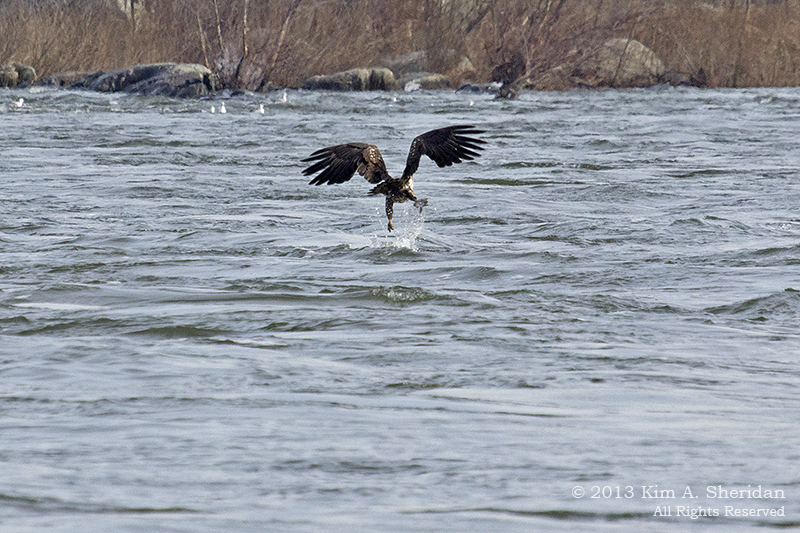
Conowingo Eagle_4615aGotcha! What this young eagle lacks in style, he makes up for in fish.

For more information on the recovery of the Bald Eagle in Pennsylvania, here’s an interesting video: http://www.youtube.com/watch?v=-4DK0sCiMd8&feature=youtu.be

Conowingo Dam

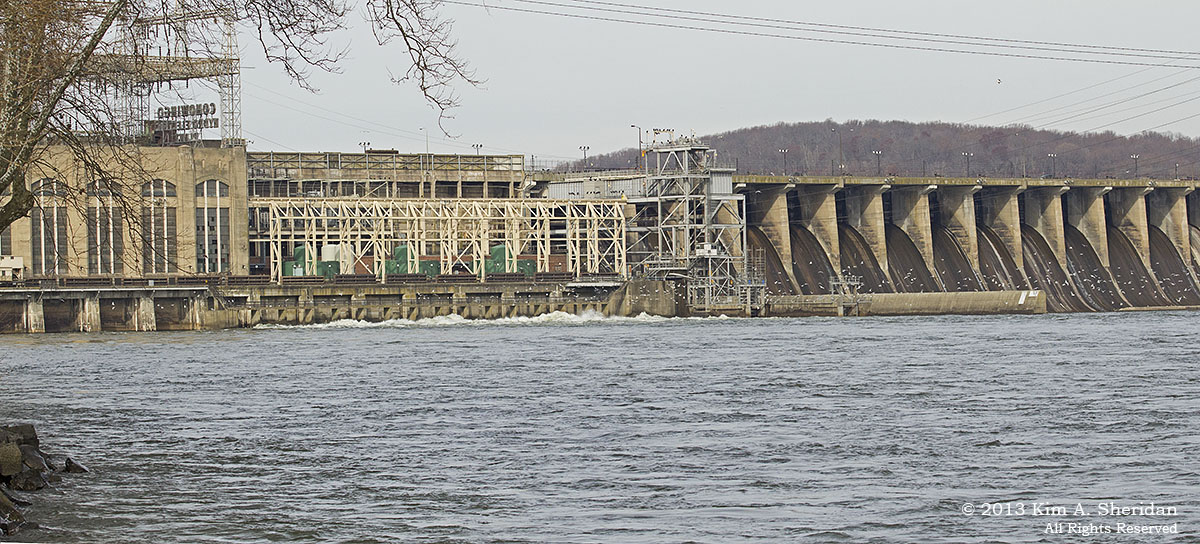
Dam_Panorama2 The Conowingo Dam on the Susquehanna River in Maryland is a 4,648 foot long power plant with 11 turbines capable of producing 572 MW of electricity when running at peak capacity. Also known as the Conowingo Hydroelectric Generating Station, when it was constructed in 1928 it was the second largest hydroelectric project in the United States, bested only by Niagara Falls. With a maximum height of 94 feet, it consists of four distinct…

“WAIT!” you’re saying. “This is supposed to be a nature blog! Why are we talking about a DAM? What could possibly be of interest to us there?”

Well…

This:Conowingo Eagle_4423a

And maybe this:Conowingo Eagle_4490a

And even this:Conowingo Eagle_4112a

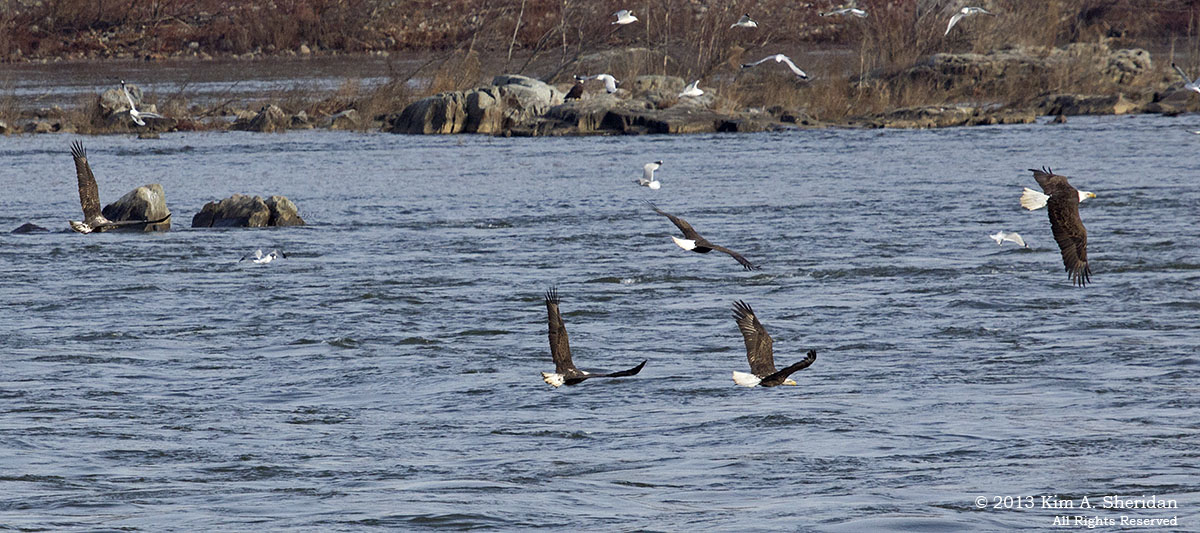
Five Bald Eagles in one shot? (And there’s a sixth in the picture somewhere. Can you find it?) Yes, folks, this was taken just downstream of Conowingo Dam, and those eagles represent maybe 5% of the eagles present there on the Saturday after Thanksgiving. 154, by one very approximate count. Every fall, in November and December, eagles gather downstream of the dam in large numbers. 50, 100, sometimes even more.

“What for?” you ask. Fish, of course. When the turbines are running, fish get sucked through the intake tubes and are discharged below the dam, stunned or dead. Easy picking for piscivorous (fish-eating) birds like Bald Eagles.Conowingo Eagle_4142a

“Why late fall?” you ask. The dam only operates when electricity demand is high. In other words, late fall and winter. By January, most eagles are returning to their nesting sites to raise a new family, and they will be tied to those sites through the summer. But in the fall, they are free to go where the fish are, and in my area, that’s Conowingo.

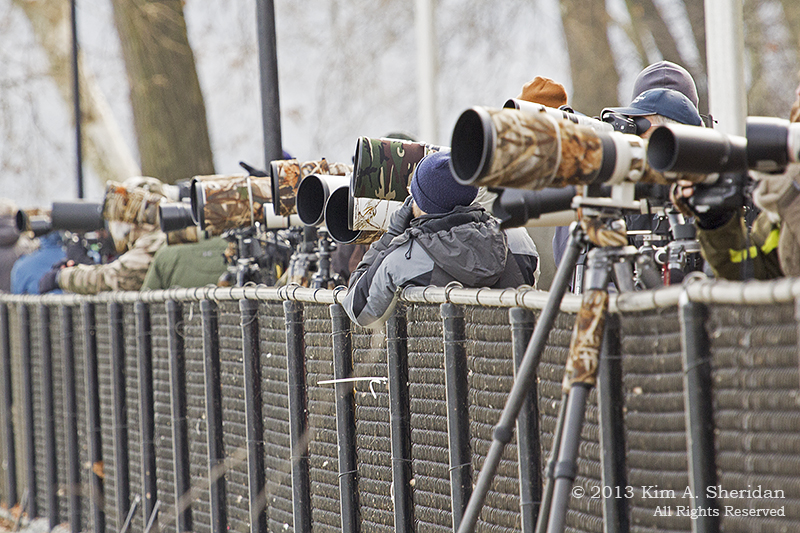
Birders in the know flock to Conowingo to watch the spectacle. Photographers, too. All the cold weather gear was necessary; it was 25 degrees. Definitely not for the faint of circulation. I lost my feet after the first hour.Conowingo Dam People_4639a

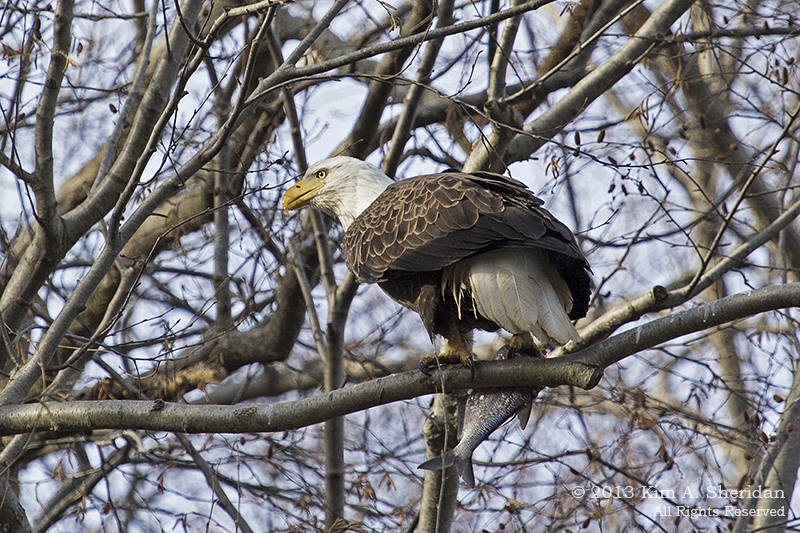
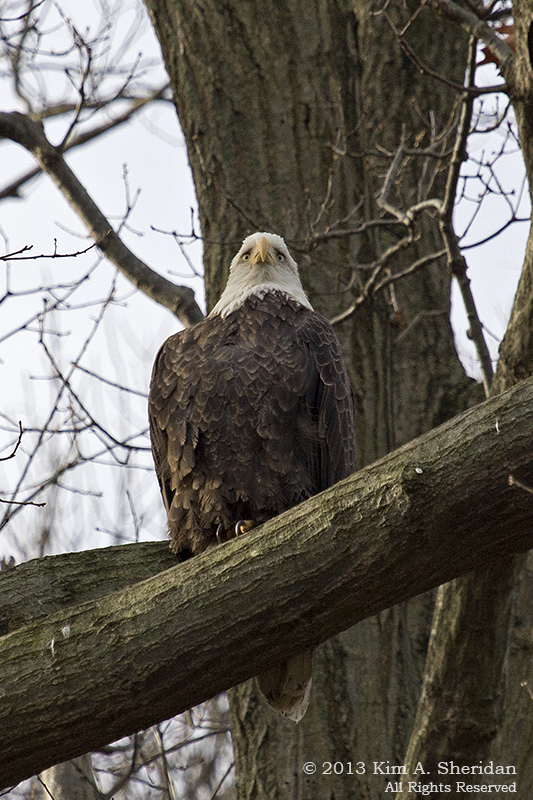
You have to be prepared to wait a long time; it’s not non-stop action. Even though several turbines were running when I arrived at 8 AM, the eagles were very quiet, content to perch on trees or rocks across the river and wait. One or two were obliging enough to perch in trees directly behind us and pose. Or maybe they were amusing themselves watching all the stupid humans shiver.

The wait paid off after more than an hour when more turbines started up. Fifteen minutes later it was like someone had thrown a switch: suddenly it was a Bald Eagle Bonanza. There were eagles catching fish. Eagles dropping fish. Eagles fighting over fish. Eagles stealing fish from other eagles. Sometimes I didn’t know which bird to follow. Other times they flew so close overhead I couldn’t zoom out fast enough.

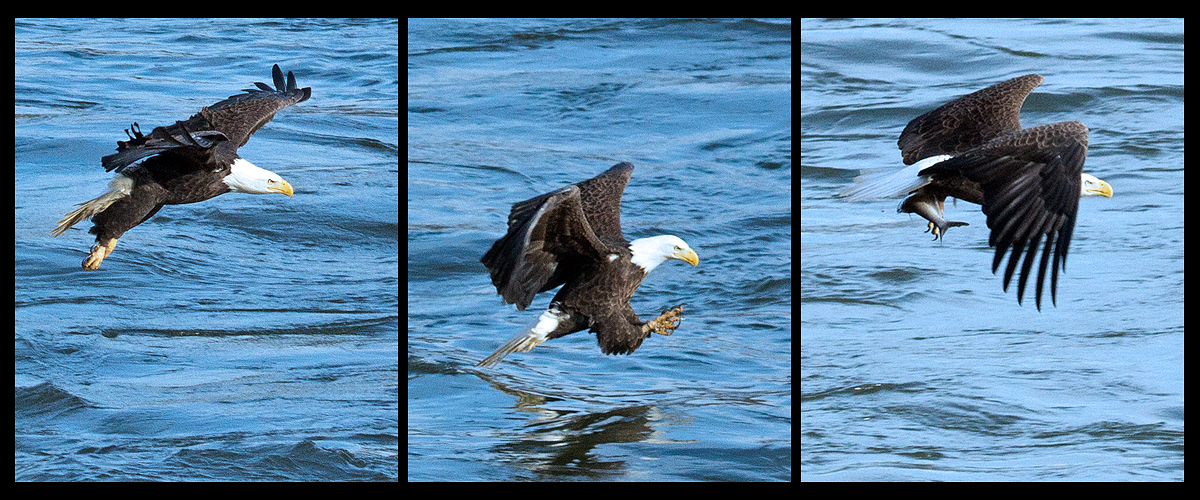
Conowingo Eagle_4094a Bald Eagle diving on a fish in the Susquehanna River. Note the four other Eagles in the tree in the background, waiting for their chance.

Collage 1           Approach                             Landing gear down                 In-flight food service.

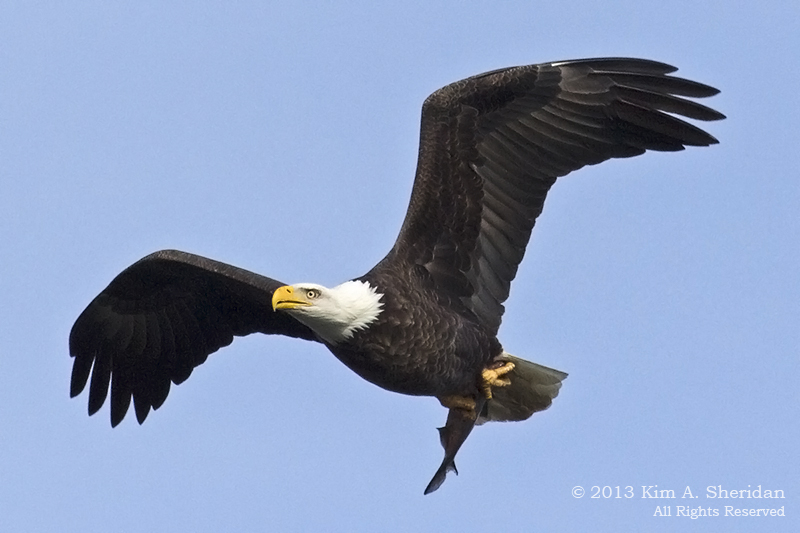
Conowingo Eagle_4282a And away we go with dinner.

Conowingo Eagle_4440aConservation Piece: This bird looks worried. About the American shad, perhaps?  This migratory fish lives in the ocean, but returns to freshwater rivers like the Susquehanna to spawn, usually during the spring or summer. Their numbers have been seriously depleted by fishing, water pollution – and the construction of dams like Conowingo, which block passage to their spawning grounds. Exelon, who operates the dam, has been working to restore the American shad to the Susquehanna River through the operation of two fish lifts at Conowingo Dam. The company has also built a Fisherman’s Park at the foot of the dam, for fishing, bird-watching, and photography. They even run an annual Bald Eagle Photo Contest!

Conowingo Eagle_4255aComing up: The Kids’ Table

In the Cave

Crystal Cave_3390a Once upon a time, when I was a small child, my father and I shared a nighttime story ritual. He would sit by my bed and weave intricate tales of the adventures of two young explorers. Our heroes hiked the deep North Woods, climbed tall mountains, built and sailed wooden ships, braved fierce blizzards, and paddled their canoe through tumbling white water. I would drift off to sleep with the sound of the wind whispering in the pines and the scent of wood smoke wafting through my dreams.

Crystal Cave_3405aNothing made as big an impression on my youthful mind as the time our young daredevils went spelunking. My father drew an image so detailed that I could see those caves as if I was there: a warren of rooms small and large filled with stalactites, stalagmites, weird rock faces, and glittering crystals. There were chimneys soaring toward the sky, deep drops into darkness, underground rivers, tiny tunnels that suddenly opened into cavernous spaces, and everywhere the drip-drip-drip of water.

I am quite sure that my love of nature was born from these nightly tales. And I don’t think it’s any coincidence that I should feel so at home on my first-ever visit to a cave last weekend.

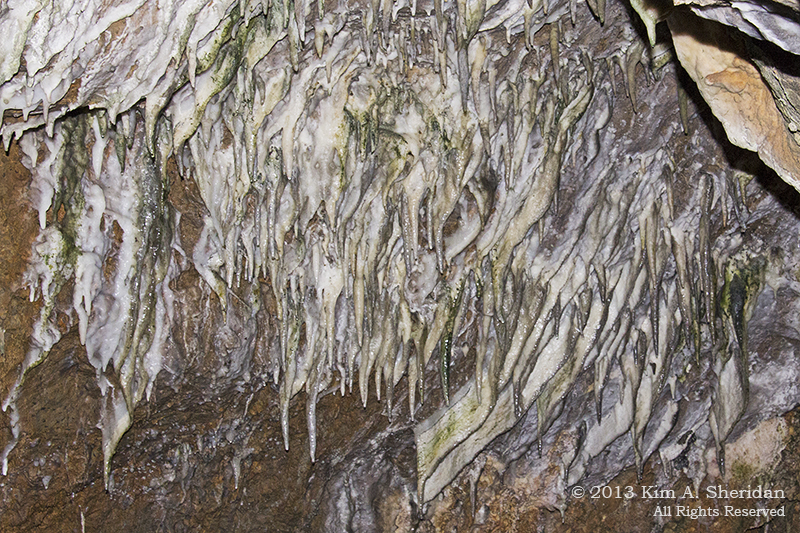
Crystal Cave_3395acsThe cavern in question is Crystal Cave, a small limestone cave a little over an hour from my house. It was discovered in 1871, and became the first tourist cave in Pennsylvania. Today you can take a guided tour 125 feet underground to see the weird rock formations and sparkling crystals that adorn the maze of rooms in this cave.

Crystal Cave_3467aFUN FACT: Caves form when rainwater seeps through cracks and fissures in the sedimentary bedrock of the ground. If the rock has a high content of calcium carbonate, like limestone, the rainwater forms an acid which eats through the rock, creating tunnels and caves.  Dripping water leaves deposits of calcite behind. These are the “speleothem” or formations of the caves, such as stalactites and stalagmites, columns, flowstone, draperies, even “cave bacon”.

Many of the individual formations in Crystal Cave have their own names, like the Prairie Dogs, the Ear of Corn, the Giant’s Tooth, and the Indian Head. I don’t know the official name for this, but I call it The Michelin Man.

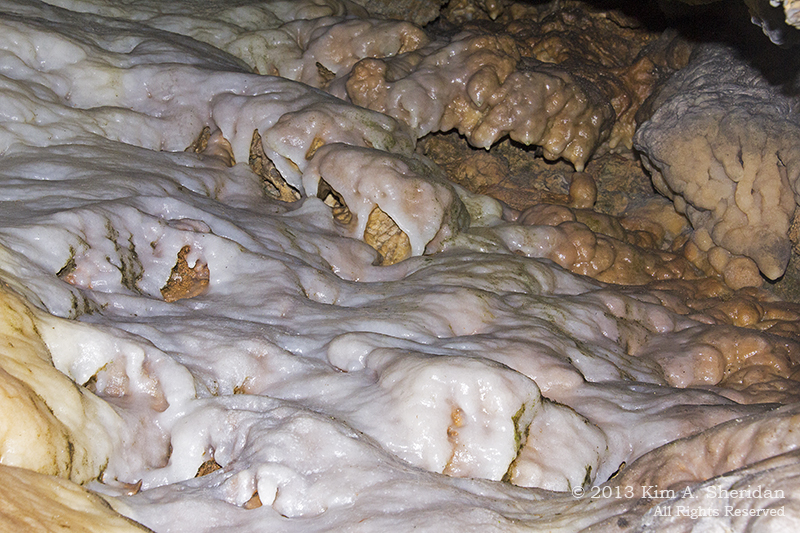
Crystal Cave_3384aThe cave giants made a cake one day, and spilled vanilla icing everywhere…

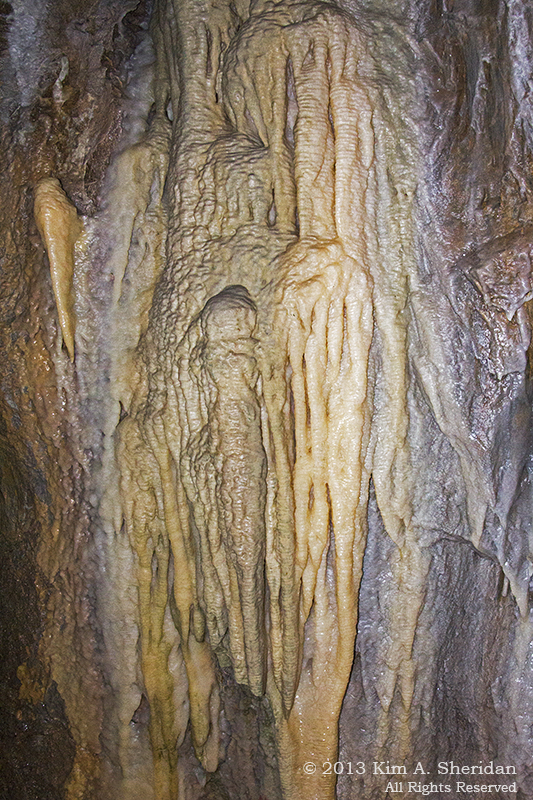
Crystal Cave_3387sDraperies.

Crystal Cave_3416a Fried Eggs on the floor of the cavern. They’re very small, just a few inches across.

Crystal Cave_3448a I’m sure this formation  inspired an alien on Dr. Who.

Or two or three.

It’s flowstone, more colorfully called a frozen waterfall.

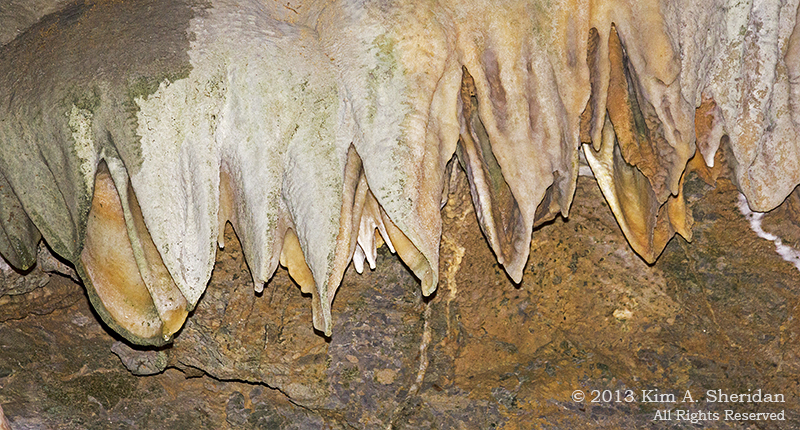
Crystal Cave_3429aStalactites and draperies.

Many caves have extensive water features, underground pools and even rivers. Crystal Cave is a bit lacking in this department, with only one small pool a foot or two across.

They call it…Crystal Cave_3412aLake Inferior.

I’ve heard of a cave where the entire tour is by boat…

Hawk Mountain

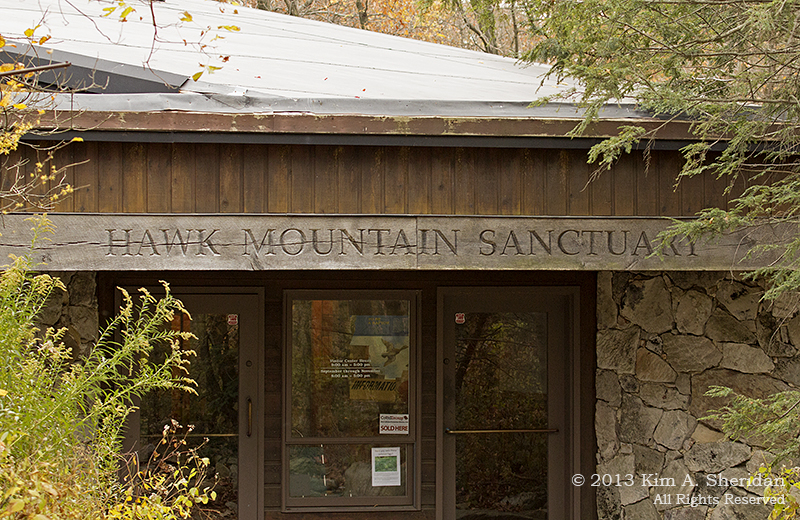
Hawk Mountain_0372a Welcome to the Endless Mountain, a long ridge known as Kittatinny that stretches 300 miles from Maryland northeastward through Pennsylvania and New Jersey into southern New York. Hawk Mountain Sanctuary sits on that ridge, and is internationally known as a premier place to watch the spectacle of fall raptor migration. Cross winds that hit face of the ridge create updrafts that southward migrating raptors use to carry them over the mountain.

On a clear fall day, with a northwest wind after a cold front, one might be treated to hawks, falcons and eagles flying past in large numbers and at close range. The day Colleen, Erika and I went to Hawk Mountain was not one of those days. It was a fun fall outing for us anyway.

Hawk Mountain Rock_0573aHawk Mountain is in the Ridge and Valley ecoregion, and is completely different from the flat Atlantic Coastal Plain of Heinz Refuge and southern New Jersey that I spend so much time in. For starters, there are hills. LARGE hills. Then there are the rocks. These range from small stones to enormous boulders. Like these at Bald Lookout (above).

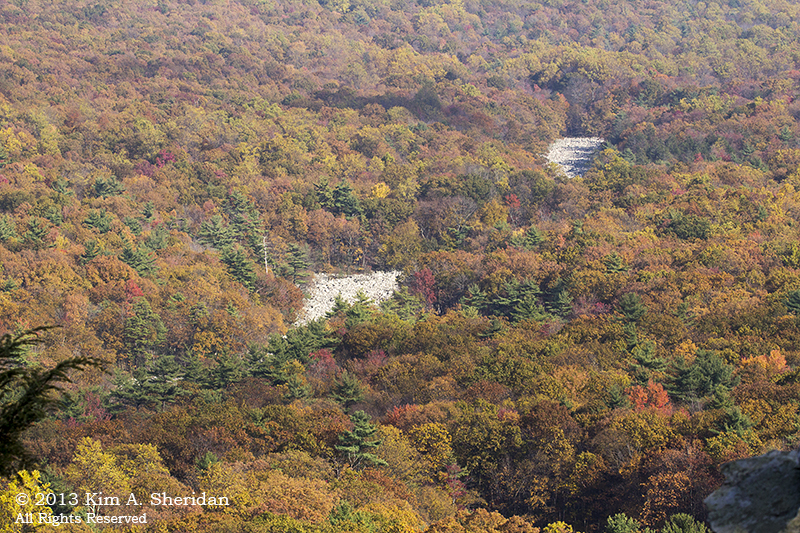
Hawk Mountain_0800a From South Lookout we could see the River of Rocks below, a geologic feature that looks like water but is actually an Ice Age boulder field.

Hawk Mountain_0515aThe Lookout Trail was easy at first, well-groomed and relatively flat. Along the way we spotted a few small birds, including this Hermit Thrush (above) and a Tufted Titmouse (below), who was not giving up his leaf toy without a fight.Hawk Mountain_0491a

Hawk Mountain_0637a After Bald Lookout, the trail became much more rocky and challenging. There’s lots to see along the way, though, and stopping to look is a great excuse to catch your breath. The variety of mosses scattered among the stones made for an interesting vignette (above). A lot of the rocks like this one (below) are covered in lichens.Hawk Mountain Rock_0422a

We finally arrived at the North Lookout, and here I learned a valuable lesson: camera and binoculars go INSIDE the daypack at Hawk Mountain while on the trails. I overbalanced on a boulder and sat down VERY hard. I was lucky, just a scraped shin and bruised bum, but I could have done some significant damage to my equipment.

Okay, folks, we’re here and ready for the Raptor Show!  Apparently the hawks didn’t get the message. On this day, the birds that flew over the ridges were so far away as to be no more than specks. The official spotters, who were armed with scopes, told us that we saw Red-tailed and Red-shouldered Hawks, and even a Golden Eagle, but they all looked like little black dots to me.

Hawk Mountain_0721a  Dear Mom and Dad, I went to Hawk Mountain and all I got was this lousy Turkey Vulture…

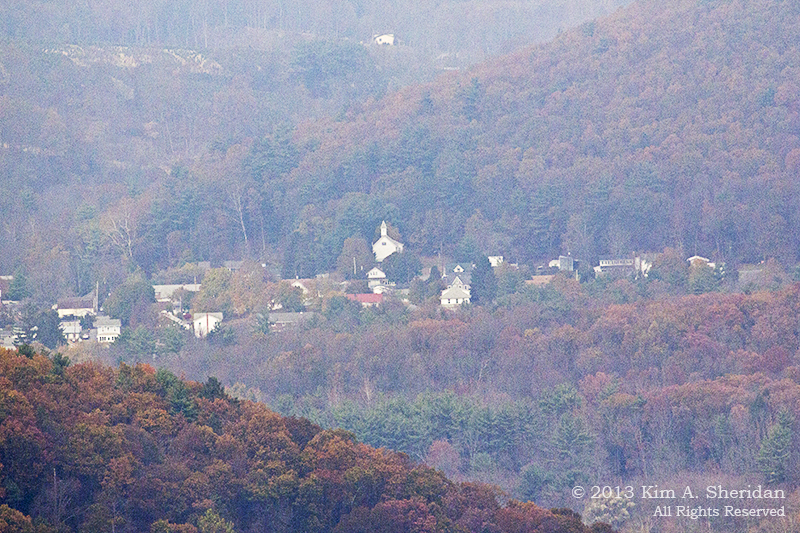
Hawk Mountain_0715aEven the hills were shrouded in mist, muting the brilliant fall color and making landscape photography difficult. Nestled in among the trees were some farms and little towns, just visible through the haze.Hawk Mountain_0822a

Of course, within ten minutes of leaving North Lookout, the sun broke out and the sky turned brilliant blue. No doubt the hawks were laughing at us hapless humans. I think even this little chipmunk was laughing at us. But we enjoyed the day, so we had the last laugh!Hawk Mountain_0789a

 CONSERVATION PIECE: During the Great Depression, the Pennsylvania Game Commission paid $5 for each hawk killed, which led to the widespread slaughter of raptors. Hawk Mountain was a popular place to stand and shoot hundreds of passing hawks for sport. Dead hawks at the SlideConservationists began to oppose the killing, and one ornithologist recovered and photographed the abandoned carcasses. Those photographs reached a New York activist named Rosalie Edge, who in 1934 leased 1,400 acres on Hawk Mountain and immediately imposed a hunting ban. The next year she opened Hawk Mountain to the public to watch the hawks migrate. She then purchased the land and gave it to the Hawk Mountain Sanctuary Association in 1938. Hawk Mountain has been a wonderful place to witness the marvel of migration ever since.

Want more information? http://www.hawkmountain.org/

Historical photo courtesy of Hawk Mountain Sanctuary Association      http://www.hawkmountain.org/who-we-are/history/page.aspx?id=387 


The Search Continues

Hawk Mountain_0399a If you would seek Lady Autumn, you must tackle the quest with tenacity. Her Ladyship will not show her brilliant colors in places that are easy for you to attain. Slow treks over rocks and steep slopes may well be the order of the day. And you may be left with bruised legs, bruised bum and bruised ego at the end of that day.

Was it worth it? You be the judge. Hail the Queen, wearing a misty veil on Hawk Mountain.Hawk Mountain_0804aHawk Mountain_0362aHawk Mountain_0704

HNWR Fall_0981aIf you would seek Lady Autumn, you must practice patience. Her Ladyship is not to be rushed. She will sample the many garments and baubles in her wardrobe over days and weeks before she achieves perfection in her raiment.

You must be willing to wait for her; she arrives in her own time. But when she does, what a show she puts on!

Hail the Queen, fashionably late at Heinz Refuge.  HNWR Fall_0940a HNWR Fall_0878aHNWR Fall_1129a

Marsh Creek_1999If you would seek Lady Autumn, you must not dally.  Her Ladyship does not linger long in her best adornments. Tarry even a little and you will be met with only bare branches and leaf-strewn paths.

Fear not. If you are willing of heart, even you, O Couch Potato, may find some lingering tokens of her presence.

Hail the Queen, playing peek-a-boo at Marsh Creek State Park. Marsh Creek_1178a Marsh Creek_1567a

Have you seen Autumn?Marsh Creek_2015a

Coming up: Hawk Mountain

Looking For Fall

Autumn at Home_0145a Has anyone seen Autumn?

I’ve been searching for her everywhere. Autumn is an elusive elf, playing peek-a-boo among the trees, teasing us with glimpses of bright color, evading us when we look too hard, then turning up where we least expect her.

OC 51st Street_5653 bCould September’s seaside goldenrod be a feather boa in her wardrobe?

Tuckahoe WMA_5526a Maybe her early colors adorn Tuckahoe trees.

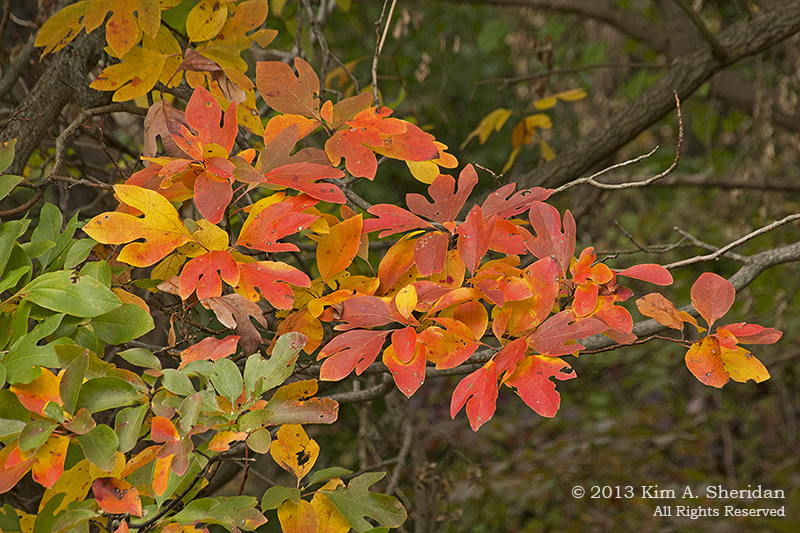
Tyler Bigfoot_8588aPerhaps Autumn’s paint pot anoints the Sassafras leaves.

Tyler Bigfoot_8599a Has anyone seen Fall?

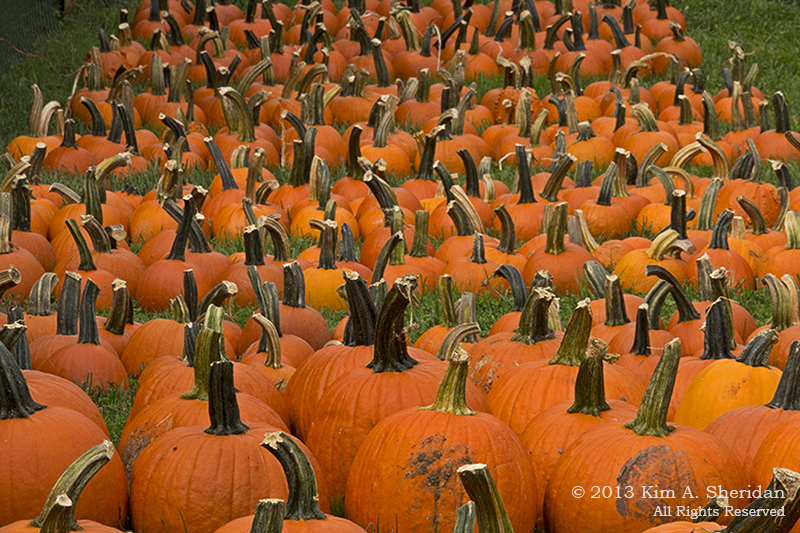
Did you see her pixie cousins darting among the marching jack o’lanterns?

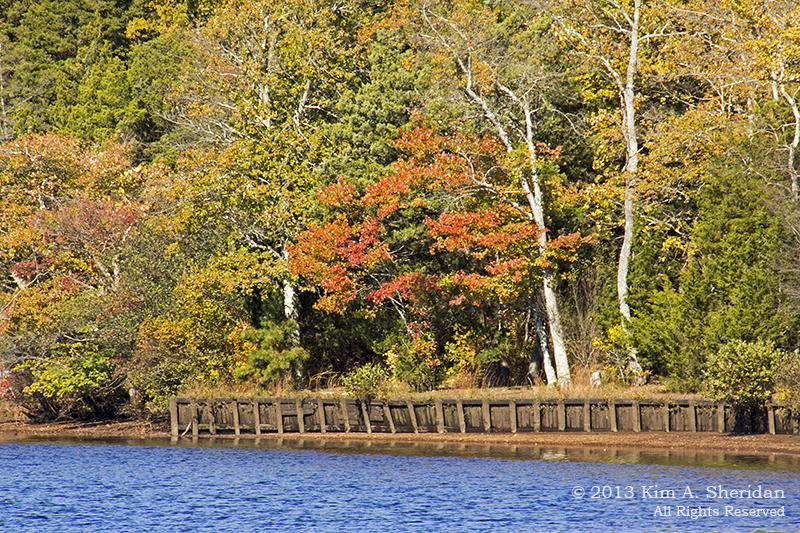
Pine Barrens_9624aStrange things lurk in the Pine Barrens of New Jersey. An elven queen knows better than to flout her presence along the Mullica River…

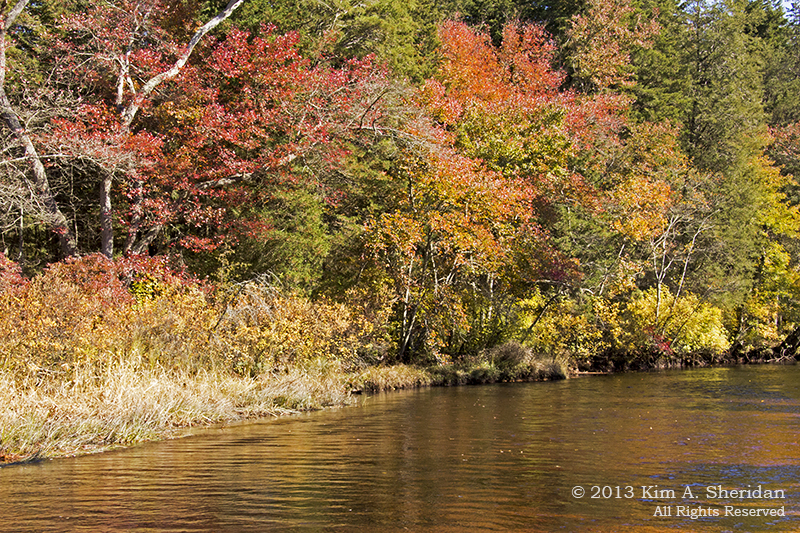
Pine Barrens_9639a Though occasionally she can’t entirely hide her exuberance.

Pine Barrens_9849aCould the tea-colored waters of the Wading River be her magic elixir?

Autumn at Home_0153aHas anyone seen Fall?

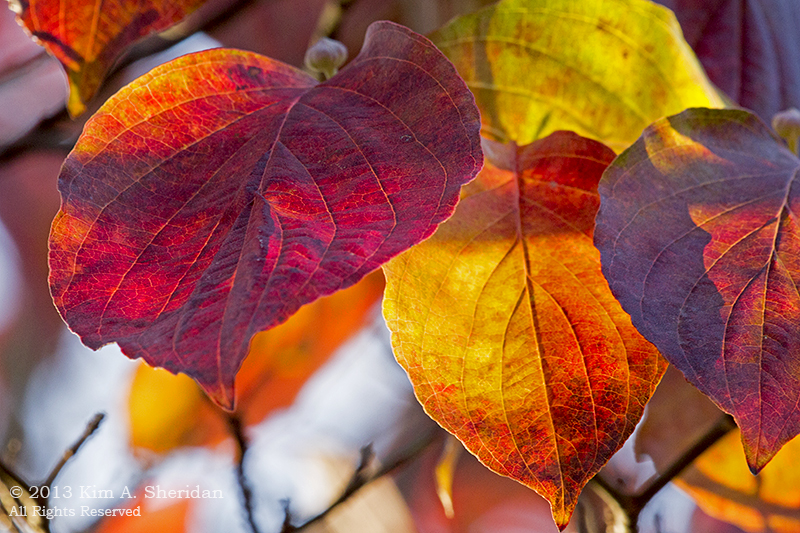
Lady Autumn played hide-and-seek with me one morn amid the dogwoods and the maples in my small Eden at home.Autumn at Home_0310aAutumn at Home_0295a

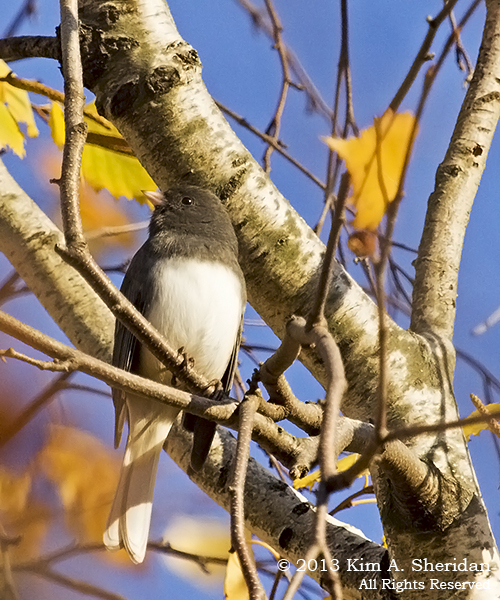
Autumn at Home_0193acs Oh, look! Here is one of her Ladyship’s attendants. The first Dark-eyed Junco of the season awaits her wishes.

Autumn at Home_0332aHave you seen Autumn?

Coming up: The Search Continues

Crab Dance

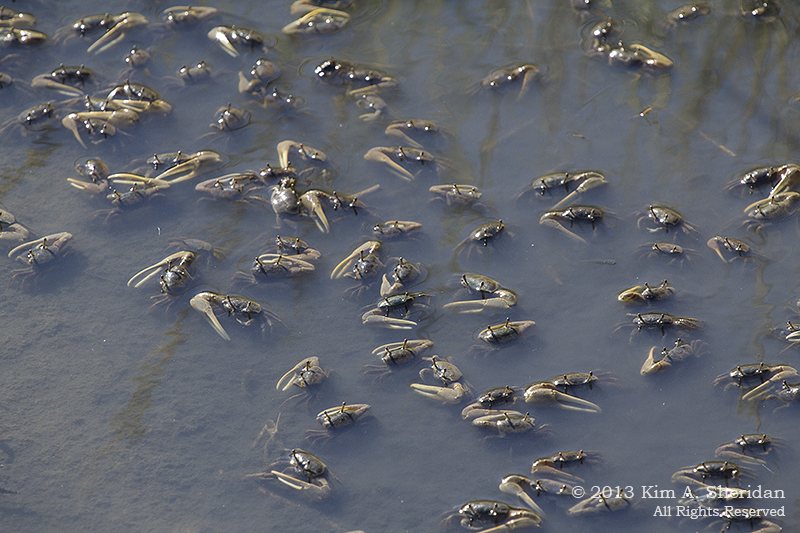
Forsythe NWR Crab_6482a Have you ever noticed something for the first time, and after that you see it everywhere? For me, this was the summer of the Fiddler Crab. Why I’d never noticed them before escapes me, but after my first encounter with a few at the Wetlands Institute in Stone Harbor, I saw them just about everywhere I went. Usually in large numbers!

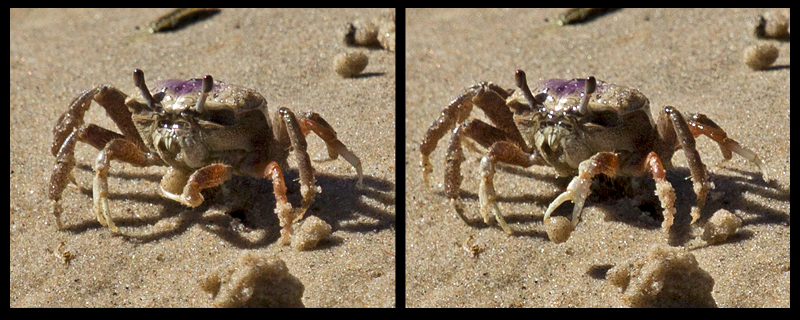
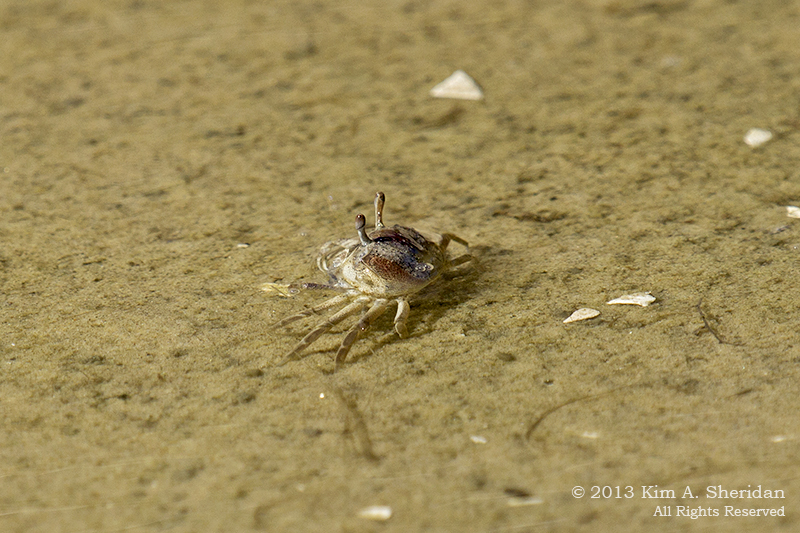
Fiddler crabs are small crabs that live in salt-water and brackish water marshes, beaches and mudflats. They are colonial and social critters that are active during the day.

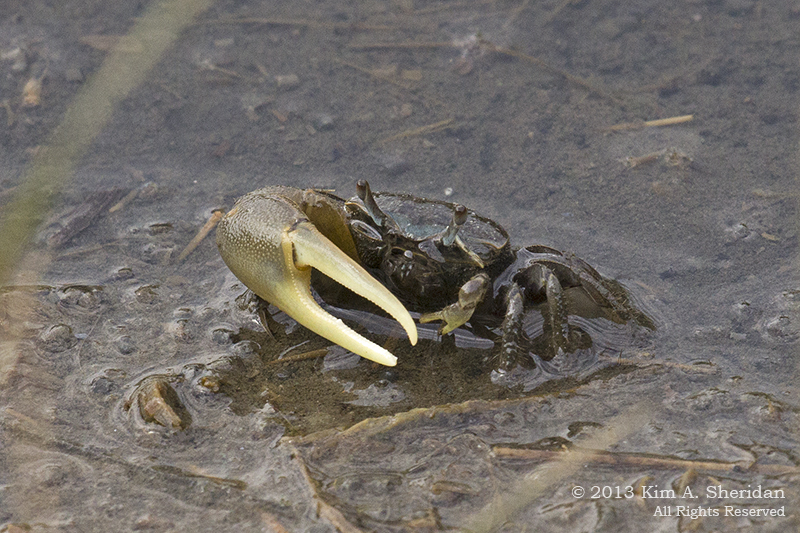
Stone Harbor Wetlands Institute_2629aThe male crabs are particularly odd-looking because one of their front claws is grossly enlarged. It’s used to court females and engage in ritualized combat with other males. In tai chi, we have a move that looks just like this!

FUN FACT: Fiddler crabs molt their shells as they grow. If a male loses his large claw, he will grow a new one during the next molt, on the opposite side of his body. The movements of his small claw against the large one resemble someone playing a fiddle, hence the name.

Crab Collage 1Fiddlers eat by scooping up mud or sand (left), removing algae and other organic material, and then returning the mud in the form of a pellet (right). Females like this one rapidly alternate between both claws as they feed. A male crab’s large claw is useless to eat with, so he has to eat one-handed.
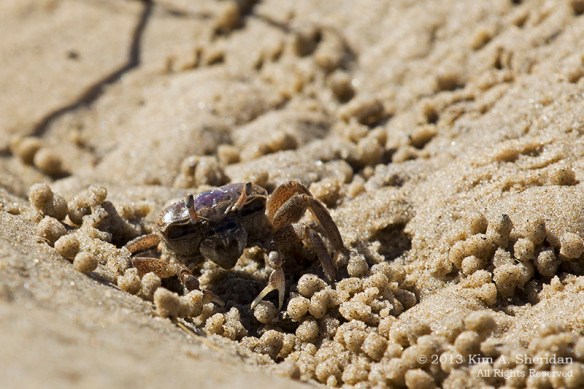
OC Corsons Fiddler Crabs_4642a Here is a fiddler crab near her burrow, with sand pellets to the side. They dig their burrows one pellet at a time, carrying it under their body as much as five feet away before returning to fetch another pellet. These burrows can be as deep as two feet! That’s a lot of work for an inch long crab.
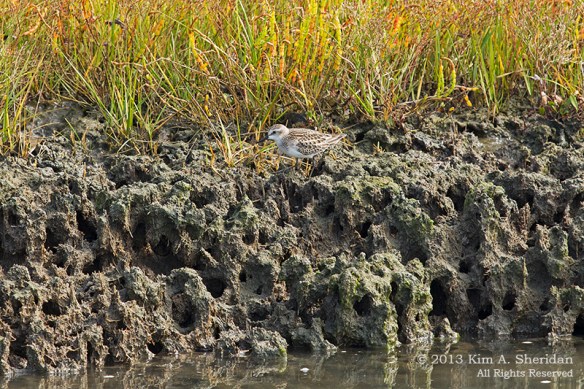
Cape May Skimmer Peep_6854aThe marsh bank below this Semipalmated Sandpiper is riddled with crab holes. The burrows are important shelters from not only predators, but the daily ebb and flow of the tides. Fiddler crabs have biological clocks synchronized to the tides, and retreat to the burrows when high tide approaches, plugging the entrance with mud.
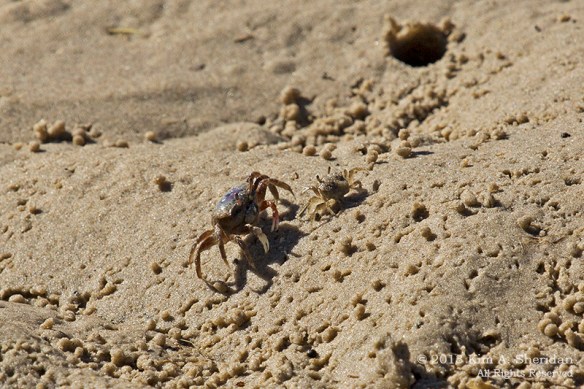
OC Corsons Fiddler Crabs_4621aThe smaller crab here approached this larger female very tentatively, and then tried to scurry past her. Only to have the large female scurry right alongside. They moved in parallel like that for quite some way. Was this a territorial dispute? Is the small crab a juvenile? Some of life’s little mysteries we’ll never solve!
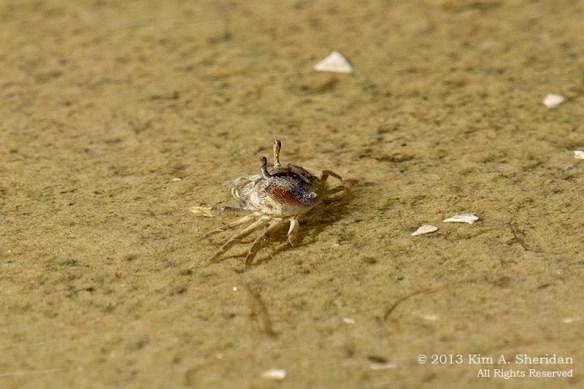
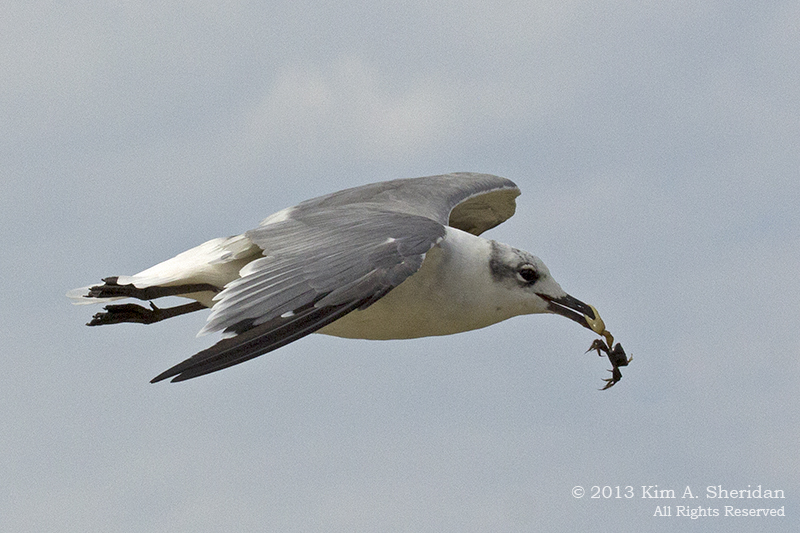
OC Corsons Fiddler Crabs_4533aIt’s a big world out there for a little crab. They have a lot of predators. Threats can come from larger crabs like the marsh crab, diamondback terrapins, and even mink and raccoons. Then there are the dangerous birds, like Great and Snowy Egrets, Great Blue Herons, terns, and gulls.

Stone Harbor Wetlands Institute_2528 Gull and CrabSometimes the crab fights back. I’m not sure who’s captured who!
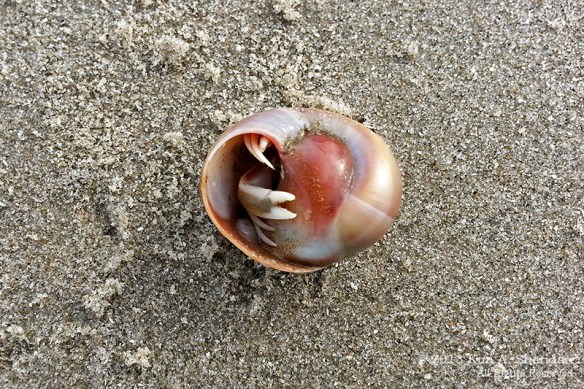
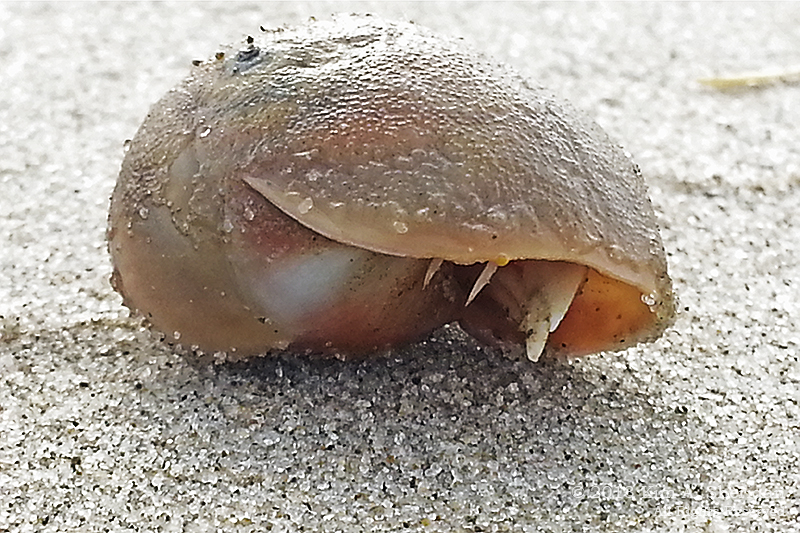
OC Hermit Crab_091753a Here’s a different sort of crab – a flat-clawed hermit crab. Hermit crabs are soft-bodied, and must find someone else’s shell to live in, typically abandoned sea snail shells. I collect a type of moon shell known as a shark’s eye. Usually they’re empty, but I was delighted to find someone at home in this one! I couldn’t coax him out to play, though. Hermits are usually nocturnal, so probably he’d have rather been napping. (It makes me cringe to admit it, but these are cell phone photos. It was all I had with me at the time.)

FUN FACT: Hermit crabs need to replace their shells as they outgrow them. Crabs like to shop for new shells, trying various ones on for size. Sometimes this leads to fights, or a number of crabs ganging up on one whose home they covet. Sometimes they form a “vacancy chain”. A new shell in the neighborhood will draw a crowd of hermit crabs. The largest crab in the group will move into it, leaving his shell behind. That will be taken by the next largest crab, leaving his shell to the third largest, and so on down the line!
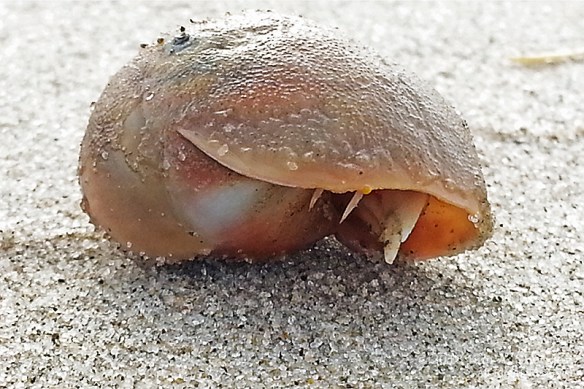
OC Hermit Crab_092723Take time to look at the little things in life. You never know what you might find!

Coming up: Looking for Fall
The Critter Radio Traffic Report

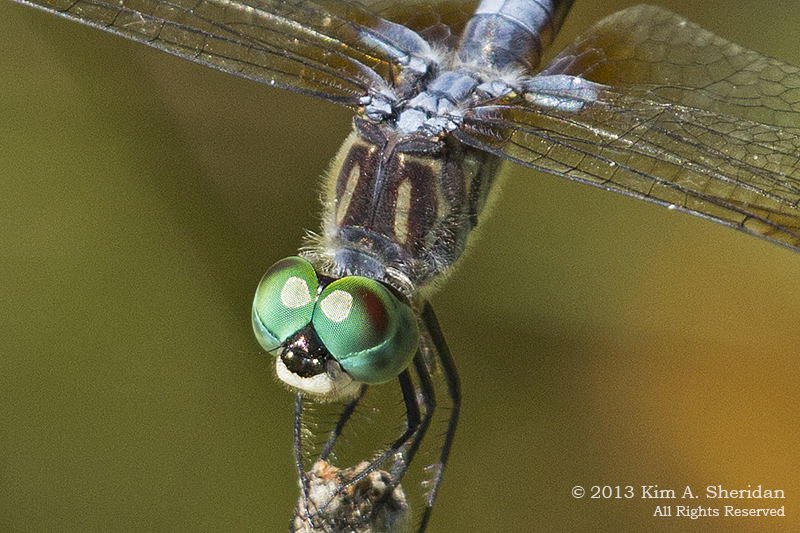
Cape May Point State Park_4230 aWondering what the roads are like on your way to work today? Critter Radio, KRTR 99.9 FM, presents the Critter Traxx Traffic report, sponsored by Critter Traxx Granola. Let’s go to Darryl Dragonfly, our Eye in the Sky. Daryl, what are you seeing on our highways and byways today?

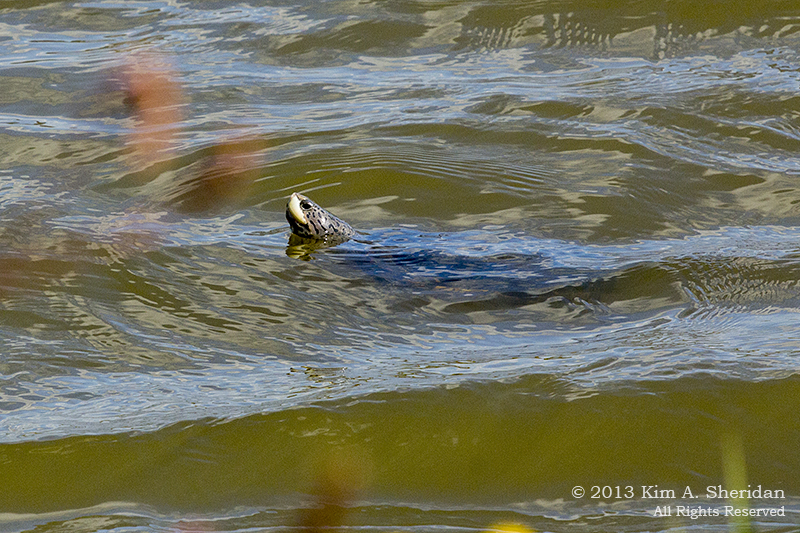
Forsythe NWR Turtles_6197 aWell, folks, it’s a typical rush hour here in southern New Jersey, not a lot of volume, but traffic is crawling. Up north at Edwin B. Forsythe NWR, many of the thoroughfares are actually waterways. Diamondback terrapins are the ultimate sport utility, built for land or water, but not speed. Slow and steady wins the race.

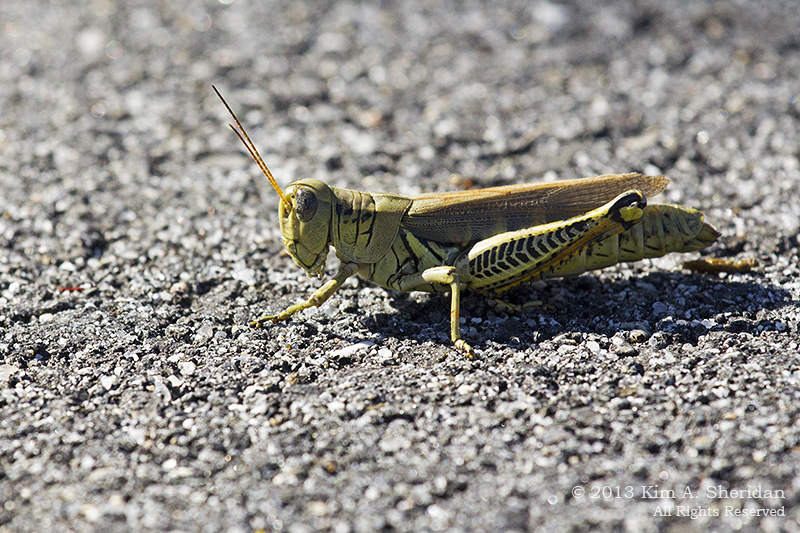
Forsythe NWR Insect_6461 a This grasshopper may not seem to be tearing up the asphalt, but he’s leaps and bounds ahead of everybody else!

FUN FACT: Grasshoppers hear with their tummies! They have a simple auditory organ, called a tympanum, on each side of their abdomens. They’re much better at detecting rhythm than pitch. They also “sing”, by either rubbing their legs against their wings (stridulation) or snapping their wings while they fly (crepitation).

OC 51st Street Structures_5861 a I’m making my way over Ocean City now. Traffic here is in better shape. Bay Avenue is all clear.

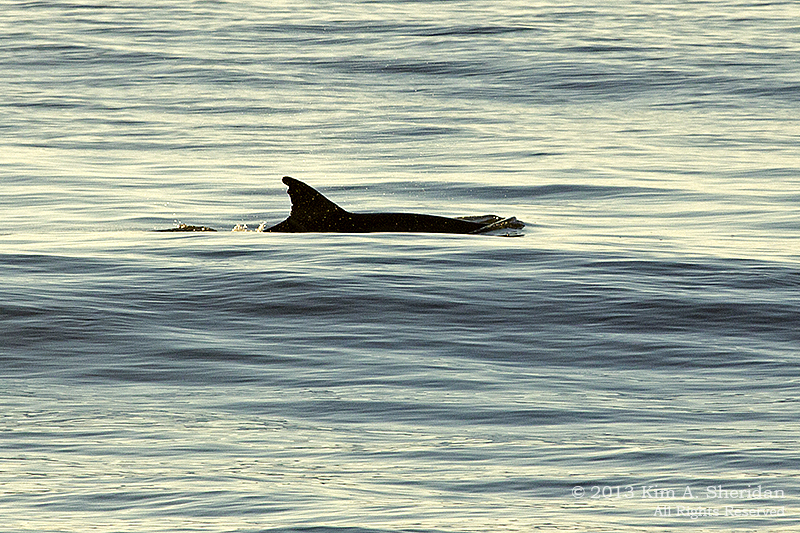
OC Dolphins_3670 a The dolphins are swimming along at a nice pace.OC Dolphins_3656 a Whoops! Bit of a fender-bender on the southbound Ocean Turnpike. Looks like the sun glare got in somebody’s eyes.

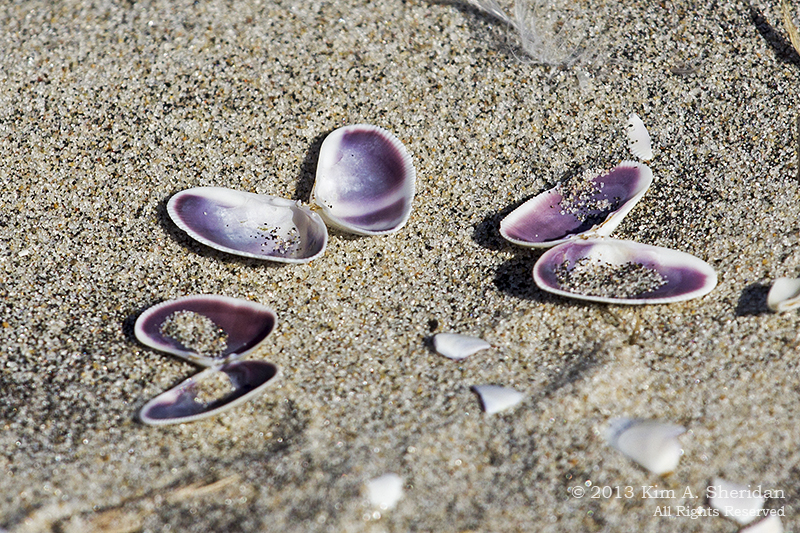
OC Corsons Inlet_4773 a Back on land, right of way issues have some coquina shells at a complete standstill. Don’t you just hate those four-way stops? Nobody ever wants to cross the intersection first. “After you.” “Please, you first.” “No, I insist.”

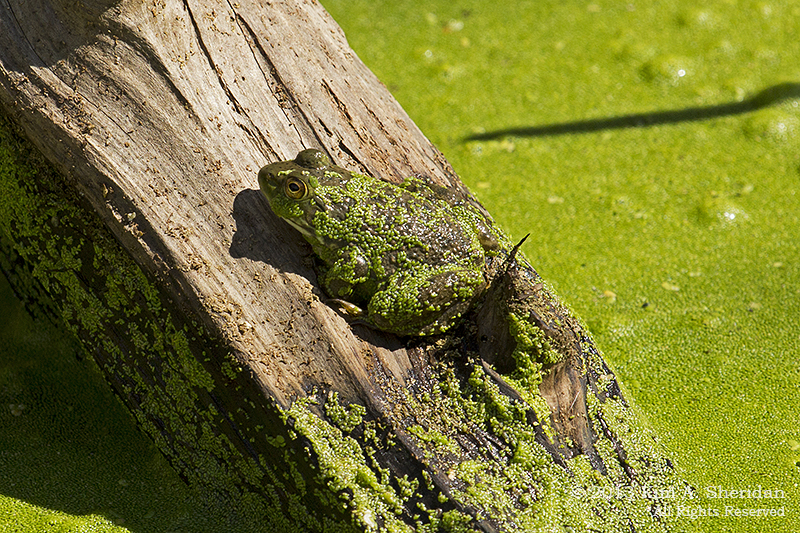
Cape May Point State Park_4115 aAt Cape May Point State Park there was a massive duckweed spill moments ago. A green frog looks like he’s wearing most of it! He’s been forced to pull off on the shoulder of the eastbound Creek Expressway. A trip through the frog wash may be in order.

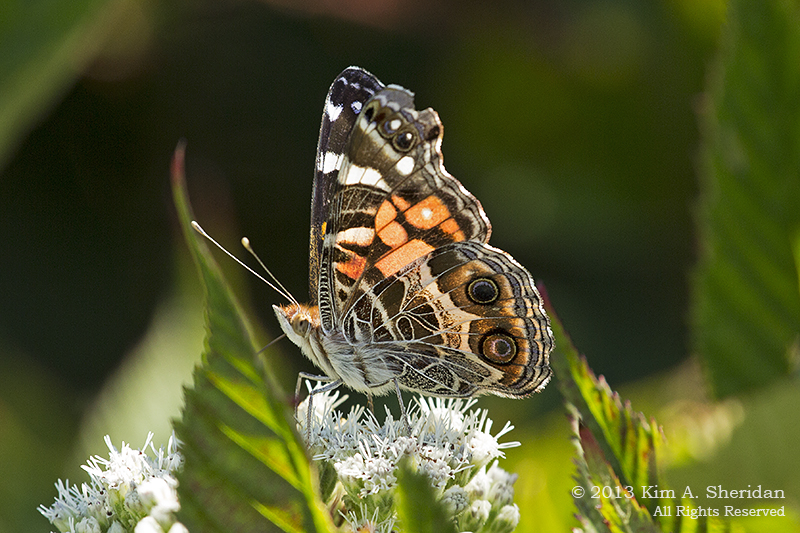
Cape May Point State Park_4090 a Hoping to avoid the duckweed altogether, an American Lady is enjoying a break from her travels. Nothing like a little flower nectar at the truck stop for a nice respite.

Maybe we should all take a page from her book and call it a day. This is Darryl Dragonfly, your Eye in the Sky, with the Critter Traxx Traffic report on Critter Radio, KRTR 99.9 FM. Remember, be nice to your fellow travelers.

OC 51st Street_5847 aCONSERVATION PIECE: The northern diamondback terrapin is the only turtle out of 300 species to live in brackish waters like those found in the coastal salt marshes, above. The terrapins are at the top of the food web and play an important role in keeping the populations of their prey from growing out of hand. Diamondbacks are themselves in a lot of trouble in New Jersey, however. They have lost a lot of the salt marsh habitat in which they live and the barrier island sand dune habitat in which they nest. They drown in commercial crab traps. Human car traffic kills an average of more than 500 gravid (egg-laden) female terrapins each year in Cape May and Atlantic Counties alone. Thankfully, dedicated people are fighting to protect the turtles, by building barrier fences, helping turtles cross roads safely, rescuing injured turtles, and even retrieving eggs to incubate them and rear the young turtles. For more information on this effort: http://wetlandsinstitute.org/conservation/

Coming up: Crab Dance

Back In Business

HNWR Yellowlegs_8781 a KRTR 99.9 Critter Radio brings you the Critter Traxx Traffic Report, sponsored –

*** WE INTERRUPT REGULARLY SCHEDULED PROGRAMMING TO BRING YOU THIS SPECIAL UPDATE ***

This just in – With the government now open, John Heinz National Wildlife Refuge is BACK IN BUSINESS!

HNWR_9263 aYes, folks, my favorite hangout is up and running. The recent government shutdown followed immediately on the heels of my two weeks at the Shore, and I found myself away from Heinz for nearly five weeks. So it was with eager anticipation that I returned for a bird walk this weekend. Would the Refuge look much different? Would there be any fall color showing yet? What birds would be out and about? Would there be interesting things to see?

The Refuge rarely disappoints, particularly after so long away. Here are some ordinary images of ordinary birds on an ordinary Saturday at Heinz that was somehow anything but ordinary.

HNWR Yellowlegs_8750 a  Greater Yellowlegs.

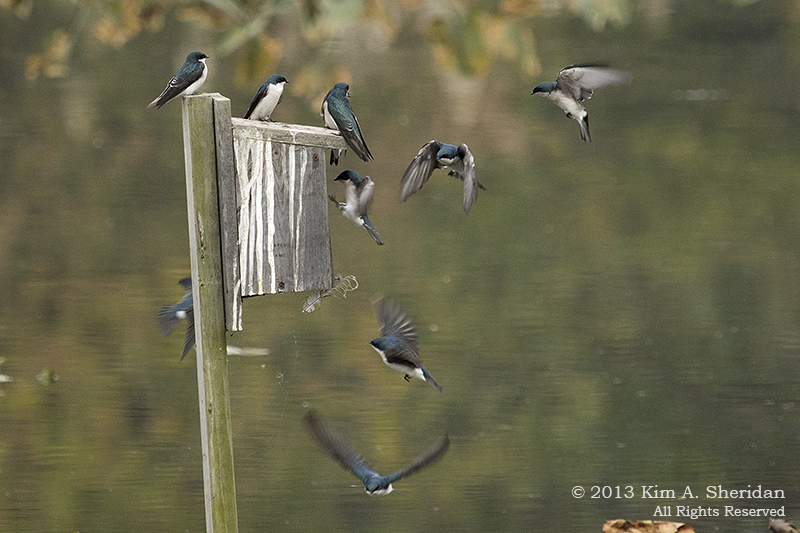
HNWR Swallow_8806 aHNWR Swallow_8863 aTree Swallows are here in large numbers. They were busily quarreling over a number of nest boxes, even though it isn’t nesting season. We think there might be insect nests inside, and that’s what’s causing the chaos.

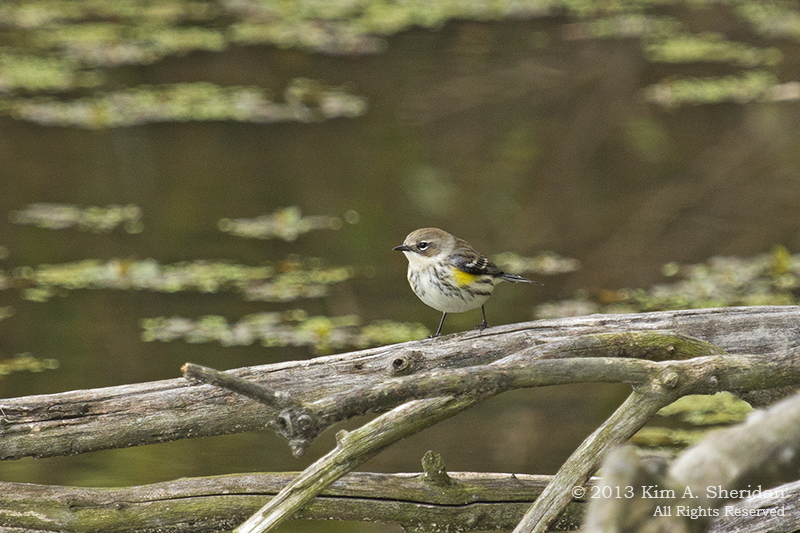
HNWR Yellow Rump_8891 a It’s fascinating to watch the way Nature changes through the seasons. Every naturalist should have a place they go frequently throughout the year, and Heinz NWR is that place for me. Last October I took my first guided bird walk here, led by Mary Ellen, and the most prominent bird was the Yellow-rumped Warbler. How fitting that exactly a year later, I should go on another of Mary Ellen’s walks, and Yellow-rumps would again dominate the walk. I have now come full circle!

FUN FACT: Phenology: the study of the timing of recurring events in the life-cycles of plants and animals. For instance, the flowering of trees, the birth of baby animals, migration, hibernation; all recur from year to year. Yellow-rumped warblers migrate through Heinz in mid-October. These events are influenced by seasonal changes and their timing may be altered by climate change. If a plant blooms weeks earlier than in the past due to a warmer climate, the insects and birds that depend on it may arrive too late to take advantage of it. And if you’re allergic to it, you may start sneezing a lot earlier!
HNWR Teal_8988 aGreen-winged Teal, one of six species of ducks we saw.

HNWR Wood Duck_9051 acs2 Here’s a duck I’ve been trying to photograph in breeding plumage since the spring – Wood Duck. This is the closest I’ve gotten so far, and they’re not very close. But they are spectacular.

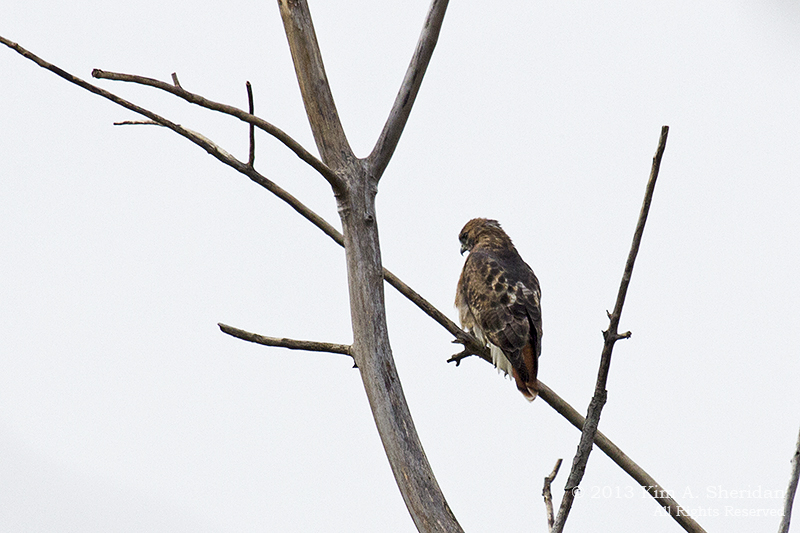
HNWR Redtail_9197 aRed-tailed Hawk.

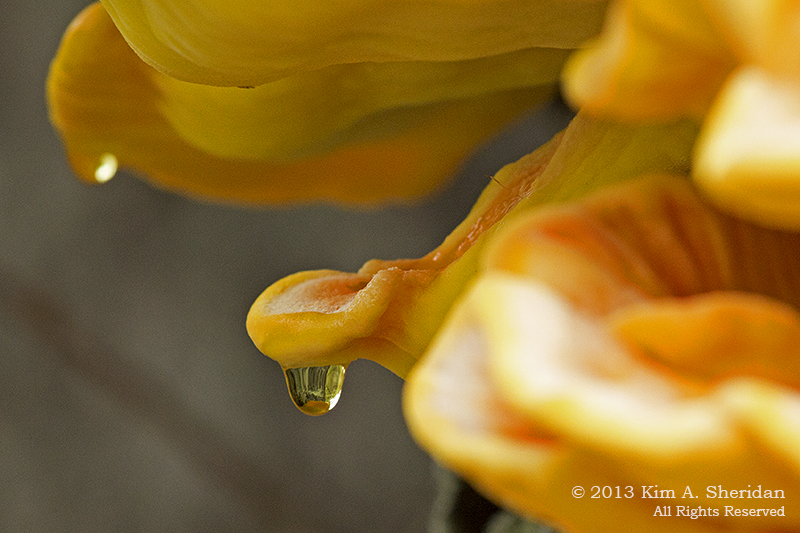
HNWR Fungus_9222 a I am told that this strange apparition is a Chicken Fungus, that it’s edible, and furthermore that it tastes like – chicken. I didn’t try it.

And with good reason – there are a lot of toxic fungi out there. Best to just admire them for their looks, and leave the taste-testing to the experts. Which I definitely am not.

HNWR Fungus_9245

*** WE NOW RETURN YOU TO YOUR REGULARLY SCHEDULED PROGRAMMING ***

Coming up: The Critter Radio Traffic Report (I promise)