Bearly There

Appalachian Spring Title SubtitleDon and I didn’t go to the Appalachians for the wildlife. Well, I did, as you’ll see later. But our main interest was in exploring habitats vastly different from what we are used to in our little corner of the Piedmont. Appalachian mountains, coves, boreal forests, balds – we wanted to experience it all.

It’s not that critters weren’t on our radar; it’s just that we were trying to cover too much ground to spend a lot of time in one place looking for birds and such. What wildlife we saw would have to find us.
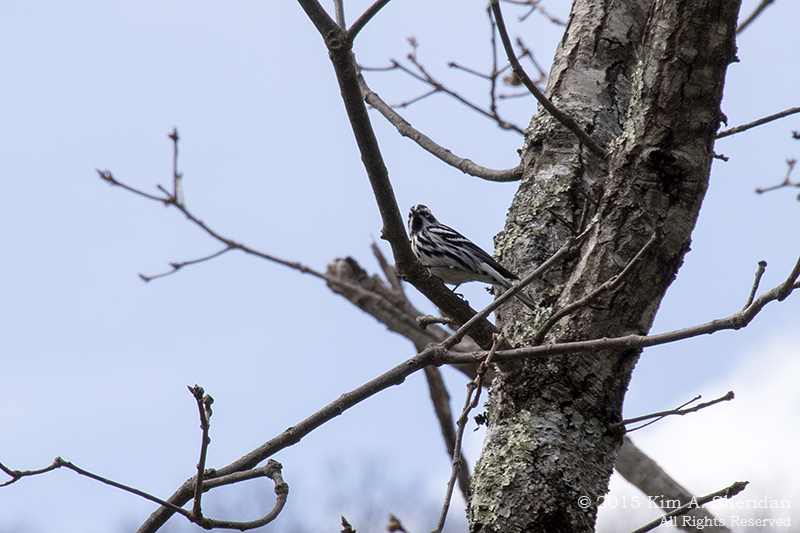
150412_TN GSMNP_3949acsAnd it did. A Pileated Woodpecker on the banks of the Little River, a Black and White Warbler near Laurel Falls, a Cooper’s Hawk on the Blue Ridge Parkway. Hummingbirds on the feeders of our cabin porch. There were lots of Wild Turkeys and lots of Turkey Vultures. A few gray squirrels. Several very tame deer at Cade’s Cove. Nothing we hadn’t seen before, but all enjoyable to watch. Especially the Pileated.

We did see three species new to us, and none of them were birds. All were exciting. And all were found by somebody else first, and we just followed the crowds.

On the Laurel Falls Trail, it was the children who led the way. We came upon a father and some kids staring intently at the rocky cliff rising above us. “Look!” they said “it’s a salamander!” Sure enough, basking in the warm sun was a six-inch striped long-tailed salamander.

150412_TN GSMNP_4018acsOr so I thought.

We saw three of these critters, and for two months I thought they were salamanders. No warning bells went off in my thick skull. Despite the fact that the animal we saw didn’t look like any of the salamanders in the Reptiles and Amphibians of the Smokies book. Despite the fact that this little guy had scales. Despite the fact he was basking in the sun, which no amphibian in its right mind would ever do. No, despite all these obvious signs, I stubbornly persisted in believing that I had found one of the Smokies’ famous salamanders.

And I call myself an amateur naturalist? This was amateur hour at its finest.

150413_TN GSMNP Cades Cove_4450 acsFinally, upon reviewing the photographic evidence I saw what I should have known in April. This was no amphibious salamander, but a lizard, a reptile. In fact, it’s one of the skinks that call the Smokies home. The scales are one clue; reptiles have them, amphibians don’t. But it’s the behavior and the habitat that should have tipped me off. Salamanders are moist skinned critters, and stick to shady, damp places, like under rocks at the edges of streams. Skinks, like all reptiles, are cold-blooded, and like to sunbathe to help regulate their body temperature.

Properly identified at the time or not, these were cute little animals. We saw two that first day on the Laurel Falls Trails, both found by kids.

150412_TN GSMNP_4036acsHere’s Don posing with one.

I found our third skink myself at the base of a farm building in Cades Cove.

150418_NC BRP Hawk_4495acsThere were no such identification issues with our next new species. I knew these magnificent animals frequented this particular area of the park, had almost been expecting them, but did not dare to hope. Yet at the end of a very long day, there they were. They stood out, big and dark in the light green grass of the open field.

Elk!

150417_NC GSMNP Oconaluftee Elk_4252acsElk used to roam the Smokies and the southern Appalachians, but they were eliminated from the area by the mid-1800s. In 2001 the National Park Service began a program to restore elk to the park. Here’s proof it’s been successful!
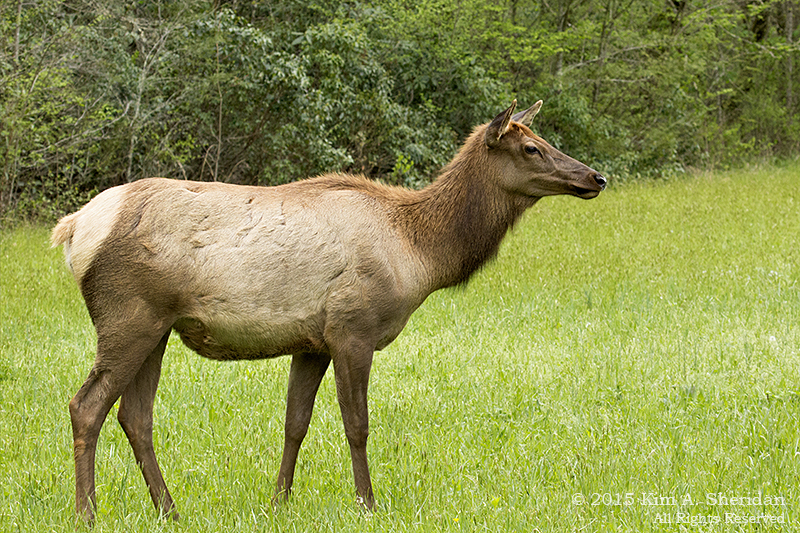
150417_NC GSMNP Oconaluftee Elk_4354acsOne of the places the elk like to hang out is Oconaluftee, at the eastern end of Newfound Gap Road, which is where we came upon them that late afternoon. I quickly pulled the car onto a side road and Don and I joined the small crowd of visitors and NPS volunteers watching the elk do basically nothing.

Eleven elk all lying down, placidly munching on grass. What entertainment! One got up and walked across the field, which stirred the crowd into a tizzy.

150417_NC GSMNP Oconaluftee Elk_4403aImagine our excitement when another elk appeared behind us and started grazing just feet away.
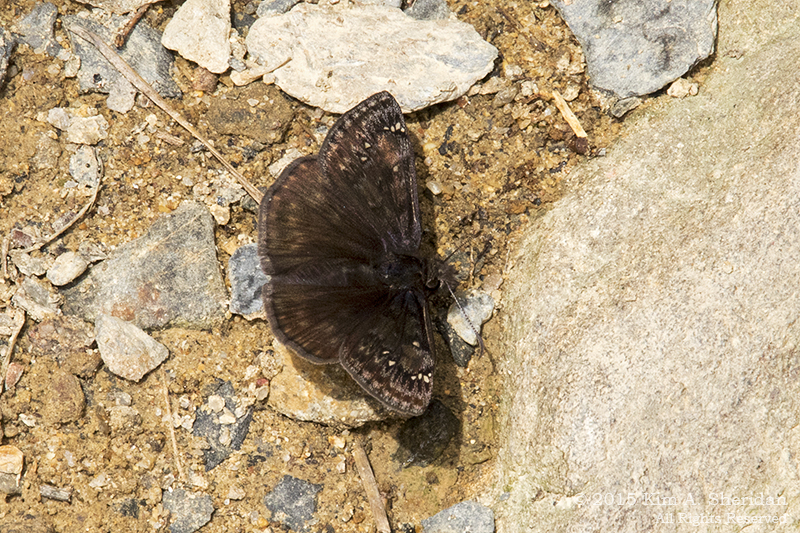
150412_TN GSMNP_3929acsWhile Don and I went to the Smokies for the mountains and varied habitats, I was secretly hoping for bears. The American black bear is my all-time favorite animal – let’s be honest, it’s the cute factor. I’ve never seen one before, though. There are an estimated 1800 black bears in the Smokies. That’s two bears a square mile, so my odds of seeing one must have been good, yes?

No. Bears are shy creatures who avoid contact with humans at all costs, unless there’s food involved.

Early in our tour of Cades Cove, Don asked a local what our odds of seeing a bear were. “About 1%”, he replied.

Five minutes later we had our first bear.
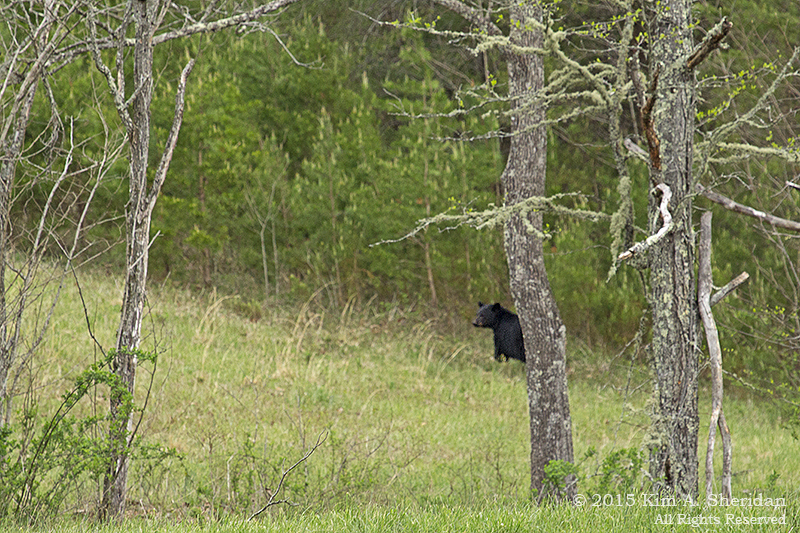
150413_TN GSMNP Cades Cove Bear_4108acsBears in the Smokies frequently cause “bear jams”, carloads of tourists on the side of the road looking at bears. So when we came upon a lot of parked cars and lots of people standing around, all supervised by a ranger, we knew what was going on. Don, being the gentleman that he is, jumped out of the car to see before I could get properly parked.

Our bear was about 200 yards away, and disappearing into the trees by the time I could get my camera on him. I only got a few shots, all blurry.
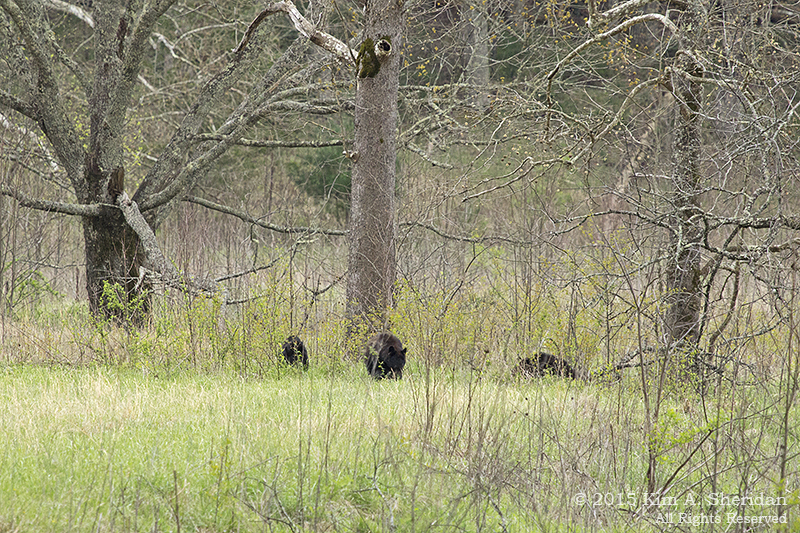
150413_TN GSMNP Cades Cove Bear_4132acsIt wasn’t long before I got another chance. This time, a bigger crowd was watching not one but three bears about 300 yards away. A mother and two yearling cubs. We got a longer look, and I tried hard to get good shots, but once again distance led to fuzzy photos. Usually I wouldn’t show photos this bad – and believe it or not, this is my sharpest shot.

150413_TN GSMNP Cades Cove Bears_4163 acs2But what the heck, I’d finally gotten to see black bears, and here’s the proof!

Don and I had one other encounter with a black bear, and it happened too fast for either of us to get a photo. We were driving home from the Smokies on the Blue Ridge Parkway near Mt. Mitchell. It was pouring rain, and the fog masked everything but the trees lining the road.

Suddenly a bear appeared from the woods on the right, maybe 10 yards away, crossed the road in front of us and disappeared into the woods on the other side. We only had time to point and start shouting “Bear! Bear! BEAR!” before it was gone. Not more than 5 seconds, but by far the best look we got at a black bear on the trip.

That quick but exciting view of a black bear was an apt metaphor for the wildlife Don and I saw on our two week Appalachian excursion. Every brief sighting was thrilling, but in the Smokies the wildlife was…
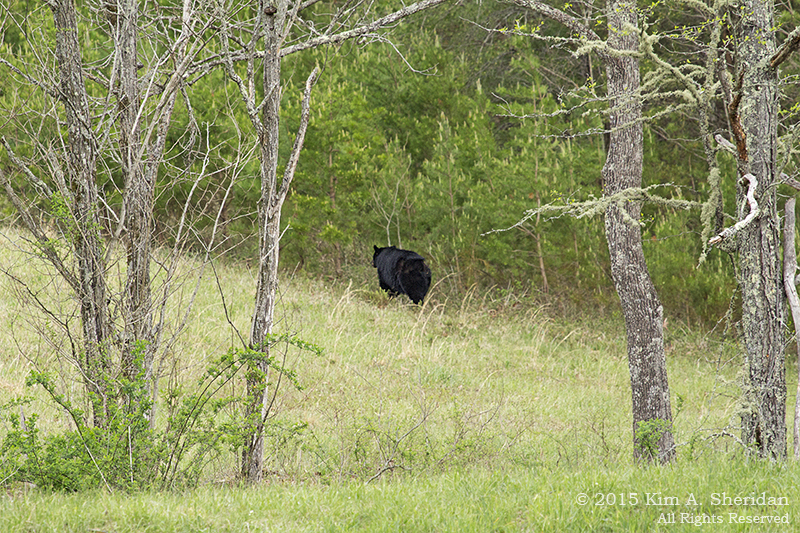
150413_TN GSMNP Cades Cove Bear_4118acsBEARLY there.

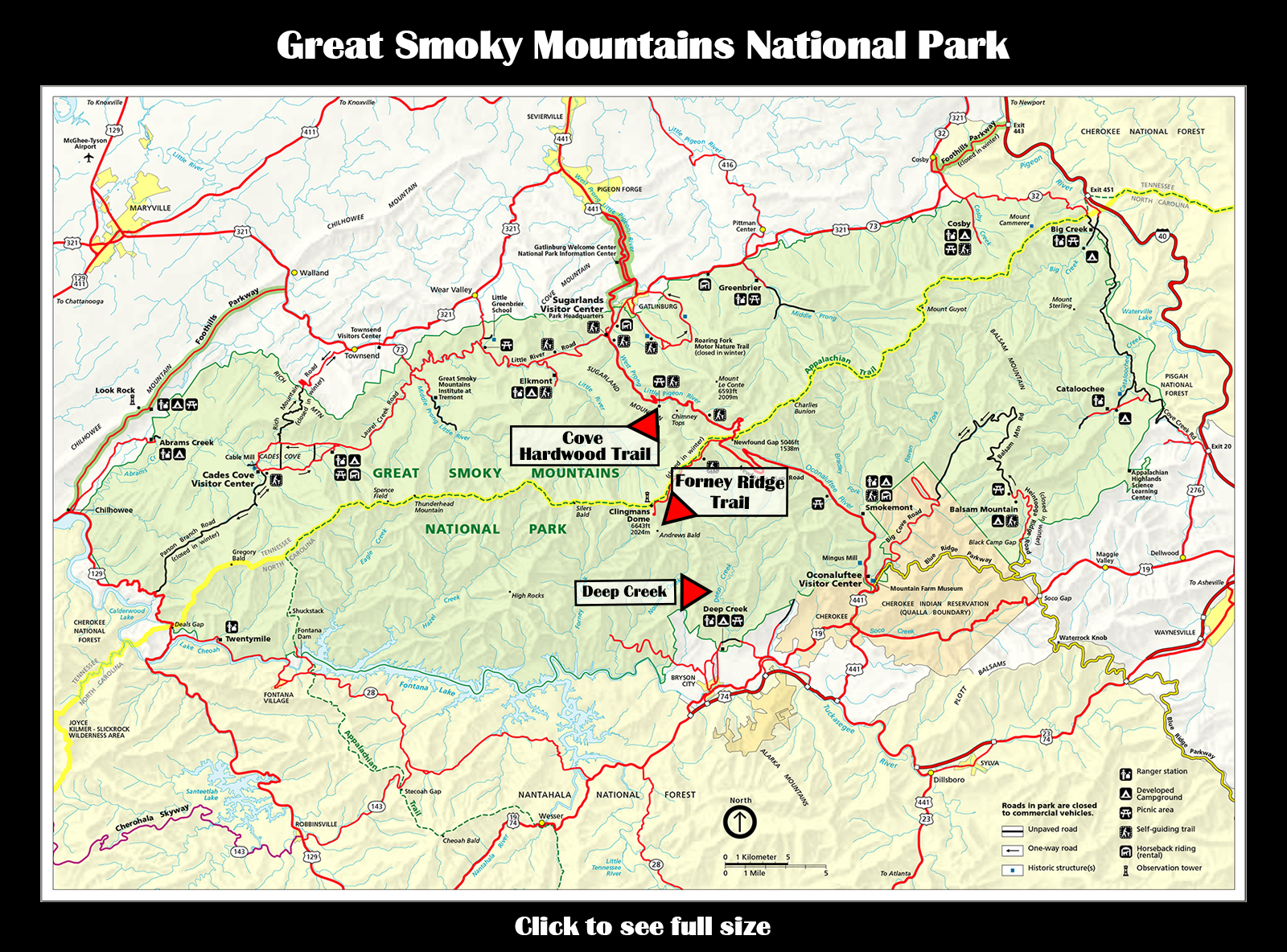
Map GSMNP Bearly There

Wildflowers and Woods

Appalachian Spring Title Subtitle

Old trees float on a sea of wildflowers, Cove Hardwood Nature Trail, Great Smoky Mountains National Park.

Old trees float on a sea of wildflowers, Cove Hardwood Nature Trail, Great Smoky Mountains National Park.

Our timing was way off.

Best to visit Great Smoky Mountains National Park during the peak of fall foliage season, or in summer when the mountains are a lush deep green. Instead we were there during mid-April, before the trees leafed out. The mountains were still a dull grayish brown in all my photos. And did I mention the rain?

Squirrel Corn, Cove Hardwood Nature Trail.

Squirrel Corn, Cove Hardwood Nature Trail.

Our timing was spot-on in one sense, though – we visited in the peak of the spring ephemeral wildflower season.

Many wildflowers live their entire above-ground life in a few weeks in the spring.

Taking advantage of warm soil, abundant moisture, and the full force of the unfiltered sunlight, these fleeting beauties awaken in early spring.

Drawing on last year’s reserves of energy, they send up stems and leaves while gathering and storing as much fresh energy as they can. They bloom, and set and disperse seeds.

Not all violets are purple. Clockwise, from top left: Canadian Violet, Early Yellow Violet, Woolly Blue Violet, Bird's Foot Violet.

Not all violets are purple. Clockwise, from top left: Canadian Violet, Early Yellow Violet, Woolly Blue Violet, Bird’s Foot Violet.

Feeding and reproduction complete, the flowers, stems and leaves wither and die, leaving the strong roots and rhizomes below the soil to enter dormancy until the next year.

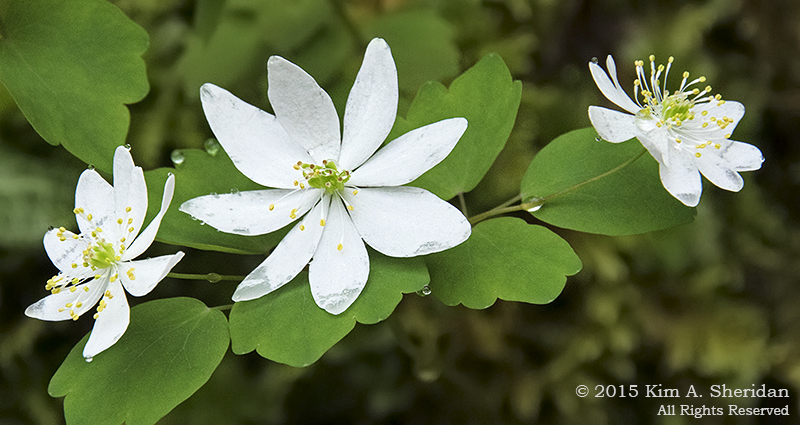
Rue-anemone, Deep Creek Trail.

Rue-anemone, Deep Creek Trail.

All of this activity in just a few short weeks, and we happened to be there to see it!

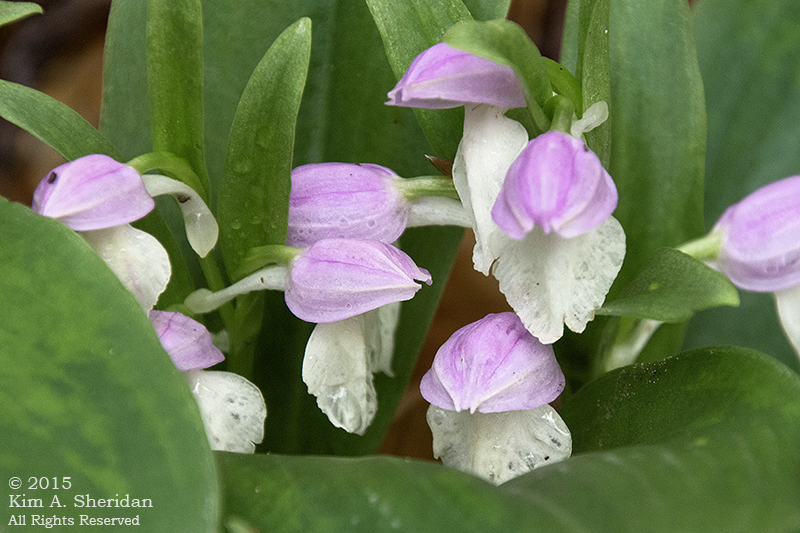
Showy Orchis, Deep Creek Trail.

Showy Orchis, Deep Creek Trail.

Plant diversity in the Smokies is matched by only a few areas worldwide. Nearly 1500 kinds of flowering plants call the southern Appalachians home.

Fringed Phacelia, Cove Hardwood Nature Trail.

Fringed Phacelia, Cove Hardwood Nature Trail.

Abundant rainfall, coupled with a wide range of elevations, provides a variety of habitats for our leafy friends. Most of the park is heavily forested. There are eight distinct forest types.

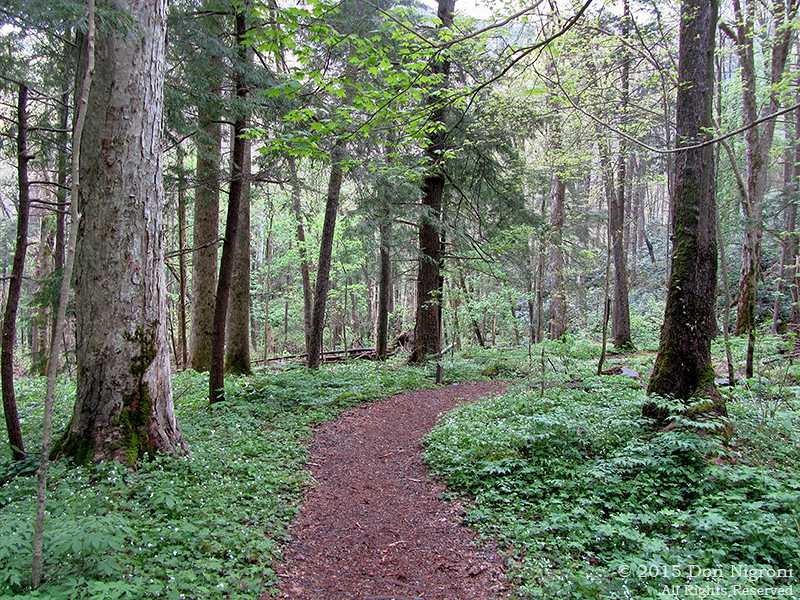
The Cove Hardwood Nature Trail.  Photo by Don Nigroni.

The Cove Hardwood Nature Trail.
Photo by Don Nigroni.

Don and I wanted to explore an old-growth forest, something neither of us had experienced before. We chose the Cove Hardwood Nature Trail, which winds through a cove hardwood forest in Sugarlands Valley.

This cove is cool, sheltered and very moist, with tiny runs seeping from the slopes everywhere. Thirty species of trees are found here, including white basswood, yellow birch, tulip poplar, and hemlocks.
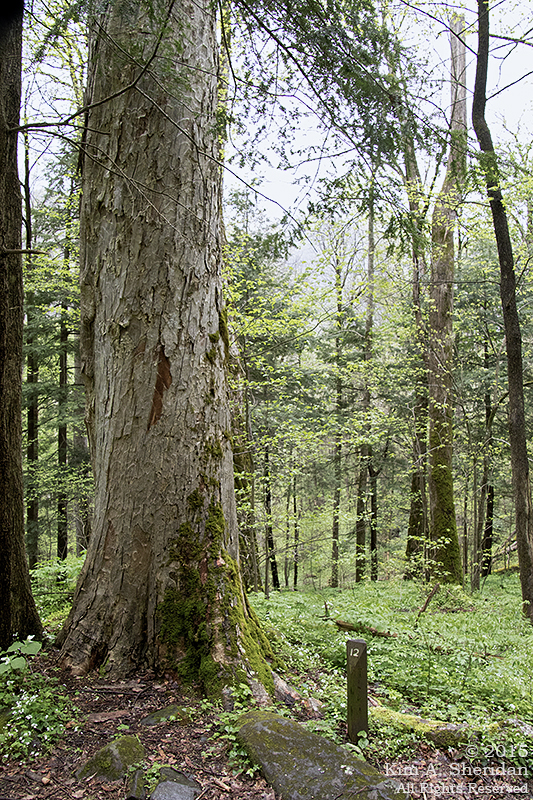
Yellow buckeye tree, Cove Hardwood Nature Trail.

Yellow buckeye tree, Cove Hardwood Nature Trail.

The old-growth forest area starts in the upper reaches above the logging limit, where the forest has never been altered.

Many of the trees have lived a long time, and are really big.

This venerable giant, a 150 year old yellow buckeye, stands 100 feet tall.

Unlike the disturbed forests we are used to, the understory below the widely spaced trees is wide open.

The ground is not, though. A riot of mosses, shade-adapted plants and those wonderful spring ephemerals carpet the soil.

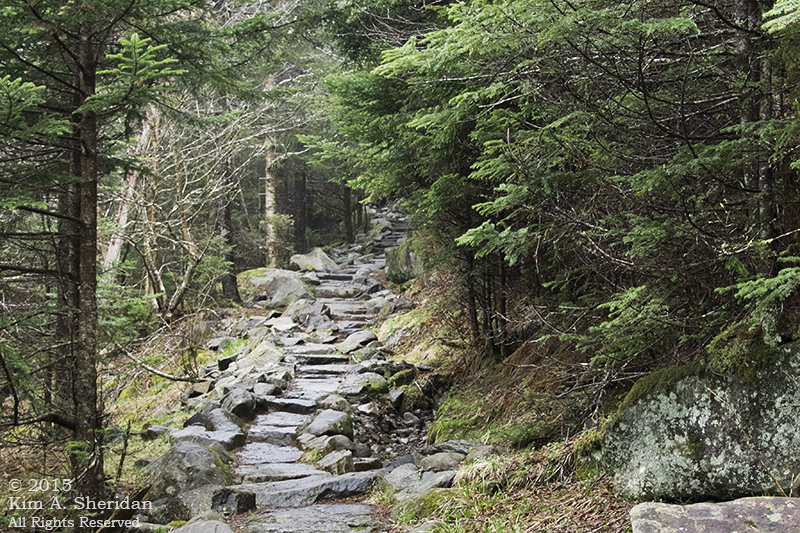
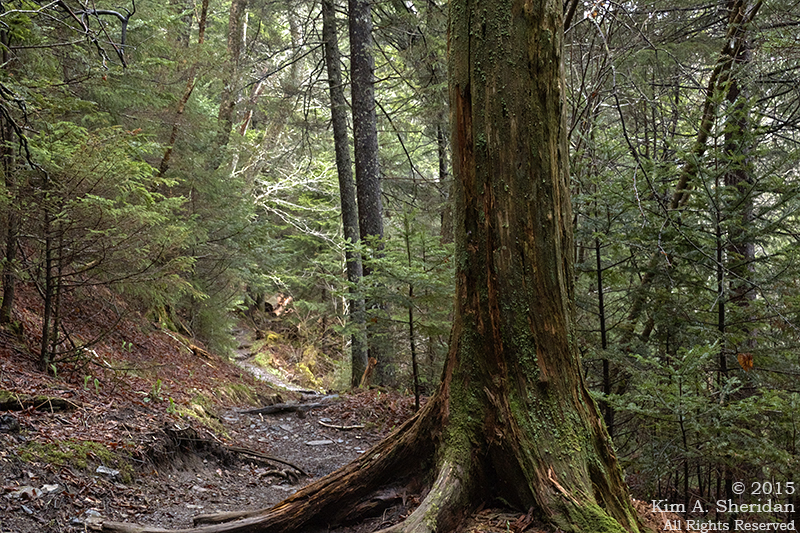
The Forney Ridge Trail winds through a boreal spruce-fir forest.

The Forney Ridge Trail winds through a boreal spruce-fir forest.

I fell in love with another unique forest ecosystem we encountered a number of times, the boreal spruce-fir forest. This type of forest is found in the North Woods of Maine and Canada. So what’s it doing in the Southern Appalachians? Ice, ice, baby. During the glacial periods, the trees and plants of the far north migrated here ahead of the glaciers. They found a favorable climate in the high altitudes of the Smokies and stayed after the glaciers retreated.

Spruce-fir forest on the Forney Ridge Trail.

Spruce-fir forest on the Forney Ridge Trail.

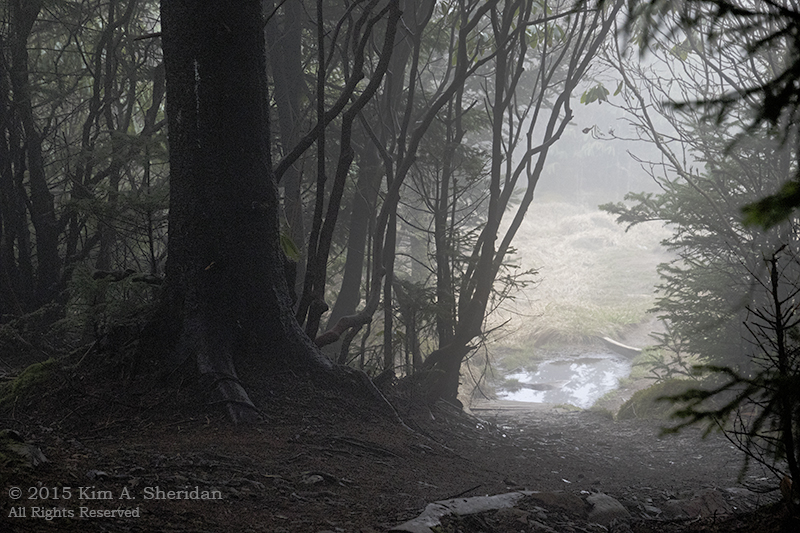
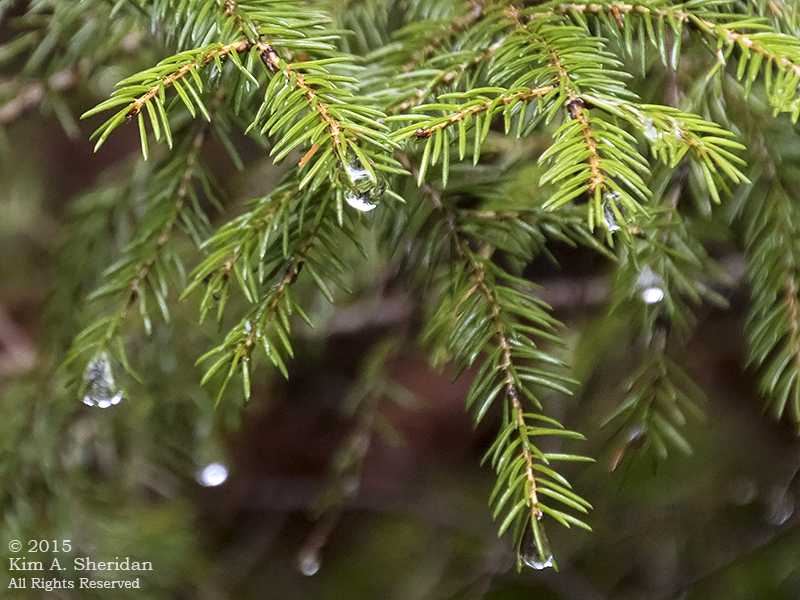
The loftiest slopes of Clingman’s Dome and other high peaks are draped in red spruce and Fraser firs. The day we trekked the Forney Ridge and Appalachian Trails, the woods were cloaked in a heavy mist. I felt we had entered a mysterious fairyland, softly decorated in deepest green and luscious auburn. Little dewdrops hung suspended from spruce needles. Mosses clung to both standing and fallen trees, while lichens coated the rocks.

Mist dripping from spruce needles.

Mist dripping from spruce needles.

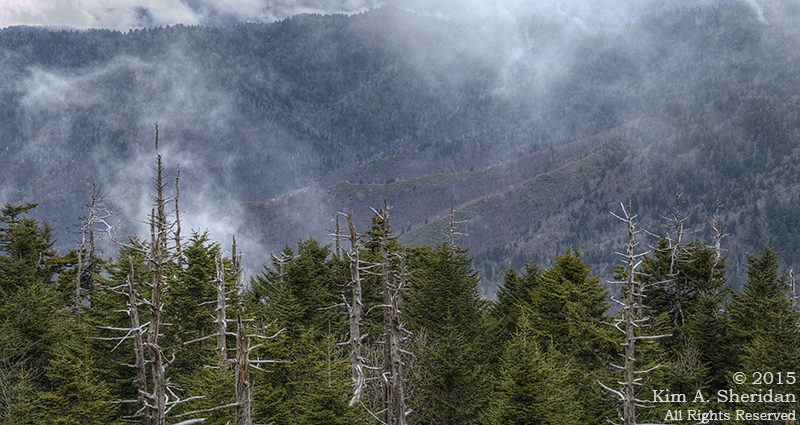
Living and skeletal Fraser fir on Clingman's Dome.

Living and skeletal Fraser fir on Clingman’s Dome.

There is a sadness in the boreal woods, though.

Since the 1960s, the Fraser firs have been decimated by a non-native invasive insect known as the balsam woolly adelgid.

This nasty critter eats the sap of the tree while injecting a toxin that kills a tree in a few short years.

The forests are littered with the ghostly skeletons of dead Fraser firs. It is all too common to see numerous bare tree trunks standing amidst live firs.

What a shame it would be to lose these majestic trees altogether.

Fraser firs on Clingman's Dome.

Fraser firs on Clingman’s Dome.

During our time in the Great Smoky Mountains National Park, I counted 25 different flower species that I was able to identify, and more that I couldn’t put a name to. We walked through southern woodlands, and forests more common to the far North.

We came to the Smokies for the mountains, but left awed by the wildflowers and the woods.

Spruce-fir forest along the Appalachian Trail.

Spruce-fir forest along the Appalachian Trail.

Maybe our timing wasn’t so bad after all!

Map GSMNP Wildflowers & Woods

Cades Cove

Appalachian Spring Title SubtitleGreat Smoky Mountains National Park spans more than 800 square miles across two states, Tennessee and North Carolina. With only 5 1/2 days to explore the Park, where do you start?

150413_TN GSMNP Cades Cove_4134aFor many visitors, including my friend Don and me, you start at Cades Cove. Scenery, wildlife and history – Cades Cove has it all, in one 11-mile driving loop. That’s where we spent our first full day at the Park.

We arrived at the Cove early on a nice morning with blue skies. It would be the last rain-free day we had for a week.

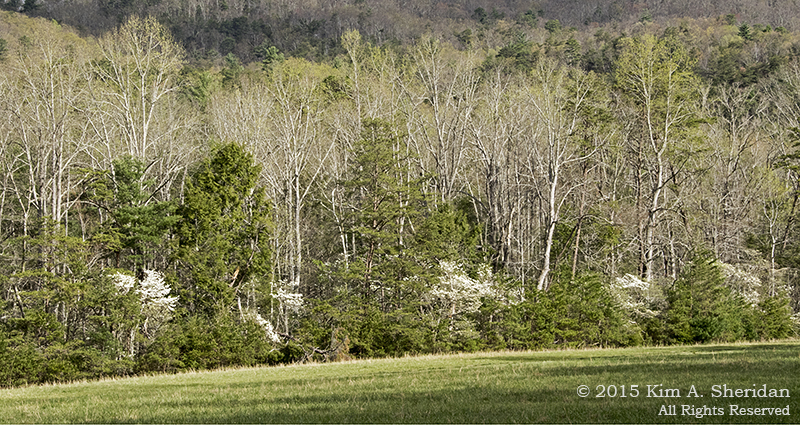
150413_TN GSMNP Cades Cove_4146aA “cove”, by the way, is Smoky Mountain parlance for a flat valley between mountain ridges. At Cades Cove, the overlying rock has eroded to expose a valley of limestone. Meadow grasses and plants thrive on limestone soil.

Cades Cove Panorama 2 PCWhile some of Cades Cove is wooded, much of it is open, making for some great views of the mountains beyond. In the five hours we spent there, I never got tired of those mountains. Click for the full effect.

There was a lot more to see than just mountains and meadows though. Wildflowers abound, and we saw some interesting wildlife. We also got a real sense of the history of the place.

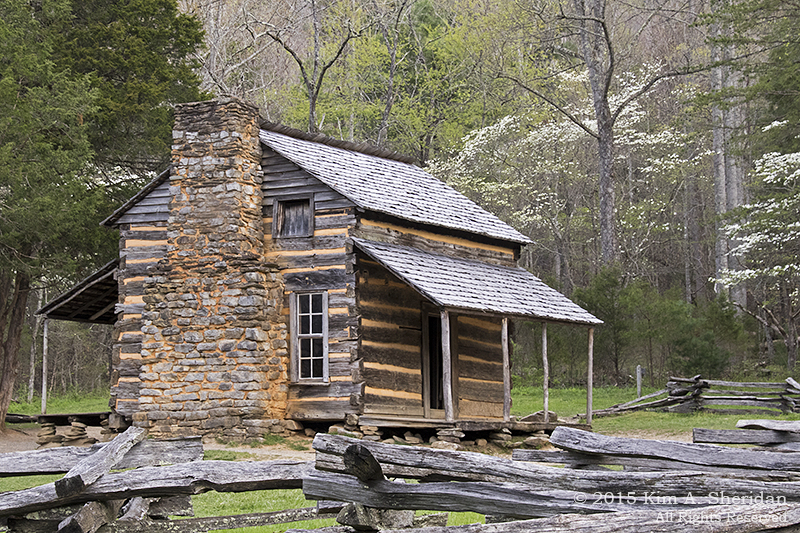
150413_TN GSMNP Cades Cove_4193 acsCades Cove was first used by the native Cherokee who hunted deer, elk, bison and bears. The first white settler arrived in this idyllic place before 1820, finding fertile soil and abundant game. A self-sufficient community flourished here for generations, with grist mills, blacksmiths, distillers, stores, churches and schools.

Since the establishment of Great Smoky Mountains National Park in 1934, the area has been maintained as an historic district. Some of the original buildings are still in place, and we stopped to explore them as we drove the loop road. The cabin above was the home of John Oliver, the one of the first settlers of Cades Cove. It’s a simple one-room log cabin, with doors on three sides and a loft above.

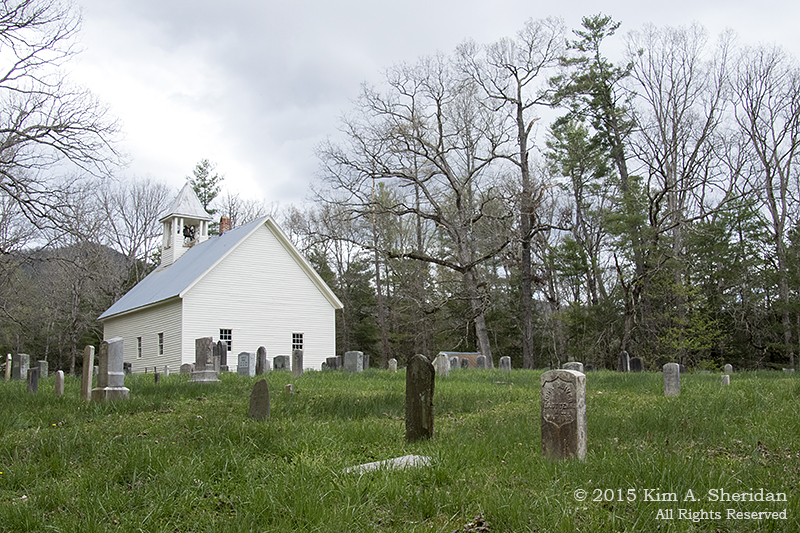
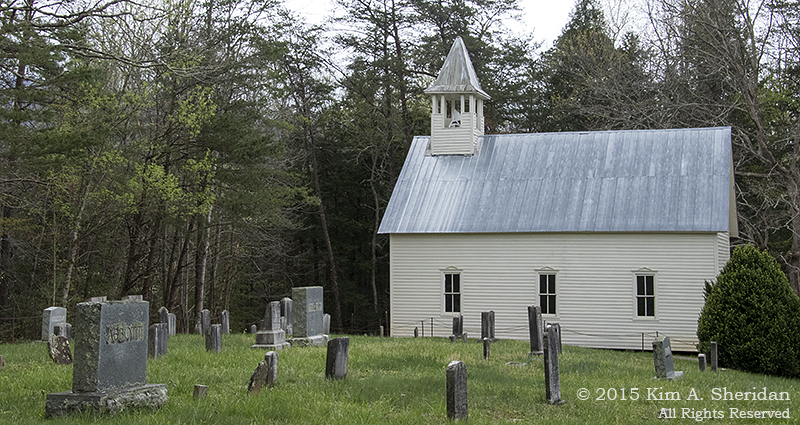
150413_TN GSMNP Cades Cove_4249 aThe people of the cove were religious folk. We came to three churches in succession, two Baptist and one Methodist. The Baptists argued over missionary activities and split into two churches; the Methodists argued over Civil War loyalties, and likewise split, although Hopewell Methodist Church no longer stands.

150413_TN GSMNP Cades Cove_4264 aAll three churches are spare white frame buildings with a bell tower on top. Inside are rows of pews, and a pulpit. Outside each church is a graveyard, which gave Don and me a change to indulge our interest reading old tombstones. Here Olivers, Tiptons, Shieldses and Cables abound. Many young children were buried in these graves, some too young to even have names. Life could be harsh in Cades Cove.

150413_TN GSMNP Cades Cove_4348 acsThe Cable Mill area is a complex of historic buildings. This is a cantilever barn, a typical type of construction in the cove.

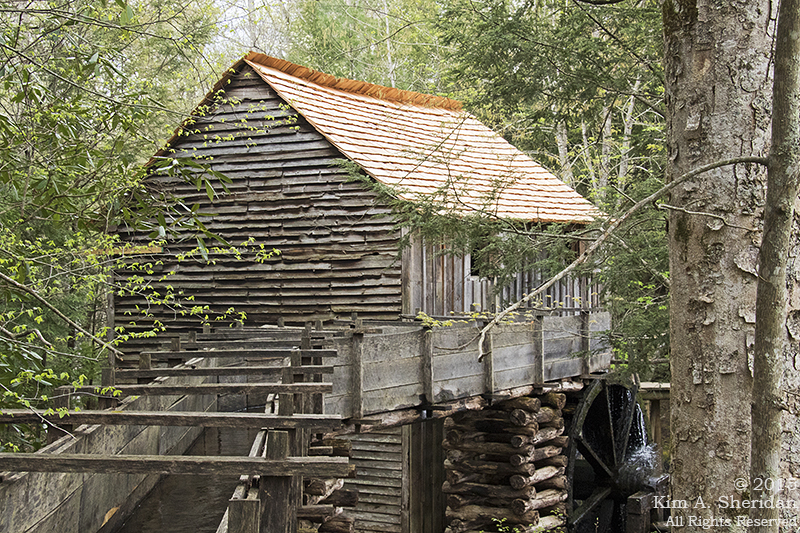
150413_TN GSMNP Cades Cove_4406 acsJohn Cable built and operated a grist mill in 1870. Its large mill wheel and mill race are still functional. Inside, you can see corn being ground and even purchase a small bag of flour.

150413_TN GSMNP Rich Mountain Road_4473 acsAfter circling the cove, we decided to take the adventurous route home. We drove Rich Mountain Rd, a one-way gravel road that runs up to the top of Rich Mountain, then descends out of the Park into Tuckaleechee Cove. It was a lot of fun winding around the endless twists and turns. Mother Nature’s roller coaster!

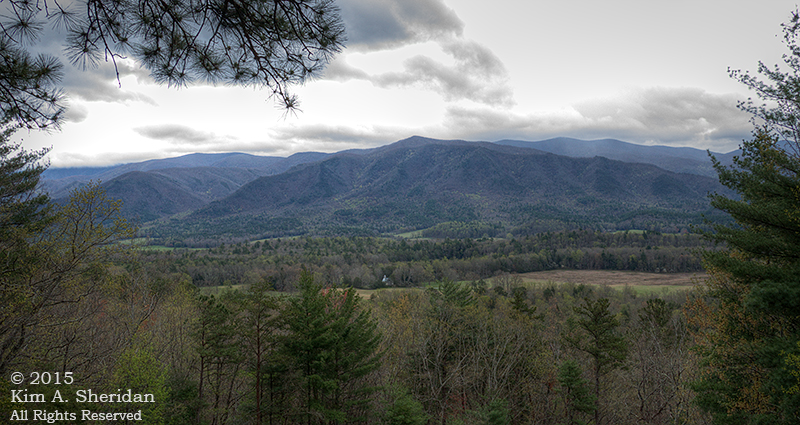
150413_TN GSMNP Rich Mountain Road_4462_HDR acs copyAlong the road was an overlook with a  fantastic view of Cades Cove and one of the churches. Click to see full size and find the church.

150413_TN GSMNP Rich Mountain Road_4475_HDR copyHere’s one of many switchbacks on the descent. I had to learn how to use low gear on my car’s automatic transmission for this trip!

150413_TN GSMNP Cades Cove_4306_HDR acs copyHistory, dramatic scenery, wildlife – yes, Cades Cove has it all.

Wait, what about that wildlife?

That, my friends is a tale for another day.

Map GSMNP Cades Cove

Winter Weary

150224_HNWR In Snow_7843acsWe are weary of winter.

150224_HNWR In Snow_7886acsWe are weary of being bound in ice; we long for open water.

150224_HNWR In Snow_7880acsWe are weary of frigid temperatures and gray gloomy days; we long for the warmth of the sun.

150307_HNWR 420 Snow_9877acsWe are weary of endless nuisance snows, freezing rain and ice; we long for grass and green leaves.

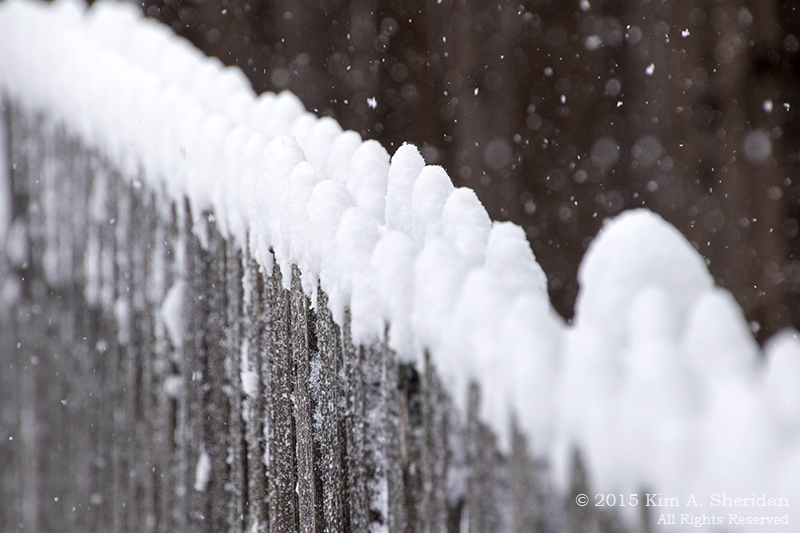
150305_Snow Day at Home_9137acsSo weary of winter are we, when at last we get a real snowstorm, our only thought is – Please, GO AWAY!

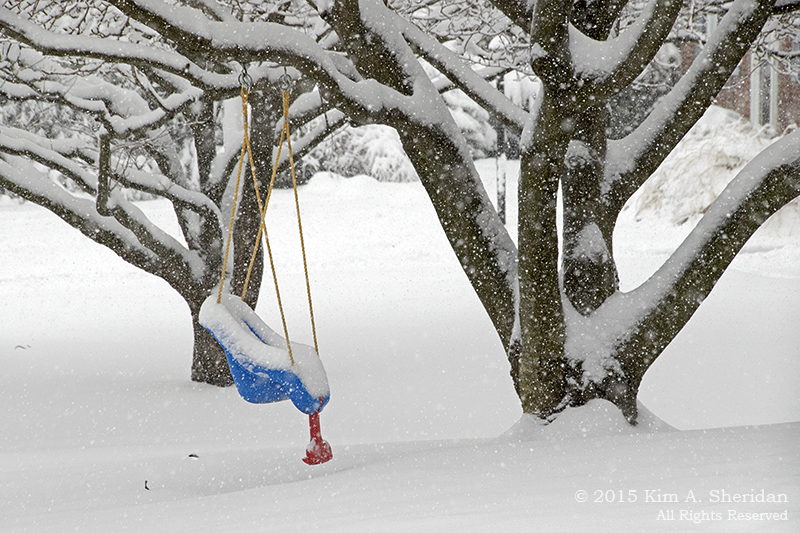
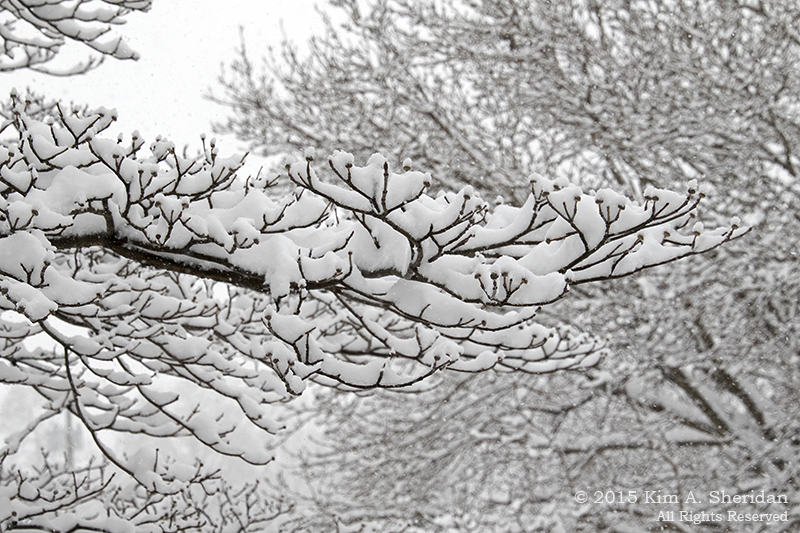
150305_Snow Day at Home_9181aStill the snow falls softly and steadily throughout the day, coating every branch and bud in a frosting of white.

Soon we have other thoughts.

Look at how beautiful it is! How quiet and peaceful.

150305_Snow Day at Home_9345acWeariness cast aside, we long to be out among the snowflakes, forging new paths across the virgin whiteness.

We are alone with a camera in a small hushed world of wonder.

150305_Snow Day at Home_9214acsWe see how ordinary things are transformed by winter’s touch.

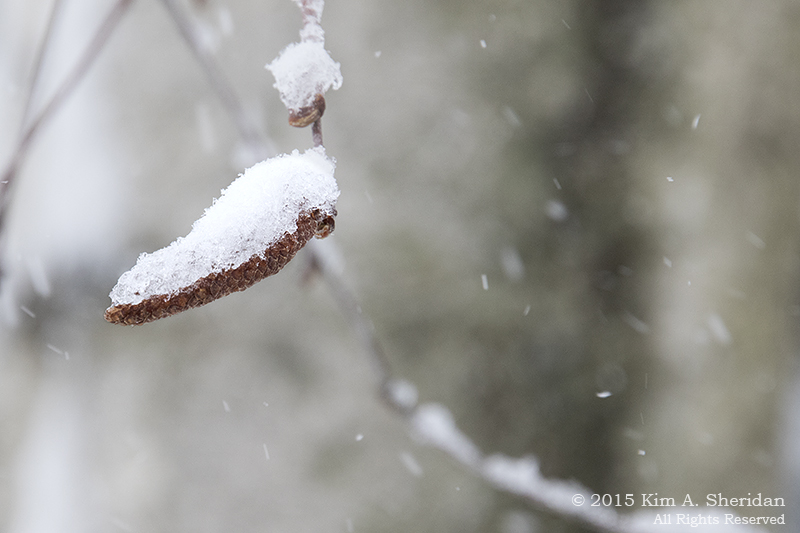
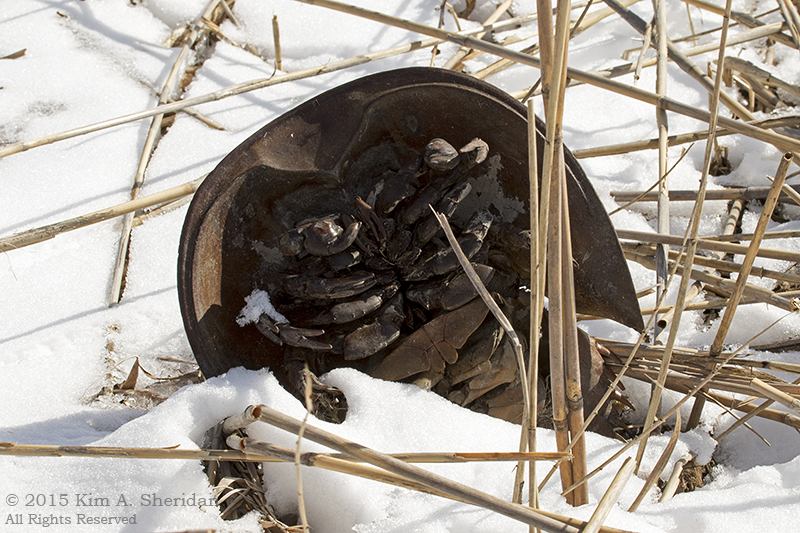
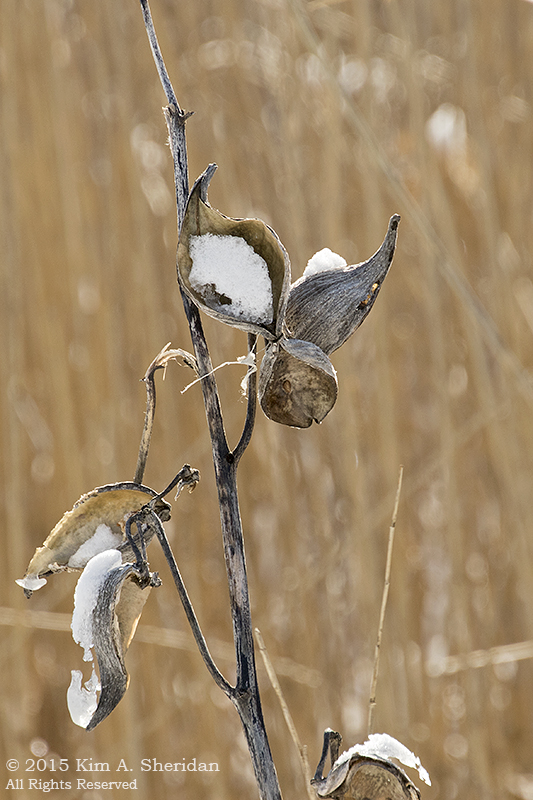
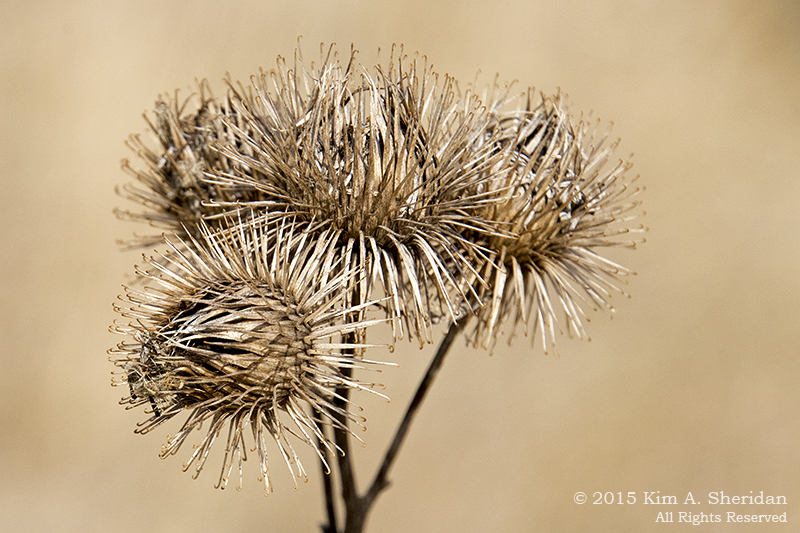
150228_Port Mahon Road_8400a150307_HNWR 420 Snow_9868acsWe admire the delicacy of a seed pod, and the oddity of a horseshoe crab, when each is cast in snow.

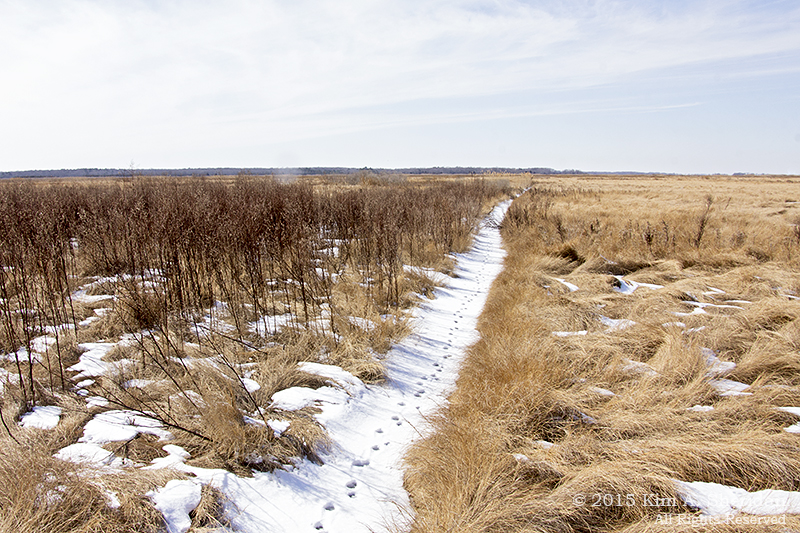
150307_HNWR 420 Snow_9781acsWe remember that the fox is glad of the ice and the snow that give him easy passage where on warmer days he would have wet feet.150228_Port Mahon Road_3425acs

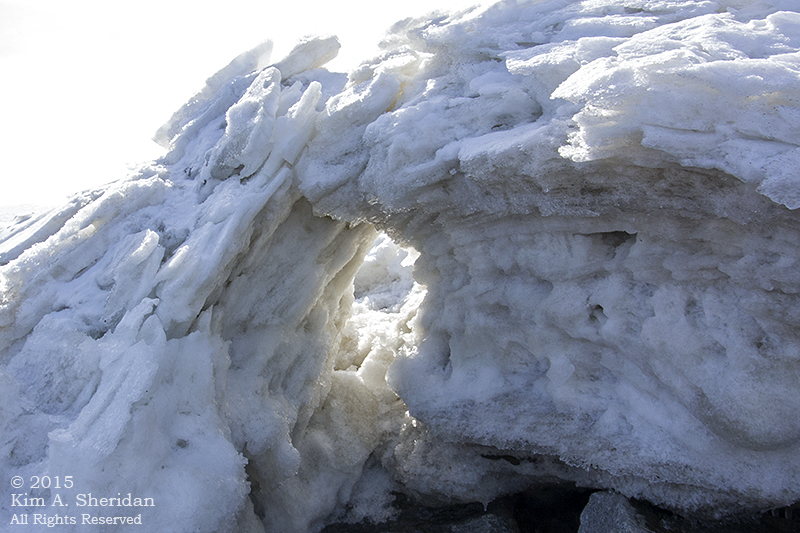
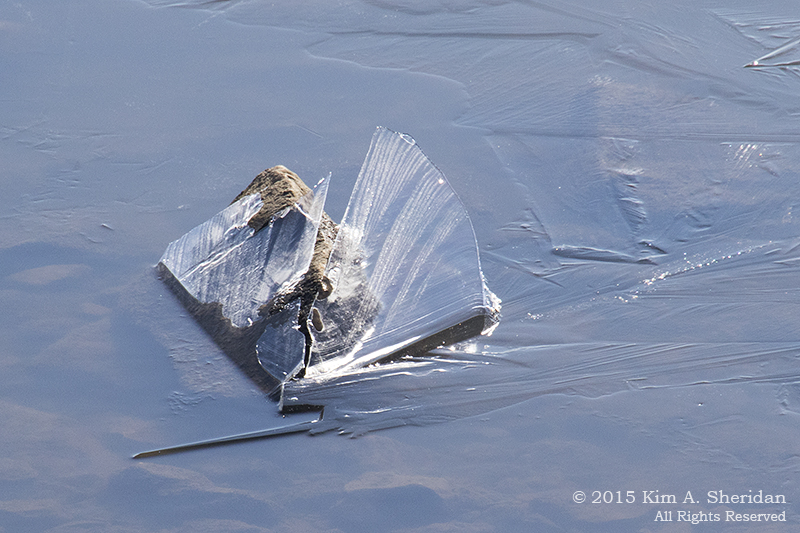
150228_Port Mahon Road_3536acsWe marvel at the strange forms of the ice blocks tossed up along the bay.150228_Port Mahon Road_3578a

150307_HNWR 420 Snow_0194acs150305_Snow Day at Home_9186aAll too soon, the fingers grow numb and the wonder fades.

We long anew for days of warmth and sun and the sweet laughter of little girls at play.

We long for days when we will not be winter weary.

It’s a Marshmallow World in the Winter

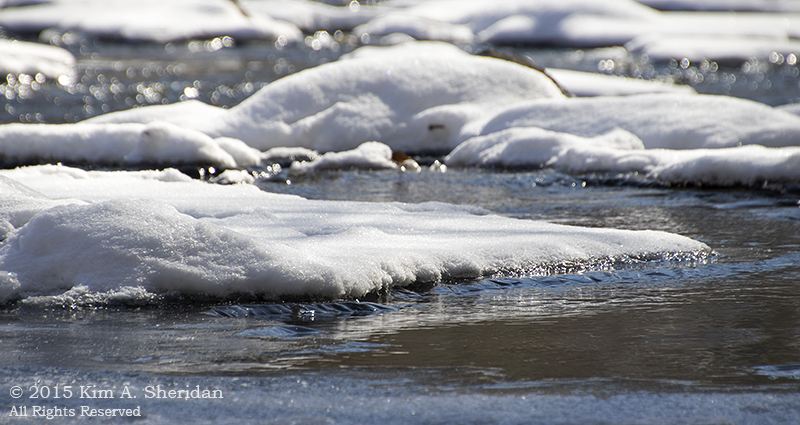
150218_Wissahickon In Snow_6945acsIt’s a marshmallow world in the winter

150218_Wissahickon In Snow_6807acsWhen the snow comes to cover the ground

150218_Wissahickon In Snow_6547acsIt’s the time for play

150218_Wissahickon In Snow_6759aIt’s a whipped cream day

150218_Wissahickon In Snow_6930acsI wait for it the whole year round.

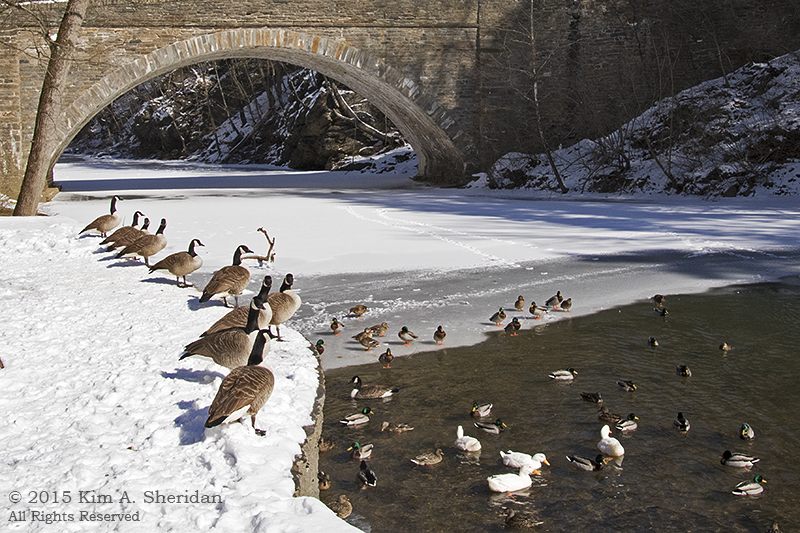
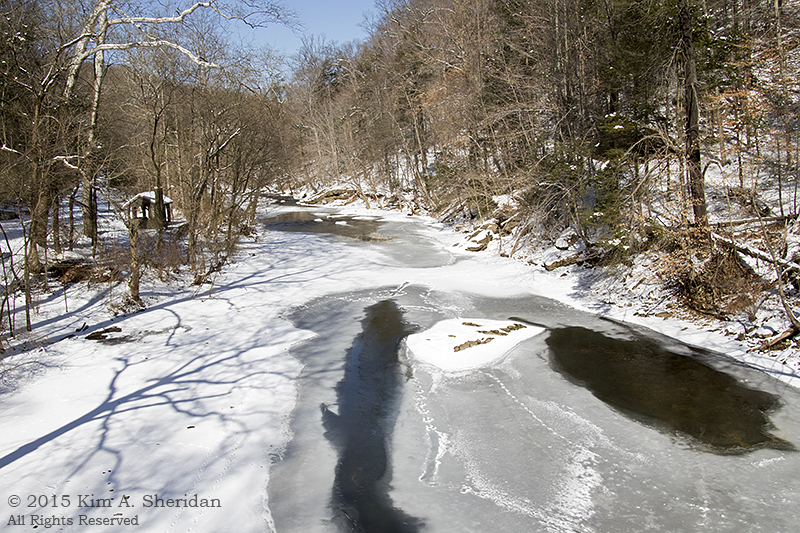
150218_Wissahickon In Snow_6562acsSince we began exploring the Wissahickon Valley earlier this year, I knew it would be a wondrous place in the snow. So I’ve been waiting.

Alas, unlike last winter, the snows have been late to come, and meager. More waiting.

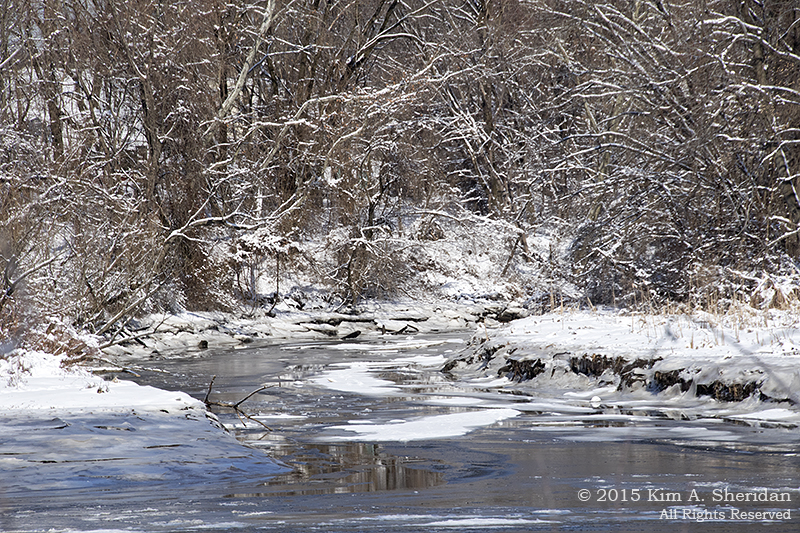
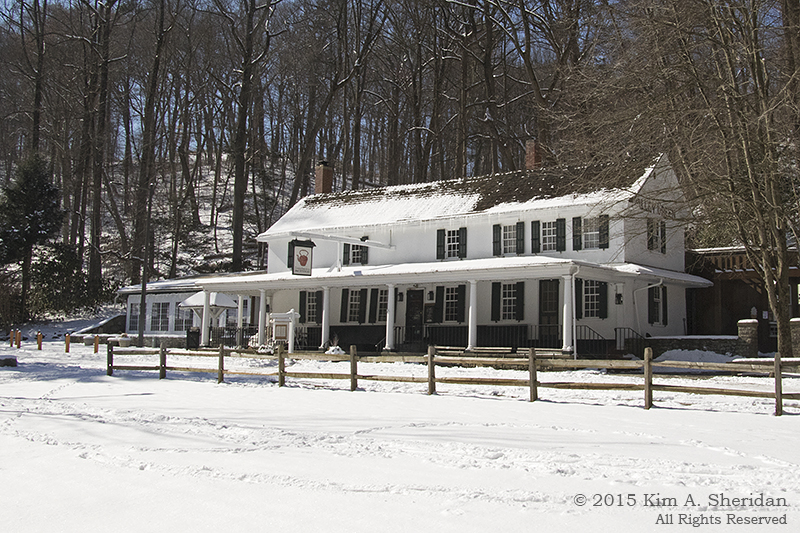
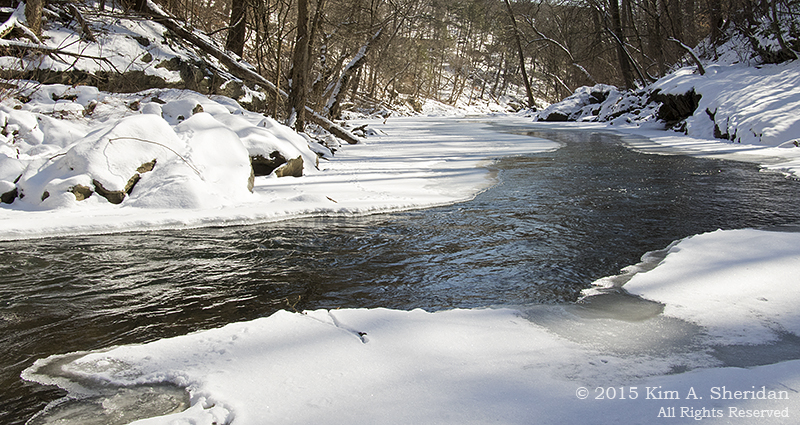
In the midst of a severe cold snap, we finally got a few inches of snow, followed by a crisp blue sky day. At last! No more waiting! Valley Green Inn.

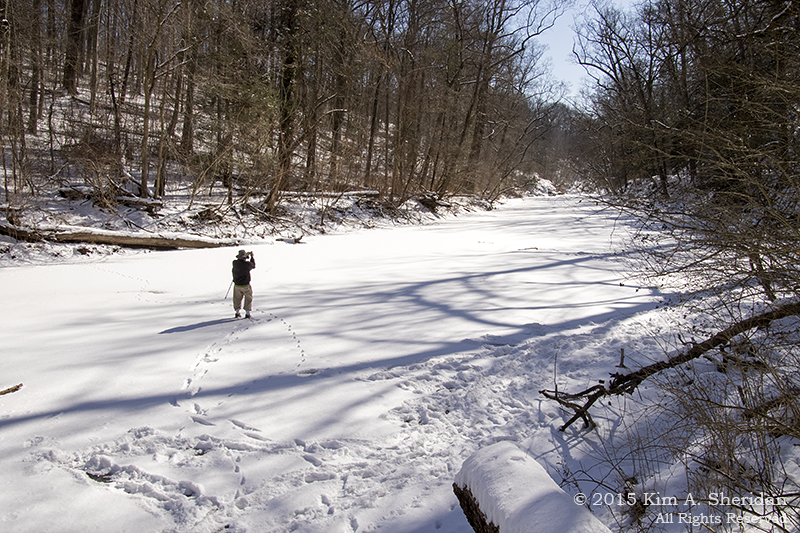
150218_Wissahickon In Snow_6600a*SIGH* There goes Don, straight onto the ice in the middle of the stream, without a thought for his own safety. He’s old enough to know better.

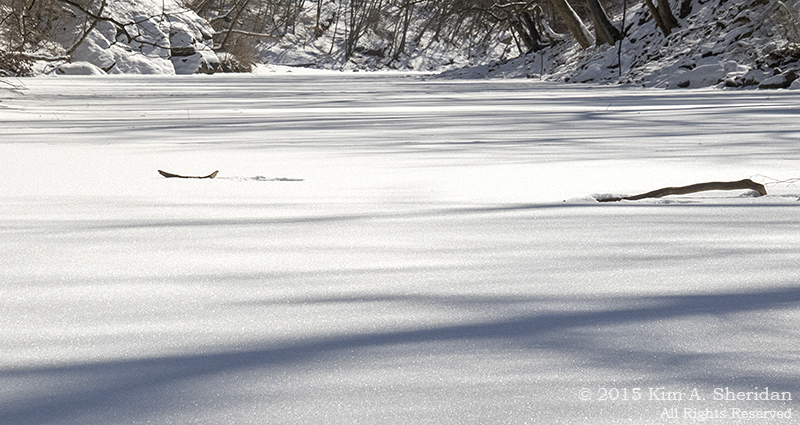
150218_Wissahickon In Snow_6624aI’m old enough to know better… than to go first. I let Don test the ice, clamber down the steep and slippery stream banks. If he survived, then  I followed. Do you think I’m going to let him get all the good shots? Wissahickon Creek, down on the ice.

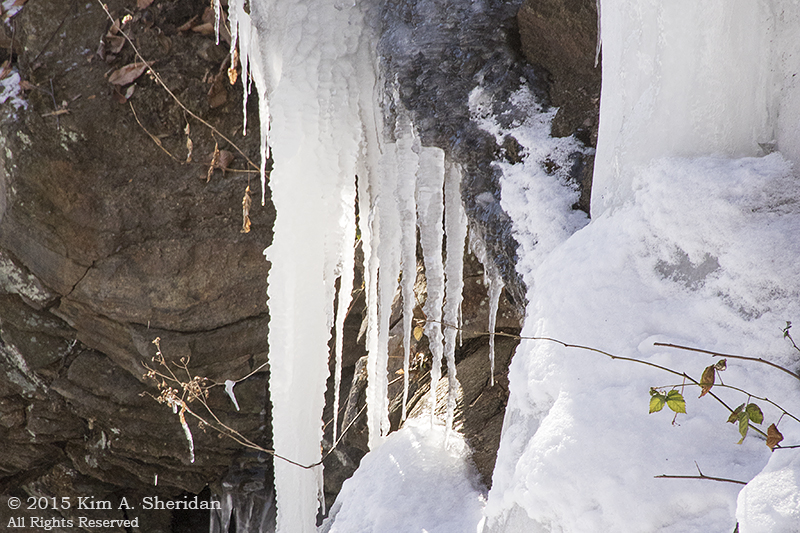
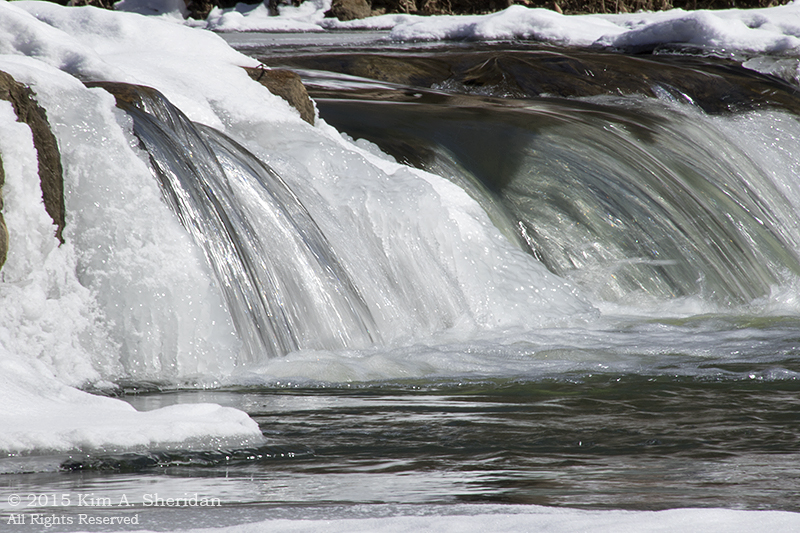
150218_Wissahickon In Snow_6679acs150218_Wissahickon In Snow_6744acs150218_Wissahickon In Snow_7049a150218_Wissahickon In Snow_7153aIn winter it’s a marshmallow world.

Duck, Duck, Sandpiper

150110_NJ Barnegat Light Harlequin_4278acs2It’s become an annual tradition now, the winter pilgrimage to Barnegat Light to see the winter waterfowl. Every year it gets colder and windier, and every year the jetty gets longer.

Or at least it seems longer! Especially this year, as it was my first time picking my way from rock to rock with a tripod on my shoulder. I’m not the most sure-footed of creatures, as my friends will be happy to tell you. But I also don’t have the steadiest of hands, so having the tripod was a big help.

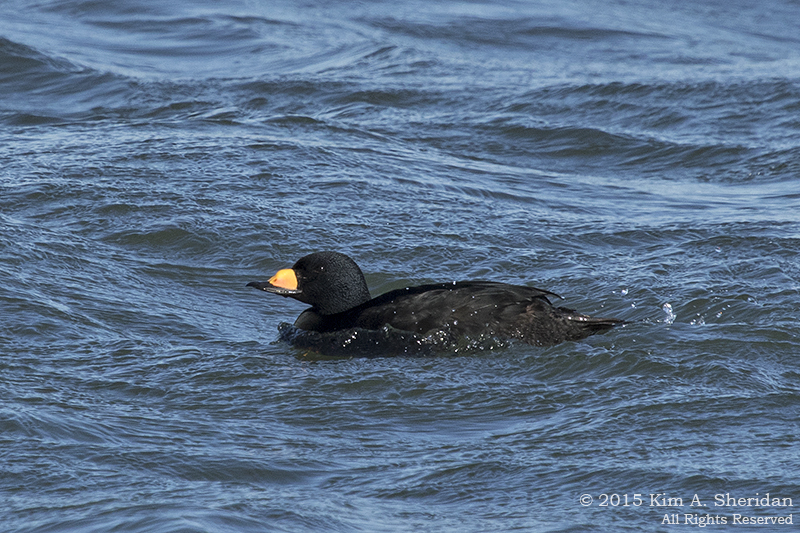
150110_NJ Barnegat Light Scoter_4124acsThe day started with a Black Scoter near the Lighthouse. Hmmm… Dark bird on dark water. Helpful of him to have a bright yellow bill.

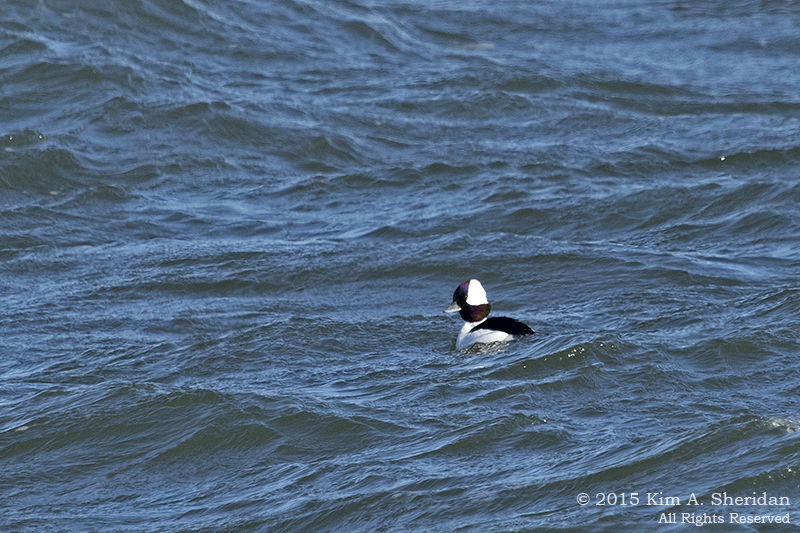
150110_NJ Barnegat Light Bufflehead_4186aA small duck bobbed alone in the big bay. I was a little surprised to see this Bufflehead out here in the Inlet. I’m used to seeing them in fresh water lakes. But they frequent the salty bays too.

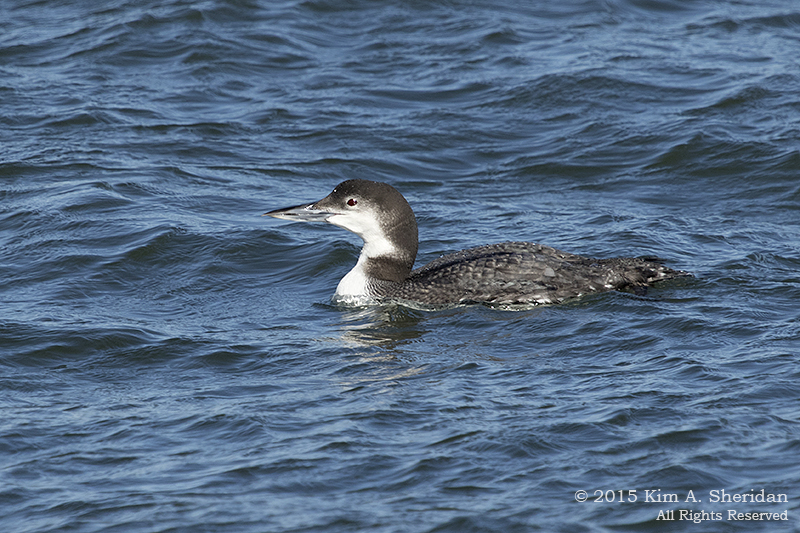
150110_NJ Barnegat Light Loon_4220acsCommon Loon. Someday I hope to see them in full breeding plumage, and hear them call.

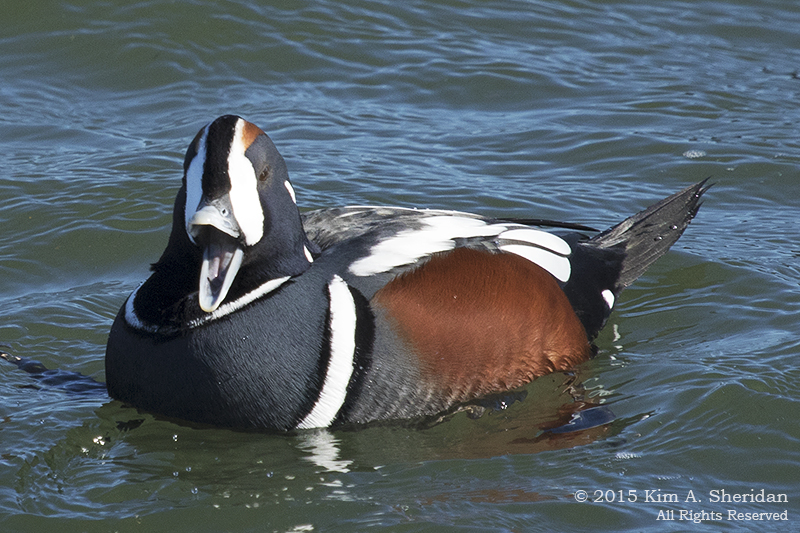
150110_NJ Barnegat Light Harlequin_4292aThe birds we came to see are the Harlequin Ducks. Two males swam near the rocks at the end of the jetty. There were only four Harlequins there this day, two males and two females. We didn’t mind. Quality over quantity.

150110_NJ Barnegat Light Harlequin_4284It was 22° with winds gusting over 20 mph. I wore heavy wool socks, long underwear, lined pants under rain pants, a turtleneck, fleece AND insulated vest under a down jacket, a scarf, two hats and three pairs of gloves, with hand warmers inside. This duck thought I was the funniest thing he’d seen in awhile.

FUN FACT: Why are the ducks comfortable swimming in the frigid water while we humans are shivering on shore?

It starts with their feathers. Next to the skin lies a thick insulating layer of down feathers. Above the down are layers of interlocking and overlapping feathers that leave a minimum of bare skin exposed to the elements. The birds attend meticulously to feather maintenance with liberal doses of preen oil.150110_NJ Barnegat Light Harlequin_4377acs3

Look closely at a duck after it surfaces from a dive, and you will see the water beading up and running from its waterproof feathers like rain from a freshly waxed car.

Ducks’ feet and legs lack feathers to protect them, and could be a dangerous source of heat loss. But water birds have evolved to combat this by utilizing a countercurrent heat exchange system. As hot blood in the arteries flows into the upper leg, it transfers heat to the cold venous blood returning from the feet. Blood that reaches the feet is much colder than the body, close to the temperature of the water in which the duck swims, but the blood that returns to the heart is warm. This heat exchange minimizes heat loss from the legs, while maintaining a healthy body core temperature. Cold feet, warm heart!
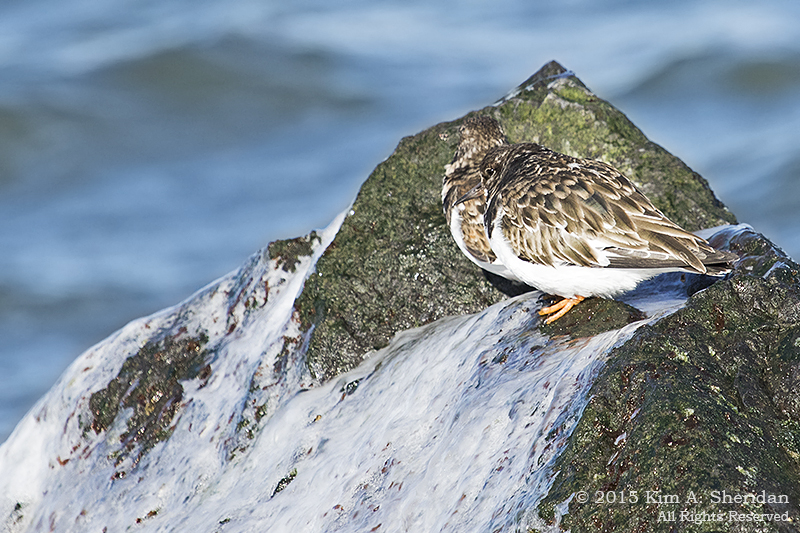
150110_NJ Barnegat Light Turnstone_4337acsSandpipers were in attendance as well as ducks. Two small gatherings of Ruddy Turnstones perched precariously on the icy rocks.

150110_NJ Barnegat Light Turnstone_4416acsYou put your right foot in, you put your right foot out…

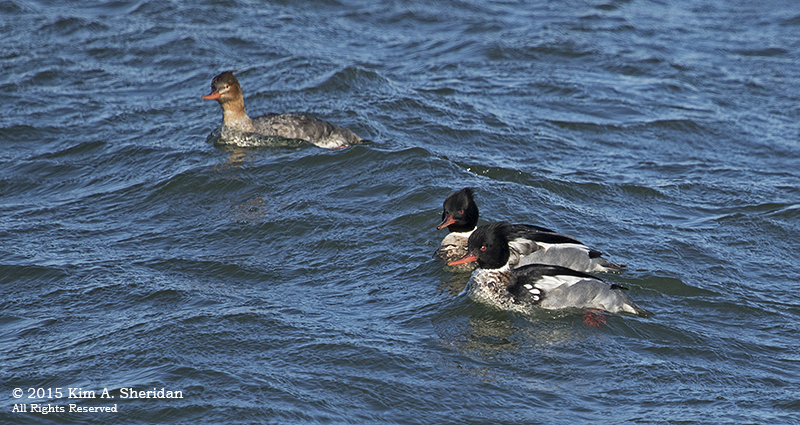
150110_NJ Barnegat Light Merganser_4578acsBack near the Lighthouse were three Red-breasted Mergansers, one female (rear left) and two males.

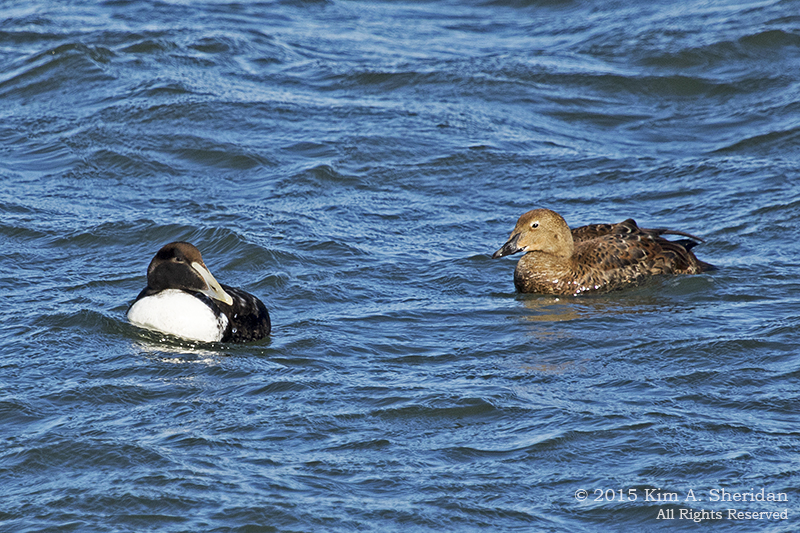
150110_NJ Barnegat Light Eider_4581aAccompanying the Mergansers were a young male Common Eider (left) and a female King Eider. The King Eider was a new bird for me. Common Eiders I’ve seen before, but only females at a distance. Seeing both this close was a treat. I’d have been happy with Eider one!

150110_NJ Barnegat Light Turnstone_4465acsTime to snuggle in somewhere warm at the end of a cold day at Barnegat Light.

Winter’s Edge

141122_NJ Stone Harbor Point_1513acsLong gone are the warm days of summer, days when families crowded the beach with their beach blankets and umbrellas, their sand pails and horseshoe sets. The only creatures frolicking in the surf are ducks. The stiff ocean breeze, so welcome when the temperature was 80°, is a torment at 35°. Autumn lingers, but teeters on the edge of winter. The beach is empty.

Of humans, but not of wonders.

At last, the beach is ours!

141122_NJ Stone Harbor Point_1563acsFrom late fall to mid-spring, the Jersey Shore is ours to explore, empty of crowds and noise. Now there are plenty of treasures to collect, shells and rocks and sea glass, safe from the many feet and the mechanical beach-sweepers of summer.

141122_NJ Stone Harbor Point_1555acs2Lines of dune fencing stretch across white sand to the horizon.

141128_NJ Holgate_2948acsThe winter birds arrive at the Shore with the colder weather. Long-tailed Ducks bob in the waves. The females seem to have a lot to say to the pink-billed males.

141128_NJ Holgate_2706acsThis sparrow-like bird is a Snow Bunting.

141128_NJ Holgate_2774acsAs we walked along the beach at Holgate one November day, we kept seeing these odd tree sculptures. For a bit, we thought some enterprising soul had placed driftwood on end as an artistic expression. Then we realized that these were the broken stumps of dead trees, and we were walking amidst what once had been wooded dunes.

141128_NJ Holgate2902-5 Pan acsThe dunes at Holgate, looking west toward Barnegat Bay. The southern tip of Long Beach Island is a part of the Edwin B. Forsythe National Wildlife Refuge. It didn’t always look like this. Only a few years ago, it was a thicket of dune plants and shrubs. Then Superstorm Sandy paid a visit, inundating the entire area, breeching the island from bay to ocean in places. These weathered roots, trunks and branches are what are left of once vital vegetation. Devastated, but starkly beautiful.

FUN FACT: These plants were flooded with water, but died of thirst. Why? Fresh water flows easily into a plant through the tissues of the roots, a process called osmosis. But this was a saltwater inundation. Ever have a salt shaker gum up in humid weather? Salt absorbs water very easily, pulling water from the plants into the soil and leading to dehydration. It also interferes with the chemical processes by which a plant obtains nutrients. The combination of nutrient and water deficiencies has laid waste to the dune plants.

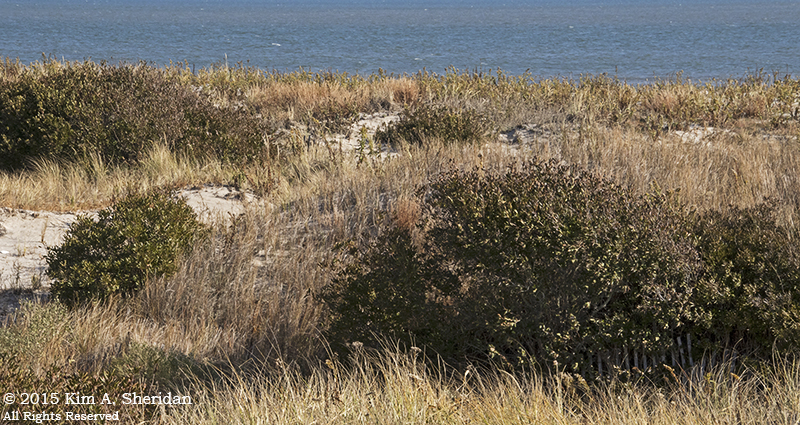
141122_NJ Stone Harbor Point_1480acsThis is what a healthy dune community should look like. Stone Harbor Point.

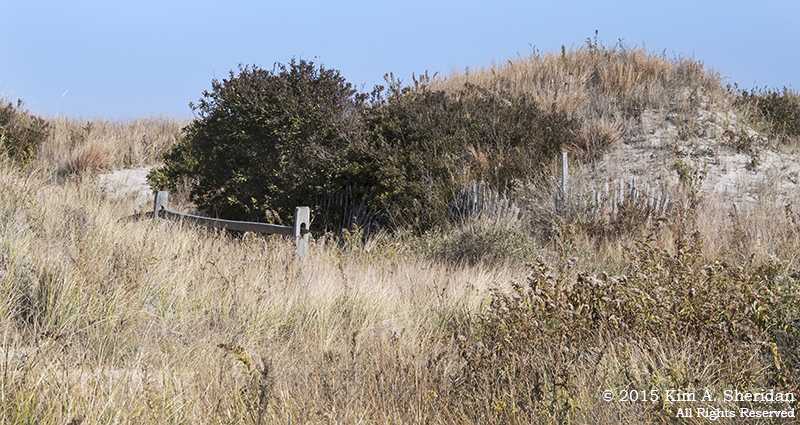
141122_NJ Stone Harbor Point_1520acsGood fences make good neighbors.

141122_NJ Stone Harbor Point_1489acsDune fences make good dunes, and if successful, good dune grasses and plants.

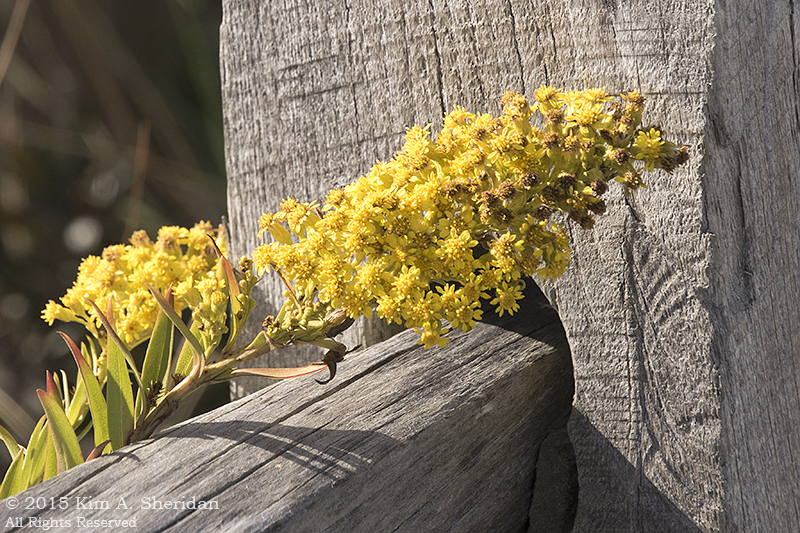
141122_NJ Stone Harbor Point_1552aGood fences make good backdrops for wildflowers, still abloom in mid-November.

141122_NJ Hereford Inlet_1646acsOne doesn’t have to go far from the beach to find woodland critters. The gardens at Hereford Lighthouse provide a fine place for squirrels to make a living.

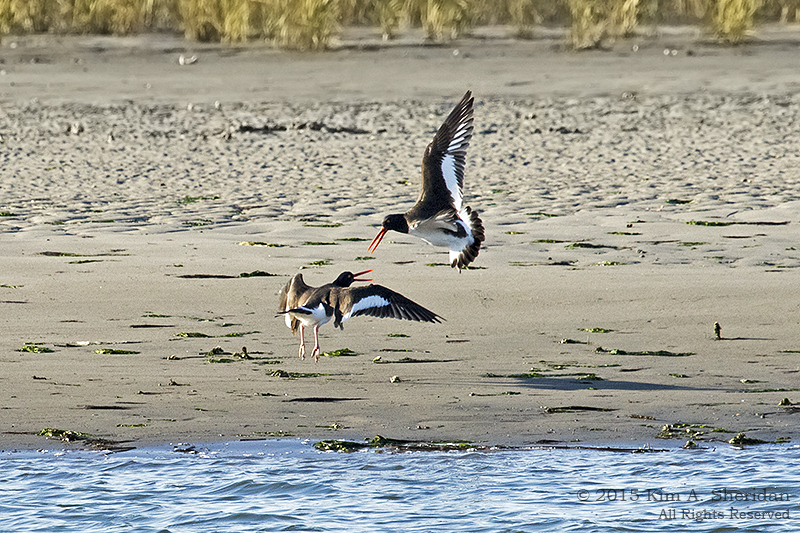
141122_NJ Nummys Island_1892acsIn the late light of day, a pair of American Oystercatchers squabbles.

Even on the edge of winter, wonders abound at the wild edge.

Junior Prom

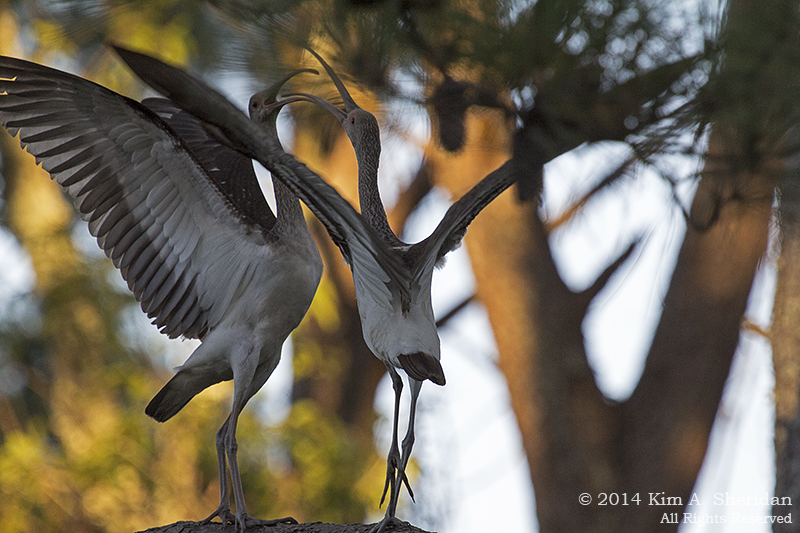
141017_Chincoteague NWR_9813acsIt’s prom season at Chincoteague National Wildlife Refuge.

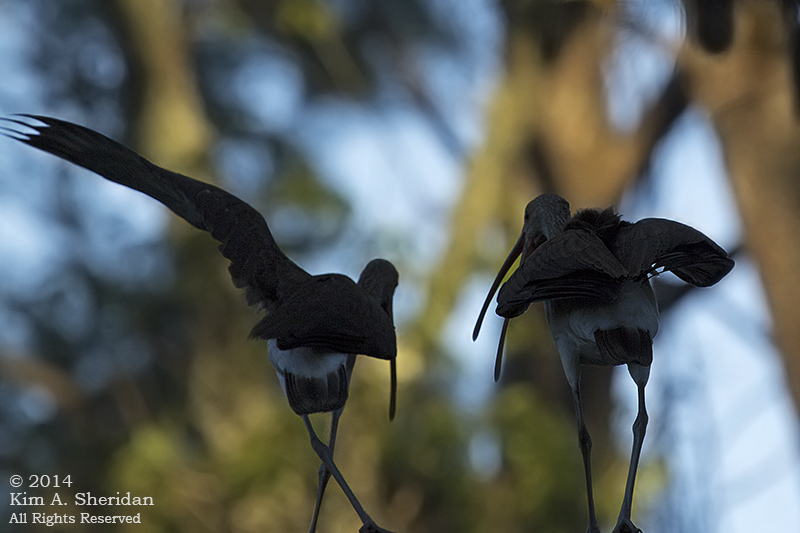
Fall is the time for young birds to gather in flocks and socialize. Like teenagers at the junior prom, they strut, preen and dance. Juvenile White Ibises show off their moves.

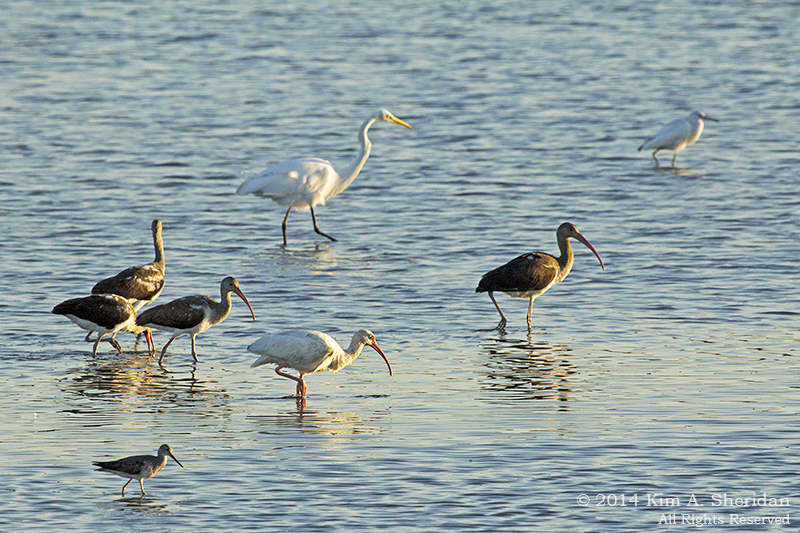
141018_Chincoteague NWR AM Swan Cove_0168aJuvenile birds have their own fashion style; they never dress like the grown-ups. White Ibis favor brown; Little Blue Herons wear white. It’s all so confusing. Especially when the adult chaperones are around. Here’s an adult White Ibis in white plumage with four young Ibis. In front is a Greater Yellowlegs; center rear is a Great Egret, and all the way in the back a juvenile Little Blue Heron.

141018_Chincoteague NWR AM Swan Cove_0464acsA Tri-colored Heron paces the dance floor.

141017_Chincoteague NWR_9868acsIn the evening the birds come to the woods along Beach Road. Loblolly pines offer a nice perch to soak up the late day sun. Twelve Snowy Egrets, three White Ibis… and a partridge in a pine tree?

141017_Chincoteague NWR_9649acsA shy young Black-crowned Night-heron waits for a dance invitation.

141018_Chincoteague NWR_0849axsDouble-crested Cormorants hang out in the small stream that bordered the road. Somebody’s gotta handle the refreshments.

141018_Chincoteague NWR_0841aGreat Blue Heron. There are a lot of wallflowers at this prom.

141017_Chincoteague NWR_9753acsThe highlight of the evening is the crowning of the Prom King and Queen. This year the honor goes to a pair of White Ibises.

141017_Chincoteague NWR_9784acsProm pictures are de rigueur.

141017_Chincoteague NWR_9816acsTime to take a bow. It’s been some enchanted evening!